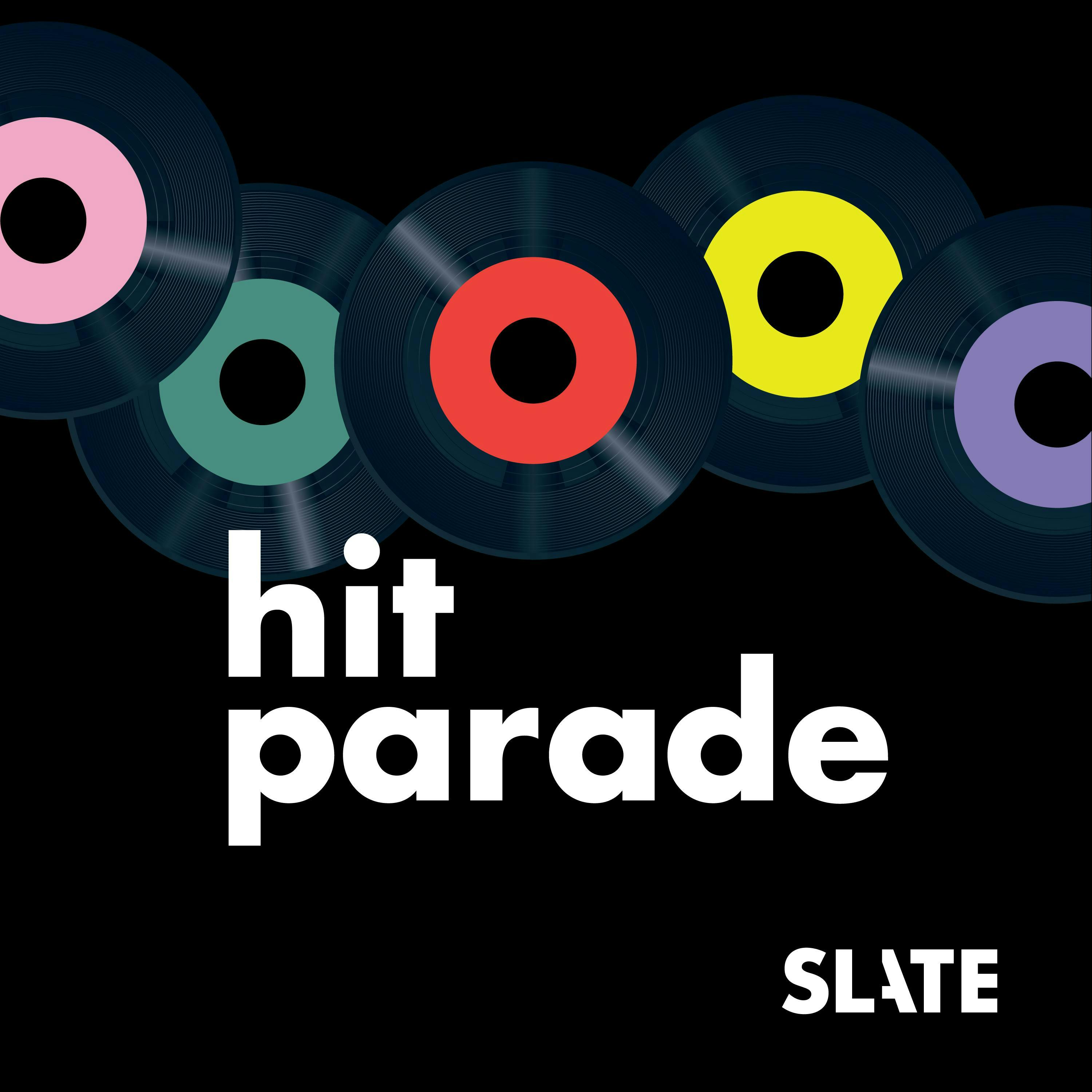
Hit Parade | Music History and Music Trivia
Slate PodcastsAudio
- Format:
- Podcast
- New episodes:
- Every two weeks
- Typical length:
- about 50 minutes
- Latest episode:
About this show
What makes a song a smash? Talent? Luck? Timing? All that—and more. Chris Molanphy, pop-chart analyst and author of Slate’s “Why Is This Song No. 1?” series, tells tales from a half-century of chart history. Through storytelling, trivia and song snippets, Chris dissects how that song you love—or hate—dominated the airwaves, made its way to the top of the charts and shaped your memories forever.
Get more of Hit Parade with Slate Plus! Join for monthly early-access episodes, bonus episodes of "The Bridge," and ad-free listening across all your favorite Slate podcasts. Subscribe directly from the our show page on Apple Podcasts or Spotify. Or visit slate.com/hitparadeplus to get access wherever you listen.
Hosted on Acast. See acast.com/privacy (https://acast.com/privacy) for more information.
Covers: pop music, chart history, music history, billboard charts, popular music trivia, Canadian music, dolly parton, hip hop, songwriting, celine dion
Show details and episodes come from the publisher's public feed at my.slate.com. Last updated . Names, artwork and text belong to their publishers.
Recently on this show
Summary of recent episodes, drawn from the publisher's feed.
Hit Parade is a podcast where pop-chart analyst Chris Molanphy uses storytelling and song clips to explain why songs became hits and how they shaped listeners' memories. Recent episodes cover Canadian artists on the Hot 100, Paul Simon's 1986 album Graceland, Dolly Parton's crossover to pop, and Jay-Z's Reasonable Doubt anniversary.
Cosmos
Similar in subject
- Mic The Snare
Both cover: chart history, pop music, music history - Billboard
Both cover: chart history, music history - PAST 10s: A Top 10 Time Machine - Music of the 70s, 80s and More
Both cover: billboard charts, music history
Similar shows





Episodes
Only Girl in the World Edition Part 2
· 51 min
It’s been nearly a decade since Rihanna released a studio album—and fans and critics alike have wondered when, if ever, a follow-up to 2016’s Anti might arrive. Which is ironic, because in her heyday, Rihanna was the most productive hitmaker on the charts. Churning out at least one album a year in the late aughts and early ‘10s, Rihanna’s approach to the charts was closer to early Motown or the Beatles than Beyoncé or Taylor. The result: the Barbadian pop deity scored more No. 1s than any 21st century artist, from “SOS” and “Umbrella” through “Diamonds” and “Work.” Join Chris Molanphy as he traces Rihanna’s journey from tropical tyro to commanding chart queen and explores how she found hits at a boundless pace. Podcast production by Kevin Bendis. Need to set up your Slate Plus feed? If you subscribed through Slate.com, check out our FAQ (https://slate.com/podcastfaqs#plusbenefits) at slate.com/podcastfaqs for easy instructions. Members subscribed via Apple Podcasts get automatic access—no setup required. Hosted on Acast. See acast.com/privacy (https://acast.com/privacy) for more information.
Not rated yetOnly Girl in the World Edition Part 1
· 53 min
It’s been nearly a decade since Rihanna released a studio album—and fans and critics alike have wondered when, if ever, a follow-up to 2016’s Anti might arrive. Which is ironic, because in her heyday, Rihanna was the most productive hitmaker on the charts. Churning out at least one album a year in the late aughts and early ‘10s, Rihanna’s approach to the charts was closer to early Motown or the Beatles than Beyoncé or Taylor. The result: the Barbadian pop deity scored more No. 1s than any 21st century artist, from “SOS” and “Umbrella” through “Diamonds” and “Work.” Join Chris Molanphy as he traces Rihanna’s journey from tropical tyro to commanding chart queen and explores how she found hits at a boundless pace. Podcast production by Kevin Bendis. Need to set up your Slate Plus feed? If you subscribed through Slate.com, check out our FAQ (https://slate.com/podcastfaqs#plusbenefits) at slate.com/podcastfaqs for easy instructions. Members subscribed via Apple Podcasts get automatic access—no setup required. Hosted on Acast. See acast.com/privacy (https://acast.com/privacy) for more information.
Not rated yetSinging Nuns and Green Tambourines Edition Part 2
· 54 min
When you think of music in the 1960s, some groundbreaking artists probably come to mind: Bob Dylan, Jimi Hendrix and the Jefferson Airplane, for example. But the pop charts paint a very different picture of that decade, which embraced easy listening, groovy bubblegum, novelty and instrumental records—even a guitar-strumming Belgian nun. In other words, the soundtrack of the era was more like Mad Men and less like Forrest Gump. Join Chris Molanphy as he unearths forgotten hits from Bobby Vinton, Kyu Sakamoto, Jeannie C. Riley, and other unlikely chart-toppers, on a still-strange trip through the ‘60s. Need to set up your Slate Plus feed? If you subscribed through Slate.com, check out our FAQ (https://slate.com/podcastfaqs#plusbenefits) at slate.com/podcastfaqs for easy instructions. Members subscribed via Apple Podcasts get automatic access—no setup required. Hosted on Acast. See acast.com/privacy (https://acast.com/privacy) for more information.
Not rated yetSinging Nuns and Green Tambourines Edition Part 1
· 47 min
When you think of music in the 1960s, some groundbreaking artists probably come to mind: Bob Dylan, Jimi Hendrix and the Jefferson Airplane, for example. But the pop charts paint a very different picture of that decade, which embraced easy listening, groovy bubblegum, novelty and instrumental records—even a guitar-strumming Belgian nun. In other words, the soundtrack of the era was more like Mad Men and less like Forrest Gump. Join Chris Molanphy as he unearths forgotten hits from Bobby Vinton, Kyu Sakamoto, Jeannie C. Riley, and other unlikely chart-toppers, on a still-strange trip through the ‘60s. Need to set up your Slate Plus feed? If you subscribed through Slate.com, check out our FAQ (https://slate.com/podcastfaqs#plusbenefits) at slate.com/podcastfaqs for easy instructions. Members subscribed via Apple Podcasts get automatic access—no setup required. Hosted on Acast. See acast.com/privacy (https://acast.com/privacy) for more information.
Not rated yetMaterial Girl in an Imperial World Edition Part 2
· 40 min
In the late 1980s, the English synth-pop duo Pet Shop Boys dominated the U.K. pop charts and staged an invasion of the American charts. Years later, founding member Neil Tennant dubbed this streak of creative and commercial supremacy the group’s “imperial phase”—a term that eventually caught on among music critics and pop fans. So, what does it take for an artist to achieve imperial dominance? Why might Fleetwood Mac in the 1970s or The Weeknd in the 2010s qualify, while Cher or Lizzo don’t quite fit the bill? Are there rules for imperial phases? Hit Parade’s Chris Molanphy says yes—he’s got chart rules for determining when an artist is at peak imperiality. And he says Madonna’s late ’80s streak of hits might be the ultimate imperial phase. Join Chris as he dissects the most regal artists across the decades, defining what makes them imperial—and he walks hit by hit through Madonna’s biggest phase, which may remain unmatched. Podcast production by Kevin Bendis. Need to set up your Slate Plus feed? If you subscribed through Slate.com, check out our FAQ (https://slate.com/podcastfaqs#plusbenefits) at slate.com/podcastfaqs for easy instructions. Members subscribed via Apple Podcasts get automatic access—no setup required. Hosted on Acast. See acast.com/privacy (https://acast.com/privacy) for more information.
Not rated yetMaterial Girl in an Imperial World Edition Part 1
· 1 hr 1 min
In the late 1980s, the English synth-pop duo Pet Shop Boys dominated the U.K. pop charts and staged an invasion of the American charts. Years later, founding member Neil Tennant dubbed this streak of creative and commercial supremacy the group’s “imperial phase”—a term that eventually caught on among music critics and pop fans. So, what does it take for an artist to achieve imperial dominance? Why might Fleetwood Mac in the 1970s or The Weeknd in the 2010s qualify, while Cher or Lizzo don’t quite fit the bill? Are there rules for imperial phases? Hit Parade’s Chris Molanphy says yes—he’s got chart rules for determining when an artist is at peak imperiality. And he says Madonna’s late ’80s streak of hits might be the ultimate imperial phase. Join Chris as he dissects the most regal artists across the decades, defining what makes them imperial—and he walks hit by hit through Madonna’s biggest phase, which may remain unmatched. Podcast production by Kevin Bendis. Need to set up your Slate Plus feed? If you subscribed through Slate.com, check out our FAQ (https://slate.com/podcastfaqs#plusbenefits) at slate.com/podcastfaqs for easy instructions. Members subscribed via Apple Podcasts get automatic access—no setup required. Hosted on Acast. See acast.com/privacy (https://acast.com/privacy) for more information.
Not rated yetThe Freewheelin’ Edition Part 2
· 56 min
At the movies, A Complete Unknown depicts Bob Dylan as a 1960s “it” boy—played by a 2020s “it” boy, Timothée Chalamet. But the film ends in 1965. What happened in the six decades after that? Dylan not only kept recording. He actually started topping the charts—in the 1970s, the era of Led Zeppelin, not Pete Seeger. And several of his chart-topping albums came decades later, in the 21st century. Bob’s voice got rougher, but loyal audiences kept buying his music. Several of these platinum Dylan LPs are among the most acclaimed in rock history—from Blood on the Tracks to Time Out of Mind. And Dylan stayed an object of fascination through all his changes—as a road warrior, a born-again Christian, a Traveling Wilbury, a JFK conspiracy theorist. Join Chris Molanphy as he walks through Bob Dylan’s career decade by decade, from his ’60s folkie years to his 21st-century revival. With the biopic reviving interest in rock’s poet laureate, there’s never been a better time to get tangled up in Bob. Podcast production by Kevin Bendis. Need to set up your Slate Plus feed? If you subscribed through Slate.com, check out our FAQ (https://slate.com/podcastfaqs#plusbenefits) at slate.com/podcastfaqs for easy instructions. Members subscribed via Apple Podcasts get automatic access—no setup required. Hosted on Acast. See acast.com/privacy (https://acast.com/privacy) for more information.
Not rated yetThe Freewheelin’ Edition Part 1
· 58 min
At the movies, A Complete Unknown depicts Bob Dylan as a 1960s “it” boy—played by a 2020s “it” boy, Timothée Chalamet. But the film ends in 1965. What happened in the six decades after that? Dylan not only kept recording. He actually started topping the charts—in the 1970s, the era of Led Zeppelin, not Pete Seeger. And several of his chart-topping albums came decades later, in the 21st century. Bob’s voice got rougher, but loyal audiences kept buying his music. Several of these platinum Dylan LPs are among the most acclaimed in rock history—from Blood on the Tracks to Time Out of Mind. And Dylan stayed an object of fascination through all his changes—as a road warrior, a born-again Christian, a Traveling Wilbury, a JFK conspiracy theorist. Join Chris Molanphy as he walks through Bob Dylan’s career decade by decade, from his ’60s folkie years to his 21st-century revival. With the biopic reviving interest in rock’s poet laureate, there’s never been a better time to get tangled up in Bob. Podcast production by Kevin Bendis. Need to set up your Slate Plus feed? If you subscribed through Slate.com, check out our FAQ (https://slate.com/podcastfaqs#plusbenefits) at slate.com/podcastfaqs for easy instructions. Members subscribed via Apple Podcasts get automatic access—no setup required. Hosted on Acast. See acast.com/privacy (https://acast.com/privacy) for more information.
Not rated yetIntroducing Broken Record: "Norah Jones Begins Again"
· 1 hr 22 min
To kick off the New Year, we're sharing a podcast that we think Hit Parade listeners are going to love: Broken Record (https://www.pushkin.fm/podcasts/broken-record). Check out this episode with singer/songwriter Norah Jones, co-hosted by Blue Note Records President Don Was. Norah has been with Blue Note Records since releasing her juggernaut 2002 debut album, Come Away With Me. In this conversation, Norah details her musical upbringing and what it was like striking it big with her debut album. She also performs for us, and talks about the musical freedom she's found as part of the Blue Note family. Blue Note is one of the first and longest standing institutions of jazz music. Since its formation in 1939 the label has put out albums by Robert Glasper, Lee Morgan, John Coltrane, Wayne Shorter, Gergory Porter, Bobby McFerrin, and many more. Need to set up your Slate Plus feed? If you subscribed through Slate.com, check out our FAQ (https://slate.com/podcastfaqs#plusbenefits) at slate.com/podcastfaqs for easy instructions. Members subscribed via Apple Podcasts get automatic access—no setup required. Hosted on Acast. See acast.com/privacy (https://acast.com/privacy) for more information.
Not rated yetThe Bridge: Slate Music Club 2024
· 35 min
The Slate Music Club is back, in a special edition of Hit Parade – “The Bridge”! Our year-end panel of critics—NPR Music’sAnn Powers (https://www.npr.org/2024/12/20/nx-s1-5235368/ann-powers-favorite-albums-of-2024), Hearing Things’Julianne Escobedo Shepherd (https://www.hearingthings.co/author/julianne-escobedo-shepherd/), Slate’s ownCarl Wilson (https://slate.com/culture/2024/12/best-albums-2024-aoty-songs-music-kendrick-sabrina.html) and Hit Parade hostChris Molanphy (https://slate.com/author/chris-molanphy)—discuss their favorite albums and singles and the trends that shaped the year in pop, rap, country, Latin and global music. Among the questions the roundtable tackles: Have we reached peak Taylor Swift? Did the Kendrick Lamar–v.-Drake beef overshadow hip-hop’s next generation? How much further will country cross over to pop audiences—and how does Latin music fit in? How did music from diverse artists stand in for protest music in 2024? And what will become of music criticism itself? Note: Slate Plus members can hear this special episode in full. Ad-supported listeners will hear the first half. Want to hear the whole discussion?Sign up for Slate Plus! (http://slate.com/hitparadeplus) Podcast production by Kevin Bendis. Need to set up your Slate Plus feed? If you subscribed through Slate.com, check out our FAQ (https://slate.com/podcastfaqs#plusbenefits) at slate.com/podcastfaqs for easy instructions. Members subscribed via Apple Podcasts get automatic access—no setup required. Hosted on Acast. See acast.com/privacy (https://acast.com/privacy) for more information.
Not rated yet