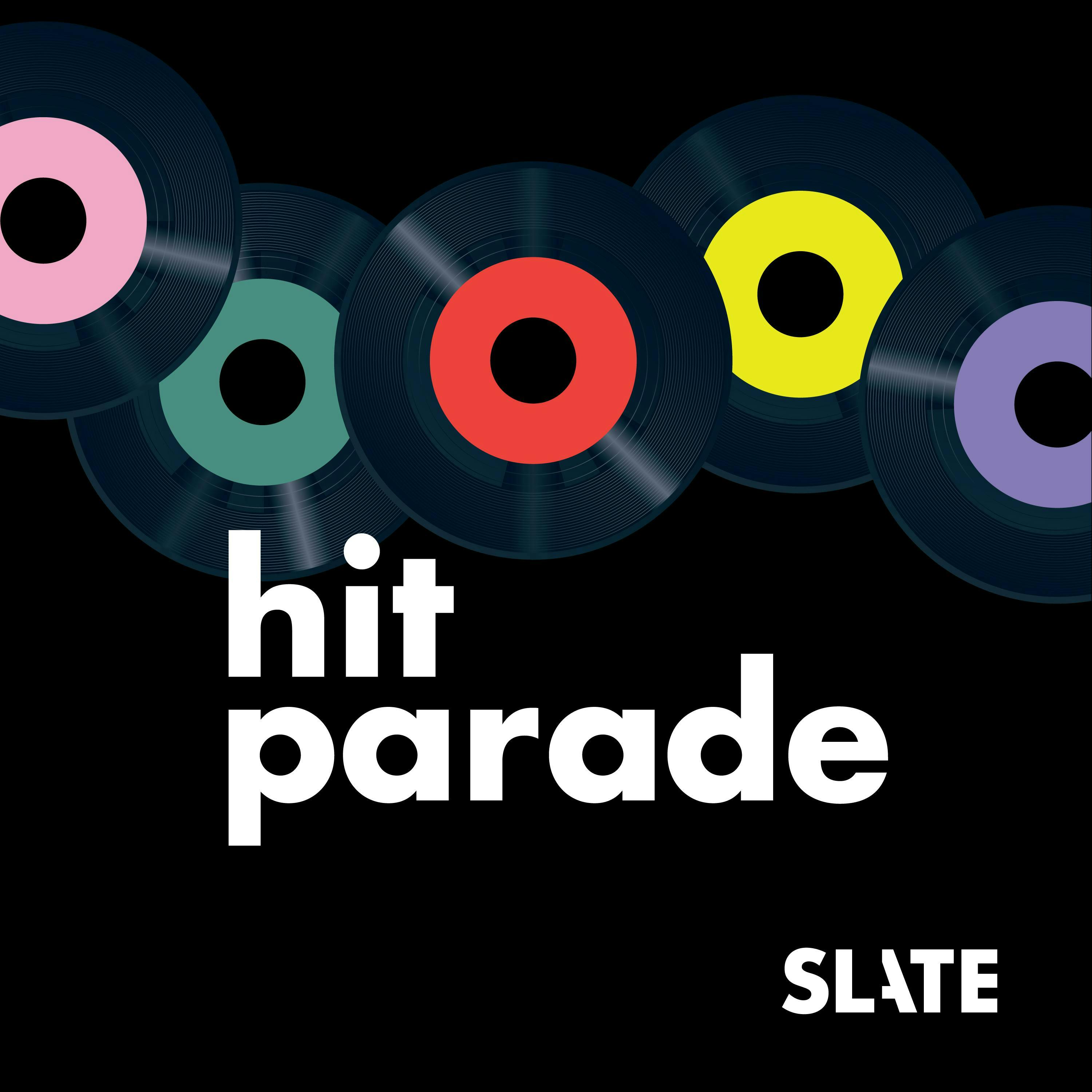
Hit Parade | Music History and Music Trivia
Slate PodcastsAudio
- Format:
- Podcast
- New episodes:
- Every two weeks
- Typical length:
- about 50 minutes
- Latest episode:
About this show
What makes a song a smash? Talent? Luck? Timing? All that—and more. Chris Molanphy, pop-chart analyst and author of Slate’s “Why Is This Song No. 1?” series, tells tales from a half-century of chart history. Through storytelling, trivia and song snippets, Chris dissects how that song you love—or hate—dominated the airwaves, made its way to the top of the charts and shaped your memories forever.
Get more of Hit Parade with Slate Plus! Join for monthly early-access episodes, bonus episodes of "The Bridge," and ad-free listening across all your favorite Slate podcasts. Subscribe directly from the our show page on Apple Podcasts or Spotify. Or visit slate.com/hitparadeplus to get access wherever you listen.
Hosted on Acast. See acast.com/privacy (https://acast.com/privacy) for more information.
Covers: pop music, chart history, music history, billboard charts, popular music trivia, Canadian music, dolly parton, hip hop, songwriting, celine dion
Show details and episodes come from the publisher's public feed at my.slate.com. Last updated . Names, artwork and text belong to their publishers.
Recently on this show
Summary of recent episodes, drawn from the publisher's feed.
Hit Parade is a podcast where pop-chart analyst Chris Molanphy uses storytelling and song clips to explain why songs became hits and how they shaped listeners' memories. Recent episodes cover Canadian artists on the Hot 100, Paul Simon's 1986 album Graceland, Dolly Parton's crossover to pop, and Jay-Z's Reasonable Doubt anniversary.
Cosmos
Similar in subject
- Mic The Snare
Both cover: chart history, pop music, music history - Billboard
Both cover: chart history, music history - PAST 10s: A Top 10 Time Machine - Music of the 70s, 80s and More
Both cover: billboard charts, music history
Similar shows





Episodes
Clearly Canadian Edition
· 54 min
For decades, America’s Hot 100 pop chart has been regularly invaded by Canadian artists like Paul Anka, the Guess Who, Bryan Adams, Céline Dion, Justin Bieber, and Drake. Yet in Canada, some of these Canucks’ biggest hits aren’t considered fully “Canadian.” Join Chris Molanphy for a look at how the country’s requirements for Canadian content, or CanCon, on radio, television, and other cultural outlets has influenced the music industry and entire careers on both sides of the border. From Kon Kan’s “I Beg Your Pardon” to Tate McRae’s recent “Housewife,” Chris explores how much credit, or blame, Canada’s radio rules deserve for what Americans hear on the pop charts. For more chart history for the Great White North, check out Hit Parade’s recent episode on Celine Dion (https://slate.com/podcasts/hit-parade/2026/08/celine-dions-voice-helped-define-the-90s-and-shaped-the-sound-of-the-decades-top-movie). Get more Hit Parade with Slate Plus! Join for bonus episodes of "The Bridge" and ad-free listening across all your favorite Slate podcasts. Subscribe directly from the Hit Parade show page on Apple Podcasts (https://podcasts.apple.com/us/podcast/hit-parade-music-history-and-music-trivia/id1291058235) or Spotify (https://open.spotify.com/show/4GqbdfOT9Je4nEp5BqnGit). Or, visit slate.com/hitparadeplus (https://slate.com/podcast-plus?utm_medium=link&utm_campaign=plus_pod&utm_content=Hit_Parade&utm_source=episode_summary) to get access wherever you listen. Need to set up your Slate Plus feed? If you subscribed through Slate.com, check out our FAQ (https://slate.com/podcastfaqs#plusbenefits) at slate.com/podcastfaqs for easy instructions. Members subscribed via Apple Podcasts get automatic access—no setup required. Hosted on Acast. See acast.com/privacy (https://acast.com/privacy) for more information.
Not rated yetGoing to Graceland Edition
· 50 min
Four decades ago, Paul Simon broke out of a middle-age slump with a collaborative project few saw coming. Join Chris Molanphy as he explores the musical brilliance, polarizing legacy—and of course, the chart history—of 1986’s Graceland. Captivated by a borrowed mixtape of South African music, Simon defied a UN cultural boycott and traveled to apartheid-era South Africa to collaborate and record with Ladysmith Black Mambazo and other musicians. The result was polarizing, critically beloved and, eventually, a chart smash. Graceland also set a new precedent for aging pop stars. For an even deeper dive on the controversies behind the album, check out Ashley Kahn’s new book Days of Miracle and Wonder: Paul Simon and the Trials and Triumphs of Graceland (https://bookshop.org/a/2181/9781668206751). And for more on the anti-apartheid movement in pop, listen to Hit Parade’s episode on the rise and fall of the charity megasingle (https://slate.com/culture/2017/07/hit-parade-the-charity-megasingle-edition.html). Get more Hit Parade with Slate Plus! Join for bonus episodes of "The Bridge" and ad-free listening across all your favorite Slate podcasts. Subscribe directly from the Hit Parade show page on Apple Podcasts (https://podcasts.apple.com/us/podcast/hit-parade-music-history-and-music-trivia/id1291058235) or Spotify (https://open.spotify.com/show/4GqbdfOT9Je4nEp5BqnGit). Or, visit slate.com/hitparadeplus (https://slate.com/podcast-plus?utm_medium=link&utm_campaign=plus_pod&utm_content=Hit_Parade&utm_source=episode_summary) to get access wherever you listen. Need to set up your Slate Plus feed? If you subscribed through Slate.com, check out our FAQ (https://slate.com/podcastfaqs#plusbenefits) at slate.com/podcastfaqs for easy instructions. Members subscribed via Apple Podcasts get automatic access—no setup required. Hosted on Acast. See acast.com/privacy (https://acast.com/privacy) for more information.
Not rated yetNear-Miss Hits: ‘80s Edition
· 43 min
The 1980s yielded a bumper crop of near-miss hits—songs that stalled out at No. 2, No. 11, or No. 41 during their original Billboard runs but were vindicated in the streaming era. The song that lent its title to a Molly Ringwald movie missed the Top 40—twice. Stevie Nicks missed the Top 10 with what is now her most beloved solo song. And Bruce Springsteen missed his only chance at a No. 1 song thanks to another ’80s icon. Today on Hit Parade: Chris Molanphy flashes back to the Reagan era to tally the greatest near-misses from Def Leppard, Huey Lewis, the Cars, Madonna, the Cure, Paula Abdul, Eddie Murphy, Prince and others. For more about near-miss hits, listen to Hit Parade’s episode on the near misses of the 1970s (https://slate.com/podcasts/hit-parade/2026/05/near-misses-hit-songs-that-stalled-on-the-pop-charts). Pssst! Do you love Hit Parade? Support what we do and help us absolutely crush it during Slate’s podcast pledge drive! For a limited time, you can join Slate Plus for 50 percent off and get bonus episodes of "The Bridge," ad-free listening across all your favorite Slate podcasts, and unlimited reading on Slate.com. Visit slate.com/hitparadeplus (https://slate.com/podcast-plus?utm_medium=link&utm_campaign=plus_pod&utm_content=Hit_Parade&utm_source=episode_summary) and use the promo code HIT50 to receive the discount AND get access wherever you listen. Need to set up your Slate Plus feed? If you subscribed through Slate.com, check out our FAQ (https://slate.com/podcastfaqs#plusbenefits) at slate.com/podcastfaqs for easy instructions. Members subscribed via Apple Podcasts get automatic access—no setup required. Hosted on Acast. See acast.com/privacy (https://acast.com/privacy) for more information.
Not rated yetChoosin’ Dolly Edition
· 49 min
In the 1970s, Dolly Parton parlayed her Nashville success into megawatt pop-culture icon status—yet many of her familiar hits of the era barely scratched the Top 40. Parton finally crossed over at the turn of the ’80s by courting pop fans directly. Nearly five decades later, country music is ubiquitous on the pop charts, with Ella Langley’s “Choosin’ Texas” recently setting a record for most weeks at No. 1. On this installment of Hit Parade, Chris Molanphy examines the chart rules that limited Parton’s pop-chart potential, the trail she blazed for Langley and other country women, and why the Nashville sound is much more than just an island in the (digital) stream. For more about country to pop crossover stardom listen to Hit Parade’s episode on John Denver and Olivia Newton John (https://slate.com/podcasts/hit-parade/2026/02/john-denver-and-olivia-newton-johns-crossover-from-country-to-pop) and read Chris’s Slate column about Ella Langley’s chart (https://slate.com/culture/2026/08/ella-langley-taylor-swift-country-music-morgan-wallen-billboard-songs.html)dominance. Pssst! Do you love Hit Parade? Support what we do and help us absolutely crush it during Slate’s podcast pledge drive! For a limited time, you can join Slate Plus for 50 percent off.and get bonus episodes of "The Bridge," ad-free listening across all your favorite Slate podcasts, and unlimited reading on Slate.com. Visit slate.com/hitparadeplus (https://slate.com/podcast-plus?utm_medium=link&utm_campaign=plus_pod&utm_content=Hit_Parade&utm_source=episode_summary) and use the promo code HIT50 to receive the discount AND get access wherever you listen. Need to set up your Slate Plus feed? If you subscribed through Slate.com, check out our FAQ (https://slate.com/podcastfaqs#plusbenefits) at slate.com/podcastfaqs for easy instructions. Members subscribed via Apple Podcasts get automatic access—no setup required. Hosted on Acast. See acast.com/privacy (https://acast.com/privacy) for more information.
Not rated yetDecoder Ring: Why Do Actors Act Like They Can Sing?
· 58 min
When an actor opens their mouth to sing in a movie, chances are high that the voice you hear will be their own. Even in music biopics, movie stars without much singing experience regularly go to great lengths to impersonate the most beloved vocalists of our time. Why not simply play Johnny Cash or Bruce Springsteen’s actual recordings, the reasons why we care about them in the first place? When the world is full of beautiful singing voices, why force Pierce Brosnan to bray his way through Mamma Mia? What you hear when an actor unhinges their jaw is a matter that Hollywood has been negotiating since the dawn of sound. So in this episode, we’ll learn about the “ghost singers” of classic Hollywood musicals, find out why they went extinct, and why today’s music biopics so often fudge the music. Then we leave Hollywood for Bollywood, where the rise of the celebrity “playback singer” shows what can happen when good singing is the highest priority. In this episode, you’ll hear from Slate’s pop music critic Jack Hamilton (https://slate.com/author/jack-hamilton); musicologist Dominic Broomfield-McHugh, editor of The Oxford Handbook of the Hollywood Musical (https://global.oup.com/academic/product/the-oxford-handbook-of-the-hollywood-musical-9780197503423?cc=us&lang=en&); Stephen Cole (https://www.stephencolewriter.org/), co-author of a memoir by the ghost singer Marni Nixon; Isaac Butler (https://slate.com/author/isaac-butler), longtime Slate contributor and scholar of American acting; and Nasreen Munni Kabir, who has written several books on Hindi cinema and curates Indian films for the UK’s Channel 4. This episode was written and produced by Max Freedman. It was edited by Willa Paskin and Evan Chung, our supervising producer. Decoder Ring is also produced by Katie Shepherd. Merritt Jacob is Senior Technical Director. Need to set up your Slate Plus feed? If you subscribed through Slate.com, check out our FAQ (https://slate.com/podcastfaqs#plusbenefits) at slate.com/podcastfaqs for easy instructions. Members subscribed via Apple Podcasts get automatic access—no setup required. Hosted on Acast. See acast.com/privacy (https://acast.com/privacy) for more information.
Not rated yetThe Harrisong Edition
· 38 min
In the 1960s, the Beatles were defined by the success of the Lennon-McCartney songwriting partnership. But in the digital era, we discovered that the Fab Four’s most popular song wasn’t written by John or Paul. In fact, it had never been a chart hit—it wasn’t even released as a single. Today on Hit Parade: Chris Molanphy shines a light on “Here Comes the Sun,” the George Harrison deep cut from Abbey Road that, in the streaming era, has emerged as the most enduring—and most popular—Beatles song of all time. For more about “stealth hits,” listen to Hit Parade’s episode on B-sides that improbably become classics (https://www.slate.com/articles/podcasts/hit_parade/2018/01/how_does_a_b_side_become_a_chart_topping_hit.html) and read Chris’s Slate column about the surprising dominance of this holiday song. (https://slate.com/culture/2023/12/brenda-lee-rockin-around-christmas-tree-billboard-100.html) Get more Hit Parade with Slate Plus! Join for bonus episodes of "The Bridge" and ad-free listening across all your favorite Slate podcasts. Subscribe directly from the Hit Parade show page on Apple Podcasts (https://podcasts.apple.com/us/podcast/hit-parade-music-history-and-music-trivia/id1291058235) or Spotify (https://open.spotify.com/show/4GqbdfOT9Je4nEp5BqnGit). Or, visit slate.com/hitparadeplus (https://slate.com/podcast-plus?utm_medium=link&utm_campaign=plus_pod&utm_content=Hit_Parade&utm_source=episode_summary) to get access wherever you listen. Podcast production by Joel Meyer. Need to set up your Slate Plus feed? If you subscribed through Slate.com, check out our FAQ (https://slate.com/podcastfaqs#plusbenefits) at slate.com/podcastfaqs for easy instructions. Members subscribed via Apple Podcasts get automatic access—no setup required. Hosted on Acast. See acast.com/privacy (https://acast.com/privacy) for more information.
Not rated yetHer Heart Will Go On Edition
· 44 min
Céline Dion is set to emerge from her career dormancy into a sold-out Paris residency—a triumph over a rare neurological illness that, until recently, prevented her from singing. Her silence seemed unimaginable. Only a few decades ago, a precocious Dion evolved from a big-lunged teen Francophone chanteuse to the chest-beating frontwoman of a string of smash English-language hits—including several titanic movie themes. The sheer physicality of her athletic voice captivated audiences in the ’90s, and filled your mom’s car. Join Chris Molanphy as he unlocks the heart of Céline Dion's chart history—how she built pop’s most soaring career from working-class Quebec to the stage at Eurovision…from the power of love to the prow of a very large ship. Podcast production by Kevin Bendis. Need to set up your Slate Plus feed? If you subscribed through Slate.com, check out our FAQ (https://slate.com/podcastfaqs#plusbenefits) at slate.com/podcastfaqs for easy instructions. Members subscribed via Apple Podcasts get automatic access—no setup required. Hosted on Acast. See acast.com/privacy (https://acast.com/privacy) for more information.
Not rated yetThe Run This Town Edition
· 39 min
Jay-Z recently celebrated the 30th anniversary of his debut Reasonable Doubt with a three-night residency at Yankee Stadium featuring superstar guests like Pharrell, Nas, Alicia Keys and, of course, Beyoncé. The marathon event was a tribute to one of rap’s most influential and successful icons—but it was also a reminder that many of Jay-Z's biggest hits were collaborations that showcased the talents of other—often women—artists. Join Chris Molanphy as he traces the decades-long history of Hova’s hitmaking, and how he deftly sought the assistance of female collaborators to push his biggest songs to No. 1. Podcast production by Kevin Bendis. Need to set up your Slate Plus feed? If you subscribed through Slate.com, check out our FAQ (https://slate.com/podcastfaqs#plusbenefits) at slate.com/podcastfaqs for easy instructions. Members subscribed via Apple Podcasts get automatic access—no setup required. Hosted on Acast. See acast.com/privacy (https://acast.com/privacy) for more information.
Not rated yetThe Chart Side of the Moon Edition
· 57 min
Pink Floyd’s The Dark Side of the Moon is one of the most played, purchased and praised albums of all time. Yet its enduring legacy might be its supernatural chart longevity. Officially, the 1973 long-player has spent nearly a thousand weeks on the Billboard album chart. But that number probably understates its past performance, not to mention its future potential, with new generations of teenagers discovering Dark Side every year Join Chris Molanphy as he explores Pink Floyd's deathless totem and traces the band’s evolution from ’60s psychedelic curios to dorm-room poster icons. Will Dark Side be able to hold onto the all-time Billboard record into the 2030s? Podcast production by Kevin Bendis. Get more Hit Parade with Slate Plus! Join for bonus episodes of "The Bridge" and ad-free listening across all your favorite Slate podcasts. Visit slate.com/hitparadeplus (https://slate.com/podcast-plus?utm_medium=link&utm_campaign=plus_pod&utm_content=Hit_Parade&utm_source=episode_page) to get access wherever you listen. Need to set up your Slate Plus feed? If you subscribed through Slate.com, check out our FAQ (https://slate.com/podcastfaqs#plusbenefits) at slate.com/podcastfaqs for easy instructions. Members subscribed via Apple Podcasts get automatic access—no setup required. Hosted on Acast. See acast.com/privacy (https://acast.com/privacy) for more information.
Not rated yetDon’t Fear the Repeat Edition
· 52 min
We’re all familiar with the concept of a one-hit wonder, but what about artists who hit it big a second time—and never again? This week on Hit Parade, Chris Molanphy lays out the ground rules for one of pop's most misunderstood chart distinctions and sorts through the roster of this ultra-exclusive club, which counts Gloria Gaynor, Hozier, the Clash, and Dead or Alive among its members. Then, Chris counts down his favorite fluky examples of two-hit wonders. Podcast production by Kevin Bendis. Get more Hit Parade with Slate Plus! Join for bonus episodes of "The Bridge" and ad-free listening across all your favorite Slate podcasts. Subscribe directly from the Hit Parade show page on Apple Podcasts (https://podcasts.apple.com/us/podcast/hit-parade-music-history-and-music-trivia/id1291058235) or Spotify (https://open.spotify.com/show/4GqbdfOT9Je4nEp5BqnGit). Or, visit slate.com/hitparadeplus (https://slate.com/podcast-plus?utm_medium=link&utm_campaign=plus_pod&utm_content=Hit_Parade&utm_source=episode_summary) to get access wherever you listen. Need to set up your Slate Plus feed? If you subscribed through Slate.com, check out our FAQ (https://slate.com/podcastfaqs#plusbenefits) at slate.com/podcastfaqs for easy instructions. Members subscribed via Apple Podcasts get automatic access—no setup required. Hosted on Acast. See acast.com/privacy (https://acast.com/privacy) for more information.
Not rated yetMore Than a Feeling Edition
· 50 min
If you were watching cable TV around midday at the turn of the millennium, there’s a good chance you saw a commercial for a compilation CD called Monster Ballads (https://www.youtube.com/watch?v=qbuXyjftq1U). It promised you more than two hours of musical cheese—some of the most over-the-top, cornball, leather-clad romantic jams ever to grace the charts, from “Heaven” to “High Enough,” “Carrie” to “Amanda.” There’s another, more common term for these rockin’ romancers: power ballads. And while this TV ad suggested the power ballad was perfected in the ’80s—preferably sung by a dude in spandex, with long, flowing locks—its roots go back decades earlier. Acts as seemingly mild as Roy Orbison, Harry Nilsson and even the Carpenters were pivotal to the way these mega-devotionals evolved. R&B divas would turn power vocals into an athletic sport, alongside hair-metal howlers. Eventually, power ballads colonized the charts in the ’80s, the ’90s and beyond. Maybe they’re cheesy, cringeworthy and melodramatic—but power ballads have proven remarkably enduring, with even 21st-century Zoomer stars like Olivia Rodrigo offering their own variations. So, join Chris Molanphy as he brings on the heartbreak, finds thorns on every rose, explores feelings we can’t fight anymore and celebrates pop fans’ greatest love of all: the power ballad. Podcast production by Kevin Bendis Need to set up your Slate Plus feed? If you subscribed through Slate.com, check out our FAQ (https://slate.com/podcastfaqs#plusbenefits) at slate.com/podcastfaqs for easy instructions. Members subscribed via Apple Podcasts get automatic access—no setup required. Hosted on Acast. See acast.com/privacy (https://acast.com/privacy) for more information.
Not rated yetNear-Miss Hits: ’70s Edition
· 35 min
In 1979, Sister Sledge changed the sound of wedding receptions forever with “We Are Family.” Believe it or not, the Chic-penned banger never made it to No. 1. Steely Dan helped invent Yacht Rock with 1977’s jazzy bop “Peg.” (They would have loved it better if it had cracked the Top 10.) And in 1972, Elton John told a timeless tale of a blue-jean baby, “Tiny Dancer.” Casey Kasem never counted it down. Today on Hit Parade: Chris Molanphy celebrates “near misses”—now-ubiquitous hits that missed the mark on the pop charts, stalling out at No. 2, No. 11, or No. 41. In this episode, Chris zooms in on near-misses from the 1970s, including songs from Paul McCartney, the Spinners, Jackson Browne, Cat Stevens, Diana Ross, and Michael Jackson. Get more Hit Parade with Slate Plus! Join for bonus episodes of "The Bridge" and ad-free listening across all your favorite Slate podcasts. Subscribe directly from the Hit Parade show page on Apple Podcasts (https://podcasts.apple.com/us/podcast/hit-parade-music-history-and-music-trivia/id1291058235) or Spotify (https://open.spotify.com/show/4GqbdfOT9Je4nEp5BqnGit). Or, visit slate.com/hitparadeplus (https://slate.com/podcast-plus?utm_medium=link&utm_campaign=plus_pod&utm_content=Hit_Parade&utm_source=episode_summary) to get access wherever you listen. Need to set up your Slate Plus feed? If you subscribed through Slate.com, check out our FAQ (https://slate.com/podcastfaqs#plusbenefits) at slate.com/podcastfaqs for easy instructions. Members subscribed via Apple Podcasts get automatic access—no setup required. Hosted on Acast. See acast.com/privacy (https://acast.com/privacy) for more information.
Not rated yetDancing With Himself Edition
· 44 min
The opening riff of “White Wedding” is instantly recognizable—a skittering, syncopated guitar line quickly swallowed by pummeling drums. But the song itself is a bit of an enigma. Is it rock? Pop? New wave? Rockabilly punk? Like much of Billy Idol’s career, the song exists somewhere in between. Idol was a shape-shifter, blurring genre lines in pursuit of bigger hooks, bigger audiences and, eventually, pop stardom. Raised near London and running with the Sex Pistols’ inner circle, Idol arrived with genuine punk bona fides. But with the rise of MTV and the explosion of new wave, he refashioned himself as the bleach-blond, leather-clad rock crooner who sneered his way to the top of the charts. Join Chris Molanphy as he traces the rise, reinvention and Rock Hall canonization of an original MTV icon. Get more Hit Parade with Slate Plus! Join for bonus episodes of "The Bridge" and ad-free listening across all your favorite Slate podcasts. Subscribe directly from the Hit Parade show page on Apple Podcasts (https://podcasts.apple.com/us/podcast/hit-parade-music-history-and-music-trivia/id1291058235) or Spotify (https://open.spotify.com/show/4GqbdfOT9Je4nEp5BqnGit). Or, visit slate.com/hitparadeplus (https://slate.com/podcast-plus?utm_medium=link&utm_campaign=plus_pod&utm_content=Hit_Parade&utm_source=episode_summary) to get access wherever you listen. Need to set up your Slate Plus feed? If you subscribed through Slate.com, check out our FAQ (https://slate.com/podcastfaqs#plusbenefits) at slate.com/podcastfaqs for easy instructions. Members subscribed via Apple Podcasts get automatic access—no setup required. Hosted on Acast. See acast.com/privacy (https://acast.com/privacy) for more information.
Not rated yetIntroducing History Daily: "The Launch of MTV"
· 17 min
Hit Parade is on a brief break, but if you need a daily dose of fascinating stories, check out History Daily. Host Lindsay Graham (the history guy! not the senator!) explores what happened "on this day in history," with a broad mix of politics, sports, technology, medicine, and much more. Chris recommends this episode about the genesis of MTV—including the forgotten role played by a former member of the Monkees. Find History Daily's huge archive of quick-hit history at: https://www.historydaily.com/ Need to set up your Slate Plus feed? If you subscribed through Slate.com, check out our FAQ (https://slate.com/podcastfaqs#plusbenefits) at slate.com/podcastfaqs for easy instructions. Members subscribed via Apple Podcasts get automatic access—no setup required. Hosted on Acast. See acast.com/privacy (https://acast.com/privacy) for more information.
Not rated yetThe Queen of Disco Edition Part 2 (Encore)
· 41 min
Donna Summer was a hit-maker for two decades and a dance floor deity for more than three. Her collaborations with Giorgio Moroder and Pete Bellotte were formative in dance, electronic, and rock music, influencing everyone from David Bowie and Blondie to Madonna and Moby. But the rock establishment was stinting in its appreciation—whether at Comiskey Park in Chicago in 1979 or the Rock and Roll Hall of Fame in the 2000s. In Part 2 of this encore episode from 2017, Chris Molanphy examines how Summer became the queen of disco … and then transcended that role altogether. Get more Hit Parade with Slate Plus! Join for monthly early-access episodes, bonus episodes of "The Bridge," and ad-free listening across all your favorite Slate podcasts. Subscribe directly from the Hit Parade show page on Apple Podcasts (https://podcasts.apple.com/us/podcast/hit-parade-music-history-and-music-trivia/id1291058235) or Spotify (https://open.spotify.com/show/4GqbdfOT9Je4nEp5BqnGit). Or, visit slate.com/hitparadeplus (https://slate.com/podcast-plus?utm_medium=link&utm_campaign=plus_pod&utm_content=Hit_Parade&utm_source=episode_summary) to get access wherever you listen. Need to set up your Slate Plus feed? If you subscribed through Slate.com, check out our FAQ (https://slate.com/podcastfaqs#plusbenefits) at slate.com/podcastfaqs for easy instructions. Members subscribed via Apple Podcasts get automatic access—no setup required. Hosted on Acast. See acast.com/privacy (https://acast.com/privacy) for more information.
Not rated yetThe Queen of Disco Edition Part 1 (Encore)
· 31 min
Donna Summer was a hit-maker for two decades and a dance floor deity for more than three. Her collaborations with Giorgio Moroder and Pete Bellotte were formative in dance, electronic, and rock music, influencing everyone from David Bowie and Blondie to Madonna and Moby. But the rock establishment was stinting in its appreciation—whether at Comiskey Park in Chicago in 1979 or the Rock and Roll Hall of Fame in the 2000s. In this encore episode from 2017, Chris Molanphy examines how Summer became the queen of disco … and then transcended that role altogether. Get more Hit Parade with Slate Plus! Join for monthly early-access episodes, bonus episodes of "The Bridge," and ad-free listening across all your favorite Slate podcasts. Subscribe directly from the Hit Parade show page on Apple Podcasts (https://podcasts.apple.com/us/podcast/hit-parade-music-history-and-music-trivia/id1291058235) or Spotify (https://open.spotify.com/show/4GqbdfOT9Je4nEp5BqnGit). Or, visit slate.com/hitparadeplus (https://slate.com/podcast-plus?utm_medium=link&utm_campaign=plus_pod&utm_content=Hit_Parade&utm_source=episode_summary) to get access wherever you listen. Need to set up your Slate Plus feed? If you subscribed through Slate.com, check out our FAQ (https://slate.com/podcastfaqs#plusbenefits) at slate.com/podcastfaqs for easy instructions. Members subscribed via Apple Podcasts get automatic access—no setup required. Hosted on Acast. See acast.com/privacy (https://acast.com/privacy) for more information.
Not rated yetFeet on the Ground, Reaching for the Stars Edition Part 2
· 52 min
The 100th episode of Hit Parade has put host Chris Molanphy in a reflective mood. So in Part 2, he unfurls the story of the late, great American Top 40 host Casey Kasem—a perennial inspiration for this podcast and the chart king that Chris calls “the original poptimist.” Enjoy this long-distance dedication, as Chris pays tribute to a radio hero with a preternatural understanding of the power of pop to unify. Get more Hit Parade with Slate Plus! Join for monthly early-access episodes, bonus episodes of "The Bridge," and ad-free listening across all your favorite Slate podcasts. Subscribe directly from the Hit Parade show page on Apple Podcasts (https://podcasts.apple.com/us/podcast/hit-parade-music-history-and-music-trivia/id1291058235) or Spotify (https://open.spotify.com/show/4GqbdfOT9Je4nEp5BqnGit). Or, visit slate.com/hitparadeplus (https://slate.com/podcast-plus?utm_medium=link&utm_campaign=plus_pod&utm_content=Hit_Parade&utm_source=episode_summary) to get access wherever you listen. This episode will be available for free on March 27, 2026. Need to set up your Slate Plus feed? If you subscribed through Slate.com, check out our FAQ (https://slate.com/podcastfaqs#plusbenefits) at slate.com/podcastfaqs for easy instructions. Members subscribed via Apple Podcasts get automatic access—no setup required. Hosted on Acast. See acast.com/privacy (https://acast.com/privacy) for more information.
Not rated yetFeet on the Ground, Reaching for the Stars Edition Part 1
· 56 min
To mark Hit Parade’s 100th episode, host Chris Molanphy is doing something he’s never done: He’s going to talk about himself—and just how nerdy you have to be to host a show like Hit Parade. Chris reflects on the origins and depth of his chart fandom, and ponders existential questions like: What makes a person want to track these rankings? Why do we care about what, or who, is No. 1? Join Chris for this exploration of how the charts have informed, inspired and infiltrated his life—and yours, too. Coming up in Part 2: Chris pays tribute to one of his heroes and a huge influence on Hit Parade: the chart king who counted down the hits every week ... from coast to coast. Available on March 27, but Slate Plus members can listen right now! Not a Slate Plus member? Get early access, bonus episodes of “The Bridge,” and ad-free listening across all your favorite Slate podcasts. Subscribe directly from the Hit Parade show page on Apple Podcasts (https://podcasts.apple.com/us/podcast/hit-parade-music-history-and-music-trivia/id1291058235) or Spotify (https://open.spotify.com/show/4GqbdfOT9Je4nEp5BqnGit). Or, visit slate.com/hitparadeplus (https://slate.com/podcast-plus?utm_medium=link&utm_campaign=plus_pod&utm_content=Hit_Parade&utm_source=episode_summary) to get access wherever you listen. Podcast production by Kevin Bendis. Need to set up your Slate Plus feed? If you subscribed through Slate.com, check out our FAQ (https://slate.com/podcastfaqs#plusbenefits) at slate.com/podcastfaqs for easy instructions. Members subscribed via Apple Podcasts get automatic access—no setup required. Hosted on Acast. See acast.com/privacy (https://acast.com/privacy) for more information.
Not rated yetCountry Roads and Summer Nights Edition Part 2
· 55 min
These days, country and pop acts regularly invade each other’s territory. But in Nashville during the 1970s, “crossover” was a dirty word. Then came two rising stars who offered up a new hybrid of Americana-style pop. John Denver infused his folk balladry with homespun lyrics about country roads and wide-open skies. Olivia Newton-John sang over twangy melodies that belied her British-Australian roots. Both faced backlash—especially when they started topping the country and pop charts simultaneously and winning prizes that used to go to Nashville legends. Eventually, both artists outgrew country music. Denver became a ubiquitous entertainer and beloved Muppet wingman. Newton-John dazzled in the film Grease, then reinvented herself as a leather-clad siren unafraid to get physical. Join Chris Molanphy as he traces the parallel rise of two country-pop titans from the Rocky Mountains to Xanadu. Get more Hit Parade with Slate Plus! Join for monthly early-access episodes, bonus episodes of "The Bridge," and ad-free listening across all your favorite Slate podcasts. Visit slate.com/hitparadeplus (https://slate.com/podcast-plus?utm_medium=link&utm_campaign=plus_pod&utm_content=Hit_Parade&utm_source=episode_page) to get access wherever you listen. Need to set up your Slate Plus feed? If you subscribed through Slate.com, check out our FAQ (https://slate.com/podcastfaqs#plusbenefits) at slate.com/podcastfaqs for easy instructions. Members subscribed via Apple Podcasts get automatic access—no setup required. Hosted on Acast. See acast.com/privacy (https://acast.com/privacy) for more information.
Not rated yetCountry Roads and Summer Nights Edition Part 1
· 1 hr 4 min
These days, country and pop acts regularly invade each other’s territory. But in Nashville during the 1970s, “crossover” was a dirty word. Then came two rising stars who offered up a new hybrid of Americana-style pop. John Denver infused his folk balladry with homespun lyrics about country roads and wide-open skies. Olivia Newton-John sang over twangy melodies that belied her British-Australian roots. Both faced backlash—especially when they started topping the country and pop charts simultaneously and winning prizes that used to go to Nashville legends. Eventually, both artists outgrew country music. Denver became a ubiquitous entertainer and beloved Muppet wingman. Newton-John dazzled in the film Grease, then reinvented herself as a leather-clad siren unafraid to get physical. Join Chris Molanphy as he traces the parallel rise of two country-pop titans from the Rocky Mountains to Xanadu. Get more Hit Parade with Slate Plus! Join for monthly early-access episodes, bonus episodes of "The Bridge," and ad-free listening across all your favorite Slate podcasts. Subscribe directly from the Hit Parade show page on Apple Podcasts (https://podcasts.apple.com/us/podcast/hit-parade-music-history-and-music-trivia/id1291058235) or Spotify (https://open.spotify.com/show/4GqbdfOT9Je4nEp5BqnGit). Or, visit slate.com/hitparadeplus (https://slate.com/podcast-plus?utm_medium=link&utm_campaign=plus_pod&utm_content=Hit_Parade&utm_source=episode_summary) to get access wherever you listen. Need to set up your Slate Plus feed? If you subscribed through Slate.com, check out our FAQ (https://slate.com/podcastfaqs#plusbenefits) at slate.com/podcastfaqs for easy instructions. Members subscribed via Apple Podcasts get automatic access—no setup required. Hosted on Acast. See acast.com/privacy (https://acast.com/privacy) for more information.
Not rated yet