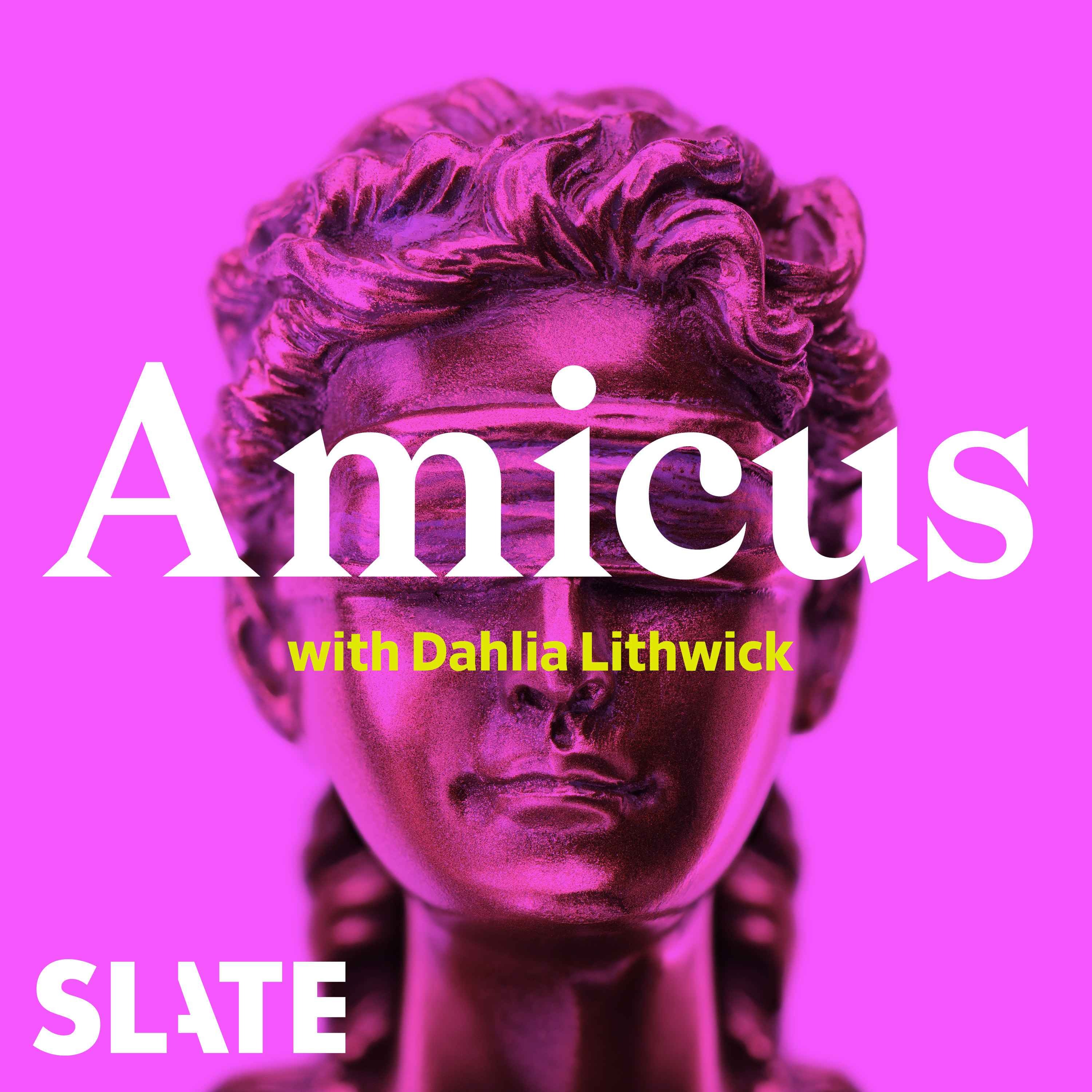
Amicus With Dahlia Lithwick | Law, justice, and the courts
Slate PodcastsAudio
- Format:
- Podcast
- New episodes:
- Weekly
- Typical length:
- about 50 minutes
- Latest episode:
About this show
A show about the law and the nine Supreme Court justices who interpret it for the rest of America.
Get more Amicus with Slate Plus. Join to unlock weekly bonus episodes with exclusive legal analysis—plus ad-free listening across all your favorite Slate podcasts. Subscribe directly from the Amicus show page on Apple Podcasts and Spotify. Or visit slate.com/amicusplus to get access wherever you listen.
Hosted on Acast. See acast.com/privacy (https://acast.com/privacy) for more information.
Covers: law, US supreme court, US politics, constitutional law, election law, civil liberties, presidential power, criminal justice
Show details and episodes come from the publisher's public feed at my.slate.com. Last updated . Names, artwork and text belong to their publishers.
Recently on this show
Summary of recent episodes, drawn from the publisher's feed.
Amicus, hosted by Dahlia Lithwick, looks at the law and the Supreme Court justices who shape how it is read across the country. Recent episodes cover court accountability, the Roberts court, impeachment questions, and Justice Department moves ahead of the midterm elections.
Cosmos
Similar in subject
- Strict Scrutiny
Both cover: us supreme court, election law, civil liberties - Advisory Opinions
Both cover: election law, law, constitutional law - The Illegal News with Sarah Longwell
Both cover: us supreme court, election law, law
Similar shows





Explore more
Episodes
Move Fast and Fix Things
· 51 min
Rebuilding the government after Trump and DOGE will take more than rehiring the people they fired last year. The Supreme Court enabled the administration’s assault on services and protections millions of Americans rely upon, and it could still block the rebuilding, too. On this week’s Amicus, Dahlia Lithwick talks with Cornell law professor and former Biden administration official K. Sabeel Rahman about his new book, Remaking the State: A New Blueprint for American Democracy (https://www.amazon.com/dp/1967190208?tag=slatmaga-20&th=1), about why restoring the old machinery of the administrative state won’t be enough. Rahman connects DOGE’s slash-and-burn campaign to a much longer legal project. He explains why doctrines that constrain regulation remain a threat to future policymaking, even as the high court supercharges Trump’s executive power grabs. But this is not just a damage assessment. From stronger consumer protections to easier access to public benefits and a meaningful democratic voice in policymaking, Rahman lays out the promise of a better, future government built around protection, provision, and participation—and explains why accountability and delivering for ordinary people are inseparable. – This episode was supported by Incogni: If you want to get your own dedicated privacy specialist and an emergency threat response team who can protect the privacy of you and your family, go to https://incogni.com/amicus. – Want more Amicus? Join Slate Plus to unlock weekly bonus episodes with exclusive legal analysis. Plus, you’ll access ad-free listening across all your favorite Slate podcasts. You can subscribe directly from the Amicus show page on Apple Podcasts (https://podcasts.apple.com/us/podcast/amicus-with-dahlia-lithwick-law-justice-and-the-courts/id928790786) and Spotify (https://open.spotify.com/show/7DpL32jgjwBTah8o9HQkBl). Or, visit slate.com/amicusplus (https://slate.com/podcast-plus?utm_medium=link&utm_campaign=plus_pod&utm_content=Amicus&utm_source=show_summary) to get access wherever you listen. Need to set up your Slate Plus feed? If you subscribed through Slate.com, check out our FAQ (https://slate.com/podcastfaqs#plusbenefits) at slate.com/podcastfaqs for easy instructions. Members subscribed via Apple Podcasts get automatic access—no setup required. Hosted on Acast. See acast.com/privacy (https://acast.com/privacy) for more information.
Not rated yetSCOTUS Is Ready to Undercut Oversight
· 50 min
Yes, Democrats won Congress, but they haven’t defeated the Accountability Death Star that is the Roberts court. This week on Amicus, guest host and Slate executive editor Susan Matthews is joined by Court Accountability (https://www.courtaccountability.org/)’s Alex Aronson to discuss the next phase of the fight—and why a few reasonable-looking Supreme Court decisions shouldn’t lull anyone into thinking the justices have changed their stripes. Aronson expects the court to work on rehabilitating its reputation after the midterms, all the while frustrating congressional oversight. They discuss what separates an investigation from a sternly worded letter, why Leonard Leo’s network remains a formidable foe, and how Democrats can avoid squandering their mandate while waiting for someone to honor a subpoena. Plus: lame-duck judicial confirmations, the Alito-and-Thomas retirement guessing game, and why court reform is vital, but definitely not a silver bullet for rescuing democracy. Alex Aronson’s piece on what must come next: https://www.contrariannews.org/p/the-roberts-court-is-next Alex mentioned the following episodes from the Amicus archive: Kim Lane Scheppele on legal autocracy: https://slate.com/podcasts/amicus/2026/01/scotus-and-project-2025-ushered-in-magas-lawlessness Niko Bowie and Daphna Renan on ending judicial supremacy: https://slate.com/podcasts/amicus/2026/07/supreme-court-term-recap-birthright-citizenship-voting-rights https://slate.com/podcasts/amicus/2026/10/stacey-abrams-ilyse-hogue-and-daphna-renan-on-reclaiming-the-constitution-from-scotus Want more Amicus? Join Slate Plus to unlock weekly bonus episodes with exclusive legal analysis. On this week’s bonus episode of Amicus Plus, Jay Willis and Madiba Dennie examine Supreme Court oral arguments this week about a federal prisoner’s fight to sue over alleged abuse—and the consequences of letting federal agents operate with impunity. The justices keep saying Congress can fix it. Could that invitation finally come back to haunt them? Slate Plus members also get access ad-free listening across all your favorite Slate podcasts. You can subscribe directly from the Amicus show page on Apple Podcasts (https://podcasts.apple.com/us/podcast/amicus-with-dahlia-lithwick-law-justice-and-the-courts/id928790786) and Spotify (https://open.spotify.com/show/7DpL32jgjwBTah8o9HQkBl). Or, visit slate.com/amicusplus (https://slate.com/podcast-plus?utm_medium=link&utm_campaign=plus_pod&utm_content=Amicus&utm_source=show_summary) to get access wherever you listen. Need to set up your Slate Plus feed? If you subscribed through Slate.com, check out our FAQ (https://slate.com/podcastfaqs#plusbenefits) at slate.com/podcastfaqs for easy instructions. Members subscribed via Apple Podcasts get automatic access—no setup required. Hosted on Acast. See acast.com/privacy (https://acast.com/privacy) for more information.
Not rated yetPardon-Proof Accountability
· 48 min
In the wake of this week’s sweeping midterm rebuke of Donald Trump, Protect Democracy co-founder Ian Bassin (https://protectdemocracy.org/people/ian-bassin/) joins Dahlia Lithwick to discuss how voters pushed back against authoritarianism—and how the country can turn that victory into lasting change. Bassin argues that congressional investigators must do more than expose corruption: They should preserve the evidence a future attorney general would need to recoup taxpayers’ money. As he explains, Trump’s pardons can’t shield ill-gotten gains. Later, the conversation turns to the Supreme Court’s response to election interference, the case for term limits for justices, and why repairing the Justice Department cannot mean turning a blind eye to abuses of power. Drawing on other countries’ struggles with authoritarianism, Dahlia and Ian consider whether this moment will usher in a revival of “small-d” democracy—and why the answer still depends on what the people do next. Want more Amicus? Join Slate Plus to unlock weekly bonus episodes with exclusive legal analysis. Plus, you’ll access ad-free listening across all your favorite Slate podcasts. You can subscribe directly from the Amicus show page on Apple Podcasts (https://podcasts.apple.com/us/podcast/amicus-with-dahlia-lithwick-law-justice-and-the-courts/id928790786) and Spotify (https://open.spotify.com/show/7DpL32jgjwBTah8o9HQkBl). Or, visit slate.com/amicusplus (https://slate.com/podcast-plus?utm_medium=link&utm_campaign=plus_pod&utm_content=Amicus&utm_source=show_summary) to get access wherever you listen. Need to set up your Slate Plus feed? If you subscribed through Slate.com, check out our FAQ (https://slate.com/podcastfaqs#plusbenefits) at slate.com/podcastfaqs for easy instructions. Members subscribed via Apple Podcasts get automatic access—no setup required. Hosted on Acast. See acast.com/privacy (https://acast.com/privacy) for more information.
Not rated yetDOJ’s Groundwork for Midterm Mayhem
· 47 min
The Trump administration has sued to potentially block certification of a Senate race in Alaska, threatened California election officials with jail time, and challenged the voter rolls in 30 states. They've lost almost all of those cases. So with a few days to go before the midterms, should we still be worried? Dahlia is joined by Ari Berman (https://www.motherjones.com/author/ari-berman/), Mother Jones national voting rights correspondent and author of Minority Rule (https://www.libraryjournal.com/review/minority-rule-the-rightwing-attack-on-the-will-of-the-peopleand-the-fight-to-resist-it-1802803) and Give Us the Ballot (https://www.goodreads.com/en/book/show/22929518-give-us-the-ballot), to walk through the legal state of play heading into Election Day. They cover the Alaska Senate race lawsuit, the California ballot-segregation case, the threat of election-day ballot seizures and poll intimidation, and the Supreme Court's likely role if disputed elections land on its doorstep. They also discuss a source of hope: Black voters across the South are surging to the polls, driven by the Roberts Court’s attack on voting rights in its recent Callais (https://supreme.justia.com/cases/federal/us/608/24-109/) decision, turning a ruling designed to suppress their votes into the most powerful mobilizing force of the cycle. Plus, Amicus Plus members get a bonus episode with Madiba Dennie on this week’s Epstein file revelations, new GOP threats to judges who rule against Trump, and a major religious liberty case headed to SCOTUS. Want more Amicus? Join Slate Plus to unlock weekly bonus episodes with exclusive legal analysis. Plus, you’ll access ad-free listening across all your favorite Slate podcasts. You can subscribe directly from the Amicus show page on Apple Podcasts (https://podcasts.apple.com/us/podcast/amicus-with-dahlia-lithwick-law-justice-and-the-courts/id928790786) and Spotify (https://open.spotify.com/show/7DpL32jgjwBTah8o9HQkBl). Or, visit slate.com/amicusplus (https://slate.com/podcast-plus?utm_medium=link&utm_campaign=plus_pod&utm_content=Amicus&utm_source=show_summary) to get access wherever you listen. Need to set up your Slate Plus feed? If you subscribed through Slate.com, check out our FAQ (https://slate.com/podcastfaqs#plusbenefits) at slate.com/podcastfaqs for easy instructions. Members subscribed via Apple Podcasts get automatic access—no setup required. Hosted on Acast. See acast.com/privacy (https://acast.com/privacy) for more information.
Not rated yetImpeach Trump Y/N?
· 48 min
Let’s say Democrats gain control of the House and Senate in a couple of weeks, with a majority of Americans demanding accountability, and an airtight list of high crimes and misdemeanors as long as your arm. Should Democrats impeach Trump on Day One? Frank Bowman is an expert in both the law and politics of the impeachment process who has analyzed the first two efforts to impeach and remove President Trump during his first term. But in the wake of an extensive study of our current moment, Professor Bowman tells Dahlia Lithwick that the president’s crimes are definitely impeachable—but acute polarization and tribalism may be insurmountable obstacles to Congress actually using the Framers’ last-ditch check against an autocratic president. Read Frank Bowman’s series for Slate Try, Try Again? https://slate.com/tag/try-try-again His forthcoming book, Great and Dangerous Offences: The Case for (and Against) Impeaching Trump a Third Time (https://bookshop.org/a/2181/9781632462152), is available for preorder now. Want more Amicus? Join Slate Plus to unlock weekly bonus episodes with exclusive legal analysis. Plus, you’ll access ad-free listening across all your favorite Slate podcasts. You can subscribe directly from the Amicus show page on Apple Podcasts (https://podcasts.apple.com/us/podcast/amicus-with-dahlia-lithwick-law-justice-and-the-courts/id928790786) and Spotify (https://open.spotify.com/show/7DpL32jgjwBTah8o9HQkBl). Or, visit slate.com/amicusplus (https://slate.com/podcast-plus?utm_medium=link&utm_campaign=plus_pod&utm_content=Amicus&utm_source=show_summary) to get access wherever you listen. Want more Amicus? Join Slate Plus to unlock weekly bonus episodes with exclusive legal analysis. Plus, you’ll access ad-free listening across all your favorite Slate podcasts. You can subscribe directly from the Amicus show page on Apple Podcasts (https://podcasts.apple.com/us/podcast/amicus-with-dahlia-lithwick-law-justice-and-the-courts/id928790786) and Spotify (https://open.spotify.com/show/7DpL32jgjwBTah8o9HQkBl). Or, visit slate.com/amicusplus (https://slate.com/podcast-plus?utm_medium=link&utm_campaign=plus_pod&utm_content=Amicus&utm_source=show_summary) to get access wherever you listen. Need to set up your Slate Plus feed? If you subscribed through Slate.com, check out our FAQ (https://slate.com/podcastfaqs#plusbenefits) at slate.com/podcastfaqs for easy instructions. Members subscribed via Apple Podcasts get automatic access—no setup required. Hosted on Acast. See acast.com/privacy (https://acast.com/privacy) for more information.
Not rated yetBy the People | The People v. SCOTUS
· 1 hr 6 min
Stacey Abrams, Ilyse Hogue, and Daphna Renan join Dahlia Lithwick in conversation for a live By The People (https://slate.com/bythepeople) finale. This is part five of our series on popular constitutionalism, the idea that the Constitution belongs to the people—and not just to nine justices. Our listeners showed up with stories: a 62-year-old heading to law school, an 8th-grade teacher emailing her senators, an artist drawing the court, and a woman literally knitting the Constitution. They also came with questions for our guests: What about court expansion? What about term limits? Is it just too late? Abrams argues we're not cooked, but “things are just really hot.” Renan walks us through the tools Congress has used throughout U.S. history to rein in judicial supremacy. And, Hogue shares the story she’s hearing at town halls across the country: Americans of all stripes still believe in the Constitution's promise—they just don't know how to claim it. Later: Our panelists offer clear and concrete steps for reclaiming the constitution. - Stacey Abrams’ 10 Steps Campaign can be found here: https://10stepscampaign.org/ - Read about Ilyse Hogue’s work on her Substack: https://theallamerican.substack.com/ - Check out Daphna Renan and Niko Bowie’s new book, Supremacy: How Rule by the Court Replaced Government by the People (https://bookshop.org/a/2181/9781324092803) Want more Amicus? Join Slate Plus to unlock weekly bonus episodes with exclusive legal analysis. Plus, you’ll access ad-free listening across all your favorite Slate podcasts. You can subscribe directly from the Amicus show page on Apple Podcasts (https://podcasts.apple.com/us/podcast/amicus-with-dahlia-lithwick-law-justice-and-the-courts/id928790786) and Spotify (https://open.spotify.com/show/7DpL32jgjwBTah8o9HQkBl). Or, visit slate.com/amicusplus (https://slate.com/podcast-plus?utm_medium=link&utm_campaign=plus_pod&utm_content=Amicus&utm_source=show_summary) to get access wherever you listen. Need to set up your Slate Plus feed? If you subscribed through Slate.com, check out our FAQ (https://slate.com/podcastfaqs#plusbenefits) at slate.com/podcastfaqs for easy instructions. Members subscribed via Apple Podcasts get automatic access—no setup required. Hosted on Acast. See acast.com/privacy (https://acast.com/privacy) for more information.
Not rated yetTrump’s DOJ Finds Yet Another Basement
· 40 min
On Monday, the Justice Department raided a sitting congresswoman's D.C. home to build a denaturalization case. Andrew Weissmann joins Dahlia Lithwick to explain the new depths being plumbed by Trump’s DOJ. ICE executed an early morning search of Rep. Ilhan Omar's D.C. home—apparently targeting immigration statements made when she was 12 years old, by a father who is now deceased—all in service of a reported plan to strip her of her citizenship and deport her. Weissmann, lead prosecutor in Robert S. Mueller’s Special Counsel’s Office from 2017 to 2019 and chief of the Fraud Section in the Department of Justice from 2015 to 2019, walks Dahlia through what is shaping up to be another case of selective and vindictive prosecution, why it violates the department's own 60-day election rule, and what it signals when post-Watergate guardrails established to prevent exactly these kinds of abuses have been dismantled. Weissmann and Lithwick also discuss the administration's lawsuit against California over mail-in ballots—a case in which the evidence, like every prior non-citizen voting claim, collapses under scrutiny but serves its purpose before the courts can intervene. Plus: Trump’s ballroom grift, and why the only thing standing between another mid-term presidential pardon spree and total impunity for all the president’s men might be state criminal law. Andrew Weissmann is a professor of practice at NYU School of Law, legal analyst for MSNOW, and author of Liar's Kingdom: How to Stop Trump's Deceit and Save America (https://bookshop.org/a/2181/9780316601306). Want more Amicus? Join Slate Plus to unlock weekly bonus episodes with exclusive legal analysis. Plus, you’ll access ad-free listening across all your favorite Slate podcasts. You can subscribe directly from the Amicus show page on Apple Podcasts (https://podcasts.apple.com/us/podcast/amicus-with-dahlia-lithwick-law-justice-and-the-courts/id928790786) and Spotify (https://open.spotify.com/show/7DpL32jgjwBTah8o9HQkBl). Or, visit slate.com/amicusplus (https://slate.com/podcast-plus?utm_medium=link&utm_campaign=plus_pod&utm_content=Amicus&utm_source=show_summary) to get access wherever you listen. Need to set up your Slate Plus feed? If you subscribed through Slate.com, check out our FAQ (https://slate.com/podcastfaqs#plusbenefits) at slate.com/podcastfaqs for easy instructions. Members subscribed via Apple Podcasts get automatic access—no setup required. Hosted on Acast. See acast.com/privacy (https://acast.com/privacy) for more information.
Not rated yetGrab Them by the Constitution
· 53 min
Donald Trump brags about his boundless freedom while the same Supreme Court that handed him that power has curtailed everyone else's. Confidence in the court has cratered to historic lows, and waiting for a justice to retire is not actually a plan. Could a “shadow court”––a body set up to critique and even to rival SCOTUS—rescue democracy? In her new book, The Shadow Court: Rescuing Democracy from the Supreme Court (https://www.amazon.com/Shadow-Court-Rescuing-Democracy-Supreme/dp/0520434218/?tag=slatmaga-20), Fordham law professor Julie Suk argues that the court isn't just making some bad decisions—it's working exactly as designed. Drawing on constitutional courts in democracies around the world that rebuilt the rule of law after falling to fascism and authoritarianism, Suk outlines a bold institutional answer: a shadow court that would issue advisory opinions on the same issues the Supreme Court decides, giving lawmakers and the public a concrete alternative to judicial supremacy. Dahlia and Julie also discuss how America’s legal and constitutional systems continue to fail women (also by design), from the stalled Equal Rights Amendment to Justice Alito's claim that women's reliance on Roe was merely "abstract"—and why the path to real change might run through state ratifying conventions, rather than state and federal institutions that have failed to reform themselves. Want more Amicus? Join Slate Plus to unlock weekly bonus episodes with exclusive legal analysis. If you’ve been peering longingly through the steamed-up windows of the Amicus Plus smokeless cigar bar—your finger hovering over that “subscribe to Slate Plus” button—now is the time to join. For a limited time (like, until Oct. 16), you can join Slate Plus for 50 percent off and get bonus episodes of Amicus. You’ll also enjoy ad-free listening across all your favorite Slate podcasts and unlimited reading onSlate.com (http://slate.com). Visithttp://slate.com/hitparadeplusslate.com/amicusplus (http://slate.com/amicusplus) and use the promo code AMICUS50 to receive the discount AND get access wherever you listen. Support what we do and help us absolutely crush it during Slate’s 30th anniversary pledge drive! Need to set up your Slate Plus feed? If you subscribed through Slate.com, check out our FAQ (https://slate.com/podcastfaqs#plusbenefits) at slate.com/podcastfaqs for easy instructions. Members subscribed via Apple Podcasts get automatic access—no setup required. Hosted on Acast. See acast.com/privacy (https://acast.com/privacy) for more information.
Not rated yetCruel and Unusual, Bought and Paid For
· 1 hr 13 min
This week, the Supreme Court blessed the torture of a condemned woman, and the court is set to kick off the new term by doing fossil fuel's bidding. So here at Amicus, we’re not really in the mood for a razzle-dazzle “curtain raiser.” Instead, we’re taking a clear-eyed look at the ways the Roberts court is pulling the constitutional rug out from under the American people. First, Dahlia is joined by Corinna Barrett Lain, author of Secrets of the Killing State: The Untold Story of Lethal Injection (https://www.goodreads.com/book/show/219374599-secrets-of-the-killing-state), to discuss the botched execution of Christa Pike. After the Supreme Court overturned a last-minute stay without explanation, Tennessee attempted to execute Pike by lethal injection—twice. She survived and was taken to hospital where doctors tried to save her life. She was unconscious and on a ventilator at the time of writing. Professor Lain explains how lethal injection's medicalized facade hides state violence, why the court keeps green-lighting botched protocols, and what Pike's case reveals about a system that executes the broken and the poor while sparing those who can afford good lawyers. Then, Dahlia speaks with Sen. Sheldon Whitehouse of Rhode Island about the Supreme Court's new term and its fossil-fuel patrons. They discuss the Suncor v. Boulder climate case, the flotilla of billionaire-funded front groups filing amicus briefs to signal the court's captured justices. Should we be optimistic that Alito has recused himself from the case that opens the term? Sen. Whitehouse says it is unlikely that decision reflects any sort of come-to-Jesus moment. It suggests instead that, if the Democrats take power in the midterms, the Supreme Court’s internal practices must be investigated. Although his peers are longing to return to regular, orderly government, the senator says “there has to be a reset.” Want more Amicus? Join Slate Plus to unlock weekly bonus episodes with exclusive legal analysis. If you’ve been peering through the steamed up windows of the Amicus Plus smokeless cigar bar longingly, hovering over that “subscribe to Slate Plus” button. Now is the time to join. For a limited time (like, until October 16th), you can join Slate Plus for 50 percent off and get bonus episodes of Amicus, like this one. You’ll also enjoy ad-free listening across all your favorite Slate podcasts and unlimited reading onSlate.com (http://slate.com). Visithttp://slate.com/hitparadeplusslate.com/amicusplus (http://slate.com/amicusplus) and use the promo code AMICUS50 to receive the discount AND get access wherever you listen. Support what we do and help us absolutely crush it during Slate’s 30th anniversary pledge drive! Need to set up your Slate Plus feed? If you subscribed through Slate.com, check out our FAQ (https://slate.com/podcastfaqs#plusbenefits) at slate.com/podcastfaqs for easy instructions. Members subscribed via Apple Podcasts get automatic access—no setup required. Hosted on Acast. See acast.com/privacy (https://acast.com/privacy) for more information.
Not rated yetEverybody Out of the Pool
· 46 min
President Trump announced on Truth Social that he was banning CNN, Politico, and MSNow from the White House because he didn't like their coverage. Within days, a federal judge ordered the outlets be reinstated—but the White House dragged its feet. Hours later, reporters were still locked out and a state dinner with President Xi of China went ahead without them. Jameel Jaffer of the Knight First Amendment Institute (https://knightcolumbia.org/bios/view/jameel-jaffer) joins Dahlia Lithwick to explain the First Amendment and due-process arguments at the heart of the case, why the administration's national security justification fell apart in court, and what it means when a president seems indifferent to judicial orders. Together, they trace the broader pattern of press intimidation, including this administration's recent bans on the Associated Press and on Pentagon reporters. And, they discuss something new: news organizations standing together in solidarity for the first time, and why Jaffer thinks we're already living in an authoritarian moment—whether we've noticed or not. Want more Amicus? Join Slate Plus to unlock weekly bonus episodes with exclusive legal analysis. Plus, you’ll access ad-free listening across all your favorite Slate podcasts. You can subscribe directly from the Amicus show page on Apple Podcasts (https://podcasts.apple.com/us/podcast/amicus-with-dahlia-lithwick-law-justice-and-the-courts/id928790786) and Spotify (https://open.spotify.com/show/7DpL32jgjwBTah8o9HQkBl). Or, visit slate.com/amicusplus (https://slate.com/podcast-plus?utm_medium=link&utm_campaign=plus_pod&utm_content=Amicus&utm_source=show_summary) to get access wherever you listen. Need to set up your Slate Plus feed? If you subscribed through Slate.com, check out our FAQ (https://slate.com/podcastfaqs#plusbenefits) at slate.com/podcastfaqs for easy instructions. Members subscribed via Apple Podcasts get automatic access—no setup required. Hosted on Acast. See acast.com/privacy (https://acast.com/privacy) for more information.
Not rated yetOne Ballot After Another
· 1 hr 6 min
You’ve seen the headlines about the lists, the claims, the THREE times this same executive order about voting by mail has gone to the Supreme Court. But is Trump’s interference with mail-in voting settled—at least with respect to the midterms? Our go-to election law expert, Richard Hasen of UCLA School of Law, joins Dahlia to unpack what just happened and how this postal chaos alters voters’ sense of election security. We’re calling this discussion “information” and not “catastrophizing.” Hasen has this advice for listeners: get out there and vote in-person. Next, Sam Sankar of the environmental-law organization Earthjustice explains why SCOTUS’ longstanding skepticism towards the environment does not make him as pessimistic as one might expect. He also takes us behind the scenes in two environmental cases that will kick off the Supreme Court term in a few weeks, including an appeal over whether the Air Force may continue to blow stuff up over an historic beach in Guam. Want more Amicus? Join Slate Plus to unlock weekly bonus episodes with exclusive legal analysis. Plus, you’ll access ad-free listening across all your favorite Slate podcasts. You can subscribe directly from the Amicus show page on Apple Podcasts (https://podcasts.apple.com/us/podcast/amicus-with-dahlia-lithwick-law-justice-and-the-courts/id928790786) and Spotify (https://open.spotify.com/show/7DpL32jgjwBTah8o9HQkBl). Or, visit slate.com/amicusplus (https://slate.com/podcast-plus?utm_medium=link&utm_campaign=plus_pod&utm_content=Amicus&utm_source=show_summary) to get access wherever you listen. Need to set up your Slate Plus feed? If you subscribed through Slate.com, check out our FAQ (https://slate.com/podcastfaqs#plusbenefits) at slate.com/podcastfaqs for easy instructions. Members subscribed via Apple Podcasts get automatic access—no setup required. Hosted on Acast. See acast.com/privacy (https://acast.com/privacy) for more information.
Not rated yetCapitulation Nation
· 54 min
Capitulation under Trump 2.0 has been devastating to the rule of law. To review a couple of lowlights: One of the nation’s leading lawyers, Brad Karp, cut a deal with Donald Trump in the first days of the bully-in-chief’s second administration that turned out to constitute five flabby bullet points on an unsigned piece of paper. Chief Justice John Roberts is pretending the president is a generic Republican. Dahlia Lithwick talks to Jacob Weisberg about his new book, Profiles in Cowardice, which examines the flawed individuals leading institutions that were meant to hold the line in Trump's second term but instead gave up almost instantly. They unpack the law firm Paul, Weiss' capitulation in an "agreement" with Trump that protects nobody, Chief Justice John Roberts' fatal bet that the Supreme Court can preserve its prestige while the Justice Department defies federal judges, and Senate enthusiast Mitch McConnell's self-defeating legacy of remaking a judiciary that empowered a president to sideline the Senate entirely. Dahlia and Jacob also examine the first signs of a countervailing force, from Harvard's refusal to make a deal to the question of what Joint Chiefs chairman Dan Caine will do if tested around the midterms. Jacob Weisberg's book is Profiles in Cowardice: A Study of Collaboration in the Trump Era (https://bookshop.org/a/2181/9798217062591), published by Penguin Press. Want more Amicus? Join Slate Plus to unlock weekly bonus episodes with exclusive legal analysis. Plus, you’ll access ad-free listening across all your favorite Slate podcasts. You can subscribe directly from the Amicus show page on Apple Podcasts (https://podcasts.apple.com/us/podcast/amicus-with-dahlia-lithwick-law-justice-and-the-courts/id928790786) and Spotify (https://open.spotify.com/show/7DpL32jgjwBTah8o9HQkBl). Or, visit slate.com/amicusplus (https://slate.com/podcast-plus?utm_medium=link&utm_campaign=plus_pod&utm_content=Amicus&utm_source=show_summary) to get access wherever you listen. Need to set up your Slate Plus feed? If you subscribed through Slate.com, check out our FAQ (https://slate.com/podcastfaqs#plusbenefits) at slate.com/podcastfaqs for easy instructions. Members subscribed via Apple Podcasts get automatic access—no setup required. Hosted on Acast. See acast.com/privacy (https://acast.com/privacy) for more information.
Not rated yetSCOTUS Rewrites the Rules for One Special Boy
· 1 hr 9 min
It’s past time to say it. This Supreme Court is helping President Donald J. Trump evade accountability. Erwin Chemerinsky, dean of the Berkeley School of Law, joins Dahlia Lithwick to break down the conservative majority's procedural toolkit—standing, ripeness, the Purcell principle, and inscrutable rulings on the shadow docket —and how these doctrinal headfakes are being used to ensure Trump always wins in court, even when he loses. They dig into the White House ballroom case and Trump’s attempt to disrupt mail-in voting and the midterms, they explore what's different from Trump's first term, and ask which of the justices are worried about the court's legitimacy. Plus, we remember Gloria Steinem, who died at 92 this week. From co-founding Ms. magazine to her lifelong allyship with the civil rights movement, Steinem's legacy of building coalitions, lifting up others, and never letting anyone steal her joy carries urgent lessons for a moment in which so much of what she fought for is being erased. Dahlia talks with legal scholar and Ms. Studios executive producer Professor Michele Goodwin. Want more Amicus? Join Slate Plus to unlock weekly bonus episodes with exclusive legal analysis. Plus, you’ll access ad-free listening across all your favorite Slate podcasts. You can subscribe directly from the Amicus show page on Apple Podcasts (https://podcasts.apple.com/us/podcast/amicus-with-dahlia-lithwick-law-justice-and-the-courts/id928790786) and Spotify (https://open.spotify.com/show/7DpL32jgjwBTah8o9HQkBl). Or, visit slate.com/amicusplus (https://slate.com/podcast-plus?utm_medium=link&utm_campaign=plus_pod&utm_content=Amicus&utm_source=show_summary) to get access wherever you listen. Need to set up your Slate Plus feed? If you subscribed through Slate.com, check out our FAQ (https://slate.com/podcastfaqs#plusbenefits) at slate.com/podcastfaqs for easy instructions. Members subscribed via Apple Podcasts get automatic access—no setup required. Hosted on Acast. See acast.com/privacy (https://acast.com/privacy) for more information.
Not rated yetBecoming Justice Gorsuch | 3. A Lunch Room for Life
· 56 min
With Amicus on a brief summer break, we’re bringing you the final installment of Slow Burn’s latest season, Becoming Justice Gorsuch. Host Susan Matthews enlists Slate’s jurisprudence team—Amicus co-hosts Dahlia Lithwick and Mark Joseph Stern—to discuss Neil Gorsuch’s key rulings to date, his unpredictability, and how this textualist will shape this court (and our country) for decades to come. In this week’s bonus episode: Susan, Dahlia, and Mark recently reconvened to record an update to this conversation, complete with analysis of how Gorsuch figured into the blockbuster, end-of-term decisions handed down in June. Want to listen to that update? If you’re not a Pluskateer yet, join Slate Plus to unlock this conversation—and other weekly bonus episodes with exclusive legal analysis. Plus, you’ll access ad-free listening across all your favorite Slate podcasts. You can subscribe directly from the Amicus show page on Apple Podcasts (https://podcasts.apple.com/us/podcast/amicus-with-dahlia-lithwick-law-justice-and-the-courts/id928790786) and Spotify (https://open.spotify.com/show/7DpL32jgjwBTah8o9HQkBl). Or, visit slate.com/amicusplus (https://slate.com/podcast-plus?utm_medium=link&utm_campaign=plus_pod&utm_content=Amicus&utm_source=show_summary) to get access wherever you listen. Need to set up your Slate Plus feed? If you subscribed through Slate.com, check out our FAQ (https://slate.com/podcastfaqs#plusbenefits) at slate.com/podcastfaqs for easy instructions. Members subscribed via Apple Podcasts get automatic access—no setup required. Hosted on Acast. See acast.com/privacy (https://acast.com/privacy) for more information.
Not rated yetBecoming Justice Gorsuch | 2. The Stolen Seat
· 47 min
With Amicus on a brief summer break, we’re bringing you the second installment of Slow Burn’s latest season, Becoming Justice Gorsuch. When Justice Antonin Scalia died in February of 2016, the Supreme Court appeared to be headed for a 5-4 liberal majority. Instead, a staggering blockade by Senate Republicans and a shocking electoral upset helped steal a seat and clear the way for today’s conservative supermajority. In Episode 2, we examine Neil Gorsuch’s politically fraught path to power and his time on the bench so far, including the unpredictability that has made him the high court’s wild card. A housekeeping note: This season was produced before the end of the most recent Supreme Court term. Next week, host Susan Matthews joins Amicus co-hosts Dahlia Lithwick and Mark Joseph Stern to discuss the blockbuster decisions handed down in June—and Gorsuch’s role in them. Want more Amicus? Join Slate Plus to unlock weekly bonus episodes with exclusive legal analysis. Plus, you’ll access ad-free listening across all your favorite Slate podcasts. You can subscribe directly from the Amicus show page on Apple Podcasts (https://podcasts.apple.com/us/podcast/amicus-with-dahlia-lithwick-law-justice-and-the-courts/id928790786) and Spotify (https://open.spotify.com/show/7DpL32jgjwBTah8o9HQkBl). Or, visit slate.com/amicusplus (https://slate.com/podcast-plus?utm_medium=link&utm_campaign=plus_pod&utm_content=Amicus&utm_source=show_summary) to get access wherever you listen. Need to set up your Slate Plus feed? If you subscribed through Slate.com, check out our FAQ (https://slate.com/podcastfaqs#plusbenefits) at slate.com/podcastfaqs for easy instructions. Members subscribed via Apple Podcasts get automatic access—no setup required. Hosted on Acast. See acast.com/privacy (https://acast.com/privacy) for more information.
Not rated yetBecoming Justice Gorsuch | 1. Man With a Plan
· 39 min
Our friends over at the Slate podcast Slow Burn are good at taking events that we think are settled history, then unlocking a new understanding of those stories through interviews, archives, and fresh analysis. They’ve reexamined Supreme Court history several times in recent years, including a new season about Neil Gorsuch we’re featuring on Amicus for the next three weeks. Becoming Justice Gorsuch explores the early years of Donald Trump’s first high-court appointee and his precedent-shattering path to power. It’s a must-listen if you want to understand this 6-3 Roberts court, how it came to be, and where it’s headed. In Episode 1, you’ll hear how Gorsuch’s worldview was shaped by his iconoclastic mother, his reaction to life on a liberal college campus, and young conservative movements of the 1980s. You’ll also hear a familiar voice, with Slow Burn host Susan Matthews interviewing Amicus co-host Mark Joseph Stern. Want more Amicus? Join Slate Plus to unlock weekly bonus episodes with exclusive legal analysis. Plus, you’ll access ad-free listening across all your favorite Slate podcasts. You can subscribe directly from the Amicus show page on Apple Podcasts (https://podcasts.apple.com/us/podcast/amicus-with-dahlia-lithwick-law-justice-and-the-courts/id928790786) and Spotify (https://open.spotify.com/show/7DpL32jgjwBTah8o9HQkBl). Or, visit slate.com/amicusplus (https://slate.com/podcast-plus?utm_medium=link&utm_campaign=plus_pod&utm_content=Amicus&utm_source=show_summary) to get access wherever you listen. Need to set up your Slate Plus feed? If you subscribed through Slate.com, check out our FAQ (https://slate.com/podcastfaqs#plusbenefits) at slate.com/podcastfaqs for easy instructions. Members subscribed via Apple Podcasts get automatic access—no setup required. Hosted on Acast. See acast.com/privacy (https://acast.com/privacy) for more information.
Not rated yetBy the People | Now It’s Your Turn
· 54 min
In the final episode—for now—of our series on reclaiming constitutional power for every American, Dahlia Lithwick and Mark Joseph Stern urge you to consider the many ways you can make constitutional meaning in your life, your community, and your profession. Joining us to imagine what that has looked like historically and what it might look like tomorrow is New York Times columnist Jamelle Bouie, our former Slate colleague who possesses an uncanny, award-winning knack for applying historical context to modern-day events. He sits down with Dahlia and Mark to give the long view of the modern Supreme Court’s monopoly on constitutional understanding; its gradual (and problematic) professionalization; his own wishlist for structural reform at the high court, and a bracing reminder that there is a tremendous amount to be done to claw back the Framers’ vision of a constitution by the people. We want to hear from you! Tell us what you’re doing in your life to assert ownership of the Constitution. What are you doing to expand fundamental freedoms to you, your loved ones, and your neighbors? Write to us at amicus@slate.com, and we might be in touch with you for a special Amicus event in September. By the People is Slate’s end-of-term project exploring the ways in which ordinary Americans have shaped the meaning of the Constitution beyond the rulings of the Supreme Court. You can read the full package of articles accompanying this series at slate.com/bythepeople (http://slate.com/bythepeople). The justices publish their opinions a few dozen times a year. Dahlia and Mark share theirs every week. Slate Plus gets you all of it: Amicus ad-free with a weekly bonus segment, and no paywalls anywhere on Slate. Join now. Visit slate.com/amicusplus to get access wherever you listen. You can subscribe directly from the Amicus show page on Apple Podcasts and Spotify. Need to set up your Slate Plus feed? If you subscribed through Slate.com, check out our FAQ (https://slate.com/podcastfaqs#plusbenefits) at slate.com/podcastfaqs for easy instructions. Members subscribed via Apple Podcasts get automatic access—no setup required. Hosted on Acast. See acast.com/privacy (https://acast.com/privacy) for more information.
Not rated yetBy The People | Two Steps Forward, One Step Back
· 45 min
Long before the Supreme Court handed down the landmark Obergefell ruling on equal marriage in 2015, activists were canvassing door-to-door, courting any lawmaker who would listen, and losing at the local level—a lot. Their scrappy determination helped convince family members, neighbors and eventually the rest of the country that the Constitution's guarantees of liberty and equality applied to same-sex couples. In Episode 3 of By the People, equal marriage campaign architect Marc Solomon joins Dahlia Lithwick and Mark Joseph Stern to trace the movement’s "quixotic" beginnings in 2001. As this series continues to explore how ordinary Americans—not just nine justices—can interpret and enforce the Constitution, the campaign for equal marriage offers examples and tools that dedicated citizens can use to make constitutional meaning. The episode also confronts an uncomfortable question: If popular pressure can produce a ruling you love, like Obergefell, it can produce one you might not, like the court’s decision to enshrine an individual right to bear arms in 2008’s D.C. v. Heller. Dahlia and Mark discuss what happens when popular constitutionalism is retrofitted as originalism, and why no constitutional win, no matter how popular, is ever truly permanent. By the People is Slate’s end-of-term project exploring how ordinary Americans have shaped the meaning of the Constitution outside the Supreme Court. You can read the full package of articles accompanying this series at slate.com/bythepeople (http://slate.com/bythepeople) The justices publish their opinions a few dozen times a year. Dahlia and Mark share theirs every week. Slate Plus gets you all of it: Amicus ad-free with a weekly bonus segment, and no paywalls anywhere on Slate. Join now. Visit slate.com/amicusplus (https://slate.com/podcast-plus?utm_medium=link&utm_campaign=plus_pod&utm_content=Amicus&utm_source=show_summary) to get access wherever you listen. You can subscribe directly from the Amicus show page on Apple Podcasts (https://podcasts.apple.com/us/podcast/amicus-with-dahlia-lithwick-law-justice-and-the-courts/id928790786) and Spotify (https://open.spotify.com/show/7DpL32jgjwBTah8o9HQkBl). Need to set up your Slate Plus feed? If you subscribed through Slate.com, check out our FAQ (https://slate.com/podcastfaqs#plusbenefits) at slate.com/podcastfaqs for easy instructions. Members subscribed via Apple Podcasts get automatic access—no setup required. Hosted on Acast. See acast.com/privacy (https://acast.com/privacy) for more information.
Not rated yetBy the People | For the Children
· 40 min
In 1867, an 8-year-old girl named Elizabeth Turner became the epicenter of a legal battle that would help define what freedom really meant after the Civil War. Days after Maryland abolished slavery, her former enslaver had her re-indentured under a sham "apprenticeship" law used to seize Black children. Elizabeth’s mother—and thousands of other parents—refused to accept it. In this second episode of By the People (https://slate.com/bythepeople), legal scholar Lyle Cherneff (https://law.umn.edu/news/2026-03-26-minnesota-law-welcomes-lyle-cherneff-visiting-assistant-professor-law-fall-2026) guides Dahlia Lithwick and Mark Joseph Stern through a Union Army general's archive of letters that documented the plight of Black parents who petitioned, marched, and filed habeas corpus claims to win their children back. These parents read the new constitutional guarantees of freedom for themselves, and demanded they be enforced, long before any Supreme Court told them what those words meant. The resulting case, In re: Turner (https://yalelawjournal.org/note/remembering-in-re-turner-popular-constitutionalism-in-the-reconstruction-era), helped end the practice of racialized child "apprenticeship" and shaped the meaning of the 13th and 14th amendments. But the parents who fought for it were nearly written out of the story. In this episode, we seek to restore that record, tracing a direct line from their fight to ordinary Americans’ resistance to ICE raids today. By the People is Slate’s end-of-term project exploring how ordinary Americans have shaped the meaning of the Constitution outside the Supreme Court. You can read the full package of articles accompanying this series at slate.com/bythepeople (http://slate.com/bythepeople) The justices publish their opinions a few dozen times a year. Dahlia and Mark share theirs every week. Slate Plus gets you all of it: Amicus ad-free with a weekly bonus segment, and no paywalls anywhere on Slate. Join now. Visit slate.com/amicusplus (https://slate.com/podcast-plus?utm_medium=link&utm_campaign=plus_pod&utm_content=Amicus&utm_source=show_summary) to get access wherever you listen. You can subscribe directly from the Amicus show page on Apple Podcasts (https://podcasts.apple.com/us/podcast/amicus-with-dahlia-lithwick-law-justice-and-the-courts/id928790786) and Spotify (https://open.spotify.com/show/7DpL32jgjwBTah8o9HQkBl). Need to set up your Slate Plus feed? If you subscribed through Slate.com, check out our FAQ (https://slate.com/podcastfaqs#plusbenefits) at slate.com/podcastfaqs for easy instructions. Members subscribed via Apple Podcasts get automatic access—no setup required. Hosted on Acast. See acast.com/privacy (https://acast.com/privacy) for more information.
Not rated yetBy the People | Who Owns the Constitution?
· 41 min
For the better part of two centuries of U.S. history, the American people understood that they—and not the Supreme Court—were the final arbiters of the Constitution. But in recent decades, nine unelected justices have claimed that mantle for themselves. Now, with the high court's claim of neutrality and legitimacy crumbling, an urgent question must be answered: Can "We the People" restore our power to interpret the Constitution—and if so, how? In the first installment of the series By the People, Dahlia Lithwick and Mark Joseph Stern try to find out how and when this notion of judicial supremacy took over, with the help of Larry Kramer, legal scholar and author of The People Themselves: Popular Constitutionalism and Judicial Review. You can read the full package of articles accompanying this series at slate.com/bythepeople (http://slate.com/bythepeople) The justices publish their opinions a few dozen times a year. Dahlia and Mark share theirs every week. Slate Plus gets you all of it: Amicus ad-free with a weekly bonus segment, and no paywalls anywhere on Slate. Join now. Visit slate.com/amicusplus (https://slate.com/podcast-plus?utm_medium=link&utm_campaign=plus_pod&utm_content=Amicus&utm_source=show_summary) to get access wherever you listen. You can subscribe directly from the Amicus show page on Apple Podcasts (https://podcasts.apple.com/us/podcast/amicus-with-dahlia-lithwick-law-justice-and-the-courts/id928790786) and Spotify (https://open.spotify.com/show/7DpL32jgjwBTah8o9HQkBl). Need to set up your Slate Plus feed? If you subscribed through Slate.com, check out our FAQ (https://slate.com/podcastfaqs#plusbenefits) at slate.com/podcastfaqs for easy instructions. Members subscribed via Apple Podcasts get automatic access—no setup required. Hosted on Acast. See acast.com/privacy (https://acast.com/privacy) for more information.
Not rated yet