

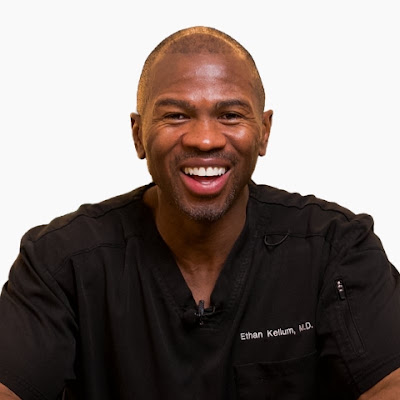
Dr. Ethan Kellum
Dr. Ethan KellumVideo
- Format:
- YouTube channel
- New videos:
- Daily
- Typical length:
- about 1 minute
- Latest video:
About this show
I’m Dr. Ethan Kellum, a board-certified orthopedic surgeon with over 20 years of experience, fellowship-trained in sports medicine. I’ve serve as a team physician for the Tennessee Titans and USA Basketball, and am a former Assistant Team Physician for the Boston Celtics.
I specialize in helping active Baby Boomer executives, entrepreneurs, professionals, and retirees, find real relief from knee pain and arthritis without surgery.
After treating over 10,000 patients, I developed the Kellum Knee Restorative Protocol; a modern, research-backed approach that helps reduce pain, repair damaged tissue, and avoid unnecessary procedures.
Unlike outdated medical advice focused on steroid shots, anti-inflammatories, or risky surgeries, I use regenerative and holistic strategies that support your body’s natural healing.
If you’re looking for solutions that go beyond pills and scalpels, you’re in the right place.
Office: 615-850-4415 Dr. Kellum's Cell: 901-484-0837 (Text preferred!)
Videos come from the channel's public YouTube feed. The artwork is the newest video thumbnail. Last updated . Names, artwork and text belong to their publishers.
Cosmos
Similar by topic and creator
- Psychology In Seattle
Shares the topics Health and Society. - UNICEF
Shares the topics Health and Society. - PeakzSanity
Shares the topics Health and Society.
Videos
3 pains that aren't coming from where they hurt #hippain #kneepain #referredpain
· 1 min
Which of these three sounds like you? Tell me below. Have you been treating the wrong spot? It happens more than you'd think, and it's one of the main reasons pain hangs around for months. Pain is a signal your brain interprets, and it isn't always precise about where that signal started. Nerves that serve one area can carry pain into another. That's called referred pain. A few clues that the spot that hurts might not be the source: The pain is vague and hard to point to with one finger. Pressing on the sore spot doesn't make it worse. Treatment aimed at that spot helps for a day, then it comes right back. It changes when you move a different part of your body, like your neck, your back or your hip. That's why a good exam checks the joints above and below where it hurts, not just the spot you point to. If you've been resting, icing and rehabbing the same area for months without real progress, it may be time to look somewhere else. I walk through three of the most common ones I see in the video. The third one is something a lot of athletes are dealing with right now.
Not rated yetWhat an NFL team doctor actually makes #nfl #sportsmedicine #teamdoctor
· 43 sec
If you want the strength routine I'd start you on, comment HELP. What does an NFL team doctor actually do on game day? A lot more than people think, and most of it happens before kickoff. The medical staff is at the stadium hours early. Injury reports get reviewed, braces and taping get checked, and there's a plan for every kind of emergency before a single snap. During the game, the job is fast decisions. When a player goes down, there are only minutes to figure out whether he can go back in or whether he's done for the day. That call can protect his season, and sometimes his career. The part that carries over to you is what happens after. Pro athletes don't come back because of secret treatments. They come back because the problem gets diagnosed early, the rehab is structured, and nobody rushes it. That's the same approach I take with every patient, whether they play on Sundays or just want to get back on the golf course. The money side of being a team doctor is not what most people assume. I explain it in the video.
Not rated yetRanking fitness trends as an orthopedic surgeon #fitnesstrends #tierlist #75hard
· 1 min
Which one did I get wrong? Tell me below. How do you know if a fitness trend is worth your time? Ask one question before you start: could I still be doing this in five years? Most trends are built to go viral, not to last. They promise fast results, they're extreme on purpose, and they usually leave out recovery. That's why the injury tends to show up a few weeks in, right when the excitement wears off and the fatigue piles up. A few things that separate a good program from a trend: It gets harder gradually. Progress should come from adding a little over time, not from punishing yourself on day one. It has rest built in. Your body adapts between sessions, not during them. It includes some form of strength training. It doesn't hurt your joints. Muscle soreness is normal. Sharp pain or joint pain isn't the price of results. And the boring stuff counts. Sleep, protein and walking never trend, but they carry most of the results. I ranked the biggest fitness trends from S tier to D tier in the video, and a few of the most popular ones land right at the bottom.
Not rated yetRating sports for your joints out of 10 #sportsmedicine #jointhealth #orthopedicsurgeon
· 1 min
What's your sport? Tell me below and I'll tell you what it's doing to your joints. Is your sport bad for your joints? Usually it isn't the sport. It's how fast you ramped up. Most of the injuries I see in weekend athletes come from doing too much, too soon. Muscle gets stronger in weeks. Tendons, ligaments and cartilage take months. So you feel ready long before your joints actually are. A few rules that protect you whatever you play: Build up gradually. Big jumps in how much you play in a single week are where overuse injuries tend to show up. Warm up like you mean it. Five to ten minutes of movement that looks like your sport beats static stretching on a cold body. Strength train twice a week. Strong muscles around a joint take load off the joint itself. Respect pain that changes how you move. If you're limping, favoring one side, or it's worse every session, that isn't soreness anymore. I'm one of the team physicians for the Titans and USA Basketball, and I rated the most popular sports for your joints in the video. A couple of the scores surprise people.
Not rated yetKnee hurts going down stairs, not up #kneepain #kneecap #patellofemoral
· 51 sec
If this sounds like your knee, comment HELP and I'll send you the knee section from my guide, plus the full training week. Knee hurts going down stairs but not going up? That one detail narrows things more than most scans will. Going up, your thigh muscle shortens to lift you. Going down, it lengthens to lower you under control, which is a much harder job, and it presses your kneecap back into the groove it sits in. So pain on the way down and not on the way up points at the joint behind the kneecap rather than the main weight-bearing surface. Two things you can check yourself. Sit with the knee bent for a long stretch, in a car or at the cinema, and see whether it aches and wants straightening. That's classic for the kneecap joint. Then try a slow step-down off the bottom stair. If the pain arrives as you lower, and is worse the slower you go, same answer. Now the ones that mean stop self-diagnosing. A knee that swells repeatedly, locks, catches, or gives way underneath you. Those aren't kneecap patterns and they want looking at properly. For everything else the fix is unglamorous and it works. Slow step-downs and sideways band walks for the hip, three times a week. Not rest, and not avoiding stairs, which is how you end up weaker and sorer than you started.
Not rated yetWhy Do I Wake Up With Back Pain? (Surgeon Explains)
· 9 min
Do you wake up with lower back pain in the morning and wonder why? Morning back pain usually starts while you sleep, and your first few minutes out of bed can make it better or worse. Here's why it happens, and the simple changes that help. In this video, orthopedic surgeon Dr. Ethan Kellum walks you through what your spinal discs do overnight, why your spine is stiffest first thing, the everyday causes of morning back pain (bending, your mattress and your sleep), the pattern of inflammatory back pain you should never brush off, and four fixes that work. You'll learn how to give your spine a warm-up window, when heat helps, why daily movement beats bed rest, and how to build up walking for back pain gently so your knees come along too. In one trial, people with long-term back pain who simply avoided bending forward early in the morning cut their pain days by about 23%, compared with about 2% in a group given fake exercises. In a trial of 313 adults, a medium-firm mattress beat a firm one for pain in bed and for how much back pain got in the way of daily life. And in a trial of more than 700 adults who had recently recovered, a simple walking plan nearly doubled the time before back pain came back: 208 days versus 112. For most people, morning back pain is a signal, not a sentence. Your discs refill overnight, so ease into your morning, then move every day. Dr. Ethan Kellum is an orthopedic surgeon who has spent more than 20 years helping people move better, including as a team doctor in the NFL and for USA Basketball. On this channel, he shares what the research says about easing back pain and staying active as you age. ▶ FOLLOW DR. KELLUM YouTube: https://www.youtube.com/@DrKellum Instagram: https://www.instagram.com/drethankellum TikTok: http://tiktok.com/@drethankellum Facebook: http://facebook.com/share/19NiwkhUNc http://facebook.com/share/1EV3e358VP Website: https://drethankellum.com/ ▶ ASK ABOUT REGENERATIVE MEDICINE Book a consultation with Dr. Kellum: https://drethankellum.com/contact/ ▶ YOUR CHALLENGE For the next seven mornings, skip deep bending right after you get up, use heat if it helps, and take a walk later in the day. Rate your back from 0 to 10 on morning 1 and morning 7, then tell us in the comments what changed. Your answers help decide what Dr. Kellum covers next. ⏱ CHAPTERS 00:00 Why you wake up with back pain 00:31 What your discs do overnight 01:15 Why morning bending is riskiest 02:03 Everyday causes: bending first thing 02:44 Firm vs medium-firm mattress 03:25 Poor sleep and back pain 03:48 Inflammatory back pain: 5 clues 04:29 Fix 1: a morning warm-up window 05:17 Fix 2: heat for back pain 05:38 Fix 3: keep moving 06:09 Fix 4: walking for back pain 07:07 Warning signs: when to get help 07:46 Recap: your morning plan 08:08 Your 7-morning challenge SAFETY: Get emergency help if back pain comes with numbness around your genitals or bottom, bladder or bowel changes, or tingling, weakness or numbness in both legs, or if it started after a serious accident. If you have any of these warning signs, don't wait seven days; get checked today. This video is for general educational purposes only and is not medical advice. It does not create a doctor-patient relationship. Always consult your own physician or a qualified healthcare provider about your specific situation. Never disregard professional medical advice or delay seeking it because of something you have seen in this video. #BackPain #LowerBackPain #MorningBackPain #BackPainRelief #SpineHealth #HealthyAging #DrKellum
Not rated yetHe tore his ACL mid-season #acl #aclrecovery #sportsinjury
· 49 sec
If your kid is facing ACL surgery, comment KNEE and I'll send you the questions I'd want answered before any surgery. Your kid just tore their ACL? The surgery is the straightforward part. The timeline is the part worth defending, because everyone will try to shorten it. Putting a new ligament in takes under two hours. What takes nine to twelve months is that ligament actually attaching to the bone, and the leg rebuilding enough strength to protect it. You can't hurry biology, and going back too early is one of the strongest predictors of tearing it a second time. Coaches will push. So will your kid. A season feels enormous at seventeen. Questions worth asking the surgeon before anything gets scheduled. What graft are you using, and why that one for my child specifically? What strength targets do they need to hit before returning to sport, and who measures them? What's your re-tear rate in teenage athletes? Is there a reason to operate now rather than once they've got full range back and the swelling has settled? That last one catches people out. Operating on an angry, swollen knee tends to go worse than waiting a few weeks for it to calm down. A good surgeon answers every one of those without getting defensive. If the answers come back vague, that's information too, and you're allowed to get a second opinion.
Not rated yetIf I wanted brittle bones by 65 #bonedensity #osteoporosis #over50
· 43 sec
If you're over 50 and worried about your bones, comment FIFTY and I'll send you the training week I'd give anyone your age. Worried about your bones but never had them measured? That's most people, and the scan is easier to get than you'd expect. It's called a DEXA. Ten minutes, no needles, and it gives you a number you can track over time. Worth asking your doctor about if you're a woman over 65 or a man over 70, if you've broken a bone from a minor fall after 50, if you went through menopause early, or if you've been on steroids long term. Younger than that and simply worried? Ask anyway and have the conversation. The part of this video that surprises people is which exercise actually counts. Bone responds to load and impact, not to effort in general. Swimming and cycling are excellent for your heart and do very little for your skeleton, because your bones never carry your weight. Walking is better, and it's free. Lifting something genuinely heavy, done properly, is better again. That's what the study is getting at. Women around 65 with low bone density, lifting heavy twice a week under supervision, gained bone density in the spine over eight months. The light home exercise group lost it. Supervised is doing real work in that sentence. Get taught the lifts before you load them.
Not rated yetThe Worst Drinks for Inflammation (And 2 You Can Keep)
· 9 min
Is coffee bad for inflammation, and is green tea really as good as everyone says? These are the best drinks for inflammation, ranked from worst to best by an orthopedic surgeon who went back to the research and changed some of his own scores. In this video, orthopedic surgeon Dr. Ethan Kellum walks you through 10 everyday drinks for inflammation, from regular soda, beer and diet soda at the bottom, through the turmeric latte, orange juice, green tea and milk, up to black coffee, tart cherry juice and the one drink he puts above everything else. You'll learn which anti-inflammatory drinks are overhyped, which ones got a bad rap, and why what a drink replaces matters more than the health claims on its label. One 12-ounce can of soda has more added sugar than the American Heart Association's daily limit for men or women. In a trial of 58 people with knee arthritis, tart cherry juice lowered CRP, a blood marker of inflammation, compared with a look-alike placebo drink. And in a study of older adults with knee arthritis who carried extra weight, every pound they lost took about four pounds of pressure off the knee with each step. The best drink for inflammation isn't a superfood in a fancy bottle. It's the one that pushes a sugary drink out of your day. And you don't have to give up your coffee. Dr. Ethan Kellum is an orthopedic surgeon who has spent more than 20 years helping people move better, including as a team doctor in the NFL and for USA Basketball. On this channel, he shares what the research says about keeping your joints healthy as you age, including what goes in your cup. ▶ FOLLOW DR. KELLUM YouTube: https://www.youtube.com/@DrKellum Instagram: https://www.instagram.com/drethankellum TikTok: http://tiktok.com/@drethankellum Facebook: http://facebook.com/share/19NiwkhUNc http://facebook.com/share/1EV3e358VP Website: https://drethankellum.com/ ▶ ASK ABOUT REGENERATIVE MEDICINE Book a consultation with Dr. Kellum: https://drethankellum.com/contact/ ▶ YOUR CHALLENGE For the next 14 days, swap the worst drink in your normal day for water. Then comment the word SWAP plus the drink you're replacing. Your answers help decide what Dr. Kellum covers next. ⏱ CHAPTERS 00:00 Why I re-ranked drinks for inflammation 00:27 #10: Soda, energy drinks and sweet tea 01:05 #9: Beer and gout 01:34 #8: Diet soda 02:18 #7: Turmeric latte (golden milk) 02:57 #6: 100% orange juice 03:27 #5: Green tea, my old perfect 10 04:17 #4: Milk and dairy 05:04 #3: Black coffee, rescored 06:11 #2: Tart cherry juice for knee arthritis 07:10 #1: The best drink for inflammation 07:40 Why 3 pounds matters to your knees 08:27 Full ranking, worst to best 09:14 Your 14-day drink swap challenge 09:31 Safety: check with your doctor first SAFETY: If you have gout, diabetes, kidney disease or heart failure, or your doctor has you on a fluid limit, talk with your doctor before you change what you drink. This video is for general educational purposes only and is not medical advice. It does not create a doctor-patient relationship. Always consult your own physician or a qualified healthcare provider about your specific situation. Never disregard professional medical advice or delay seeking it because of something you have seen in this video. #Inflammation #DrinksForInflammation #AntiInflammatory #JointHealth #KneeArthritis #HealthyAging #DrKellum
Not rated yetStretching doesn't prevent injuries #stretching #injuryprevention #strengthtraining
· 44 sec
Comment HELP and I'll send you the three-day strength week I'd start you on. Still stretching before you play? It probably isn't doing what you think it's doing, and that's worth separating from whether it's worth doing at all. The study in this video pooled 25 trials and more than 26,000 people. Stretching barely moved injury rates. Strength training cut them to less than a third. That's not a small difference, and almost nobody trains as though it's true. But here's the part a headline like that flattens. Stretching is bad at preventing injury. It's good at other things, and people bin it entirely the moment they hear this. If you've genuinely lost range, and you can't get your arm fully overhead or your heel down in a squat, stretching helps you get it back. If you simply like how it feels afterwards, that's a real reason on its own. And a dynamic warm-up, which is movement rather than holding a position, does prepare you to play, by raising temperature and waking things up rather than by lengthening anything. What it won't do is protect a hamstring that isn't strong enough for what you're asking of it. So keep it if you enjoy it. The correction isn't stop stretching, it's stop counting it as injury prevention and then wondering why you keep getting hurt.
Not rated yet