

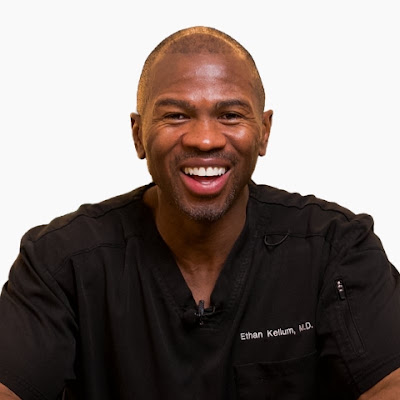
Dr. Ethan Kellum
Dr. Ethan KellumVideo
- Format:
- YouTube channel
- New videos:
- Daily
- Typical length:
- about 1 minute
- Latest video:
About this show
I’m Dr. Ethan Kellum, a board-certified orthopedic surgeon with over 20 years of experience, fellowship-trained in sports medicine. I’ve serve as a team physician for the Tennessee Titans and USA Basketball, and am a former Assistant Team Physician for the Boston Celtics.
I specialize in helping active Baby Boomer executives, entrepreneurs, professionals, and retirees, find real relief from knee pain and arthritis without surgery.
After treating over 10,000 patients, I developed the Kellum Knee Restorative Protocol; a modern, research-backed approach that helps reduce pain, repair damaged tissue, and avoid unnecessary procedures.
Unlike outdated medical advice focused on steroid shots, anti-inflammatories, or risky surgeries, I use regenerative and holistic strategies that support your body’s natural healing.
If you’re looking for solutions that go beyond pills and scalpels, you’re in the right place.
Office: 615-850-4415 Dr. Kellum's Cell: 901-484-0837 (Text preferred!)
Videos come from the channel's public YouTube feed. The artwork is the newest video thumbnail. Last updated . Names, artwork and text belong to their publishers.
Cosmos
Similar by topic and creator
- Psychology In Seattle
Shares the topics Health and Society. - UNICEF
Shares the topics Health and Society. - PeakzSanity
Shares the topics Health and Society.
Videos
Which is worse for your hips? #hippain #hiphealth #posture
· 54 sec
Which one do you do every day? Comment below. Why do your hips feel tight all the time? For a lot of people it isn't a flexibility problem. It's a sitting and loading problem. Your hips are built to move in a lot of directions, but most days we use a small slice of that range. Spend hours in the same few positions and the muscles around the hip adapt to them. A few signs your hip might need attention: Pain in the groin or the front of the hip, which often comes from the joint itself. Pain on the outside of the hip when you lie on that side. Stiffness when you first get up in the morning or after sitting. Trouble putting on your socks and shoes. Simple things help. Get up and move every 30 to 60 minutes, and add a few hip exercises like bridges, side lying leg raises and slow lunges to your week. And if hip pain wakes you up at night or makes you limp, get it looked at. I ran through the everyday habits that are hardest on your hips in the video. The winner is probably in your back pocket right now.
Not rated yetWhy I Try Not to Have Anesthesia
· 1 min
"I've had anesthesia once." Like I said, if I don't have to have it, I'm going to try not to have it. Anesthesia makes surgery possible, and there's times when you have to have anesthesia. But you're not the same after having that. This isn't medical advice. #anesthesia #surgery #shorts
Not rated yetBone-on-Bone Knees: Is Replacement Your Only Option?
· 10 min
Have you been told you have a bone on bone knee and that it's time for a replacement? A bone on bone knee doesn't automatically make replacement your only road, and a new knee doesn't automatically mean a happy knee. Here's what decides who ends up happiest, and what to discuss if you're not ready yet. In this video, orthopedic surgeon Dr. Ethan Kellum walks you through why knee replacement gets recommended, why it's such a strong operation, who ends up happiest after knee replacement surgery, and the knee replacement alternatives worth discussing if you're not ready. You'll learn the single biggest factor linked to being unhappy with a new knee, what realistic goals and recovery look like, and the two questions to ask your surgeon before anything gets scheduled. In a survey of about 1,700 knee replacements in Ontario, Canada, about 81% of people were satisfied at one year, and those whose expectations weren't met had more than 10 times the risk of being dissatisfied. In a study of 140 people aged 65 to 90 who were already headed for replacement in both knees, more than 80% of the knees treated with bone marrow cells still hadn't been replaced after an average of 15 years of follow-up. He also explains where a concentrate made from your own bone marrow can fit, for the right candidate, to help you keep your own knee longer. Knee replacement is a strong operation and a great one for the right person. How happy you are afterward tracks closely with what you expected from it. And if you're not quite ready for metal yet, there are options worth a real conversation. Dr. Ethan Kellum is an orthopedic surgeon who has spent more than 20 years helping people move better, including as a team doctor in the NFL and for USA Basketball. On this channel, he shares what the research says about bone on bone knees, knee replacement and keeping your own joints moving. ▶ FOLLOW DR. KELLUM YouTube: https://www.youtube.com/@DrKellum Instagram: https://www.instagram.com/drethankellum TikTok: http://tiktok.com/@drethankellum Facebook: http://facebook.com/share/19NiwkhUNc http://facebook.com/share/1EV3e358VP Website: https://drethankellum.com/ ▶ ASK ABOUT REGENERATIVE MEDICINE Book a consultation with Dr. Kellum: https://drethankellum.com/contact/ ▶ YOUR CHALLENGE Take a sheet of paper and write down what success would look like for you one year from now, then what you've honestly tried so far and for how long. Bring that page to your next appointment, and tell us in the comments what's holding you back from a replacement: the recovery, the results, or something else. Your answers help decide what Dr. Kellum covers next. ⏱ CHAPTERS 00:00 Bone on bone knee: the replacement myth 00:28 Why knee replacement gets recommended 01:28 Knee replacement: a strong operation 02:29 Who is happiest after knee replacement 03:13 Expectations: the biggest factor 04:03 Realistic goals and recovery 04:47 2 questions before knee replacement 05:10 Not ready yet? Start with the basics 05:46 Bone marrow cells: a 15-year study 06:54 Who is a good candidate 07:42 How regenerative treatments help 08:25 When knee replacement makes sense 09:08 Your one-page challenge 09:56 Safety note SAFETY: If your knee suddenly turns red, hot and badly swollen, or you can't put weight on it, don't wait for an appointment. Get seen urgently. This video is for general educational purposes only and is not medical advice. It does not create a doctor-patient relationship. Always consult your own physician or a qualified healthcare provider about your specific situation. Never disregard professional medical advice or delay seeking it because of something you have seen in this video. #KneePain #BoneOnBoneKnee #KneeReplacement #KneeArthritis #SecondOpinion #RegenerativeMedicine #DrKellum
Not rated yetHow long to get an athlete's body, part 3 #athlete #physique #bodybuilding
· 1 min
Which athlete should I do next? Tell me below. Why do some people build muscle faster than others? Genetics, training experience and recovery all play a part. Beginners usually gain the fastest in their first year, and then progress slows down. That's normal, not a sign you're doing it wrong. The further along you are, the more patience it takes. A few things that matter most for building muscle: Train each muscle group at least twice a week. Push your working sets close to your limit, with good form. Add weight or reps gradually over time. Eat enough protein, spread across the day. Sleep. Muscle is built during recovery, not during the workout. Give it time. Real change is measured in months and years. Comparing yourself to someone else's highlight reel is the fastest way to quit. Compare yourself to where you were six months ago. Part 3 covers seven more athletes, including one where the slowest part isn't the muscle at all.
Not rated yetRating more shoes out of 10 #shoes #footpain #flatfeet
· 1 min
Comment SHOES and I'll send you the shoes I actually tell my patients to buy. How do you know when to replace your shoes? Usually before they look worn out. The cushioning in most athletic shoes breaks down long before the upper falls apart. Runners often hear somewhere around 300 to 500 miles, and if you're on your feet all day at work, they can wear out faster than you'd expect. A few signs it's time: The sole looks creased or flattened when you look at it from the side. The tread is worn smooth in spots, especially at the heel or the ball of the foot. They lean or tilt when you set them on a flat table. Your feet, knees or back ache after wearing them when they didn't before. When you buy new ones, shop later in the day when your feet are slightly bigger, wear the socks you'll actually use, and leave about a thumb's width at the toe. And pick the shoe for the job. Walking, running and court shoes are built differently for a reason. I rated more of the most popular shoes out of 10 in the video. I'm sorry in advance.
Not rated yetWould I Use It on Someone With Cancer?
· 36 sec
"And so, like I said, I wouldn't personally do that." There's a lot of legal ramifications for that. Always your goal is to keep a patient safe. As long as they've been cancer-free for two years, we're able to do that. This isn't medical advice. #regenerativemedicine #cancer #shorts
Not rated yetIf I wanted to throw out my back #backpain #lowerbackpain #injuryprevention
· 51 sec
Tag the person whose back went out doing something ridiculous. Just threw out your back? Most sudden low back pain gets better on its own within a few weeks, and staying gently active helps it get better faster. Bed rest used to be the standard advice. Now we know light movement, like short walks, usually leads to a quicker recovery than lying still. A few things that help in the first days: Keep moving, even if it's slow. Short walks every few hours. Heat can ease the muscle spasm. Find a position that takes the pressure off, like lying on your back with your knees bent over a pillow. Avoid heavy lifting and twisting for a few days, but don't stop living. Over the counter pain relief can help in the short term if it's safe for you. Get checked right away if you have numbness in your groin or inner thighs, trouble controlling your bladder or bowels, weakness in your legs, a fever, or pain after a serious fall. Those are not wait and see symptoms. I break down exactly how I'd throw out my back if I wanted to in the video. Most of it has nothing to do with heavy lifting.
Not rated yetThe Two Surgeries I'll Probably Always Do
· 2 min
"I always try to augment with something regenerative" Rotator cuff repairs, ACL reconstructions. Even doing that, I always try to augment with something regenerative, because it's going to help it to heal better. This isn't medical advice. #orthopedics #regenerativemedicine #shorts
Not rated yetTold You Need Surgery? Ask These 5 Questions First
· 9 min
Has a surgeon told you that you need surgery, with the consent form already on the clipboard? Before you answer "do I need surgery?", ask these 5 questions first. They take a few minutes, and the last one is the one most people skip. In this video, orthopedic surgeon Dr. Ethan Kellum walks you through the warning signs that mean you shouldn't wait, how to agree on a clear goal for the operation, which alternatives to surgery deserve a real conversation, how to ask about your own risk and recovery, and why a surgical second opinion matters. You'll learn how to tell a strong reason for surgery from a weak one, the recovery questions to ask your surgeon, and what a good second opinion should include. In a nationwide French second opinion service that reviewed requests from 1,552 adults, the second expert's view differed on the diagnosis or the treatment in about 1 in 3 cases, and in about 1 in 4 bone and joint cases. For a knee with arthritis, exercise carries the strongest level of recommendation from the orthopedic surgeons' guideline, so it belongs in the conversation before knee surgery. Dr. Kellum also explains how his own surgical second opinion visits work, and when PRP or a concentrate made from your own bone marrow is worth discussing. A second opinion either hands you a different plan worth weighing or lets you go ahead with real confidence. Either way, you come out ahead. And when two surgeons agree and the alternatives have had a fair try, surgery isn't a failure. It's the right call. Dr. Ethan Kellum is an orthopedic surgeon who has spent more than 20 years helping people move better, including as a team doctor in the NFL and for USA Basketball. On this channel, he shares what the research says about making clear, confident decisions before orthopedic surgery. ▶ FOLLOW DR. KELLUM YouTube: https://www.youtube.com/@DrKellum Instagram: https://www.instagram.com/drethankellum TikTok: http://tiktok.com/@drethankellum Facebook: http://facebook.com/share/19NiwkhUNc http://facebook.com/share/1EV3e358VP Website: https://drethankellum.com/ ▶ ASK ABOUT REGENERATIVE MEDICINE Book a consultation with Dr. Kellum: https://drethankellum.com/contact/ ▶ YOUR CHALLENGE Write the five questions on a card, and under question two, write the one thing you want your joint to let you do again. Take it to your next appointment, then tell us in the comments which joint a surgeon said needs an operation and how long you've had the pain. Your answers help decide what Dr. Kellum covers next. ⏱ CHAPTERS 00:00 Do I need surgery? 5 questions first 00:28 Why surgery gets recommended 01:00 Q1: Is it urgent? Warning signs 01:31 Q2: What exactly are we fixing? 02:16 Q3: Alternatives to surgery 02:57 Good vs weak reasons 03:31 Q4: Your risks and recovery 04:09 Recovery questions to ask 05:01 Q5: Would another surgeon agree? 06:15 What a good second opinion includes 07:05 PRP and bone marrow options 07:35 When surgery is the right call 08:28 Recap and your 5-question challenge 09:15 Safety note SAFETY: If a joint turns red, hot and swollen with a fever, or you suddenly can't put weight on it, don't wait for a second opinion. Get seen. This video is for general educational purposes only and is not medical advice. It does not create a doctor-patient relationship. Always consult your own physician or a qualified healthcare provider about your specific situation. Never disregard professional medical advice or delay seeking it because of something you have seen in this video. #OrthopedicSurgery #DoINeedSurgery #SecondOpinion #KneeSurgery #KneePain #OrthopedicSurgeon #DrKellum
Not rated yetThe Two Surgeries I'll Probably Always Do
· 1 min
"I always try to augment with something regenerative" Rotator cuff repairs, ACL reconstructions. Even doing that, I always try to augment with something regenerative, because it's going to help it to heal better. This isn't medical advice. #orthopedics #regenerativemedicine #shorts
Not rated yetRanking gym machines as an orthopedic surgeon #gymmachines #tierlist #gymtips
· 1 min
Defend your favorite machine in the comments. New to the gym and not sure where to start? Machines are a great place to begin, as long as you set them up right. Most problems on machines come from the setup, not the machine itself. A few rules: Line the pivot point up with your joint. On a leg curl or leg extension, the axis should sit right at your knee. Adjust the seat every time. The person before you was a different size. Start lighter than you think, and learn the path of the movement before you load it. Control the weight on the way down. That's where a lot of the benefit is, and where people get sloppy. Work through a range of motion you can control without pain. Once you're comfortable, mixing in free weights and cables trains the smaller stabilizing muscles in a way fixed machines can't. And wipe it down. Everyone appreciates it. I ranked the most common gym machines from S tier to D tier in the video. The one at the top is almost always open.
Not rated yetKnee, Hip, Ankle and Spine: Not With Surgery
· 1 min
"Not with surgery. We're treating them with regenerative medicine." Stem cells, growth factors, exosomes, and helping people to avoid surgery. Knee arthritis, hip arthritis, ankle arthritis, spine work. This isn't medical advice. #regenerativemedicine #arthritis #shorts
Not rated yetWant to end up on my operating table? #secondopinion #avoidsurgery #orthopedicsurgeon
· 1 min
If someone already told you surgery is your only option, I do virtual consults. The link is in my bio. When should joint pain get looked at? Sooner than most people go. A lot of people wait months, hoping it settles on its own. Sometimes it does. But some signs mean you shouldn't wait: Pain at night or at rest, not just with activity. Swelling without a clear reason. A joint that locks, catches or gives way. Numbness, tingling or weakness down an arm or leg. A hot, swollen joint along with a fever. You can't put weight on it after an injury. When you do get it checked, bring any imaging and reports you have, plus a list of what you've already tried. It makes the visit far more useful. And if you've already been told surgery is your only option, it's always fair to ask questions before you commit. Sometimes surgery is the right answer. You should just know why. I go through five rules that are almost guaranteed to land you on my operating table in the video.
Not rated yetStem Cells Can Help Most Things Out There, Not Everything
· 1 min
"Every single disease has a component of inflammation." If you can use those products to decrease the inflammation, it's going to make the symptoms of that particular disease better. It depends on how much they get, depends on what they get. This isn't medical advice. #stemcells #inflammation #shorts
Not rated yetEveryday habits: leave it or love it #healthyhabits #mobility #jointhealth
· 58 sec
Which one are you defending? Comment below. What daily habits actually keep your joints healthy? Usually the small ones you do without thinking. Your joints love movement. Cartilage doesn't have its own blood supply, so it depends on movement and loading to stay healthy. Long stretches of not moving are often harder on your body than the activity itself. A few habits worth building: Get up and move every 30 to 60 minutes when you're sitting. Walk after meals. Even ten minutes helps. Change positions often. The best position is usually your next one. Strength train at least twice a week. Keep your weight in a healthy range if you can. Every extra pound adds load to your knees with every step. Sleep seven to nine hours. That's when recovery happens. The goal isn't perfect habits. It's moving a little more, a little more often. I went through a list of everyday habits, leave it or love it, in the video. The last one is the test I care about most.
Not rated yet- Not rated yet
Stem cells: myth or fact #stemcells #regenerativemedicine #kneepain
· 56 sec
Comment the number you want me to explain. Are stem cell injections worth it for knee pain? For the right patient, they can be a real option. For the wrong one, they're an expensive disappointment. Regenerative treatments work best when the expectations are realistic. They aren't a way to rebuild a worn out joint from scratch. A few questions to ask any clinic before you book: Who is doing the procedure, and what's their training? Where do the cells come from, and how are they processed? Is the injection guided with ultrasound or imaging? What results do they honestly see in patients like me? What does it cost, and what's included? What's the rehab plan afterward? If a clinic promises a cure, a brand new joint, or results for everything from knees to memory, walk away. The best results usually come when the injection is part of a bigger plan: strength work, weight management and smart changes to activity. I answer ten of the most common stem cell beliefs, myth or fact, in the video. A couple of them catch people off guard.
Not rated yetStem Cells at Times Are Really Just the Middleman
· 2 min
"What I call the business end of stem cells." It's really what the stem cell is going to produce, the exosomes, those nanoparticles. Sometimes you can cut that middleman out and just use the products of stem cells. This isn't medical advice. #stemcells #exosomes #shorts
Not rated yetIf I wanted to tear my ACL #acl #kneeinjury #injuryprevention
· 44 sec
Tag the friend who plays pickup with zero warm up. Can you prevent an ACL tear? Not every one, but injury prevention programs have been shown to lower the risk, especially in young athletes. The riskiest moments are landings, sudden stops and quick changes of direction, often when the knee collapses inward. The programs that work have a few things in common: Strength work for the hamstrings, glutes and hips. Landing and cutting practice, with the knee kept in line with the toes. Balance work on one leg. A real warm up before every practice and game, not just some of them. Consistency. They work when they're done a few times a week for the whole season. Signs an ACL might be torn: a pop when it happened, swelling within a few hours, and a knee that feels unstable or gives way. If that happens, get it evaluated before you try to play on it. I explain exactly how I'd tear my ACL if I wanted to in the video, and then how to flip every one of those.
Not rated yetYour Cell Can't Hear Because It's So Noisy
· 2 min
"Now when that inflammation is gone, the cell can breathe." We're going to call that inflammation the noise. Your body's trying to send a signal to that cell to now do its work and it can't hear because it's so noisy. This isn't medical advice. #inflammation #stemcells #shorts
Not rated yet