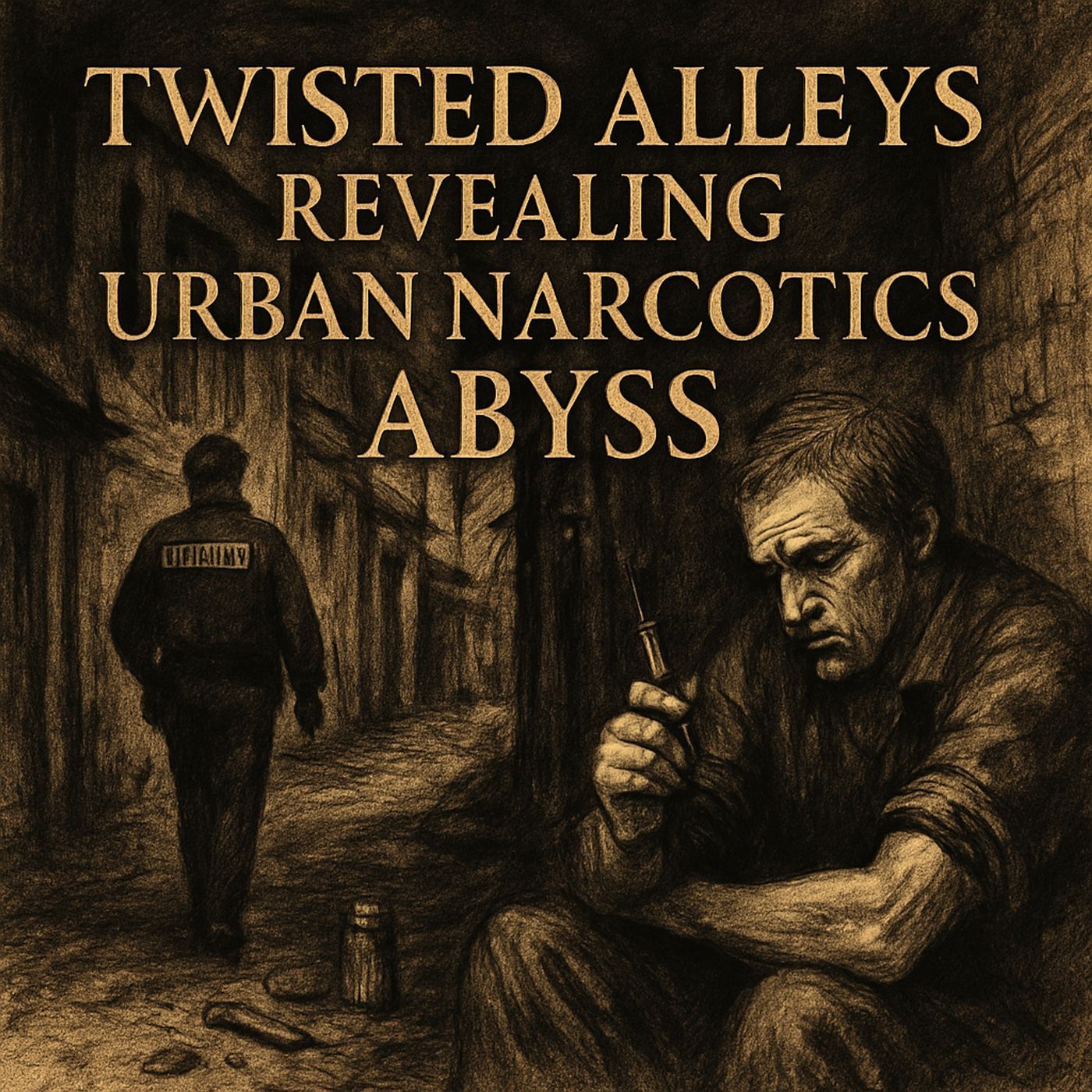
Twisted Alleys Revealing Urban Narcotics Abyss
Neon NightsAudio
- Format:
- Podcast
- New episodes:
- Weekly
- Typical length:
- about 9 minutes
- Latest episode:
About this show
Venture into the shadowy infrastructure of metropolitan drug networks, where clandestine operations shape entire neighborhoods and challenge law enforcement at every turn. Through exclusive interviews with retired DEA agents, forensic psychologists, and reformed traffickers, this series maps the anatomy of urban narcotics empires—exposing supply chains, territorial conflicts, addiction mechanics, and the human cost of America's drug economy.
Covers: drug trafficking, urban drug markets, organized crime, addiction recovery, harm reduction, community organizing, substance abuse policy, urban economics
Show details and episodes come from the publisher's public feed at feeds.simplecast.com. Last updated . Names, artwork and text belong to their publishers.
Recently on this show
Summary of recent episodes, drawn from the publisher's feed.
This podcast examines how urban drug markets shape neighborhoods, covering supply networks, addiction, and the human toll. Recent episodes look at how mental health services can reduce stigma, how local businesses adapt to drug market pressures, and how urban agriculture and community resilience push back against drug networks.
Cosmos
Similar in subject
- Dopey: On the Dark Comedy of Drug Addiction
Both cover: harm reduction, addiction recovery - Curios&Spiritual Crime Documentary
Both cover: drug trafficking, organized crime - APEX CRIME VAULT
Both cover: drug trafficking, organized crime
Similar shows







Explore more
Episodes
How Mental Health Services Can Combat Substance Abuse Stigma
· 9 min
The intersection of mental health and substance use often remains a stigmatized topic, complicating recovery efforts for individuals caught in the cycle of addiction. This discussion explores how integrating mental health services into community support systems can reduce stigma and improve recovery outcomes. We interview mental health professionals who advocate for holistic approaches to addiction treatment, emphasizing the importance of addressing underlying mental health issues that frequently accompany substance use disorders. A former user shares their journey of recovery, highlighting how mental health support played a crucial role in overcoming addiction. We examine specific initiatives where mental health services have been successfully integrated into addiction treatment programs, demonstrating the positive impact on community perceptions and individual recovery rates. This exploration reveals how dismantling stigma through education and support can create more compassionate and effective pathways for those struggling with substance use. Hosted by Simplecast, an AdsWizz company. See https://pcm.adswizz.com for information about our collection and use of personal data for advertising.
Not rated yetHow Local Economies Adapt to Drug Market Pressures
· 8 min
In cities where drug markets dominate, local economies often undergo significant transformations as businesses adapt to the pressures and realities of narcotics activity. This discussion explores how legitimate businesses, from corner stores to restaurants, navigate the complexities of operating in environments heavily influenced by drug distribution. We interview small business owners who share their experiences of balancing safety and profitability, as well as economists who analyze the broader economic implications of drug market presence. The episode examines specific case studies where businesses have developed strategies to either coexist with or resist the influence of drug networks, including community engagement initiatives and partnerships with local law enforcement. A former dealer provides insights into how drug activity can inadvertently shape consumer behavior and business practices, while a local government official discusses policy measures aimed at supporting legitimate businesses in high-drug-activity areas. This exploration reveals the intricate relationship between local economies and drug markets, highlighting how adaptation can lead to both resilience and vulnerability within communities. Hosted by Simplecast, an AdsWizz company. See https://pcm.adswizz.com for information about our collection and use of personal data for advertising.
Not rated yetHow Urban Legends Shape Perceptions of Drug Use
· 8 min
Exploring the fascinating intersection of urban legends and drug culture, this discussion examines how myths and stories surrounding drug use influence public perception, policy, and community responses. We interview cultural anthropologists, sociologists, and community activists who reveal how urban legends—such as the infamous 'killer weed' or tales of dangerous new substances—shape narratives around drug use and addiction. The episode delves into specific case studies where these myths have led to heightened fears, misguided policies, or even community mobilization efforts. A former user shares personal experiences of how urban legends affected their choices and perceptions of risk. We analyze the role of media in perpetuating these stories and the impact they have on real-world behaviors, law enforcement strategies, and public health initiatives. This exploration uncovers how the power of narrative can both harm and heal communities grappling with the complexities of substance use. Hosted by Simplecast, an AdsWizz company. See https://pcm.adswizz.com for information about our collection and use of personal data for advertising.
Not rated yetHow Art and Culture Challenge Drug Trafficking Influence
· 9 min
In cities where drug trafficking casts a long shadow, art and culture emerge as powerful tools for resistance and transformation. This discussion explores how artists, musicians, and cultural activists are using creative expression to reclaim public spaces and challenge the narratives surrounding drug use and trafficking. We interview local artists who have turned abandoned buildings into murals that tell stories of resilience, hope, and community strength. A musician discusses how their lyrics address the realities of addiction while promoting messages of recovery and empowerment. We examine specific initiatives where cultural festivals and art installations have sparked conversations about drug policy, community healing, and social justice. A cultural historian explains how art can serve as a form of protest, creating platforms for marginalized voices and fostering solidarity among residents. This episode reveals how creativity can disrupt the cycle of despair associated with drug trafficking, offering new pathways for community engagement and change. Hosted by Simplecast, an AdsWizz company. See https://pcm.adswizz.com for information about our collection and use of personal data for advertising.
Not rated yetHow Community Resilience Fights Back Against Drug Networks
· 8 min
In neighborhoods heavily impacted by drug trafficking, community resilience emerges as a powerful counterforce to the pervasive influence of narcotics. This discussion explores grassroots initiatives and local movements that actively challenge the grip of drug networks, fostering hope and rebuilding social fabric. We interview community leaders, activists, and residents who have successfully organized against drug operations, creating safe spaces and alternative opportunities for youth. The episode examines specific case studies where community coalitions have mobilized to reclaim public spaces, advocate for policy changes, and provide support systems for individuals seeking recovery. A former trafficker shares insights on how community solidarity can disrupt recruitment strategies and alter the perception of drug dealing as an economic necessity. We analyze the transformative power of community engagement, revealing how collective action can reshape narratives around addiction and create pathways toward healing and empowerment. Hosted by Simplecast, an AdsWizz company. See https://pcm.adswizz.com for information about our collection and use of personal data for advertising.
Not rated yetHow Gentrification Fuels New Drug Economies in Cities
· 8 min
As urban landscapes undergo rapid gentrification, the shifting demographics and economic pressures create unique opportunities for new drug economies to emerge. This discussion explores how rising rents and displacement of long-term residents can inadvertently lead to increased drug activity in neighborhoods undergoing transformation. We interview urban sociologists, real estate developers, and community activists who highlight the complex interplay between gentrification and drug markets. The episode examines specific case studies from cities like San Francisco and New York, where the influx of wealth has altered local economies and created niches for drug distribution that cater to both new residents and those left behind. A former dealer shares insights on how the changing social fabric influences drug preferences and distribution methods, while a community organizer discusses the challenges faced by long-term residents who find themselves in a rapidly changing environment. We analyze how this dynamic creates a cycle of vulnerability and opportunity, revealing the unintended consequences of urban revitalization efforts. Hosted by Simplecast, an AdsWizz company. See https://pcm.adswizz.com for information about our collection and use of personal data for advertising.
Not rated yetHow Urban Agriculture Is Reshaping Drug Market Dynamics
· 8 min
In cities where economic opportunity is scarce, urban agriculture is emerging as an unexpected counterforce to drug markets. This discussion explores how community gardens and urban farms are not only providing fresh produce but also creating legitimate employment opportunities that can deter youth from entering trafficking networks. We interview urban planners, community organizers, and former traffickers who have witnessed firsthand how green spaces can transform neighborhoods plagued by drug activity. The episode examines specific case studies where urban agriculture initiatives have successfully reduced drug-related crime and improved community cohesion. A local farmer shares insights on how these projects foster resilience and provide a sense of purpose for at-risk individuals. We analyze the potential of urban agriculture as a sustainable solution to combat the allure of drug distribution, revealing how cultivating food can cultivate hope in areas often overshadowed by despair. Hosted by Simplecast, an AdsWizz company. See https://pcm.adswizz.com for information about our collection and use of personal data for advertising.
Not rated yetThe Role of Social Media in Drug Distribution Networks
· 7 min
As urban drug markets evolve, social media has emerged as a powerful tool for traffickers, enabling them to connect with customers, coordinate logistics, and evade law enforcement scrutiny. This discussion explores how platforms like Instagram, Snapchat, and encrypted messaging apps have transformed traditional distribution methods into digital marketplaces. We interview digital security experts, former traffickers who adapted to these new tools, and law enforcement officials who are grappling with the challenges posed by online drug sales. The episode examines specific case studies where social media facilitated rapid market entry for new substances, created virtual storefronts for dealers, and allowed for the cultivation of customer loyalty through targeted marketing strategies. We analyze the implications of this digital shift on enforcement tactics and public health responses, revealing how the online landscape complicates the already intricate dynamics of urban narcotics. A social media analyst explains how algorithms can inadvertently promote drug-related content, while a reformed dealer discusses the psychological tactics used to attract and retain customers in a virtual environment. This episode uncovers the intersection of technology and drug distribution, highlighting a significant yet underexplored aspect of contemporary urban narcotics. Hosted by Simplecast, an AdsWizz company. See https://pcm.adswizz.com for information about our collection and use of personal data for advertising.
Not rated yetPathways Out That Require Systemic Transformation Beyond Individual Choice
· 10 min
While individual recovery from addiction and exit from drug distribution networks remains possible, sustained community-level change requires systemic interventions addressing root causes—economic opportunity creation, neighborhood investment, treatment infrastructure expansion, and criminal justice reform—that extend far beyond individual behavior change. This concluding episode synthesizes insights from previous episodes to examine what genuine progress would require through interviews with community leaders, policy experts, and reformed individuals who have successfully exited trafficking networks. We explore how communities that have reduced drug market activity share common characteristics: economic investment generating legitimate employment, expanded treatment and mental health services, reformed policing approaches emphasizing community partnership, and reduced incarceration rates. The episode examines specific policy interventions that have demonstrated effectiveness—including job training programs, community development investment, drug court diversion programs, and harm reduction infrastructure—while acknowledging the political difficulty of implementing these approaches. We analyze how current policy represents a fundamental mismatch between problems and solutions, with enforcement-focused approaches addressing symptoms while ignoring underlying causes. A policy expert explains how this represents a choice—society could redirect resources from incarceration toward treatment and economic opportunity, but this requires political will that remains elusive. The episode reveals how reformed individuals who successfully exit trafficking networks typically require multiple interventions: treatment access, employment opportunity, housing stability, and ongoing social support. We conclude by examining how genuine progress requires viewing drug markets not as criminal problems requiring enforcement but as public health and economic problems requiring comprehensive systemic responses. Hosted by Simplecast, an AdsWizz company. See pcm.adswizz.com (https://pcm.adswizz.com) for information about our collection and use of personal data for advertising.
Not rated yetOrganized Crime Structures That Mirror Legitimate Corporate Hierarchies
· 10 min
Major drug trafficking organizations operate with organizational sophistication that rivals legitimate multinational corporations, employing hierarchical management structures, specialized divisions, financial controls, and strategic planning that enable coordination across thousands of operators and billions in revenue. This episode examines organizational structure through interviews with organized crime specialists, federal prosecutors who have prosecuted major traffickers, and a reformed mid-level trafficker who managed organizational divisions. We explore how trafficking organizations divide operations into specialized functions—including supply chain management, distribution logistics, financial management, security, and enforcement—with clear reporting relationships and accountability structures. The episode examines how these organizations develop written policies, training programs, and quality control systems that ensure operational consistency across multiple geographic markets. We analyze how major organizations employ sophisticated financial management, with accounting systems that track revenue flows, manage expenses, and allocate resources to different operational divisions. A federal prosecutor describes how organizational documentation seized during raids reveals decision-making processes, strategic planning, and management practices virtually indistinguishable from legitimate business operations. The episode reveals how this organizational sophistication creates a fundamental enforcement challenge—targeting individual operators leaves organizational structure intact, while targeting organizational leadership creates vacuums that trigger violent succession conflicts. We examine how this represents a strategic asymmetry where law enforcement operates reactively against organizations with centralized planning and strategic flexibility. Hosted by Simplecast, an AdsWizz company. See pcm.adswizz.com (https://pcm.adswizz.com) for information about our collection and use of personal data for advertising.
Not rated yetHarm Reduction Models That Actually Reduce Overdose Deaths
· 11 min
Evidence-based harm reduction approaches—including supervised consumption facilities, naloxone distribution, needle exchange programs, and medication-assisted treatment—have demonstrated consistent effectiveness in reducing overdose mortality and infectious disease transmission while simultaneously reducing drug market activity. This episode examines harm reduction evidence through interviews with public health researchers, harm reduction program directors, and individuals whose lives have been saved by these interventions. We explore how supervised consumption facilities reduce overdose deaths by approximately 35% in neighborhoods where they operate, while simultaneously reducing visible drug activity and enabling connection to treatment services. The episode examines how naloxone distribution programs have prevented hundreds of thousands of overdose deaths, with community-based distribution proving more effective than medical-only distribution models. We analyze how needle exchange programs reduce hepatitis C and HIV transmission while creating points of contact for individuals to access treatment and social services. A harm reduction specialist describes how these programs operate from a premise of meeting people where they are rather than demanding behavioral change as a prerequisite for assistance. The episode reveals how harm reduction approaches produce superior public health outcomes compared to enforcement-focused approaches, yet remain politically controversial and underfunded. We examine how this represents a fundamental values conflict—between approaches viewing addiction as a criminal problem requiring punishment versus approaches viewing addiction as a public health problem requiring treatment and support. A public health researcher explains how harm reduction represents not moral acceptance of drug use but pragmatic acknowledgment that some individuals will use drugs regardless of legal consequences. Hosted by Simplecast, an AdsWizz company. See pcm.adswizz.com (https://pcm.adswizz.com) for information about our collection and use of personal data for advertising.
Not rated yetAddiction Neurobiology That Explains Why Willpower Fails Repeatedly
· 10 min
Contemporary neuroscience has revealed that addiction represents a fundamental rewiring of brain structures governing decision-making, impulse control, and motivation—creating neurobiological conditions where willpower and moral commitment become insufficient to prevent relapse. This episode examines addiction neurobiology through interviews with neuroscientists studying addiction, addiction medicine specialists, and individuals describing their subjective experience of addiction's neurobiological reality. We explore how chronic drug use alters dopamine signaling systems, reducing reward sensitivity to natural reinforcers while increasing sensitivity to drug-related cues—creating a neurobiological state where drug-seeking becomes the dominant motivational priority. The episode examines how addiction affects the prefrontal cortex, impairing executive function and decision-making capacity in ways that make rational cost-benefit analysis of drug use nearly impossible. We analyze how this neurobiology explains the paradox of addiction: individuals fully aware of addiction's consequences, genuinely motivated to stop, and possessing significant willpower nevertheless continue using despite severe negative consequences. A neuroscientist explains how this represents not moral failure but neurobiological dysfunction—the brain has been altered in ways that override conscious intention. The episode reveals how this neurobiology has profound implications for criminal justice policy, suggesting that punishment-based approaches targeting "criminal choice" address the wrong level of analysis. We examine how understanding addiction neurobiology creates ethical imperatives for treatment-based approaches rather than incarceration-based approaches. Hosted by Simplecast, an AdsWizz company. See pcm.adswizz.com (https://pcm.adswizz.com) for information about our collection and use of personal data for advertising.
Not rated yetNeighborhoods Where Economic Opportunity Remains Structurally Absent
· 8 min
Drug distribution networks flourish most vigorously in neighborhoods where legitimate economic opportunity has been systematically eliminated through disinvestment, factory closures, and institutional abandonment—creating conditions where drug dealing becomes the most accessible income source. This episode examines the relationship between economic structure and drug markets through interviews with urban economists, community development specialists, and residents of high-drug-activity neighborhoods. We explore how deindustrialization eliminated stable working-class employment in major cities, leaving behind neighborhoods where unemployment rates exceed 30% and median household income falls below poverty thresholds. The episode examines how this economic abandonment creates recruitment pools of individuals for whom drug distribution represents not criminal choice but rational economic survival. We analyze how legitimate employment barriers—including criminal records, discrimination, inadequate education, and geographic isolation from job centers—make drug dealing comparatively attractive. A community organizer describes how neighborhood residents often view drug dealers not as criminals but as entrepreneurs responding to economic necessity. The episode reveals how this represents a fundamental policy failure, where society has created conditions of economic desperation then criminalized the survival strategies those conditions generate. We examine how this dynamic perpetuates across generations, with children growing up in neighborhoods where drug distribution represents the most visible economic success model. A sociologist explains how this creates a tragic paradox: the most economically rational response to structural abandonment is participation in illegal markets that further destabilize neighborhoods. Hosted by Simplecast, an AdsWizz company. See pcm.adswizz.com (https://pcm.adswizz.com) for information about our collection and use of personal data for advertising.
Not rated yetEnforcement Strategies That Disrupt Operations Without Addressing Root Causes
· 9 min
Federal and local law enforcement agencies employ enforcement strategies designed to disrupt trafficking operations through arrests, asset forfeiture, and incarceration—yet these interventions frequently fail to reduce drug availability or address underlying market dynamics that generate continuous replacement supply. This episode examines enforcement effectiveness through interviews with federal prosecutors, police commanders, and criminologists studying enforcement outcomes. We explore how street-level enforcement creates high arrest rates but minimal market impact, since arrested dealers are quickly replaced by others seeking distribution opportunities. The episode examines large-scale enforcement operations—including multi-agency task forces targeting major traffickers—that generate significant arrests and asset seizures but fail to produce sustained market disruption. We analyze how enforcement creates perverse incentives, where successful prosecutions of high-level traffickers create organizational vacuums that trigger violent competition for control, often increasing violence rather than reducing it. A federal prosecutor acknowledges the reality that enforcement success is measured by arrests and convictions rather than by actual reduction in drug availability or harm. The episode reveals how enforcement-focused approaches ignore market dynamics—when enforcement removes supply, prices increase, creating economic incentives for new suppliers to enter the market. We examine how this represents a fundamental strategic failure, where tactics succeed (arrests increase) while strategy fails (drug availability remains constant). A criminologist explains how research demonstrates that treatment and prevention investments produce greater harm reduction than equivalent enforcement spending. Hosted by Simplecast, an AdsWizz company. See pcm.adswizz.com (https://pcm.adswizz.com) for information about our collection and use of personal data for advertising.
Not rated yetSurveillance Technologies That Track Distribution Networks Across Cities
· 9 min
Law enforcement agencies employ increasingly sophisticated surveillance technologies—including cell phone tracking, license plate readers, social network analysis, and predictive algorithms—that create detailed maps of drug distribution networks and enable targeted enforcement interventions. This episode examines surveillance capabilities through interviews with DEA intelligence analysts, technology specialists who develop tracking systems, and civil liberties advocates concerned about privacy implications. We explore how law enforcement uses cellular metadata to track drug dealers' movement patterns, identifying distribution routes and identifying coordination between operators across multiple neighborhoods. The episode examines how license plate readers document vehicle movements that correlate with known distribution sites, creating evidentiary trails that support prosecution. We analyze how social network analysis maps relationships between dealers, identifying hierarchical structures and organizational vulnerabilities that enable targeted disruption. A DEA analyst explains how predictive algorithms analyze historical crime data to forecast where future drug activity will concentrate, enabling proactive enforcement deployment. The episode reveals how these surveillance technologies create asymmetrical information advantages—law enforcement can map entire networks while individual dealers remain unaware of the extent of surveillance. We examine the civil liberties implications of mass surveillance, including false positives, racial bias in algorithmic systems, and the potential for surveillance infrastructure to be weaponized against marginalized communities. A civil liberties attorney explains the legal frameworks governing surveillance and the ongoing tension between security and privacy. Hosted by Simplecast, an AdsWizz company. See pcm.adswizz.com (https://pcm.adswizz.com) for information about our collection and use of personal data for advertising.
Not rated yetAddiction Treatment Systems Designed To Fail Vulnerable Populations
· 8 min
The American addiction treatment infrastructure remains fundamentally inadequate to address demand, with treatment access disparities that correlate directly with race, income, and geographic location—creating conditions where relapse and return to trafficking become nearly inevitable. This episode examines treatment system failures through interviews with addiction medicine specialists, treatment program directors, and individuals who have cycled through multiple treatment attempts. We explore the structural barriers preventing treatment access—including insurance coverage limitations, long waitlists, geographic deserts where treatment facilities don't exist, and the criminalization of relapse that discourages treatment engagement. The episode examines how treatment programs often fail to address the underlying conditions that drive addiction—poverty, trauma, untreated mental illness, and lack of economic opportunity—treating addiction as an isolated medical problem rather than a symptom of systemic dysfunction. We analyze how medication-assisted treatment (methadone and buprenorphine) remains underutilized despite evidence of effectiveness, often due to regulatory restrictions, provider bias, and stigma. A treatment specialist describes how individuals cycling through treatment multiple times without sustained recovery often return to drug distribution as an economic survival strategy. The episode reveals how treatment failure becomes a pathway back into trafficking networks, as individuals with treatment history but continued addiction become targets for dealers offering immediate access and financial opportunity. We examine how this represents not a failure of individuals but a systemic failure of institutions designed with insufficient capacity and resources. Hosted by Simplecast, an AdsWizz company. See pcm.adswizz.com (https://pcm.adswizz.com) for information about our collection and use of personal data for advertising.
Not rated yetFentanyl Analogues Creating Detection Evasion At Every Level
· 8 min
The emergence of fentanyl analogues—including carfentanil, isotonitazene, and dozens of other synthetic variations—represents a deliberate strategy by traffickers to evade drug enforcement detection systems while maintaining or increasing potency. This episode examines the chemistry and enforcement implications through interviews with forensic chemists, DEA chemists who track novel synthetic opioids, and a reformed chemist who produced fentanyl analogues. We explore how chemists modify fentanyl's molecular structure to create new compounds that exist in legal gray areas, evade standard drug testing protocols, and remain undetectable by field testing equipment until new detection methods are developed. The episode details specific analogues—including their chemical properties, potency compared to heroin, and how they function as adulterants in street-level drugs. We examine the cat-and-mouse dynamic where law enforcement develops detection protocols, then chemists immediately synthesize new analogues that evade those protocols, creating an endless cycle of innovation. A forensic chemist explains how this represents a fundamental asymmetry—law enforcement must detect all possible compounds, while chemists only need to create one new compound to restart the cycle. The episode reveals how this innovation-driven arms race has created an environment where street-level users face unprecedented uncertainty about product composition and potency. We analyze how fentanyl analogues represent not just a public health crisis but evidence of sophisticated chemistry expertise embedded within trafficking networks. Hosted by Simplecast, an AdsWizz company. See pcm.adswizz.com (https://pcm.adswizz.com) for information about our collection and use of personal data for advertising.
Not rated yetCartel Supply Chains That Connect Mexican Production to American Streets
· 10 min
The logistics infrastructure connecting Mexican drug production facilities to American street-level distribution represents one of the most sophisticated supply chain operations globally, rivaling legitimate multinational corporations in complexity and efficiency. This episode examines supply chain mechanics through interviews with DEA agents who track international trafficking, border security specialists, and a former mid-level trafficker who managed distribution logistics. We explore the multi-stage supply chain—from poppy cultivation and heroin production in Mexican states like Sinaloa and Guerrero, through distribution hubs in border cities, to wholesale distribution centers in major American cities, to final street-level retail. The episode examines how cartels manage enormous product volumes while maintaining quality control, coordinating across thousands of independent operators, and adapting to enforcement interventions that constantly disrupt specific supply routes. We analyze the transportation methods—including concealment in commercial vehicles, body carrying through border crossings, and increasingly sophisticated tunneling operations—that allow cartels to move multi-ton quantities regularly. A border security official explains how enforcement interdiction captures only a small percentage of total flow, with cartels maintaining profitability despite losing significant product volumes. The episode reveals how supply chain redundancy allows cartels to absorb enforcement disruptions while maintaining consistent street-level availability. We examine how this supply chain represents a fundamental challenge to American law enforcement, which operates reactively against a system designed with built-in resilience. Hosted by Simplecast, an AdsWizz company. See pcm.adswizz.com (https://pcm.adswizz.com) for information about our collection and use of personal data for advertising.
Not rated yetHow Prison Systems Become Distribution Hubs Themselves
· 9 min
Incarceration facilities function as active nodes within drug distribution networks rather than barriers to trafficking, with organized drug markets operating inside prisons that rival street-level operations in sophistication. This episode examines prison-based drug markets through interviews with corrections officers, prison gang investigators, and formerly incarcerated individuals who managed distribution networks from inside facilities. We explore how drugs enter secure facilities through corrupt staff, visitors, legal mail, and food deliveries, then circulate through complex distribution systems that mirror street-level organization. The episode reconstructs the economics of prison drug markets—where scarcity and captive demand create price markups that dwarf street-level profits, making prison distribution extraordinarily lucrative for organized networks. We examine how prison gangs function as distribution franchises, controlling specific facilities and managing supply chains that connect to street-level operations. A corrections officer describes the daily challenge of interdicting drugs while managing the reality that some staff actively facilitate trafficking for financial compensation. The episode reveals how incarceration often strengthens rather than disrupts trafficking networks, providing opportunities for mid-level distributors to build organizational skills, establish connections with other traffickers, and graduate to higher-status roles upon release. We analyze how this creates a perverse cycle where prison time becomes a credential-building experience rather than a genuine punishment. Hosted by Simplecast, an AdsWizz company. See pcm.adswizz.com (https://pcm.adswizz.com) for information about our collection and use of personal data for advertising.
Not rated yetCorruption Networks That Compromise Law Enforcement Response
· 8 min
Systematic corruption within police departments, regulatory agencies, and judicial systems creates protected pathways for drug organizations to operate with reduced enforcement risk, fundamentally compromising public safety infrastructure. This episode examines corruption mechanisms through interviews with internal affairs investigators, federal prosecutors who have pursued police corruption cases, and a reformed trafficker who managed relationships with corrupt officers. We explore how drug organizations identify vulnerable officers through financial pressure, personal vice, or ideological alignment, then gradually escalate corruption from information-sharing to active facilitation of trafficking operations. The episode reconstructs specific corruption cases—including officers providing advance warning of raids, protecting distribution sites, and actively participating in drug sales—that demonstrate how corruption transforms law enforcement from obstacle to asset. We examine how corruption creates perverse incentives, where officers may actually benefit from increased drug activity since it justifies enforcement budgets and asset forfeiture proceeds. A federal prosecutor explains the difficulty of prosecuting police corruption given institutional resistance and evidentiary challenges. The episode reveals how corruption extends beyond individual officers to systemic patterns where entire precincts develop cultures tolerating or facilitating trafficking. We analyze how this corruption fundamentally undermines community trust in law enforcement and creates conditions where drug organizations operate with near-impunity. Hosted by Simplecast, an AdsWizz company. See pcm.adswizz.com (https://pcm.adswizz.com) for information about our collection and use of personal data for advertising.
Not rated yet