

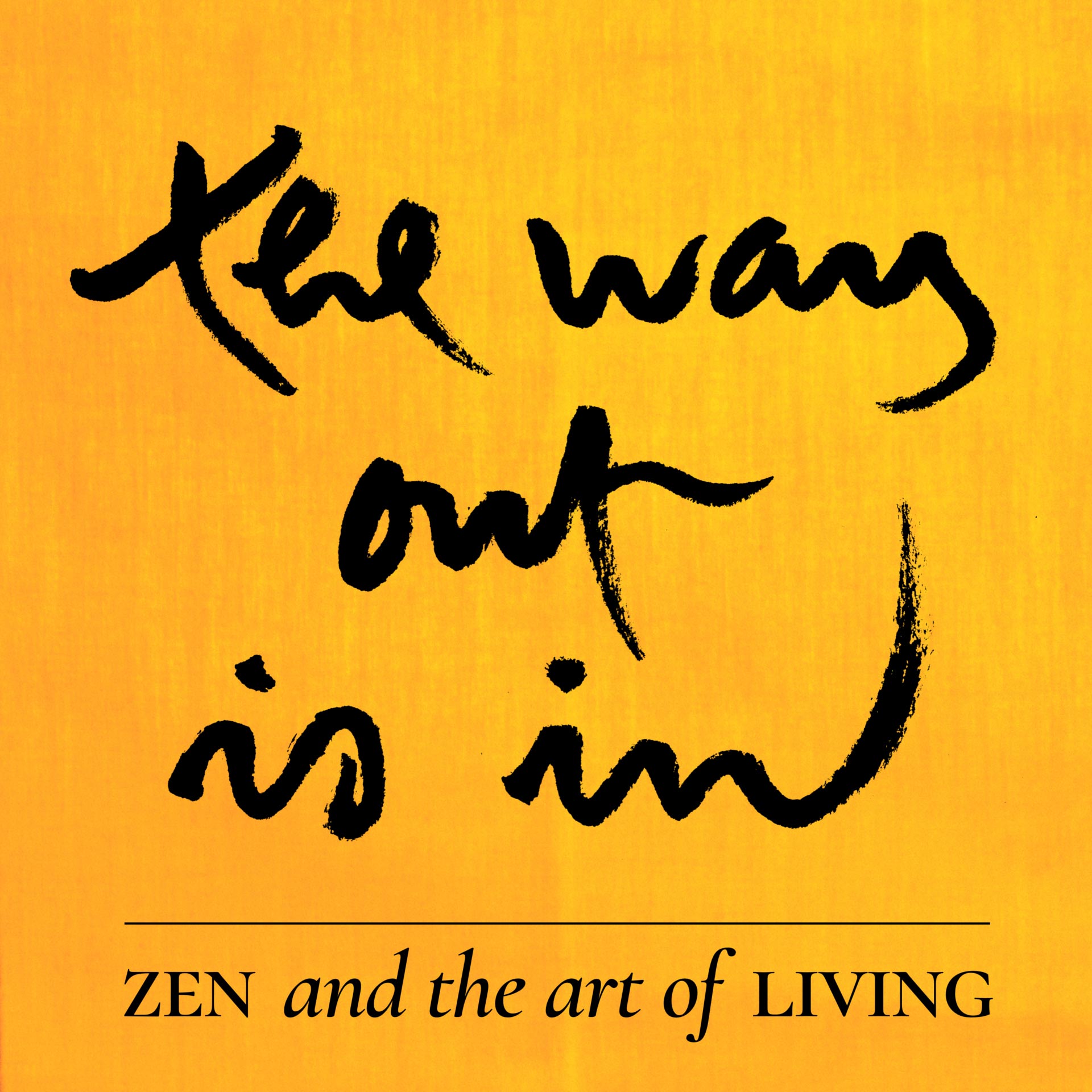
The Way Out Is In
Plum VillageAudio
- Format:
- Podcast
- New episodes:
- Every two weeks
- Typical length:
- about 1 hour 40 minutes
- Latest episode:
About this show
This podcast series is aimed at helping us to transcend our fear and anger so that we can be more engaged in the world in a way that develops love and compassion.
Thich Nhat Hanh’s calligraphy ‘The Way Out Is In” highlights that the way out of any difficulty is to look deeply within, gain insights and then put them into practice.
"The Way Out is In" is co-hosted by Brother Phap Huu, Thich Nhat Hanh's personal attendant for 17 years and the abbot of Plum Village's Upper Hamlet, and Jo Confino, who works at the intersection of personal transformation and systems change.
The podcast is co-produced by the Plum Village App and Global Optimism, with support from the Thich Nhat Hanh Foundation.
Covers: buddhism, mindfulness, zen practice, personal transformation, compassion, emotional wellbeing, social change, meditation
Show details and episodes come from the publisher's public feed at plumvillage.org. Last updated . Names, artwork and text belong to their publishers.
Recently on this show
Summary of recent episodes, drawn from the publisher's feed.
The Way Out Is In is a Zen-inspired podcast from Plum Village, aiming to help listeners move past fear and anger toward more loving, compassionate engagement with the world. Recent episodes cover trust in life, asking for help, paths of change and resistance, and dharma and business.
Cosmos
Rated alike
- Dear Gabby
Often rated the same way. - Heimler's History
Often rated the same way. - English Addict with Mr Duncan
Often rated the same way.
Similar in subject
- The Daily Dharma
Both cover: compassion, emotional wellbeing, buddhism - Buddhism Beyond Belief with Susan Piver
Both cover: compassion, emotional wellbeing, buddhism - AudioDharma
Both cover: compassion, buddhism, mindfulness
Similar shows





Explore more
Episodes
The Beauty of Imperfection (Episode #80)
· 1 hr 39 min
🔔 SENSITIVE CONTENT Disclaimer: The information in this video is not intended to diagnose or treat any mental health condition. If you are in crisis, or in need of immediate assistance, we encourage you to reach out to friends, professionals, and other groups to gain relevant support for your particular situation. Welcome to episode 80 of The Way Out Is In: The Zen Art of Living, a podcast series mirroring Zen Master Thich Nhat Hanh (https://plumvillage.org/about/thich-nhat-hanh/)’s deep teachings of Buddhist philosophy: a simple yet profound methodology for dealing with our suffering, and for creating more happiness and joy in our lives. In this installment, Zen Buddhist monk Brother Phap Huu (https://plumvillage.org/people/dharma-teachers/br-phap-huu/) and leadership coach/journalist Jo Confino (https://www.instagram.com/joconfino/?hl=en) talk about how to come home to ourselves, why it can be so difficult for people to feel at home in their own skin and to feel that they are enough, and why people go searching for things outside of themselves in order to feel better about themselves on the inside. The hosts further explore self-love and self-acceptance; compassion; overcoming perfectionism and feelings of inadequacy; redefining beauty; true generosity; dismantling self; the Buddhist teachings on interbeing and dwelling in the present moment; and more. They also share personal experiences and insights from Thich Nhat Hanh’s own journey to inner freedom and stability. The episode concludes with a short meditation guided by Brother Phap Huu. Enjoy! Co-produced by the Plum Village App: https://plumvillage.app/ And Global Optimism: https://globaloptimism.com/ With support from the Thich Nhat Hanh Foundation: https://thichnhathanhfoundation.org/ List of resources Interbeing https://en.wikipedia.org/wiki/Interbeing Brother Phap Linh (Brother Spirit) https://www.instagram.com/brotherspirit ‘Three Resources Explaining the Plum Village Tradition of Lazy Days’ https://plumvillage.app/three-resources-explaining-the-plum-village-tradition-of-lazy-days/ ‘Thich Nhat Hanh on Discrimination and Complexes’ https://plumvillage.app/thich-nhat-hanh-on-discrimination-and-complexes Dharma Talks: ‘What Is the Equality Complex?’ https://plumvillage.org/library/dharma-talks/what-is-the-equality-complex How To: ‘Begin Anew’ https://plumvillage.org/articles/begin-anew Dharma Talks: ‘The Five Remembrances’ https://plumvillage.org/library/dharma-talks/the-five-remembrances-sr-thuan-nghiem-spring-retreat-2018-05-17 The Way Out Is In: ‘Feel It to Heal It: The Dharma of Music (Episode #79)’ https://plumvillage.org/podcast/feel-it-to-heal-it-the-dharma-of-music-episode-79 The Way Out Is In: ‘Shining Light (Episode #63)’ https://plumvillage.org/podcast/shining-light-episode-63 Quotes “Where there’s a stillness, the energy of mindfulness is present.” “Thich Nhat Hanh would speak about how, sometimes, we have to expand our mind and expand ourselves to see that our suffering is not ours alone: it is a shared suffering. And, also, when we transform the suffering, it is not only our transformation: it is a transformation for the greater collective. And we don’t discriminate about whether it is a small or a large transformation, because all transformations have an impact on the greater consciousness of our society.” “When we talk about coming home to oneself, that is the whole journey of meditation: dwelling happily in the present moment. It means that, in the present moment, whether there’s a storm, whether it is a moment that is blissful and peaceful, I can be happy. And if there is a moment when there is suffering, like if I am unwell and I’m not experiencing joy and happiness, I can learn to still tap into my happy conditions and be there for this moment. So I can generate happiness in this moment, even in the midst of suffering and pain.” “The word love in Buddhism is very deep; there’s so many layers to it. And a part of love always…
Not rated yetFeel It to Heal It: The Dharma of Music (Episode #79)
· 2 hr 12 min
Welcome to episode 79 of The Way Out Is In: The Zen Art of Living, a podcast series mirroring Zen Master Thich Nhat Hanh (https://plumvillage.org/about/thich-nhat-hanh/)’s deep teachings of Buddhist philosophy: a simple yet profound methodology for dealing with our suffering, and for creating more happiness and joy in our lives. In this installment, Zen Buddhist monk Brother Phap Huu (https://plumvillage.org/people/dharma-teachers/br-phap-huu/) and leadership coach/journalist Jo Confino (https://www.instagram.com/joconfino/?hl=en) are joined by musician/producer Jack Peñate (https://en.wikipedia.org/wiki/Jack_Pe%C3%B1ate) and frequent guest Brother Phap Linh (https://plumvillage.org/people/dharma-teachers/brother-phap-linh), Dharma teacher/musician. Together, they talk about the release of A Cloud Never Dies (https://plumvillage.org/album-a-cloud-never-dies), the debut album by the Plum Village Band – a musical meditation on love, continuation, and non-fear, inspired by and dedicated to Thich Nhat Hanh. The album was produced by Jack, with the two monastics joining the conversation as co-creators of the album and representing the Plum Village Band: a collective of Zen Buddhist monks and nuns from Plum Village Monastery, France, plus musician-meditator friends from around the world. In the first part of the episode, the guests discuss their musical journeys, from childhood to this point; the power of music as a portal to share the Dharma; music and Buddhist tradition; making music as a spiritual form; art as a Zen practice; and more. In the second part, they share songs from the album and discuss their origins, meaning, creative process, and production stories. And we get to listen to the discussed songs too. Listen to the album and find out more about it here (https://plumvillage.org/album-a-cloud-never-dies). Co-produced by the Plum Village App: https://plumvillage.app/ And Global Optimism: https://globaloptimism.com/ With support from the Thich Nhat Hanh Foundation: https://thichnhathanhfoundation.org/ List of resources Interbeing https://en.wikipedia.org/wiki/Interbeing Jack Peñate https://en.wikipedia.org/wiki/Jack_Pe%C3%B1ate Brother Phap Linh (Brother Spirit) https://www.instagram.com/brotherspirit Sister Chan Khong https://plumvillage.org/about/sister-chan-khong ‘Recommendation’ https://plumvillage.org/articles/recommendation Album: A Cloud Never Dies https://plumvillage.org/album-a-cloud-never-dies The Way Out Is In: ‘Regeneration and Musical Inspiration: The North American Tour (Episode #53)’ https://plumvillage.org/podcast/regeneration-and-musical-inspiration-the-north-american-tour-episode-53 Pirates Blend https://piratesblend.com/ ‘The Four Dharma Seals of Plum Village’ https://plumvillage.org/articles/the-four-dharma-seals-of-plum-village Aretha Franklin https://en.wikipedia.org/wiki/Aretha_Franklin Billie Holiday https://en.wikipedia.org/wiki/Billie_Holiday Lee ‘Scratch’ Perry https://en.wikipedia.org/wiki/Lee_%22Scratch%22_Perry Narcissus and Goldmund https://en.wikipedia.org/wiki/Narcissus_and_Goldmund The Glass Bead Game https://en.wikipedia.org/wiki/The_Glass_Bead_Game Hermann Hesse https://en.wikipedia.org/wiki/Hermann_Hesse Bhagavad Gita https://en.wikipedia.org/wiki/Bhagavad_Gita Quotes “Music and Zen go together.” “There’s art in making tea and there’s art in life, in the way that we live our days.” “The highest music, the best kind of music, is breathing.” “Everything could become practice. It just depends on our heart and our intention. We feel like we can be very authentic practitioners and teachers of mindfulness and meditation and combine that with playing music, singing, creating. Because our teacher showed us how to do that, and how to be real in the doing of that, to make the music a meditation as well.” “Music not as a performance, but as an invitation to touch the present moment.” “When you know what your path is, you have to completely follow that, and be…
Not rated yetBeing with Busyness Q&A, Part Two (Episode #78)
· 1 hr 45 min
Welcome to episode 78 of The Way Out Is In: The Zen Art of Living, a podcast series mirroring Zen Master Thich Nhat Hanh (https://plumvillage.org/about/thich-nhat-hanh/)’s deep teachings of Buddhist philosophy: a simple yet profound methodology for dealing with our suffering, and for creating more happiness and joy in our lives. This special episode – part two of two Q&A installments – marks the launch of the first book by Zen Buddhist monk Brother Phap Huu (https://plumvillage.org/people/dharma-teachers/br-phap-huu/) and leadership coach/journalist Jo Confino (https://www.instagram.com/joconfino/?hl=en). Being with Busyness: Zen Ways to Transform Overwhelm and Burnout is intended to help readers navigate these experiences, relieve stress, and reconnect to their inner joy through mindfulness and compassion practices inspired by Thich Nhat Hanh. Instead of discussing the book, the two presenters asked listeners to submit their questions on these timely topics. Listeners’ generous, vulnerable questions answered in this episode include: What are some practical tips for staying grounded and mindful amidst the busyness? How can I get back into practicing mindfulness? How can I practice mindfulness while doing multiple things at once? How can I be of service to others while still caring for myself? How can busy people know when it’s enough and draw a line? How does Plum Village deal with the burnout issues that also exist in the outside world? Co-produced by the Plum Village App: https://plumvillage.app/ And Global Optimism: https://globaloptimism.com/ With support from the Thich Nhat Hanh Foundation: https://thichnhathanhfoundation.org/ List of resources Interbeing https://en.wikipedia.org/wiki/Interbeing Being with Busyness https://www.parallax.org/product/being-with-busyness The Way Out Is In: ‘Being with Busyness Q&A, Part One (Episode #77)’ https://plumvillage.org/podcast/being-with-busyness-qa-part-one-episode-77 The Miracle of Mindfulness: An Introduction to the Practice of Meditation https://www.parallax.org/product/the-miracle-of-mindfulness Pema Chödrön https://en.wikipedia.org/wiki/Pema_Ch%C3%B6dr%C3%B6n Start Where You Are https://pemachodronfoundation.org/product/start-where-you-are-book/ Sister Chan Khong https://plumvillage.org/about/sister-chan-khong ‘Three Resources Explaining the Plum Village Tradition of Lazy Days’ https://plumvillage.app/three-resources-explaining-the-plum-village-tradition-of-lazy-days/ Dharma Talks: ‘The Fours Pillars of Spiritual Life’ https://plumvillage.org/library/dharma-talks/the-four-pillars-of-spiritual-life-dharma-talk-by-sr-dang-nghiem Bodhisattva https://en.wikipedia.org/wiki/Bodhisattva Quotes “The Buddha explains that each and every one of us has an island within us that we have to tend and take care of. That island is our way of being, our calm that we can bring to the chaos. And it doesn’t mean that our surroundings are calm, but that we are calm inside. Even just a slice of calmness can relieve everything that is happening around us.” “The art of a meditator among busyness is to not be dispersed or carried away. When we are dispersed and carried away, we have the ability to come back to that island of practice. And this is an ongoing practice that we can all develop. We develop it when we’re at peace, when we have calm, when there is stillness.” “Our mindfulness is what we’re cultivating in our mind at the present moment.” “When you’re washing your plate, that is a moment when you’re just washing your plate, not thinking about the next project; that is mindfulness.” “The spiritual dimension is an old technology. It’s free and can be practiced from day one, right now, right here.” “Letting go in the space of Dharma is to grow and to have freedom. But if we’re to let go, to give up, that’s a different energy. So we also have to know that taking a step back to have more space, and then continuing, is also okay.” “People have dual problems. One is that they…
Not rated yetBeing with Busyness Q&A, Part One (Episode #77)
· 1 hr 18 min
Welcome to episode 77 of The Way Out Is In: The Zen Art of Living, a podcast series mirroring Zen Master Thich Nhat Hanh (https://plumvillage.org/about/thich-nhat-hanh/)’s deep teachings of Buddhist philosophy: a simple yet profound methodology for dealing with our suffering, and for creating more happiness and joy in our lives. This special episode – part one of a two Q&A installments – marks the launch of the first book by Zen Buddhist monk Brother Phap Huu (https://plumvillage.org/people/dharma-teachers/br-phap-huu/) and leadership coach/journalist Jo Confino (https://www.instagram.com/joconfino/?hl=en). Being with Busyness: Zen Ways to Transform Overwhelm and Burnout is intended to help readers navigate these experiences, relieve stress, and reconnect to their inner joy through mindfulness and compassion practices inspired by Zen Master Thich Nhat Hanh. Instead of discussing the book, the two presenters asked listeners to submit their questions on these timely topics. Listeners’ generous, vulnerable questions answered in this episode include: Can mindfulness help us observe busyness, set limits, and let us savor boredom and solitude? How do you handle the phone as monastics in Plum Village, and what do you do to not get pulled in? How can I make long-lasting change when our culture demands constant attention? How do I survive when I desperately want to leave my line of work but can’t for financial reasons? Co-produced by the Plum Village App: https://plumvillage.app/ And Global Optimism: https://globaloptimism.com/ With support from the Thich Nhat Hanh Foundation: https://thichnhathanhfoundation.org/ List of resources Interbeing https://en.wikipedia.org/wiki/Interbeing Being with Busyness https://www.parallax.org/product/being-with-busyness ‘Three Resources Explaining the Plum Village Tradition of Lazy Days’ https://plumvillage.app/three-resources-explaining-the-plum-village-tradition-of-lazy-days/ Dharma Talks: ‘The Noble Eightfold Path’ https://plumvillage.org/library/dharma-talks/the-noble-eightfold-path Online course: Zen and the Art of Saving the Planet https://plumvillage.org/courses/zen-and-the-art-of-saving-the-planet (https://plumvillage.org/courses/zen-and-the-art-of-saving-the-planet?utm_source=podcast&utm_medium=twoii&utm_campaign=zasp) Bodhisattva https://en.wikipedia.org/wiki/Bodhisattva Christiana Figueres https://www.globaloptimism.com/christiana-figueres Quotes “The title, Being with Busyness: it’s not getting rid of busyness, it’s not fixing busyness, but it is a way of being with busyness. But it’s not about fixing it, it’s about how to be in it and how to be with it; how to move through these particular strong energies of our society so that we don’t lose ourselves.” “The first wing of meditation is the art of stopping and recognizing the present moment. But there is a fear of doing nothing, because we have been educated – dare I say, brainwashed – to think that we have to do something in every moment of life, because time is money. Time is projects; time is to succeed. And this has driven our society into a mindset of not knowing how to be in the now.” “Thay always reminds us that the purpose of being alive, first and foremost, is to be here, to know what is happening in the very here and now.” “Knowing that we have habits that are taking us away from the present moment is already mindfulness.” “A mindful life, the art of mindfulness, is not about just cutting off bad habits; it’s also about developing enough good habits to replace the bad ones.” “I really love this idea of reciprocity: the idea that if you’re given something valuable then the most natural thing is to want to give something valuable back.” “It’s not about the laptop. It’s about how we use it; it’s about what kind of practice we build around it.” “There is a system pushing us to be a certain way. There is a system making demands of us – but, actually, within that system we always have agency. There is always…
Not rated yetThe Four Types of Food for Healthy Growth (Episode #76)
· 1 hr 59 min
Welcome to episode 76 of The Way Out Is In: The Zen Art of Living, a podcast series mirroring Zen Master Thich Nhat Hanh (https://plumvillage.org/about/thich-nhat-hanh/)’s deep teachings of Buddhist philosophy: a simple yet profound methodology for dealing with our suffering, and for creating more happiness and joy in our lives. In this installment, Zen Buddhist monk Brother Phap Huu (https://plumvillage.org/people/dharma-teachers/br-phap-huu/) and leadership coach/journalist Jo Confino (https://www.instagram.com/joconfino/?hl=en) put a modern twist on the Four Nutriments – one of the Sutras of the Buddha – using it as a framework to explore what it is to be a mindful consumer of life. With each of the Four Nutriments – edible foods, sense impressions, volition or aspiration, and consciousness – the Buddha gave a little story which the presenters explore and bring into the reality of our times. The ensuing conversation touches many topics and ideas, like how and why to invest in our spiritual dimension; individual and collective consciousness; shifting consciousness, generating community and a fairer society; practicing moderation; cultivating compassion; habit energies; rebuilding our connection to food; changing the way stories are told; suffering as a bell of mindfulness; and more. Brother Phap Huu shares deeply about experiencing burnout; speaking our minds; and adapting Buddhist teaching for each new generation. Jo complements this episode’s theme with personal stories and a new approach to what it is to be courageous. Co-produced by the Plum Village App: https://plumvillage.app/ And Global Optimism: https://globaloptimism.com/ With support from the Thich Nhat Hanh Foundation: https://thichnhathanhfoundation.org/ List of resources Online course: Zen and the Art of Saving the Planet https://plumvillage.org/zasp?utm_source=podcast&utm_medium=twoii&utm_campaign=zasp Interbeing https://en.wikipedia.org/wiki/Interbeing Sutras https://plumvillage.org/genre/sutras Sutras: ‘Discourse on the Four Kinds of Nutriments’ https://plumvillage.org/library/sutras/discourse-on-the-four-kinds-of-nutriments Bodhisattva https://en.wikipedia.org/wiki/Bodhisattva Douglas Tompkins https://en.wikipedia.org/wiki/Douglas_Tompkins The Order of Interbeing https://plumvillage.org/community/order-of-interbeing John Bell https://www.parallax.org/authors/john-bell/ Who Cares Wins: How to Protect the Planet You Love https://www.penguin.co.uk/books/305695/who-cares-wins-by-cole-lily/9780241309148 Quotes “Every being has a spiritual dimension and we need to invest in our spiritual dimension. And if young people can invest in it earlier, then the future has a greater hope and a more wonderful and sustainable livelihood that we can lead ourselves towards.” “Consuming is not just what we eat and drink but what we listen to, what we smell, what we taste, and so on.” “It’s not that wanting a state of peace means that we can suddenly have peace; we have to nurture the peace inside of us.” “Mindfulness gives us the lens of awareness to go inwards and see what we are consuming on a daily basis. What is intentional and what are we consuming that we’re not even aware of?” “Our way of being is also food for elements that are outside of us.” “We’re creating a cacophony of thoughts, feelings, and actions that form an individual basis, then create a collective. Often, people don’t feel that their individual behavior has an impact on the collective; often, they think that the collective is the only thing influencing them.” “Trust the seeds that you plant, but don’t expect them to grow right away.” “The Buddha says every action has an impact on the past, the present, and the future. So our actions today actually have an impact 1,000 years later.” “When we practice a vegetarian or a vegan diet, it is because we are aspiring to cultivate our compassion.” “Vulnerability opens support.” “We know that habit energy is not ours alone: it’s society’s…
Not rated yetBridging Being and Doing (Episode #75)
· 1 hr 32 min
Welcome to episode 75 of The Way Out Is In: The Zen Art of Living, a podcast series mirroring Zen Master Thich Nhat Hanh (https://plumvillage.org/about/thich-nhat-hanh/)’s deep teachings of Buddhist philosophy: a simple yet profound methodology for dealing with our suffering, and for creating more happiness and joy in our lives. In this installment, Zen Buddhist monk Brother Phap Huu (https://plumvillage.org/people/dharma-teachers/br-phap-huu/) and leadership coach/journalist Jo Confino (https://www.instagram.com/joconfino/?hl=en) discuss the practice of being and doing – in terms of both Buddhist and mainstream-society perceptions. Together, they look at practical ways to create conditions in which our way of being present can be truly valued and made essential in all our daily actions. How can we train ourselves to maintain presence, in spite of our circumstances? The conversation tackles various relevant topics, such as being as the ground of our actions; being as a state which is crucial for the art of peace; training our concentration; the super-strength of allowing and sharing our vulnerabilities; creating a schedule for practicing being; how ‘to be’ in Zen and what people can get wrong about it; being as a way to access interbeing; doing as an avoidance of being (what is it about being that scares us?); the risks of not bringing being into doing; and more. The episode ends with a short meditation on being, guided by Brother Phap Huu. Co-produced by the Plum Village App: https://plumvillage.app/ And Global Optimism: https://globaloptimism.com/ With support from the Thich Nhat Hanh Foundation: https://thichnhathanhfoundation.org/ List of resources Online course: Zen and the Art of Saving the Planet https://plumvillage.org/zasp?utm_source=podcast&utm_medium=twoii&utm_campaign=zasp Interbeing https://en.wikipedia.org/wiki/Interbeing ‘The Four Dharma Seals of Plum Village’ https://plumvillage.org/articles/the-four-dharma-seals-of-plum-village The Way Out Is In: ‘The Art of Laziness: Don’t Just Do Something, Sit There! (Episode #41)’ https://plumvillage.org/podcast/the-art-of-laziness-dont-just-do-something-sit-there-episode-41 The Way Out Is In: ‘Taming Our Survival Instinct (Episode #65)’ https://plumvillage.org/podcast/taming-our-survival-instinct-episode-65 John Bradshaw https://www.johnbradshaw.com/ Quotes “Mainstream society seems to believe that action equates to what we do, and how we are and the way we are in the world tends to be relegated to a very, very poor second place.” “In the deep view of Buddhism, ‘being’ can only be when you interbe with everything else.” “To be is to interbe.” “Don’t just do something, sit there.” “We tend to think in terms of doing and not in terms of being. We think that when we are not doing anything, we are wasting our time. That is not true. Our time is, first of all, for us to be. To be what? To be alive, to be peace, to be joy, to be loving. And that is what the world needs the most. So we train ourselves in order to be. And if you know the art of being peace, being silent, then you have the ground for every action, because the ground for action is to be. And the quality of being determines the quality of doing. Action must be based on non-action.” “This mindset of doing and being has been divided. Whereas, in our training we don’t separate between spirituality and doing.” “In Buddhism, our actions – which we leave behind in this world – are our truest karma. They are the true continuation of our thoughts, our speech, and our bodily actions: how I open the door, how I see you, how I speak to you, how I engage in difficult conversations.” “The schedule is our teacher.” “Being can be very confronting because, when we’re truly there, we start to see ourselves more clearly.” “The real art is being blissful and being present through every storm that arises.” “By being and understanding how to be, you can act with integrity and with understanding.” “Don’t try to…
Not rated yetMindful Economics: In Conversation with Kate Raworth (Episode #74)
· 2 hr 2 min
Welcome to episode 74 of The Way Out Is In: The Zen Art of Living, a podcast series mirroring Zen Master Thich Nhat Hanh (https://plumvillage.org/about/thich-nhat-hanh/)’s deep teachings of Buddhist philosophy: a simple yet profound methodology for dealing with our suffering, and for creating more happiness and joy in our lives. In this installment, Zen Buddhist monk Brother Phap Huu (https://plumvillage.org/people/dharma-teachers/br-phap-huu/) and leadership coach/journalist Jo Confino (https://www.instagram.com/joconfino/?hl=en) are joined by special guest Kate Raworth (https://www.kateraworth.com/), the creator of Doughnut Economics, to discuss from spirituality to new economic thinking; individual, community, and planetary boundaries; putting ideas into practice; practicing true love and no self; avoiding the trap of fame; and much more. Kate shares her journey into reimagining economics; the encounters that shaped her vision; regenerative enterprises and the inspiring communities making new economics a reality; and the discoveries made after attending a Plum Village retreat with her family. Kate Raworth is the creator of the Doughnut (https://doughnuteconomics.org/about-doughnut-economics) of social and planetary boundaries, co-founder of Doughnut Economics Action Lab (https://doughnuteconomics.org/), and author of the internationally bestselling Doughnut Economics: Seven Ways to Think like a 21st Century Economist. She is a Senior Associate at Oxford University’s Environmental Change Institute (http://www.eci.ox.ac.uk/), and Professor of Practice at Amsterdam University of Applied Sciences (https://www.amsterdamuas.com/). Over the past 25 years, Kate’s career has taken her from working with micro-entrepreneurs in the villages of Zanzibar to co-authoring the Human Development Report for the United Nations Development Programme (UNDP) in New York, followed by a decade as Senior Researcher at Oxfam. Read more about her work on her website (https://www.kateraworth.com/). Co-produced by the Plum Village App: https://plumvillage.app/ And Global Optimism: https://globaloptimism.com/ With support from the Thich Nhat Hanh Foundation: https://thichnhathanhfoundation.org/ List of resources Online course: Zen and the Art of Saving the Planet https://plumvillage.org/courses/zen-and-the-art-of-saving-the-planet Interbeing https://en.wikipedia.org/wiki/Interbeing Doughnut Economics Action Lab https://doughnuteconomics.org Doughnut Economics: Seven Ways to Think like a 21st Century Economist https://en.wikipedia.org/wiki/Doughnut_Economics:_Seven_Ways_to_Think_Like_a_21st-Century_Economist ‘Five Contemplations before Eating’ https://www.parallax.org/mindfulnessbell/article/five-contemplations-before-eating/ Biocentrism https://www.britannica.com/topic/biocentrism Lily Cole https://en.wikipedia.org/wiki/Lily_Cole The Raft Is Not the Shore https://www.parallax.org/product/the-raft-is-not-the-shore/ ‘Begin Anew’ https://plumvillage.org/articles/begin-anewClub of Rome https://www.clubofrome.org/The Art of Power https://www.parallax.org/product/art-of-power/ Herman Daly https://en.wikipedia.org/wiki/Herman_Daly Chants: ‘The Three Refuges’ https://plumvillage.org/library/chants/the-three-refuges Wellbeing Alliance https://www.culturehealthandwellbeing.org.uk/ Economy for the Common Good https://www.econgood.org Elinor Ostrom https://en.wikipedia.org/wiki/Elinor_Ostrom International Monetary Fund (IMF) https://www.imf.org/en/Home TED Talk: A Healthy Economy Should Be Designed to Thrive, Not Grow https://www.ted.com/talks/kate_raworth_a_healthy_economy_should_be_designed_to_thrive_not_grow?subtitle=en Barbara Ward https://en.wikipedia.org/wiki/Barbara_Ward,_Baroness_Jackson_of_Lodsworth Marilyn Waring https://marilynwaring.com/ Donella Meadows https://en.wikipedia.org/wiki/Donella_Meadows Janine Benyus https://biomimicry.org/janine-benyus Quotes “Doughnut economics is one way of trying to create an economics that…
Not rated yetBeing with Painful Feelings (Episode #73)
· 1 hr 27 min
Welcome to episode 73 of The Way Out Is In: The Zen Art of Living, a podcast series mirroring Zen Master Thich Nhat Hanh (https://plumvillage.org/about/thich-nhat-hanh/)’s deep teachings of Buddhist philosophy: a simple yet profound methodology for dealing with our suffering, and for creating more happiness and joy in our lives. Nobody escapes pain, but, for most people, knowing how to handle it remains a mystery. That’s why, in this installment, Zen Buddhist monk Brother Phap Huu (https://plumvillage.org/people/dharma-teachers/br-phap-huu/) and leadership coach/journalist Jo Confino (https://www.instagram.com/joconfino/?hl=en) discuss ways to cope with painful feelings, both individually and collectively. The two presenters talk about the Buddhist practices of being with pain, and how to handle it, be aware of it, and understand it, in order to start transforming it. The conversation touches upon personal stories of transformation, including snippets from Thich Nhat Hanh’s life; the general fear of being with our suffering; the ability to touch joy in daily life; deep happiness; accessing the wisdom in ourselves; eight practical stages for dealing with our pain, based on Buddhist practices; and much more. The episode ends with a short meditation guided by Brother Phap Huu. Co-produced by the Plum Village App: https://plumvillage.app/ And Global Optimism: https://globaloptimism.com/ With support from the Thich Nhat Hanh Foundation: https://thichnhathanhfoundation.org/ List of resources Interbeing https://en.wikipedia.org/wiki/Interbeing ‘The Four Dharma Seals of Plum Village’ https://plumvillage.org/articles/the-four-dharma-seals-of-plum-village Sister True Dedication https://plumvillage.org/people/dharma-teachers/sister-hien-nghiem The Way Out Is In: ‘The Three Doors of Liberation (Episode #18)’ https://plumvillage.org/podcast/the-three-doors-of-liberation-episode-18 The Way Out Is In: The Heart of Meditation – Part One (Episode #61)’ https://plumvillage.org/podcast/the-heart-of-meditation-part-one-episode-61 The Way Out Is In: ‘The Heart of Meditation – Part Two (Episode #62)’ https://plumvillage.org/podcast/the-heart-of-meditation-part-two-episode-62 51 Mental Formations https://plumvillage.org/transcriptions/51-mental-formation ‘Texts for the Practice of “Touching the Earth”’ https://plumvillage.org/texts-for-the-practice-of-touching-the-earth Quotes “I think pain is a universal thread that connects all of us human beings, because it is inevitable that each and every one of us experience pain, whether it is physical or emotional. And part of the Buddha’s journey of spiritual investigation was how he could touch deep freedom and deep awakening.” “When we are taking care of our happiness, we are also taking care of our pain and our suffering. And these emotions coexist. They are like light and darkness, up and down; like all opposites. These two fundamental elements of life are very important ingredient of spirituality.” “If we know how to look deeply into suffering, we will know how to suffer.” “In kindness there’s patience.” “Understanding pain and suffering is a very important element of spiritual growth.” “Someone like Thay, who experienced war, would never take a peaceful day for granted. And that became a root of his insight; he went through so much suffering, so much despair, so much killing, that the peace he was able to experience in 24 hours was the greatest gift.” “When we can touch our own pain and our own suffering, that is already mindfulness: just knowing that we suffer.” “The path is to be with our suffering in order to generate happiness.” “As a practitioner, we have to remember to nourish an important element in our daily life: the ability to experience joy in the present moment. And then recognize that happiness in the present moment.” “You are more than your emotions.” “Don’t think about your breath; feel your breath. Don’t think about your body; feel your body.” “Each moment…
Not rated yetFinding a Spiritual Path (Episode #72)
· 1 hr 20 min
Welcome to episode 72 of The Way Out Is In: The Zen Art of Living, a podcast series mirroring Zen Master Thich Nhat Hanh (https://plumvillage.org/about/thich-nhat-hanh/)’s deep teachings of Buddhist philosophy: a simple yet profound methodology for dealing with our suffering, and for creating more happiness and joy in our lives. In this installment, Zen Buddhist monk Brother Phap Huu (https://plumvillage.org/people/dharma-teachers/br-phap-huu/) and leadership coach/journalist Jo Confino (https://www.instagram.com/joconfino/?hl=en) discuss finding a spiritual path and the conditions that need to exist for someone to feel at home with a spiritual practice. And what is it to find a spiritual practice and truly rest in it and develop it over time? How do we know if we’ve found a practice that works for us, and what is it to go deeply into one way of seeing the world? The conversation touches upon many other ideas and topics such as bringing the sacred into the everyday; to be in service to the past and/or the future; Buddhist practices for people from different religious backgrounds; Dharma sharing and trust; and many more. Brother Phap Huu also shares stories of many spiritual paths that are being told at the current Plum Village retreat. The episode ends with a short meditation guided by Brother Phap Huu. Thank you for listening, and enjoy! Co-produced by the Plum Village App: https://plumvillage.app/ And Global Optimism: https://globaloptimism.com/ With support from the Thich Nhat Hanh Foundation: https://thichnhathanhfoundation.org/ List of resources Interbeing https://en.wikipedia.org/wiki/Interbeing The Sun My Heart https://www.parallax.org/product/the-sun-my-heart/ Understanding Our Mindhttps://www.parallax.org/product/understanding-our-mind/ ‘The Five Mindfulness Trainings’ https://plumvillage.org/mindfulness/the-5-mindfulness-trainings ‘The Four Dharma Seals of Plum Village’ https://plumvillage.org/articles/the-four-dharma-seals-of-plum-village Quotes “To find a practice, a spiritual practice, Thay says that’s a treasure in life. And this is why we always have to practice gratitude. I’m very grateful every day that I have a community, I have a practice, and that I’m still part of the practice.” “When we say ‘I take refuge in the Buddha’, it means ‘I take refuge in the seed of awakening inside of me’.” “What I like about Plum Village is that there are very strong guidelines about sharing: to deeply listen with love; to speak only from the heart; not to cross-talk or answer back. And not to give people advice, but just be present for them, to offer a safe space into which they can pour their pain and let it be released but not to have to justify it, not have to answer questions about it – just know that people are present for them.” “Buddhist practices are not in conflict with any religion; they actually coexist alongside very beautifully.” “When we lose our sense of being, we don’t touch interbeing, which is the deep connection that comes from us all being interrelated.” “Buddha means awakening.” “When we don’t know how to take care of our pain, we go and consume. We are ready to create more pain for other people, because we don’t know how to cope with our pain. We don’t know how to transform our pain.” “We don’t have the ability to sit with nothing, to sit with the sense of pain in us. Or, sometimes, we don’t have the ability to be there and do nothing.” “Don’t just do something, sit there.” “For those who would really like to be Buddhist, they can be Buddhist. And those who would like to keep their tradition but also be Buddhist and practice mindfulness, go ahead.” “The first wing of meditation: stop. Know what you have. Check in. Where are you in your life?” “This idea that when you practice, you don’t suffer; we have to review that idea. We have to give a new language to that.” “Sometimes, joy and happiness can coexist at the same time as suffering.” “My mantra has been, ‘There are other…
Not rated yetAncient Path for Modern Times: Feeling Safe (Episode #71)
· 1 hr 23 min
Welcome to episode 71 of The Way Out Is In: The Zen Art of Living, a podcast series mirroring Zen Master Thich Nhat Hanh (https://plumvillage.org/about/thich-nhat-hanh/)’s deep teachings of Buddhist philosophy: a simple yet profound methodology for dealing with our suffering, and for creating more happiness and joy in our lives. We’re delighted to share this special two-part installment with you, which was recorded in June 2024 at the recent Plum Village retreat, Ancient Path for Modern Times. This is the second recording of a panel discussion based loosely around the 14 mindfulness trainings – Thich Nhat Hanh’s ethical guidelines for living, a modern distillation of the traditional Bodhisattva precepts of Mahayana Buddhism. The trainings are followed by monastics and lay friends who have made a formal vow to receive, study, and observe them. In the panel, you will hear from leadership coach/journalist Jo Confino (https://www.instagram.com/joconfino/?hl=en), Sister Lang Nghiem (https://plumvillage.org/people/dharma-teachers/sr-lang-nghiem), one of the senior nuns in Plum Village, and Elli Weisbaum (https://www.elliweisbaum.com/). Their conversation focuses on what it is to feel safe in the world, what it is to belong, and what it is like to feel at home in the world, and touches upon topics such as healing the past in the present moment; spiritual homes; community building; localization; being aware of indoctrination; challenging our worldviews; misinformation; creating resilience; and much more. Dr. Elli Weisbaum, BFA, MES, PhD, has worked internationally facilitating mindfulness workshops and retreats within the sectors of education, healthcare, and business. She is currently the Acting Program Director for the Buddhism, Psychology and Mental Health Program (BPMH), at New College, University of Toronto, Canada. At the heart of her teaching and research is an interest in cultivating learning and occupational environments where all members of the community can flourish and thrive. She attended her first retreat with Thich Nhat Hanh at the age of 10 and has continued to train with the Plum Village community. Elli’s background in both academic research and traditional mindfulness practice provides a distinct approach to her ongoing work teaching and researching in the field. Read more on her website (https://www.elliweisbaum.com/). Thank you for listening, and enjoy! Co-produced by the Plum Village App: https://plumvillage.app/ And Global Optimism: https://globaloptimism.com/ With support from the Thich Nhat Hanh Foundation: https://thichnhathanhfoundation.org/ List of resources Interbeing https://en.wikipedia.org/wiki/Interbeing The Fourteen Mindfulness Trainings https://plumvillage.org/mindfulness/the-14-mindfulness-trainings Mahayana https://en.wikipedia.org/wiki/Mahayana Elli Weisbaum https://www.elliweisbaum.com/ Sister Chan Lang Nghiem https://plumvillage.org/people/dharma-teachers/sr-lang-nghiem The Order of Interbeing https://orderofinterbeing.org/ Jamie Bristow https://www.jamiebristow.com/ Sister Chan Khong https://plumvillage.org/about/sister-chan-khong Christiana Figueres https://www.globaloptimism.com/christiana-figueres Dharma Talks: ‘Nutriments for Healing’ https://plumvillage.org/library/dharma-talks/nutriments-for-healing Deer Park Monastery https://deerparkmonastery.org/ Sister Chan Duc https://plumvillage.org/people/dharma-teachers/sr-chan-duc A Cloud Never Dies https://plumvillage.org/a-cloud-never-dies Quotes “You practice in the good times so that when the bad, difficult times come, you’re prepared to act.” “Our thoughts, we consume them first. They lead to our actions.” “As a practitioner, I often look around in my day-to-day life and ask, holding up the four nutriments, what am I consuming beyond edible foods? And how is this impacting my internal landscape?” “How am I contributing to the landscapes of consciousness around me?” “Our practice is to turn towards suffering and…
Not rated yet