

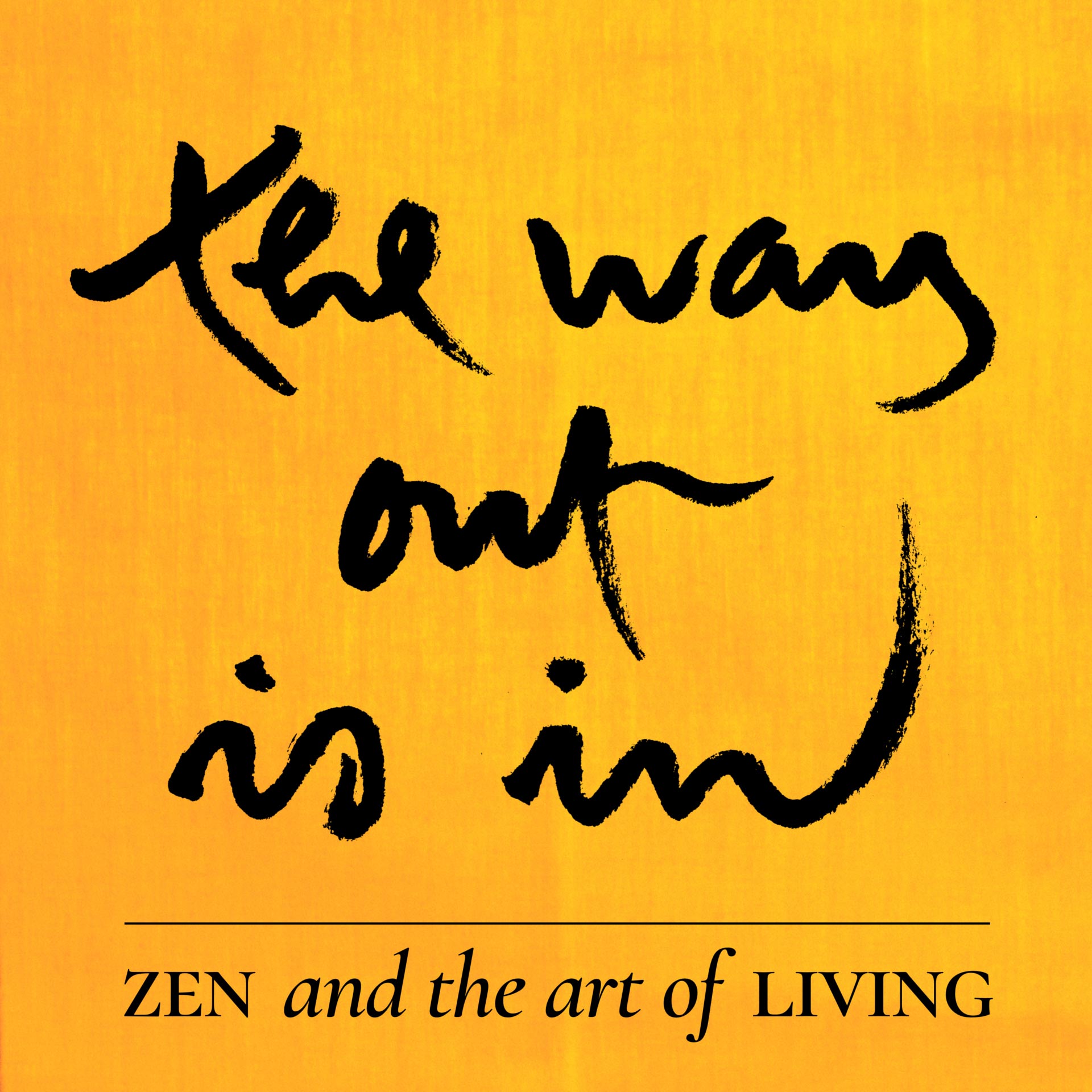
The Way Out Is In
Plum VillageAudio
- Format:
- Podcast
- New episodes:
- Every two weeks
- Typical length:
- about 1 hour 40 minutes
- Latest episode:
About this show
This podcast series is aimed at helping us to transcend our fear and anger so that we can be more engaged in the world in a way that develops love and compassion.
Thich Nhat Hanh’s calligraphy ‘The Way Out Is In” highlights that the way out of any difficulty is to look deeply within, gain insights and then put them into practice.
"The Way Out is In" is co-hosted by Brother Phap Huu, Thich Nhat Hanh's personal attendant for 17 years and the abbot of Plum Village's Upper Hamlet, and Jo Confino, who works at the intersection of personal transformation and systems change.
The podcast is co-produced by the Plum Village App and Global Optimism, with support from the Thich Nhat Hanh Foundation.
Show details and episodes come from the publisher's public feed at plumvillage.org. Last updated . Names, artwork and text belong to their publishers.
Cosmos
Similar by topic and creator
- The Rich Roll Podcast
Shares the topics Education, Health and Society. - Dear Gabby
Shares the topics Education, Health and Society. - The Dr. Lee Warren Podcast
Shares the topics Education, Health and Society.
Episodes
In Conversation with Benedict Cumberbatch (Episode #118)
· 2 hr 11 min
If you wish to support our podcast, please follow this link (https://thichnhathanhfoundation.org/?form=thewayoutisin). Thank you! Welcome to a new episode of The Way Out Is In: The Zen Art of Living, a podcast series mirroring Zen Master Thich Nhat Hanh (https://plumvillage.org/about/thich-nhat-hanh/)’s deep teachings of Buddhist philosophy: a simple yet profound methodology for dealing with our suffering, and for creating more happiness and joy in our lives. In this episode, Zen Buddhist monk Brother Phap Huu (https://plumvillage.org/people/dharma-teachers/br-phap-huu/) and leadership coach Jo Confino (https://www.instagram.com/joconfino/?hl=en) sit down with a special guest: acclaimed actor Benedict Cumberbatch (https://en.wikipedia.org/wiki/Benedict_Cumberbatch). Their unplanned conversation is dense and surprising, going in many unexpected and exciting directions. Topics include Benedict’s entry into Buddhism at 19, which eventually led him to Plum Village; his most recent project, How to Live on Earth, a documentary “about how humans are learning to team up with nature” (https://howtoliveonearth.net/); and new approaches to climate activism. All three also delve into the role of Plum Village in helping young people find their spiritual path; the challenges of maintaining mindfulness in daily life; interbeing; the importance of transforming negative patterns early on; how anger can be channeled into positive action; the pitfalls of fame; the responsibility of artists to create meaningful, impactful work; and much more. Enjoy! Co-produced by the Plum Village App: https://plumvillage.app/ And Global Optimism: https://globaloptimism.com/ With support from the Thich Nhat Hanh Foundation: https://thichnhathanhfoundation.org/ List of resources Benedict Cumberbatch https://en.wikipedia.org/wiki/Benedict_Cumberbatch Sister True Dedication https://plumvillage.org/people/dharma-teachers/sister-hien-nghiem Brother Phap Ling (Brother Spirit) https://plumvillage.org/people/dharma-teachers/brother-phap-linh Walk with Me https://plumvillage.org/walk-with-me Calm in the Storm https://plumvillage.org/articles/calm-in-the-storm-live-podcast How to Live on Earth https://howtoliveonearth.net/ Interbeing https://en.wikipedia.org/wiki/Interbeing The Plum Village Tradition https://en.wikipedia.org/wiki/Plum_Village_Tradition Wake Up https://wkup.org/ The Maasai Wilderness Conservation Trust https://maasaiwilderness.org/ Joanna Macy https://www.joannamacy.net/main Babak Anvari https://en.wikipedia.org/wiki/Babak_Anvari Under the Shadow https://en.wikipedia.org/wiki/Under_the_Shadow Martin Scorsese https://en.wikipedia.org/wiki/Martin_Scorsese Mike Leigh https://en.wikipedia.org/wiki/Mike_Leigh Richard Gere https://en.wikipedia.org/wiki/Richard_Gere Quotes “We were in this room for two nights and a day. Sleeping, eating, praying, only going out to go to the bathroom. In a weird way, it was a very good grounding. After the week was over, I remember an amazing feeling of walking out into the world and everything, everything was interbeing; everything was vibrating with the same energy; everything felt alive in a completely transparent and new but also obvious way.” “The first night, both my younger boys came to the nine o’clock meditation. They saw me going, so there was a bit of FOMO, I guess. And they both said, ‘Oh, it was amazing. It was the best. It was so quiet. It was so peaceful.’ They were so quiet, and that’s a seven- and a nine-year-old. And it’s testament to the power of this place, what it invites you to become, and bring out of yourself, these seeds that it waters. It’s really an extraordinary place to be, and to see that in a young person is an inspiration to me.” “I think all of us experience spirituality very differently. We’re very conditioned in our way of being and by our upbringing. And, for some of us, that is through suffering. For some of us, it’s through curiosity. For some of us, it’s through…
Not rated yetA Love Letter to the Vietnameseness – With Special Guest Ocean Vuong (Episode #117)
· 2 hr 2 min
If you wish to support our podcast, please follow this link (https://thichnhathanhfoundation.org/?form=thewayoutisin). Thank you! Welcome to a new episode of The Way Out Is In: The Zen Art of Living, a podcast series mirroring Zen Master Thich Nhat Hanh (https://plumvillage.org/about/thich-nhat-hanh/)’s deep teachings of Buddhist philosophy: a simple yet profound methodology for dealing with our suffering, and for creating more happiness and joy in our lives. This special episode features a deep conversation about Vietnamese identity in the diaspora, led by Zen Buddhist monk Brother Phap Huu (https://plumvillage.org/people/dharma-teachers/br-phap-huu/), scholar Nho Tran (https://mather.harvard.edu/people/nho-anh-tran), and acclaimed novelist Ocean Vuong (https://www.oceanvuong.com/about). The discussion explores Vietnameseness, the complexities of being Vietnamese in the West, and the challenges of maintaining cultural identity while adapting to new environments. The three speakers reflect on their personal journeys; the role of Buddhism in shaping their understanding of identity; the need to reject binary thinking and embrace the multifaceted nature of Vietnamese identity; the practice of joy; communal healing; the significance of filial piety; the role of language and tradition in preserving cultural heritage; honoring one’s roots while allowing for personal growth; and more. With an intro by Jo Confino and a short meditation guided by Brother Phap Huu. Co-produced by the Plum Village App: https://plumvillage.app/ And Global Optimism: https://globaloptimism.com/ With support from the Thich Nhat Hanh Foundation: https://thichnhathanhfoundation.org/ List of resources Ocean Vuong https://www.oceanvuong.com/ Interbeing https://en.wikipedia.org/wiki/Interbeing The Plum Village Tradition https://en.wikipedia.org/wiki/Plum_Village_Tradition The Way Out Is In: ‘Cultivating Joy and Togetherness in the Midst of Hardship (Episode #95)’ https://plumvillage.org/podcast/cultivating-joy-and-togetherness-in-the-midst-of-hardship-episode-95 The Way Out Is In: ‘Roots and Renewal (Episode #91)’ https://plumvillage.org/podcast/roots-and-renewal-episode-91 The Way Out Is In: ‘Spiritual Friendship (Episode #90)’ https://plumvillage.org/podcast/spiritual-friendships-episode-90 Maya Angelou https://en.wikipedia.org/wiki/Maya_Angelou Hoa Nguyen https://www.hoa-nguyen.com/ Édouard Glissant https://en.wikipedia.org/wiki/%C3%89douard_Glissant Sarah Ahmed https://en.wikipedia.org/wiki/Sara_Ahmed Paris by Night https://en.wikipedia.org/wiki/Paris_by_Night The white gaze https://en.wikipedia.org/wiki/White_gaze Chinua Achebe https://en.wikipedia.org/wiki/Chinua_Achebe Paul Celan https://en.wikipedia.org/wiki/Paul_Celan Hayao Miyazaki https://en.wikipedia.org/wiki/Hayao_Miyazaki Nina Simone https://en.wikipedia.org/wiki/Nina_Simone On Earth We’re Briefly Gorgeous https://en.wikipedia.org/wiki/On_Earth_We%27re_Briefly_Gorgeous Quotes “The first Dharma seal of our practice is, ‘I have arrived, I am home.’ And ‘arrive’, here, means to be with yourself and not feel disconnected from who you are.” “How lucky we are that Thay offered us a practice where there isn’t a demand for perfection, but a demand for presence and a demand for love in all of its manifestations. That is a thing that begins to heal.” “Part of what Buddhism has taught me is to be able to be brave and ferocious enough. I think people don’t understand the ferocity Buddhist practice demands of you. That’s why I love the idea of the wrathful deities – because Buddhism has been commodified in the West as self-help, corporate self-help especially: ‘Go calm down so you can answer more emails efficiently for the corporation.’” “The things that I lean on most, every day, are Buddhist ideas of committing oneself fully with courage. Courage is very different from fearlessness, because fearlessness means there is no fear – but there’s a lot of fear in me. I don’t know about…
Not rated yetTrust in Life (Episode #116)
· 1 hr 32 min
If you wish to support our podcast, please follow this link (https://thichnhathanhfoundation.org/?form=thewayoutisin). Thank you! Welcome to a new episode of The Way Out Is In: The Zen Art of Living, a podcast series mirroring Zen Master Thich Nhat Hanh (https://plumvillage.org/about/thich-nhat-hanh/)’s deep teachings of Buddhist philosophy: a simple yet profound methodology for dealing with our suffering, and for creating more happiness and joy in our lives. In this episode, Zen Buddhist monk Brother Phap Huu (https://plumvillage.org/people/dharma-teachers/br-phap-huu/) and leadership coach Jo Confino (https://www.instagram.com/joconfino/?hl=en) discuss the concept of ‘trust in life’. Together, they explore how Buddhist teachings can help us to navigate the tension between accepting life as it is and wanting to control it. The conversation further touches on the challenges of modern life, such as information overload and the tendency to seek quick fixes, and how these can be addressed through mindful practices; the role of suffering in personal growth and the importance of being present with one’s experiences; developing inner trust and understanding; the role of mindfulness, direct experience, and discernment in cultivating trust; the significance of simplicity, listening, and the practice of ‘beginner’s mind’ in spiritual growth; the Buddhist concept of aimlessness; and more. Co-produced by the Plum Village App: https://plumvillage.app/ And Global Optimism: https://globaloptimism.com/ With support from the Thich Nhat Hanh Foundation: https://thichnhathanhfoundation.org/ List of resources Brother Phap Ling (Brother Spirit) https://plumvillage.org/people/dharma-teachers/brother-phap-linh Interbeing https://en.wikipedia.org/wiki/Interbeing The Plum Village Tradition https://en.wikipedia.org/wiki/Plum_Village_Tradition The Sun My Heart https://www.parallax.org/product/the-sun-my-heart/ Mahayana https://en.wikipedia.org/wiki/Mahayana Dharma Talks: ‘Redefining the Four Noble Truths’ https://plumvillage.org/library/dharma-talks/redefining-the-four-noble-truths Ocean Vuong https://www.oceanvuong.com/ Dharma Talks: ‘The Noble Eightfold Path’ https://plumvillage.org/library/dharma-talks/the-noble-eightfold-path The Way Out Is In: ‘The Three Doors of Liberation (Episode #18)’ https://plumvillage.org/podcast/the-three-doors-of-liberation-episode-18 Quotes “Trust in God, but don’t forget to tie up your camel.” “Understanding is love, is peace – because, when we understand suffering, we don’t want to create more suffering.” “If we listen deeply, we can see how many conditions we have to generate the understanding that allows us to have joy and happiness in the present moment.” “As a human being, we all have a spiritual dimension, and it’s not far away. It’s not found in a retreat. It’s not found in a monastery. It is everywhere. It’s in the ultimate dimension, the historical dimension. It’s in the trees. It is us. But we’re not able to activate it – our collective culture doesn’t allow us to tap into that. We have been afraid of being sensitive, of having empathy, and it’s hard to be in a world where we’re not conditionedto be with our feelings.” “Thay said not to bring your intellectual mind into Dharma talks, because it will try to agree or disagree. The intellectual mind will try to consume the understanding, which becomes a blockage to deeper understanding of your deepest potentials.” “In Buddhist Zen Mahayana literature, sometimes we have to be a learner, and sometimes we have to let go of the learning because it’s enough. Just practice. Enjoy the present moment.” “Sometimes we draw a graph and think growth is always going up or being solid. But, sometimes, growth is knowing that we’re suffering but not being carried away by it – just being present and holding it and listening to it.”
Not rated yetAsking for Help (Episode #115)
· 1 hr 9 min
If you wish to support our podcast, please follow this link (https://thichnhathanhfoundation.org/?form=thewayoutisin). Thank you! Welcome to a new episode of The Way Out Is In: The Zen Art of Living, a podcast series mirroring Zen Master Thich Nhat Hanh (https://plumvillage.org/about/thich-nhat-hanh/)’s deep teachings of Buddhist philosophy: a simple yet profound methodology for dealing with our suffering, and for creating more happiness and joy in our lives. In this episode, Zen Buddhist monk Brother Phap Huu (https://plumvillage.org/people/dharma-teachers/br-phap-huu/) and leadership coach Jo Confino (https://www.instagram.com/joconfino/?hl=en) discuss the difficulty of asking for help, exploring the cultural and personal barriers that can prevent people from seeking assistance. They emphasize the importance of recognizing indirect requests for help, and the need for compassion and presence when one is asked for help; the role of community and nature in providing support; and the necessity of self-forgiveness and self-care. The conversation underscores collective responsibility for addressing societal issues, and the power of shared vulnerability in fostering deeper connections. The hosts also share practical steps, from both teachings and their own lives. Co-produced by the Plum Village App: https://plumvillage.app/ And Global Optimism: https://globaloptimism.com/ With support from the Thich Nhat Hanh Foundation: https://thichnhathanhfoundation.org/ List of resources Sister Chan Khong https://plumvillage.org/about/sister-chan-khong Brother Phap Ling (Brother Spirit) https://plumvillage.org/people/dharma-teachers/brother-phap-linh Interbeing https://en.wikipedia.org/wiki/Interbeing The Plum Village Tradition https://en.wikipedia.org/wiki/Plum_Village_Tradition Wake Up Retreat 2026 https://plumvillage.org/articles/wake-up-retreat-2026-am-i-good-enough The Four Mantras of Love https://plumvillage.org/gems/event/The-Four-Mantras-of-Love-V2DFQvyDMgD3NEx7GTKfXz European Institute of Applied Buddhism https://www.eiab.eu/ Mahayana https://en.wikipedia.org/wiki/Mahayana The Way Out Is In: ‘The Three Jewels (Episode #89)’ https://plumvillage.org/podcast/the-three-jewels-episode-89 ‘Beginning Anew’ https://www.parallax.org/mindfulnessbell/article/beginning-anew/ The Way Out Is In: ‘True Love: Practicing in Relationships (Episode #31)’ https://plumvillage.org/podcast/true-love-practicing-in-relationship-episode-31 Quotes “Because we are alive, everything is possible.” “Unfortunately, as humans, we tend to only recognize that something is really happening when we experience it.” “The beauty of mindfulness and meditation is to welcome the vulnerability in ourselves.” “For someone to ask for help, they need someone to be compassionate.” “When you can listen deeply, you can hear what the other person is not saying.” “Asking for help is a leadership skill.” “People think the environment is outside of themselves – but they are the environment.” “We need to turn to ourselves, to take responsibility and to forgive ourselves, and then reach out to people in a way that benefits them. Because, when we ask for help, we give them permission to also experience that.”
Not rated yetPaths of Change and Resistance (Episode #114)
· 1 hr 28 min
If you wish to support our podcast, please follow this link (https://thichnhathanhfoundation.org/?form=thewayoutisin). Thank you! Welcome to a new episode of The Way Out Is In: The Zen Art of Living, a podcast series mirroring Zen Master Thich Nhat Hanh (https://plumvillage.org/about/thich-nhat-hanh/)’s deep teachings of Buddhist philosophy: a simple yet profound methodology for dealing with our suffering, and for creating more happiness and joy in our lives. In this episode, Zen Buddhist monk Brother Phap Huu (https://plumvillage.org/people/dharma-teachers/br-phap-huu/) and leadership coach Jo Confino (https://www.instagram.com/joconfino/?hl=en) are joined by Zen Buddhist nun Sister True Dedication (https://plumvillage.org/people/dharma-teachers/sister-hien-nghiem). Together, they explore the significance and offerings of the Plum Village community – a sanctuary of peace, healing, and mindfulness, in stark contrast to the fast-paced, consumer-driven world outside. The three speakers further discuss the importance of a physical environment for spiritual practice, where individuals can reconnect with their true selves; the value of community living, where monastics share a collective career and work towards the flourishing of the community rather than individual success; the relevance of the five mindfulness trainings, which serve as ethical guidelines for personal and societal transformation; and much more. The conversation also touches upon the need for support to maintain and expand the Plum Village facilities, the importance of generosity, and the impact of supporting engaged monastic communities. Co-produced by the Plum Village App: https://plumvillage.app/ And Global Optimism: https://globaloptimism.com/ With support from the Thich Nhat Hanh Foundation: https://thichnhathanhfoundation.org/ List of resources Interbeing https://en.wikipedia.org/wiki/Interbeing Plum Village Tradition https://en.wikipedia.org/wiki/Plum_Village_Tradition The Bodhisattva vow https://en.wikipedia.org/wiki/Bodhisattva_vow The Five Mindfulness Trainings https://plumvillage.org/mindfulness/the-5-mindfulness-trainings The Fourteen Mindfulness Trainings https://plumvillage.org/mindfulness/the-14-mindfulness-trainings Es Devlin https://esdevlin.com/ Rebecca Solnit https://www.rebeccasolnit.net/ The Way Out Is In: ‘Stepping into Freedom – Live Recording with Q&A Session (Episode #67)’ https://plumvillage.org/podcast/stepping-into-freedom-live-recording-with-qa-session-episode-67 The Way Out Is In: ‘Cultivating Joy and Togetherness in the Midst of Hardship (Episode #95)’ https://plumvillage.org/podcast/cultivating-joy-and-togetherness-in-the-midst-of-hardship-episode-95 Quotes “Plum Village emerged from our teacher’s vision of how the world could look and feel different from mainstream society. From the beginning, Plum Village has been a community of resistance. We could even call it a community of resilience: a physical environment that holds different values to the mainstream consciousness. We can all recognize those values. It might be unbridled capitalism, craving, consumerism, violence, or excesses of different kinds that we see in our immediate lives, around us, and in the economic and labor systems that we’re a part of. The vision for Plum Village was, ‘What if we create a physical environment that models entirely different values?’ Embodying those values is the resistance. For example, embodying peace, harmony, collectiveness, and community rather than individualism.” “We need to reclaim our sovereignty from the machines of our creation.” “Plum Village is holding an environment of peace and healing and freedom from the rat race; freedom from the world of technological overwhelm.” “At a retreat, we are invited into a space of sharing our generosity in presence. We’re not sitting for ourselves: we’re sitting for the collective. When we are taking care of our emotions, we’re also taking care of the emotions of the collective,…
Not rated yetYou Are Already the Person You Want to Become – Live Recording with Q&A Session (Episode #113)
· 2 hr 10 min
If you wish to support our podcast, please follow this link (https://thichnhathanhfoundation.org/?form=thewayoutisin). Thank you! Welcome to a new episode of The Way Out Is In: The Zen Art of Living, a podcast series mirroring Zen Master Thich Nhat Hanh (https://plumvillage.org/about/thich-nhat-hanh/)’s deep teachings of Buddhist philosophy: a simple yet profound methodology for dealing with our suffering, and for creating more happiness and joy in our lives. This is our third live recording of the podcast made in London, England, in July, 2026, before a sold-out audience. In it, Zen Buddhist monk Brother Phap Huu (https://plumvillage.org/people/dharma-teachers/br-phap-huu/) and leadership coach Jo Confino (https://www.instagram.com/joconfino/?hl=en) are joined on stage by Zen Buddhist nun Sister True Dedication (https://plumvillage.org/people/dharma-teachers/sister-hien-nghiem) to explore the idea that the answers to life’s issues are often found within ourselves, rather than externally, and that we are already the person we want to become. The discussion includes reflections on the challenges of recognizing one’s own worth and the societal pressures that contribute to feelings of inadequacy; how mindfulness, presence, and community are essential in cultivating self-acceptance and personal transformation; the role of kindness in daily life; the power of the present moment in fostering personal and collective change; practicing self-compassion; and much more. The conversation concludes with questions from the audience answered by the three speakers. Co-produced by the Plum Village App: https://plumvillage.app/ Plum Village UK: https://plumvillage.uk/ And Global Optimism: https://globaloptimism.com/ With support from the Thich Nhat Hanh Foundation: https://thichnhathanhfoundation.org/ List of resources Sister True Dedication https://plumvillage.org/people/dharma-teachers/sister-hien-nghiem Koan https://en.wikipedia.org/wiki/Koan Interbeing https://en.wikipedia.org/wiki/Interbeing Plum Village Tradition https://en.wikipedia.org/wiki/Plum_Village_Tradition Meredith Monk https://en.wikipedia.org/wiki/Meredith_Monk The Way Out Is In: ‘Stepping into Freedom – Live Recording with Q&A Session (Episode #67)’ https://plumvillage.org/podcast/stepping-into-freedom-live-recording-with-qa-session-episode-67 The Way Out Is In: ‘Cultivating Joy and Togetherness in the Midst of Hardship (Episode #95)’ https://plumvillage.org/podcast/cultivating-joy-and-togetherness-in-the-midst-of-hardship-episode-95 Quotes “Given everything that’s happening in the world, the person I’d like to become is this impossible person – a person who can find an answer to heal and stop all of the suffering, all of the injustice, all of the violence. We know that the pain and discomfort we feel in ourselves is not only a personal, individual discomfort; we’re feeling the pain of the world, and that’s reflected in our bodies and in our feelings. And so, when we can’t accept ourselves, or think we’re not enough, it’s also because we’re not enough in the face of all of this. How could we be?” “All the suffering of the world is reflected in us in a really concrete way: we watch something on a screen and we have a bodily response. We feel the anxiety, we feel the tension. We felt the heat in the heat wave last week. And that’s doing something to us at an emotional level; a kind of existential fear is triggered. So that suffering is really visceral in us. But what’s really interesting is that there’s also the other side of this: if the suffering of the world is reflected in our bodies and in our minds, the beauty of the word is also there in us.” “I understand how hard it is to not feel enough in the face of what I would like to do, or need to do, to respond to the world. But, at the same time, all of the goodness of the world is refracted and expressed in unique ways in each one of us. For me, that’s the key to unlocking the door to accepting myself.”…
Not rated yetDharma and Business (Episode #112)
· 2 hr 2 min
If you wish to support our podcast, please follow this link (https://thichnhathanhfoundation.org/?form=thewayoutisin). Thank you! Welcome to a new episode of The Way Out Is In: The Zen Art of Living, a podcast series mirroring Zen Master Thich Nhat Hanh (https://plumvillage.org/about/thich-nhat-hanh/)’s deep teachings of Buddhist philosophy: a simple yet profound methodology for dealing with our suffering, and for creating more happiness and joy in our lives. In this episode, Zen Buddhist monk Brother Phap Huu (https://plumvillage.org/people/dharma-teachers/br-phap-huu/) and leadership coach Jo Confino (https://www.instagram.com/joconfino/?hl=en) are joined by special guest Pham Minh Huong, businesswoman and spiritual practitioner, to discuss integrating Buddhist teachings into the business world. Pham Minh Huong shares her journey from being a successful but lonely CEO to one who prioritizes trust, mindfulness, and community in her companies – by adopting practices like servant leadership and consensus-building, and by creating a culture of compassion and collaboration. She emphasizes the importance of presence, authenticity, and the power of mindfulness in navigating crises and maintaining a balanced life, but reflects also on the challenges of integrating spirituality into a business world dominated by metrics and competativeness. Brother Phap Huu shares his own experience as the abbot of Upper Hamlet, while Jo reflects on writing about sustainable businesses for The Guardian and on his current work as leadership coach. The conversation highlights the potential for businesses to be a source of meaning, connection, and positive change when guided by spiritual principles. Ms Pham Minh Huong (https://www.vndirect.com.vn/doi-ngu-lanh-dao/) has nearly 30 years of experience in the finance and banking sector. Having previously served as Head of Treasury and Financial Markets at Citibank N.A., she was among the first members to contribute to its operational growth. She is a visionary leader and a pioneer in introducing new products to the market. Her significant contributions to the securities community and her personal professional reputation have established her as a highly respected leader in Vietnam’s financial market. Co-produced by the Plum Village App: https://plumvillage.app/ And Global Optimism: https://globaloptimism.com/ With support from the Thich Nhat Hanh Foundation: https://thichnhathanhfoundation.org/ List of resources Sister Chan Khong https://plumvillage.org/about/sister-chan-khong Brother Phap Ung https://plumvillage.org/people/dharma-teachers/brother-chan-phap-ung Interbeing https://en.wikipedia.org/wiki/Interbeing Plum Village Tradition https://en.wikipedia.org/wiki/Plum_Village_Tradition The Way Out Is In: ‘The Three Jewels (Episode #89)’ https://plumvillage.org/podcast/the-three-jewels-episode-89 Order of Interbeing https://plumvillage.org/community/order-of-interbeing ‘The Four Dharma Seals of Plum Village’ https://plumvillage.org/articles/the-four-dharma-seals-of-plum-village The Way Out Is In: ‘Space, Time, and the Ultimate Dimension (Episode #54)’ https://plumvillage.org/podcast/space-time-and-the-ultimate-dimension-episode-54 The Art of Power https://plumvillage.org/books/the-art-of-power Quotes “Now I have a path, there is nothing to fear.” “When I first came to Plum Village, I saw that things were very organized, but I didn’t see leaders. And when I asked, people said, ‘That’s because of Yidma.’ Yidma, in Buddha’s teaching, is about consensus. But, at that time, I couldn’t believe that we could run a business in a slow way and build democratic governance as per Thay’s vision.” “Good teacher, good methodology, and good friends.” “If everything is important, then, actually, nothing is important.” “What Buddhism and what the Buddha and Thay offer us is another dimension of really asking the question, ‘What is happiness? What is success?’” “Engage, trust – and then there’s…
Not rated yetA Quiet Beauty in Everything (Episode #111)
· 1 hr 17 min
If you wish to support our podcast, please follow this link (https://thichnhathanhfoundation.org/?form=thewayoutisin). Thank you! Welcome to a new episode of The Way Out Is In: The Zen Art of Living, a podcast series mirroring Zen Master Thich Nhat Hanh (https://plumvillage.org/about/thich-nhat-hanh/)’s deep teachings of Buddhist philosophy: a simple yet profound methodology for dealing with our suffering, and for creating more happiness and joy in our lives. In this episode, Zen Buddhist monk Brother Phap Huu (https://plumvillage.org/people/dharma-teachers/br-phap-huu/) and leadership coach Jo Confino (https://www.instagram.com/joconfino/?hl=en) talk about finding beauty and reverence in the most ordinary of things. Jo shares his new book, Between Earth and Sky (https://www.parallax.org/product/between-earth-and-sky/), which documents his time in Mitla, Mexico, and his journey of deep looking and finding beauty in the seemingly empty land. Brother Phap Huu emphasizes the importance of mindfulness, stopping, and being present to see the wonder in everyday life. The hosts further share the concept of consciousness in everything, and the need for reverence in our habits and interactions. The conversation also touches on reciprocity, the importance of community, and the journey of opening one’s heart through listening and acceptance. The episode concludes with a short meditation guided by Brother Phap Huu, to help listeners ground themselves in the present moment and to recognize the beauty in all life. Co-produced by the Plum Village App: https://plumvillage.app/ And Global Optimism: https://globaloptimism.com/ With support from the Thich Nhat Hanh Foundation: https://thichnhathanhfoundation.org/ List of resources Between Earth and Sky https://www.parallax.org/product/between-earth-and-sky/ Interbeing https://en.wikipedia.org/wiki/Interbeing Plum Village Tradition https://en.wikipedia.org/wiki/Plum_Village_Tradition Order of Interbeing https://plumvillage.org/community/order-of-interbeing The Way Out Is In: ‘Space, Time, and the Ultimate Dimension (Episode #54)’ https://plumvillage.org/podcast/space-time-and-the-ultimate-dimension-episode-54 Mitla https://en.wikipedia.org/wiki/Mitla Stephen Mitchell https://en.wikipedia.org/wiki/Stephen_Mitchell_(translator) Tao Te Ching https://en.wikipedia.org/wiki/Tao_Te_Ching Samsara https://en.wikipedia.org/wiki/Sa%E1%B9%83s%C4%81ra Pema Chödrön https://en.wikipedia.org/wiki/Pema_Ch%C3%B6dr%C3%B6n Quotes “We can see beauty everywhere.” “When we feel alive and present on this Earth, what more do we need?” “The first act of meditation is learning to stop. It is learning to take a pause and feel the present moment. And feeling the present moment is more important than thinking about the present moment, because, when we attune ourselves into our own body, into our senses, what we see, what we smell, what we hear, what we touch gives us an opportunity to be in touch with life in the very here and now.” “We can sit and look at a tree or even look at a rock and find all of life in that.” “This is it.” “We want to know what’s out in space, but we don’t know what is in our inner space.” “Depending on how we show up, our way of being can shift and change our whole mental formation, our whole consciousness of reality.” “Reverence creates a sense of reciprocity because, when we have reverence, we are in conversation with whatever is in front of us. So when we think of things as objects, we’re looking at them as separate from ourselves. But when we have reverence for things, we see that they are talking to us as well as we are talking to them.” “The beauty of Zen is turning a simple moment into a beautiful ritual.” “Reverence is a manifestation of our mental formations.” “I invite everybody to hold their next cup of tea, or coffee, or orange juice, with two hands. It shifts you into a different space. A simple action with two hands, and I’m fully present. Just like when…
Not rated yetHiking Zen (Episode #110)
· 1 hr 29 min
If you wish to support our podcast, please follow this link (https://thichnhathanhfoundation.org/?form=thewayoutisin). Thank you! Welcome to a new episode of The Way Out Is In: The Zen Art of Living, a podcast series mirroring Zen Master Thich Nhat Hanh (https://plumvillage.org/about/thich-nhat-hanh/)’s deep teachings of Buddhist philosophy: a simple yet profound methodology for dealing with our suffering, and for creating more happiness and joy in our lives. In this episode, Zen Buddhist monk Brother Phap Huu (https://plumvillage.org/people/dharma-teachers/br-phap-huu/) and leadership coach Jo Confino (https://www.instagram.com/joconfino/?hl=en) are joined by Zen Buddhist monk Brother Phap Xa (https://www.parallax.org/authors/brother-phap-xa/) to explore the revolutionary aspect of walking meditation – not just a physical activity but a spiritual practice that can help us ground ourselves and connect with the present moment. Brother Phap Xa – who co-authored the book Hiking Zen with Brother Phap Luu – shares practical tips for walking meditation, and personal experiences such as the way this type of meditation has helped him deal with strong emotions and transformed his perspective on life. The conversation also touches on the concept of aimlessness in walking meditation, the importance of walking for the sake of walking, the benefits of walking in silence, the idea of walking with ancestors, the practice of walking for others, and more. The episode concludes with a short meditation guided by Brother Phap Huu, to help listeners connect with the present moment when walking. Co-produced by the Plum Village App: https://plumvillage.app/ And Global Optimism: https://globaloptimism.com/ With support from the Thich Nhat Hanh Foundation: https://thichnhathanhfoundation.org/ List of resources Brother Phap Xa https://www.parallax.org/authors/brother-phap-xa/ Brother Phap Luu https://www.parallax.org/authors/brother-phap-luu/ Stephan Harding https://en.wikipedia.org/wiki/Stephan_Harding Hiking Zen https://www.parallax.org/product/hiking-zen/ Interbeing https://en.wikipedia.org/wiki/Interbeing Plum Village Tradition https://en.wikipedia.org/wiki/Plum_Village_Tradition EIAB https://www.eiab.eu/ ‘The Tortoise and the Hare’ https://en.wikipedia.org/wiki/The_Tortoise_and_the_Hare Old Path White Clouds https://www.parallax.org/product/old-path-white-clouds/ The Way Out Is In: ‘The Three Doors of Liberation (Episode #18)’ https://plumvillage.org/podcast/the-three-doors-of-liberation-episode-18 The Way Out Is In: ‘Guest Episode: Reconnecting with Gaia – A Deep Time Walk’ https://plumvillage.org/podcast/guest-episode-reconnecting-with-gaia-a-deep-time-walk Quotes “Don’t take another step until you really believe that you can walk in freedom.” “When we speak about freedom in the practice, it’s freedom to be fully in the present moment, with every step that we take, with every action that we can accumulate.” “Whenever I am in fifth gear, I know I need to go down to first gear. And I don’t see it as a slowing down, as a bad thing – I see it as an upgrade to the presence, to the quality of freedom.” “Meditation is in every action. That’s the way we look at it in our tradition. Meditation is to be engaged in the way we stand, the way we sit, the way we move – even the way we lay down. There is an attention that comes from bringing our mindfulness to how we are in the present moment.” “I have arrived; I’m home wherever I go.” “When you walk, don’t talk; just walk. This is one of the most difficult practices.” “The miracle is not to walk on water, the miracle is to walk on this earth.” “Walking meditation is an important practice for coming back to the present moment, because then we can recognize that there are many wonders happening in the present moment, inside and around us. And it’s already a wonder to be able to breathe, and to be able to be in touch with the many forms and colors around us.” “Walk for the sake of…
Not rated yetFather (Episode #109)
· 1 hr 58 min
If you wish to support our podcast, please follow this link (https://thichnhathanhfoundation.org/?form=thewayoutisin). Thank you! Welcome to a new episode of The Way Out Is In: The Zen Art of Living, a podcast series mirroring Zen Master Thich Nhat Hanh (https://plumvillage.org/about/thich-nhat-hanh/)’s deep teachings of Buddhist philosophy: a simple yet profound methodology for dealing with our suffering, and for creating more happiness and joy in our lives. In this episode, Zen Buddhist monk Brother Phap Huu (https://plumvillage.org/people/dharma-teachers/br-phap-huu/) and leadership coach Jo Confino (https://www.instagram.com/joconfino/?hl=en) reflect on the passing of Brother Phap Huu’s father and the power of community in difficult moments, as well as considering insights into the teachings of no birth, no death. This emotional conversation touches tender places and explores the Brother’s personal journey of grief and loss, from first hearing the news of his father’s stroke, to the funeral and the subsequent processing. Brother Phap Huu further explores his complicated relationship with his father, the sacrifices made by his parents, and his regret at not being able to fully express his gratitude and love. Indeed, “It’s one thing to teach about ‘no birth, no death’, the passing of a loved one, but it’s a very different thing to experience it.” The episode ends with a short meditation guided by Brother Phap Huu. Co-produced by the Plum Village App: https://plumvillage.app/ And Global Optimism: https://globaloptimism.com/ With support from the Thich Nhat Hanh Foundation: https://thichnhathanhfoundation.org/ List of resources Bodh Gaya https://en.wikipedia.org/wiki/Bodh_Gaya Bodhi tree https://en.wikipedia.org/wiki/Bodhi_tree Christiana Figueres https://www.globaloptimism.com/christiana-figueres ‘The Fourteen Mindfulness Trainings’ https://plumvillage.org/mindfulness/the-14-mindfulness-trainings Interbeing https://en.wikipedia.org/wiki/Interbeing Jeta Grove https://en.wikipedia.org/wiki/Jetavana Joan Halifax https://www.joanhalifax.org/ ‘Listening to Namo Avalokiteshvara’ https://plumvillage.app/listening-to-namo-avalokiteshvara/ Plum Village Tradition https://en.wikipedia.org/wiki/Plum_Village_Tradition Sister Chan Khong https://plumvillage.org/about/sister-chan-khong Upaya Zen Center https://www.joanhalifax.org/upaya The Way Out Is In: ‘Slow Down, Rest, and Heal: The Spirit of the Rains Retreat (Episode #7)’ https://plumvillage.org/podcast/slow-down-rest-and-heal-the-spirit-of-the-rains-retreat The Way Out Is In: ‘The Three Jewels (Episode #89)’ https://plumvillage.org/podcast/the-three-jewels-episode-89 Quotes “Be kind in life because that kindness is something that you can never underestimate. It will come back. Just trust that.” “For a lot of us immigrants in Canada, the temple was not just a spiritual and religious refuge, it was a cultural refuge. It was where we would see each other as Vietnamese. It was where we would smell the incense, eat the Vietnamese food, and hear the language… The temple was where we touched our little Vietnam and where everyone could feel that their longing was being answered by this community coming together.” “The good training of Plum Village is to learn to see the flowers first.” “It is never too late to say what needs to be said, even if someone has passed.” “‘Enjoy and easy.’ Enjoy that no matter how hard life is, we can always taste joy. And no matter how hectic life is, learn to be at ease; be easy with yourself.” “The practice of no birth, no death is also to see that life is also right here, right now.” “For me, the practice of no birth and no death gives us permission to hold both and to not be tied down by only sorrow.” “We’re here to connect the ultimate and the historical – not to see them as separate, but to bring them closer together.”
Not rated yetRenewing Buddhism – Live New Delhi Recording (Episode #108)
· 1 hr 27 min
If you wish to support our podcast, please follow this link (https://thichnhathanhfoundation.org/?form=thewayoutisin). Thank you! Welcome to a new episode of The Way Out Is In: The Zen Art of Living, a podcast series mirroring Zen Master Thich Nhat Hanh (https://plumvillage.org/about/thich-nhat-hanh/)’s deep teachings of Buddhist philosophy: a simple yet profound methodology for dealing with our suffering, and for creating more happiness and joy in our lives. This episode was recorded live onstage in New Delhi, India, in February 2026, at the end of the pilgrimage In the Footsteps of the Buddha. Leadership coach Jo Confino (https://www.instagram.com/joconfino/?hl=en) was joined by Zen Buddhist nun Sister Tam Muoi (https://plumvillage.org/people/dharma-teachers/trang-tam-muoi) and Dharma teacher Shantum Seth (https://ahimsatrust.org/dharmacharya-shantum/) to discuss what it means to renew Buddhism, and Thich Nhat Hanh’s vision for doing so – including his emphasis on simplicity, equality, and making the teachings accessible and relevant to the contemporary world. They also reflect on their 14-day pilgrimage in India, and how it deepened their understanding of and connection to the Buddha’s teachings. This includes Sister Tam Muoi’s insights about the strong sangha formed among the diverse group of 60 pilgrims from 16 different countries. She also reflects on her personal connection to India and her healing journey of reconnecting with the Buddha’s teachings in their land of origin. Shantum Seth, who has been leading pilgrimages in India for over 30 years, explains the transformative power of these journeys in allowing people to connect with the Buddha as a human being and experience his teachings’ relevance to their own lives. He also shares plans for the Ahimsa Trust to establish a Plum Village center in India, to continue Thich Nhat Hanh’s legacy and bring the Dharma to a wider audience, especially a young one. Shantum Seth (https://ahimsatrust.org/dharmacharya-shantum/), an ordained Dharmacharya (Dharma teacher) in the Buddhist Mindfulness lineage of Zen Master Thich Nhat Hanh, teaches in India and across the world. A co-founder of Ahimsa Trust, he has been a student of Thich Nhat Hanh’s teachings for the past 35 years, and, since 1988, has led pilgrimages and other multi-faith, educational, cultural, spiritual, and transformative journeys across diverse regions of India and Asia. He is actively involved in educational, social, and ecological programmes, including work on cultivating mindfulness in society, including with educators, the Indian Central Reserve Police Force, and the corporate sector. Across various Indian sanghas, Dharmacharya Shantum is the primary teacher of different practices of mindfulness from Thich Nhat Hanh’s tradition. Sister Tam Muoi (Sister Samadhi) is from the UK and was ordained in 2012 and became a Dharma teacher in 2022. Having encountered the practice whilst living in France, she became engaged in the French lay sangha and was ordained into the Order of Interbeing in 2004. She is actively supporting the recently created Being Peace Practice Centre (https://beingpeace.uk/) in the UK and is deeply committed to the work of healing ancestral harm, and to participation in trainings and retreats exploring White Awareness. Read more here (https://plumvillage.org/people/dharma-teachers/trang-tam-muoi). Co-produced by the Plum Village App: https://plumvillage.app/ And Global Optimism: https://globaloptimism.com/With support from the Thich Nhat Hanh Foundation: https://thichnhathanhfoundation.org/ Recordist: Ann Nguyen https://ann.earth (https://ann.earth/)Sound editor: Joe Holtaway https://joeholtaway.com (https://joeholtaway.com/)Publisher: Anca Rusu Producer: Clay Carnill https://claycarnill.com (https://claycarnill.com/)Executive Producer: Catalin Zorzini List of resources Interbeing https://en.wikipedia.org/wiki/Interbeing Plum Village Tradition…
Not rated yetIn the Footsteps of the Buddha (6/6) | Loss and Transformation (Episode #107)
· 1 hr 34 min
This week’s show was recorded using an improvised audio recording setup while the podcast team was on pilgrimage through India. Thank you for your understanding. 🙏 If you wish to support our podcast, please visit this link (https://thichnhathanhfoundation.org/?form=thewayoutisin). Thank you! Welcome to a new episode of The Way Out Is In: The Zen Art of Living, a podcast series mirroring Zen Master Thich Nhat Hanh (https://plumvillage.org/about/thich-nhat-hanh/)’s deep teachings of Buddhist philosophy: a simple yet profound methodology for dealing with our suffering, and for creating more happiness and joy in our lives. The final in a series of six episodes recorded during the In the Footsteps of the Buddha pilgrimage, this instalment was made in Sravasti, India, in February 2026. In it, leadership coach Jo Confino (https://www.instagram.com/joconfino/?hl=en) is joined by Zen Buddhist nun Sister Tam Muoi (https://plumvillage.org/people/dharma-teachers/trang-tam-muoi) and Dharma teacher Shantum Seth (https://ahimsatrust.org/dharmacharya-shantum/) to share their experiences and reflections as they visit Sravasti and Jeta Grove. They discuss the power of community, and how the sangha held space for grief when co-host Brother Phap Huu received news of his father’s passing. They further explore themes of impermanence, non-attachment, transformation, the balance between the ultimate and historical dimensions in Buddhist teachings, and the importance of insight and practice. All three share personal stories illustrating these themes and the ways the pilgrimage has deepened their understanding of and connection to the Buddha’s legacy. The episode concludes with the group singing a song composed by a fellow pilgrim, capturing the essence of the ‘way out is in’ teachings. About the pilgrimage: In 1988, Shantum Seth was invited by Thich Nhat Hanh (Thay) to organize a pilgrimage to the sacred sites associated with the Buddha’s life across India. Subsequently, Thay encouraged Shantum to continue guiding such journeys each year, offering pilgrimage itself as a mindfulness practice – one that the Buddha had suggested. Shantum has been leading these transformative journeys ever since, offering people from around the world the opportunity to follow In the Footsteps of the Buddha with awareness and insight. After 15 years at the United Nations, Shantum left to volunteer with the Ahimsa Trust (https://ahimsatrust.org/), which represents Thay’s work in India and promotes the practice of “peace in oneself and peace in the world”. Through Buddhapath, his expression of Right Livelihood, Shantum continues to guide pilgrimages and share the wisdom and culture of the places he visits in India and across Buddhist Asia, cultivating community through these deeply meaningful journeys. To learn more about upcoming pilgrimages, visit www.buddhapath.com (http://www.buddhapath.com/), or follow Shantum on Facebook and Instagram at @eleven_directions. Shantum Seth (https://ahimsatrust.org/dharmacharya-shantum/), an ordained Dharmacharya (Dharma teacher) in the Buddhist Mindfulness lineage of Zen Master Thich Nhat Hanh, teaches in India and across the world. A co-founder of Ahimsa Trust, he has been a student of Thich Nhat Hanh’s teachings for the past 35 years, and, since 1988, has led pilgrimages and other multi-faith, educational, cultural, spiritual, and transformative journeys across diverse regions of India and Asia. He is actively involved in educational, social, and ecological programmes, including work on cultivating mindfulness in society, including with educators, the Indian Central Reserve Police Force, and the corporate sector. Across various Indian sanghas, Dharmacharya Shantum is the primary teacher of different practices of mindfulness from Thich Nhat Hanh’s tradition. Sister Tam Muoi (Sister Samadhi) is from the UK and was ordained in 2012, becoming a Dharma teacher in 2022. Having encountered the practice whilst living in France,…
Not rated yetIn the Footsteps of the Buddha (5/6) | The River of Life (Episode #106)
· 1 hr 39 min
If you wish to support our podcast, please visit this link (https://thichnhathanhfoundation.org/?form=thewayoutisin). Thank you! Welcome to a new episode of The Way Out Is In: The Zen Art of Living, a podcast series mirroring Zen Master Thich Nhat Hanh (https://plumvillage.org/about/thich-nhat-hanh/)’s deep teachings of Buddhist philosophy: a simple yet profound methodology for dealing with our suffering, and for creating more happiness and joy in our lives. The fifth in a series of six episodes recorded during the In the Footsteps of the Buddha pilgrimage, this instalment was made in Kushinagar, India, in February 2026. In it, Zen Buddhist monk Brother Phap Huu (https://plumvillage.org/people/dharma-teachers/br-phap-huu/) and leadership coach Jo Confino (https://www.instagram.com/joconfino/?hl=en) are joined by Zen Buddhist nun Sister Tam Muoi (https://plumvillage.org/people/dharma-teachers/trang-tam-muoi) and Dharma teacher Shantum Seth (https://ahimsatrust.org/dharmacharya-shantum/) to reflect on the Buddha’s final days and the legacy and continuation of his teachings. They also discuss Thich Nhat Hanh’s passing and how Plum Village responded to his transition; the responsibility of current and future generations to continue his work and teachings; and the importance of the multi-fold community in preserving and spreading the Buddha’s teachings in a way that is relevant and accessible to the modern world. Furthermore, Shantum Seth provides historical context about the Buddha’s final journey and the events after his passing, including the first Buddhist council and the spread of Buddhism; Brother Phap Huu draws parallels between the Buddha’s and Thich Nhat Hanh’s teachings and legacies; and Sister Tam Muoi discusses the importance of the monastic order in continuing the Buddha’s teachings – as well as Thich Nhat Hanh’s vision for the Plum Village tradition to evolve and adapt while staying true to its core principles. About the pilgrimage: In 1988, Shantum Seth was invited by Thich Nhat Hanh (Thay) to organize a pilgrimage to the sacred sites associated with the Buddha’s life across India. Subsequently, Thay encouraged Shantum to continue guiding such journeys each year, offering pilgrimage itself as a mindfulness practice – one that the Buddha had suggested. Shantum has been leading these transformative journeys ever since, offering people from around the world the opportunity to follow In the Footsteps of the Buddha with awareness and insight. After 15 years at the United Nations, Shantum left to volunteer with the Ahimsa Trust (https://ahimsatrust.org/), which represents Thay’s work in India and promotes the practice of “peace in oneself and peace in the world”. Through Buddhapath, his expression of Right Livelihood, Shantum continues to guide pilgrimages and share the wisdom and culture of the places he visits in India and across Buddhist Asia, cultivating community through these deeply meaningful journeys. To learn more about upcoming pilgrimages, visit www.buddhapath.com (http://www.buddhapath.com/), or follow Shantum on Facebook and Instagram at @eleven_directions. Shantum Seth (https://ahimsatrust.org/dharmacharya-shantum/), an ordained Dharmacharya (Dharma teacher) in the Buddhist Mindfulness lineage of Zen Master Thich Nhat Hanh, teaches in India and across the world. A co-founder of Ahimsa Trust, he has been a student of Thich Nhat Hanh’s teachings for the past 35 years, and, since 1988, has led pilgrimages and other multi-faith, educational, cultural, spiritual, and transformative journeys across diverse regions of India and Asia. He is actively involved in educational, social, and ecological programmes, including work on cultivating mindfulness in society, including with educators, the Indian Central Reserve Police Force, and the corporate sector. Across various Indian sanghas, Dharmacharya Shantum is the primary teacher of different practices of mindfulness from Thich Nhat Hanh’s tradition. Sister…
Not rated yetIn the Footsteps of the Buddha (4/6) | Fourfold Sangha: The Living Community (Episode #105)
· 1 hr 57 min
If you want to support our podcast please visit this link (https://thichnhathanhfoundation.org/?form=thewayoutisin). Thank you! Welcome to a new episode of The Way Out Is In: The Zen Art of Living, a podcast series mirroring Zen Master Thich Nhat Hanh (https://plumvillage.org/about/thich-nhat-hanh/)’s deep teachings of Buddhist philosophy: a simple yet profound methodology for dealing with our suffering, and for creating more happiness and joy in our lives. The fourth in a series of six episodes recorded during the In the Footsteps of the Buddha pilgrimage, this instalment was made in Vaishali, India, in February 2026. In it, Zen Buddhist monk Brother Phap Huu (https://plumvillage.org/people/dharma-teachers/br-phap-huu/) and leadership coach Jo Confino (https://www.instagram.com/joconfino/?hl=en) are joined by Zen Buddhist nun Sister Tam Muoi (https://plumvillage.org/people/dharma-teachers/trang-tam-muoi) and Dharma teacher Shantum Seth (https://ahimsatrust.org/dharmacharya-shantum/) to discuss new steps in the pilgrimage, like their visit to Nalanda University, an ancient seat of Buddhist learning, and Vulture Peak, where the Buddha gave some of his most important teachings. In Vaishali, the Buddha made the revolutionary decision to ordain the first nuns, which was a significant step towards gender equality in Buddhism. Shantum Seth discusses the historical context and significance of these events and places, the importance of adapting Buddhist teachings to the present day, and a vision for Plum Village India to be a multifold community that embraces diversity and continues the legacy of the Buddha and Thich Nhat Hanh in a way relevant to the current times. Sister Tam Muoi and Brother Phap Huu share their personal experiences and reflections on the role of nuns and the evolution of the Plum Village community, emphasizing the importance of embodying Buddhist teachings, skillfully navigating change, and continuing Thich Nhat Hanh’s legacy of inclusivity and gender equality. About the pilgrimage: In 1988, Shantum Seth was invited by Thich Nhat Hanh (Thay) to organize a pilgrimage to the sacred sites associated with the Buddha’s life across India. Subsequently, Thay encouraged Shantum to continue guiding such journeys each year, offering pilgrimage itself as a mindfulness practice—one that the Buddha had suggested. Shantum has been leading these transformative journeys ever since, offering people from around the world the opportunity to follow In the Footsteps of the Buddha with awareness and insight. After 15 years at the United Nations, Shantum left to volunteer with the Ahimsa Trust (https://ahimsatrust.org/), which represents Thay’s work in India and promotes the practice of “peace in oneself and peace in the world”. Through Buddhapath, his expression of Right Livelihood, Shantum continues to guide pilgrimages and share the wisdom and culture of the places he visits in India and across Buddhist Asia, cultivating community through these deeply meaningful journeys. To learn more about upcoming pilgrimages, visit www.buddhapath.com (http://www.buddhapath.com/), or follow Shantum on Facebook and Instagram at @eleven_directions. Shantum Seth (https://ahimsatrust.org/dharmacharya-shantum/), an ordained Dharmacharya (Dharma teacher) in the Buddhist Mindfulness lineage of Zen Master Thich Nhat Hanh, teaches in India and across the world. A co-founder of Ahimsa Trust, he has been a student of Thich Nhat Hanh’s teachings for the past 35 years, and, since 1988, has led pilgrimages and other multi-faith, educational, cultural, spiritual, and transformative journeys across diverse regions of India and Asia. He is actively involved in educational, social, and ecological programmes, including work on cultivating mindfulness in society, including with educators, the Indian Central Reserve Police Force, and the corporate sector. Across various Indian sanghas, Dharmacharya Shantum is the primary teacher of different practices of…
Not rated yetIn the Footsteps of the Buddha (3/6) | The Heart of the Buddha’s Teachings (Episode #104)
· 1 hr 51 min
If you want to support our podcast please visit this link (https://thichnhathanhfoundation.org/?form=thewayoutisin). Thank you! Welcome to a new episode of The Way Out Is In: The Zen Art of Living, a podcast series mirroring Zen Master Thich Nhat Hanh (https://plumvillage.org/about/thich-nhat-hanh/)’s deep teachings of Buddhist philosophy: a simple yet profound methodology for dealing with our suffering, and for creating more happiness and joy in our lives. The third in a series of six episodes recorded during the In the Footsteps of the Buddha pilgrimage, this instalment was made in Rajgir, India, in February 2026. In it, Zen Buddhist monk Brother Phap Huu (https://plumvillage.org/people/dharma-teachers/br-phap-huu/) and leadership coach Jo Confino (https://www.instagram.com/joconfino/?hl=en) are again joined by Dharma teacher Shantum Seth (https://ahimsatrust.org/dharmacharya-shantum/) to discuss the foundational initial teachings of the Buddha: the Four Noble Truths, the Noble Eightfold Path, Non-Self, and the Fire Sermon. Together, they also share personal experiences of encountering the Buddha’s teachings, practicing Thich Nhat Hanh’s wisdom in daily life, highlighting the transformative power of mindfulness, community, the realization of non-self, and more. About the pilgrimage: In 1988, Shantum Seth was invited by Thich Nhat Hanh (Thay) to organize a pilgrimage to the sacred sites associated with the Buddha’s life across India. Subsequently, Thay encouraged Shantum to continue guiding such journeys each year, offering pilgrimage itself as a mindfulness practice—one that the Buddha had suggested. Shantum has been leading these transformative journeys ever since, offering people from around the world the opportunity to follow In the Footsteps of the Buddha with awareness and insight. After 15 years at the United Nations, Shantum left to volunteer with the Ahimsa Trust (https://ahimsatrust.org/), which represents Thay’s work in India and promotes the practice of “peace in oneself and peace in the world”. Through Buddhapath, his expression of Right Livelihood, Shantum continues to guide pilgrimages and share the wisdom and culture of the places he visits in India and across Buddhist Asia, cultivating community through these deeply meaningful journeys. To learn more about upcoming pilgrimages, visit www.buddhapath.com (http://www.buddhapath.com/), or follow Shantum on Facebook and Instagram at @eleven_directions. Shantum Seth (https://ahimsatrust.org/dharmacharya-shantum/), an ordained Dharmacharya (Dharma teacher) in the Buddhist Mindfulness lineage of Zen Master Thich Nhat Hanh, teaches in India and across the world. A co-founder of Ahimsa Trust, he has been a student of Thich Nhat Hanh’s teachings for the past 35 years, and, since 1988, has led pilgrimages and other multi-faith, educational, cultural, spiritual, and transformative journeys across diverse regions of India and Asia. He is actively involved in educational, social, and ecological programmes, including work on cultivating mindfulness in society, including with educators, the Indian Central Reserve Police Force, and the corporate sector. Across various Indian sanghas, Dharmacharya Shantum is the primary teacher of different practices of mindfulness from Thich Nhat Hanh’s tradition. Co-produced by the Plum Village App: https://plumvillage.app/ And Global Optimism: https://globaloptimism.com/With support from the Thich Nhat Hanh Foundation: https://thichnhathanhfoundation.org/ Recordist: Ann Nguyen https://ann.earth (https://ann.earth/)Sound editor: Joe Holtaway https://joeholtaway.com (https://joeholtaway.com/)Publisher: Anca Rusu Producer: Clay Carnill https://claycarnill.com (https://claycarnill.com/)Executive Producer: Catalin Zorzini List of resources The Way Out Is In: ‘In the Footsteps of the Buddha (2/6) | Enlightenment under the Bodhi Tree (Episode #103)’…
Not rated yetIn the Footsteps of the Buddha (2/6) | Enlightenment under the Bodhi Tree (Episode #103)
· 1 hr 43 min
If you want to support our podcast please visit this link (https://thichnhathanhfoundation.org/?form=thewayoutisin). Thank you! Welcome to a new episode of The Way Out Is In: The Zen Art of Living, a podcast series mirroring Zen Master Thich Nhat Hanh (https://plumvillage.org/about/thich-nhat-hanh/)’s deep teachings of Buddhist philosophy: a simple yet profound methodology for dealing with our suffering, and for creating more happiness and joy in our lives. The second in a series of six episodes recorded during the In the Footsteps of the Buddha pilgrimage, this instalment was made in Bodh Gaya, India, in February 2026. In it, Zen Buddhist monk Brother Phap Huu (https://plumvillage.org/people/dharma-teachers/br-phap-huu/) and leadership coach Jo Confino (https://www.instagram.com/joconfino/?hl=en) are joined again by Dharma teacher Shantum Seth (https://ahimsatrust.org/dharmacharya-shantum/) to discuss the journey of the Buddha, Siddhartha Gautama, before he reached enlightenment under the Bodhi Tree in Bodh Gaya. It covers Siddhartha’s early life, the various ascetic practices he tried, his finding of the middle way between extreme asceticism and hedonism and going through various stages of meditation and insight, to becoming the awakened one, and his first teaching. Together, the three participants further reflect on the relevance of the Buddha’s journey to their own spiritual practices; the challenges of maintaining mindfulness and presence in the modern world; the importance of the sangha in the Buddhist tradition; and how the Buddha’s teachings emphasize the interconnectedness of all things. About the pilgrimage: In 1988, Shantum Seth was invited by Thich Nhat Hanh (Thay) to organize a pilgrimage to the sacred sites associated with the Buddha’s life across India. Subsequently, Thay encouraged Shantum to continue guiding such journeys each year, offering pilgrimage itself as a mindfulness practice—one that the Buddha had suggested. Shantum has been leading these transformative journeys ever since, offering people from around the world the opportunity to follow In the Footsteps of the Buddha with awareness and insight. After 15 years at the United Nations, Shantum left to volunteer with the Ahimsa Trust (https://ahimsatrust.org/), which represents Thay’s work in India and promotes the practice of “peace in oneself and peace in the world”. Through Buddhapath, his expression of Right Livelihood, Shantum continues to guide pilgrimages and share the wisdom and culture of the places he visits in India and across Buddhist Asia, cultivating community through these deeply meaningful journeys. To learn more about upcoming pilgrimages, visit www.buddhapath.com (http://www.buddhapath.com/), or follow Shantum on Facebook and Instagram at @eleven_directions. Shantum Seth (https://ahimsatrust.org/dharmacharya-shantum/), an ordained Dharmacharya (Dharma teacher) in the Buddhist Mindfulness lineage of Zen Master Thich Nhat Hanh, teaches in India and across the world. A co-founder of Ahimsa Trust, he has been a student of Thich Nhat Hanh’s teachings for the past 35 years, and, since 1988, has led pilgrimages and other multi-faith, educational, cultural, spiritual, and transformative journeys across diverse regions of India and Asia. He is actively involved in educational, social, and ecological programmes, including work on cultivating mindfulness in society, including with educators, the Indian Central Reserve Police Force, and the corporate sector. Across various Indian sanghas, Dharmacharya Shantum is the primary teacher of different practices of mindfulness from Thich Nhat Hanh’s tradition. Co-produced by the Plum Village App: https://plumvillage.app/ And Global Optimism: https://globaloptimism.com/ With support from the Thich Nhat Hanh Foundation: https://thichnhathanhfoundation.org/ Recording by Ann Nguyen https://ann.earth (https://ann.earth/) Sound editing by Joe Holtaway https://joeholtaway.com…
Not rated yetIn the Footsteps of the Buddha (1/6) | The Buddha: Down to Earth (Episode #102)
· 1 hr 44 min
Welcome to a new episode of The Way Out Is In: The Zen Art of Living, a podcast series mirroring Zen Master Thich Nhat Hanh (https://plumvillage.org/about/thich-nhat-hanh/)’s deep teachings of Buddhist philosophy: a simple yet profound methodology for dealing with our suffering, and for creating more happiness and joy in our lives. The first of a series of six episodes recorded during the pilgrimage ‘In the Footsteps of the Buddha’, this instalment was made in Varanasi, India, in February 2026. In this opening episode, Zen Buddhist monk Brother Phap Huu (https://plumvillage.org/people/dharma-teachers/br-phap-huu/) and leadership coach Jo Confino (https://www.instagram.com/joconfino/?hl=en) are joined by Dharma teacher Shantum Seth (https://ahimsatrust.org/dharmacharya-shantum/) to discuss the importance of understanding the Buddha as a fully human being; a boat journey on the sacred Ganges river at sunrise, from which it was possible to witness cremation and devotion; teachings on death and impermanence as daily practice; the importance of living in the present moment; and much more. The speakers also share personal experiences and reflections on their spiritual journeys, the role played by the community, and the continuation of the Buddha’s teachings through their own lives and practice. About the pilgrimage: In 1988, Shantum Seth was invited by Thich Nhat Hanh (Thay) to organize a pilgrimage to the sacred sites associated with the Buddha’s life across India. Subsequently, Thay encouraged Shantum to continue guiding such journeys each year, offering pilgrimage itself as a mindfulness practice—one that the Buddha had suggested. Shantum has been leading these transformative journeys ever since, offering people from around the world the opportunity to follow In the Footsteps of the Buddha with awareness and insight. After 15 years at the United Nations, Shantum left to volunteer with the Ahimsa Trust (https://ahimsatrust.org/), which represents Thay’s work in India and promotes the practice of “peace in oneself and peace in the world”. Through Buddhapath, his expression of Right Livelihood, Shantum continues to guide pilgrimages and share the wisdom and culture of the places he visits in India and across Buddhist Asia, cultivating community through these deeply meaningful journeys. To learn more about upcoming pilgrimages, visit www.buddhapath.com (http://www.buddhapath.com/), or follow Shantum on Facebook and Instagram at @eleven_directions. Shantum Seth (https://ahimsatrust.org/dharmacharya-shantum/), an ordained Dharmacharya (Dharma teacher) in the Buddhist Mindfulness lineage of Zen Master Thich Nhat Hanh, teaches in India and across the world. A co-founder of Ahimsa Trust, he has been a student of Thich Nhat Hanh’s teachings for the past 35 years, and, since 1988, has led pilgrimages and other multi-faith, educational, cultural, spiritual, and transformative journeys across diverse regions of India and Asia. He is actively involved in educational, social, and ecological programmes, including work on cultivating mindfulness in society, including with educators, the Indian Central Reserve Police Force, and the corporate sector. Across various Indian sanghas, Dharmacharya Shantum is the primary teacher of different practices of mindfulness from Thich Nhat Hanh’s tradition. Co-produced by the Plum Village App: https://plumvillage.app/ And Global Optimism: https://globaloptimism.com/ With support from the Thich Nhat Hanh Foundation: https://thichnhathanhfoundation.org/ Recording by Ann Nguyen https://ann.earth (https://ann.earth/) Sound editing by Joe Holtaway https://joeholtaway.com (https://joeholtaway.com/) Publishing by Anca Rusu Produced by Clay Carnill https://claycarnill.com (https://claycarnill.com/) Executive Producer: Catalin Zorzini List of resources The Way Out Is In: ‘Ancient Path for Modern Times: Active Nonviolence (Episode #70)’…
Not rated yetCalm in the Storm Q&R, Part Two (Episode #101)
· 1 hr 31 min
Welcome to a new episode of The Way Out Is In: The Zen Art of Living, a podcast series mirroring Zen Master Thich Nhat Hanh (https://plumvillage.org/about/thich-nhat-hanh/)’s deep teachings of Buddhist philosophy: a simple yet profound methodology for dealing with our suffering, and for creating more happiness and joy in our lives. This special episode – the last of two question-and-response (Q&R) installments – marks the publication of the second book by Zen Buddhist monk Brother Phap Huu (https://plumvillage.org/people/dharma-teachers/br-phap-huu/) and leadership coach Jo Confino (https://www.instagram.com/joconfino/?hl=en). Calm in the Storm: Zen Ways to Cultivate Stability in an Anxious World is intended to help readers meet the current polycrisis with love and stability, but also forcefulness and resilience. According to Plum Village tradition, Jo and Brother Phap Huu recorded two episodes responding to questions by listeners which connect to the book’s themes. In this second part they answer questions on dealing with anxious thoughts, raising children in uncertain times, reacting to the anger of those around us, managing fears and hypochondria, and much more. Co-produced by the Plum Village App: https://plumvillage.app/ And Global Optimism: https://globaloptimism.com/ With support from the Thich Nhat Hanh Foundation: https://thichnhathanhfoundation.org/ List of resources Being with Busyness: Zen Ways to Transform Overwhelm and Burnout https://www.parallax.org/product/being-with-busyness/ Calm in the Storm: Zen Ways to Cultivate Stability in an Anxious World https://www.parallax.org/product/calm-in-the-storm/ The Way Out Is In: ‘Calm in the Storm Q&R, Part One (Episode #97)’ https://plumvillage.org/podcast/calm-in-the-storm-qr-part-one-episode-97 Interbeing https://en.wikipedia.org/wiki/Interbeing Plum Village Tradition https://en.wikipedia.org/wiki/Plum_Village_Tradition ‘The Fourteen Mindfulness Trainings’ https://plumvillage.org/mindfulness/the-14-mindfulness-trainings Ursula K. Le Guin https://en.wikipedia.org/wiki/Ursula_K._Le_Guin The Sun My Heart https://www.parallax.org/product/the-sun-my-heart/ Quotes “If Buddhism is not engaged, it’s not Buddhism.” “We have to study the meaning of calm, because when we say ‘calm’ or ‘sitting meditation’, that may look like non-action. But what we have seen in some of the most impactful work is that, when people take the time to be still, to listen, and to embrace and hold feelings and emotions and these projects in a calm manner, they are able to direct, lead, and not be carried away with the force field of anxiety, of fear, of restlessness.” “Mindfulness is only true mindfulness if it’s generating love and compassion.” “We can say so many things about Buddhist history and Buddhist philosophy, but what the Buddha transmitted to us and really wanted was for us to ask the question, ‘How can I put these practices into daily life?’” “When everything is changing, the most important thing is to also know what needs to remain the same.” “Our mindfulness should not be a blockage to other people’s engagement with us – but, at the same time, we do have to have boundaries. We do have to have clarity.” “Mindfulness is to lead an ethical life. If you’re practicing mindfulness and you’re continuing to cause harm to the earth, to living beings, to yourself and your loved ones, maybe that is wrong mindfulness. As Thay said, ‘Is the burglar mindful?’”
Not rated yetOne Hundred Years of Thich Nhat Hanh (Episode #100)
· 2 hr 8 min
Welcome to a new episode of The Way Out Is In: The Zen Art of Living, a podcast series mirroring Zen Master Thich Nhat Hanh (https://plumvillage.org/about/thich-nhat-hanh/)’s deep teachings of Buddhist philosophy: a simple yet profound methodology for dealing with our suffering, and for creating more happiness and joy in our lives. In this installment, Zen Buddhist monk Brother Phap Huu (https://plumvillage.org/people/dharma-teachers/br-phap-huu/) and leadership coach/journalist Jo Confino (https://www.instagram.com/joconfino/?hl=en) are joined by Zen Buddhist nun Sister True Dedication (https://plumvillage.org/people/dharma-teachers/sister-hien-nghiem) to celebrate the legacy of Thich Nhat Hanh (Thay)’s teachings, and how they have impacted both them and the broader community. This milestone instalment of the podcast – the 100th episode! – coincides with the centenary of Thich Nhat Hanh’s birth. As well as discussing the purpose of the podcast series, the contributors reflect upon Thay’s compassion, and commitment to relieving suffering – and the monastic tradition’s importance to the preservation and transmission of these teachings. The discussion also takes in topics such as the evolution of Plum Village; the development of an online monastery, to make Plum Village’s teachings more accessible; and the need for ethical values and mindful living in the face of global crises, and Plum Village’s aim to be a community of resistance, embodying a way of life that is in harmony with the Earth and with each other. All this and: how has the podcast transformed the lives of its hosts? Co-produced by the Plum Village App: https://plumvillage.app/ And Global Optimism: https://globaloptimism.com/ With support from the Thich Nhat Hanh Foundation: https://thichnhathanhfoundation.org/ List of resources Course: Zen and the Art of Saving the Planet https://plumvillage.org/courses/zen-and-the-art-of-saving-the-planet Interbeing https://en.wikipedia.org/wiki/Interbeing Plum Village Tradition https://en.wikipedia.org/wiki/Plum_Village_Tradition Linji https://en.wikipedia.org/wiki/Linji_school Sister True Dedication https://plumvillage.org/people/dharma-teachers/sister-hien-nghiem Bodhicitta https://en.wikipedia.org/wiki/Bodhicitta ‘The Five Mindfulness Trainings’ https://plumvillage.org/mindfulness/the-5-mindfulness-trainings ‘The 14 Mindfulness Trainings’ https://plumvillage.org/mindfulness/the-14-mindfulness-trainings Dharma Talk: ‘Redefining the Four Noble Truths’ https://plumvillage.org/library/dharma-talks/redefining-the-four-noble-truths Zen and the Art of Saving the Planet https://www.parallax.org/product/zen-and-the-art-of-saving-the-planet/ How To: ‘Begin Anew’ https://plumvillage.org/articles/begin-anew Living Gems https://plumvillage.org/gems/ Stephen Batchelor https://stephenbatchelor.org/ Being with Busyness: Zen Ways to Transform Overwhelm and Burnout https://www.parallax.org/product/being-with-busyness/ Calm in the Storm: Zen Ways to Cultivate Stability in an Anxious World https://www.parallax.org/product/calm-in-the-storm/ Quotes “What you [the hosts] give voice and humanity and friendship to is what a spiritual life being lived feels like, sounds like, looks like. You’re both wonderfully descriptive in how you talk about both your own spiritual lives, and seeking, and your own experiences – and those of the people around us, here, in the community.” “Thay’s bodhicitta really sets him apart from many other leading spiritual figures, perhaps in that he was relentless in his creativity and his determination to relieve suffering and to find universal paths out of it. And something else that set him apart was that he didn’t offer the Buddha Dharma for Buddha Dharma’s sake: he wasn’t interested in the success of Buddhism per se; he wanted humanity to be a better species and he wanted human actions to not bring so much suffering to humans and to the planet.” “Thay transcended even Zen and Buddhism. He was an…
Not rated yetWalking the Path (Episode #99)
· 1 hr 34 min
Welcome to a new episode of The Way Out Is In: The Zen Art of Living, a podcast series mirroring Zen Master Thich Nhat Hanh (https://plumvillage.org/about/thich-nhat-hanh/)’s deep teachings of Buddhist philosophy: a simple yet profound methodology for dealing with our suffering, and for creating more happiness and joy in our lives. In this installment, Zen Buddhist monk Brother Phap Huu (https://plumvillage.org/people/dharma-teachers/br-phap-huu/) and leadership coach/journalist Jo Confino (https://www.instagram.com/joconfino/?hl=en) discuss what it means to walk a spiritual path. The conversation provides a deep and personal insight into the life of a long-term Buddhist practitioner, as Brother Phap Huu reflects on his 25 years as a monk, including the joys and challenges of living in a spiritual community; the role of a teacher on the path; the importance of finding one’s own inner teacher; the practice of celibacy; the transformations that can happen through spiritual practice; the lessons learned from 17 years as Thich Nhat Hanh’s attendant; and much more. Co-produced by the Plum Village App: https://plumvillage.app/ And Global Optimism: https://globaloptimism.com/ With support from the Thich Nhat Hanh Foundation: https://thichnhathanhfoundation.org/ List of resources Course: Zen and the Art of Saving the Planet https://plumvillage.org/courses/zen-and-the-art-of-saving-the-planet Interbeing https://en.wikipedia.org/wiki/Interbeing Plum Village Tradition https://en.wikipedia.org/wiki/Plum_Village_Tradition Fragrant Palm Leaves https://plumvillage.org/books/1998-neo-ve-cua-y-fragrant-palm-leaves Dharma Talk: ‘Redefining the Four Noble Truths’ https://plumvillage.org/library/dharma-talks/redefining-the-four-noble-truths Taming the Tiger Within https://www.parallax.org/product/taming-the-tiger-within/ Sister True Dedication https://plumvillage.org/people/dharma-teachers/sister-hien-nghiem Sister Chan Khong https://plumvillage.org/about/sister-chan-khong Brother Phap Ung https://plumvillage.org/people/dharma-teachers/brother-chan-phap-ung Quotes “A good teacher is to show that each and every one of us has a teacher inside of us.” “It’s enough of a journey to transform ourselves before we choose to transform other people.” “You’re already the person you want to be.” “A lot of us are defined by our past, and we let that become our whole narrative. But I think that Thay stepped into transforming his past and seeing himself in the present moment and not being caught in a prison of ‘what was’.” “Thay was very optimistic – not an ignorant optimism, but optimistic with the insight that there is awakening everywhere. We just have to tap into the right conditions, into the right path, so that those seeds can blossom into trees and into a garden.” “Every human being that comes into the spiritual path is different. We all have different stories, experiences, histories, upbringing. So we can’t bundle everyone into the same boat. But each and every one of us have to see and accept each other’s differences, suffering, and limits, and be patient with each other.” “When we talk about becoming a monk, we talk about stepping into freedom. And that freedom is the choice that we have made to not chase after, in our language, worldly successes. Those successes come with different layers of desires and hooks that would trap us. And the aspiration is ideal, but on the path itself, we all have to encounter our own demons within us.” “Be beautiful, be yourself.” “There’s a saying, particularly for monastics, that, when you wear the robe of a monk, your home is everywhere. Because our home is the present moment. The present moment is our daily destination, so that is where we will never feel lost. But that is insight and that is practice.” “If we are a teacher who thinks we have all the answers, I don’t think we will really connect with everyone. We won’t connect with the ever-changing present moment, the ever-changing…
Not rated yet