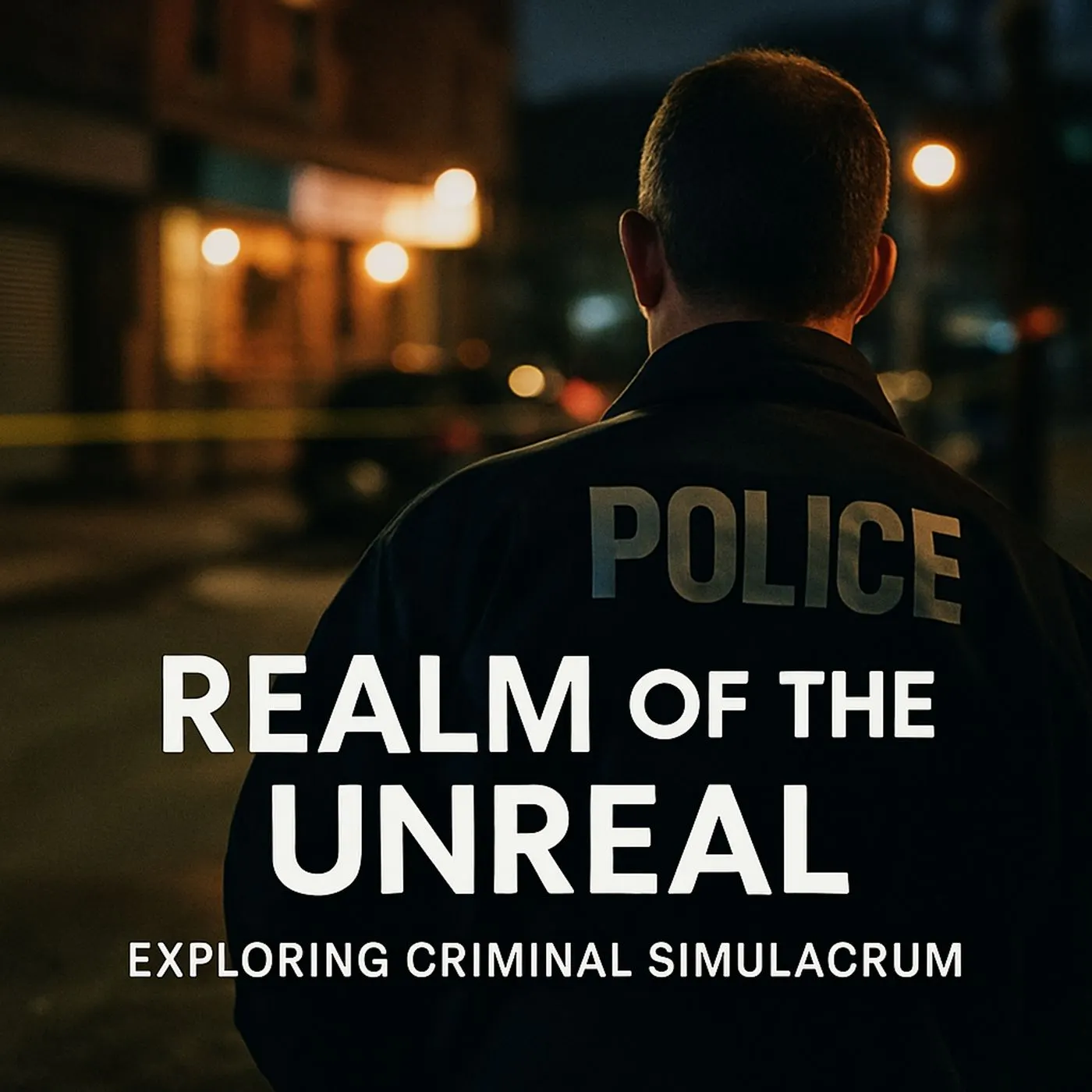


Immutable Echoes Decoding Criminal Whisper Trails
Neon Nights StudioAudio
- Format:
- Podcast
- New episodes:
- Weekly
- Typical length:
- about 10 minutes
- Latest episode:
About this show
Immutable Echoes examines the psychological architecture underlying urban crime through rigorous analysis, expert interviews, and historical case examination. Each narrative traces the cognitive patterns, social conditions, and behavioral markers that define criminal behavior in metropolitan environments. This series reconstructs how perpetrators think, how communities respond, and what forensic and psychological science reveals about the human capacity for transgression.
Show details and episodes come from the publisher's public feed at feeds.megaphone.fm. Last updated . Names, artwork and text belong to their publishers.
Cosmos
Similar by topic and creator
- Jungle Shadows Sifting Through Urban Felonies
Shares the topics History and True Crime and the creator Neon Nights Studio. - Urban Underneath Forensics of Hidden Delinquency
Shares the topics History and True Crime and the creator Neon Nights Studio. - Graffiti of Guilt Decoding Urban Crime Syndicates
Shares the topics History and True Crime and the creator Neon Nights Studio.
Similar shows







Explore more
Episodes
The Role of Urban Legends in Shaping Crime Reporting Practices
· 11 min
Exploring the intersection of urban legends and crime reporting reveals how sensationalized narratives can distort public understanding and influence media coverage. This discussion examines specific urban legends that have emerged in response to crime incidents, analyzing how they shape the narratives that journalists choose to highlight. We delve into case studies where urban legends have led to increased fear or misrepresentation of crime trends, affecting community perceptions and law enforcement responses. Interviews with journalists and media analysts provide insights into the ethical dilemmas faced in reporting crime stories, particularly when urban legends blur the lines between fact and fiction. By understanding the impact of these narratives, we can better navigate the complexities of crime reporting and its implications for public safety and community trust. Learn more about your ad choices. Visit megaphone.fm/adchoices (https://megaphone.fm/adchoices)
Not rated yetThe Psychological Effects of Urban Surveillance on Citizen Behavior
· 16 min
As cities increasingly adopt surveillance technologies, the psychological impact on residents becomes a critical area of exploration. This discussion examines how the presence of cameras and monitoring systems influences individual behavior, perceptions of safety, and community trust. We analyze case studies from various metropolitan areas where surveillance has been implemented, revealing both the intended and unintended consequences on social interactions and crime rates. Interviews with psychologists and urban sociologists provide insights into how constant monitoring can lead to heightened anxiety, altered behaviors, and even a sense of disconnection among residents. By understanding the psychological ramifications of urban surveillance, we can better navigate the balance between safety and personal freedom in modern city life. Learn more about your ad choices. Visit megaphone.fm/adchoices (https://megaphone.fm/adchoices)
Not rated yetThe Role of Urban Rituals in Shaping Crime Responses
· 11 min
Rituals within urban communities often serve as powerful mechanisms for collective identity and social cohesion, influencing how residents respond to crime and safety concerns. This discussion explores the various forms of urban rituals, from community gatherings and memorials to informal neighborhood watch practices, and how these activities create a shared sense of purpose and belonging. We analyze case studies where rituals have been employed to address crime, including how public ceremonies can foster healing and resilience after violent incidents. Interviews with community leaders and social psychologists reveal the psychological underpinnings of these rituals, highlighting their role in reinforcing social norms and collective action against crime. By understanding the significance of urban rituals, we can gain insights into their potential as tools for community empowerment and crime prevention. Learn more about your ad choices. Visit megaphone.fm/adchoices (https://megaphone.fm/adchoices)
Not rated yetThe Role of Urban Soundscapes in Crime Dynamics
· 14 min
Exploring the often overlooked influence of sound in urban environments reveals how auditory landscapes can shape criminal behavior and community safety. This discussion examines how noise levels, types of sounds, and the presence of music or silence can affect the psychological state of individuals, potentially leading to increased aggression or fostering a sense of safety. We analyze case studies from various cities where sound design has been intentionally used to deter crime, such as the implementation of calming soundscapes in public spaces. Interviews with sound designers, urban planners, and psychologists provide insights into how auditory elements can be strategically integrated into urban environments to enhance community well-being and reduce criminal activity. By understanding the power of sound, we can rethink urban design and its implications for safety and social interaction. Learn more about your ad choices. Visit megaphone.fm/adchoices (https://megaphone.fm/adchoices)
Not rated yetThe Role of Urban Green Spaces in Crime Reduction Efforts
· 8 min
Exploring the connection between urban green spaces and crime reduction reveals how nature can play a pivotal role in fostering community safety and well-being. This discussion examines how parks, gardens, and green corridors contribute to lower crime rates by enhancing social cohesion, increasing community engagement, and providing safe recreational areas. We analyze case studies from cities that have successfully integrated green spaces into their urban planning, highlighting the psychological benefits of nature on residents and the potential for these environments to deter criminal activity. Interviews with urban planners and community leaders shed light on innovative approaches to designing green spaces that not only beautify neighborhoods but also serve as vital components in crime prevention strategies. By understanding the multifaceted benefits of urban greenery, we can rethink how we approach safety and community resilience in metropolitan areas. Learn more about your ad choices. Visit megaphone.fm/adchoices (https://megaphone.fm/adchoices)
Not rated yetThe Role of Urban Myths in Shaping Crime Responses
· 11 min
Urban myths often serve as a lens through which communities interpret crime and safety, influencing both individual behavior and collective action. This discussion explores how these myths, whether based on real events or entirely fabricated, can create a distorted sense of threat and alter community dynamics. We analyze specific urban myths that have emerged in various cities, examining their origins and the psychological mechanisms that perpetuate them. Case studies illustrate how these myths can lead to increased fear, community mobilization, or even the misidentification of suspects. By understanding the impact of urban myths, we can gain insights into the social fabric of communities and the ways in which fear and misinformation shape responses to crime. Learn more about your ad choices. Visit megaphone.fm/adchoices (https://megaphone.fm/adchoices)
Not rated yetThe Role of Community Narratives in Shaping Criminal Justice Outcomes
· 10 min
Community narratives play a crucial role in shaping perceptions of justice and influencing the outcomes of criminal cases. This discussion examines how local stories, folklore, and shared experiences create a collective understanding of justice that can impact everything from police-community relations to jury decisions. We analyze case studies where community narratives have either supported or undermined the judicial process, revealing how deeply held beliefs about crime and morality can sway public opinion and legal outcomes. The conversation also explores the psychological mechanisms behind these narratives, including the desire for social cohesion and the need for a shared identity in the face of crime. By understanding the power of community narratives, we can better address the complexities of justice and its implications for both individuals and society as a whole. Learn more about your ad choices. Visit megaphone.fm/adchoices (https://megaphone.fm/adchoices)
Not rated yetThe Intersection of Urban Isolation and Criminal Behavior Trends
· 12 min
Isolation in metropolitan areas can create a paradox where individuals feel surrounded by others yet profoundly alone, influencing their propensity toward criminal actions. This discussion explores how social isolation, exacerbated by urban living conditions, contributes to the development of criminal behaviors. We analyze the psychological effects of loneliness and disconnection, examining how these feelings can lead to desperation and impulsive actions. Case studies highlight instances where isolated individuals have turned to crime as a means of coping or seeking connection. We also consider community responses to isolation, including innovative programs aimed at fostering social bonds and reducing crime. By understanding the relationship between urban isolation and crime, we can better address the underlying social issues that contribute to criminality in cities. Learn more about your ad choices. Visit megaphone.fm/adchoices (https://megaphone.fm/adchoices)
Not rated yetThe Influence of Urban Legends on Crime Perception and Behavior
· 11 min
Urban legends often shape public perception of crime, influencing not only fear levels but also community responses and individual behaviors. This discussion explores how these narratives, whether based on truth or fiction, can create a psychological landscape that affects crime rates and reporting. We analyze specific urban legends that have circulated in various cities, examining their origins, the societal fears they reflect, and their potential to incite real-world consequences. Case studies illustrate how these stories can lead to increased vigilance, community mobilization, or even unjust targeting of individuals. By understanding the power of urban legends, we can better comprehend their role in shaping both criminal behavior and community dynamics, revealing the intricate interplay between myth and reality in urban environments. Learn more about your ad choices. Visit megaphone.fm/adchoices (https://megaphone.fm/adchoices)
Not rated yetThe Interplay of Mental Health and Criminal Behavior in Urban Settings
· 14 min
Exploring the intricate relationship between mental health issues and criminal behavior reveals a complex web of factors influencing urban crime. This discussion examines how untreated mental health conditions can lead to criminal acts, often exacerbated by social stigma and lack of access to care. We analyze case studies that illustrate the intersection of mental illness and crime, highlighting how systemic failures in mental health services contribute to cycles of incarceration. The conversation also addresses how communities can implement preventative measures, such as mental health outreach and support programs, to reduce crime rates while fostering understanding and compassion for those affected. By reframing the narrative around mental health and criminality, we aim to promote a more holistic approach to urban safety and community well-being. Learn more about your ad choices. Visit megaphone.fm/adchoices (https://megaphone.fm/adchoices)
Not rated yetThe Impact of Economic Inequality on Crime Rates in Cities
· 11 min
Economic inequality serves as a critical backdrop for understanding crime in urban settings, influencing both the motivations for criminal behavior and the community responses to it. This discussion explores how disparities in wealth and opportunity create environments ripe for crime, as individuals in marginalized communities often resort to illegal activities out of desperation. We analyze the psychological effects of poverty on decision-making processes, examining how limited access to resources can lead to a sense of hopelessness that drives some individuals toward crime. Case studies highlight cities where economic policies have either exacerbated or alleviated crime rates, offering insights into the complex relationship between economic conditions and criminal behavior. By understanding the economic factors at play, we can better address the root causes of crime and develop more effective prevention strategies that focus on equity and opportunity. Learn more about your ad choices. Visit megaphone.fm/adchoices (https://megaphone.fm/adchoices)
Not rated yetThe Influence of Urban Design on Crime Patterns and Prevention Strategies
· 11 min
Urban design plays a critical role in shaping crime patterns and influencing community safety. This discussion explores how the layout of neighborhoods, including street connectivity, public spaces, and building designs, can either facilitate or deter criminal activity. We analyze case studies of cities that have successfully implemented design changes to reduce crime rates, such as improved lighting, open sight lines, and community spaces that encourage social interaction. The conversation also examines the psychological impact of urban environments on both potential offenders and community members, highlighting how feelings of safety or vulnerability can be directly linked to design choices. By understanding the relationship between urban planning and crime, we uncover innovative strategies for creating safer cities that foster community resilience and engagement. Learn more about your ad choices. Visit megaphone.fm/adchoices (https://megaphone.fm/adchoices)
Not rated yetUnderstanding the Role of Social Media in Modern Crime Dynamics
· 11 min
Social media platforms have transformed the landscape of urban crime, influencing both criminal behavior and community responses. This discussion explores how social media serves as a tool for criminals to coordinate activities, share information, and even recruit new members, while simultaneously providing law enforcement with new avenues for investigation. We analyze specific case studies where social media played a pivotal role in criminal enterprises, from gang communications to the dissemination of illicit content. The conversation also addresses how communities leverage social media for crime prevention, mobilizing collective action through neighborhood watch groups and real-time reporting. By examining the dual-edged nature of social media, we uncover the psychological and social implications of its use in crime, highlighting the need for a nuanced understanding of its impact on urban safety and criminal behavior. Learn more about your ad choices. Visit megaphone.fm/adchoices (https://megaphone.fm/adchoices)
Not rated yetFuture Trajectories and the Emerging Technologies Reshaping Criminal Justice
· 9 min
Criminal justice systems face transformation through emerging technologies including artificial intelligence, biometric surveillance, and genetic analysis, creating both public safety opportunities and profound civil liberties risks. This episode examines how predictive algorithms increasingly guide criminal justice decisions including bail, sentencing, and parole, despite limitations in accuracy and potential for bias amplification. We analyze how facial recognition technology enables mass surveillance while producing false identifications that have led to wrongful arrests. The discussion includes how genetic genealogy has enabled cold case investigations while raising questions about privacy rights and familial DNA searches. We examine how artificial intelligence applications in criminal justice promise efficiency gains while potentially entrenching historical discrimination. The episode addresses the tension between public safety benefits and civil liberties protections as technology enables unprecedented surveillance capacity. We discuss how criminal justice systems must navigate technological capabilities that exceed democratic consensus about appropriate surveillance and control. The series concludes by establishing that understanding criminal psychology and behavior requires continued evolution as technology reshapes both criminal enterprise and law enforcement response. Learn more about your ad choices. Visit megaphone.fm/adchoices (https://megaphone.fm/adchoices)
Not rated yetVigilantism and the Breakdown of Institutional Justice Authority
· 10 min
When institutional justice systems fail to prosecute or convict perpetrators, communities sometimes pursue vigilante justice, representing both legitimate grievance with systemic failure and dangerous circumvention of due process. This episode examines cases where vigilante violence has targeted individuals later proven innocent, demonstrating how vigilantism can perpetuate injustice. We analyze how vigilantism emerges when communities lose faith in law enforcement and judicial systems, particularly in jurisdictions with endemic corruption or bias. The discussion includes how social media has enabled rapid vigilante mobilization through crowd identification of suspects, sometimes targeting innocent individuals. We examine the psychological mechanisms driving vigilante participation, including moral outrage, desire for justice, and community bonding. The episode addresses the ethical tensions between respecting community grievance with institutional failure and preventing mob violence against potentially innocent individuals. We discuss how addressing vigilantism requires both institutional reform and community trust restoration rather than pure suppression. Learn more about your ad choices. Visit megaphone.fm/adchoices (https://megaphone.fm/adchoices)
Not rated yetVictim Trauma Response and the Neurobiology of Post Traumatic Stress
· 11 min
Criminal victimization produces lasting neurobiological changes that alter threat perception, emotional regulation, and social functioning through mechanisms of traumatic stress. This episode examines how crime-related trauma activates the amygdala while suppressing prefrontal cortex function, creating hypervigilance and emotional dysregulation that persists long after the crime. We analyze how trauma memories become fragmented and intrusive rather than coherent narrative memories, contributing to flashbacks and avoidance behaviors. The discussion includes how trauma responses vary based on crime type, perpetrator relationship, and victim characteristics, with intimate violence often producing more severe trauma than stranger crime. We examine how criminal justice proceedings can retraumatize victims through cross-examination and delayed trial processes. The episode addresses how trauma-informed approaches to victim support and criminal justice processes can reduce secondary victimization. We discuss how understanding trauma neurobiology contextualizes victim behavior that might otherwise appear inconsistent or counterintuitive. Learn more about your ad choices. Visit megaphone.fm/adchoices (https://megaphone.fm/adchoices)
Not rated yetCybercrime and the Evolution of Criminal Enterprise Into Digital Spaces
· 11 min
Criminal activity has migrated into digital environments where traditional enforcement approaches prove ineffective and perpetrators operate with relative anonymity. This episode examines how cybercrime encompasses diverse activities including identity theft, ransomware attacks, online fraud, and child sexual abuse material distribution. We analyze how digital spaces enable criminals to operate across jurisdictions, complicating law enforcement response and creating safe havens in countries with minimal cybercrime enforcement. The discussion includes how organized crime groups have transitioned to cybercrime operations offering greater profit with reduced personal risk compared to traditional street crime. We examine how cryptocurrency enables financial transactions that obscure perpetrator identity and complicate asset seizure. The episode addresses the dark web marketplaces where illegal goods and services are traded with relative security from law enforcement. We discuss how cybercrime victim identification and prosecution present novel challenges, including victims' reluctance to report and perpetrators' ability to operate from secure locations. The episode establishes that cybercrime represents evolution of criminal enterprise rather than fundamentally new phenomenon. Learn more about your ad choices. Visit megaphone.fm/adchoices (https://megaphone.fm/adchoices)
Not rated yetJuvenile Delinquency and the Developmental Pathways Toward Adult Criminality
· 11 min
Juvenile delinquency represents not a distinct category but an earlier manifestation of developmental pathways that often continue into adulthood, requiring understanding of age-specific factors and developmental trajectories. This episode examines how juvenile offenders differ from adult criminals in brain development, particularly regarding impulse control and future consequence consideration. We analyze how early behavioral problems including aggression and rule-breaking predict later criminal behavior, though most children displaying these behaviors do not become criminal adults. The discussion includes how juvenile justice system involvement often increases rather than decreases criminal behavior through labeling, peer exposure, and reduced legitimate opportunity. We examine how adolescent risk-taking reflects normal development rather than pathology, yet consequences become permanent through criminal records. The episode addresses the controversial practice of trying juveniles as adults in criminal courts, examining evidence regarding deterrent effects and rehabilitation potential. We discuss developmental approaches emphasizing rehabilitation and reintegration as more effective for juveniles than punishment-focused approaches. Learn more about your ad choices. Visit megaphone.fm/adchoices (https://megaphone.fm/adchoices)
Not rated yetHomelessness and the Criminalization of Survival in Urban Environments
· 10 min
Homeless individuals face criminalization for survival behaviors including sleeping in public, panhandling, and remaining in public spaces, creating a cycle where criminal justice involvement deepens poverty and housing instability. This episode examines how cities increasingly criminalize homelessness through ordinances prohibiting sleeping in parks, sitting on sidewalks, and remaining in public after specified hours. We analyze how homeless individuals accumulate criminal records for survival activities, which then impede employment and housing access, intensifying homelessness. The discussion includes how mental illness and substance abuse disproportionately affect homeless populations, creating vulnerability to both victimization and criminal behavior. We examine how incarceration of homeless individuals costs substantially more than housing provision, yet criminal justice remains the default response to visible homelessness. The episode addresses how homeless individuals experience both high rates of victimization and elevated criminalization, creating a vulnerable population subject to systematic injustice. We discuss alternative approaches including housing-first models that provide stable housing without preconditions. Learn more about your ad choices. Visit megaphone.fm/adchoices (https://megaphone.fm/adchoices)
Not rated yetRehabilitation Versus Punishment and the Effectiveness of Incarceration
· 9 min
Criminal justice systems worldwide operate along a spectrum from purely punitive approaches to rehabilitation-focused models, with dramatically different outcomes for recidivism and public safety. This episode examines evidence comparing purely punitive incarceration with rehabilitation-focused approaches including education, vocational training, and cognitive-behavioral therapy. We analyze how Scandinavian countries implementing rehabilitation-focused models achieve dramatically lower recidivism rates compared to American systems emphasizing punishment. The discussion includes how incarceration often increases rather than decreases criminal behavior through exposure to criminal networks, institutionalization that impairs reintegration, and stigmatization that reduces legitimate opportunity. We examine how rehabilitation programs require significant investment and sustained implementation, yet produce long-term public safety benefits exceeding program costs. The episode addresses the political difficulty of rehabilitation-focused approaches given public demand for punishment, and how victims' rights movements have sometimes opposed rehabilitation emphasis. We discuss how rehabilitation success requires addressing underlying factors including addiction, mental illness, and limited education. Learn more about your ad choices. Visit megaphone.fm/adchoices (https://megaphone.fm/adchoices)
Not rated yet