

The Dark Reality of Otto Dix: Pain, Politics, and Powerful Paintings - Generalised Version
From Art History School · · 16 min
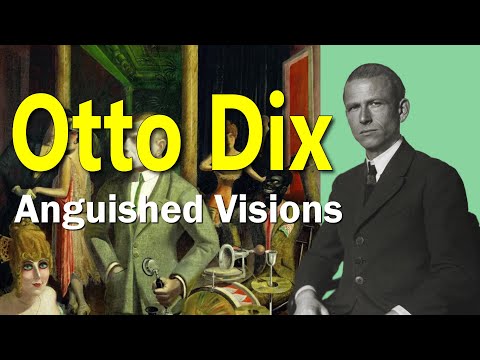
The player loads from YouTube only when you click. It uses YouTube's privacy-enhanced mode.
If the video does not play, the owner may have turned off embedding. Watch it on YouTube instead.
Description
✅Enjoyed the video? You'll love exploring others from The European Avant-Garde: https://www.youtube.com/playlist?list=PLRnrrVEsmbC4 ✅Want to know more? Buy the book related to this video: 'Otto Dix and the Memorialization of World War 1' https://tidd.ly/4zrHKnd I earn a small commission if you buy the book through this link.
This art history video covers the life of Otto Dix was a German painter and printmaker, born on 2 December, 1891, in Untermhaus, Thuringia. He was a prominent figure in the New Objectivity movement, which emerged in Germany after World War I and aimed to capture the harsh realities of life in a modern, industrialized society. Dix studied art in Dresden, and during World War I, served as a machine gunner on the Western Front. The horrors of war deeply affected him, and he would later produce a series of powerful anti-war works, including his famous triptych, "The War." In the 1920s and 1930s, Dix established himself as one of Germany's most important artists, and his works were exhibited widely throughout Europe. He was known for his stark, realistic style, which often portrayed the darker aspects of society. During the Nazi era, Dix's work was deemed "degenerate" and he was banned from exhibiting his art. He was even briefly imprisoned by the Gestapo. After the war, he continued to work as an artist and was eventually recognized as one of Germany's most important modern artists. Otto Dix died on July 25, 1969, in Singen, Germany, at the age of 77. His legacy as a painter and printmaker continues to be celebrated today, and his works can be found in museums and galleries around the world.
This video seeks to answer the following questions about Otto Dix. How did Otto Dix's experiences in World War I shape his artistic vision and style? What are the defining features of Otto Dix's style, particularly in his portraits and war paintings? How did Otto Dix's work evolve from early influences to the more politically charged and shocking pieces for which he is famous? Why were the Nazis hostile to Dix's work and what specific actions did they take against him and his art? What kind of art did Otto Dix create while in "internal exile," and what was the nature of his work after World War II? What do Dix's works reveal about German society between the two world wars, particularly in his portraits of disabled veterans and sex workers?
#arthistory #historyofart #famousartists
Another version of this video which depicts more works and images by Otto Dix, that some may find disturbing. It can be seen here:- https://youtu.be/be3PW2QjVhI This video is rated 18+
And supporting this channel on Patreon, https://patreon.com/paulpriestleyart many thanks!
Interested in DRAWING? Check out my drawing channel: https://youtube.com/paulpriestleyart
Want this video in your own language? Check out my video to see how: https://youtu.be/ZnoxutAvyaI
Follow our Facebook Page: https://www.facebook.com/PaulPriestleyArtVideos/
PATREON: I'd like to thank the following patrons whose support in the making of this video is much appreciated: Dee Ann Havely, Deirdre Feely, Denise Berg, Ivan Gilbert Rappaport, Mary Stewart, Nicolae Opris, S. Ryckman, Tatiana Lostorto, Tina Valentine, Visnja Zeljeznjak, Linda Frazier, Marnie Coutts, Stein Harald Os, Emily Liss, William Scott Griffiths, Dinny Hinds, Patrick Lefebvre, Philip Levene, Alena Sidorkina, Jeff Smith, Ashok Kanagasundram, Olivia McGoldrick, Rahman Yii, Sarah Hirsch, Kevin Coburn, Stacy Schweigler, Jennifer Ranghelli, Deborah Smith, Emily, Carol Tenson, Min A, Colin Parrish, Larry Specht, David Cornwell, Kerri Southern, Yvonne Tsang, Lena Allen, Hüma, Michelle Kunkel, Barbara Perl, Steve Pike, LN, Mary K. Kroner, Kate Emery, Don Kyle, David Smernoff, Kathy Anderson, Shirley Trill, Floki, Hristiana Bobeva, David Tate, David Burt, Henrik, Howard Schwartz, Judy Tuwaletstiwa and Susan Valliant
Copyright Disclaimer under section 107 of the Copyright Act of 1976, allowance is made for…