

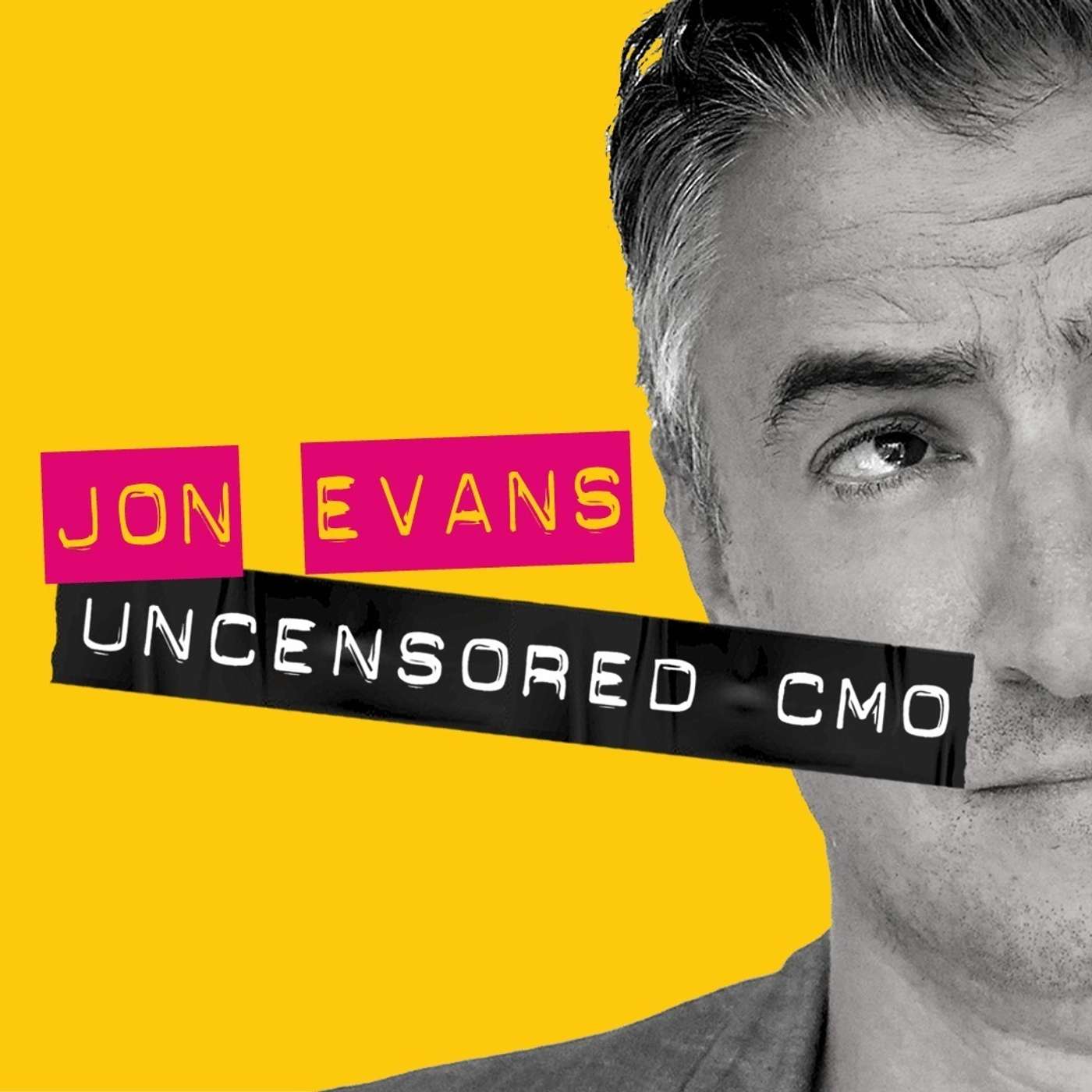
Uncensored CMO
Jon EvansAudio
- Format:
- Podcast
- New episodes:
- Weekly
- Typical length:
- about 50 minutes
- Latest episode:
About this show
The Uncensored CMO was created to explore the good, the bad and quite frankly downright ugly truth about marketing theory & practice.
Covers: marketing, brand building, marketing leadership, advertising strategy, media buying, digital platforms, creative leadership, business strategy
Show details and episodes come from the publisher's public feed at feeds.transistor.fm. Last updated . Names, artwork and text belong to their publishers.
Recently on this show
Summary of recent episodes, drawn from the publisher's feed.
The Uncensored CMO is a podcast by Jon Evans that examines the good and bad of marketing theory and practice. Recent episodes cover PepsiCo's brand building, Škoda's turnaround, Pinterest's growth, and wasted media budgets.
Cosmos
Similar in subject
- The Exit Five Podcast
Both cover: marketing leadership, marketing - Top Comment
Both cover: digital platforms - The Futur with Chris Do
Both cover: brand building, marketing
Similar shows





Explore more
Episodes
OpenAI on what every CMO needs to know about AI with BCG
· 41 min
In this episode, Mark Abraham, Managing Director and Senior Partner at BCG, joins Elke Karskens, Head of International Marketing at OpenAI to explore how AI is already transforming marketing and what's coming next. We discuss OpenAI's remarkable growth, the launch of its first advertising campaign, and how marketers can prepare for a future where AI is embedded across every function. The conversation covers how brands can increase their visibility in ChatGPT, the opportunities created by tools like Codex, the skills tomorrow's CMOs will need, and why the real value of AI isn't just efficiency, it's effectiveness. This episode has been produced in partnership with BCG. Browse their CMO Report here: https://www.bcg.com/publications/2026/making-the-agentic-marketing-transformation-a-reality Timestamps 00:00 - Start 01:16 - Open AI’s meteoric rise 02:07 - Breakthrough moments for OpenAI 03:04 - How have Open AI scaled so quickly 04:49 - What will be led by humans and what will be led by AI in 5 years 06:09 - Open AI’s impressive first ad campaign 08:32 - Launch of the Open AI advertising platform 13:01 - How brands can rank in ChatGPT 14:44 - How brands can use Codex 17:44 - How do CMOs feel about AI 19:34 - How do you deliver transformation with AI 20:55 - What skillsets are going to be in demand for the future CMO 23:29 - Which brands are using AI well today 24:52 - What can we do with AI in a year from now we can’t do today? 29:45 - Why BCG and Open AI work together 30:53 - What don’t people understand about AI? 35:11 - Efficiency and cost savings vs effectiveness in AI 38:15 - Best advice you’ve ever been given
Not rated yetByron Sharp vs Mark Ritson - 5 big marketing truths we agree on
· 1 hr 26 min
For years, Mark Ritson and Byron Sharp have been two of the most influential and most opinionated voices in marketing. They've challenged each other's ideas, debated strategy, and helped shape how an entire generation of marketers thinks. Now, for the first time in more than a decade, at Cannes Lions, they sit down together to answer a simple question: what do they actually agree on? From How Brands Grow and the 95:5 rule to distinctiveness, the 4 Ps, mass marketing, luxury brands, purpose and AI, this conversation explores the fundamental marketing principles they both believe every marketer should understand. There are still plenty of disagreements (and more than a few jokes at each other's expense), but this is a rare opportunity to hear two of the industry's biggest thinkers build a shared foundation for modern marketing. This episode is brought to you by System1. Download their creator effectiveness report here: https://system1group.com/the-creator-effectiveness-playbook Timestamps 00:00:00 - Start 00:00:40 - Teaser 00:02:08 - Mark Ritson on Champagne 00:03:42 - When did Mark and Byron meet 00:05:36 - Why Byron and Mark are coming together after a decade 00:07:25 - When Jon met Byron 00:08:57 - Is AI more brand centric than humans? 00:11:08 - Mark and Byron’s criticism on their Cannes talk 00:12:49 - The problem with academia 00:13:45 - What do marketers still not understand about How Brands Grow 00:18:06 - You are not the customer 00:20:56 - Distinctiveness vs relative differentiation 00:28:45 - Why we need to control all 4 Ps 00:33:10 - The 95:5 rule 00:39:20 - Why Byron doesn’t like the term “Long Term” 00:42:41 - The role of mass marketing 00:46:40 - How to do mass marketing as a challenger brand 00:53:45 - How long does it take to build a proper brand 00:56:10 - What does Byron think of P&G 00:58:47 - The power of distinctive brand assets 01:03:42 - Why brand anniversaries are pointless 01:04:40 - How luxury brands grow 01:09:16 - The role of purpose 01:16:58 - The dark lord of penetration 01:18:17 - What pet name does Byron have for Mark 01:23:17 - Closing remarks
Not rated yetThe Google approach to marketing in the age of AI (with Google and BCG)
· 46 min
In this episode, Josh Spanier from Google and Lauren Wiener from BCG join us to discuss how AI is transforming marketing, organisations, and the role of the CMO. From navigating the AI hype cycle to building the right culture for change, they share practical advice for leaders trying to turn AI from a buzzword into a genuine competitive advantage. We also explore the future skills marketers will need, the changing role of agencies, why marketing should lead AI transformation, and where the industry is likely to be just 12 months from now. This episode has been produced in partnership with BCG. Browse their CMO Report here: https://www.bcg.com/publications/2026/making-the-agentic-marketing-transformation-a-reality Timestamps 00:00 - Start 01:52 - Where are we in the AI hype cycle 04:48 - How are Google seeing AI impact businesses 06:50 - The difference between the CMOs who are getting it right and wrong 09:05 - The future of marketing in the age of AI 10:48 - The skills of the future CMO 16:41 - Why marketing needs to drive the change 19:18 - Positive examples of AI 24:01 - How do organisations make the change 27:02 - When AI campaigns don’t go so well 29:11 - How AI data will transform marketing 30:13 - Dealing with higher expectations but less resource 35:25 - The culture to enable successful AI transformation 36:55 - The role of agencies in an AI world 38:50 - AI predictions in 12 months 40:23 - The best advice you’ve ever been given 41:52 - Where will marketing be in 12 months
Not rated yetThe Startling Power of Surprise with Adam Morgan
· 45 min
Adam Morgan, founder of eatbigfish and co-creator of The Cost of Dull, joins us to explore why surprise is one of the most powerful tools available to marketers. Drawing on new research unveiled at Cannes Lions, Adam and Jon explain the psychology behind surprise, the science of reward prediction error, and why memorable brands consistently give people more than they expect. We discuss the different types of surprise, why products need to live up to the expectations created by advertising, and examine some of the best examples of surprise in modern marketing from Aldi to Jaguar and beyond. Timestamps 00:00 - Start 01:58 - The surprising outcomes of Cost of Dull 06:04 - The genesis of Cost of Dull 09:01 - Why are we talking about surprise? 10:08 - Why the best marketers look outside of marketing 13:42 - What the data says about surprise 15:50 - Reward prediction error 17:26 - Why your product needs to exceed expectations set by your brand 19:59 - The surprising power of giving people more than they expect 21:48 - The two types of surprise 25:00 - Adam’s favourite examples of surprise 26:09 - Jon’s favourite example of surprise 28:20 - Was Jaguar intentionally surprising? 29:39 - Examples of long term surprise 31:50 - Why Aldi are so successful at surprise 34:28 - Why you need a system for your surprise 38:15 - The right balance of surprise 42:12 - When is shock necessary
Not rated yetThe real 4 P's of the CMO with Susan O'Brien (Just Eat)
· 58 min
Suso O'Brien, former CMO of Just Eat, joins us to discuss what the role of the modern CMO really looks like. Drawing on her experience helping scale Just Eat and the findings from a new CMO survey conducted with TikTok, Suso argues that today's marketing leaders need a completely different set of priorities. We revisit the growth of Just Eat, the success of the iconic “Did Somebody Say…” campaign, and the role celebrity partnerships and sonic branding played in building the brand. But beyond the advertising, Suso shares why CMOs spend surprisingly little time on the work itself, why internal influence matters more than ever, and why managing expectations may be more important than managing brands. The conversation also explores the lack of marketing representation at the top of organisations, the pressures facing today's CMOs, and Suso's framework for leading people through her five Cs of great management. Timestamps 00:00 - Start 02:52 - The food delivery category in 2016 04:05 - The role marketing played in the growth of Just Eat 05:55 - Does “did somebody say?” translate globally? 07:26 - The celebrity strategy behind Just Eat 09:47 - The power of sonic branding 12:12 - What impact did the campaign have vs other growth levers for Just Eat 14:36 - CMOs rarely spend any time on the work 17:28 - The real 4 Ps of the CMO 19:06 - Discoveries from the CMO survey with TikTok 20:56 - Why the lack of marketing representation at the top of companies is worrying 22:00 - What skills are lacking in an organisation 23:08 - The short term pressure on the CMO 24:34 - How do you make the case to invest in long term 28:20 - The power of compounding creativity 29:04 - The CMO’s role is managing expectations, not brands 30:04 - Why CMO’s need to persuade internal stakeholders 36:10 - The #1 challenge CMO’s face 40:58 - Suso’s hardest challenges as Just Eat CMO 42:40 - Why Suso asked her colleagues for feedback when she left Just Eat 44:17 - 5 C’s of great people management 44:32 - 1: Care 45:30 - 2: Clarity 47:35 - 3. Calling it early 49:12 - 4. The cost of comfort 51:33 - 5: Constant feedback 53:25 - Suso’s advice to future CMOs
Not rated yetThe power of incredible customer experience - Jamie Domenici, Klaviyo
· 44 min
Jamie Domenici, CMO of Klaviyo, joins us to discuss why customer experience has become one of the most powerful drivers of growth. Drawing on lessons from nearly a decade at Salesforce and her experience joining Klaviyo just months before its IPO, Jamie shares how great brands create loyalty by obsessing over the customer. We explore what marketers can learn from customer success teams, why events like Dreamforce are so memorable, and how Klaviyo has repositioned itself while building a competitive moat in an increasingly crowded market. Jamie also shares her views on AI, the future workforce, the skills tomorrow's CMOs will need, and the difference between good marketing leaders and truly great ones. Timestamps 00:00 - Start 01:05 - Jamie’s strange first job 02:26 - Best and worst customer experiences 05:56 - The power of a good customer experience 08:45 - Marketing lessons from customer success 11:48 - Marketing lessons from 10 years at Salesforce 13:05 - Why Dreamforce was a great example of good customer experience 14:46 - The key to a great keynote 21:56 - Joining Klaviyo just months before an IPO 24:28 - Repositioning a company 25:45 - How does B2C differ to B2B when it comes to CRM? 28:41 - How Klaviyo are building their moat 30:51 - Where is AI going to have the biggest impact? 32:19 - How are Klaviyo using AI in their product? 34:14 - How AI is going to change the workforce 35:42 - What skills will future CMOs be hiring for? 37:31 - The difference between a good CMO and a great CMO 39:17 - Why Klaviyo invest a lot in events 40:52 - The best advice Jamie has ever received
Not rated yetWhy brave creativity means business results according to GUT co-founder Anselmo Ramos
· 1 hr 20 min
Anselmo Ramos is one of the most respected creatives in advertising and the co-founder of GUT, the agency behind some of the world's most talked-about campaigns. Built on the belief that brave creativity drives business growth, GUT has quickly become one of the industry's most successful modern agencies. In this episode, Anselmo shares the story behind founding GUT, the principles that guide the business, and why marketers need to trust their instincts more. We discuss the power of relationships, how to build a great co-founder partnership, and why the biggest challenge often comes after success. We also explore GUT's approach to pitching, the bravery gap facing modern brands, the role of AI, and the campaigns that have helped define the agency's remarkable rise. Thank you to our sponsor System1 Group for supporting the show. To find out more, head to: https://system1group.com Timestamps 00:00:00 - Start 00:02:44 - Why is the industry obsessed with making rational advertising? 00:04:19 - Why GUT have 68 principles 00:06:27 - Why you need to pay more attention to your GUT 00:09:10 - The GUT agency founding story 00:12:41 - The secret to a successful co-founder relationship 00:14:42 - Lessons from creating a successful agency 00:17:58 - The surprising challenges of growing a successful agency 00:20:14 - The compounding power of relationships 00:22:55 - GUT’s approach to pitching 00:29:26 - How to be productive and find inspiration 00:31:50 - The power of working without approval 00:36:26 - The bravery scale and the bravery gap 00:40:17 - How to become a brave brand 00:43:26 - Why brave creativity drives business results 00:45:52 - Why black t shirts? 00:49:09 - How GUT’s acquisition changed the business 00:56:21 - How to plan your exit strategy 00:59:29 - The Artois Probability: a Grand Prix winning campaign 01:03:55 - Wimbledon All White Stella Artois Can 01:05:59 - Stella Artois partnership with David Beckham 01:11:06 - Where Anselmo uses AI 01:13:53 - The best advice Anselmo has ever been given
Not rated yetGreg Hahn on why the biggest risk you can take is to be ignorable
· 59 min
Greg Hahn returns to the podcast to discuss the philosophy that has made Mischief one of the most talked-about agencies in the world. From Tubi's famous Super Bowl interruption campaign to turning around legacy brands like JCPenney, Greg explains why the biggest risk brands face today isn't failure, it's being ignored. We discuss how to create safe spaces for dangerous ideas, why AI risks making marketers more cautious, and the hidden cost of playing it safe. Greg also shares the traits of great CMOs, the future of agencies and pitching, the campaigns he's most proud of, and the advice he'd give to the next generation of creatives. Thanks for System1 for supporting the podcast: https://system1group.com Timestamps 00:00 - Start 01:43 - Who are Mischief and what do they stand for? 04:26 - What would Greg Hahn’s walk on track be? 05:05 - How to make a safe space for dangerous ideas 07:46 - Is AI making us play it safe? 10:37 - What is the real cost of playing it safe? 14:31 - The Mischief strategy behind Tubi 16:20 - Tubi’s famous Super Bowl interruption campaign 17:20 - The reward prediction error theory 22:16 - Turning around a large legacy business like JCPenney 25:55 - The traits of a successful CMO 28:06 - The JCPenney movie trailer 30:16 - Goldfish Chilean Sea Bass campaign 35:51 - Why Greg likes George Felix as a CMO 37:09 - The work that Greg is most proud of 38:03 - What does the future of pitching look like? 40:50 - How much of Mischief’s work comes from pitching 42:13 - The future of social media 43:17 - What other agency work is Greg envious of? 45:03 - What would Greg do if he wasn’t afraid? 48:01 - What does the future creative agency look like? 49:14 - What does the future CMO role look like? 51:12 - What does Greg want to achieve next? 53:29 - Greg’s advice for young creatives 54:25 - What’s the best advice Greg Hahn has ever been given? 56:59 - What content does Greg consume? - Post chat
Not rated yetHow Chili’s used creativity, culture and customer experience to create one of the greatest turnaround success stories - George Felix
· 1 hr 4 min
George Felix, CMO of Chili’s, joins us to tell the story behind one of the most impressive brand turnarounds of recent years. From iconic menu items like chips and salsa and the famous margarita to viral social media moments and creative partnerships, George explains how Chili’s became culturally relevant again and reignited growth. Before Chili’s, George played a key role in the legendary Old Spice turnaround, and in this episode he shares the lessons he's learned from transforming legacy brands. We discuss the power of nostalgia, making the most of your agency relationships, influencing product and pricing decisions, and why the customer experience often drives more value than advertising alone. Timestamps 00:00:00 - Start 00:02:07 - The famous Chili’s chips and salsa 00:03:39 - The famous Chili’s margharita 00:06:32 - Why Chili’s has signature items 00:08:01 - How Chili’s became one of the biggest brand turnarounds in history 00:10:51 - The importance of working with people you trust 00:12:26 - George’s role in the Old Spice turnaround 00:18:10 - How to build the case for increased brand investment 00:21:16 - The power of nostalgia for a legacy brand 00:25:57 - How George pitched an idea to his creative agency and they bought it 00:29:03 - The System1 data for the Chili’s ad 00:30:45 - Fostering a great client / agency relationship 00:38:19 - How experience drives better ROI than marketing 00:42:43 - The viral cheese pull trend 00:45:45 - How can a brand create cultural relevance? 00:48:45 - Chili’s brand collaboration with Tecovas Boots 00:51:19 - How George has influence over the Product “P” in marketing 00:54:51 - How to leverage the Pricing “P” 00:57:43 - The concept of “barbell pricing” 01:00:27 - What is the most important attribute for a successful CMO?
Not rated yetTom Goodwin and Rory Sutherland Fix Marketing (Part 2)
· 1 hr 4 min
Rory Sutherland and Tom Goodwin return for part two of our wide-ranging conversation on the future of marketing, creativity, and business. From driverless cars and Silicon Valley thinking, to the dangers of digitising every human interaction, Rory and Tom explore what businesses lose when efficiency becomes the only goal. They also discuss why governments need creative departments, whether we truly understand how advertising works, and how marketers can finally gain the influence they deserve inside organisations. Timestamps: 00:00 - Start 00:56 - What will be the advertising agency of the future? 10:39 - How to change the way we think about ad agencies 15:42 - Why the government need a creative department 19:44 - Creativity isn’t dead because AI only uses data from the past 22:32 - How marketers can achieve the influence they deserve 24:08 - Do we really know how advertising works? 29:29 - Is Tesla applying marketing thinking? 31:58 - The future of driverless cars and the danger of Silicon Valley 44:03 - Human interaction vs digitising everything 47:43 - Tom and Rory’s advice for CMOs
Not rated yetRory Sutherland and Tom Goodwin Fix Marketing (Part 1)
· 1 hr 3 min
Two of our most popular guests return for a conversation on what’s gone wrong in modern marketing and how to fix it. Rory Sutherland and Tom Goodwin tackle everything from digital overload and bad choice architecture to the disappearance of taglines, long-term thinking, and genuine creativity. Expect behavioural science, contrarian thinking, and plenty of ideas that will make you rethink how marketing really works. Timestamps 00:00:00 - Start 00:01:31 - Digital overload - are consumers given too much choice? 00:05:51 - The power of “Easter Egg Thinking” 00:07:54 - Have hotels destroyed choice architecture? 00:10:56 - More choice reduction failures 00:14:46 - Do consumers need more choice? 00:17:45 - How ad agencies can discover real insights 00:19:21 - An idea to revolutionise Cannes 00:20:49 - Why Rory and Tom think differently 00:24:05 - What are the biggest marketing myths today 00:30:41 - Fat tailed distribution - the Dulux Dog 00:32:18 - Why we need to bring back the tagline 00:35:17 - Are marketers too young? 00:37:15 - The long term work only pays off after you’re fired 00:42:34 - How to we make companies look more long term? 00:48:03 - Why people love Ryanair but hate BA 00:49:09 - The role of surprise in advertising 00:50:43 - Is marketing actually rather easy? 01:00:49 - Is the advertising agency model broken? Thank you to our sponsor, System1: https://system1group.com/
Not rated yetHow to manage a crisis with ex United Airlines Chief of Comms, Jim Olson
· 44 min
Jim Olson has spent his career helping businesses navigate moments of intense pressure from corporate crises to deeply personal challenges, running comms at United Airlines and Starbucks. In this episode, the author of Tailwind shares the lessons he’s learned from leadership, resilience, and facing adversity head-on. Drawing inspiration from Captain Sully’s Hudson River landing, Jim explains why the best crisis leaders follow the same process: aviate, navigate, communicate. We discuss where crisis management often goes wrong, what leaders can learn from failures like United Airlines, and why “black box thinking” matters in both business and marketing. Jim also opens up about his own cancer diagnosis and the mindset that helped him through it. Get Jim's new book, Tailwind here: https://www.amazon.com/Tailwind-Compass-Turning-Setback-Comeback/dp/B0GXCM3VYT/ (https://www.amazon.com/Tailwind-Compass-Turning-Setback-Comeback/dp/B0GXCM3VYT/ref=tmm_hrd_swatch_0?_encoding=UTF8&dib_tag=se&dib=eyJ2IjoiMSJ9.pZMHz3ZqM-_n3nzswEVWao_RNqDBo0G-hUAWSUNIhsfPq-Ft1WQzWswS_KEGGW9XTYoYsyVWXZxDqofS15UwBfbw61zlsAl7-6yEUtTCHXF1vOfEKsOUeeFzP0pGbybGcq1LcPue7q6eqh8HwwLrtyRQiWMlWHLkdHFUJ6fRCM5xJUOQP8Ecr64bUjg3Y77SRosLZKo3S6AMPdHVfBGgCeWPqXRNrF12idxAqhII09w.0b60PTJRrbVeEIASYJyotUuUPFc6KP5wDhEtBJh0KKY&qid=1777945783&sr=1-1) 00:00 - Start 01:11 - Lessons from Captain Sully’s Hudson River landing 06:11 - The black box thinking approach to marketing 07:30 - Other crises Jim has had to deal with in his career 09:18 - When crisis management goes wrong - United Airlines 13:11 - Managing merging two cultures 15:27 - The situation when Jim’s CEO had a heart attack 18:00 - Jim’s cancer diagnosis 23:30 - The power of positive mentality 28:30 - Don’t ask yourself what if, ask yourself why not 31:34 - The power of a fourth space 34:05 - Crisis doesn’t build character, it reveals it 37:02 - Leadership lessons from Howard Schultz 38:58 - Jim’s advice for those people facing a crisis
Not rated yetMarketing lessons from 20 years at Google - Dan Taylor
· 48 min
Dan Taylor has spent over two decades at Google, helping shape how brands grow through search, media, and technology. Today, he leads global advertising at one of the world’s most influential companies, giving him a front-row seat to the biggest shifts in marketing. In this episode, Dan shares what he’s learned from 20 years at Google, from the importance of simplicity to navigating organisational complexity and the evolving relationship between product and commercial teams. We also dive into the future of search, including AI, new tools like “Circle to Search,” and what it all means for marketers. Timestamps 00:00 – Start 00:40 – Lessons from being a pilot 05:34 – Lessons from 20 years at Google 06:43 – How Google has changed over two decades 07:46 – The power of simplicity 09:02 – Google’s breakthrough moments 12:11 – The relationship between commercial and product 13:47 – Navigating organisational politics 17:08 – The biggest search trends in marketing 18:24 – What is “Circle to Search”? 20:37 – Opportunities for marketers in new search behaviours 24:52 – How AI is changing search 25:59 – Does Google see AI as competition? 28:09 – Will ads exist in AI search? 32:00 – How brands can improve search performance 33:42 – Making the most of Google and YouTube 35:34 – Measuring the value of brand search 39:56 – AI’s impact on creativity 45:52 – The one lesson from 20 years at Google
Not rated yetHow Sephora built brands through creators, partnerships and loyalty - CMO Zena Arnold
· 43 min
Zena Arnold, CMO of Sephora, joins us to break down how one of the world’s most influential beauty retailers continues to set the standard for brand, community, and culture. From standout branding to record-breaking product launches, Zena shares what’s behind Sephora’s success and how the business stays relentlessly close to its customers in a fast-moving category. We explore the rise of celebrity brands, the power of loyalty, and how Sephora works with creators through initiatives like the Sephora Squad. Thank you to our sponsor, System1: https://system1group.com/ Timestamps 00:00 - Start 01:13 - Zena’s incredible marketing career 06:02 - Lessons that turned Zena into the marketer she is today 07:41 - What has made Sephora so successful? 10:01 - Why Sephora’s branding stands out 11:30 - What’s trending in the beauty category in 2026? 13:22 - How does Sephora stay close to the customer? 14:45 - The biggest brand launch in Sephora history 15:25 - How to pitch a beauty brand to Sephora 18:00 - How important are celebrity brands? 19:03 - Helping brands launch in Sephora 21:00 - The power of Sephora’s loyalty programme 25:09 - How Sephora attract new customers 27:02 - How Sephora uses creators effectively with the Sephora Squad 29:45 - How to measure the effectiveness of creators 31:12 - The exceptional advertising of Sephora 32:49 - How Sephora uses tech in their marketing 38:09 - Dealing with the speed of retail 39:00 - Creating conditions where you can fail and learn
Not rated yetMarketing in the age of AI with Adobe Enterprise CMO, Rachel Thornton
· 39 min
Rachel Thornton, Enterprise CMO at Adobe (https://www.adobe.com), joins us to unpack how one of the world’s leading technology companies is navigating marketing in the age of AI. From brand building in B2B to launching complex software products, Rachel shares what it takes to drive growth at global scale. We discuss the role of major events like Adobe Summit, how AI is transforming both the practice and perception of marketing, and why community and storytelling are becoming more important than ever. Rachel also explains how Adobe balances brand and product marketing, invests in partnerships like sports sponsorships, and what “agentic orchestration” actually means in practice. Timestamps 00:00 - Start 01:39 - Rachel’s career and what makes a successful CMO 04:12 - The importance of brand in B2B 08:57 - The role of large events in B2B marketing (like Adobe Summit) 12:29 - The biggest changes AI have had in marketing 18:06 - How Adobe approaches community in their marketing 20:26 - How Adobe use AI in their marketing 22:53 - How Tesco use Adobe 24:22 - Adobe’s product launches at Summit 2026 26:50 - What does agentic orchestration mean? 28:33 - How to successfully launch new software? 29:58 - How Adobe addresses brand vs product marketing? 30:57 - Why Adobe invests in sports sponsorships 34:26 - The power of storytelling in sport 36:07 - The best advice Rachel has received
Not rated yetNir Eyal on how belief can transform your life & your brand
· 54 min
Nir Eyal returns to the podcast to discuss his latest book, Beyond Belief, and the powerful role belief plays in shaping our behaviour, relationships, and decisions. From the difference between fact, faith, and belief to the surprising ways our perceptions influence what we see, Nir explains how beliefs can be consciously changed and why doing so can transform everything from personal performance to company culture. We also explore the role of belief in branding, including how companies like Liquid Death use anticipation to disrupt entire categories, and why the most successful brands don’t just sell products they shape what people believe. Thank you to System1 for sponsoring Uncensored CMO. https://system1group.com/ Timestamps 00:00 - Start 01:44 - Why Nir wrote a book about belief? 05:57 - How powerful can belief be? 10:15 - Believing is seeing 12:44 - The three powers of belief 14:42 - The difference between fact, faith and belief 16:05 - How belief can affect relationships 17:10 - How to change your beliefs 25:52 - How powerful can beliefs be? 28:37 - The cautious power of placebo 32:59 - Why Liquid Death used the power of anticipation to disrupt water 35:59 - Why brand is so powerful 37:40 - How our beliefs literally shape what we see 39:42 - Why smart people are more unsuccessful 41:59 - How beliefs can improve company culture 42:57 - When should you quit? 47:08 - Why labelling yourself can be self-limiting 50:52 - How to build good beliefs
Not rated yetHow to get the best performance out of your agency with Kory Marchisotto
· 22 min
Today, Jon and Kory break down one of the most misunderstood relationships in marketing: working with agencies. From treating agencies as a true force multiplier to fixing broken relationships, they share practical advice on how to get the best out of your partners, and what to do when things inevitably go wrong. This is a candid look at trust, expectations, and why the best results come when agencies feel like part of your team, not just a supplier. Whether you’re managing an agency or working inside one, this episode will change how you think about the relationship. Get Uncensored Renegades every week: Apple Podcasts: https://podcasts.apple.com/gb/podcast/uncensored-renegades/id1868870960 Spotify: https://open.spotify.com/show/7qnkqq0XSpgif9A5ZNgSpX?si=f181c3a0e9af480c Timestamps 00:00 - Start 01:20 - Why agencies can be a force multiplier 02:11 - How to fix a broken agency relationship 04:12 - How to set your agency up for success 08:36 - Bringing your agency into your company 13:42 - What to do when things go wrong with your agency 18:30 - Be tough in victory and gentle in defeat 20:17 - What is the cost of changing your agency?
Not rated yetWho Gives A Crap Founder on Challenger Lessons - Danny Alexander
· 43 min
Danny Alexander, co-founder of Who Gives A Crap, joins us to share how a toilet paper brand became a global challenger business while giving away 50% of its profits to charity. From launching with a viral crowdfunding campaign to capitalising on the global toilet paper shortage, Danny breaks down how the brand combined purpose, creativity, and strong fundamentals to stand out in a commoditised category. We also discuss the realities of scaling a mission-led business, the differences between DTC and retail marketing, lessons from failed launches, and how to build a team and culture that lasts. A brilliant look at what it really takes to build a brand people care about. Timestamps 00:00 – Start 00:29 – The founding story of Who Gives A Crap 02:55 – The benefits of having three co-founders 05:00 – Naming the company 07:07 – Innovating in packaging design 10:08 – The story behind the emergency roll 10:58 – Why they give away 50% of profits 12:53 – Convincing investors to support the mission 14:38 – The viral crowdfunding campaign 17:33 – Capitalising on the toilet paper shortage 22:45 – DTC vs retail marketing 24:36 – Most effective marketing campaigns 27:46 – Biggest challenges and failures 30:53 – A failed brand launch 37:08 – Hiring great talent 38:32 – The five values of Who Gives A Crap 41:14 – Advice for aspiring founders
Not rated yetHow to find inspiration with Kory Marchisotto
· 21 min
Today, Jon and Kory explore a simple but often overlooked skill: how to actually find inspiration. From brands like Tony’s Chocolonely to supermarkets, subways, and even nature, they break down why the best ideas rarely come from inside your own company. Instead, inspiration comes from changing your environment, staying curious, and being open to unexpected moments. If you’re feeling stuck, this episode is a reminder that great ideas are everywhere, if you’re willing to look for them. Get Uncensored Renegades every week: Apple Podcasts: https://podcasts.apple.com/gb/podcast/uncensored-renegades/id1868870960 Spotify: https://open.spotify.com/show/7qnkqq0XSpgif9A5ZNgSpX?si=f181c3a0e9af480c Timestamps 00:00 - Start 00:32 - Why Jon is inspired by Tony’s Chocolonely 06:45 - Why you need to look outside your company for inspiration 08:35 - Finding inspiration in nature 10:54 - The importance of changing your context 12:56 - Getting inspiration in a supermarket 14:33 - Getting inspiration on the metro 16:57 - Why you need to be open to be inspired
Not rated yetCoke CMO’s lessons on advertising, innovation and surviving corporate politics - Walter Susini
· 1 hr 0 min
Walter Susini, former CMO of Coca-Cola Europe, joins us to share what it really takes to succeed inside one of the world’s most iconic brands. From the enduring power of “Holidays Are Coming” to the role of jingles and distinctive assets. We also dive into innovation at Coca-Cola, including the lessons from Coke Zero and the failed launch of Coke Energy, and where brands often get innovation wrong. But beyond marketing, Walter offers a candid look at the political reality of being a CMO, a theme he explores in his book Bullsh*t Inc., an unfiltered guide to how companies really operate behind the scenes. Drawing on decades of experience, he shares why performance alone isn’t enough, how decisions actually get made, and what it takes to survive and succeed inside large organisations. Get Walter's book here: https://www.amazon.co.uk/BULLSH-INC-Unfiltered-Survival-Corporate/dp/B0G6PVDM11 Sign up to our live event, The Calling, on April 21st here: https://event.uncensoredcmo.com/events/uncensoredcmo/2044861 Subscribe to our newsletter, The One Thing: https://newsletter.uncensoredcmo.com/ Listen to our new podcast, Uncensored Renegades: Apple Podcasts: https://podcasts.apple.com/gb/podcast/uncensored-renegades/id1868870960 Spotify: https://open.spotify.com/show/7qnkqq0XSpgif9A5ZNgSpX?si=f181c3a0e9af480c Timestamps 00:00 - Start 00:58 - Walter Susini’s career journey 02:38 - Why Coke ran the holidays are coming ads for so long? 05:51 - The power of distinctive assets for Coca Cola - especially jingles 08:34 - Why Pepsi used Coke’s polar bear 11:50 - What the data says about the Pepsi polar bear ad 15:41 - Why Walter is a “Professor of Practice” 18:10 - The failed launch of Coke Energy 21:29 - Innovation in the drinks industry: launching Coke Zero 23:32 - The sweet spot for innovation 25:53 - The political reality of being a CMO 34:00 - Why Walter’s book cover is yellow 37:11 - Why Walter wrote a book on corporate politics 40:29 - How to navigate the politics in a business 42:27 - Why you can still be fired if your performance is great 44:54 - Performance theatre beats actual theatre 47:15 - Why decisions don’t get made in meetings 47:57 - Why vulnerability and psychological safety are non-existent in business 49:33 - Dealing with buzzword hyperfocus 53:39 - How to survive the corporate jungle
Not rated yet