

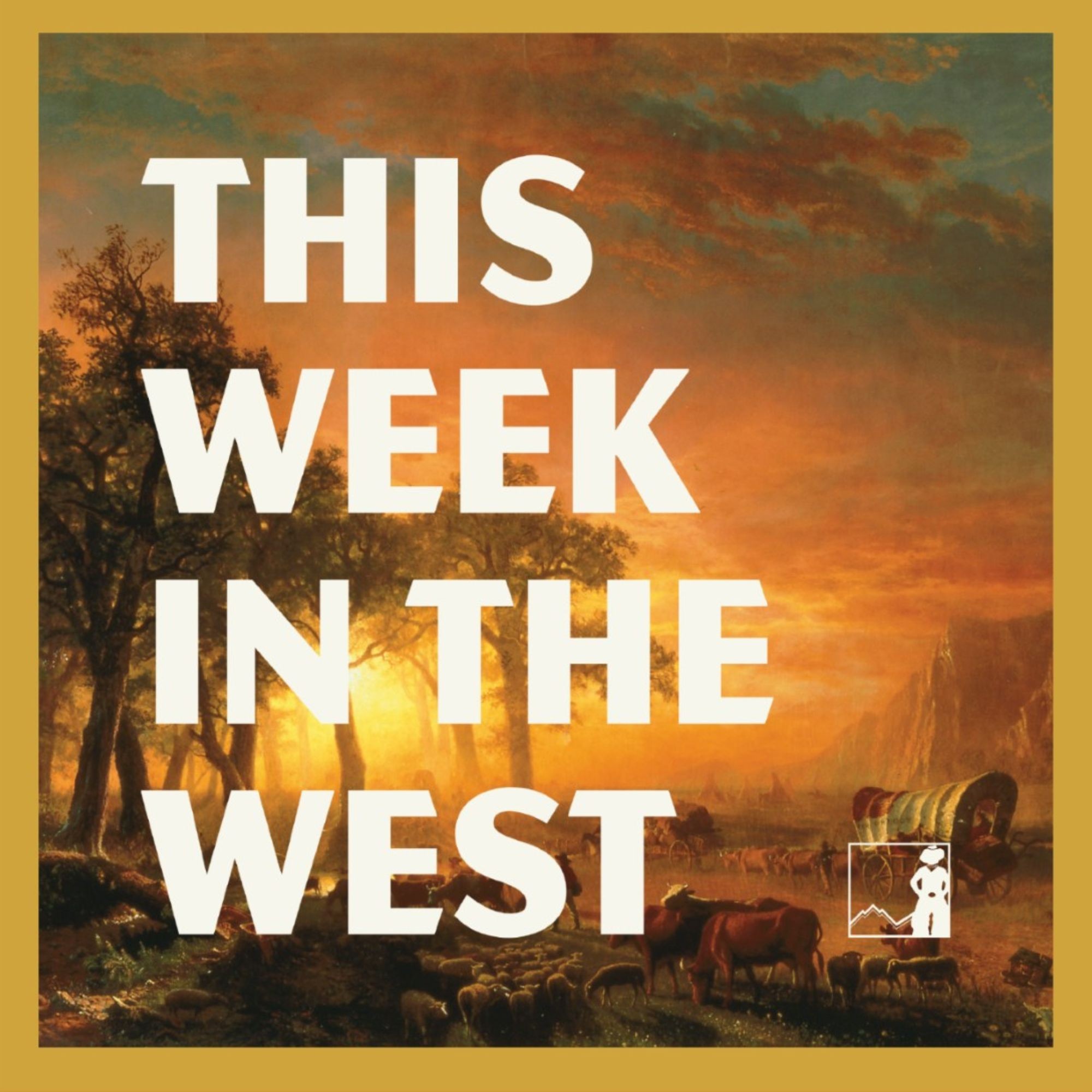
This Week in the West
The National Cowboy & Western Heritage MuseumAudio
- Format:
- Podcast
- New episodes:
- Weekly
- Typical length:
- about 6 minutes
- Latest episode:
About this show
Broadcasting from The National Cowboy & Western Heritage Museum, This Week in the West brings you the stories of the people and events that shaped the history of the American West.
Show details and episodes come from the publisher's public feed at feed.podbean.com. Last updated . Names, artwork and text belong to their publishers.
Cosmos
Similar by topic and creator
- Cautionary Tales of History
Shares the topic History. - Hardcore Stories
Shares the topic History. - History: Hits and Stories
Shares the topic History.
Similar shows





Explore more
Episodes
This Week in the West: The Finely Detailed Life of Western Artist Tom Lovell
· 6 min
🤠This Week in the West 🎙️ Episode 87: The Finely Detailed Life of Western Artist Tom Lovell 📢 Episode Summary: llustrator and painter Tom Lovell became one of the most respected artists of the American West by combining meticulous historical research with exceptional storytelling. Although he grew up in New York City, his fascination with Native American history began in childhood museum visits and later shaped a career that spanned pulp magazines, national publications and historical illustration. His early work taught him to eliminate unnecessary details and ensure that every element in a painting served the story. During World War II, Lovell served as a Marine Corps artist, further refining his commitment to historical accuracy. After the war, he illustrated for National Geographic and researched subjects ranging from Vikings to Alexander the Great before a major commission on the history of the American Southwest redirected his focus toward Western art. Moving to Santa Fe in 1972 immersed him in the landscapes and cultures that inspired many of his most celebrated paintings. Lovell became a leading figure in Western art, earning honors from the Cowboy Artists of America and the Prix de West Invitational Art Exhibition & Sale, where his painting Target Practice won the Ann Noble Brown Purchase Award in 1986. Following his death in 1997, his legacy has endured through paintings held in museums and private collections, including significant works, papers and studio artifacts preserved at the National Cowboy & Western Heritage Museum. His career remains a testament to the power of careful research, historical authenticity and visual storytelling. 🔍 What You’ll Learn: - How Tom Lovell evolved from a successful magazine illustrator into one of America's most influential Western artists through a lifelong commitment to historical accuracy and storytelling. - Why research mattered so much to Lovell, and how his attention to authentic clothing, weapons, landscapes and cultures made his paintings feel believable and historically grounded. - What legacy Tom Lovell left behind, including his award-winning Western paintings, his impact on the Prix de West Invitational Art Exhibition & Sale and the collection of his artwork and personal archives preserved at the National Cowboy & Western Heritage Museum. 👥 Behind the Scenes Host: Seth Spillman Producer: Chase Spivey Writer: Mike Koehler 🔗 Further research: - Tom Lovell’s pulp years: https://www.pulpartists.com/Lovell.html - Tom Lovell’s Marine Corps years: https://gurneyjourney.blogspot.com/2013/05/sergeant-tom-lovell-usmc.html - More from our archives: https://nationalcowboymuseum.org/explore/lovell-art-illustrations/ 📬 Connect With Us: 🌐 Website: www.thecowboy.org (http://www.nationalcowboymuseum.org)📖 Read Our Blog: https://nationalcowboymuseum.org/blog/📩 Email: podcast@thecowboy.org📲Facebook:https://www.facebook.com/ncwhm/📷Instagram: https://www.instagram.com/nationalcowboymuseum❎X/Twitter: https://x.com/ncwhm💼LinkedIn: https://www.linkedin.com/company/national-cowboy-&-western-heritage-museum 🗺️ Visit Us: The National Cowboy & Western Heritage Museum, 1700 NE 63rd Street, Oklahoma City, OK, 73111. See us on the map (https://maps.app.goo.gl/1DruqCuukCzUerwQ6) 🎟️: You can now buy tickets to The Cowboy online, go to https://nationalcowboymuseum.org/tickets/💡 Support Us:🏅Become A Member of the Museum: https://nationalcowboymuseum.org/support/memberships/ 🛒Shop at Persimmon Hill, our Museum store: https://persimmonhillstore.com/ 🎧 Listen & Subscribe: 🔹 Apple Podcasts:https://podcasts.apple.com/us/podcast/this-week-in-the-west/id1776228708🔹 Spotify: https://open.spotify.com/show/2KYmd2BumVtQVH1ez1Cr2U🔹YouTube: https://www.youtube.com/playlist?list=PLFoE2kU21JpX9T6W9NonXuD9UapS1TsmN🔹Podbean: https://thisweekinthewest.podbean.com/ ⭐ If you enjoyed this episode, don’t forget to rate & review!
Not rated yetThis Week in the West: A German Duke Explores the Frontier
· 6 min
🤠This Week in the West 🎙️ Episode 86: A German Duke Explores the Frontier 📢 Episode Summary: Born into European royalty in 1797, Duke Paul Wilhelm of Württemberg chose a life of exploration rather than courtly comfort. Inspired by the scientific curiosity of the age and the work of naturalist Alexander von Humboldt, he traveled to North America in 1822 and spent years exploring the Mississippi and Missouri River valleys. At a time when much of the American West remained unfamiliar to Europeans, Wilhelm collected plants, animals and artifacts while documenting the landscapes and cultures he encountered. Traveling from New Orleans to St. Louis and deep into the fur-trade country of the Missouri River, Wilhelm followed in the footsteps of Lewis and Clark. Along the way, he met legendary explorer William Clark and became acquainted with Jean Baptiste Charbonneau, who later accompanied him back to Europe. His journeys took him among numerous Indigenous nations, including the Sioux, Blackfoot and Mandan peoples, and ultimately to the Three Forks region of present-day Montana, where he helped expand scientific knowledge of the Missouri River watershed. What makes Wilhelm especially significant today is the detailed record he left behind. Unlike many travelers of his era, he approached Indigenous cultures with genuine curiosity and carefully documented languages, customs, clothing and daily life. His journals, sketches and collections preserved a snapshot of the American frontier during a brief period before railroads and large-scale settlement transformed the West. Though much of his work was later lost during World War II, his surviving writings remain an important resource for historians studying the early American frontier. 🔍 What You’ll Learn: - How a German duke became one of the earliest scientific explorers of the American West and why he left Europe to study the frontier. - The remarkable connections between Duke Paul Wilhelm, William Clark, and Jean Baptiste Charbonneau, the son of Sacagawea. - How Wilhelm's journals and collections preserved valuable information about Indigenous nations, frontier settlements and the Missouri River country before the West was transformed by expansion and development. 👥 Behind the Scenes Host: Seth Spillman Producer: Chase Spivey Writer: Mike Koehler 🔗 Further research: - The Duke’s book: Travels in North America, 1822-1824: https://archive.org/details/travelsinnortham0000paul/page/n7/mode/2up - The story of Jean Baptiste Charbonneau: https://lewis-clark.org/members/jean-baptiste-charbonneau/ 📬 Connect With Us: 🌐 Website: www.thecowboy.org (http://www.nationalcowboymuseum.org)📖 Read Our Blog: https://nationalcowboymuseum.org/blog/📩 Email: podcast@thecowboy.org📲Facebook:https://www.facebook.com/ncwhm/📷Instagram: https://www.instagram.com/nationalcowboymuseum❎X/Twitter: https://x.com/ncwhm💼LinkedIn: https://www.linkedin.com/company/national-cowboy-&-western-heritage-museum 🗺️ Visit Us: The National Cowboy & Western Heritage Museum, 1700 NE 63rd Street, Oklahoma City, OK, 73111. See us on the map (https://maps.app.goo.gl/1DruqCuukCzUerwQ6) 🎟️: You can now buy tickets to The Cowboy online, go to https://nationalcowboymuseum.org/tickets/💡 Support Us:🏅Become A Member of the Museum: https://nationalcowboymuseum.org/support/memberships/ 🛒Shop at Persimmon Hill, our Museum store: https://persimmonhillstore.com/ 🎧 Listen & Subscribe: 🔹 Apple Podcasts:https://podcasts.apple.com/us/podcast/this-week-in-the-west/id1776228708🔹 Spotify: https://open.spotify.com/show/2KYmd2BumVtQVH1ez1Cr2U🔹YouTube: https://www.youtube.com/playlist?list=PLFoE2kU21JpX9T6W9NonXuD9UapS1TsmN🔹Podbean: https://thisweekinthewest.podbean.com/ ⭐ If you enjoyed this episode, don’t forget to rate & review!
Not rated yetThis Week in the West: Dispelling the Myths Surrounding Geronimo
· 6 min
🤠This Week in the West 🎙️ Episode 85: Dispelling the Myths Surrounding Geronimo 📢 Episode Summary: Geronimo, born Goyahkla—or "One Who Yawns"—in 1829, grew up among the Chiricahua Apache in what is now Arizona, New Mexico and northern Mexico. His life changed forever in 1851 when Mexican soldiers attacked his camp and killed his mother, wife and children while he was away. The tragedy fueled a lifelong determination to defend his people and their way of life. Over time, he earned the name Geronimo, likely derived from Mexican soldiers calling upon Saint Jerome during battle, and became one of the most recognizable figures in the history of the American West. Although not a chief, Geronimo emerged as an influential Apache spiritual leader, warrior and strategist during the Apache Wars. As American expansion accelerated following the Mexican-American War, the Apache faced increasing pressure from settlers, soldiers and government policies that confined Indigenous peoples to reservations. Refusing to accept life on the San Carlos Reservation, Geronimo repeatedly led small groups of Apache followers into the mountains of the Southwest, evading capture and conducting raids for years. His ability to escape much larger military forces made him both feared and legendary throughout the region. Geronimo finally surrendered in 1886, marking the end of major Apache resistance campaigns in the Southwest. He and the Chiricahua Apache spent the rest of their lives as prisoners of war, eventually being relocated to Fort Sill in Oklahoma Territory. In later years, Geronimo became a national celebrity, appearing at fairs, expositions and even President Theodore Roosevelt's inaugural parade. Yet he never stopped seeking permission to return to his homeland. His 1905 autobiography remains one of the most important firsthand accounts by an Indigenous leader of the American West. He died at Fort Sill in 1909, still a prisoner of war, leaving behind a legacy that continues to shape conversations about resistance, survival and the history of the American West. 🔍 What You’ll Learn: - How Geronimo became a symbol of Apache resistance and the personal tragedy that shaped his determination to defend his people, homeland and traditions. - The story of the Apache Wars and the growing conflicts between Indigenous peoples, settlers, soldiers and governments as the American Southwest underwent dramatic change during the 19th century. - What happened after Geronimo's surrender, including his years as a prisoner of war, his unexpected rise to national celebrity and the lasting legacy he left through his autobiography and his role in Western history. 👥 Behind the Scenes Host: Seth Spillman Producer: Chase Spivey Writer: Mike Koehler 🔗 Further research: - Oklahoma PBS Documentary on Geronimo: https://www.pbs.org/video/geronimo-vvnasx/ - National Archive article on Geronimo: https://prologue.blogs.archives.gov/2022/11/22/geronimo-apache-chief/ - The Geronimo Trail National Scenic Byway: https://geronimotrail.com/ 📬 Connect With Us: 🌐 Website: www.thecowboy.org (http://www.nationalcowboymuseum.org)📖 Read Our Blog: https://nationalcowboymuseum.org/blog/📩 Email: podcast@thecowboy.org📲Facebook:https://www.facebook.com/ncwhm/📷Instagram: https://www.instagram.com/nationalcowboymuseum❎X/Twitter: https://x.com/ncwhm💼LinkedIn: https://www.linkedin.com/company/national-cowboy-&-western-heritage-museum 🗺️ Visit Us: The National Cowboy & Western Heritage Museum, 1700 NE 63rd Street, Oklahoma City, OK, 73111. See us on the map (https://maps.app.goo.gl/1DruqCuukCzUerwQ6) 🎟️: You can now buy tickets to The Cowboy online, go to https://nationalcowboymuseum.org/tickets/💡 Support Us:🏅Become A Member of the Museum: https://nationalcowboymuseum.org/support/memberships/ 🛒Shop at Persimmon Hill, our Museum store: https://persimmonhillstore.com/ 🎧 Listen & Subscribe: 🔹 Apple…
Not rated yetThis Week in the West: Louis L'Amour, the West's Great Storyteller
· 5 min
🤠This Week in the West 🎙️ Episode 84: Louis L’Amour, The West’s Great Storyteller 📢 Episode Summary: Louis L’Amour became one of the most influential Western writers in history not because he imagined the West from afar, but because he lived much of it himself. Born in North Dakota in 1908, he spent his early adulthood traveling the American West, working as a ranch hand, miner, lumber camp laborer, merchant seaman and boxer. Those experiences gave him firsthand knowledge of the landscapes, people and hardships that would later become the foundation of his fiction. After years of writing short stories for pulp magazines, L’Amour achieved national success with Hondo in 1953. The novel's popularity launched a remarkable career that produced nearly 100 novels, more than 250 short stories and hundreds of millions of books sold worldwide. His stories of ranchers, settlers, prospectors and wanderers helped define how generations of readers understood the American West, while his dedication to historical research gave his work a reputation for authenticity. This episode explores L’Amour's relentless work ethic, his love of reading and learning, and the legacy he left behind when he died on June 10, 1988. While some aspects of his work have been reassessed by modern audiences, his influence on Western literature, film and popular culture remains enormous. More than three decades after his death, his books continue to introduce new readers to the history, adventure and mythology of the American West. 🔍 What You’ll Learn: - How Louis L’Amour's real-life adventures as a laborer, sailor, boxer and traveler shaped the characters and settings that made his Western novels famous. - Why Hondo became the turning point that transformed L’Amour from a pulp magazine writer into one of the world's bestselling authors. - How L’Amour's commitment to research, history and ordinary people helped him create stories that continue to resonate with readers around the globe. 👥 Behind the Scenes Host: Seth Spillman Producer: Chase Spivey Writer: Mike Koehler 🔗 Further research: - 1976 “60 Minutes” Profile of Louis L’Amour: https://youtu.be/0da3C2BLCro?si=Ce2RSCLNJJRdrwE_ - Short film “A Man Called Louis L’Amour:” https://youtu.be/vUqPR49_44s?si=-CKOsB42oYj9AzUx - The Official Louis L’Amour website: https://www.louislamour.com/ 📬 Connect With Us: 🌐 Website: www.thecowboy.org (http://www.nationalcowboymuseum.org)📖 Read Our Blog: https://nationalcowboymuseum.org/blog/📩 Email: podcast@thecowboy.org📲Facebook:https://www.facebook.com/ncwhm/📷Instagram: https://www.instagram.com/nationalcowboymuseum❎X/Twitter: https://x.com/ncwhm💼LinkedIn: https://www.linkedin.com/company/national-cowboy-&-western-heritage-museum 🗺️ Visit Us: The National Cowboy & Western Heritage Museum, 1700 NE 63rd Street, Oklahoma City, OK, 73111. See us on the map (https://maps.app.goo.gl/1DruqCuukCzUerwQ6) 🎟️: You can now buy tickets to The Cowboy online, go to https://nationalcowboymuseum.org/tickets/💡 Support Us:🏅Become A Member of the Museum: https://nationalcowboymuseum.org/support/memberships/ 🛒Shop at Persimmon Hill, our Museum store: https://persimmonhillstore.com/ 🎧 Listen & Subscribe: 🔹 Apple Podcasts:https://podcasts.apple.com/us/podcast/this-week-in-the-west/id1776228708🔹 Spotify: https://open.spotify.com/show/2KYmd2BumVtQVH1ez1Cr2U🔹YouTube: https://www.youtube.com/playlist?list=PLFoE2kU21JpX9T6W9NonXuD9UapS1TsmN🔹Podbean: https://thisweekinthewest.podbean.com/ ⭐ If you enjoyed this episode, don’t forget to rate & review!
Not rated yet- Not rated yet
This Week in the West: Andy Payne and the Brutal Craziness of the Bunion Derby
· 6 min
🤠This Week in the West 🎙️ Episode 82: Andy Payne and the Brutal Craziness of the Bunion Derby 📢 Episode Summary: In this episode of This Week in The West, listeners travel back to 1928 for one of the strangest and toughest athletic events in American history: the Transcontinental Footrace, better known as the “Bunion Derby.” Created by sports promoter Charles C. Pyle, the race challenged nearly 300 runners to travel more than 3,400 miles from Los Angeles to New York City for a massive cash prize. Following much of what would later become Route 66, the race became a national spectacle filled with carnivals, crowds and daily hardship. At the center of the story is Andy Payne, a 20-year-old Cherokee runner from Foyil, Oklahoma. Payne entered the race hoping to save his family’s farm from financial trouble. Unlike many competitors who pushed too hard early, Payne relied on patience, discipline and endurance. He survived brutal weather, illness, dangerous traffic and exhaustion while steadily climbing through the ranks as other runners dropped out. Along the way, he became a folk hero across Oklahoma, greeted by cheering crowds, politicians and even humorist Will Rogers. The episode concludes with Payne’s dramatic finish at Madison Square Garden on May 26, 1928. After 84 grueling days on the road, Payne won the race by more than 15 hours, earning enough money to pay off his family’s mortgage and invest in land back home. The podcast reflects on how Payne’s victory transformed his life and secured his place in Oklahoma and Route 66 history. Today, a statue in Foyil honors the humble runner who crossed America on foot. 🔍 What You’ll Learn: - How the 1928 “Bunion Derby” became one of the most extreme endurance races in American history - Why Cherokee runner Andy Payne became an Oklahoma hero during the race - How Route 66 played a major role in the race and helped turn the event into a national spectacle 👥 Behind the Scenes Host: Seth Spillman Producer: Chase Spivey Writer: Mike Koehler 🔗 Further research: - Runner’s World article on Bunion Derby: https://www.runnersworld.com/advanced/a20787316/the-great-bunion-derby/ - A look at the African-American runners of the Bunion Derby: https://blackpast.org/african-american-history/1928-bunion-derby-america-s-brush-integrated-sports/ - Rare footage of the Bunion Derby:https://www.youtube.com/watch?v=5s-kS_Ye4mw 📬 Connect With Us: 🌐 Website: www.thecowboy.org (http://www.nationalcowboymuseum.org)📖 Read Our Blog: https://nationalcowboymuseum.org/blog/📩 Email: podcast@thecowboy.org📲Facebook:https://www.facebook.com/ncwhm/📷Instagram: https://www.instagram.com/nationalcowboymuseum❎X/Twitter: https://x.com/ncwhm💼LinkedIn: https://www.linkedin.com/company/national-cowboy-&-western-heritage-museum 🗺️ Visit Us: The National Cowboy & Western Heritage Museum, 1700 NE 63rd Street, Oklahoma City, OK, 73111. See us on the map (https://maps.app.goo.gl/1DruqCuukCzUerwQ6) 🎟️: You can now buy tickets to The Cowboy online, go to https://nationalcowboymuseum.org/tickets/💡 Support Us:🏅Become A Member of the Museum: https://nationalcowboymuseum.org/support/memberships/ 🛒Shop at Persimmon Hill, our Museum store: https://persimmonhillstore.com/ 🎧 Listen & Subscribe: 🔹 Apple Podcasts:https://podcasts.apple.com/us/podcast/this-week-in-the-west/id1776228708🔹 Spotify: https://open.spotify.com/show/2KYmd2BumVtQVH1ez1Cr2U🔹YouTube: https://www.youtube.com/playlist?list=PLFoE2kU21JpX9T6W9NonXuD9UapS1TsmN🔹Podbean: https://thisweekinthewest.podbean.com/ ⭐ If you enjoyed this episode, don’t forget to rate & review!
Not rated yetThis Week in the West: Edward Borein and the Authentic West
· 4 min
🤠This Week in the West 🎙️ Episode 81: Edward Borein and the Authentic West 📢 Episode Summary: This episode of This Week in The West explores the life and legacy of Western artist and cowboy Edward Borein, whose work helped preserve an authentic visual record of the American West. The episode opens with Borein’s early years in California, where he watched cattle drives as a child and quickly developed both artistic talent and cowboy skills. By the age of eighteen, he was working ranches across California and Mexico, sketching the people, horses and landscapes he encountered along the way. The podcast highlights Borein’s insistence on authenticity in his art, a quality that distinguished him from many artists who romanticized the West from afar. Listeners learn how Borein’s firsthand experiences shaped his illustrations for major publications like Harper’s, Collier’s Weekly and The Saturday Evening Post. The episode also covers his friendships with influential Western figures, including Will Rogers, Buffalo Bill Cody and fellow artist Charles Marion Russell, who encouraged Borein’s development as a painter. The final portion of the episode follows Borein’s return to California in the 1920s, where he refined the etching style that would make him famous. His studio in Santa Barbara became a gathering place for artists and storytellers, while his work documented cowboy life, stagecoaches, missions and Indigenous communities with remarkable detail. The episode concludes by examining Borein’s lasting legacy, including his inclusion in the permanent collection of the National Cowboy & Western Heritage Museum and his posthumous induction into the Hall of Great Westerners in 1971. 🔍 What You’ll Learn: - How artist and cowboy Edward Borein used firsthand experience on ranches in California and Mexico to create some of the most authentic visual records of the American West. - Why Borein’s dedication to accuracy set him apart from many early Western artists and earned him comparisons to fellow Western art legend Charles Marion Russell. - How Borein’s work evolved from cowboy sketches and magazine illustrations into internationally recognized etchings, watercolors and paintings that are now preserved in museums, including the National Cowboy & Western Heritage Museum. 👥 Behind the Scenes Host: Seth Spillman Producer: Chase Spivey Writer: Mike Koehler 🔗 Further research: - Santa Monica Historical Museum’s Edward Borein Gallery: https://www.sbhistorical.org/borein-2/ - Video lecture: Etched by the West, the Life and Art of Edward Borein by Byron Price: https://youtu.be/6lz3ZrhAup8?si=9BWQWvOUxs6WC0Iu - Antiques Roadshow appraises Edward Borein etchings: https://www.pbs.org/video/antiques-roadshow-appraisal-edward-borein-etchings-ca-1930/ 📬 Connect With Us: 🌐 Website: www.thecowboy.org (http://www.nationalcowboymuseum.org)📖 Read Our Blog: https://nationalcowboymuseum.org/blog/📩 Email: podcast@thecowboy.org📲Facebook:https://www.facebook.com/ncwhm/📷Instagram: https://www.instagram.com/nationalcowboymuseum❎X/Twitter: https://x.com/ncwhm💼LinkedIn: https://www.linkedin.com/company/national-cowboy-&-western-heritage-museum 🗺️ Visit Us: The National Cowboy & Western Heritage Museum, 1700 NE 63rd Street, Oklahoma City, OK, 73111. See us on the map (https://maps.app.goo.gl/1DruqCuukCzUerwQ6) 🎟️: You can now buy tickets to The Cowboy online, go to https://nationalcowboymuseum.org/tickets/💡 Support Us:🏅Become A Member of the Museum: https://nationalcowboymuseum.org/support/memberships/ 🛒Shop at Persimmon Hill, our Museum store: https://persimmonhillstore.com/ 🎧 Listen & Subscribe: 🔹 Apple Podcasts:https://podcasts.apple.com/us/podcast/this-week-in-the-west/id1776228708🔹 Spotify: https://open.spotify.com/show/2KYmd2BumVtQVH1ez1Cr2U🔹YouTube: https://www.youtube.com/playlist?list=PLFoE2kU21JpX9T6W9NonXuD9UapS1TsmN🔹Podbean: https://thisweekinthewest.podbean.com/ ⭐ If you enjoyed this episode, don’t forget to…
Not rated yetThis Week in the West: Jim Shoulders, The Babe Ruth of Rodeo
· 5 min
🤠This Week in the West 🎙️ Episode 80: Jim Shoulders, the Babe Ruth of Rodeo 📢 Episode Summary: This episode of This Week in The West explores the life and legacy of rodeo legend Jim Shoulders, often called the “Babe Ruth of Rodeo.” Born in Tulsa, Oklahoma, on May 13, 1928, Shoulders grew from a city kid with dreams of cowboy life into one of the most dominant athletes in rodeo history. The episode follows his humble beginnings, including his first rodeo win at age 14 in Oilton, Oklahoma, and the determination that launched a championship career. Listeners will hear how Shoulders transformed professional rodeo through toughness, consistency and unmatched competitive success. Over his career, he earned 16 world championships, including titles in bull riding, bareback bronc riding and all-around competition. The podcast also examines the dangerous nature of rodeo in the mid-20th century, when competitors endured serious injuries with little medical support or safety equipment. Through quotes from friends, family and Shoulders himself, the episode paints a vivid picture of a cowboy whose grit helped define an entire era of the sport. The episode also highlights Shoulders’ lasting influence beyond competition. After retiring from riding, he became a respected stock contractor and helped develop legendary bucking bulls like Tornado. His fame also carried into Western fashion and advertising, including work with Wrangler and helping design the iconic Cowboy Cut jeans. The podcast closes by reflecting on Shoulders’ enduring legacy through honors at the National Cowboy & Western Heritage Museum, the National Rodeo Hall of Fame and the PBR Ring of Honor. 🔍 What You’ll Learn: - How Jim Shoulders rose from a teenage rodeo competitor in Oklahoma to become one of the greatest champions in rodeo history - What professional rodeo was like during the rough-and-tumble 1940s and 1950s, before modern safety standards and training methods - How Shoulders influenced Western culture beyond rodeo through livestock breeding, advertising partnerships and the development of Wrangler Cowboy Cut jeans 👥 Behind the Scenes Host: Seth Spillman Producer: Chase Spivey Writer: Mike Koehler 🔗 Further research: - Oklahoma Historical Society Interview with Jim Shoulders, 1970: https://youtu.be/WRRPRuMqRZ4?si=o7pvP6MDhweBKCXG - Oklahoma Hall of Fame entry on Jim Shoulders: https://www.oklahomahof.com/hof/inductees/shoulders-jim-1976 - New York Times Obituary of Jim Shoulders: https://www.nytimes.com/2007/06/22/sports/22shoulders.html 📬 Connect With Us: 🌐 Website: www.thecowboy.org (http://www.nationalcowboymuseum.org)📖 Read Our Blog: https://nationalcowboymuseum.org/blog/📩 Email: podcast@thecowboy.org📲Facebook:https://www.facebook.com/ncwhm/📷Instagram: https://www.instagram.com/nationalcowboymuseum❎X/Twitter: https://x.com/ncwhm💼LinkedIn: https://www.linkedin.com/company/national-cowboy-&-western-heritage-museum 🗺️ Visit Us: The National Cowboy & Western Heritage Museum, 1700 NE 63rd Street, Oklahoma City, OK, 73111. See us on the map (https://maps.app.goo.gl/1DruqCuukCzUerwQ6) 🎟️: You can now buy tickets to The Cowboy online, go to https://nationalcowboymuseum.org/tickets/💡 Support Us:🏅Become A Member of the Museum: https://nationalcowboymuseum.org/support/memberships/ 🛒Shop at Persimmon Hill, our Museum store: https://persimmonhillstore.com/ 🎧 Listen & Subscribe: 🔹 Apple Podcasts:https://podcasts.apple.com/us/podcast/this-week-in-the-west/id1776228708🔹 Spotify: https://open.spotify.com/show/2KYmd2BumVtQVH1ez1Cr2U🔹YouTube: https://www.youtube.com/playlist?list=PLFoE2kU21JpX9T6W9NonXuD9UapS1TsmN🔹Podbean: https://thisweekinthewest.podbean.com/ ⭐ If you enjoyed this episode, don’t forget to rate & review!
Not rated yetThis Week in the West: The Monumental Effort to Create the Transcontinental Railroad
· 6 min
🤠This Week in the West 🎙️ Episode 79: The Monumental Effort to Create the Transcontinental Railroad 📢 Episode Summary: This episode of This Week in The West commemorates the anniversary of the completion of the transcontinental railroad on May 10, 1869. The story opens at Promontory Summit in Utah Territory, where the Union Pacific and Central Pacific railroads met in a historic moment symbolized by the driving of the golden spike. What had once seemed impossible—a rail connection spanning the continent—became a reality, marking a turning point in American history. The episode explores the immense challenges behind the railroad’s construction. From the granite walls of the Sierra Nevada to the vast and unforgiving Great Plains, thousands of laborers—many of them Chinese immigrants, Irish workers, Civil War veterans and formerly enslaved men—endured brutal conditions to complete the line. The project was driven forward by the Pacific Railway Act signed by President Abraham Lincoln in 1862, but it came at a cost, including the disruption of Native American lands and the near destruction of the American bison. Finally, the episode examines the profound impact of the railroad on the nation. Travel time across the country shrank from months to about a week, transforming commerce, communication and daily life. The railroad helped establish time zones, fueled economic growth and shaped settlement patterns across the West. Its influence reached into industries like cattle ranching and inspired artists such as Albert Bierstadt, whose work captured a landscape in transition. The legacy of the transcontinental railroad remains deeply woven into the story of the American West and the themes explored at the National Cowboy & Western Heritage Museum. 🔍 What You’ll Learn: - How the transcontinental railroad was planned, funded and ultimately completed at Promontory Summit in 1869 - The human story behind the railroad, including the diverse workforce and the कठिन and dangerous conditions they endured - The lasting impact of the railroad on American life, from economic growth and time zones to Western expansion and cultural change 👥 Behind the Scenes Host: Seth Spillman Producer: Chase Spivey Writer: Mike Koehler 🔗 Further research: - PBS’ American Experience documentary on the Transcontinental Railroad: https://www.pbs.org/wgbh/americanexperience/films/tcrr/ - The Transcontinental Railroad and the Asian-American Experience: https://postalmuseum.si.edu/the-transcontinental-railroad-and-the-asian-american-story - How the Transcontinental Railroad changed America forever: https://www.bbc.com/reel/video/p0n4kjvh/watch 📬 Connect With Us: 🌐 Website: www.thecowboy.org (http://www.nationalcowboymuseum.org)📖 Read Our Blog: https://nationalcowboymuseum.org/blog/📩 Email: podcast@thecowboy.org📲Facebook:https://www.facebook.com/ncwhm/📷Instagram: https://www.instagram.com/nationalcowboymuseum❎X/Twitter: https://x.com/ncwhm💼LinkedIn: https://www.linkedin.com/company/national-cowboy-&-western-heritage-museum 🗺️ Visit Us: The National Cowboy & Western Heritage Museum, 1700 NE 63rd Street, Oklahoma City, OK, 73111. See us on the map (https://maps.app.goo.gl/1DruqCuukCzUerwQ6) 🎟️: You can now buy tickets to The Cowboy online, go to https://nationalcowboymuseum.org/tickets/💡 Support Us:🏅Become A Member of the Museum: https://nationalcowboymuseum.org/support/memberships/ 🛒Shop at Persimmon Hill, our Museum store: https://persimmonhillstore.com/ 🎧 Listen & Subscribe: 🔹 Apple Podcasts:https://podcasts.apple.com/us/podcast/this-week-in-the-west/id1776228708🔹 Spotify: https://open.spotify.com/show/2KYmd2BumVtQVH1ez1Cr2U🔹YouTube: https://www.youtube.com/playlist?list=PLFoE2kU21JpX9T6W9NonXuD9UapS1TsmN🔹Podbean: https://thisweekinthewest.podbean.com/ ⭐ If you enjoyed this episode, don’t forget to rate & review!
Not rated yetThis Week in the West: The Wild Western Life of Artist Olaf Wieghorst
· 5 min
🤠This Week in the West 🎙️ Episode 78: The Wild Western Life of Artist Olaf Wieghorst 📢 Episode Summary: This episode of This Week in the West explores the remarkable life of Western artist Olaf Wieghorst, a man whose story reads like the very scenes he would later paint. Born in Denmark in 1899, Wieghorst developed an early fascination with horses while performing as a child acrobat and circus rider. Drawn by stories of the American West, he immigrated to the United States in 1918, famously jumping ship in New York with little more than a dollar and a dream. His journey west began through enlistment in the U.S. Cavalry, where he gained firsthand experience with the landscapes, people, and horses that would define his artistic legacy. After his military service, Wieghorst lived and worked as a cowboy in the Southwest, sketching scenes of everyday Western life before eventually settling in New York City. There, he joined the NYPD Mounted Division, continuing his work with horses while quietly building a side career as an artist. Despite restrictions on outside work, his drawings began gaining recognition through magazines and exhibitions, reflecting an authenticity that came from lived experience rather than imagination. In 1944, Wieghorst retired from the police force and moved permanently to California, dedicating himself fully to painting. His work—often centered on horses and quiet, reflective moments of Western life—earned him national acclaim and comparisons to legends like Frederic Remington and Charles Russell. Honored during his lifetime and beyond, including induction into the Hall of Great Westerners, Wieghorst left behind a legacy rooted in authenticity. As he once said, he painted what he knew—knowledge earned through hardship, experience, and a life fully lived in the West. 🔍 What You’ll Learn: - How Olaf Wieghorst’s real-life experiences as a cavalryman, cowboy, and horseman shaped the authenticity of his Western art - The unlikely path from Danish circus performer and immigrant to one of America’s most respected Western painters - Why firsthand experience—not formal training—became the foundation of Wieghorst’s artistic philosophy and lasting legacy 👥 Behind the Scenes Host: Seth Spillman Producer: Chase Spivey Writer: Mike Koehler 🔗 Further research: - The Olaf Wieghorst Museum: https://wieghorstmuseum.org/ - Audio of Olaf Wieghorst on the Merv Griffin Show: https://www.youtube.com/watch?v=idFc80uuQu8 - Wieghorst at The National Cowboy & Western Heritage Museum for an art show: https://images.nationalcowboymuseum.org/Documents/Detail/olaf-wieghorst/103336 📬 Connect With Us: 🌐 Website: www.thecowboy.org (http://www.nationalcowboymuseum.org)📖 Read Our Blog: https://nationalcowboymuseum.org/blog/📩 Email: podcast@thecowboy.org📲Facebook:https://www.facebook.com/ncwhm/📷Instagram: https://www.instagram.com/nationalcowboymuseum❎X/Twitter: https://x.com/ncwhm💼LinkedIn: https://www.linkedin.com/company/national-cowboy-&-western-heritage-museum 🗺️ Visit Us: The National Cowboy & Western Heritage Museum, 1700 NE 63rd Street, Oklahoma City, OK, 73111. See us on the map (https://maps.app.goo.gl/1DruqCuukCzUerwQ6) 🎟️: You can now buy tickets to The Cowboy online, go to https://nationalcowboymuseum.org/tickets/💡 Support Us:🏅Become A Member of the Museum: https://nationalcowboymuseum.org/support/memberships/ 🛒Shop at Persimmon Hill, our Museum store: https://persimmonhillstore.com/ 🎧 Listen & Subscribe: 🔹 Apple Podcasts:https://podcasts.apple.com/us/podcast/this-week-in-the-west/id1776228708🔹 Spotify: https://open.spotify.com/show/2KYmd2BumVtQVH1ez1Cr2U🔹YouTube: https://www.youtube.com/playlist?list=PLFoE2kU21JpX9T6W9NonXuD9UapS1TsmN🔹Podbean: https://thisweekinthewest.podbean.com/ ⭐ If you enjoyed this episode, don’t forget to rate & review!
Not rated yetThis Week in the West, Episode 77: Naturalist John Muir's Vision of Preserving the West
· 6 min
🤠This Week in the West 🎙️Episode 77: Naturalist John Muir's Vision of Preserving the West 📢 Episode Summary: This episode tells the remarkable story of John Muir, whose life changed forever after a factory accident in 1867 temporarily blinded him. When his vision returned, Muir saw it as a second chance and chose to leave behind industrial life to pursue a deeper connection with the natural world. That decision led him on a thousand-mile journey to the Gulf of Mexico and eventually west to California, where he discovered the awe-inspiring beauty of Yosemite and the Sierra Nevada. In the mountains, Muir immersed himself in observation and study, blending poetic writing with careful scientific inquiry. He challenged prevailing ideas about how Yosemite Valley was formed, arguing that glaciers shaped its landscape—an idea later proven correct. Through his essays and books, Muir invited Americans to see the wilderness not just as scenery, but as something sacred and worthy of understanding and protection. As the West changed rapidly in the late nineteenth century, Muir became a leading voice for conservation. He helped establish Yosemite National Park, founded the Sierra Club, and influenced President Theodore Roosevelt during a famous 1903 camping trip. Though he suffered a major defeat in the fight to save Hetch Hetchy Valley, his legacy endured through the national parks movement. Today, Muir is remembered not only as a naturalist, but as a force who helped define how Americans value and preserve their wild places. 🔍 What You’ll Learn: - How a life-altering injury led John Muir to abandon industry and become a pioneer of wilderness exploration - Why Muir’s scientific observations helped reshape our understanding of Yosemite and the natural world - How his advocacy influenced the creation of national parks and helped launch the American conservation movement 👥 Behind the Scenes Host: Seth Spillman Producer: Chase Spivey Writer: Mike Koehler 🔗 Further research: - The Sierra Club’s Biography Page of John Muir: https://vault.sierraclub.org/john_muir_exhibit/life/muir_biography.aspx - PBS’ American Masters Documentary of Muir: https://www.pbs.org/video/american-masters-john-muir-in-the-new-world-1/ - John Muir National Historical Site: https://www.nps.gov/jomu/learn/index.htm 📬 Connect With Us: 🌐 Website: www.thecowboy.org (http://www.nationalcowboymuseum.org)📖 Read Our Blog: https://nationalcowboymuseum.org/blog/📩 Email: podcast@thecowboy.org📲Facebook:https://www.facebook.com/ncwhm/📷Instagram: https://www.instagram.com/nationalcowboymuseum❎X/Twitter: https://x.com/ncwhm💼LinkedIn: https://www.linkedin.com/company/national-cowboy-&-western-heritage-museum 🗺️ Visit Us: The National Cowboy & Western Heritage Museum, 1700 NE 63rd Street, Oklahoma City, OK, 73111. See us on the map (https://maps.app.goo.gl/1DruqCuukCzUerwQ6) 🎟️: You can now buy tickets to The Cowboy online, go to https://nationalcowboymuseum.org/tickets/💡 Support Us:🏅Become A Member of the Museum: https://nationalcowboymuseum.org/support/memberships/ 🛒Shop at Persimmon Hill, our Museum store: https://persimmonhillstore.com/ 🎧 Listen & Subscribe: 🔹 Apple Podcasts:https://podcasts.apple.com/us/podcast/this-week-in-the-west/id1776228708🔹 Spotify: https://open.spotify.com/show/2KYmd2BumVtQVH1ez1Cr2U🔹YouTube: https://www.youtube.com/playlist?list=PLFoE2kU21JpX9T6W9NonXuD9UapS1TsmN🔹Podbean: https://thisweekinthewest.podbean.com/ ⭐ If you enjoyed this episode, don’t forget to rate & review!
Not rated yetThis Week in the West: Glenna Goodacre, Reagan's Scupltor and More
· 6 min
🤠This Week in the West 🎙️ Episode 76: Glenna Goodacre, Reagan’s Sculptor and More 📢 Episode Summary: Glenna Goodacre’s life and work reveal the power of sculpture to tell deeply human stories rooted in history, emotion and place. Best known for her bronze statue After the Ride of President Ronald Reagan at the National Cowboy & Western Heritage Museum, Goodacre had a gift for capturing personality in quiet, reflective moments. Her portrayal of Reagan as a relaxed Western figure—rather than a formal political icon—demonstrates her ability to connect national figures to the broader story of the American West. Born in Lubbock, Texas, in 1939, Goodacre developed her artistic voice through formal training and a lifelong connection to Western landscapes and culture. After settling in Santa Fe, she built a prolific career spanning more than 50 years and more than 600 sculptures. Her work ranged from intimate portraits to monumental public memorials, including the Vietnam Women’s Memorial in Washington, D.C., and the Irish Memorial in Philadelphia—both of which showcase her commitment to honoring resilience, compassion and shared history. Even in her smallest works, Goodacre’s impact reached millions. Her design for the Sacagawea dollar coin brought her artistry into everyday life, blending historical reverence with accessibility. Recognized with numerous awards and honors, she retired in 2016, leaving behind not only a remarkable body of work but also a legacy of mentorship and inspiration. Goodacre passed away on April 13, 2020, but her sculptures continue to invite viewers into moments of connection, reflection and enduring Western identity. 🔍 What You’ll Learn: - How Glenna Goodacre used sculpture to capture personality, emotion and Western identity in figures like Ronald Reagan - The stories behind her most significant works, including the Vietnam Women’s Memorial and the Sacagawea dollar coin - Why her approach to public art continues to shape how history is experienced and remembered today 👥 Behind the Scenes Host: Seth Spillman Producer: Chase Spivey Writer: Mike Koehler 🔗 Further research: - Official Glenna Goodacre site: https://glennagoodacre.com/ - Interview from The Cowboy’s Brodkin Contemporary Western Artists Project: https://youtu.be/WHKzl7imqfU?si=yCpfwUrVhMWQooF9 - The Briscoe Art Museum remembers Glenna Goodacre: https://briscoemuseum.org/remembering-glenna-goodacre/ 📬 Connect With Us: 🌐 Website: www.thecowboy.org (http://www.nationalcowboymuseum.org)📖 Read Our Blog: https://nationalcowboymuseum.org/blog/📩 Email: podcast@thecowboy.org📲Facebook:https://www.facebook.com/ncwhm/📷Instagram: https://www.instagram.com/nationalcowboymuseum❎X/Twitter: https://x.com/ncwhm💼LinkedIn: https://www.linkedin.com/company/national-cowboy-&-western-heritage-museum 🗺️ Visit Us: The National Cowboy & Western Heritage Museum, 1700 NE 63rd Street, Oklahoma City, OK, 73111. See us on the map (https://maps.app.goo.gl/1DruqCuukCzUerwQ6) 🎟️: You can now buy tickets to The Cowboy online, go to https://nationalcowboymuseum.org/tickets/💡 Support Us:🏅Become A Member of the Museum: https://nationalcowboymuseum.org/support/memberships/ 🛒Shop at Persimmon Hill, our Museum store: https://persimmonhillstore.com/ 🎧 Listen & Subscribe: 🔹 Apple Podcasts:https://podcasts.apple.com/us/podcast/this-week-in-the-west/id1776228708🔹 Spotify: https://open.spotify.com/show/2KYmd2BumVtQVH1ez1Cr2U🔹YouTube: https://www.youtube.com/playlist?list=PLFoE2kU21JpX9T6W9NonXuD9UapS1TsmN🔹Podbean: https://thisweekinthewest.podbean.com/ ⭐ If you enjoyed this episode, don’t forget to rate & review!
Not rated yetThis Week in the West: How James Garner Re-Defined the Western Hero
· 5 min
🤠This Week in the West 🎙️ Episode 75: How James Garner re-defined the Western hero 📢 Episode Summary: James Garner’s story begins in Norman, Oklahoma, with a difficult childhood marked by loss, hardship and an uncertain future. After leaving school early, he worked a series of jobs before serving in both World War II and the Korean War, where he was wounded twice and earned two Purple Hearts. Acting came almost by accident, but an early experience watching Henry Fonda on stage shaped Garner’s understated, natural style—one that would define his career. Garner rose to fame in 1957 as Bret Maverick on the hit Western series Maverick, redefining the genre’s typical hero. Instead of a stoic gunslinger, Maverick was witty, reluctant to fight and disarmingly human. Garner successfully transitioned to film at a time when few television actors could, starring in projects like The Great Escape and a string of comedies and Westerns, including Support Your Local Sheriff! His versatility and charm made him one of the most recognizable and respected actors of his era. He returned to television in 1974 with The Rockford Files, earning an Emmy Award and cementing his legacy as a relatable, everyman hero. Over a career spanning decades, Garner earned major industry honors while remaining grounded in his Oklahoma roots. Remembered as much for his humility as his talent, Garner’s life reflects a journey shaped by resilience, quiet skill and an enduring connection to the West. 🔍 What You’ll Learn: - How James Garner redefined the Western hero through humor, subtlety and realism - The unlikely path from Oklahoma oil fields and military service to Hollywood stardom - Why Garner’s influence helped pave the way for television actors to succeed in film 👥 Behind the Scenes Host: Seth Spillman Producer: Chase Spivey Writer: Mike Koehler 🔗 Further research: - YouTube Playlist of James Garner interviews about his career: https://www.youtube.com/watch?v=Vwef1pF9da0&list=PLAEA1D1610EE5BAA0 - James Garner receiving the Lifetime Achievement Award at 11th Screen Actors Guild Awards: https://youtu.be/hzBBDGo-RGA?si=menaTFJnzP_o1pcN - Los Angeles Times obituary of James Garner: https://www.latimes.com/local/obituaries/la-me-james-garner-20140721-story.html 📬 Connect With Us: 🌐 Website: www.thecowboy.org (http://www.nationalcowboymuseum.org)📖 Read Our Blog: https://nationalcowboymuseum.org/blog/📩 Email: podcast@thecowboy.org📲Facebook:https://www.facebook.com/ncwhm/📷Instagram: https://www.instagram.com/nationalcowboymuseum❎X/Twitter: https://x.com/ncwhm💼LinkedIn: https://www.linkedin.com/company/national-cowboy-&-western-heritage-museum 🗺️ Visit Us: The National Cowboy & Western Heritage Museum, 1700 NE 63rd Street, Oklahoma City, OK, 73111. See us on the map (https://maps.app.goo.gl/1DruqCuukCzUerwQ6) 🎟️: You can now buy tickets to The Cowboy online, go to https://nationalcowboymuseum.org/tickets/💡 Support Us:🏅Become A Member of the Museum: https://nationalcowboymuseum.org/support/memberships/ 🛒Shop at Persimmon Hill, our Museum store: https://persimmonhillstore.com/ 🎧 Listen & Subscribe: 🔹 Apple Podcasts:https://podcasts.apple.com/us/podcast/this-week-in-the-west/id1776228708🔹 Spotify: https://open.spotify.com/show/2KYmd2BumVtQVH1ez1Cr2U🔹YouTube: https://www.youtube.com/playlist?list=PLFoE2kU21JpX9T6W9NonXuD9UapS1TsmN🔹Podbean: https://thisweekinthewest.podbean.com/ ⭐ If you enjoyed this episode, don’t forget to rate & review!
Not rated yetThis Week in the West: Jo Decker and the Importance of Rodeo Secretaries
· 5 min
🤠This Week in the West 🎙️ Episode 74: Jo Decker and the Importance of Rodeo Secretaries 📢 Episode Summary: Jo Ramsey Decker stood at the center of rodeo’s evolution, bridging the gap between competitor and organizer at a time when the sport was still finding its footing. From her early days growing up on a Texas ranch to competing in rodeos as a child, Decker developed a deep connection to Western life. By the 1940s, she had earned national visibility as a “Ranch Sponsor Girl” at Madison Square Garden and built a successful competitive career, winning multiple world championships. Her marriage to rodeo cowboy Tater Decker marked the beginning of a lifelong partnership rooted in the rodeo world. While her accomplishments in the arena were significant, Decker’s lasting legacy came from her work behind the scenes. At a time when women’s rodeo lacked structure and consistency, she played a key role in supporting and promoting what would become the Women’s Professional Rodeo Association. As a rodeo secretary for 25 years, she became one of the most respected administrators in the sport, managing entries, payouts and logistics for major events. Her work with leading stock contractors and even entertainer Gene Autry demonstrated her wide influence, while her role in organizing the first National Finals Rodeo in 1959 helped shape rodeo’s premier championship event. Decker’s impact extended beyond rodeo operations into Western culture itself. In the 1950s, she launched a successful Western fashion line worn by celebrities like Rex Allen and even Princess Grace of Monaco, helping bring Western style to a broader audience. She later settled in Oklahoma, where she remained connected to the rodeo community until her death in 2010. Remembered as both a champion competitor and a pioneering organizer, Jo Decker’s career reflects the vital, often unseen work that helped professionalize rodeo and elevate its national profile. 🔍 What You’ll Learn: - How Jo Decker helped organize the first National Finals Rodeo and shape it into a lasting championship event - The critical role of a rodeo secretary and why it is essential to the success of rodeo competitions - How Decker advanced women’s rodeo and expanded Western culture through both sport and fashion 👥 Behind the Scenes Host: Seth Spillman Producer: Chase Spivey Writer: Mike Koehler 🔗 Further research: - Video of Jo Decker entering the arena at the 1959 NFR: https://www.youtube.com/watch?v=hvWETf4kQcc - Jo Decker, Texas Rodeo Cowboy Hall of Fame: https://texasrodeocowboy.com/inductees/jo-decker/ - MVP of Rodeo: The Secretary - https://www.oklahoman.com/story/news/1992/08/16/mvp-of-rodeo-the-secretary/62485000007/ 📬 Connect With Us: 🌐 Website: www.thecowboy.org (http://www.nationalcowboymuseum.org)📖 Read Our Blog: https://nationalcowboymuseum.org/blog/📩 Email: podcast@thecowboy.org📲Facebook:https://www.facebook.com/ncwhm/📷Instagram: https://www.instagram.com/nationalcowboymuseum❎X/Twitter: https://x.com/ncwhm💼LinkedIn: https://www.linkedin.com/company/national-cowboy-&-western-heritage-museum 🗺️ Visit Us: The National Cowboy & Western Heritage Museum, 1700 NE 63rd Street, Oklahoma City, OK, 73111. See us on the map (https://maps.app.goo.gl/1DruqCuukCzUerwQ6) 🎟️: You can now buy tickets to The Cowboy online, go to https://nationalcowboymuseum.org/tickets/💡 Support Us:🏅Become A Member of the Museum: https://nationalcowboymuseum.org/support/memberships/ 🛒Shop at Persimmon Hill, our Museum store: https://persimmonhillstore.com/ 🎧 Listen & Subscribe: 🔹 Apple Podcasts:https://podcasts.apple.com/us/podcast/this-week-in-the-west/id1776228708🔹 Spotify: https://open.spotify.com/show/2KYmd2BumVtQVH1ez1Cr2U🔹YouTube: https://www.youtube.com/playlist?list=PLFoE2kU21JpX9T6W9NonXuD9UapS1TsmN🔹Podbean: https://thisweekinthewest.podbean.com/ ⭐ If you enjoyed this episode, don’t forget to rate & review!
Not rated yetThis Week in the West: John Arbuckle and Coffee's Importance in the West
· 6 min
🤠This Week in the West 🎙️ Episode 73: John Arbuckle and Coffee's Importance in the West 📢 Episode Summary: This episode of This Week in The West explores the surprising but essential role coffee played in shaping life on the American frontier, focusing on the legacy of John Arbuckle. At a time when coffee was difficult to preserve and inconsistent in quality, Arbuckle revolutionized the industry in 1868 with a glazing process that kept roasted beans fresh and shelf-stable. His innovation made coffee widely accessible, transforming it from a fragile commodity into a dependable staple for Americans across the country. The impact of Arbuckle’s coffee was especially profound in the American West, where cowboys relied on it as a daily necessity rather than a luxury. On cattle drives, coffee fueled long days, harsh conditions, and sleepless nights, becoming as essential as food itself. Arbuckle’s brand, Ariosa, became so dominant that many cowboys simply referred to coffee as “Arbuckle,” and its packaging and coupon system even took on economic value in frontier communities. Ultimately, the episode highlights how a single innovation helped sustain the physical and cultural life of the West. Coffee was more than a drink—it was a symbol of endurance, comfort, and routine on the frontier. Even as competition and industry changes led to Arbuckle’s decline, his influence remains embedded in the imagery and stories of the American West, from chuck wagons to campfires. 🔍 What You’ll Learn: - How John Arbuckle’s innovation made coffee portable, reliable, and widely available in America - Why coffee became a critical survival tool for cowboys on cattle drives in the American West - How Arbuckle coffee shaped frontier culture, commerce, and even everyday language 👥 Behind the Scenes Host: Seth Spillman Producer: Chase Spivey Writer: Mike Koehler 🔗 Further research: - The current Arbuckle Coffee brand: https://arbucklecoffee.com/ - The history of coffee on the Brooklyn waterfront: https://www.bkwaterfronthistory.org/story/where-coffee-was-king/ - True West Magazine: Cowboy and Coffee: https://www.truewestmagazine.com/article/cowboy-coffee/ 📬 Connect With Us: 🌐 Website: www.thecowboy.org (http://www.nationalcowboymuseum.org)📖 Read Our Blog: https://nationalcowboymuseum.org/blog/📩 Email: podcast@thecowboy.org📲Facebook:https://www.facebook.com/ncwhm/📷Instagram: https://www.instagram.com/nationalcowboymuseum❎X/Twitter: https://x.com/ncwhm💼LinkedIn: https://www.linkedin.com/company/national-cowboy-&-western-heritage-museum 🗺️ Visit Us: The National Cowboy & Western Heritage Museum, 1700 NE 63rd Street, Oklahoma City, OK, 73111. See us on the map (https://maps.app.goo.gl/1DruqCuukCzUerwQ6) 🎟️: You can now buy tickets to The Cowboy online, go to https://nationalcowboymuseum.org/tickets/💡 Support Us:🏅Become A Member of the Museum: https://nationalcowboymuseum.org/support/memberships/ 🛒Shop at Persimmon Hill, our Museum store: https://persimmonhillstore.com/ 🎧 Listen & Subscribe: 🔹 Apple Podcasts:https://podcasts.apple.com/us/podcast/this-week-in-the-west/id1776228708🔹 Spotify: https://open.spotify.com/show/2KYmd2BumVtQVH1ez1Cr2U🔹YouTube: https://www.youtube.com/playlist?list=PLFoE2kU21JpX9T6W9NonXuD9UapS1TsmN🔹Podbean: https://thisweekinthewest.podbean.com/ ⭐ If you enjoyed this episode, don’t forget to rate & review!
Not rated yetThis Week in the West: Charles Russell: Artist & Original Great Westerner
· 6 min
🤠This Week in the West 🎙️ Episode 72: Charles Russell: Artist & Original Great Westerner 📢 Episode Summary: This week on This Week in The West, we remember Charles Marion Russell, one of the most important artists to ever capture the spirit of the American frontier. Born March 19, 1864, Russell left his comfortable home in St. Louis at just sixteen years old to pursue his dream of becoming a cowboy in Montana. Instead of following the respectable career paths expected of him, Russell chose the rough life of the open range—an experience that would later define his art. Before he became famous, Russell spent more than a decade working as a cowboy and night wrangler. During that time, he carefully observed the people, animals and cultures of the West. He lived among cowboys, learned from mountain men and spent time with Native communities, experiences that gave his later paintings an authenticity few artists could match. Russell’s artistic career began almost by accident during the devastating winter of 1886–87, when he sketched a starving steer in the snow with the caption Waiting for a Chinook. The small drawing circulated among ranchers and townspeople and brought Russell his first attention as an artist. By the early 1890s, he set aside cowboy life to focus on painting full-time. With the support of his wife Nancy, who became his tireless promoter and business manager, Russell’s work gained national and international recognition. Yet he remained rooted in Montana and committed to telling the stories of the West as he had lived them. Today, Russell’s paintings, drawings and sculptures remain some of the most powerful visual records of frontier life. 🔍 What You’ll Learn: - How Charles Marion Russell’s real-life experience as a working cowboy shaped the authenticity of his Western art. - The story behind Russell’s famous sketch Waiting for a Chinook and how it launched his career. - How Russell and his wife Nancy helped preserve the stories, people and culture of the Old West through art. 👥 Behind the Scenes Host: Seth Spillman Producer: Chase Spivey Writer: Mike Koehler 🔗 Further research: - The C.M. Russell Museum: https://cmrussell.org/ - The Charles M. Russell Center for the Study of Art of the American West at the University of Oklahoma: https://www.ou.edu/finearts/visual-arts/about/charles-m-russell-center - PBS Documentary “C.M. Russell and the American West:” https://www.montanapbs.org/programs/CMRussellAmericanWest/ 📬 Connect With Us: 🌐 Website: www.thecowboy.org (http://www.nationalcowboymuseum.org)📖 Read Our Blog: https://nationalcowboymuseum.org/blog/📩 Email: podcast@thecowboy.org📲Facebook:https://www.facebook.com/ncwhm/📷Instagram: https://www.instagram.com/nationalcowboymuseum❎X/Twitter: https://x.com/ncwhm💼LinkedIn: https://www.linkedin.com/company/national-cowboy-&-western-heritage-museum 🗺️ Visit Us: The National Cowboy & Western Heritage Museum, 1700 NE 63rd Street, Oklahoma City, OK, 73111. See us on the map (https://maps.app.goo.gl/1DruqCuukCzUerwQ6) 🎟️: You can now buy tickets to The Cowboy online, go to https://nationalcowboymuseum.org/tickets/💡 Support Us:🏅Become A Member of the Museum: https://nationalcowboymuseum.org/support/memberships/ 🛒Shop at Persimmon Hill, our Museum store: https://persimmonhillstore.com/ 🎧 Listen & Subscribe: 🔹 Apple Podcasts:https://podcasts.apple.com/us/podcast/this-week-in-the-west/id1776228708🔹 Spotify: https://open.spotify.com/show/2KYmd2BumVtQVH1ez1Cr2U🔹YouTube: https://www.youtube.com/playlist?list=PLFoE2kU21JpX9T6W9NonXuD9UapS1TsmN🔹Podbean: https://thisweekinthewest.podbean.com/ ⭐ If you enjoyed this episode, don’t forget to rate & review!
Not rated yetThis Week in the West: The Miller Brothers and the Rise of the 101 Ranch
· 6 min
🤠This Week in the West 🎙️ Episode 71: The Miller Brothers and the Rise of the 101 Ranch 📢 Episode Summary: This week on This Week in The West, we remember Joe Miller Sr., one of the driving forces behind Oklahoma’s legendary 101 Ranch. Born March 12, 1868, Miller grew up in a cattle family that helped shape ranching in Indian Territory. After their father, Colonel George Washington Miller, established the 101 brand and built a vast ranching operation, Joe and his brothers inherited the growing enterprise. Under their leadership, the 101 Ranch expanded into a massive 110,000-acre operation near Ponca City, becoming one of the largest and most diversified farms and ranches in the United States. Joe Miller distinguished himself not only as a rancher but as a promoter who understood the public’s fascination with the American West. In 1907 he helped launch the 101 Ranch Real Wild West Show, which brought the spectacle of frontier life to audiences across the United States and around the world. The show featured cowboys, Native American performers from many tribes, and rising Western legends such as Bill Pickett, Will Rogers and Tom Mix. Through daring demonstrations of horsemanship and frontier skills, the show helped shape the public’s image of the cowboy and the West. At the same time, the ranch itself thrived as a hub of innovation, agriculture and oil development, helping launch what became the Marland Oil Company, later known as Conoco. Yet the Wild West show business proved volatile, and mounting costs, competition and economic challenges eventually caught up with the Millers. After Joe Miller’s death in 1927 and the onset of the Great Depression, the great 101 Ranch empire collapsed. Today, the legacy of the ranch survives in preserved historic sites, museum artifacts and the enduring myth of the American cowboy that the Millers helped bring to life. 🔍 What You’ll Learn: - How Joe Miller Sr. helped transform the massive 101 Ranch near Ponca City into one of the largest and most diversified ranching operations in America. - How the 101 Ranch Real Wild West Show introduced global audiences to the drama and skills of frontier life, featuring performers such as Bill Pickett, Will Rogers and Tom Mix. - How the 101 Ranch helped shape the popular image of the American cowboy while also contributing to early oil development and the cultural mythology of the West. 👥 Behind the Scenes Host: Seth Spillman Producer: Chase Spivey Writer: Mike Koehler 🔗 Further research: - The Encyclopedia of Oklahoma History on the 101 Ranch: https://www.okhistory.org/publications/enc/entry?entry=MI029 - 101 Ranch episode of PBS’ “Back in Time”: https://www.pbs.org/video/back-time-101-ranch/ - Western Horseman Magazine article: https://westernhorseman.com/culture/the-101-ranch-empire-2/ 📬 Connect With Us: 🌐 Website: www.thecowboy.org (http://www.nationalcowboymuseum.org)📖 Read Our Blog: https://nationalcowboymuseum.org/blog/📩 Email: podcast@thecowboy.org📲Facebook:https://www.facebook.com/ncwhm/📷Instagram: https://www.instagram.com/nationalcowboymuseum❎X/Twitter: https://x.com/ncwhm💼LinkedIn: https://www.linkedin.com/company/national-cowboy-&-western-heritage-museum 🗺️ Visit Us: The National Cowboy & Western Heritage Museum, 1700 NE 63rd Street, Oklahoma City, OK, 73111. See us on the map (https://maps.app.goo.gl/1DruqCuukCzUerwQ6) 🎟️: You can now buy tickets to The Cowboy online, go to https://nationalcowboymuseum.org/tickets/💡 Support Us:🏅Become A Member of the Museum: https://nationalcowboymuseum.org/support/memberships/ 🛒Shop at Persimmon Hill, our Museum store: https://persimmonhillstore.com/ 🎧 Listen & Subscribe: 🔹 Apple Podcasts:https://podcasts.apple.com/us/podcast/this-week-in-the-west/id1776228708🔹 Spotify: https://open.spotify.com/show/2KYmd2BumVtQVH1ez1Cr2U🔹YouTube: https://www.youtube.com/playlist?list=PLFoE2kU21JpX9T6W9NonXuD9UapS1TsmN🔹Podbean: https://thisweekinthewest.podbean.com/ ⭐ If you…
Not rated yetThis Week in the West: How Jesse Chisholm Talked His Way Into Western History
· 6 min
🤠This Week in the West 🎙️ Episode 70: How Jesse Chisholm Talked His Way Into Western History 📢 Episode Summary: This week on This Week in The West, we remember Jesse Chisholm, the man whose name became permanently attached to one of the most famous cattle trails in American history. Yet Chisholm himself was not a cowboy or cattle baron. Born around 1805 to a Scottish father and a Cherokee mother, he grew up between cultures on the expanding American frontier. Fluent in numerous Native languages as well as Spanish and Plains sign language, Chisholm built his reputation as a trader, guide and interpreter who could move between tribal nations, settlers and government officials at a time when communication often meant the difference between peace and conflict. Throughout the 1820s and 1830s, Chisholm worked as a scout and guide across what is now Oklahoma, Kansas and Texas. He later established trading posts where commerce and diplomacy could take place peacefully between Native communities and newcomers. His language skills made him a trusted mediator in treaty negotiations and diplomatic missions, even interpreting for tribal delegations meeting with President James K. Polk. Leaders across the Southern Plains came to view Chisholm as a fair dealer and a reliable peacemaker. After the Civil War devastated Indian Territory, Chisholm reopened trade and improved a wagon route he had long traveled across the region. That road, built simply to move goods efficiently through the Plains, later became the famous Chisholm Trail when cattlemen used it to drive millions of Texas longhorns north to Kansas railheads. Though Chisholm never drove cattle and died in 1868 before the great cattle drives reached their peak, the trail bearing his name helped shape the economy, culture and enduring mythology of the American West. 🔍 What You’ll Learn: - Why Jesse Chisholm’s ability to speak multiple Native languages made him one of the most important interpreters and mediators on the Southern Plains. - How Chisholm’s trading posts and diplomatic work helped maintain peace between tribal nations, settlers and government officials during a turbulent era of frontier expansion. - How a practical wagon route Chisholm improved after the Civil War became the famous Chisholm Trail, used by cattlemen to drive more than five million longhorns north to Kansas railheads. 👥 Behind the Scenes Host: Seth Spillman Producer: Chase Spivey Writer: Mike Koehler 🔗 Further research: - Jesse Chisholm grave site: https://www.travelok.com/listings/view.profile/id.3935 - Chisholm Trail Heritage Center: https://onthechisholmtrail.com/who-was-jesse-chisholm/ - Wichita Eagle on the 100th Anniversary of the Trail: https://www.kansas.com/news/article1107374.html 📬 Connect With Us: 🌐 Website: www.thecowboy.org (http://www.nationalcowboymuseum.org)📖 Read Our Blog: https://nationalcowboymuseum.org/blog/📩 Email: podcast@thecowboy.org📲Facebook:https://www.facebook.com/ncwhm/📷Instagram: https://www.instagram.com/nationalcowboymuseum❎X/Twitter: https://x.com/ncwhm💼LinkedIn: https://www.linkedin.com/company/national-cowboy-&-western-heritage-museum 🗺️ Visit Us: The National Cowboy & Western Heritage Museum, 1700 NE 63rd Street, Oklahoma City, OK, 73111. See us on the map (https://maps.app.goo.gl/1DruqCuukCzUerwQ6) 🎟️: You can now buy tickets to The Cowboy online, go to https://nationalcowboymuseum.org/tickets/💡 Support Us:🏅Become A Member of the Museum: https://nationalcowboymuseum.org/support/memberships/ 🛒Shop at Persimmon Hill, our Museum store: https://persimmonhillstore.com/ 🎧 Listen & Subscribe: 🔹 Apple Podcasts:https://podcasts.apple.com/us/podcast/this-week-in-the-west/id1776228708🔹 Spotify: https://open.spotify.com/show/2KYmd2BumVtQVH1ez1Cr2U🔹YouTube: https://www.youtube.com/playlist?list=PLFoE2kU21JpX9T6W9NonXuD9UapS1TsmN🔹Podbean: https://thisweekinthewest.podbean.com/ ⭐ If you enjoyed this episode, don’t forget to rate & review!
Not rated yetThis Week in the West: Quanah Parker, Remarkable Native Leader
· 6 min
🤠This Week in the West 🎙️ Episode 69: Quanah Parker, Remarkable Native Leader 📢 Episode Summary: This week on This Week in The West, we remember Quanah Parker, the famed Comanche leader, on the anniversary of his death on February 23, 1911. Born the son of Comanche war chief Peta Nocona and Cynthia Ann Parker—a white woman captured and raised among the Comanche—Quanah grew up fully immersed in Comanche life during a time when the power of the Plains tribes was rapidly being challenged by American expansion. As railroads spread westward and commercial hunters decimated the buffalo herds that sustained Plains cultures, Parker emerged as a war leader among the Kwahadi Comanche. He fought to defend his people’s homeland during the final years of open conflict between Plains tribes and the United States, including the famous 1874 attack at Adobe Walls that helped trigger the Red River War. When the buffalo were gone and survival on the open plains was no longer possible, Parker faced the difficult decision to surrender and lead his people onto the reservation at Fort Sill in 1875. Rather than fade into history, Parker adapted. Appointed principal chief of the Comanche Nation, he became a bridge between cultures—advocating for his people while navigating the new realities of reservation life. A successful rancher, political advocate and protector of Native traditions, Parker helped guide the Comanche through one of the most difficult transitions in their history. 🔍 What You’ll Learn: - How Quanah Parker’s unique heritage shaped his role as a leader during the final years of Comanche resistance. - The impact of buffalo destruction and westward expansion on the Plains tribes and the events that led to the Red River War. - How Parker reinvented himself as a political advocate, rancher and cultural bridge while helping the Comanche adapt to reservation life. 👥 Behind the Scenes Host: Seth Spillman Producer: Chase Spivey Writer: Mike Koehler 🔗 Further research: - Interview with author S.C. Gwynne: https://historynet.com/interview-with-author-s-c-gwynne/ - 10 Facts You May Not Know About Quanah Parker, OldWest. (http://oldwest.com)org: https://www.oldwest.org/quanah-parker/ - Bio from the Oklahoma Historical Society: https://www.okhistory.org/publications/enc/entry?entry=PA014 📬 Connect With Us: 🌐 Website: www.thecowboy.org (http://www.nationalcowboymuseum.org)📖 Read Our Blog: https://nationalcowboymuseum.org/blog/📩 Email: podcast@thecowboy.org📲Facebook:https://www.facebook.com/ncwhm/📷Instagram: https://www.instagram.com/nationalcowboymuseum❎X/Twitter: https://x.com/ncwhm💼LinkedIn: https://www.linkedin.com/company/national-cowboy-&-western-heritage-museum 🗺️ Visit Us: The National Cowboy & Western Heritage Museum, 1700 NE 63rd Street, Oklahoma City, OK, 73111. See us on the map (https://maps.app.goo.gl/1DruqCuukCzUerwQ6) 🎟️: You can now buy tickets to The Cowboy online, go to https://nationalcowboymuseum.org/tickets/💡 Support Us:🏅Become A Member of the Museum: https://nationalcowboymuseum.org/support/memberships/ 🛒Shop at Persimmon Hill, our Museum store: https://persimmonhillstore.com/ 🎧 Listen & Subscribe: 🔹 Apple Podcasts:https://podcasts.apple.com/us/podcast/this-week-in-the-west/id1776228708🔹 Spotify: https://open.spotify.com/show/2KYmd2BumVtQVH1ez1Cr2U🔹YouTube: https://www.youtube.com/playlist?list=PLFoE2kU21JpX9T6W9NonXuD9UapS1TsmN🔹Podbean: https://thisweekinthewest.podbean.com/ ⭐ If you enjoyed this episode, don’t forget to rate & review!
Not rated yetThis Week in the West: Albert Bierstadt's Larger Than Life Artistic Journey
· 7 min
🤠This Week in the West 🎙️ Episode 68: Albert Bierstadt's Larger-Than-Life Artistic Journey 📢 Episode Summary: This episode of This Week in The West explores the life and legacy of artist Albert Bierstadt through one of the National Cowboy & Western Heritage Museum’s most breathtaking works, Emigrants Crossing the Plains. Known for his massive, dramatic landscapes, Bierstadt didn’t simply document the American West — he transformed it into a vision of hope, grandeur, and destiny that captured the imagination of a nation eager for expansion and opportunity. From his immigrant beginnings in Massachusetts to his groundbreaking journeys west with government surveys, Bierstadt used sketches, photography, and bold artistic license to create scenes that felt larger than life. His famous wagon train paintings, inspired by real emigrants he encountered near Fort Kearny, blended reality with romantic storytelling, shaping how generations would envision the pioneer experience. At the height of his career, his paintings sold for astonishing sums and drew crowds eager to be transported into the West’s sublime beauty. But tastes eventually changed, personal tragedy struck, and Bierstadt’s once-celebrated style fell out of favor before being rediscovered decades later. Today, his work is recognized not just for its technical mastery but for its powerful role in shaping America’s myth and memory of the frontier — a legacy that still stops visitors in their tracks at The Cowboy. 🔍 What You’ll Learn: - How Albert Bierstadt used photography, travel, and artistic embellishment to create the iconic Western landscapes Americans fell in love with - The real-life wagon train encounter that inspired Emigrants Crossing the Plains and how the painting blends history with imagination - Why Bierstadt’s career soared, collapsed, and ultimately experienced a major revival in the 20th century 👥 Behind the Scenes Host: Seth Spillman Producer: Chase Spivey Writer: Mike Koehler 🔗 Further research: - Albert Bierstadt and the American Land, a lecture by the Museum of Fine Arts, Boston: Watch on YouTube (https://youtu.be/phAETFErwRU?si=49Qg3-QIYtyut9jS) 📬 Connect With Us: 🌐 Website: www.thecowboy.org (http://www.nationalcowboymuseum.org) 📖 Read Our Blog: https://nationalcowboymuseum.org/blog/ 📩 Email: podcast@thecowboy.org 📲Facebook:https://www.facebook.com/ncwhm/ 📷Instagram: https://www.instagram.com/nationalcowboymuseum ❎X/Twitter: https://x.com/ncwhm 💼LinkedIn: https://www.linkedin.com/company/national-cowboy-&-western-heritage-museum 🗺️ Visit Us: The National Cowboy & Western Heritage Museum, 1700 NE 63rd Street, Oklahoma City, OK, 73111. See us on the map (https://maps.app.goo.gl/1DruqCuukCzUerwQ6) 🎟️: You can now buy tickets to The Cowboy online, go to https://nationalcowboymuseum.org/tickets/ 💡 Support Us:🏅Become A Member of the Museum: https://nationalcowboymuseum.org/support/memberships/ 🛒Shop at Persimmon Hill, our Museum store: https://persimmonhillstore.com/ 🎧 Listen & Subscribe: 🔹 Apple Podcasts:https://podcasts.apple.com/us/podcast/this-week-in-the-west/id1776228708 🔹 Spotify: https://open.spotify.com/show/2KYmd2BumVtQVH1ez1Cr2U 🔹YouTube: https://www.youtube.com/playlist?list=PLFoE2kU21JpX9T6W9NonXuD9UapS1TsmN 🔹Podbean: https://thisweekinthewest.podbean.com/ ⭐ If you enjoyed this episode, don’t forget to rate & review!
Not rated yet