

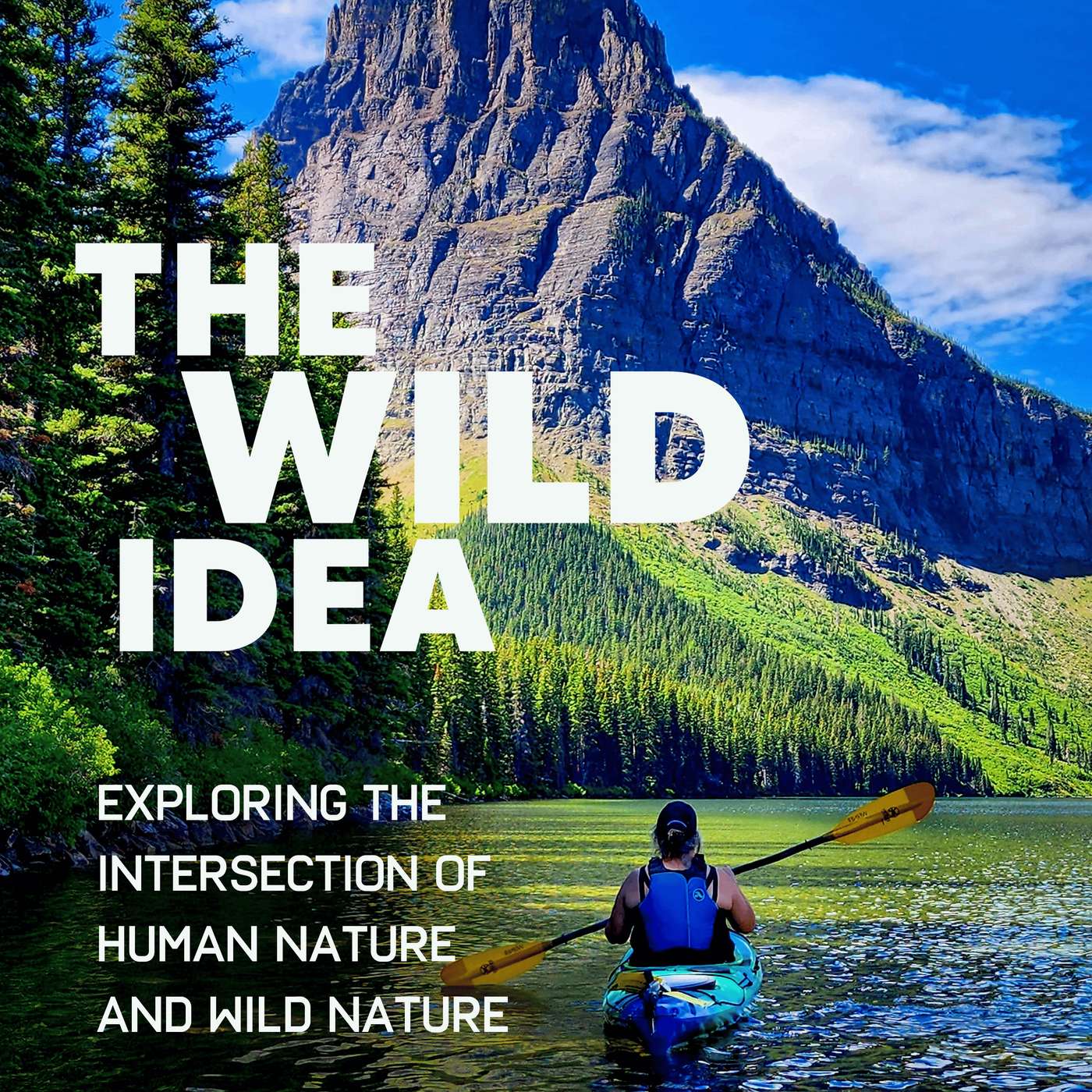
The Wild Idea
Wild Idea MediaAudio
- Format:
- Podcast
- New episodes:
- Weekly
- Typical length:
- about 45 minutes
- Latest episode:
About this show
The Wild Idea is an exploration of the intersection of wild nature and our own human nature. The hosts, Bill Hodge and Anders Reynolds, through conversations with experts and thought leaders will dive into the ways that humans have both embraced and impact the function and vitality of our remaining wild places.
Covers: wildlife conservation, public lands, environmental policy, indigenous knowledge, nature, ranching and grasslands, wilderness history, outdoor recreation, wildfire management, river access
Show details and episodes come from the publisher's public feed at feeds.transistor.fm. Last updated . Names, artwork and text belong to their publishers.
Recently on this show
Summary of recent episodes, drawn from the publisher's feed.
The Wild Idea is a podcast about where wild nature meets human nature, featuring expert conversations on how people affect remaining wild places. Recent episodes cover bison and prairie restoration, a film about walking Alaska's Brooks Range, and Klamath River salmon recovery.
Cosmos
Similar in subject
- Wild Lives
Both cover: indigenous knowledge, nature, wildlife conservation - Nerdy About Nature
Both cover: indigenous knowledge, environmental policy - Take 2
Both cover: wildfire management, public lands
Similar shows





Explore more
Episodes
The Wild Line: Trump Guts Utah Monuments, Admin Rewrites 'Harm,' Red Wolves Recover as Grizzlies and Whales are Targeted
· 23 min
This week, President Trump signs executive orders cutting Grand Staircase-Escalante and Bears Ears National Monuments by nearly 3 million acres combined, over tribal leaders' objections that they were never consulted. Federal agencies rescind the Endangered Species Act's core habitat protection, and Interior proposes returning grizzly bear management to Western states. We also cover a court ruling on grizzly and bull trout habitat in Montana, a House committee vote on whale protections, new funding for endangered species recovery, and rare good news: four litters of wild red wolf pups born in North Carolina. Plus, Ferncliff begins removing a dam to restore an Arkansas stream, and we mark a fourth death tied to Colorado's Gold Mountain Fire. Full show notes and links at our website, thewildidea.com (https://thewildidea.com/).
Not rated yetHeather Hansman: Fierce Women Who Ignited America's Love for the Wild
· 41 min
For decades, the story of American conservation has been told almost entirely through male protagonists: Thoreau, Muir, Abbey. Journalist and author Heather Hansman joins The Wild Idea to make the case for three women who belong in that story too. Her new book, Fierce Country: The Untold Story of Three Women Who Ignited America's Love for the Wild, profiles Georgie White, one of the first commercial Grand Canyon river guides; Anne LaBastille, an off-grid Adirondack biologist whose research helped support the Clean Air Act; and Dolores La Chapelle, a backcountry ski pioneer who became a founding voice of the deep ecology movement. Hansman talks with Bill and Anders about why she refused to smooth over each woman's flaws and rivalries, what it means to write "a girl book" without being boxed in by it, and how the same nostalgia that keeps people attached to old maps and decommissioned lighthouses shapes public land policy today. The conversation also touches on the shrinking landscape of environmental journalism and Hansman's own reporting on inequities in the federal Recreation.gov permitting system. Full show notes and links at our website, thewildidea.com (https://thewildidea.com).
Not rated yetThe Wild Line: A New Tracker for Public Land Comment Periods, Eastern States Invest in Wildlife Crossings, and Forest Service Retirees Join Suit to Stop Reorg
· 18 min
This week, the Bureau of Land Management proposes its first grazing rule overhaul since 1995, covering 155 million acres of Western public land and sharply limiting public participation in permit decisions. A coalition sues to block the Forest Service's largest restructuring in a century, and we track new wildlife crossing funding in Pennsylvania and North Carolina, a wildfire burning into a 50-year-untouched Colorado wilderness, and a new free tool for tracking public lands comment periods. We also remember David Page of the Winter Wildlands Alliance. Full show notes and links at our website, thewildidea.com (https://thewildidea.com/wild-line-56).
Not rated yetPaul Hendricks, Jen McLaren & Dawn Mancini Moyer: Why Outdoor Brands Are Speaking Up for Public Lands
· 33 min
Congress has taken 65 separate actions against U.S. public lands this year, and three outdoor industry leaders are done staying quiet about it. Recorded live on a panel at Switchback Spring 2026 in New Orleans, this conversation brings together Paul Hendricks of The Conservation Alliance, Jen McLaren of Altra, and Dawn Mancini Moyer of Fjällräven to talk through the real risk-reward calculus behind corporate advocacy: what it costs a brand to speak up, what it costs to stay silent, and how they're each building tools, coalitions, and community partnerships to do something about it. They cover The Conservation Alliance's 170-company Brands for Public Lands coalition, a new economic study on national monuments, Altra's trail-running access work, and Fjällräven's fire-mitigation partnership in Boulder, Colorado, plus a candid take on Interior Secretary Doug Burgum's framing of public lands as a financial asset. Find the links and resources mentioned today at our website, thewildidea.com (http://thewildidea.com/episode-68).
Not rated yetThe Wild Line: A Genomics Pact for Endangered Species, an Oregon Timber Lawsuit, and a Farewell to National Parks Traveler
· 17 min
This week, the Forest Service opens a comment period on a proposed rule that would narrow public input into how national forests are managed, and the window closes July 31. The Interior Department signs a partnership with "de-extinction" company Colossal Biosciences on species genomics, raising the question of whether the tools complement or replace habitat-based recovery. A new lawsuit tests how far Congress can stretch the Congressional Review Act against land management plans. We also cover a volunteer-built replacement for the shuttered Climate.gov, the opening of the Theodore Roosevelt Presidential Library in Medora, and hard news from the fire line in Colorado alongside the closing of National Parks Traveler. Find the full show notes and links at our website, thewildidea.com (https://thewildidea.com/wild-line-55/).
Not rated yetMeryl Harrell & Lisa Ronald: The future of stewarding our shared wild spaces
· 47 min
Wilderness visitation surged 75% during the pandemic and hasn't come back down. Federal staffing hasn't kept pace. Meryl Harrell of Friends of the Forest Service and Lisa Ronald of American Rivers joined The Wild Idea at the National Wilderness Skills Institute to talk honestly about what that gap looks like on the ground, and where the stewardship community is actually filling it. They cover the federal capacity crunch, American Rivers' 2025 National Protected Rivers Assessment (which found that over 80% of U.S. rivers lack adequate protection), the management pressure building on the Flathead Wild and Scenic River, and the technology reshaping how visitors move through wild places. They also bring specific examples of partnership models working right now: a single advocate driving a Wild and Scenic designation for Florida's Myakka River, and the Flathead Rivers Alliance building community river patrols in Montana. And they're direct about what "showing up" actually requires, beyond the trail. Before diving into that conversation, we kick off the episode with host Ashley Arnold previewing Raising Wild (https://thewildidea.com/raising-wild), Wild Idea Media's new podcast about raising kids in nature. Full show notes and links at our website, thewildidea.com (https://thewildidea.com/episode-67).
Not rated yetThe Wild Line: Farm Bill Text Features Wilderness Designations, Interior Rolls Back Drilling Safeguards, and NPS Restricts Reporting on Fatalities
· 14 min
This week on The Wild Line, we're tracking Farm Bill wilderness designations for Virginia, Arkansas, and Illinois; Kevin Lilly's confirmation hearing before the Senate Environment and Public Works Committee; Interior's proposed rollback of oil and gas drilling safeguards; a leaked Flathead National Forest memo that would open recommended wilderness to off-road vehicles; an emergency Forest Service salvage timber declaration covering up to 11 million acres with a one-week comment period; NPS restrictions on fatality reporting; and the death of environmental journalist James Bruggers. Find the links and resources mentioned today at our website, thewildidea.com (https://thewildidea.com/wild-line-54).
Not rated yetFault Lines: Exploring Wilderness Climbing Management
· 46 min
For nearly 30 years, whether fixed anchors belong in wilderness was answered differently by every park superintendent who had to decide. In 2023, the National Park Service proposed prohibiting them outright, nationwide. Congress stepped in. The Protecting America's Rock Climbing Act, signed in January 2025, established that climbing and fixed anchors are appropriate in wilderness and required federal agencies to issue public guidance within 18 months. That guidance is now out, and the public comment window is open. Erik Murdock, Deputy Director of Programs, Policy & Government Affairs at the Access Fund, has worked this issue for nearly three decades, from doctoral research at Joshua Tree National Park to the policy fight that produced the PARC Act. In the first episode of our Fault Lines bonus series, he traces the full history, explains what the draft guidelines actually say, and makes the case for why this comment period will shape wilderness climbing management for a generation. Learn more about Erik and how you can take part in the public comment period at our website, thewildidea.com (https://thewildidea.com/bonus-fault-lines-1).
Not rated yetDillon Osleger: The Hidden Histories Beneath America's Trails
· 55 min
Dillon Osleger is a geologist, conservationist, and trail builder whose debut book, Trail Work: Restoring the Paths and Stories of America's Public Lands, reads as both a love letter and a reckoning. Named after Dillon, Montana, and raised by field geologists who hauled him on their excursions through the Canadian Rockies and the rangelands of southwestern Montana, Osleger grew up learning that the land itself is a kind of map, one that records what came before and what we choose to preserve. This episode continues The Wild Idea's month of stewardship with a wide-ranging conversation about trails, history, and what the act of maintenance actually means. The conversation moves through the Appalachian Trail and Pacific Crest Trail as case studies in how long-distance trails have drifted from their original purposes, which were economically and socially rooted in rural communities, toward a culture of speed and personal achievement that has little relationship to the land itself. It returns, finally, to the people who maintain the trails: the campground hosts, trail crews, and seasonal rangers who rarely receive the recognition the work deserves. Osleger's argument is not nostalgic. It is a civic one. Stewardship, he says, is one of the few remaining spaces where people from genuinely different backgrounds can work side by side, swinging tools for the same reasons. The question the episode leaves open is how long that common ground can hold if we stop funding the people who tend it. Learn more about Dillon and today's conversation at our website, thewildidea.com (https://thewildidea.com/).
Not rated yetThe Wild Line: New Wilderness Directives, Congress Approves $2 Billion for Parks, Former Big Bend Supervisors Fight Border Wall
· 12 min
This week on The Wild Line, we're tracking new federal directives reshaping wilderness management for climbing anchors and livestock grazing, a bipartisan bill that would restore nearly $2 billion annually for national park maintenance, and a legal battle over a proposed oil road through Utah's most culturally significant canyon corridor. From the Senate's quiet protection of Grand Staircase-Escalante to a federal court's order restoring park displays, this week brought a complicated mix of setbacks and hard-won wins for public lands. Find the links and resources mentioned today at our website, thewildidea.com. (https://thewildidea.com)
Not rated yetSheena Pate: The Rivers That Launched the Wild and Scenic Act
· 35 min
The Three Forks of the Flathead River in northwest Montana didn't just earn Wild and Scenic designation — they inspired the law that made it possible. In the 1950s, a proposed dam at Spruce Park would have dewatered the Middle Fork entirely, routing its flow through a mountain tunnel into Hungry Horse Reservoir. Wildlife biologists John and Frank Craighead floated the river to document what would be lost, and their fight against the dam seeded the movement that became the National Wild and Scenic Rivers Act of 1968. The three forks themselves weren't formally designated until 1976 — 50 years ago this year. Recorded live at Lake Baked in Bigfork, Montana during the annual Whitewater Festival, this episode features Sheena Pate, executive director of the Flathead Rivers Alliance (FRA), in conversation with Bill and Anders about what protecting 219 miles of wild river actually requires on the ground today. FRA runs a River Ambassador Program, an annual noxious weed pull with 165 volunteers, water quality monitoring, youth programming, and boots-on-ground education at put-ins across all three forks — work that has become more urgent as recreation pressure has grown and federal agency capacity has shrunk. The conversation covers the distinct character of the North, Middle, and South forks; the transboundary dimension of the North Fork, which originates in Ktunaxa Nation territory in British Columbia; FRA's partnerships with First Nations tribes and the Blackfeet; and the long-overdue update to the 1980s river management plan. Bill is a former board member of FRA who was there at the organization's founding, which gives the conversation an unusually frank quality about what it takes to build a river stewardship organization from scratch. Learn more and find the links and resources mentioned today at our website, thewildidea.com (https://thewildidea.com/).
Not rated yetThe Wild Line: Trump Targets Recommended Wilderness, Lee Launches Attack on Roadless, Interior Designates New Trails
· 20 min
This week on The Wild Line, we're tracking a lackluster oil and gas lease sale in the Arctic National Wildlife Refuge, a draft Forest Service memo that could open recommended wilderness to off-road vehicles, Senator Mike Lee's move to nullify the Roadless Rule, and a bipartisan bill to keep public land sales out of budget reconciliation. From Alaska to Appalachia, these stories come down to who decides the future of America's public lands. For more on these stories and the links mentioned, visit our website at thewildidea.com. (https://thewildidea.com)
Not rated yetKaitlin de Varona: Stewardship as a Form of Advocacy
· 51 min
Kaitlin de Varona is the executive director of Southern Appalachian Wilderness Stewards (SAWS), the nonprofit that has spent more than a decade building a community of skilled, committed wilderness stewards across the Southeast. In this special episode, she joins Bill and Anders — both former SAWS leaders who helped shape the organization — for a wide-ranging conversation about what it takes to keep wild places healthy and accessible for generations to come. From the passage of the Tennessee Wilderness Act in 2018 to the harrowing weeks following Hurricane Helene in 2024, SAWS has repeatedly proven that consistent stewardship changes minds, builds coalitions, and, when disaster strikes, can respond to the wilderness faster than anyone expected. In the months after Helene, Kaitlin's pro crews deployed into remote Tennessee backcountry in winter conditions with one week's notice, clearing 700 downed trees using only traditional tools. Meanwhile, she worked to ensure that not a single staff member lost their job in the storm's aftermath. This episode is part of The Wild Idea's Month of Stewards series and captures a moment of genuine transformation for SAWS: the organization has grown to approximately 70 employees, launched year-round professional crews with benefits, and continues to expand the Wilderness Skills Institute — all while staying true to the founding conviction that places worth protecting are worth showing up for, again and again. Learn more and find the links and resources mentioned today at our website, thewildidea.com (https://thewildidea.com).
Not rated yetThe Wild Line: Trump Repeals Motorized Protections, the CRA comes for Utah, Appropriators Slash Funding for National Parks
· 18 min
This week on The Wild Line, we're tracking the White House's repeal of decades-old off-road vehicle protections on public lands, House appropriations cuts to national parks and the EPA, the collapse of federal conservation program funding for farmers, and the withdrawal of NSF's deep-sea ocean monitoring network. From rolling back environmental safeguards to shrinking the public institutions that protect land and water, these stories trace a consistent direction in 2026. Find the links and resources mentioned today at our website, thewildidea.com (https://thewildidea.com).
Not rated yetJaime Loucky: 60 Years of Stewarding Trails in the Evergreen State
· 48 min
Jaime Loucky is the CEO of the Washington Trails Association, one of the largest trail stewardship nonprofits in the United States. The organization now facilitates more than 160,000 hours of volunteer trail work each year, runs gear lending libraries that generated 5,000 outdoor experiences for youth last year alone, and serves one to two million website visitors monthly looking for reliable information about where and how to get outside. The sixtieth anniversary arrives at a moment when the public lands those trails cross are under serious pressure. A central concept in the conversation is what Jaime calls the flywheel: the cycle by which high-quality trail information draws people outside, outdoor experiences build personal connection, and connection generates the volunteers, donors, and advocates who keep public lands accessible. That flywheel is under stress. In 2025, federal staffing cuts eliminated hundreds of Forest Service and National Park Service positions across Washington State, including all but three of the thirteen-person recreation team managing the Enchantments, one of the state's most-visited backcountry landscapes. Jaime describes what a trail nonprofit does when agency partners disappear, how WTA has expanded paid professional crews into post-wildfire backcountry areas that volunteers cannot safely work in, and why urban day work parties in city parks are not a retreat from the wilderness mission but a genuine entry point for the next generation of trail stewards. The episode is also about coalition. Jaime identifies the fourth pillar of WTA's new strategic plan, building an outdoors movement, as the one that excites him most: uniting recreation groups, conservation organizations, hunters and anglers, and motorized users around shared public lands interests, a coordination that has not historically happened at the scale the current moment requires. The question he is working toward is not whether people care about public lands, because they do across the political spectrum, but whether they can be organized to show it before the losses become permanent. Learn more about the links and resources mentioned today at our website, thewildidea.com (https://thewildidea.com).
Not rated yetThe Wild Line: Wildlife Fare Well in Transportation Bill, Park Fees Redirected to DC, a Warning on Wildfire Season
· 12 min
This week on The Wild Line, we're tracking a new bill to nullify the Gulf of Mexico Endangered Species Act exemption, $67 million in national park entrance fees redirected to Washington, D.C. beautification projects, a steep drop in Forest Service wildfire fuels reduction, and conservation wins in the House surface transportation bill. From the Gulf to the Rockies, these stories capture the pressures and the persistent advocacy shaping federal land and wildlife policy heading into a high-risk fire season. Learn more about the links and resources mentioned today at our website, thewildidea.com (https://thewildidea.com).
Not rated yetTracy Stone-Manning Returns: Don't Mourn, Organize
· 34 min
The federal lands fight has shifted since Tracy Stone-Manning last sat down with Bill and Anders in June 2025. The workforce cuts she warned about have arrived; the Roadless Rule is days from final rescission; and on the day this episode was recorded, the BLM Public Lands Rule was formally rescinded. Stone-Manning, who led the Bureau of Land Management under President Biden, returns as the show's first repeat guest to assess the damage, name what's still worth fighting for, and make the case that the crisis contains an opportunity. The conversation covers the full landscape of the current moment. We walk through the hollowing-out of federal land management agencies, including the deferred resignation programs, proposed 30% budget cuts for FY27, and Forest Service reorganization, all of which she frames as an effort to set agencies up to fail and use that failure to justify divestiture. She sounds a direct alarm on wildfire: with historic low snowpack, a reorganizing Forest Service, and reduced staffing, she calls the coming season a recipe for the government to fail its people. She also addresses the Congressional Review Act's unprecedented use against Grand Staircase-Escalante's citizen-built management plan, and names what a future Congress would need to do to fix it. The episode's most striking thread is Stone-Manning's argument that the destruction itself has opened a door. Ground Shift, a cross-partisan ideas hub seeded by the Wilderness Society but operating independently, is betting that public anger, the obvious inadequacy of laws written for the Dust Bowl and to settle the West, and the scale of what will need to be rebuilt represent a once-in-a-generation chance to reimagine public lands protection from the ground up. Her message to listeners losing hope: don't mourn, organize, and be ready with the answers when the moment comes. Learn more and find the links and resources mentioned today at our website, thewildidea.com. (https://thewildidea.com)
Not rated yetThe Wild Line: Pearce Confirmed for BLM, Cyanide Bombs Return to Public Lands, Kash Patel Dives Pearl Harbor
· 15 min
This week on The Wild Line, we’re tracking the Senate confirmation of Steve Pearce as Bureau of Land Management director, the Trump administration’s restoration of cyanide trap devices on public lands, new reporting on how automated bots are locking everyday users out of Recreation.gov permits, the launch of a free community shuttle connecting Colorado residents to outdoor destinations in the Golden and Morrison area, and FBI Director Kash Patel’s coordinated snorkel tour of the USS Arizona at Pearl Harbor. From FY27 appropriations markups to Conservation Alliance lobbying in Washington, these stories trace a week of compounding movement on federal lands and wildlife policy. Learn more and find the links and resources mentioned at our website,thewildidea.com (https://thewildidea.com).
Not rated yetJohn Leshy: The Hollowing Out of America’s Public Lands
· 50 min
John Leshy has spent sixty years tracking the arc of federal public land policy, which makes his assessment of the current moment unusually grounded and unusually sobering. He is an Emeritus Professor at UC Law San Francisco, former Solicitor of the Interior Department under President Clinton, and the author of Our Common Ground: A History of America’s Public Lands (Yale University Press, 2022). In this conversation, Leshy traces the founding-era origins of America’s public lands, from the thirteen colonies’ negotiation over western land claims to the Great Transition of 1890, when Congress first authorized presidents to reserve lands for protection. He then turns to the present, naming the Trump administration’s approach not as a policy disagreement but as something new: a deliberate strategy to hollow out the agencies that manage these lands, make the management visibly bad, and use public disillusionment to justify divestiture. He also examines why Bears Ears National Monument drew an immediate public backlash while rescinding the Roadless Rule has not, and what that difference means for conservation organizers. The hollowing out of agencies is not something that can be reversed quickly; rebuilding the expertise and capacity that has been stripped away could take a decade. Whether public support, which Colorado College’s annual western polls show remains strong and even growing across the political spectrum, can translate into political action remains, in Leshy’s words, “a big, gigantic question mark.” Learn more about today's conversation and find the links and resources mentioned at our website, thewildidea.com (https://thewildidea.com/episode-61).
Not rated yetThe Wild Line: Public Lands Rule Rescinded, Right Whale and Roadless Rule Hearings Loom, and Wins in Colorado and New Mexico
· 10 min
This week on The Wild Line, we're tracking the Bureau of Land Management's rescission of the Conservation and Landscape Health Rule, Interior Secretary Doug Burgum's congressional testimony — including his description of designated wilderness areas as "death sentences for forests" — a House bill that would block North Atlantic right whale protections through 2035, the authorization of chainsaws in the Frank Church Wilderness, and state-level wins in Colorado and New Mexico. Find the details and links mentioned at our website, thewildidea.com (https://thewildidea.com/wild-line-48)
Not rated yet