

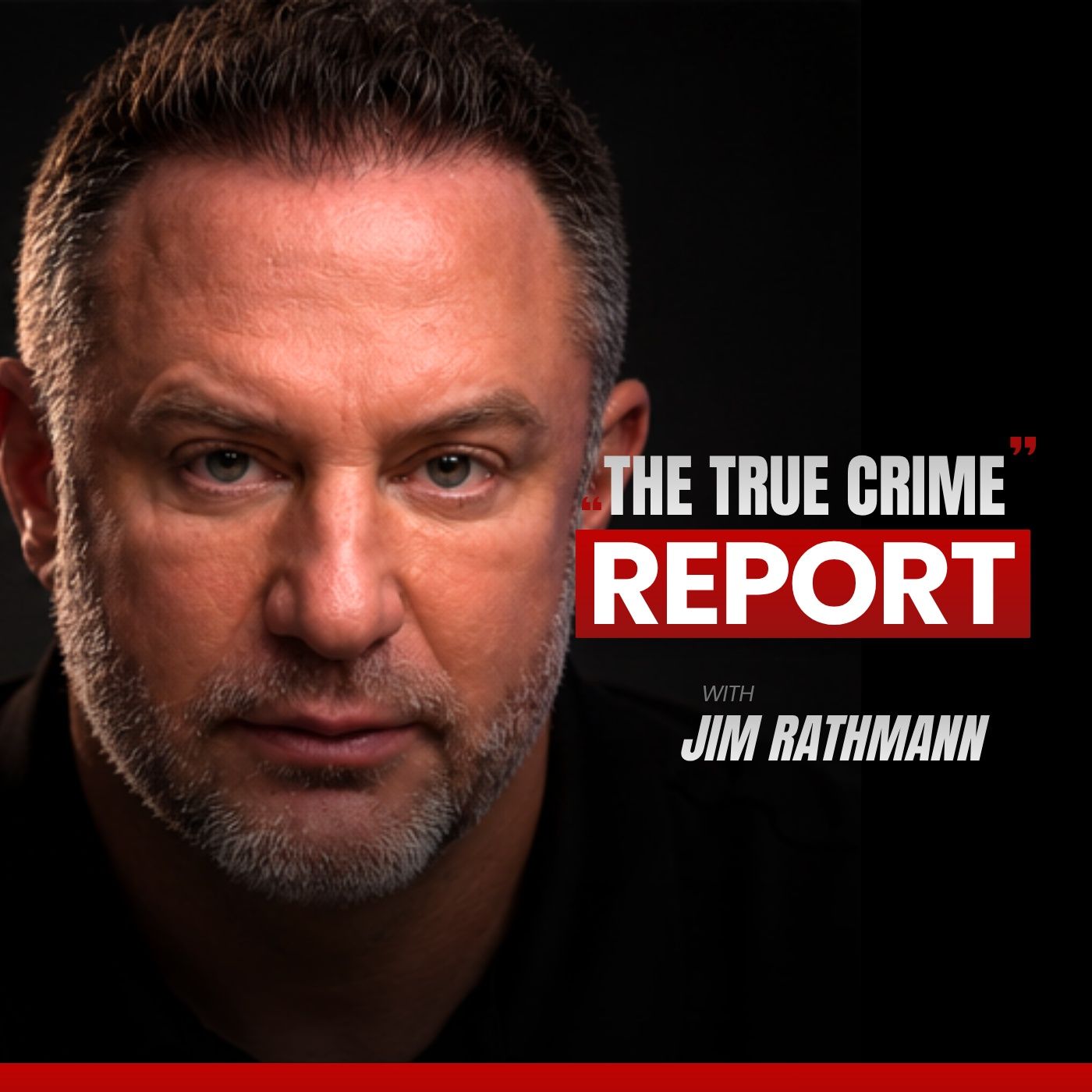
The True Crime Report with Jim Rathmann
- Format:
- Podcast
- New episodes:
- Weekly
- Typical length:
- about 35 minutes
- Latest episode:
About this show
Welcome to The True Crime Report with Jim Rathmann—where Bronze Star recipient, 82nd Airborne Division Captain, and former Secret Service agent Jim Rathmann takes a deep dive into some of the most complex and controversial true cases in America. A veteran of the police force and an experienced homicide investigator, Jim brings the same relentless dedication to his investigations that he did while serving as an Infantry Platoon Leader in Kandahar, Afghanistan, and as a decorated LSU athlete.
Covers: true crime, criminal investigation, cold cases, sexual assault cases, forensic evidence, US criminal justice, homicide investigation
Show details and episodes come from the publisher's public feed at spreaker.com. Last updated . Names, artwork and text belong to their publishers.
Recently on this show
Summary of recent episodes, drawn from the publisher's feed.
Jim Rathmann, a former Secret Service agent and homicide investigator, examines complex, controversial true crime cases in America. Recent episodes cover the Aaron Spencer case in Arkansas, a Florida Citibank shooting, the Cornell Seven allegations, and the Lindsay Clancy mistrial.
Cosmos
Similar in subject
- Trace Evidence
Both cover: homicide investigation, forensic evidence, cold cases - Bad Things: True Crime
Both cover: us criminal justice, forensic evidence, criminal investigation - Crimelines® True Crime
Both cover: forensic evidence, cold cases, criminal investigation
Similar shows





Explore more
Episodes
38. Aaron Spencer Case: Murder or a Father Protecting His Daughter?
· 23 min
Was Aaron Spencer protecting his daughter, or was he guilty of murder? Former law enforcement professional Jim Rathmann investigates one of Arkansas' most controversial criminal cases in this episode of The True Crime Report. On October 8, 2024, Aaron Spencer discovered his missing 13-year-old daughter inside the truck of 67-year-old Michael Fosler, a man who was already facing sexual offense charges involving the same child. After forcing the vehicle off the road, Spencer fatally shot Fosler and was subsequently charged with second-degree murder. But the Aaron Spencer case is far more complicated than it initially appears. Jim Rathmann examines the circumstances surrounding the fatal shooting, the alleged violation of bond restrictions, missing dashcam evidence, the Arkansas Supreme Court's ruling regarding a gag order and the dismissal of Spencer's murder charge in June 2026. In this episode, we discuss: • The Aaron Spencer and Michael Fosler case timeline • What happened on October 8, 2024, in Lonoke County, Arkansas • The criminal charges against Michael Fosler • Alleged violations of bond conditions and protective orders • Aaron Spencer's second-degree murder charge • The missing dashcam SD card and potential evidence • Defense of others and the use of deadly force • The Arkansas Supreme Court's gag order ruling • The dismissal of Aaron Spencer's murder charge • Aaron Spencer's 2026 campaign for Lonoke County sheriff • Prosecutorial discretion and accountability • Whether the criminal justice system failed to protect a child Through his professional law enforcement experience and perspective as a father, Jim challenges the prosecution's decisions and raises important questions about parental protection, criminal investigations, evidence collection and the American justice system. Was this murder or a father's attempt to protect his daughter? Should Aaron Spencer have been charged in the first place? Let us know your thoughts in the comments below. Subscribe to The True Crime Report with Jim Rathmann for more true crime investigations, criminal case breakdowns, law enforcement analysis, courtroom updates and in-depth discussions surrounding America's most controversial criminal cases. Stay tuned for more episodes to come where Jim will wrap up reveal the case. Follow Jim on Instagram: @therealjimrathmann ----------------------------------------------------- Special thanks to our sponsor: Hi Hello Labs in Orlando, Florida, for powering and producing this show. Sponsored by: Hi Hello Labs (Orlando, FL) Produced at: Hi Hello Labs
Not rated yet37. Citibank Shooting: $2,556 Debt Leads to Deadly Attack in Florida
· 18 min
Citibank Shooting in Brandon, Florida: Jacob Pearson, a $2,556 Debt, and the Security Officer Who Stopped the Attack What led to the deadly November 4, 2026, shooting at a Citibank corporate campus near Tampa, Florida? In this episode of The True Crime Report, Jim Rathman investigates the reported actions of 35-year-old Jacob Pearson, the fatal shooting of Citibank employee Leanne Selman, and the response of former Marine and armed security team member John Fraley. According to the timeline discussed in this episode, the violence began with a dispute over a $2,556 debt. Pearson allegedly threatened attorneys representing Citibank before traveling from Orlando to the corporate campus in Brandon, Florida. Despite authorities being alerted to the threats, the attack unfolded just hours later. THE CITIBANK SHOOTING: WHAT HAPPENED? On November 4, 2026, Pearson reportedly drove his vehicle through a security gate at the Citibank campus before opening fire. Leanne Selman, a 41-year-old Citibank employee of nine years, was fatally shot while in the courtyard. As the gunman continued toward the building, John Fraley, a former Marine serving on the facility's armed security team, confronted him and returned fire. Pearson was transported to Tampa General Hospital, where he later died from his injuries. IN THIS EPISODE, JIM RATHMAN BREAKS DOWN: - The $2,556 Citibank debt dispute and lawsuit - Jacob Pearson's alleged threats against Citibank attorneys - The timeline of warnings to law enforcement and corporate security - The fatal shooting of Leanne Selman - How John Fraley confronted and stopped the gunman - The importance of workplace security and emergency exit planning - Why violent threats must be taken seriously - What businesses can learn about active shooter preparedness - The role of trained security personnel in preventing further casualties THE BIGGER QUESTION: COULD THIS ATTACK HAVE BEEN PREVENTED? Jim Rathman examines the reported warning signs and the challenges law enforcement and corporate security teams face when a credible threat escalates into immediate violence. With a background in law enforcement and the military, Jim offers his perspective on threat assessment, situational awareness, workplace violence prevention, and the importance of reporting dangerous behavior. This case raises critical questions about how employers respond to threats, how quickly information reaches the right people, and what individuals can do to improve their personal safety. If you or someone you know believes they have experienced sexual assault, consider contacting local law enforcement, a hospital or qualified sexual-assault support organization for professional assistance. Subscribe to The True Crime Report for true crime investigations, law enforcement analysis, criminal case breakdowns, and Jim Rathmann's perspective on cases making headlines. ----------------------------------------------------- Subscribe for more deep dives into cybercrime, investigations, and real-world threats. Comment below: What’s the biggest online safety concern you have for your family right now? Disclaimer: The content discussed in this episode contains descriptions of child exploitation, grooming, self-harm, and suicide. Listener discretion is strongly advised. The information shared is for educational and awareness purposes only and should not be considered legal or professional advice. If you or someone you know is in immediate danger, contact local law enforcement or the appropriate authorities right away. Stay tuned for more episodes to come where Jim will wrap up reveal the case. Follow Jim on Instagram: @therealjimrathmann ----------------------------------------------------- Special thanks to our sponsor: Hi Hello Labs in Orlando, Florida, for powering and producing this show. Sponsored by: Hi Hello Labs (Orlando, FL) Produced at: Hi Hello Labs
Not rated yet36. What Happens After Sexual Assault? A Former Investigator Explains
· 24 min
The Cornell Seven case raised questions that extend far beyond Cornell University: What should someone do if they believe they were drugged or sexually assaulted? What happens if they don't report it immediately? Can investigators still build a sexual assault case months or years later? And how do alcohol, drugs, memory gaps, and incapacitation affect an investigation? In Part 2 of The True Crime Report's Cornell Seven Q&A, Jim Rathmann and Carlos answer listener questions about sexual assault investigations, reporting, evidence preservation, consent, delayed reporting, alleged drug-facilitated assault, and the investigative process. Drawing from his experience as a former criminal investigator, Jim discusses what investigators may look for when physical evidence is limited or no longer available. Text messages, witness accounts, videos, digital communications, clothing, previous statements, toxicology results, and other evidence may become important when reconstructing a timeline. The episode explores: • What to do after a suspected sexual assault • Where victims can seek help • Why preserving potential evidence can matter • What happens when someone suspects they were drugged • Delayed reporting of sexual assault • Whether a case can be investigated months or years later • Alcohol, drugs, incapacitation, and consent • Memory gaps following an alleged assault • What happens when a victim feels they weren't taken seriously • Resources available to sexual assault victims • Sexual assault involving male victims • Whether similar allegations from multiple people can affect an investigation • How investigators reconstruct a case without DNA evidence • The Cornell Seven Title IX investigation • Digital evidence, texts, videos, and communications • How investigators build a timeline • The evidence Jim would request if he were investigating the Cornell Seven case today Jim also explains what he would want to see first if he were handed the Cornell Seven investigation: the complete Title IX investigative report, law enforcement records, prosecutor records, the victim's statements, digital communications, video evidence, and a detailed timeline showing who allegedly communicated what — and when. This episode contains discussion of alleged sexual assault and may not be appropriate for all audiences.IMPORTANT: The Cornell Seven case discussed in this episode involves allegations that have not been proven in criminal court. Nothing discussed should be interpreted as a determination of guilt. Accused individuals are presumed innocent unless and until proven guilty. If you or someone you know believes they have experienced sexual assault, consider contacting local law enforcement, a hospital or qualified sexual-assault support organization for professional assistance. Subscribe to The True Crime Report for true crime investigations, law enforcement analysis, criminal case breakdowns, and Jim Rathmann's perspective on cases making headlines. ----------------------------------------------------- Subscribe for more deep dives into cybercrime, investigations, and real-world threats. Comment below: What’s the biggest online safety concern you have for your family right now? Disclaimer: The content discussed in this episode contains descriptions of child exploitation, grooming, self-harm, and suicide. Listener discretion is strongly advised. The information shared is for educational and awareness purposes only and should not be considered legal or professional advice. If you or someone you know is in immediate danger, contact local law enforcement or the appropriate authorities right away. Stay tuned for more episodes to come where Jim will wrap up reveal the case. Follow Jim on Instagram: @therealjimrathmann ----------------------------------------------------- Special thanks to our sponsor: Hi Hello Labs in Orlando, Florida, for powering and producing this show. Sponsored by: Hi Hello Labs (Orlando, FL) Produced at: Hi Hello Labs
Not rated yet35. Cornell Seven: Why Weren’t Criminal Charges Filed?
· 26 min
The Cornell Seven case continues to generate major questions about the alleged sexual assault, Cornell University's Title IX investigation, consent, intoxication, digital evidence, and the possibility of future criminal charges. In this episode of The True Crime Report, former criminal investigator Jim Rathmann answers listener questions and breaks down the Cornell Seven case from a law-enforcement and investigative perspective. Why did prosecutors reportedly decline to bring criminal charges initially? Could the case now be reopened? What role could Cornell's Title IX investigation play? How might investigators analyze alleged Snapchat messages, group chats, photos, videos, witness statements, and other digital evidence? And could different members of the so-called "Cornell Seven" ultimately face different legal consequences based on their individual alleged conduct? Jim also discusses one of the most complicated issues surrounding the case: consent. What happens if someone initially consents to a sexual encounter but later becomes incapacitated or does not consent to additional participants? How do investigators reconstruct events when drugs, alcohol, trauma, memory, and conflicting accounts are involved? The episode explores: • Why prosecutors may initially decline a sexual assault case • The importance and limitations of DNA evidence • How delayed reporting can affect an investigation • Consent vs. incapacitation • How investigators reconstruct a timeline • Snapchat, group chats, photos, videos, and digital evidence • Cornell University's Title IX investigation • What could cause prosecutors to reopen a case • The difference between university discipline and criminal prosecution • Whether all seven accused men could face the same allegations or charges • Why individual conduct matters when investigating multiple suspects • The presumption of innocence and importance of allowing the investigative process to unfold Jim brings experience as a former criminal investigator and detective who has worked serious felony investigations, including homicide and sexual assault cases. This episode contains discussion of alleged sexual assault and may not be appropriate for all audiences.IMPORTANT: This episode discusses allegations and Jim Rathmann's analysis based on publicly discussed information. Allegations are not findings of guilt. All individuals accused of criminal conduct are presumed innocent unless and until proven guilty in a court of law. Subscribe to The True Crime Report for investigative breakdowns, criminal case analysis, and a law-enforcement perspective on the cases making headlines. ----------------------------------------------------- Subscribe for more deep dives into cybercrime, investigations, and real-world threats. Comment below: What’s the biggest online safety concern you have for your family right now? Disclaimer: The content discussed in this episode contains descriptions of child exploitation, grooming, self-harm, and suicide. Listener discretion is strongly advised. The information shared is for educational and awareness purposes only and should not be considered legal or professional advice. If you or someone you know is in immediate danger, contact local law enforcement or the appropriate authorities right away. Stay tuned for more episodes to come, where Jim will wrap up reveal the case. Follow Jim on Instagram: @therealjimrathmann ----------------------------------------------------- Special thanks to our sponsor: Hi Hello Labs in Orlando, Florida, for powering and producing this show. Sponsored by: Hi Hello Labs (Orlando, FL) Produced at: Hi Hello Labs
Not rated yet34. The Cornell 7: What REALLY Happened That Night?
· 20 min
The Cornell 7 case is drawing national attention as allegations of sexual assault at Cornell University raise major questions about consent, campus safety, Title IX investigations, law enforcement, and what happens when an alleged crime is reported weeks after it occurs. In this episode of True Crime Report, former law enforcement investigator Jim Rathmann breaks down the Cornell University case from an investigative perspective. According to the allegations discussed in the episode, a female Cornell student, identified publicly as Jane Doe, reported an alleged sexual assault involving multiple male students following a night involving alcohol and ketamine. Jim examines why the timeline of the report matters to investigators, how delays can affect DNA and forensic evidence, and how prosecutors attempt to reconstruct an alleged sexual assault when physical evidence may no longer be available. Jim also examines Cornell University’s Title IX investigation and the disciplinary actions discussed in the episode, including expulsions and suspensions, while asking a larger investigative question: What information was uncovered by the university, and was everything potentially relevant made available to criminal investigators and prosecutors? The conversation goes beyond one case. Jim discusses: • The Cornell 7 allegations • Cornell University and campus sexual assault • Title IX investigations vs. criminal investigations • Sexual consent and severe intoxication • Alcohol and ketamine • Delayed reporting of sexual assault • DNA and forensic evidence • Witness statements and digital evidence • Fraternity culture and campus safety • The responsibilities of universities and law enforcement • Why sexual assault victims may wait before reporting • The dangers of online harassment and public judgment before an investigation is complete Jim emphasizes that a delayed report does not mean an assault did not occur, noting his own experience investigating sexual assault cases and encountering victims who did not immediately come forward. This is an investigative analysis of allegations and publicly discussed claims. The allegations discussed have not necessarily been proven in criminal court. All accused individuals are presumed innocent unless proven guilty. CONTENT WARNING: This episode contains graphic discussion of alleged sexual assault, alcohol, drug use, and consent.Subscribe to True Crime Report for more criminal investigations, breaking true crime cases, law enforcement analysis, and discussions of the evidence behind the headlines. -------------------------------- Subscribe for more deep dives into cybercrime, investigations, and real-world threats. Comment below: What’s the biggest online safety concern you have for your family right now? Disclaimer: The content discussed in this episode contains descriptions of child exploitation, grooming, self-harm, and suicide. Listener discretion is strongly advised. The information shared is for educational and awareness purposes only and should not be considered legal or professional advice. If you or someone you know is in immediate danger, contact local law enforcement or the appropriate authorities right away. Stay tuned for more episodes to come, where Jim will wrap up reveal the case. Follow Jim on Instagram: @therealjimrathmann ---------------------------------- Special thanks to our sponsor: Hi Hello Labs in Orlando, Florida, for powering and producing this show. Sponsored by: Hi Hello Labs (Orlando, FL) Produced at: Hi Hello Labs
Not rated yet33. Eric Naposki Case: Why Hasn't the DNA Been Tested?
· 38 min
Eric Naposki Case Update: Why Has Court-Ordered DNA Still Not Been Tested? Jim Rathman returns to the Eric Naposki and Nanette Packard-Johnston murder case, one of the most controversial cases previously examined on True Crime Report. In December 1994, wealthy medical-device entrepreneur Bill McLaughlin was shot and killed inside his Newport Beach, California home. Years later, former NFL linebacker Eric Naposki and Nanette Packard-Johnston were convicted in connection with McLaughlin's murder. But Jim argues there are significant unanswered questions surrounding the prosecution, including a missing phone record that he says originally supported Naposki's alibi, questions about the timeline, changing witness testimony, and the absence of physical evidence directly placing Naposki inside McLaughlin's home. Now, there is another major development. According to Jim's account of the case records, DNA evidence collected from the 1994 crime scene still exists, and advances in DNA technology could potentially provide new information about who was at the scene. A judge granted an order allowing post-conviction DNA testing, but more than two years later, Jim says that testing has still not been completed. In this episode, Jim examines: - The 1994 murder of Bill McLaughlin - The convictions of Eric Naposki and Nanette Packard-Johnston - Naposki's disputed timeline and missing phone record - The DNA evidence collected from the crime scene - The court order permitting post-conviction DNA testing - Why Jim says the DNA remains untested - The approximately 20-month delay involving Naposki's previously appointed attorney - The subsequent conflict-of-interest disclosure - The new defense attorney's attempts to move the case forward - Delays obtaining trial transcripts - Jim's questions about whether Naposki and Packard-Johnston were wrongfully convicted Jim makes his position clear: test the DNA. If it implicates Eric Naposki, he says he'll publicly acknowledge he was wrong. But if it excludes him, the implications could be enormous. This episode contains Jim Rathman's analysis and opinions regarding the case. Allegations and questions discussed should not be interpreted as established findings of misconduct. Subscribe to True Crime Report with Jim Rathman for continuing coverage of the Eric Naposki case, wrongful conviction cases, criminal investigations, cold cases, forensic evidence, and true crime. -------------------------------- Subscribe for more deep dives into cybercrime, investigations, and real-world threats. Comment below: What’s the biggest online safety concern you have for your family right now? Disclaimer: The content discussed in this episode contains descriptions of child exploitation, grooming, self-harm, and suicide. Listener discretion is strongly advised. The information shared is for educational and awareness purposes only and should not be considered legal or professional advice. If you or someone you know is in immediate danger, contact local law enforcement or the appropriate authorities right away. Stay tuned for more episodes to come, where Jim will wrap up reveal the case. Follow Jim on Instagram: @therealjimrathmann ---------------------------------- Special thanks to our sponsor: Hi Hello Labs in Orlando, Florida, for powering and producing this show. Sponsored by: Hi Hello Labs (Orlando, FL) Produced at: Hi Hello Labs
Not rated yetLindsay Clancy Case: Patrick, the Holdout Juror & What’s Next
· 32 min
Why did the Lindsay Clancy trial end in a mistrial, and what happens next? In Part 2 of the True Crime Report Lindsay Clancy case breakdown, former Secret Service agent and investigator Jim Rathmann joins Carlos Flores to answer viewer questions about Patrick Clancy’s testimony, the controversial 11–1 jury split, the holdout juror, double jeopardy, a possible retrial, and the unanswered questions surrounding one of the most closely followed true crime cases in America. Jim examines what Patrick Clancy’s testimony contributed to the prosecution’s case beyond medical records and expert testimony, including details about the Clancy family, Lindsay’s behavior before the deaths, and conversations Patrick says occurred afterward. Pasted text The conversation also explores the intense public scrutiny surrounding Patrick. Jim discusses questions and theories raised about Patrick’s actions and relationships, but emphasizes an essential investigative principle: questions and suspicious circumstances are not proof, and conclusions must be based on evidence. Then, Jim breaks down the jury controversy. What happens when 11 jurors agree and one refuses to change their position? Can a judge remove a holdout juror? Can a judge participate in jury deliberations? And was the mistrial actually an example of the American jury system functioning as designed? Jim also explains why Lindsay Clancy can face another trial without violating double jeopardy. Because the first trial ended without a guilty or not-guilty verdict, the case remains unresolved and prosecutors can try the case again. Finally, Jim examines what prosecutors and defense attorneys may do differently in a second Lindsay Clancy trial, whether a plea agreement could avoid another trial, and what unanswered questions could become critical the next time the case reaches a jury. ----------------------------------------------------- Subscribe for more deep dives into cybercrime, investigations, and real-world threats. Comment below: What’s the biggest online safety concern you have for your family right now? Disclaimer: The content discussed in this episode contains descriptions of child exploitation, grooming, self-harm, and suicide. Listener discretion is strongly advised. The information shared is for educational and awareness purposes only and should not be considered legal or professional advice. If you or someone you know is in immediate danger, contact local law enforcement or the appropriate authorities right away. Stay tuned for more episodes to come., where Jim will wrap up reveal the case. Follow Jim on Instagram: @therealjimrathmann ----------------------------------------------------- Special thanks to our sponsor: Hi Hello Labs in Orlando, Florida, for powering and producing this show. Sponsored by: Hi Hello Labs (Orlando, FL) Produced at: Hi Hello Labs
Not rated yetLindsay Clancy Mistrial: What Happens Next?
· 31 min
Lindsay Clancy Mistrial Explained: What Happens Next in the Retrial? Following the mistrial in the Lindsay Clancy case, former investigator Jim Rathmann is taking a deeper look at the questions surrounding the trial, the reported jury split, postpartum psychosis, criminal responsibility, and what could happen when the case returns to court. In this listener Q&A episode of The True Crime Report, Jim is joined by producer Carlos Flores to answer some of the biggest questions submitted after their initial Lindsay Clancy case breakdown. Why couldn't the jury reach a unanimous verdict? What does a mistrial mean for the prosecution and defense? Could evidence of planning coexist with severe mental illness or psychosis? What behaviors can investigators examine when considering consciousness of guilt? And are there unanswered questions surrounding the timeline that deserve further investigation? Jim discusses the prosecution's burden of proof, the defense's potential strategy, the alleged timeline surrounding the deaths of Clancy's three children, questions surrounding her mental state, and the distinction between postpartum depression and postpartum psychosis. This episode also explores one of the central questions surrounding the Lindsay Clancy case: Can someone appear organized or calculated while experiencing psychosis? Jim examines that question from an investigative perspective while discussing how mental state, alleged premeditation, physical evidence, timelines, and behavior can affect a homicide investigation. Later, Jim explains why he believes certain timeline details raise unanswered questions and discusses what investigators typically examine when reconstructing the events before and after a homicide. Finally, Jim and Carlos discuss the important distinction between postpartum depression and postpartum psychosis and why understanding that difference matters when examining this case. Topics include: - Lindsay Clancy case - Lindsay Clancy mistrial - Lindsay Clancy retrial, hung jury - postpartum psychosis - postpartum depression - criminal responsibility - insanity defense - homicide investigation - consciousness of guilt - premeditation - prosecution strategy - defense strategy - true crime investigation - and unanswered questions in the Lindsay Clancy case. This episode includes discussion of the deaths of children, suicide, mental illness, and other sensitive subjects. Commentary and opinions expressed during the episode should not be interpreted as findings of fact or determinations of guilt. ----------------------------------------------------- Subscribe for more deep dives into cybercrime, investigations, and real-world threats. Comment below: What’s the biggest online safety concern you have for your family right now? Disclaimer: The content discussed in this episode contains descriptions of child exploitation, grooming, self-harm, and suicide. Listener discretion is strongly advised. The information shared is for educational and awareness purposes only and should not be considered legal or professional advice. If you or someone you know is in immediate danger, contact local law enforcement or the appropriate authorities right away. Stay tuned for more episodes to come. Follow Jim on Instagram: @therealjimrathmann ----------------------------------------------------- Special thanks to our sponsor: Hi Hello Labs in Orlando, Florida, for powering and producing this show. Sponsored by: Hi Hello Labs (Orlando, FL) Produced at: Hi Hello Labs
Not rated yetLindsay Clancy Case: The Evidence That Doesn’t Add Up
· 23 min
The Lindsay Clancy case is one of the most tragic and complicated true crime cases in recent years. In this episode of The True Crime Report, former investigator Jim Rathmann breaks down the Lindsay Clancy case from an investigative perspective and examines the unanswered questions he believes remain surrounding the deaths of her three children. Jim explores the reported timeline surrounding the deaths, Lindsay Clancy’s mental health treatment, postpartum psychosis, medications she had been prescribed, her suicide attempt, digital evidence, reported internet searches, Patrick Clancy’s movements that evening, and other details Jim believes investigators should examine closely. Rather than assuming one theory explains everything, Jim approaches the case as he would a crime scene: test the timeline, examine the physical and digital evidence, investigate everyone involved, and determine which facts can actually be independently supported. Among the questions discussed: • What role could postpartum psychosis or medication have played in Lindsay Clancy’s mental state? • Does the reported timeline make sense when compared with the physical evidence? • What can Lindsay Clancy’s reported core body temperature tell investigators? • Are there digital and timeline discrepancies that deserve additional examination? • Was every possible scenario investigated thoroughly enough? • What evidence would be necessary to establish what happened beyond a reasonable doubt? Jim also explains why investigators cannot begin with a predetermined conclusion. In a case involving three murdered children, every relevant timeline, witness statement, digital record, medical finding, and piece of physical evidence deserves scrutiny. This episode contains Jim Rathmann’s analysis, questions, and theories based on information discussed in the case. Allegations and theories discussed should not be understood as established findings of fact. Subscribe to The True Crime Report with Jim Rathmann for more true crime investigations, criminal case analysis, cold cases, investigative breakdowns, and updates on the Lindsay Clancy case. ----------------------------------------------------- Subscribe for more deep dives into cybercrime, investigations, and real-world threats. Comment below: What’s the biggest online safety concern you have for your family right now? Disclaimer: The content discussed in this episode contains descriptions of child exploitation, grooming, self-harm, and suicide. Listener discretion is strongly advised. The information shared is for educational and awareness purposes only and should not be considered legal or professional advice. If you or someone you know is in immediate danger, contact local law enforcement or the appropriate authorities right away. Stay tuned for more episodes to come., where Jim will wrap up reveal the case. Follow Jim on Instagram: @therealjimrathmann ----------------------------------------------------- Special thanks to our partners: Hi Hello Labs in Orlando, Florida, for powering and producing this show. Sponsored by: Hi Hello Labs (Orlando, FL) Produced at: Hi Hello Labs (Orlando, FL)
Not rated yetEric Naposki: The DNA Questions Still Unanswered
· 37 min
Eric Naposki Case: Missing Evidence, Witness Testimony & DNA Questions Did key evidence in the Bill McLaughlin murder investigation disappear? And why is DNA testing still being delayed decades after the crime? In this episode of The True Crime Report, Jim Rathmann examines the controversial case involving former NFL player Eric Naposki and Nanette Packard Johnston, who were convicted in connection with the 1994 murder of wealthy Newport Beach businessman Bill McLaughlin. ----------------------------------------------------- Follow Jim on Instagram: @therealjimrathmann ----------------------------------------------------- Special thanks to our partners: Podgo and Hi Hello Labs in Orlando, Florida, for powering and producing this show. Sponsored by: Podgo Services Produced at: Hi Hello Labs (Orlando, FL) Hosted by Simplecast, an AdsWizz company. See https://pcm.adswizz.com for information about our collection and use of personal data for advertising.
Not rated yetDNA Test delayed 18 months: Why?
· 32 min
Eric Naposki DNA Testing Delayed? New Questions in Bill McLaughlin Murder Case Could modern DNA technology change everything we know about the murder of Bill McLaughlin? In this episode of The True Crime Report, host Jim Rathmann examines new developments in the case involving Eric Naposki and Nanette Packard, who were convicted years after the 1994 murder of wealthy medical device entrepreneur Bill McLaughlin in Newport Beach, California. This episode explores: • The significance of touch DNA testing in cold cases • Evidence collected from the original crime scene • Questions surrounding a key allegedly linked to the case • The disputed Denny's phone call alibi • Court filings requesting forensic DNA testing • The timeline of events surrounding the murder investigation • Delays in court-ordered DNA testing • Why this case continues to generate controversy decades later As DNA technology advances, questions remain about whether modern forensic testing could provide additional answers in one of Southern California's most debated murder cases. If you enjoy true crime investigations, cold case analysis, wrongful conviction discussions, criminal justice topics, and deep dives into controversial murder cases, be sure to subscribe and follow The True Crime Report. ----------------------------------------------------- Subscribe for more deep dives into cybercrime, investigations, and real-world threats. Comment below: What’s the biggest online safety concern you have for your family right now? Follow Jim on Instagram: @therealjimrathmann ----------------------------------------------------- Special thanks to our partners: Podgo and Hi Hello Labs in Orlando, Florida, for powering and producing this show. Sponsored by: Podgo Services Produced at: Hi Hello Labs (Orlando, FL) ----------------------------------------------------- Hosted by Simplecast, an AdsWizz company. See https://pcm.adswizz.com for information about our collection and use of personal data for advertising.
Not rated yetThe 1994 Murder Case That Still Doesn't Add Up
· 39 min
In this episode of The True Crime Report, Jim Rathmann revisits the 1994 Newport Beach murder of businessman Bill McLaughlin and the controversial convictions of Eric Naposki and Nanette Packard-Johnston. Fifteen years after McLaughlin was killed, prosecutors secured convictions based entirely on circumstantial evidence. But what happened to the phone record that allegedly provided Naposki with an alibi? Why did key witness testimony emerge more than a decade later? And could modern DNA testing finally reveal the truth? Follow Jim on Instagram: @therealjimrathmann ----------------------------------------------------- Special thanks to our partners: Podgo and Hi Hello Labs in Orlando, Florida, for powering and producing this show. Sponsored by: Podgo Services Produced at: Hi Hello Labs (Orlando, FL) Hosted by Simplecast, an AdsWizz company. See https://pcm.adswizz.com for information about our collection and use of personal data for advertising.
Not rated yetThe Evidence That Disappeared Before Trial
· 47 min
In the third installment of the Eric Naposki and Nanette Johnston Packard series, former homicide investigator Jim Rathmann conducts a rigorous examination of the evidence, timelines, witness statements, and lingering questions surrounding one of Southern California's most controversial murder convictions. The case traces back to December 1994, when William McLaughlin was murdered in Newport Beach, California. More than a decade later, Naposki and Packard were convicted of the crime, despite a prosecution strategy that relied heavily on circumstantial evidence rather than definitive physical proof. Throughout this episode, Rathmann systematically breaks down the critical components of the state's case, shedding light on the alleged missing phone record from a Denny's restaurant, stark timeline inconsistencies between 1994 and 2009, and a witness who claimed to remember cutting a key fifteen years after the fact. He also scrutinizes the drive-time recreations used by prosecutors, reports of a mysterious sports car spotted near the crime scene, and the reasons why investigators initially declined to file charges. Furthermore, the episode explores the pivotal role cold case investigators played in reopening the file, raises concerns about potentially overlooked exculpatory evidence, and reviews the specific questions that troubled jurors during trial deliberations. Ultimately, Rathmann questions whether these high-profile convictions were truly rooted in indisputable facts or merely built upon a foundation of assumptions. As part of an ongoing independent investigation into the Naposki-Packard case, this episode raises profound questions about wrongful convictions, prosecutorial decision-making, and the reliability of circumstantial evidence in the modern justice system. ----------------------------------------------------- Follow Jim on Instagram: @therealjimrathmann ----------------------------------------------------- Special thanks to our partners: Podgo and Hi Hello Labs in Orlando, Florida, for powering and producing this show. Sponsored by: Podgo Services Produced at: Hi Hello Labs (Orlando, FL) Hosted by Simplecast, an AdsWizz company. See https://pcm.adswizz.com for information about our collection and use of personal data for advertising.
Not rated yetUnanswered Questions: Bill McLaughlin Murder
· 34 min
The 1994 murder of wealthy entrepreneur Bill McLaughlin shocked Newport Beach, California and became one of the most controversial true crime cases in modern California history. In this episode of True Crime Report, Jim Rathmann walks through the murder case of Bill McLaughlin, Nanette Packard, and former NFL linebacker Eric Naposki — a case that has been featured on Dateline NBC, 20/20, and multiple true crime television specials for years. Jim takes a fresh look at the timeline, the alleged affair, the prosecution’s theory, and the evidence used to convict Nanette and Eric nearly 15 years after the murder. Hosted by Simplecast, an AdsWizz company. See https://pcm.adswizz.com for information about our collection and use of personal data for advertising.
Not rated yetZero Trace: Two Life Sentences for Nanette Packard & Eric Naposki
· 37 min
The 1994 murder of Bill McLaughlin sent shockwaves through the affluent community of Newport Beach, but decades later, the high-profile case involving Nanette Packard and former NFL player Eric Naposki continues to raise serious questions. In this compelling episode of The True Crime Report, host Jim Rathmann launches a deep investigative breakdown into what remains one of the most controversial cold case prosecutions in California true crime history. By revisiting the complex web of relationships, Rathmann explores the dynamic between McLaughlin and Packard, her alleged affair with Naposki, and the million-dollar life insurance policy that quickly became the central focus for prosecutors. As the narrative unfolds, the episode dissects critical timeline inconsistencies surrounding the night of the murder and shines a spotlight on a mysterious missing phone record that could change everything. Viewers will be guided through the original, stalled investigation and the subsequent May 2009 reopening that led to the arrests of Naposki and Packard, as well as their ultimate convictions in July 2011 and January 2012, respectively. By scrutinizing the gaps in alibis, the handling of DNA evidence, disputed keys, and conflicting witness testimony, Rathmann peels back the layers of the official story, offering a fresh perspective that may completely change how people view this notorious case. Follow Jim on Instagram: @therealjimrathmann ----------------------------------------------------- Special thanks to our partners: Podgo and Hi Hello Labs in Orlando, Florida, for powering and producing this show. Sponsored by: Podgo Services Produced at: Hi Hello Labs (Orlando, FL) Hosted by Simplecast, an AdsWizz company. See https://pcm.adswizz.com for information about our collection and use of personal data for advertising.
Not rated yetDeath Sentence for the killer of Athena Strand
· 33 min
In this episode of the True Crime Report, Jim Rathmann reflects on the abduction and murder of 7-year-old Athena Strand that shocked the nation. The killer, FedEx contract driver Tanner Horner, kidnapped and murdered Athena Strand after delivering a package to her home in Paradise, Texas. Disclaimer: The content discussed in this episode contains descriptions of child exploitation. Listener discretion is strongly advised. Follow Jim on Instagram: @therealjimrathmann Join the discussion on Patreon: patreon.com/cw/TrueCrimeReportShow ----------------------------------------------------- Special thanks to our partners: Podgo and Hi Hello Labs in Orlando, Florida, for powering and producing this show. Sponsored by: Podgo Services Produced at: Hi Hello Labs (Orlando, FL) Hosted by Simplecast, an AdsWizz company. See https://pcm.adswizz.com for information about our collection and use of personal data for advertising.
Not rated yetThe Guilty Verdict: Inside the Kouri Richins Case
· 28 min
The Kouri Richins case is one of the most disturbing true crime stories in recent years—a wife, mother, and author convicted of killing her husband, Eric Richins, using fentanyl in a calculated plan driven by money, debt, and deception. In this episode of True Crime Report, Jim Rathmann breaks down the full timeline of events, from the attempted poisoning on Valentine’s Day to the fatal overdose just weeks later. We dive into the key evidence, including deleted text messages, secret life insurance policies, and the shocking role of a housekeeper in obtaining drugs. This case goes beyond murder—it’s about manipulation, financial desperation, and the chilling lengths someone will go to for a new life. From the suspicious behavior immediately after the death to the eerie release of a children’s grief book titled Are You With Me?, every detail raises more questions. Follow Jim on Instagram: @therealjimrathmann Join us on Patreon https://www.patreon.com/cw/TrueCrimeReportShow ----------------------------------------------------- Special thanks to our partners: Podgo and Hi Hello Labs in Orlando, Florida, for powering and producing this show. Sponsored by: Podgo Services Produced at: Hi Hello Labs (Orlando, FL) Hosted by Simplecast, an AdsWizz company. See https://pcm.adswizz.com for information about our collection and use of personal data for advertising.
Not rated yetInside the Security Breach at the White House Correspondents Dinner
· 29 min
What REALLY happened at the White House Correspondents’ Dinner security incident? In this episode of The True Crime Report, former United States Secret Service agent Jim Rathmann delivers an expert breakdown of the attempted attack at the White House Correspondents' Dinner held at the Washington Hilton. With firsthand experience protecting high-profile events and working inside the Washington Hilton, Jim explains: How Secret Service security layers actually work Why the hotel setting changes security strategy What the public is getting wrong about this incident How the suspect breached initial access points Why the response was faster and more effective than it appears What this means for future presidential security Jim also compares this incident to past failures and successes, including previous assassination attempts and known security lapses, giving viewers a deeper understanding of how protective operations evolve. This is not speculation. This is insight from someone who has been there. If you're interested in true crime, presidential security, Secret Service operations, or breaking news analysis, this episode gives you the clarity the headlines won’t. ----------------------------------------------------- Subscribe for more deep dives into cybercrime, investigations, and real-world threats. Comment below: What’s the biggest online safety concern you have for your family right now? Stay tuned for more episodes to come., where Jim will wrap up reveal the case. Follow Jim on Instagram: @therealjimrathmann ----------------------------------------------------- Special thanks to our partners: Podgo and Hi Hello Labs in Orlando, Florida, for powering and producing this show. Sponsored by: Podgo Services Produced at: Hi Hello Labs (Orlando, FL) Hosted by Simplecast, an AdsWizz company. See https://pcm.adswizz.com for information about our collection and use of personal data for advertising.
Not rated yetGilgo Beach Serial Killer Pleads Guilty
· 35 min
The Gilgo Beach Serial Killer investigation stands as one of the most chilling and controversial true crime sagas in recent history. In this episode, Jim Rathmann deconstructs the arrest of Rex Heuermann—a successful Manhattan architect, married father, and suburban neighbor who allegedly led a dark, predatory double life for decades. While Heuermann maintained a facade of normalcy in Massapequa Park, he is accused of orchestrating a secret reign of terror. We expose the shocking institutional failures and overlooked leads that allowed a suspected serial killer to hide in plain sight. With Rex Heuermann now admitting to multiple murders, the investigation is expanding—and the possibility of additional victims across multiple states is becoming more real. If you’re interested in true crime, serial killer psychology, unsolved cases, and law enforcement corruption, this episode reveals the disturbing truth behind one of America’s most infamous cases. Subscribe for more true crime breakdowns and real-world case analysis. ----------------------------------------------------- Subscribe for more deep dives into cybercrime, investigations, and real-world threats. Comment below: What’s the biggest online safety concern you have for your family right now? Disclaimer: The content discussed in this episode contains descriptions sexual violence Follow Jim on Instagram: @therealjimrathmann ----------------------------------------------------- Special thanks to our partners: Podgo and Hi Hello Labs in Orlando, Florida, for powering and producing this show. Sponsored by: Podgo Services Produced at: Hi Hello Labs (Orlando, FL) Hosted by Simplecast, an AdsWizz company. See https://pcm.adswizz.com for information about our collection and use of personal data for advertising.
Not rated yetCOLD CASE CLOSED: Identifying Ted Bundy’s Forgotten Victim
· 55 min
A shocking new development in the case of infamous serial killer Ted Bundy has surfaced—thanks to modern DNA technology, investigators have officially linked him to another murder over 50 years later. In this episode of The True Crime Report, Jim Rathmann is joined by Tricia Griffith to break down the case of 17-year-old old Laura Ann Aime who disappeared from a Halloween party in 1974. Her case remained unsolved for decades until advancements in next-generation DNA sequencing finally confirmed Bundy as her killer. But this episode takes a chilling turn when Tricia reveals that she was personally approached by Ted Bundy in 1974—and narrowly escaped becoming one of his victims. In this episode, we cover: •The newly confirmed Bundy victim through DNA evidence •How cold cases are being solved decades later •Ted Bundy’s manipulation tactics and victim profile •A firsthand encounter with Bundy that almost ended in tragedy •The importance of trusting your instincts and situational awareness This is a must-watch for anyone interested in true crime, cold cases, forensic science, and the psychology of serial killers. ----------------------------------------------------- Subscribe for more deep dives into cybercrime, investigations, and real-world threats. Comment below: What’s the biggest online safety concern you have for your family right now? Disclaimer: The content discussed in this episode contains descriptions of sexual violence. Stay tuned for more episodes to come., where Jim will wrap up reveal the case. Follow Jim on Instagram: @therealjimrathmann ----------------------------------------------------- Special thanks to our partners: Podgo and Hi Hello Labs in Orlando, Florida, for powering and producing this show. Sponsored by: Podgo Services Produced at: Hi Hello Labs (Orlando, FL) Hosted by Simplecast, an AdsWizz company. See https://pcm.adswizz.com for information about our collection and use of personal data for advertising.
Not rated yet