
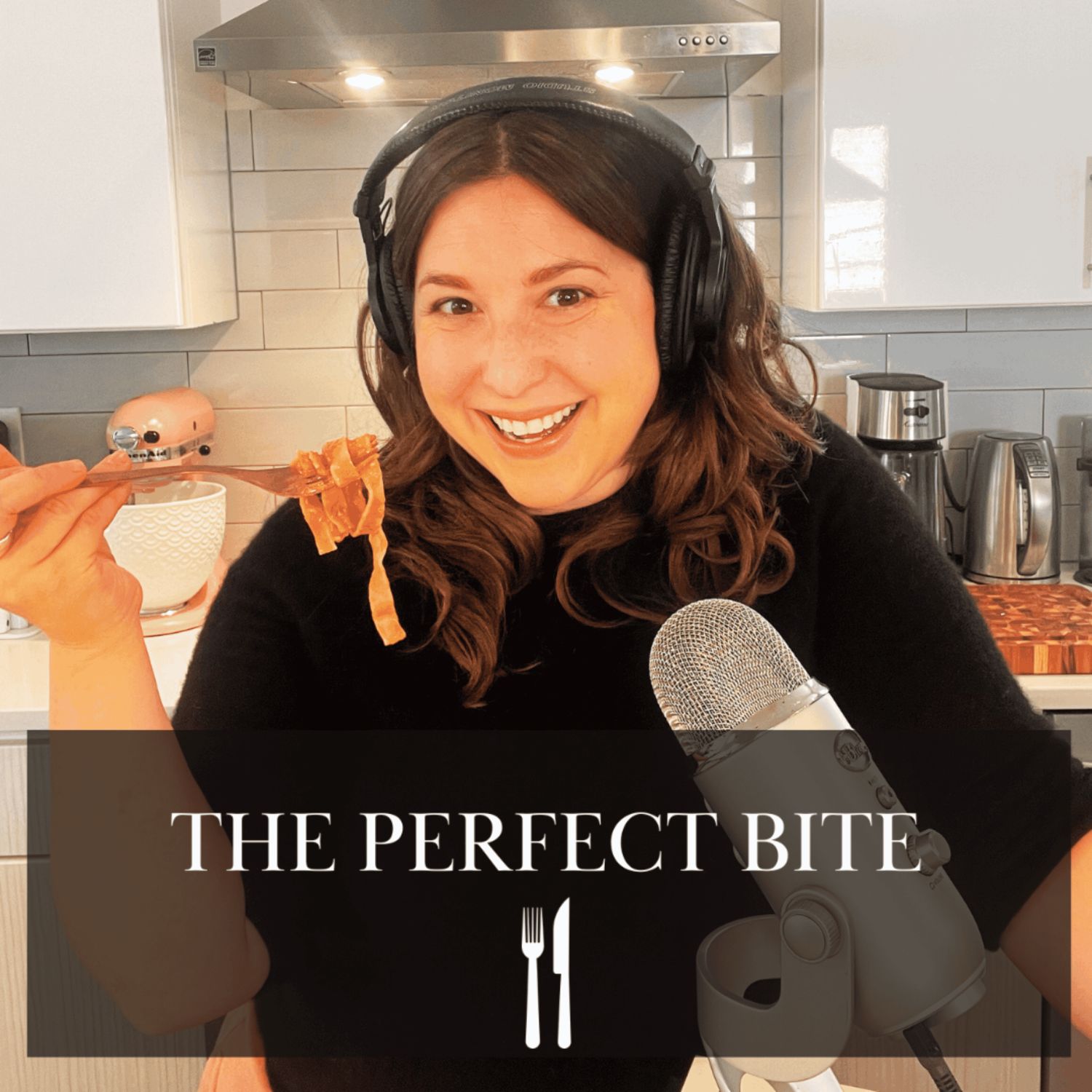
The Perfect Bite
Sarah PerkinsAudio
- Format:
- Podcast
- New episodes:
- Weekly
- Typical length:
- about 1 hour
- Latest episode:
About this show
Your fusion of food and entrepreneurship, The Perfect Bite brings you inspiring conversations with chefs, restaurateurs, CPG brand founders, food tech founders, and more in the food and beverage industry, highlighting their experiences and how they've cooked up something new. From emerging brands to established business owners, you'll learn from the best entrepreneurs in food, beverage, hospitality, and agriculture about how they started their businesses, what problems they're solving, the tough times they've overcome, and their best advice for entering these industries or starting your own business. We end each episode with the world's best and hardest question: What is your perfect bite?
Show details and episodes come from the publisher's public feed at feeds.cohostpodcasting.com. Last updated . Names, artwork and text belong to their publishers.
Cosmos
Similar by topic and creator
- Bartalk
Shares the topics Arts and Culture, Business and Food. - Distillers Journal Podcast
Shares the topics Arts and Culture, Business and Food. - QSR Uncut
Shares the topics Arts and Culture, Business and Food.
Similar shows




Explore more
Episodes
Juice Runners on Mezcal, Run the Jewels, and Building a Craft RTD Without Shortcuts: Joe Malcoun and Amaechi Uzoigwe
· 1 hr 2 min
Amaechi Uzoigwe started managing El-P when he was 19 years old. That was more than 30 years ago. He has spent his entire adult life in the music business and entrepreneurship, building careers and protecting artists, watching Run the Jewels grow from a collaboration into one of the most respected groups in hip-hop. Joe Malcoun grew up in Ann Arbor, became a serial entrepreneur, and built a career that ran through sustainability consulting, tech, and became owner of The Blind Pig, a fixture in the city's bar and music scene. They were introduced through mutual friends who knew they shared an obsession for great cocktails and spirits. That introduction, over shared bottles and long conversations, became the foundation for Juice Runners with El-P and Killer Mike of Run the Jewels. The drink that set everything in motion came later, at a London after-party following a music video shoot. Billy Durney had a mezcal paloma in hand. Amaechi tried it. Something clicked. They had been drinking mezcal for years. This was mezcal in a form that worked, and they wanted to know why. What followed was three years of uncompromising recipe development with Leif Huckman, a Brooklyn rum bar owner who became their cocktail lead, running samples until the Paloma Remix was what it needed to be. Meanwhile, Joe and Amaechi went to work on the supply chain: sourcing El Tinieblo mezcal from a ranch in Monterrey and doing the legal work to bring it across the border. Juice Runners is the only canned cocktail brand that can put mezcal on the label. Kate Brankin from Pipeworks Brewing came in as COO and brought operational depth. The artwork came from Edoardo Chavarin, who worked with the Run the Jewels pink colorway to create a visual identity that felt like the music. And when they finally arrived at Tales of the Cocktail in New Orleans, Simon Ford from Ford's Gin pulled them aside and told them the industry was rooting for them. Sea Legs followed: a pineapple rum punch built on Dr. Bird Jamaican rum from Two James, the result of eight rounds of sampling and the discovery that they could not call what they were making a dark and stormy, because that trademark belongs to Goslings. Coming soon is Rum the Jewels, a bottled rum developed with St. Lucia Distillery and spirits expert Fred Minnick. They sold out the bar every night at Madison Square Garden on the RTJ anniversary tour. They activated with Wu-Tang Clan. The craft cocktail world knows who they are. And they still talk about the work the same way they talk about the music: treat your first product like your first single, get the people who need to know it to know it, and never put something out that you wouldn't drink yourself. What we cover: - How Joe and Amaechi were introduced through mutual friends with a shared love of spirits, and how that introduction became the beginning of the Juice Runners team - Joe's background in sustainability consulting, tech, and taking over The Blind Pig, a fixture in Ann Arbor's bar and music scene - Amaechi's 30-plus years managing El-P and building alongside Run the Jewels, and what the music business taught them both about how to launch a product right - The London after-party moment: Billy Durney, a mezcal paloma, and the drink that started everything - Sourcing El Tinieblo mezcal from a ranch in Monterrey and doing the legal work to bring it across the border, making Juice Runners the only canned cocktail brand that can put mezcal on the label - Three years of recipe development with the team, and what it actually takes to scale a bar-top recipe without losing what makes it great - Building the team: Kate Brankin from Pipeworks as COO and what operational expertise means for a brand at this stage, Leif Huckman behind the cocktail mixtures - The artwork: Edoardo Chavarin, the Run the Jewels pink colorway, and why the visual identity had to feel like the music - Sea Legs: the pineapple rum punch made with Dr. Bird Jamaican rum from Two James,…
Not rated yetChef Sarah Grueneberg Built Monteverde into a Chicago Italian Icon. Trattoria Lo So Comes Next.
· 1 hr 0 min
Sarah Grueneberg grew up between two worlds: the suburbs of Houston, where her mom worked long hours and baked potatoes were dinner on the go, and her grandparents' cattle farm in Victoria, Texas, where the freezer was full of mystery cuts wrapped in white paper and cinnamon rolls cooled on the counter every summer. She was a rebellious teenager who got her GED at 17, enrolled in culinary school, and found, for the first time, a place where the chaos of a kitchen made complete sense. Her mentor was Chris Shepherd, who hired her at Brennan's Houston because she showed up unannounced after he ghosted her and refused to leave. She became one of the youngest sous chefs in Brennan's history at 22. A sommelier at the restaurant, originally from Chicago, handed her a list of restaurants worth visiting, and that piece of paper eventually changed everything. Missy Robbins called her in for a stage at Spiaggia. Tony Mantuano offered her the job. She called her mom. A month and a half later, she was moving north. Her first day at Spiaggia was September 1, 2005, the morning Hurricane Katrina hit the Gulf Coast. She met her business partners Meg Sahs and Rob Mosher that week. She met her husband Jamie not long after. And in 2008, she was the chef de cuisine when the Obamas came in to celebrate their first election win, with one of her dishes on the menu. Top Chef Season 9 came next. She describes it as becoming warrior chef, a different version of herself who had to find a competitive edge to survive. She made it to the finale. On that menu, in the notes to herself, she had already written the name of the restaurant she was going to open: Monteverde. Her last name, Grueneberg, is green mountain in German. In Italy they had called her Sarah Monteverde. It was always the same word. She and her partners opened Monteverde in 2015 with two things at its center: a pastificio where pasta is made to order at a wooden table under a mirror, so guests can watch, and seven balsamic barrels from Reggio Emilia that crown the room, the result of a trip to Italy at 26 when Andrea Bazzucchi showed her how balsamic is made and she realized it was one of the most misunderstood ingredients in the world. Eleven-plus years later, Monteverde has 105 employees, closes on Sundays and Mondays to give the team a real break, and is still home to some of the most iconic dishes in Chicago. The tigelle, little bread cakes from Reggio Emilia, split open and filled with burrata and seasonal mostarda and prosciutto butter she invented so she would not waste the ends of a prosciutto when money was tight. Oma's Green Mountain Salad, an homage to her grandmother and the women who made great salads in wooden bowls. The shrimp scampi with blue prawns cooked in the shell on the plancha and finished in brown butter with Calabrian chilies, a dish no one is allowed to take off the menu. Her cookbook, Listen to Your Vegetables, turns the vegetable into the muse and the pasta into one chapter among sixteen. She wanted to write a pasta book. Her agent said no. She wrote a vegetable book instead, and found a way to make it a sneaky pasta book anyway. Now she is getting ready to open Trattoria Lo So in Bucktown with her executive chef Bailey, whose wings she has been helping to build for years. Lo So means "I know" in Italian. The concept is humble, neighborhood, wood-burning oven, bronze die pasta, baked pastas, charcoal grill. What we cover: - Growing up between Houston and her grandparents' cattle farm in Victoria, Texas, and how summers in the country turned her into an adventurous eater who understood where food comes from - Getting her GED at 17, enrolling in culinary school, and finding the belonging and belonging she could never quite locate in a traditional classroom - Meeting Chris Shepherd at Brennan's Houston, the two-day ghosting, the unannounced return, and the moment in the walk-in when he said: Let's see what talks to you - Becoming one of Brennan's youngest…
Not rated yetHow Dana Cree Turned the Science of Ice Cream Into One of Chicago's Most Creative Food Brands
· 55 min
Dana Cree has spent her career asking questions most pastry chefs never think to ask. Why does brown sugar make ice cream icier? What is bubblegum actually made of? Can a green bean casserole taste incredible as a frozen pop? The answers led her from restaurant kitchens across three continents to Penn State's Ice Cream Short Course, a James Beard-nominated book, and Pretty Cool Ice Cream, the Logan Square shop and ice cream pop brand she has been running for eight years. Dana grew up in the Pacific Northwest with a grandmother who was a home ec teacher. Weekends meant turning the crank on the apple peeler and standing on a stool to learn pie crust. She fell in love with pastry the moment she spotted the words "pastry chef" on a dessert menu at a restaurant her father helped build on a Seattle pier. She went to culinary school, transferred into the new pastry program when it opened, and spent the next two decades working in some of the most celebrated kitchens in the world, including The Fat Duck, Noma, avec, and Blackbird, where she considers her work a magnum opus. The idea for Pretty Cool came not from a business plan but from a road trip. After testing an ice cream bar machine at a friend's restaurant in St. Louis, Dana drove back to Chicago with the entire concept fully formed. She opened a Kickstarter, typed "My name is Dana Cree and I make pretty cool ice cream" as her introduction, saw the name, opened GoDaddy, bought the domain, and one year later opened the doors in Logan Square. The shop is 100 percent gluten-free, the result of Dana developing Celiac disease and no longer being able to eat what she was making. Pretty Cool now has a new production facility that opens up wholesale, catering, festivals, and a future second Chicago storefront. The pops ship nationally through Lou Malnati's Tastes of Chicago platform. The holiday menu has included a green bean casserole pop that a food writer once said should have Dana's palate insured, alongside Thanksgiving sides, savory Super Bowl collections, and breakfast ice cream day specials that won the Idaho Potatoes campaign. What we cover: - Growing up in the Pacific Northwest with a home ec grandmother and first lessons in pie crust, canning, and applesauce - Spotting "pastry chef" on a dessert menu as a kid and knowing immediately that was the job - Building a career wide rather than climbing straight up: Poppy in Seattle, The Fat Duck, Noma, avec, and Blackbird, and why the lesser-known restaurants were often the ones where she did her best work - What it actually means to be a pastry chef: being a chameleon, punctuating someone else's meal, and why Dana finds that the most creatively exciting constraint - The bubblegum dessert at Blackbird: how you reconstruct a fantasy flavor that does not exist in nature using banana, lemon, orange, and vanilla - The Pacojet that broke every one of her recipes and sent her down a 10-year rabbit hole into the science of ice cream - Penn State Ice Cream Short Course, also known as ice cream college, and writing "Hello, My Name Is Ice Cream: The Art and Science of the Scoop" - The road trip from St. Louis where the entire Pretty Cool concept was born, and how the name came from the first sentence of a Kickstarter form - Opening in Logan Square, the soft opening where a neighbor started yelling "free ice cream" on the corner, and the pandemic year that followed - Why the bar and pop format beats a scoop for texture, and how quiescent freezing makes vegan ice cream actually work - Developing Celiac disease mid-career and building Pretty Cool as a 100 percent gluten-free company, including the beetle shellac detail in most commercial sprinkles - Third wave ice cream: where Jeni's, Salt & Straw, Kith, and Pretty Cool fit, and the new classics that used to sound wacky (salted caramel, honey lavender, strawberry balsamic) - The holiday and seasonal menu: green bean casserole, Thanksgiving sides, the Idaho Potatoes campaign win,…
Not rated yetHow Rye Bunny's Jon Sybert and Jill Tyler Walked Away From a Decade of Success to Build Something Better
· 1 hr 4 min
After a decade running Tail Up Goat, one of DC's most celebrated tasting menu restaurants, Jon Sybert and Jill Tyler did something most restaurateurs would never consider: They closed it on their own terms, gave their team almost a full year to celebrate and prepare, and started over. What they built in its place, Rye Bunny, is the restaurant they always wanted to run and the model they believe the industry needs more of. Jon grew up in Chicago before landing in Northern Virginia and eventually dropping out of college to cook, drawn in by the industry before he even loved food. Jill grew up on St. Thomas with nightly family dinners and a hostess job at fifteen, eventually realizing she could not quit restaurants no matter how many times she tried. They met at a DC restaurant where Jon was staging, spent a summer of Jill looking for him at parties, and ended with her slamming a car door and telling him to ask her out. He eventually did. Tail Up Goat ran for ten years, collected Michelin recognition, and changed how Jon thought about protein sourcing after his lamb ribs got so popular they moved the national lamb market and his D'Artagnan rep called to say a meeting was being held about pricing. The restaurant became more formal than they ever intended, accolades shaped guest expectations, and post-pandemic it never quite fit back together. When the lease came up, they chose not to renew. Rye Bunny, which opened in Adams Morgan in April, is counter service with full table hospitality: guests order at the counter, then sit down to a server, fresh plateware, and a full meal. It covers 100% of full-time employee health insurance and offers a week of paid time off. Their two reservations per night carry a $25 booking fee that goes entirely to Dreaming Out Loud and Amica Center for Immigrant Rights. And it finally feels like the dinner party they’ve always wanted to host. What we cover: - Jill growing up on St. Thomas with nightly family dinners and Grandma Connie's pasta; Jon growing up in Chicago and falling into kitchens before he ever loved food - How hospitality became a career, not a detour, for each of them, and why Jill kept going back no matter how many times she thought she was supposed to stop - Their meet cute: a stage, a summer of Jill searching for Jon at parties, and eventually a date - How the name Tail Up Goat came from a trip to the Virgin Islands and why the name informed everything that followed - The lamb ribs that were so popular they moved the national lamb market and what that moment taught Jon about whole-animal cooking and responsibility - Why Tail Up Goat became more formal than they ever planned, and how accolades quietly reshaping a restaurant is something you only understand in hindsight - The post-pandemic reckoning: why things never fit back together, and why the end of the lease felt like a gift rather than a loss - The send-off year: announcing the closure, watching the entire team stay, and filling the dining room with people who came back one last time - How a trip to Austin to see friends Arjav and Tracy at Birdie's changed Jill's mind on counter service, and then changed Jon's in one dinner - What Rye Bunny actually is: counter service ordering, full table service, earlier hours, and a kitchen that gets one ticket at a time - Why 100% health insurance and a week of PTO were nonnegotiables from day one, and how the counter service model made them possible - "A special place, not a special occasion": the single sentence Brian Miller wrote that became the mission of Rye Bunny - The $25 reservation fee and why it goes entirely to Dreaming Out Loud and Amica Center for Immigrant Rights - What is on the menu right now: anchovy toast, roast chicken on focaccia, and why a regular named Joe said the roast chicken is the most Rye Bunny dish at Rye Bunny - Their favorite spots in DC: Seki, Martha Dear, La Tahona, Albi, and Yellow - What they are most proud of and what is coming next,…
Not rated yetHow Donnie Madia Changed the Way Chicago Eats
· 1 hr 2 min
This episode is sponsored by Vermont Nut Free Chocolates. Get 20% off your order through December 31st with code PERFECTBITE at vermontnutfree.com. This episode is also sponsored by BLiS Gourmet, Michigan's small-batch producer of barrel-aged condiments, sauces, and caviar. Get 15% off your order through November 1, 2026 with code PERFECTBITE. Elevate your everyday cooking at blisgourmet.com. This episode is also sponsored by Takeaways. Indulge your salt tooth with Takeaways' cheesy, protein-packed snack bars. Get 20% off with code PERFECTBITE at eattakeaways.com. For nearly three decades, Donnie Madia has shaped how Chicago eats, drinks, and gathers. As owner and partner of One Off Hospitality Group, he is the co-founder behind Blackbird, avec, Publican, Big Star, and a string of concepts that helped define Fulton Market, the West Loop, River North and now the North Shore. Along the way, his group has been credited with 12 James Beard Awards and a reputation for doing things right, not just first. Donnie grew up in Chicago raised by his mother and her twin sister, two women who made handmade pasta every Friday and Sunday dinners that friends still talk about today. Before hospitality, he spent years at the Chicago Board of Trade, undercapitalized and inverting numbers, until bartending and hospitality took over and never let go. In this episode, he talks about assembling the Blackbird team like a rock band, running out of money multiple times before opening night, and the moment his mother sat in a steel-studded, drywallless room and made peace with his dream. He also gets into his role as a hospitality advisor on The Bear, the avec expansion to Highwood, and why he still believes the best thing you can do as an entrepreneur is stay singularly focused on one great idea. What we cover: - Growing up Italian in a household run by his mom and her twin sister, and the Sunday dinners that shaped everything - The Chicago Board of Trade detour: being undercapitalized, inverting numbers, and bartending his way to a new dream - Meeting Rick DeArmit and assembling the Blackbird team like a rock band, each person an expert in their own instrument - Running out of money more than four times and how his mom's blessing and seed money got them over the finish line - Why Thomas Schlesser's minimalist design was ahead of its time and what it took to believe in it - "Everyone is welcome": the phrase Rick coined that became the DNA of One Off Hospitality - His role as hospitality advisor on The Bear and what he brought to set in seasons two and three - avec coming to Highwood: the town hall meeting that changed the plan from Big Star to avec - Post-COVID dining shifts, the suburbs having their moment, and why proximity to home is reshaping how people eat out - Dyslexia, ADHD, and choosing to use them as abilities rather than disabilities - The book he is writing and why he wants it to help other people navigate their own differences - Why the best entrepreneurial advice he can give is to stay singularly focused, let it unfold naturally, and resist spreading too thin too fast Find One Off Hospitality’s concepts and locations at oneoffhospitality.com (http://oneoffhospitality.com) and find Donnie on Instagram at @donniemadia (https://www.instagram.com/donniemadia/), along with @avecchicago (https://www.instagram.com/avecchicago/), @bigstarchicago (https://www.instagram.com/bigstarchicago/), and @publicanchicago (https://www.instagram.com/publicanchicago/) and more. Catch him in person at Publican Quality Meats in the West Loop during lunch time. Subscribe to The Perfect Bite podcast on Apple Podcasts, Spotify, or wherever you listen! Want to watch the entire episode? Head here (https://www.youtube.com/@perfectbitepod) to our YouTube! You can follow us on social media @perfectbitepod (https://www.instagram.com/perfectbitepod/) and sign up for our newsletter (https://the-perfect-bite.beehiiv.com/)!
Not rated yetHill Top Hospitality Rewrites the Rules of Utah's Food Scene
· 1 hr 2 min
This episode is sponsored by Vermont Nut Free Chocolates, your new favorite 100% tree nut and peanut nut quality chocolates. Get 20% off your order through December 31st with code PERFECTBITE at vermontnutfree.com (http://vermontnutfree.com). This episode is also sponsored by BLiS Gourmet, Michigan's small-batch producer of barrel-aged condiments, sauces, and Midwestern caviar. Elevate your everyday cooking and get 15% off your order with code PERFECTBITE at blisgourmet.com (http://blisgourmet.com) through Sunday, November 1. Exclusions for both codes: One use per customer. Offer valid on products, not on shipping. When you think of food destinations, Utah might not be the first place that comes to mind. Father and son duo Brooks and David Kirchheimer are working to change that. Together with co-owner and mom Linda, they founded Hill Top Hospitality, a Park City and Salt Lake City restaurant group that has grown to five concepts and over 350 employees in just eight years. Brooks brings a lifetime of hospitality experience: starting at age seven when he asked for a cash register for Christmas to play pretend restaurant, working his way through the Montage Beverly Hills, the Montage Deer Valley, and Merriman's in Hawaii. David comes from a career in finance, bringing sophisticated business practices to an industry famous for its thin margins and sky-high failure rates. In this episode, they talk about why they planted their first restaurant in a then-overlooked neighborhood outside of Park City's touristy Main Street, how they've maintained a GM for five and a half years in an industry where 90-day turnover is the norm, and why they believe the restaurant industry may be the last human-centered platform standing. What we cover: - The origin of Hearth and Hill and why going where "nobody else was" turned out to be their greatest advantage - How David brought Fortune 500 business practices, including root cause analysis, into the independent restaurant world - Their mantra: Inspire our associates, thrill our guests, and enrich our community. And why associates come first - The full benefits package they offer, from health insurance and 401k matching to free meals, English classes, and the first mental health appointment on the company - How they scaled from one to five concepts without losing their identity - Monthly cooking classes with the National Ability Center and why it fills their team up just as much - Navigating a father and son business marriage and why healthy disagreement is part of the culture - The food at Hearth and Hill: modern American cuisine that goes beyond the expected, and what "elevated everyday" looks like on the plate - How Utah's dining scene has quietly become one of the most exciting in the mountain west, and why Brooks believes a James Beard Award is coming - Advice for anyone starting a business: network without fear, know your risk tolerance, and do not be afraid to ask for help Find Hill Top Hospitality at hilltophospitality.com (http://hilltophospitality.com) for their various restaurants and locations, and on Instagram at @hearth_and_hill (https://www.instagram.com/hearth_and_hill/), @urbanhillslc (https://www.instagram.com/urbanhillslc/), and @_hills_kitchen_ (https://www.instagram.com/_hills_kitchen_/). Subscribe to The Perfect Bite podcast on Apple Podcasts, Spotify, or wherever you listen! Want to watch the entire episode? Head here (https://www.youtube.com/@perfectbitepod) to our YouTube! You can follow us on social media @perfectbitepod (https://www.instagram.com/perfectbitepod/) and sign up for our newsletter (https://the-perfect-bite.beehiiv.com/)!
Not rated yetHow Dominique Leach Brought Fine Dining to Chicago BBQ
· 1 hr 6 min
Chef Dominique Leach is a pit master, fine dining veteran, food entrepreneur, community builder, and the woman behind one of Chicago's most celebrated barbecue restaurants: Lexington Betty Smokehouse. And if you think you know what a pit master looks like, Dom is here to expand your imagination. In this episode, host Sarah Perkins sits down with Dominique at the brand-new Lexington Betty location inside the University of Chicago's Hutchinson Dining Commons, just days before students arrived. Dom talks about growing up in Humboldt Park, finding her footing through culinary school and eight years in the catering world alongside James Beard-connected chefs, and making the choice that would change everything: narrowing her catering business down to the thing that lit her up most. They get into all of it: the story behind naming the restaurant after her grandmother Betty King (90 years old and from Lexington, Mississippi), what it means to be the only independent restaurant in Pullman surrounded by mega chains, how she won best barbecue in Chicago on Good Morning America, what she learned about brisket by standing in the rain for an hour at a food truck in Austin, her retail line of sauces and seasonings, the real challenges of co-packing as a small CPG brand, and why she believes Chicago has a BBQ identity all its own. Dominique is the kind of person who cooked food for 350 box lunches, two restaurant locations, and a downtown pop-up before sitting down for this interview. She is relentless, generous, and completely clear-eyed about who she is and what she is building. This one will stay with you. In this episode, we cover: - Growing up in Humboldt Park and finding her way to culinary school at the Illinois Institute of Art - Eight years in catering alongside James Beard-connected chefs and what that training gave her - Starting a catering business with her wife in 2016 and narrowing down to barbecue - The story behind the name Lexington Betty and her grandmother Betty King - Being the only independent restaurant in Pullman among major chains like Chick-fil-A, Chipotle, and Wingstop - The history of Pullman National Monument and why the Labor Day holiday exists - Bringing a fine dining lens to pit master culture and how she talks about it on camera - Winning best barbecue in Chicago on Good Morning America - Speaking at a pit master class in Nigeria for 500 people - Her retail line: TeTe seasoning, Spicy Betty barbecue sauce, Wagyu beef franks - The real challenges of co-packing for small food brands right now - Opening at the University of Chicago and joining the student meal plan - Employing young people from underserved neighborhoods and the unexpected hats that come with it - Her advice for anyone starting something new: follow through Connect with Dominique and Lexington Betty Smokehouse: - Instagram: @chefdominiqueleach (https://www.instagram.com/chefdominiqueleach/) and @lexingtonbettysmokehouse (https://www.instagram.com/lexingtonbettysmokehouse/) - Website: lexingtonbetty.com (http://lexingtonbetty.com) - Pullman location: 756 East 111th Street, Chicago - UChicago location: Hutchinson Dining Commons, Hyde Park Subscribe to The Perfect Bite podcast on Apple Podcasts, Spotify, or wherever you listen! Want to watch the entire episode? Head here (https://www.youtube.com/@perfectbitepod) to our YouTube! You can follow us on social media @perfectbitepod (https://www.instagram.com/perfectbitepod/) and sign up for our newsletter (https://the-perfect-bite.beehiiv.com/)!
Not rated yetBlack Lagoon's Erin Hayes and Kelsey Ramage on Spooky Cocktails
· 55 min
They rented a cursed venue in Toronto with a leak and a fire alarm. They put everything they had into it. And by the end of the first week, there was a line around the block. Erin Hayes and Kelsey Ramage are the co-founders of Black Lagoon, now in its sixth year, a Halloween-themed immersive cocktail pop-up experience running across 34 locations in North America every October. Erin came from the Chicago cocktail scene, where she led the programs at J. Parker, Three Dots and a Dash, and Lost Lake as the city became the cocktail destination it is today. Kelsey came from Vancouver and London, where she became a sommelier, helped build the award-winning bar program at Dandelion on London's South Bank, and launched Trash Collective, a sustainability-focused pop-up concept that was doing pop-ups before anyone else was doing pop-ups. They became best friends through shared circles, shared aesthetics, shared music taste, and a shared obsession with Halloween. When Kelsey pulled the ripcord in 2021 and said "I rented a venue, we're doing this," they had no idea what they were building. Six years later, Black Lagoon is a handpicked network of 34 award-winning bars across North America, with custom glassware designed by Chicago artist Kisira Hill, a strong non-alcoholic menu that has been there from the beginning, and a community of cocktail enthusiasts, goth kids, fashion kids, and spooky community members who come back year after year. In this special Halloween-themed episode of The Perfect Bite, host Sarah Perkins sits down with Erin and Kelsey for one of the most joyful and genuinely fun conversations of the season. From growing up in households without wine to bartending at Disney World, to building the Chicago and London cocktail scenes in their formative years. From a cease and desist from Dolly Parton's lawyers on Kelsey's COVID delivery service Dolly Trolley, to The Dungeon bar in New Orleans where they threw their first party together at Tales of the Cocktail and knew they were going to work together forever. From the year they hand-picked their first bar operators to a portfolio of events that now runs year-round including Krampus Cove, Goth Girl Summer, Sad Girl Swim Club, and Y2K Splash Zone. The chaos is the fun. That is their new motto. And after hearing this episode you will understand exactly why. In this episode, we cover: - Erin growing up without a food or drink family and discovering hospitality at age 14 working at a cafe called Grumpy's - Kelsey's mom getting into canning and food preserving while Kelsey discovered food and drink after leaving home - Erin doing the Disney College Program at Disney World, learning to bartend, and never leaving the industry since age 19 - Kelsey starting at a nightclub in Toronto that was also a supper club, becoming a sommelier in Vancouver, and moving to London to work at Dandelion on the South Bank - The difference between Canadian drinking culture and London hotel bar culture where they would leave cocktails in hotel rooms on check-in - Erin building the cocktail programs at Perennial Verant with chef Paul Verant and Matty Eggleston, then Three Dots and a Dash and Lost Lake with Paul McGee - The girl mafia of Chicago bartenders coming up together: Liz Pearce, Mia Leach, Julia Momose, Jossie Erde de Oliveira, and the legacy of The Violet Hour - Kelsey's Trash Tiki and Trash Collective: a sustainability-focused pop-up concept that was doing pop-ups before everyone else - Kelsey opening Supernova Ballroom in Toronto, a massive sparkly disco bar, five months before COVID shut everything down - The Dolly Trolley: Kelsey's COVID delivery cocktail service that sold mixed drinks to-go before it was legal and received a cease and desist from Dolly Parton's team - Erin's role as a global advocacy lead for a whiskey company during COVID and keeping her nine brand ambassadors employed - How they met through Trash Tiki pop-ups and shared circles, throwing a party together at…
Not rated yetIn the Mood to Bake with Alex George of Lily P Crumbs
· 58 min
She named her brand after her geriatric dog. She started her Instagram account while in chemotherapy and called it Cooking with Cancer. She photographed her own cookbook in her parents' basement with the help of her mom's mahjong friend Karen, a hobby photographer in her 70s who ended up with photos on the back cover of the finished book. And she has never once paywalled a recipe because she learned to bake from bloggers who were generous enough to share everything for free. Alex George is the founder of Lily P Crumbs and the author of In the Mood to Bake, a cookbook that comes out September 29, 2026 and is as warm, whimsical, and genuinely joyful as everything else Alex has ever made. The brand is named after her beloved dog Lily P, who lived to 21 years old. The cookbook is a love letter to nostalgia, creativity, and the belief that knowing the rules is just the beginning of knowing how to break them. In this episode, host Sarah Perkins sits down with Alex to chat growing up in the 90s Googling baking recipes on the one family desktop, majoring in public policy and interning on Capitol Hill, becoming a TV news reporter in Tennessee who filmed herself, to being diagnosed with a rare cancer at 22. From starting a baking Instagram account in the hospital to slowly and methodically building Lily P Crumbs over nearly a decade, through multiple jobs and a graduate degree and a COVID lockdown she had just emerged from a year of chemotherapy to experience. To a cookbook deal she almost did not pursue until her best friend Sam told her she would regret it forever. This is a conversation about baking as a love language, about building something slowly and with your whole heart, and about what it means to decide that if you are lucky enough to get more life, you are going to do everything you were too scared to do before. In this episode, we cover: - Growing up in the ‘90s and early 2000s and the dawn of baking bloggers like Sally's Baking Blog and Cupcakes and Cashmere - The one family desktop, waiting for her brother to finish playing Backyard Baseball, and Googling how to make a cupcake - A middle school layered brownie cake for her best friend's brother's graduation that she genuinely thought she invented - Majoring in public policy at college, interning on Capitol Hill, and gravitating toward storytelling and journalism - Becoming a TV news reporter who filmed herself, set up her own satellite, and walked in front of the camera all at once - Being diagnosed with a rare cancer at 22 while working in Tennessee and choosing to come back to Philadelphia for treatment at Penn - Baking for her doctors and nurses during chemotherapy and starting an Instagram account called Cooking with Cancer - Changing the name to Lily P Crumbs after her 21-year-old geriatric dog and getting her ServSafe certification - The bag of cookies someone thought were dog treats because of the illustration of Lily licking a cupcake - Stamping the back of every bag with "Not for canine consumption, humans only" - Doing wholesale through a sandwich shop in Philadelphia and New Jersey - Coming back to news as a freelancer, then moving to PR, then grad school, then finally committing to Lily P Crumbs full-time - The moment she started posting real thoughts about cookies and people started following along - The public spreadsheet ranking cookies by texture, effort level, and her personal analysis - Being too afraid to show her face on camera for the first five videos and the moment that changed - Getting approached by a publisher and the imposter syndrome that almost made her say no - Her best friend Sam telling her she would regret it forever and the decision that followed - Sam being on the cover of the cookbook (her thumb) after being called away from the nail salon as an emergency hand model - Photographing the entire cookbook herself in her parents' basement after learning from her mom's mahjong friend Karen in her 70s - What makes…
Not rated yetChef Kevin O'Donnell on Freestyle Italian Cuisine in Newport
· 1 hr 3 min
He was sixteen years old, court-ordered to an alternative school in Rhode Island, looking for a way to pass the time. A retired Johnson & Wales chef named Andy ran a vocational culinary program there. Kevin signed up. Chef Andy saw something in him. And that was the beginning of everything. Chef Kevin O'Donnell is a multi-time James Beard Award nominee and the owner of Giusto and Mother Pizzeria in Newport, Rhode Island. Giusto is his flagship restaurant at Hammett's Hotel on the Newport waterfront, serving what Kevin calls freestyle Italian cuisine: not Roman, not Tuscan, not southern Italian, but Italian cuisine seen through a Rhode Island lens, cooked with the seasons, and built around the relationships with local farmers, fisheries, and artisans that Kevin has spent a lifetime cultivating. Mother Pizzeria is his sister concept built around a 100% sourdough pizza program using stone-ground heirloom wheat from a local mill and mozzarella from the only mozzarella producer in Rhode Island. In this episode, host Sarah Perkins sits down with Kevin for a conversation that covers one of the most genuinely moving arcs The Perfect Bite has ever told. From a North Kingstown childhood where food was about gathering rather than cooking, to turbulent high school years where his parents split and he moved out at sixteen and made choices he has spent twenty-five years building something beautiful beyond. From Ocean Tides to Junction Pizzeria to Johnson & Wales to a walk through an Italian farmers market that changed how he understood food forever. From Del Posto to Paris to a Boston restaurant nominated for Best New Restaurant by the James Beard Foundation the year it opened, to the moment he and his wife found out they were having a baby and he knew it was time to come home to Rhode Island. This is a conversation about what cooking can do for a person. And what a person can do with cooking when they decide to give everything back. In this episode, we cover: - Growing up in North Kingstown, Rhode Island in an Irish-Italian-Swedish household where food was about gathering rather than cooking - A huge childhood appetite that eventually pointed him toward the kitchen - His parents splitting when he was going into high school and moving out at sixteen to live with a friend - Poor decisions, difficult choices, and a court-ordered stint at Ocean Tides, an alternative school in Rhode Island - Chef Andy, a retired Johnson & Wales instructor who ran the vocational culinary program at Ocean Tides and saw something in Kevin immediately - Basketball and cooking as the two things that gave him structure and routine when he needed it most - Graduating Ocean Tides, reflecting on what the rehabilitative model gave him versus what incarceration would have taken - Junction Pizzeria in North Kingstown and chef Walter Slater, a Johnson & Wales graduate who taught him the soft skills of becoming an adult - Walter Slater hiring only athletes because people who play team sports already know how to work together - Going to Johnson and Wales at twenty-one through a weekend continuing education program while working two full-time jobs and paying his own way without debt - His Johnson & Wales internship in Orvieto, Umbria at Ristorante Zeppelin under Chef Lorenzo Pellegrini: four months that turned into almost three years - Walking through the Orvieto farmers market every morning on the way to work and understanding seasonality for the first time in his life - Lorenzo as a well-traveled, creative chef and a traditionalist Sicilian chef in the same kitchen: learning both sides of Italian cooking simultaneously - The quality of Italian ingredients as the single most important lesson from his time there: starting with the best makes everything else simple - Castle Hill Inn in Rhode Island, then Del Posto in New York under Mark Ladner and a two Michelin star approach to a tomato sauce that changed how he thinks about simplicity - An unexpected job…
Not rated yetAshok Selvam on Ravenous and the Food Media Renaissance
· 1 hr 1 min
About six weeks after winning the James Beard Jonathan Gold Local Voice Award, Ashok Selvam was laid off from Eater Chicago. He had been there for over a decade. He was the only full-time staff member. His fingerprints were on every single story, every headline, every post. And then his supervisor sent a message asking him to check his email. What happened next is one of the most genuinely exciting food media stories of the past year. Ashok Selvam is a co-founder of Ravenous, a worker-owned independent food and culture publication that launched May 1st, 2026, built by five journalists who collectively decided that the future of food media did not have to look like what they had just left. Alongside co-founders Jaya Saxena, Amy McCarthy, Courtney Smith, and Francis Dumlao, Ashok has spent the past year building something that sounds deceptively simple: a publication where the writers own the work, get paid fairly, write what they actually care about, and push each other toward better stories without a publisher filtering the results. In this episode, host Sarah Perkins sits down with Ashok for one of the most wide-ranging and honest conversations about food media, journalism, and what it actually means to build something from scratch after a career-defining moment of change. From a South Indian household on the northwest side of Chicago where his physician parents cooked in creative and improvisational ways, to newspaper journalism at Syracuse in the era of paste-up and Xacto knives. From covering happy hour legislation and building chicken wing maps at Eater, to the morning of August 6th, 2025, when he went to the gym, logged in to check assignments, and got the message asking him to check his email. This is a conversation about identity, independence, what happens when your greatest asset is your flexibility and that flexibility is taken for granted, and how five journalists decided that the price of great journalism is a lot cheaper than going without it. In this episode, we cover: - Growing up on the northwest side of Chicago with South Indian physician parents who cooked creatively and improvisationally - A dad who made his version of fried rice with basmati rice and ground beef - A mom who made a mystery chicken marinated in yogurt and paprika that may have had Goan Portuguese origins - The comfort food outside the immigrant household: Carson's Ribs and his son who now calls it "the rib store" - Deciding on newspaper journalism at Syracuse much to his parents' chagrin, including paste-up duties and Xacto knives - The slow burn romance with food writing as a vehicle for covering Chicago and bringing people together - Being a six foot two left-handed Brown guy in Chicago food media and how standing out became an asset - Starting as a freelancer at Eater Chicago, staying part-time just under the benefits threshold, and eventually becoming deputy city editor - Being the only full-time staff member at Eater Chicago while his fingerprints were on every single story - The happy hour legislation story that opened his career and his relationship with sources like Bill Jacobs at Piece - The mandatory advertorial problem - The James Beard Jonathan Gold Local Voice Award win and the Malort shot he took backstage in front of Padma Lakshmi - The warning signs before August 6th: Big layoffs in 2024, being asked to cover Detroit and the Twin Cities, being told to feed the app, not write stories - The morning of August 6th 2025: the gym, the log-in, the email, the Slack, the goodbyes - Why his son's reaction to the news was the thing he was least prepared for - Colleagues already plotting with a code name: Chomp Chicago, named after the fictional Eater stand-in from The Bear - The Zoom meeting where Amy and Jaya expected Ashok to be the local journalism purist and were relieved when he was not - The five who committed: Ashok, Jaya, Amy, Courtney, and Frances - Ravenous launching May 1st with a story in Defector…
Not rated yetJaju Pierogi: 10 Years of Polish American Pride and Dumplings
· 58 min
Their grandfather worked at his Polish deli until he was 87. Their uncle is 75 and still running it. Nobody in the family told them the business was a good idea. And that didn’t stop Vanessa and Casey White from building one of the most beloved Polish American food brands in the country. Vanessa and Casey White are the co-founders of Jaju Pierogi, a Polish American frozen pierogi brand they started in 2016 from their grandfather's handwritten deli recipes, scaled through New England farmers markets and brewery pop-ups on $70 Amazon griddles, grew through a COVID meal kit delivery service that hit 2,000 orders in six weeks, and have now brought to Whole Foods nationwide, Fresh Market, and upcoming Target locations in the Midwest. For those who didn’t grow up having these delish bites, pierogi are Polish dumplings. Jaju is their grandfather's name in Polish. His legacy lives on in every bag. In this episode, host Sarah Perkins sits down with Vanessa and Casey for one of the most honest, funny, and genuinely moving CPG founder conversations The Perfect Bite has ever had. From growing up on a boarding school campus in Western Massachusetts eating endless buffets while their mom's kielbasa was the most requested dish at every gathering, to scaling a frozen food business without a single dollar of outside funding, to walking away from Shark Tank rather than take a deal that did not work for them. From the pineapple and cheese pierogi that their grandfather's deli loved but the market did not, to the gluten-free pierogi and the skillet meal coming next, this is a conversation about legacy, grit, community, and what it actually looks like to build something real over ten years. In this episode, we cover: - Growing up Polish-Irish American on a boarding school campus in Western Massachusetts where their parents were not particularly great cooks - A mom whose kielbasa was the most requested dish at every summer gathering on the Cape - A grandfather who worked at his Polish deli until he was 87 and whose handwritten recipes launched an entire company - Going to their grandfather's store to get those recipes and discovering that a handful of salt means something very different when the hand belongs to your grandfather - Working in the deli from middle school on Saturdays where Vanessa got blamed for every mistake - Casey at Bentley studying business while Vanessa studied Italian and French - The gap in the Boston pierogi market that kicked everything off - Starting on a kitchen table scaling 500-pierogi recipe trial and errors down to 40 and handing them to friends in Ziploc bags - The deli in Beverly, Massachusetts that let them rent the space on Sundays as a kitchen - Selling out 40 boxes of pierogi in an hour at their first farmers market and writing down everyone's name and address to hand deliver the rest - Building the brand at New England breweries on two four-foot tables and $70 Amazon griddles - COVID: a Google Form for pierogi meal kit delivery that went from seven expected orders to 275 by Tuesday morning and 2,000 deliveries over six weeks - Purchase orders quadrupling overnight as people stocked their freezers during lockdown - Going national at Whole Foods and building out regional distribution before ever touching outside funding - Appearing on Shark Tank: the application process, the boot camp prep, pitching at 5:30 PM after being there since 11 AM, and walking away without a deal - Mr. Wonderful saying potstickers and pierogi are the same and why that upset everyone - The ongoing challenge of educating a national audience about pierogi while competing with the surge in Asian frozen food options - Unit economics, the reality of retailer fees and slotting costs, and why sustainable beats unicorn - The Mrs. T's comparison: $60 million in annual sales and 70 years in business is a completely valid version of success - The skillet meal coming next: pierogi, kielbasa rounds, and sauteed onions in one bag…
Not rated yetAvishar Barua on Agni, Joya's and Honoring Columbus
· 54 min
Just because a dish is well executed does not mean it has to feel stuffy. And just because you have culinary school training and a Michelin-starred kitchen on your resume does not mean you cannot dedicate your career to making dining the most fun part of someone's day. That is exactly what Avishar Barua is doing in Columbus, Ohio. And Columbus has never tasted better. Avishar Barua is a two-time James Beard Award semifinalist and the founder of Agni and Joya's, the two Columbus restaurants that make up Serious Fun, his restaurant group built around one beautiful and completely genuine philosophy: that serious hospitality and joyful dining are not opposites. They are the point. Agni is a tasting menu experience in the Brewery District where you can find a happy meal course and keeps candy at the bar. Joya's is a fast casual spot in Old Worthington where the chicken sandwich is messy and magnificent. Both feel like home. That is entirely on purpose. In this episode, host Sarah Perkins sits down with Avishar for one of the most wide-ranging and genuinely joyful conversations The Perfect Bite has ever had. From a Bengali American childhood in Columbus where he survived entirely on candy and his mom's strategically disguised rice balls, to a pre-med track at Ohio State that gave way to an organic chemistry A and a culinary epiphany. From a stage at Mission Chinese Food under Danny Bowien where he bought salt and vinegar chips for a dish and thought he was being hazed, to an unpaid stage at WD-50 where he got his ass kicked daily and then got hired. From a legendary taco at Service Bar that landed him in Food and Wine and on Top Chef Season 18, to the quiet, patient decade of building something in Columbus that honors the city, its immigrant restaurants, and its people, rather than trying to be New York. Columbus is Columbus. That is his whole philosophy. And it is more than enough. In this episode, we cover: - Growing up Bengali American in Columbus surviving on candy, junk food, and his mom's strategically disguised rice balls - The first memory of food he actually loved: Chinese food and chow fun noodles - Discovering cooking in college out of necessity: a foil pan, chopsticks as a roasting rack, and a library cookbook - Combining his biology and psychology degrees into a way of thinking about food and people - His brother's restaurant Eight: his first kitchen, where mac and cheese was made with bechamel and pot roast was actually burgundy braised short rib - The Columbus State ACF chef apprenticeship that let him work and learn simultaneously - The Mission Street Food cookbook that inspired him to pack up and move to New York - Staging at Mission Chinese Food under Danny Bowien: buying salt and vinegar chips for a dish and thinking he was being hazed - Mission Chinese Food getting shut down by the Department of Health - Walking down Clinton Street and into WD-50, sitting at the bar alone, and getting a bonus dessert course - The unpaid two week stage at WD-50 and getting hired despite not being the fastest or most technically precise cook - Being at WD-50 for their James Beard Award, the Gelinaz 10-year anniversary dinner, and their closure - Returning to Columbus, joining Middle West Spirits and Service Bar - The cheesy brisket crunch taco: a Taco Bell inspired dish made with paratha that landed in Food and Wine and got him on Top Chef Season 18 - His TED Talk about the tacos - Why he believes Columbus chefs who blame their city for poor staff are simply not doing their job - Honoring the strip mall restaurants he grew up going to: Mi Li, Quang, Main Moon - The philosophy behind Agni: a tasting menu that includes a happy meal course and keeps it fun - Joya's: a fast casual spot built around genuine hospitality in a space with a lot of seats - Bengali adda: the culture of hospitality that informs how both restaurants treat their guests - What Serious Fun might do next: wholesale production, white…
Not rated yetMira's Manny and Gina Ocasio Are Putting Buffalo on the Culinary Map
· 51 min
Some things feel like fate. Manny Ocasio was working at Zahav during a rare lunch service when Gina walked in looking for her friend. They barely spoke. Months later Gina walked into a bar and Manny was sitting there. Everything unfolded from that moment. And now they run one of Buffalo's most exciting new restaurants together, as partners in life and in business. Manny and Gina Ocasio are the executive chefs and partners of Mira, a Mediterranean restaurant that opened in Buffalo's in November 2025, built around the simplest and most beautiful philosophy: the best quality ingredients, the simplest preparation, and food that makes you feel like you are sitting by sparkling Mediterranean water even when there are two feet of snow outside. In this episode, host Sarah Perkins sits down with Manny and Gina to chat everything from Gina's Italian American New Jersey childhood where her mom made everything from scratch including baby food, to Manny's Buffalo upbringing where both parents worked in restaurants and he resisted the family path right up until the moment he started washing dishes at 15 and never looked back. From Gina's years at CIA and Del Posto and Sqirl in Los Angeles, to Manny's formative time at Manresa at 17 years old. From meeting at Zahav, to moving to Buffalo during COVID, to building Mira around a Josper grill from Spain, hand-made culurgiones, and a kitchen crew that has been there since day one. This is a conversation about what it looks like when two people decide to do life together. Completely. In this episode, we cover: - Gina growing up in a New Jersey Italian American household where her mom made everything from scratch including her baby food - Manny growing up in Buffalo with a dad who was a chef and a mom who was a server, resisting the restaurant world right up until the moment he started washing dishes at 15 - Gina naturally gravitating toward pastry and baking from her mom's kitchen - Manny drawn to savory cooking for the same reason he struggled in school: learning with your hands, working through mistakes, being self-taught - Manny obsessing over the Manresa cookbook and the Mind of a Chef episode featuring David Kinch, sending weekly emails to the restaurant until he got a response - Leaving Buffalo at 17 for a position at Manresa: the first time really traveling alone, figuring out logistics in Los Gatos, and the surreal experience of cooking in a kitchen he had only ever seen in videos - Gina's CIA experience in baking and pastry: the Apple Pie Bakery, cooking for the whole school, and the pressure that set the bar for everything that followed - Gina at Del Posto for four years before a Brooks Headley event in LA led her to eat at Sqirl and change the entire trajectory of her career - What Sqirl taught Gina: freedom with baking, whole grains, California produce, letting go of some rules - What California permanently installed in both of them: a philosophy of seasonality, local sourcing, and not doing much to a beautiful ingredient - What they miss most about California: Manny the timing and length of the seasons, Gina a specific persimmon that a friend brought to Sqirl - Moving back to the East Coast: Gina to open a restaurant in Philly, Manny to Zahav and Jean-Georges - Gina recognized as Best Pastry Chef by Philadelphia Magazine - Zahav winning Outstanding Restaurant the year Manny was there - Meeting at Zahav during a rare lunch service: Gina looking for her friend, Manny at the door, and months later reuniting at a bar - Moving to Buffalo during COVID and the timing that made it all click: Manny's friend leaving the chef position at Grange Restaurant Group, a pastry job opening for Gina - Business partners Caryn Dujanovich and Brad Rowell: the owners of Grange Restaurant Group who trusted a 23-year-old Manny to run their kitchen and eventually became co-founders of Mira - The Mira name: born from the Spanish kitchen word that means look but means everything, the…
Not rated yetTakeaways: The Savory Protein Bar the World Needed | Ash Baxter
· 1 hr 0 min
She spent six years evaluating CPG founders from the other side of the table, sitting in boardrooms at TRUFF and Erewhon-backing growth firms while secretly thinking she would never be the one to jump. And then she ate one too many chocolate flavored protein bars at midnight in a finance office and finally said enough. Ash Baxter is the founder of Takeaways, a savory puffed protein snack bar that she spent two and a half years developing, launched for pre-order on June 10th, started shipping June 24th, and has already sold 45,000 bars in its first month. She is a former investor at Stripes and Sky Partners, a Stanford D1 rower who had to make weight as a coxswain and learned the protein to calorie ratio at age 13 from her mom's nutrition plan, and the person who genuinely cannot carry on without a tin of Maldon salt in her bag. The concept behind Takeaways is elegant: Cheese is the savory chocolate. The flavors are indulgent, the macros are table stakes, and the brand is built around joy rather than nutrition—12 grams of protein, 120 calories, three grams of fiber, and characters called Slice Slice Baby, You Cheddar Believe It, and Pepper Jacked who all live in Takeaways Town. In this episode, host Sarah Perkins sits down with Ash for a genuinely fun and insightful conversation about what it looks like when a CPG investor becomes a CPG founder, including the concept study that showed 85% of protein bar consumers would buy Takeaways, the food scientist who told her "cheese is the savory chocolate," her fiancé's mom who turned out to be the real product development genius, and the private equity firm in Chicago that has placed three orders in one month without knowing they are Takeaways' best customer so far. In this episode, we cover: - Growing up in San Francisco in a food and wine obsessed family whose road trips were planned entirely around eating - A first job bio that listed an Acme sourdough baguette and an oaky chardonnay as favorite foods - Becoming a coxswain at age 12 for Marin Rowing after a chance encounter with her sister's boyfriend - Learning the protein to calorie ratio at age 13 from her mom's nutrition plan and carrying that philosophy ever since - The protein bar addiction that started at boarding school in New Hampshire when she lost her "nutritionist" mom - Stanford, D1 rowing, and a Stanford Women in Business club that introduced her to Stripes - Six years as a CPG investor at Stripes and Sky Partners: fashion, beauty, food, and beverage - Being on the board of TRUFF and learning the most important lesson in CPG: amazing product first, always - How TRUFF's founders built an Instagram following before they built a product - Meeting mentor Mark Ramadan, founder of Sir Kensington's and former CEO of Hu Chocolate, through the TRUFF board - Working crazy finance hours and eating five chocolate protein bars a day until she could not take it anymore - The aha moment: TRUFF in cottage cheese was getting out of hand so she started tinkering in the kitchen - Her fiancé's mother, an incredible chef and baker, iterating on recipes from Washington state while Ash was in Boston - Why she brought in food scientist Barb Stuckey and gave her life savings to the food science team - The moment Barb told her "cheese is the savory chocolate" and everything clicked - A concept study showing 85% of protein bar consumers would buy Takeaways and 70% would not change their sweet bar behavior - Why Takeaways says "puffed snack bar" not "protein bar" on the packaging - Launching nut-free and why that matters for schools, offices, and families - Characters: Slice Slice Baby, You Cheddar Believe It, and Pepper Jacked, all residents of Takeaways Town - 45,000 bars sold in the first month, number one in bars and jerky at Pop Up Grocer since July 10th - Going into Foxtrot locations and Oakville Grocery in the Bay Area - A private equity firm in Chicago placing three orders in one month as their best customer -…
Not rated yetYama Seafood: 50 Years of World Class Seafood | Nobu Yamanashi
· 48 min
Kingo Yamanashi bought his first bluefin tuna for a dollar from a recreational fisherman. He did not have a refrigerated van. He did not speak English. He did not know how to break down a tuna or even have a scale to weigh it. He just put it in a van with some ice, drove it back to New York, and let the chefs cut whatever they wanted while he calculated the weight by feel. That was 1977. Today, Yama Seafood is the purveyor behind the seafood programs at Le Bernardin, Masa, and more of the most celebrated restaurants in the world. Nobu Yamanashi is the president of Yama Seafood, the New Jersey based Japanese seafood company his father built over nearly 50 years. In this episode, host Sarah Perkins sits down with Nobu for a conversation that covers the full arc of a remarkable family legacy: from a father who chased bluefin tuna migration patterns up and down the Northeast coast and taught fishermen how to bleed their catch properly so he could pay them more, to a son who started as a warehouse worker cleaning drains and re-icing salmon before he ever touched a spreadsheet. And then modernized the entire operation with an ERP system he implemented in February 2020, moments before the pandemic hit. This is a conversation about legacy, reinvention, and what it means to carry a family business into its next generation without losing the soul of what made it extraordinary in the first place. In this episode, we cover: - Growing up in New Jersey in a fully Japanese household where Nobu did not speak English until age four or five - Bento boxes in a 1980s lunchroom when bento boxes were decidedly not cool - A father who brought home kilos of gifted caviar and ate it on crackers with his kids without caring about the price - Working at Quiznos in high school for six dollars an hour and eating meatball sandwiches made from the end pieces - A financial media startup that did not work out, followed by corporate roles at Mercedes-Benz and Rolls-Royce that accidentally taught him everything about the ultra-luxury market - What selling Rolls-Royces taught him about access, scarcity, and demand that he still applies every day at Yama Seafood - Joining the family business as a warehouse worker: cleaning drains, picking and packing, re-icing salmon, going on deliveries - The pen and paper fax machine order system that required seven or eight people an hour of administrative prep every single day - Implementing an ERP system in February 2020, one month before the pandemic, and why that decision may have saved the company - COVID: going from 1,000 plus orders a week to 50, turning a million dollars of fresh seafood into community fish boxes sold below cost just to generate cash - Building Yama Seafood's direct to consumer business from a Squarespace website he made himself during the pandemic - 55% repeat customers and a community of home sushi enthusiasts who have become genuine brand advocates - How his father pioneered bringing year-round bluefin tuna to New York by flying fish in from Hawaii to close the seasonal gap - Why Nobu made the decision to eat tariff costs rather than pass them to restaurant partners during the most recent economic pressure - The leadership turning point during COVID when he asked his team to take pay cuts to stay open and serve the restaurants that needed them - Being a trained tuna carver and producing private events for Rolls-Royce and Moët Hennessy - Plans for a new warehouse with a test kitchen, a speakeasy omakase counter, and a destination for chefs and guests - Learning to work on the business rather than in it: a seven year journey to trusting his team - Taking his daughters to Japan for the first time to connect them with the family and culture that built everything - Advice for founders: keep fighting, roll with the punches, and never stop improving Find Nobu and Yama Seafood: - Website: yamaseafood.com (http://yamaseafood.com) - E-commerce: shop.yamaseafood.com…
Not rated yetJames Beard Winner Chef Sarah Thompson Brings Coastal Mexico to Vegas
· 54 min
She didn't want to move to Las Vegas. She moved anyway for a restaurant that was supposed to open March 16th, 2020. And then she stayed, kept pushing through two years of pandemic uncertainty, and built something so extraordinary that just the other month she became the 2026 James Beard Award winner for Best Chef: Southwest, the first time Las Vegas had been recognized on the James Beard platform in 15 years. Chef Sarah Thompson is the executive chef of Casa Playa at Wynn Las Vegas, a coastal Mexican restaurant she opened in September 2021, now approaching its fifth anniversary. She is also the 2026 James Beard Award winner for Best Chef: Southwest, the first time Las Vegas has been recognized on the James Beard platform in 15 years. And host Sarah Perkins met her on the red carpet a few weeks before this conversation, already knowing she was talking to someone extraordinary! In this episode, Sarah tells the whole story. From a mom who has organized every Bon Appétit magazine from 1989 to 2022 by year in the basement, to a decisive 17-year-old who knew exactly what she wanted and went straight to the Culinary Institute of America right out of high school. From learning the French brigade system at school while sneaking into New York City on weekends to eat at Eleven Madison Park and Momofuku Ssam Bar, to learning to break down fish at Marea, to having her entire creative understanding of cooking transformed by Wylie Dufresne at Alder, to the turning point of her entire career working under Daniela Soto-Innes at Cosme, where she knew nothing about Mexican food and had her palate completely transformed. And then a phone call to come to Las Vegas for a restaurant slated to open March 16th, 2020, which tells you everything you need to know about what happened next. Casa Playa is Sarah's love letter to coastal Mexico, built in the Nevada desert, sourcing corn from Masienda and mushrooms from a hydroponic farm in Las Vegas, and employing a kitchen where four of six chefs are women. It is also a restaurant that is about to add a tasting counter with eight to ten seats and two seatings per night, and a chef who has no intention of slowing down. In this episode, we cover: - Growing up in the suburbs of Boston with a mom who collected every Bon Appétit magazine from 1989 to 2022 and organized them by year - Family dinners every night and discovering that not everyone did this - Going straight to CIA out of high school and spending weekend trips eating at Eleven Madison Park, Gramercy Tavern, and Momofuku Ssam Bar - Learning to be a line cook at Marea under Amador Acosta and working the fish roast station for a year - Wylie Dufresne at Alder teaching her to think about food completely differently and use parts of her brain she never knew she had - Walking into Cosme knowing nothing about Mexican food and having her entire palate transformed - The flavors, the community, the communal feeling of Mexican cuisine and why it always brought her back - Traveling to Mexico City, Oaxaca, and the Yucatan during her Cosme years - Masienda: working with them for 15 years since Cosme was their very first restaurant customer - Moving to Las Vegas to open Ilio with Daniela Soto-Innes and Enrique Olvera, slated to open March 16th, 2020 - Wynn Las Vegas asking her to stay and build her own coastal Mexican restaurant from a blank brief - Casa Playa opening September 2021 and approaching its fifth anniversary - Building a kitchen where four of six chefs are women and more than 50% of the team is female - Why female cooks and leaders gravitated to Casa Playa without her actively seeking it - Being the only female executive chef at Wynn Las Vegas when she arrived, now one of four - The Women's Hospitality Initiative in Las Vegas: from 40 people to 90 to 100 across two annual events - Sourcing: corn from Masienda in Mexico, mushrooms from Desert Moon hydroponic farm in Las Vegas, produce from Santa Monica Farmer's Market - Making all…
Not rated yetZingerman's Bob Bennett on Culture and 22 Years of Leadership
· 45 min
Some people spend their careers looking for the right place. Bob Bennett found his 22 years ago and never looked back. Bob Bennett is the head chef of Zingerman's Roadhouse in Ann Arbor, Michigan, one of the most beloved and respected restaurant institutions in the Midwest. He started as a line cook before The Roadhouse even opened its doors, helped paint the outside of the building that summer, survived a soft opening of 300 people with one day of training, and has been there every day since. What keeps him? The team, the culture, the guests, the sourcing obsession, the philosophy that food and hospitality can change people's lives, and a co-founder who still walks through the restaurant almost every single day in year 45 of the business. In this episode, host Sarah Perkins sits down with Bob for a conversation that covers everything from mac and cheese out of a box in the mid-80s to sourcing whole hogs from a farmer 30 minutes away in Milan, Michigan. From studying sandwich menus instead of attending psychology classes at Eastern Michigan, to sitting in front of US senators explaining that without the Restaurant Revitalization Fund there would be no more sandwiches for them. From the open book management philosophy that makes Zingerman's feel genuinely different, to the no drama culture that keeps the average Roadhouse staff tenure at eight or nine years in an industry known for burnout and turnover. This is a conversation about what happens when a business genuinely means what it says about people first, and what 22 years of that philosophy actually looks like from the inside. In this episode, we cover: - Growing up in the mid-80s with mac and cheese, Hamburger Helper, and microwave cookbooks alongside family restaurant outings that introduced him to mussels and good seafood - The importance of people at the table more than the food itself, including 20 person family gatherings around an island bar eating KFC - Starting at Mongolian Barbecue with four friends around a circular grill for tips and frozen soup cubes - Studying psychology at Siena Heights, Eastern Michigan, and community college while working in restaurants and reading sandwich menus in class - A friend bringing him to stage at Zingerman's Deli and immediately falling for the energy of the line - The Roadhouse opening managed by Alex Young and how Bob got in the door - Knowing only three of five French mother sauces in his interview and still getting the job - Helping paint the outside of the Roadhouse building on scaffolding that summer before it opened - A "soft" opening of 300 people with one day of training on September 15th - How the Roadhouse menu has evolved while holding true to its American Southern core - Sourcing whole hogs from Neil Bastian in Milan, Michigan, 30 minutes away, with 150 hogs raised a year - Dahardi sourcing Tellicherry black pepper directly from farmers in India - The open book management philosophy: sharing all numbers with all staff so everyone has the full picture - The no drama culture: treating each other with kindergarten rules and having human conversations - Average Roadhouse staff tenure of eight to nine years in an industry known for 90 day churn - Maria Mendez: a server who was there on day one and is still there many years later - Ari Weinzweig, co-founder of Zingerman's, still walking through the Roadhouse almost every day in year 45 - ZingTrain: the Zingerman's leadership and management training program that has spread nationwide - The Independent Restaurant Coalition: from pandemic Zoom calls with senators to fly-ins on Capitol Hill - Why the independent restaurant industry is a bipartisan community resource that employs the second or third most people in the US - The spinning wheel of challenges facing independent restaurants: inflation, mergers, immigration policy, and rising ingredient costs - Southern Foodways Alliance symposium as an annual source of inspiration outside the building - A…
Not rated yetBLiS Gourmet on Great Lakes Caviar, Wild Flavors, and Giving Back
· 55 min
Because life is short. That is what BLiS stands for. And after 23 years of bourbon barrel aged maple syrup, wild Great Lakes caviar, smoked soy sauce, fish sauce, vinegars, and tamari built from a single forager's obsession with wild flavor and zero waste, it is hard to argue with the philosophy. Chef Steve Stallard and Sarah Sherman are the co-owners of BLiS Gourmet, a Grand Rapids, Michigan-based artisan pantry brand that started with a bucket of live brook trout, a handful of barrels sourced from a trip to Kentucky, and a conviction that the most extraordinary flavors in the world are hiding in nature and in the bottom of a good bourbon barrel. In this episode, host Sarah Perkins sits down with Steve and Sarah for a conversation that is as layered and complex as a BLiS product itself. From Steve's childhood garden where he learned what a perfectly ripe heirloom tomato actually tastes like, to washing dishes at 14 while fishing and hunting everything he could find, to watching Grant Achatz walk through his kitchen at 17 years old and knowing immediately he was watching a future superstar. From Sarah's flight from pilot training to nursing school to bartending, and the moment she shoved her foot in the door at BLiS and never looked back. And from a bucket of brook trout roe that started an entire Great Lakes caviar program, to bourbon barrels reused so many times they eventually end up as planters for petunias. This is a story about respecting what nature gives you, building a business around the life you want to live, and finding that the most loyal customers in the world are the ones who have tasted the difference and can never go back. In this episode, we cover: - Steve's childhood in an organic garden his dad kept expanding with "cheap child labor" - Sarah's childhood with PBS, Julia Child, open fire camping cooking, and a dad who snuck something spicy into every recipe - Steve washing dishes at 14, hunting and fishing, and a Lithuanian group at a convention center who fed him smoked eel and blood sausage and changed his palate forever - The moment at a Dow Chemical club kitchen where a bucket of live brook trout led to Steve teaching himself to cure roe - Driving to Kentucky, knocking on distillery doors, and putting $3,000 worth of maple syrup in a bourbon barrel to start it all - How the barrels get reused: syrup, then vinegar, then fish sauce, then tamari, then beer aging, then cut in half as garden planters - Sarah meeting Steve at wine dinners through a mutual restaurant connection, bonding over mushroom hunting, and shoving her foot in the BLiS door 15 years ago - Working together for over two decades: the sibling dynamic, the chair kick signal, and "don't sink the ship" - BLiS flagship products: bourbon barrel aged maple syrup and wild Great Lakes roe - Wild char roe versus wild steelhead roe: the flavor profiles, the colors, and why they sell theirs frozen for maximum freshness - Grant Achatz at 17 years old in Steve's program kitchen: knowing he was watching a superstar before anyone else did - How to actually order BLiS caviar: call them directly for availability and shipping coordination for maximum freshness - Nine years working with the culinary arts program at Lakeland Correctional Facility and the James Beard Award winning documentary about Coldwater Kitchen - Three Specialty Food Association Fancy Food Show gold awards, including the Colicchio Award - Brand refresh driven by glass bottle availability and keeping prices accessible - New: automated bottling and labeling equipment that will allow BLiS to co-pack small batch runs for early stage CPG founders - What is coming next: private label services and a potential new caviar SKU in October or November - Michigan as a food destination: the Great Lakes bounty, Detroit's resurgence, and the first American Culinary Federation Conference coming to Grand Rapids - What they are most proud of: creating careers, mentoring people, and the…
Not rated yetRita Sodi and Jody Williams: Iconic Food, Life and an Empire of Community
· 39 min
Some restaurants feel like places. Via Carota feels like a person. Warm, unhurried, deeply intelligent, and completely unconcerned with trends. That’s not an accident. It is the direct result of two women who have spent decades building exactly the places they wanted to eat in, and refusing to compromise on a single detail along the way. Rita Sodi and Jody Williams are the co-owners of I Sodi, Via Carota, Buvette, Bar Pisellino, Commerce Inn, Officina 1397, and Officina del Bere, among the most beloved and respected restaurant and hospitality concepts in New York City. Rita came from Florence via a career in fashion and denim, with a Tuscan childhood where her mother cooked everything from the garden and nothing arrived out of season. Jody came from California via a “fend for yourself” household, a hotel steward job she did not fully understand when she applied for it, and nearly six years cooking in Italy, three in Reggio Emilia and three in Rome. They met over asparagus. They fell in love and went into business because the only way to see each other was to open a place together. And they have been building community and their lives ever since. In this episode, host Sarah Perkins sits down with Rita and Jody for a conversation as rich and layered as their famous green salad. They talk about the Tuscan food rituals that shaped Rita's entire philosophy, the Diana Vreeland quote that guided Jody's early career ("The eye must travel"), the eight tables at I Sodi whose menu has barely changed in 18 years, and what it means to ask yourself "How do we feel?" before every single business decision. They also share exclusive details about fire roasted coffee coming from outside Florence in September, a new patisserie and forno expanding Bar Pisellino, and their new Via Carota sparkling cocktail line. And they share what it means to get old with your customers, including a second generation guest who used to come to the bar as a boy with his mother. In this episode, we cover: - Rita growing up in Tuscany with a mother who fed the family from the garden every single day - Jody growing up in a single mom California household, fighting over fudge, and cooking her London broil on a hibachi as a kid - Rita's career in fashion and denim in Florence: the Big E vintage Levi's, the passion, and the pivot - Jody knocking on a hotel door in San Francisco and asking what a steward job actually was - Jody's six years in Italy: three in Reggio Emilia, three in Rome, and falling completely in love - Diana Vreeland's "the eye must travel" and how travel shaped both of their careers and palates - How Buvette on Grove Street started as a place Jody could sustain herself creatively with big ideas and modest means - Rita opening I Sodi with eight tables and a menu that has barely changed in 18 years - Meeting over asparagus and realizing they were going to do life together, restaurants included - Via Carota, the “green monster” salad, and building a place where they wanted to eat - How they ask "How do we feel?" before every single creative and business decision - Bar Pisellino: opening with no bar stools, teaching themselves mixology, traveling the world to learn - Via Carota Craft Cocktails: bottling negronis and sparkling cosmos so anyone can have their quality anywhere - Officina del Bere: the bottle shop and the Italian art of drinking - Officina 1397: named after the year the Renaissance began and what that means to them - Exclusive: fire roasted wood coffee from outside Florence coming in September - Exclusive: a new patisserie and forno expanding Bar Pisellino with bomboloni, biscotti, and savory items - Getting old with their customers: a second generation guest who used to come as a boy - Why they never plan, never follow trends, and always figure it out as they go - What they are most proud of: their relationship, the restaurants, and becoming part of people's lives - Their advice for founders: be open to where…
Not rated yet