

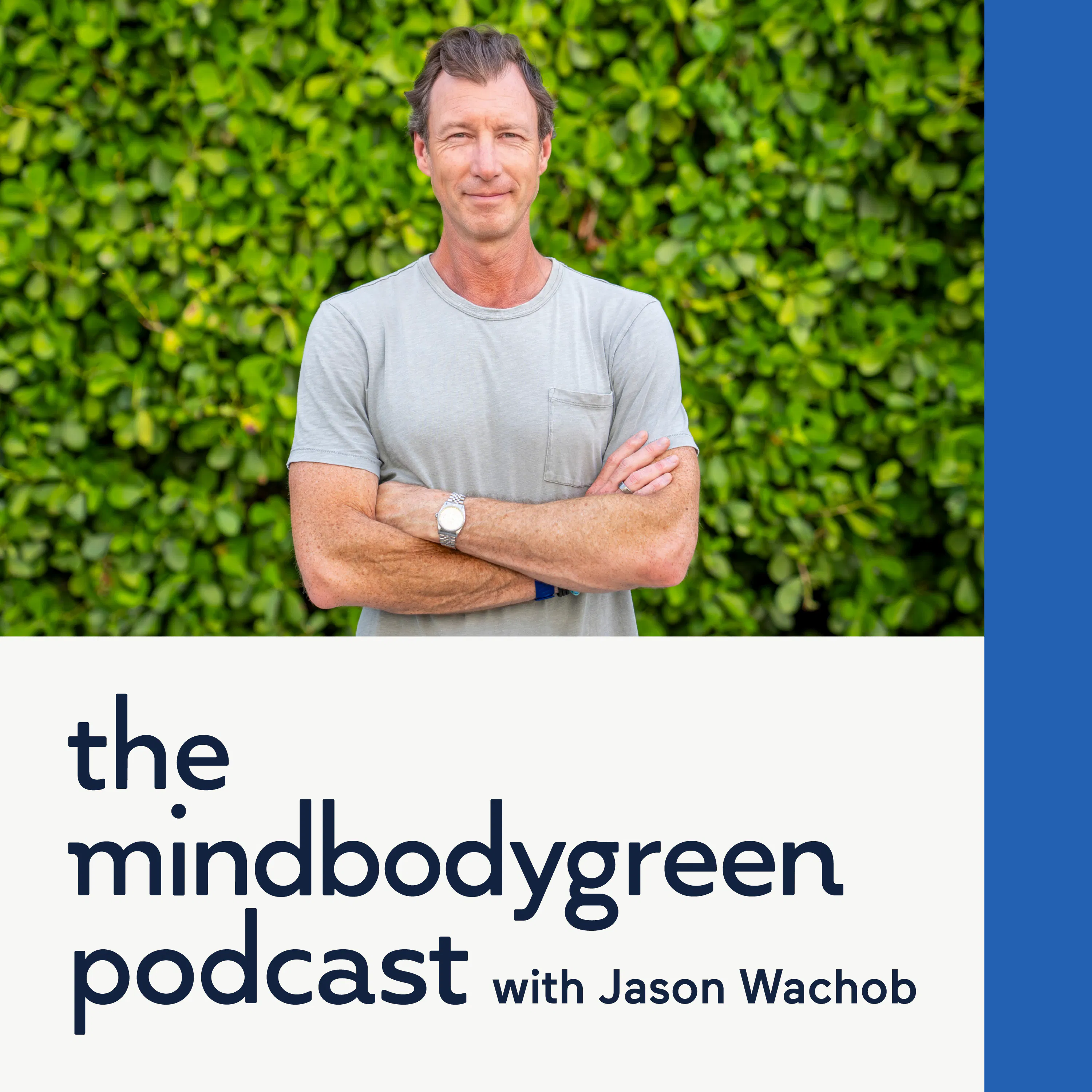
The mindbodygreen Podcast
mindbodygreenAudio
- Format:
- Podcast
- New episodes:
- Weekly
- Typical length:
- about 50 minutes
- Latest episode:
About this show
The mindbodygreen podcast explores the infinite possibilities of health & well-being. Hosted by founder and co-CEO Jason Wachob, each episode features a thought-provoking interview with a leader in the health space. Whether you’re thinking about changing what’s on your plate, how you move, or how you think, these conversations are sure to offer solutions in whole-body health.
Covers: health and wellness, preventive medicine, nutrition, longevity, neuroscience, exercise, youth sports, mindset and behavior
Show details and episodes come from the publisher's public feed at feeds.megaphone.fm. Last updated . Names, artwork and text belong to their publishers.
Recently on this show
Summary of recent episodes, drawn from the publisher's feed.
This podcast covers whole-body health, including food, movement, the mind, and longevity, through interviews with health experts. Recent episodes explore making workouts better for the brain, whether being "good enough" aids longevity, why food quality matters more than calories, and preventing Alzheimer's.
Cosmos
Similar in subject
- Life Time Talks
Both cover: preventive medicine, health and wellness, longevity - LONGEVITY with Nathalie Niddam
Both cover: preventive medicine, longevity, neuroscience - Extend Podcast with Darshan Shah, MD
Both cover: preventive medicine, health and wellness, longevity
Similar shows






Explore more
Episodes
673: How to make your workout better for your brain | Beth Lewis, MS
· 44 min
“You can actually get more from your workout if you just stop and pay attention to what your body's doing,” says Beth Lewis, MS. Lewis is a movement specialist whose approach combines artistic training with exercise science. After earning her BFA in Dance Performance, she toured internationally with the dance company Pilobolus. She holds an MS in Kinesiology with a focus on Aging and Exercise and is currently pursuing a master's in social work with a focus in gerontology. Lewis works in longevity medicine and preventive neurology, bringing research-based exercise methods into everyday practice. She is the founder of Beth Lewis Moves, an age integrated fitness community that combines aging research with accessible, effective training. Her work also extends to film and live performance. She was Brendan Fraser's movement coach for his Oscar-winning performance in The Whale, prepared Hugh Jackman for his return as Wolverine at age 55, and choreographed Jackman's jump rope performance at Radio City Music Hall. 00:00 - From pro dancer to movement coach 05:20 - Why curiosity matters in your workouts 07:23 - Making exercise better for your brain 09:38 - Movement sequences to train memory 11:31 - Rowing's hidden brain-body benefits 18:04 - Minimum effective dose for rowing 20:19 - Hugh Jackman's rowing routine 21:27 - Episode break 23:19 - Jump rope & brain gains 27:10 - How to start jumping rope safely 29:08 - The importance of learning new skills 33:21 - Her ideal weekly training formula 37:25 - Aesthetics, function, & physical reserve 39:38 - The psychosocial side of aging 41:41 - Inside the Beth Lewis Moves community Referenced in the episode: Listen to our episode with Dr. Kellyann Niotis: https://podcasts.apple.com/us/podcast/the-latest-on-how-to-prevent-alzheimers-kellyann-niotis-m-d/id1246494475?i=1000795232654 Listen to our episode with Courtney Conley: https://podcasts.apple.com/us/podcast/how-to-walk-to-optimize-your-health-courtney-conley-d-c/id1246494475?i=1000765873094 Follow Lewis on Instagram: https://www.instagram.com/bethlewisfit/ Lewis’s rowing community: https://www.instagram.com/rowingkweens/ Lewis’s jump rope community: https://www.instagram.com/jumprope_baddies/ Lewis’s website & classes: https://www.improveyourmoves.online/ We hope you enjoy this episode, and feel free to watch the full video on YouTube (https://www.youtube.com/@mindbodygreen/videos)! Whether it's an article or podcast, we want to know what we can do to help here at mindbodygreen. Let us know at: podcast@mindbodygreen.com. Learn more about your ad choices. Visit megaphone.fm/adchoices (https://megaphone.fm/adchoices)
Not rated yet672: A neuropsychologist’s focus rule for a sharper brain | Aldrich Chan, PsyD
· 50 min
“We are no longer living in conditions that we naturally evolved for,” says Aldrich Chan, PsyD. Chan is a neuropsychologist, psychotherapist, and author of two award winning books: Reassembling Models of Reality (https://www.amazon.com/Reassembling-Models-Reality-Clinical-Practice/dp/1324015977)and 7 Principles of Nature: How We Strayed & How We Return. He is the president of the (https://wwnorton.com/ipnbseries)Society for Neuroexistential Psychology (http://www.society-nep.org/)and (https://wwnorton.com/ipnbseries) founder of the Center for Neuropsychology and Consciousness (CNC), a practice in Miami, Florida that provides neuropsychological and psychological services. In addition to his practice, he serves on the faculty at Pepperdine University, teaching at their masters and doctoral programs. 00:00 - What a neuropsychologist does 06:25 - How much of the brain can change 08:21 - Working in focus cycles 11:41 - The SAD theory of mental distress 16:51 - Evolutionary mismatch and modern life 18:35 - Choice overload 21:05 - The problem with divided attention 23:22 - Episode break 25:20 - Vital signals & finding your values 30:01 - The neuroscience of intuition 34:27 - Intuition vs overanalyzing 37:41 - 7 principles for living in alignment 41:10 - Reframing uncertainty as opportunity 44:45 - A Taoist parable about fortune Referenced in the episode: For more about Chan, visit: https://www.drchancnc.com/ Ward 2017:https://www.journals.uchicago.edu/doi/full/10.1086/691462 Ang 2025:https://psycnet.apa.org/record/2027-05616-001 We hope you enjoy this episode, and feel free to watch the full video on YouTube (https://www.youtube.com/@mindbodygreen/videos)! Whether it's an article or podcast, we want to know what we can do to help here at mindbodygreen. Let us know at: podcast@mindbodygreen.com. Learn more about your ad choices. Visit megaphone.fm/adchoices (https://megaphone.fm/adchoices)
Not rated yetThe housekeepers who got leaner just by changing what they believed
· 15 min
In this week’s solo episode of the mindbodygreen podcast, Jason breaks down a fascinating study of hotel room attendants that showed how a small shift in mindset can completely change how our bodies respond to movement. It’s easy to get caught up in the data, but this study is a reminder that the meaning you assign to what you're doing is another critical input. 00:00 - The chambermaid study 04:06 - What changed after four weeks 06:24 - The milkshake study 07:37 - The honest caveats 09:03 - 3 ways to use this today Referenced in the episode: Read the Harvard study: https://pubmed.ncbi.nlm.nih.gov/17425538/ Read the milkshake study: https://pubmed.ncbi.nlm.nih.gov/21574706/ For more about Alia Crum, visit: https://www.instagram.com/draliacrum/?hl=en Listen to the episode with Dr. Ellen Langer: https://podcasts.apple.com/us/podcast/how-to-think-yourself-younger-mother-of-mindfulness/id1246494475? (https://podcasts.apple.com/us/podcast/how-to-think-yourself-younger-mother-of-mindfulness/id1246494475?i=1000629050644) We hope you enjoy this episode, and feel free to watch the full video on YouTube (https://www.youtube.com/@mindbodygreen/videos)! Whether it's an article or podcast, we want to know what we can do to help here at mindbodygreen. Let us know at: podcast@mindbodygreen.com. Learn more about your ad choices. Visit megaphone.fm/adchoices (https://megaphone.fm/adchoices)
Not rated yet671: Is being “good enough” the secret to longevity? | Matt Bloom, Ph.D.
· 49 min
“Small steps add up over time to the big changes that we seek,” says Matt Bloom, Ph.D. Bloom is a professor emeritus of business at the University of Notre Dame. He has a PhD in psychology from Cornell University. For nearly thirty years, he and his research team studied the well-being of people who work in the helping and healing professions including physicians, humanitarian workers, clergy and public school teachers. Matt is cofounder of Ritual, a mobile app that offers a living library of evidence-based well-being practices created in partnership with wise guides including Barbara Brown Taylor, Kate Bowler, Steve Kerr, Nedra Glover Tawaab, and Anne Lamott. 00:00 - Why small habits beat big overhauls 05:05 - The 5-minute worry window 07:24 - Lessons from high-stress professions 13:32 - Radical acceptance & psychological flexibility 15:32 - An exercise for hard experiences 17:33 - When resilience through becomes self-destructive 20:22 - Why you need an accountability partner 24:57 - Practice over perfectionism 28:16 - Balancing great & good enough 31:48 - Burnout & finding your core values 34:34 - His Wall Street wake-up call 35:37 - Achieving personal & professional alignment 40:15 - Science that stands out 42:11 - Children & grandchildren Referenced in the episode: Visit Bloom’s website: https://mattbloom.org/ Buy Bloom’s new book: https://www.amazon.com/Lasting-Wellbeing-Science-Based-Tranquility-Authenticity/dp/1637748787/ref=sr_1_ (https://www.amazon.com/Lasting-Wellbeing-Science-Based-Tranquility-Authenticity/dp/1637748787/ref=as_li_qf_sp_asin_il_tl?tag=mind0a3-20)1 For more about the worry window, visit Elissa Epel’s website: https://www.elissaepel.com/ For more about radical acceptance, visit Steven Hayes’ website: https://stevenchayes.com/the-bittersweet-art-of-acceptance-2/ We hope you enjoy this episode, and feel free to watch the full video on YouTube (https://www.youtube.com/@mindbodygreen/videos)! Whether it's an article or podcast, we want to know what we can do to help here at mindbodygreen. Let us know at: podcast@mindbodygreen.com. Learn more about your ad choices. Visit megaphone.fm/adchoices (https://megaphone.fm/adchoices)
Not rated yet670: Why food quality matters more than calories | Dariush Mozaffarian, M.D.
· 53 min
“The food industry is experimenting on us without data and knowledge,” says Dariush Mozaffarian, M.D., DrPH. Mozaffarian is a cardiologist, Director of the Food is Medicine Institute at Tufts University, and author of the book, Food is Medicine (Holt/Macmillan). He serves as Distinguished Professor, Dean Emeritus, and Jean Mayer Professor; and is clinically active in cardiology at Tufts Medical Center. His work aims to create the evidence and translation for a food system that is nutritious, equitable, and sustainable. He has authored nearly 700 scientific publications, and has served in numerous advisory roles. His work has been featured in leading media outlets, and Thomson Reuters has named him as one of the World’s Most Influential Scientific Minds. Dr. Mozaffarian received his B.S. in biological sciences from Stanford, M.D. from Columbia, Doctorate in Public Health from Harvard, and clinical training in internal medicine at Stanford and in cardiology at the University of Washington. He is married, has three children, and actively trains as a Fourth Degree Black Belt in Taekwondo. 00:00 - The last century of nutrition science 07:03 - The single-nutrient mistake 10:50 - Pellagra & the birth of enriched flour 13:45 - Macros vs. food quality 17:05 - The 3 buckets of food 21:56 - What’s the deal with red meat 24:46 - Episode break 27:14 - Cholesterol absorbers & plant sterols 31:05 - How low-fat & Big Tobacco fueled ultra-processing 33:24 - The truth about seed oils 38:06 - Sweeteners & additives 41:41 - Flipping the script on the food system 47:28 - The problem with calorie counting 52:16 - Inside a cardiologist's shopping cart Referenced in the episode: Buy Mozaffarian’s book here: https://www.amazon.com/dp/1250394287 Visit the Food Is Medicine Institute website: https://tuftsfoodismedicine.org/ We hope you enjoy this episode, and feel free to watch the full video on YouTube (https://www.youtube.com/@mindbodygreen/videos)! Whether it's an article or podcast, we want to know what we can do to help here at mindbodygreen. Let us know at: podcast@mindbodygreen.com. Learn more about your ad choices. Visit megaphone.fm/adchoices (https://megaphone.fm/adchoices)
Not rated yet669: The latest on how to prevent Alzheimer’s | Kellyann Niotis, M.D.
· 52 min
"What we know for sure is that Alzheimer's is a preventable disease. It's not destiny,” says Kellyann Niotis, M.D. Niotis is the world’s first fellowship-trained preventive neurologist. She is a Clinical Assistant Professor of Neurology at Weill Cornell Medicine, the Director of Parkinson’s and Lewy Body Dementia Prevention Research at the Institute for Neurodegenerative Diseases (IND) and runs a private preventive neurology practice in New York City focused on early detection and personalized risk reduction strategies for diseases like Alzheimer’s, Parkinson’s and Dementia with Lewy Bodies. Her research has been published in notable medical journals and presented at national and international conferences. Her expertise has been featured in media outlets such as CNN and NBC, and she has received numerous honors and awards recognizing her work. She is passionate about advancing the field of preventive neurology—not only through clinical care and research but also through advocacy for policy change and expanding access to education and treatment. 00:00 - Your genes are not your destiny 05:06 - Why prevention starts in your 30s 06:44 - Cholesterol management for brain health 11:06 - Explaining amyloid & p-tau 217 17:17 - How viruses & your cycle affect tau 19:37 - Dr. Niotis’s research 23:41 - What movement reveals about your brain 30:37 - Why motor reserve matters 34:47 - Why variety is key when exercising for brain health 37:38 - Elen’s story with two APOE4 copies 44:37 - ApoA1: the brain's cholesterol exception 47:42 - The future of Alzheimer's treatment 50:43 - The statin study she'd love to run Referenced in the episode: Visit Niotis’s website: http://www.drkellyannniotis.com/ Visit Niotis’s practice: http://www.preventive-neuro.com/ For more about Beth Lewis: https://www.instagram.com/bethlewisfit/ Listen to our episode with Richard Isaacson: https://open.spotify.com/episode/4uW7V9qfeD2vj2m56MZlYB We hope you enjoy this episode, and feel free to watch the full video on YouTube (https://www.youtube.com/@mindbodygreen/videos)! Whether it's an article or podcast, we want to know what we can do to help here at mindbodygreen. Let us know at: podcast@mindbodygreen.com. Learn more about your ad choices. Visit megaphone.fm/adchoices (https://megaphone.fm/adchoices)
Not rated yetWhy 70% of American kids quit sports by age 13
· 23 min
Youth sports has become a multi-billion-dollar industry built on one unspoken promise: specialize early, and your kid has a shot. In this solo episode, we dig into what the research really says about early specialization. We also looks at how Norway built a youth sports system around play instead of competition, and why it's keeping kids in the game at nearly triple the US rate. 00:00 - The myth of sports specialization 04:29 - How youth sports became a billion-dollar industry 05:10 - My own path to Division I basketball 06:52 - Higher risk of overuse injuries 09:42 - The weaker case for burnout 10:41 - Junior stars & adult pro athletes are different people 12:28 - Deliberate play & the sampling years 15:00 - 3 honest caveats 16:10 - How Norway keeps kids playing 20:29 - What every parent should actually do Referenced in the episode: 2022 meta-analysis from Jean Côté’, Ph.D.: https://doi.org/10.1177/19417381211056301 2015 study from Neeru Jayanthi, M.D.: .https://pubmed.ncbi.nlm.nih.gov/25646361/ Research from David Bell, Ph.D.: https://pubmed.ncbi.nlm.nih.gov/31633411/ Research from Tim McGuine, Ph.D: https://pubmed.ncbi.nlm.nih.gov/28735552/ We hope you enjoy this episode, and feel free to watch the full video on YouTube (https://www.youtube.com/@mindbodygreen/videos)! Whether it's an article or podcast, we want to know what we can do to help here at mindbodygreen. Let us know at: podcast@mindbodygreen.com. Learn more about your ad choices. Visit megaphone.fm/adchoices (https://megaphone.fm/adchoices)
Not rated yet668: What 200K full-body scans reveal about how we age | Andrew Lacy, Founder & CEO at Prenuvo
· 42 min
"I hope in 20 or 30 years time, a clinical diagnosis is something that's rarely given because most everything has been caught before it rises to that stage,” says Andrew Lacy. Lacy is the CEO and founder of Prenuvo, the company pioneering proactive whole-body imaging for the early detection of cancer and other diseases. Under Lacy’s leadership, the company has expanded across North America, establishing Prenuvo as a recognized and trusted proactive healthcare service to both patients and referring clinicians. A seasoned entrepreneur, he scaled transformative products (including Tapulous, acquired by Disney) and grew Prenuvo into a global leader. He actively serves as an advisor and investor across a diverse portfolio of startups. He received an MBA from Stanford University and a JD from the University of Melbourne. He is currently based in Los Angeles. This podcast was created in partnership with Prenuvo. Their whole-body MRI scans 33 organs for hundreds of conditions in as little as an hour, finding a potentially life-saving diagnosis in 1 in 20 people.* Prenuvo can help give you a broader understanding of what’s happening in your body–before symptoms appear. Get a $300 discount on comprehensive and executive memberships, along with a standalone whole-body scan at prenuvo.com/MINDBODYGREEN. 00:00 - What's changed in the last two years of scanning 03:58 - The importance of establishing a baseline 06:15 - The average scan turns up nine findings 07:55 - Ageotypes: why everyone ages differently 09:19 - Inside the new body composition report 11:47 - 4 ways AI is changing medical imaging 15:44 - NeuroQuant & catching dementia decades early 18:07 - Building a comprehensive, preventative healthcare system 24:10 - Busy Philipps’s story & what people actually fear 25:17 - The case for peace of mind over avoidance 30:46 - Skin health as the next imaging frontier 37:27 - Why people worry most about the brain 39:21 - Changing the approach to healthcare Referenced in the episode: Read about Jason’s experience first Prenuvo scan here: https://www.mindbodygreen.com/articles/full-body-mri-scan-review We hope you enjoy this episode, and feel free to watch the full video on YouTube (https://www.youtube.com/@mindbodygreen/videos)! Whether it's an article or podcast, we want to know what we can do to help here at mindbodygreen. Let us know at: podcast@mindbodygreen.com. *Based on our internal data analysis, 5% of Prenuvo scans have helped detect a potentially life-saving condition. This reflects in particular the combined prevalence of radiologically-suspected pre-cancerous/cancerous-findings or brain-aneurysms in our whole body MRI screening practice. Learn more about your ad choices. Visit megaphone.fm/adchoices (https://megaphone.fm/adchoices)
Not rated yet667: Why this doctor stopped fearing sugar, ice cream, & alcohol | Keshav Grover, D.O, M.S.
· 50 min
"What is the lowest dose of intervention that can have the maximum effect to help the body heal itself?” asked Keshav Grover, D.O., M.S., IFMCP. Grover is the founder of Grover Health and Wellness, PLLC. He is a physician, keynote speaker, and champion of functional/integrative medicine and of eating a whole foods, plant-based diet. He holds a Doctorate in osteopathic medicine from Michigan State University College and a Master of Science from Wayne State University School of Medicine. He completed the prestigious Andrew Weil Center of Integrative Medicine fellowship at the University of Arizona and is a certified functional medicine practitioner by the Institute for Functional Medicine. He has spoken to leading organizations about holistic health and has been featured on CBS and Fox News as a wellness expert. His first book, Wellness Bridge, was published this August. 00:00 - The "Wellness Bridge" 05:37 - Why medicine doesn't have to be either/or 08:55 - A simple at-home gut health check 11:21 - There’s no universal cure 13:37 - Peptides 101 19:30 - Who should avoid peptides entirely 22:21 - Smallest dose, maximum effect 24:27 - Grover’s approach to testing 30:29 - Where health testing is headed next 33:38 - The connection between glyphosate & cancer 40:38 - His brother's warts & a homeopathy win 44:37 - Why he stopped being the ingredient police 47:31 - Gut health & food sensitivity 49:55 - Why genetics isn't your destiny Referenced in the episode: For more about Grover, visit: https://www.drkeshavgrover.com/ Buy Grover’s book: https://www.amazon.com/dp/B0GZMP5BQX/ref=as_li_qf_sp_asin_il_tl?tag=mind0a3-20 We hope you enjoy this episode, and feel free to watch the full video on YouTube (https://www.youtube.com/@mindbodygreen/videos)! Whether it's an article or podcast, we want to know what we can do to help here at mindbodygreen. Let us know at: podcast@mindbodygreen.com. Learn more about your ad choices. Visit megaphone.fm/adchoices (https://megaphone.fm/adchoices)
Not rated yet666: Is wellness culture making us less healthy? | Ezekiel J. Emanuel, MD, PhD, MsC
· 41 min
“I don't need to track it. I just listen to my body,” says Ezekiel J. Emanuel, M.D., Ph.D., Ms.C. Dr. Emanuel is an oncologist and world leader in health policy and bioethics. He is the Vice Provost for Global Initiatives at the University of Pennsylvania, and holds appointments in the Department of Medical Ethics and Health Policy in the Perelman School of Medicine and the Department of Health Care Management in the Wharton School. He is Special Advisor to the Director General of the WHO, Senior Fellow at the Center for American Progress, and a member of the Council on Foreign Relations. He was founding chair of the Department of Bioethics at the NIH. He served as a Special Advisor on Health Policy to the Director of the Office of Management and Budget and National Economic Council. In this role, he was instrumental in drafting the Affordable Care Act. He served on the Biden-Harris Transition Covid Advisory Board. Dr. Emanuel is the most widely cited bioethicist in history with over 350 publications. He has authored or edited 16 books. His newest book, Eat Your Ice Cream, is out now. 00:00 - When tracking our health goes overboard 06:19 - The health markers worth testing 08:03 - Daily nutrition habits 09:34 - What it means to “eat your ice cream” 14:15 - The importance of social connection 19:12 - Why willpower fails & habits win 24:47 - Everest, introverts, & grip strength 27:52 - How purpose is linked to health 31:06 - Why & how the Emanuel brothers succeeded 35:21 - Rethinking retirement for brain health 36:42 - Age-old health wins (& that’s a relief) 40:10 - Favorite ice cream shops Referenced in the episode: For more about Emanuel, visit his website: https://www.ezekielemanuel.com/ Buy Eat Your Ice Cream here: https://www.amazon.com/Eat-Your-Ice-Cream-Healthy/dp/1324117532/ref=as_li_qf_sp_asin_il_tl?tag=mind0a3-20 Find our episode on the rabbit cholesterol here: https://youtu.be/er3k40nlCh8?si=MxeG7IxEVnirxIoX We hope you enjoy this episode, and feel free to watch the full video on YouTube (https://www.youtube.com/@mindbodygreen/videos)! Whether it's an article or podcast, we want to know what we can do to help here at mindbodygreen. Let us know at: podcast@mindbodygreen.com. Learn more about your ad choices. Visit megaphone.fm/adchoices (https://megaphone.fm/adchoices)
Not rated yet660: Why adding more to your diet beats eliminating | Wendy Bazilian, DrPH, MA, RDN
· 44 min
"The diet you'll stay on is a diet that's enjoyable and not too hard,” says Wendy Bazilian, DrPH, MA, RDN. Bazilian is a Registered Dietitian Nutritionist, American College of Sports Medicine Certified Exercise Physiologist, and Doctor of Public Health. She's authored multiple bestselling books, as well as contributed to a New York Times bestseller and a James Beard-nominated cookbook. She’s a spokesperson for Avocados – Love One Today and a frequent nutrition expert cited in mindbodygreen articles. 00:00 - The value of the food we consume 03:06 - Why dietary fat was misunderstood for decades 07:47 - Nutrient density vs. calorie counting 09:56 - Why 94% of us fall short on fiber 14:26 - Heart health, satiety, & blood sugar control 16:48 - Why the best diet is one you enjoy 18:50 - Food synergy & nutrient absorption 21:51 - Unexpected ways to cook with avocados 26:58 - The glycemic load effect 31:28 - Serving size vs. portion size 35:41 - How to store avocados properly 40:06 - 3 rules for moving the needle on health Referenced in the episode: The HAT trial: https://pubmed.ncbi.nlm.nih.gov/34496276/ Glycemic load study: https://www.sciencedirect.com/science/article/pii/S2475299126000557 For more about Bazilian, visit her website: https://www.wendybazilian.com/ We hope you enjoy this episode, and feel free to watch the full video on YouTube (https://www.youtube.com/@mindbodygreen/videos)! Whether it's an article or podcast, we want to know what we can do to help here at mindbodygreen. Let us know at: podcast@mindbodygreen.com. Learn more about your ad choices. Visit megaphone.fm/adchoices (https://megaphone.fm/adchoices)
Not rated yetStatus, Sex, & Sports Cars: What Science Says
· 11 min
What does driving a sports car actually do to your hormones? In this episode, we break down a surprisingly revealing 2009 study in which researchers had men drive a bright red sports car and a beige sedan and measured changes in their testosterone before and after. The results weren't what anyone expected. And the real finding had nothing to do with speed, horsepower, or even the car itself. We dig into the evolutionary biology behind status signaling, why social context drives hormonal responses, and what this study quietly reveals about how we chase external validation in modern life. Ever seen someone rev a Ferrari at a stoplight and thought "midlife crisis"? This one's for you. 00:00 - Introduction 00:53 - The Experiment 01:44 - The Results (And Why They're Surprising) 02:41 - The Evolutionary Biology Behind Status Signaling 03:34 - Why the Audience Mattered More Than the Car 04:26 - What "Borrowed Status" Costs Us 05:33 - What Actually Sustains Us Long-Term Read the study here:https://www.sciencedirect.com/science/article/abs/pii/S0749597809000442 We hope you enjoy this episode, and feel free to watch the full video onYouTube (https://www.youtube.com/@mindbodygreen/videos)! Whether it's an article or podcast, we want to know what we can do to help here at mindbodygreen. Let us know at: podcast@mindbodygreen.com. Learn more about your ad choices. Visit megaphone.fm/adchoices (https://megaphone.fm/adchoices)
Not rated yet665: Is Zone 2 training a waste of your workout time? | Kristi Storoschuk, exercise scientist
· 45 min
“As your time commitment goes down, the importance of intensity goes up,” says Kristi Storoshuk. Storoschuk is a PhD candidate in Muscle Physiology at Queen’s University in Kingston, Ontario. Her research focuses on the relationship between skeletal muscle metabolism and whole-body metabolism, with an emphasis on how nutrient–exercise timing influences physiological adaptations to exercise. Storoschuk has contributed to peer-reviewed publications and is passionate about translating complex scientific findings into practical, evidence-based recommendations. Outside of her academic work, Kristi is the founder of a women’s health coaching program focused on improving metabolic health through sustainable nutrition and exercise, particularly in the context of preconception health. 00:00 - What is Zone 2 training? 08:14 - The limitations of Zone 2 training 11:18 - Prioritizing intensity when time is limited 15:56 - All about interval training 19:16 - The truth about building your aerobic base 21:02 - We shouldn’t train cardio like elite athletes 24:48 - Fat burning & Zone 2 26:10 - Talking weekly cardio protocol 30:03 - Storoschuk’s habits 33:03 - Unpacking exercise culture & trends 37:22 - Recovery, wearables, & intuition 43:10 - HIIT above all else Referenced in the episode: Read Storoschuk’s research about Zone 2: https://link.springer.com/article/10.1007/s40279-025-02261-y For more about Storoschuk, visit her website: https://krististoroschuk.com/ We hope you enjoy this episode, and feel free to watch the full video on YouTube (https://www.youtube.com/@mindbodygreen/videos)! Whether it's an article or podcast, we want to know what we can do to help here at mindbodygreen. Let us know at: podcast@mindbodygreen.com. Learn more about your ad choices. Visit megaphone.fm/adchoices (https://megaphone.fm/adchoices)
Not rated yet664: High-achiever? Here’s how to prevent burnout | science writer Elizabeth Svoboda
· 51 min
"It's way better to pull yourself back from the brink of burnout before it hits than to let yourself fall all the way in,” says Elizabeth Svoboda. Svoboda is an award-winning science writer and contributor to Scientific American, Discover, The Boston Globe, The New York Times, and other publications. Elizabeth is a winner of the Evert Clark/Seth Payne Award for Young Science Writers, and her work has been anthologized in the Best American Science and Nature Writing series. She lives in San Jose, California, with her husband and young sons. Her new book, The Art of Pacing (https://www.amazon.com/Art-Pacing-Balancing-Short-Term-Long-Term/dp/1668022419/ref=as_li_qf_sp_asin_il_tl?tag=mind0a3-20), is available now. 00:00 - Why high performers always push to 110% 05:58 - Physical signs of burnout 09:14 - Getting more comfortable with recovery 12:16 - Pacing & how to take advantage of energy rhythms 16:00 - What an Olympic runner taught her about rest 18:32 - Modulation & the importance of breathwork 28:30 - Why it’s so hard recover from burnout 31:48 - Boom-bust cycles 35:12 - Gold star culture & unsustainable achievement 40:34 - Why early sports specialization backfires 44:08 - How to pace yourself with rigid flexibility 50:32 - The next wise choice Referenced in the episode: For more about Elizabeth Svoboda, visit her website: https://elizabethsvoboda.com/ Buy The Art Of Pacing here: https://www.amazon.com/Art-Pacing-Balancing-Short-Term-Long-Term/dp/1668022419/ref=as_li_qf_sp_asin_il_tl?tag=mind0a3-20 Find the Maslach Burnout Inventory here: https://static1.squarespace.com/static/5fecb650c2646617cb1e0599/t/6320f5325f757e4ad8bc0062/1663104306195/Maslach-Burnout-Inventory.pdf For more about Joe Arpaia: https://www.centerfortransformativehealing.org/joseph Follow runner Ajeé Wilson: https://www.instagram.com/ajeelenee/?hl=en We hope you enjoy this episode, and feel free to watch the full video on YouTube (https://www.youtube.com/@mindbodygreen/videos)! Whether it's an article or podcast, we want to know what we can do to help here at mindbodygreen. Let us know at: podcast@mindbodygreen.com. Learn more about your ad choices. Visit megaphone.fm/adchoices (https://megaphone.fm/adchoices)
Not rated yet663: Daily choices that shape brain health in your 30s, 40s & beyond | David Perlmutter, MD
· 47 min
“We can choose our brain’s destiny,” says David Perlmutter, MD. Perlmutter is a Board-Certified Neurologist and six-time New York Times bestselling author whose work focuses on the intersection of neurology, nutrition, and brain health. He is on the Board of Directors of the American College of Nutrition and the Editorial Board of the Journal of Alzheimer’s Disease. His books, including the #1 bestseller Grain Brain, has been published in 32 languages and sold over a million copies. Perlmutter lectures globally at leading institutions and has been featured on major media outlets including 20/20, CNN, The Today Show, and Oprah. His new book, Brain Defenders (http://braindefenders.com/), focuses on the pivotal role of microglia, the brain’s immune cells, in protecting, repairing, and reprogramming the brain for lifelong resilience, and is now available for pre-order. 00:00 - Treating the symptoms, not the cause 02:37 - Microglial cells & their evil twin state 05:44 - How metabolism affects the brain 08:00 - Gut bacteria, inflammation, & brain degeneration 11:38 - Why lifestyle beats the APOE4 gene 16:25 - Perlmutter’s daily routine 23:55 - Loneliness & oxytocin 26:21 - The effects of long COVID on the brain 32:18 - Glyphosate & other environmental factors 39:20 - Reprogramming microglia & mitochondrial transplants 41:35 - Own your brain's destiny Referenced in the episode: For more about Perlmutter, visit his website: https://drperlmutter.com/ For more about Perlmutter's upcoming book, visit: https://braindefenders.com/ Alzheimers & UPFs study: https://doi.org/10.1016/j.tjpad.2024.100042 POINTER study - https://jamanetwork.com/journals/jama/fullarticle/2837046 20-week Alzheimer’s study: https://link.springer.com/article/10.1186/s13195-024-01482-z Golf course & Parkinson’s study: https://jamanetwork.com/journals/jamanetworkopen/fullarticle/2833716 We hope you enjoy this episode, and feel free to watch the full video on YouTube (https://www.youtube.com/@mindbodygreen/videos)! Whether it's an article or podcast, we want to know what we can do to help here at mindbodygreen. Let us know at: podcast@mindbodygreen.com. Learn more about your ad choices. Visit megaphone.fm/adchoices (https://megaphone.fm/adchoices)
Not rated yet662: The truth about peptides, NAD, & other longevity treatments | Rachele Pojednic, Ph.D.
· 51 min
"If you don't get those foundational behaviors down, there ain't nothing a peptide's gonna do for you,” says Rachele Pojednic, Ph.D. Pojednic is a professor of Sports Nutrition and Exercise Physiology at Stanford University and is the Chief Science Officer at Restore. Her work examines nutrition, supplementation and physical activity interventions on muscle physiology, performance and recovery, as well as muscle related chronic disease, with a particular focus on women. Pojednic holds a Certified Strength and Conditioning Specialist (CSCS) certification from National Strength and Conditioning Association (NSCA) and is board certified Health Coach from the National Board of Health and Wellness Coaches (NBHWC). She has a particular passion for science communication and has been a consultant and writer for many prominent news outlets, including NPR, Time, The Washington Post, and Popular Science. Show notes: 00:00 - The difference between science & wellness 06:30 - The big vs. little levers of health 08:40 - What we do & don’t know about peptides 11:45 - A study on supplement stacking gone wrong 13:55 - Next-gen peptides (BPC-157 & more) 18:20 - All about NAD, NR, & NMN 29:57 - Creatine for muscle & brain health 33:48 - Looking at leucine & amino acid profile in protein 36:48 - Why fasting advice for women often backfires 40:24 - Stop chasing perfection 43:45 - How to use wearables & lab testing 50:13 - Bridging science & wellness Referenced in the episode: For more about Pojednic, visit her website: https://www.rachelepojednic.com/ mindbodygreen’s creatine brain supplement: https://shop.mindbodygreen.com/products/creatine-brain mindbodygreen’s whey protein: https://shop.mindbodygreen.com/products/clear-whey-protein We hope you enjoy this episode, and feel free to watch the full video on YouTube (https://www.youtube.com/@mindbodygreen/videos)! Whether it's an article or podcast, we want to know what we can do to help here at mindbodygreen. Let us know at: podcast@mindbodygreen.com. Learn more about your ad choices. Visit megaphone.fm/adchoices (https://megaphone.fm/adchoices)
Not rated yet661: Why structure is good for your brain | journalist David Epstein
· 53 min
"I think structure is more liberating than it is stifling, and it often takes people losing it to sort of realize that,” says David Epstein. Epstein is the author of the number one New York Times bestseller Range and the New York Times bestseller The Sports Gene. He has master’s degrees in environmental science and journalism and has worked as a senior writer for Sports Illustrated and as an investigative reporter for ProPublica. He lives in Washington, DC. His newest book, Inside The Box, is out now. 00:00 - Why constraints drive creativity 06:35 - How mnemonics help you memorize 10:31 - The power of low-stakes practice 12:25 - The problem with youth sports 18:56 - The constraints-led approach in elite sports 22:25 - Good vs bad constraints 25:39 - Constraints at NASA & Pixar 31:07 - Why we always add instead of subtract 35:02 - The dizziness of freedom 41:29 - Experimentation as a practice 45:19 - The importance of self-reflection 49:02 - How to fix your fractured attention Referenced in the episode: Read The Athletic’s article about the constraints-led approach: https://www.nytimes.com/athletic/6665943/2025/09/29/sports-training-cla-coaching-wembanyana-ohtani (https://www.nytimes.com/athletic/6665943/2025/09/29/sports-training-cla-coaching-wembanyana-ohtani/?utm_medium=social&utm_campaign=twhq&source=twitterhq) For more about David Epstein, visit his website: https://davidepstein.com/ Buy Inside The Box here: https://www.amazon.com/dp/B0FNDSKWMY/?/ref=as_li_qf_sp_asin_il_tl?tag=mind0a3-20 Buy Range here: https://www.amazon.com/Range-Generalists-Triumph-Specialized-World/dp/0735214506/ref=as_li_qf_sp_asin_il_tl?tag=mind0a3-20 We hope you enjoy this episode, and feel free to watch the full video on YouTube (https://www.youtube.com/@mindbodygreen/videos)! Whether it's an article or podcast, we want to know what we can do to help here at mindbodygreen. Let us know at: podcast@mindbodygreen.com. Learn more about your ad choices. Visit megaphone.fm/adchoices (https://megaphone.fm/adchoices)
Not rated yet659: How to build a flourishing mind in 5 minutes | Richard Davidson, Ph. D.
· 50 min
“Every human being comes equipped with the capacity to flourish,” says Richard Davidson, Ph.D. Davidson is the William James and Vilas Professor of Psychology and Psychiatry at the University of Wisconsin–Madison and the Founder and Director of the Center for Healthy Minds. He is best known for his groundbreaking work studying emotion and the brain. A friend and confidante of the Dalai Lama, he is a highly sought after expert and speaker, leading conversations on wellbeing on international stages such as the World Economic Forum, where he served on the Global Council on Mental Health. In 2014, Davidson founded Humin (formerly Healthy Minds Innovations), a global nonprofit on a mission to make wellbeing real by translating science into action. 00:00 - What it means to flourish 05:48 - Using your mind intentionally 09:46 - Why informal practice works just as well 11:50 - A mindful walk 14:21 - The biology of loneliness 17:15 - The narrative you carry about yourself 20:38 - Mental reps & neuroplasticity 23:54 - Connecting purpose to small tasks 28:25 - The free Healthy Minds app 31:02 - How fast the brain actually changes 36:48 - Inflammation, dementia, & longevity 38:53 - Davidson's morning & evening ritual 43:13 - Setting kids up to flourish 44:43 - How a volleyball team connects Referenced in the episode: The Healthy Minds app: https://www.humin.org/wellbeing-tools/app For more about Davidson, visit: https://www.richardjdavidson.com/ Purchase his book here: https://www.amazon.com/dp/1668066238/ref=as_li_qf_sp_asin_il_tl?tag=mind0a3-20 We hope you enjoy this episode, and feel free to watch the full video on YouTube (https://www.youtube.com/@mindbodygreen/videos)! Whether it's an article or podcast, we want to know what we can do to help here at mindbodygreen. Let us know at: podcast@mindbodygreen.com. Learn more about your ad choices. Visit megaphone.fm/adchoices (https://megaphone.fm/adchoices)
Not rated yet658: The most efficient path to better cardio | sports scientist Fraser Thurlow, Ph.D.
· 53 min
"When it comes to high-intensity interval training work, quality is much more important than quantity,” says Fraser Thurlow, Ph.D. Thurlow is a high-performance coach, researcher, and lecturer with over a decade of experience helping people improve their fitness and performance. He holds a PhD in Human Performance, has published extensively on training, and has lectured at leading Australian universities in sport and exercise science. His work focuses on translating science into practical, evidence-based strategies that improve health, fitness, and athletic performance. 00:00 - How to actually raise your VO2 max 05:26 - Long vs short interval training 09:00 - Heart rate vs. perceived exertion 11:13 - Accurately monitoring heart rate 13:12 - The sprint interval training protocol 19:07 - A sample weekly plan 23:58 - Working exercise into the day-to-day 28:24 - Making the most out of supersets 31:58 - VO2 max mistakes 34:32 - How to train for HYROX 39:17 - Foot strength & barefoot lifting 43:37 - Overrated & underrated fitness 45:35 - Fraser's sprint research 50:40 - VO2 max vs. muscle for longevity Referenced in the episode: For more about Thurlow & his personal training, visit: https://stan.store/drthurlow Jan Helgerud sprint study: https://pubmed.ncbi.nlm.nih.gov/17414804/ Vollaard analysis of VO2 max studies: https://pubmed.ncbi.nlm.nih.gov/28079707/ We hope you enjoy this episode, and feel free to watch the full video on YouTube (https://www.youtube.com/@mindbodygreen/videos)! Whether it's an article or podcast, we want to know what we can do to help here at mindbodygreen. Let us know at: podcast@mindbodygreen.com. Learn more about your ad choices. Visit megaphone.fm/adchoices (https://megaphone.fm/adchoices)
Not rated yet657: The science of art as medicine | behavioral scientist Daisy Fancourt
· 46 min
“When we engage in the arts, it exposes us to a lot of emotions, which can have a tangible impact on the neurotransmitters released in our brains, the stress hormones in our bodies, and even the levels of inflammation in our immune system,” says Daisy Fancourt. Fancourt is a Professor of Psychobiology and Epidemiology at University College London where she heads the Social Biobehavioural Research Group, and serves as the Director of the World Health Organization Collaborating Centre on Arts and Health. She is one of the most highly cited scientists in the world, having published 300 scientific papers and won over two dozen academic prizes. She is a multi-award-winning science communicator and has been named a World Economic Forum Global Shaper and BBC New Generation Thinker. 00:00 - Art as the fifth pillar of health 01:21 - The benefits of arts engagement 08:10 - Your daily & weekly arts prescription 09:35 - Why attention is the key ingredient 11:12 - Visual vs. audio art 14:56 - Making the most of a museum visit 18:11 - Art for stress & mood regulation 19:09 - Using art to wind down 21:04 - Art & the brain 27:44 - Prescribing art for anxiety & depression 32:08 - Reconnecting with childhood creativity 34:14 - Finding art in the every day 36:45 - Biological evidence of art’s impact 40:14 - Art for joy & exercise 44:54 - The creative commute Referenced in the episode: Greece’s art program for mental health: https://artonprescription.gr/en/ For more about Fancourt & her research, visit: https://sbbresearch.org/ Buy Fancourt’s book here: https://a.co/d/03ypycB7 We hope you enjoy this episode, and feel free to watch the full video on YouTube (https://www.youtube.com/@mindbodygreen/videos)! Whether it's an article or podcast, we want to know what we can do to help here at mindbodygreen. Let us know at: podcast@mindbodygreen.com. Learn more about your ad choices. Visit megaphone.fm/adchoices (https://megaphone.fm/adchoices)
Not rated yet