

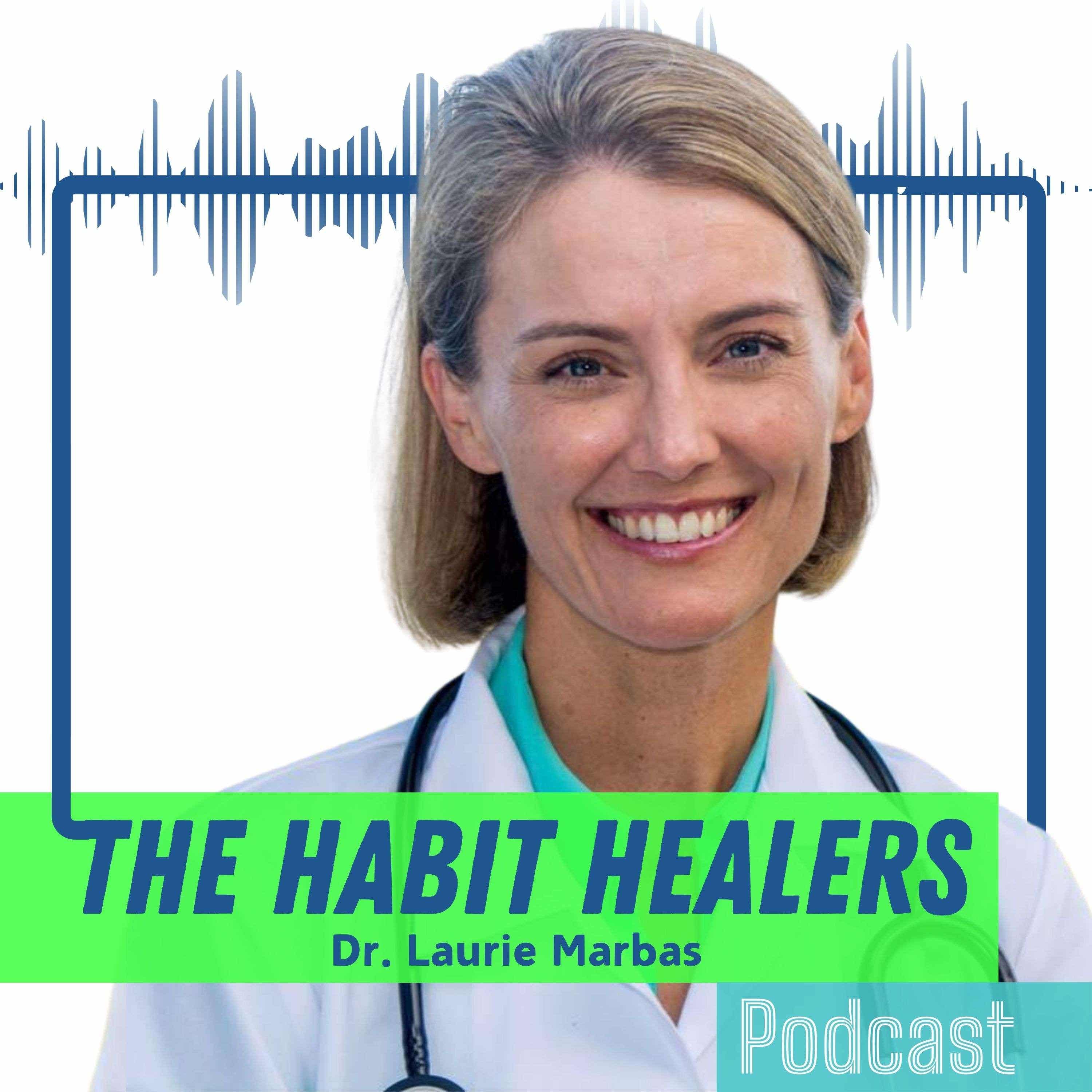
The Habit Healers
- Format:
- Podcast
- New episodes:
- Daily
- Typical length:
- about 20 minutes
- Latest episode:
About this show
Welcome to The Habit Healers Podcast—where transformation starts with a single habit.
Hosted by Dr. Laurie Marbas, this podcast is for anyone ready to break free from chronic health struggles, rewire their habits, and create lasting healing. Through powerful stories, science-backed strategies, and real-world tools, we dive deep into the micro shifts that lead to massive health transformations.
You’ll learn how to heal beyond prescriptions—how to nourish your body, reprogram your mind, and build the habits that make vibrant health effortless. Whether you’re looking to reverse disease, boost energy, or finally make health a way of life, this podcast will show you how.
Because true healing isn’t about willpower—it’s about design. And you’re always just one healing habit away.
drlauriemarbas.substack.com (https://drlauriemarbas.substack.com?utm_medium=podcast)
Covers: health, healthy aging, nutrition, metabolic health, habit change, cholesterol, strength training, cognitive health, cancer survival, women's health
Show details and episodes come from the publisher's public feed at api.substack.com. Last updated . Names, artwork and text belong to their publishers.
Recently on this show
Summary of recent episodes, drawn from the publisher's feed.
The Habit Healers Podcast, hosted by Dr. Laurie Marbas, explores how small daily habits can help people tackle chronic health problems. Recent episodes cover a short walk to lower blood sugar, high cholesterol despite healthy eating, building muscle after 50, and a uterine cancer survivor's story.
Cosmos
Similar in subject
- The Ben Azadi Show
Both cover: habit change, metabolic health, health - Strength Changes Everything
Both cover: healthy aging, metabolic health, strength training - Low Carb MD Podcast
Both cover: cholesterol, metabolic health, health
Similar shows
- Fat Loss School for Women Over 50 | Strategies to Lose Weight and Belly Fat After Menopause with Intermittent Fasting, Carb Cycling, Macros, Exercise, & Mindset
- Menopause Strength Training & Fitness | 40+ Fitness for Women
- Well Beyond 40
- Fasting For Life
- The Jordan Syatt Podcast
- Be Well by Kelly Leveque
- Forever Fit by Mavy Wellness
- Mark Hyman, MD



Explore more
Episodes
Everyday Habits to Lower Blood Sugar: The 10-Minute Walk
· 5 min
What everyday habits can help lower your blood sugar? Most people think first about what to stop eating, but what you do right after a meal matters too. On this episode of The Habit Healers Podcast, I explain how a short walk after eating can blunt a blood sugar spike. I’m Dr. Laurie Marbas, and I break down insulin, insulin sensitivity and how your working muscles can pull glucose out of your blood even without insulin. Picture groceries coming in the door after a meal: moving muscles are the extra hands that put them away. Then I share a 2016 study from the University of Otago in adults with type 2 diabetes, where splitting the same 30 minutes of walking into 10 minutes after each meal led to a smaller rise in blood sugar, especially after dinner. In this episode: * How insulin and insulin sensitivity work, in plain language * Why walking after meals helps control blood sugar * What the post-meal walking study found, and why dinner made the biggest difference * How to set up an after-dinner walk habit, plus an indoor or seated version for bad weather * An important safety note if you take insulin or other diabetes medications The after-dinner walk is just one of the habits in my article Nine Tiny Healing Habits That Lower Your Blood Sugar, and most of them take under two minutes. You don't have to do all nine, but the walk is an easy one to start with. Read it here: https://drlauriemarbas.substack.com/p/nine-tiny-healing-habits-that-lower This is a public episode. If you'd like to discuss this with other subscribers or get access to bonus episodes, visit drlauriemarbas.substack.com/subscribe (https://drlauriemarbas.substack.com/subscribe?utm_medium=podcast&utm_campaign=CTA_2)
Not rated yetWhat happens when you force an old brain to learn new tricks?
· 16 min
Brain training for older adults works, but only if it’s hard enough. In this episode of The Habit Healers Podcast, I’m sharing what the research says about preventing cognitive decline, protecting your memory, and lowering your dementia risk as you age. Most of us think of the aging brain as a machine that’s slowly wearing out. The science tells a more hopeful story. I walk you through a study where people in their sixties, seventies, and eighties trained on a challenging video game and ended up beating untrained twenty-year-olds at multitasking. We’ll talk about why the 80 percent success “sweet spot” matters so much for neuroplasticity, why your daily crossword may not be enough once you’ve mastered it, and which kind of cognitive training was linked to a 29 percent lower risk of dementia ten years later. Then I’ll give you something practical: the Neuro-Stretch Protocol, a three-day-a-week, twenty-minute routine with analog and digital options. You don’t have to get this perfect. You just have to be willing to feel a little clumsy again. What you’ll learn: * Why adaptive difficulty is the key to brain training that actually works * How processing speed training was tied to lower dementia risk in the ACTIVE study * Which kind of mental effort raised BDNF, the “fertilizer” for brain cells, in older adults * Why learning new skills like quilting or digital photography supports memory improvement * How dual-task activities like dancing connect brain health and balance * A simple weekly plan for healthy aging, from card sort sprints to dual-task walks Dr. Marbas Substack Article: https://drlauriemarbas.substack.com/p/what-happens-when-you-force-an-old Check out the Habit Healers Community: https://www.skool.com/habithealers/about This is a public episode. If you'd like to discuss this with other subscribers or get access to bonus episodes, visit drlauriemarbas.substack.com/subscribe (https://drlauriemarbas.substack.com/subscribe?utm_medium=podcast&utm_campaign=CTA_2)
Not rated yetWhy Is It So Hard to Lose Weight and Keep It Off?
· 7 min
Why is it so hard to lose weight and keep it off? If you’ve started over more times than you can count, a weight loss plateau or rebound is not proof that you didn’t try hard enough. On this episode of The Habit Healers Podcast, I’m being very honest about why strict diets so often backfire. I’m Dr. Laurie Marbas, and I use a lesson from flight training: when a plane stalls, pulling the nose up harder makes it worse, and a very strict diet works a lot like that. I walk through what happens to your metabolism and hunger hormones after weight loss, including a study that found hunger hormones were still elevated a full year later. Then I share Kevin Hall’s NIH study on ultra-processed food, where the same people ate about 500 more calories a day without realizing it. In this episode: * Why your metabolism slows and hunger rises after you lose weight * What a weight loss plateau really means, and what it doesn’t * How ultra-processed foods lead you to eat more, and faster * Why whole foods like lentils and vegetables give your fullness signals time to catch up * How to build one dependable, affordable dinner as a first step If you're tired of starting over again and again, I wrote an article called 5 Science-Backed Ways to Lose Weight That Don't End in a Binge, a Plateau, or a Rebound. Paid subscribers also get my five-step Lose It Once protocol and a printable worksheet. Read it here: https://drlauriemarbas.substack.com/p/5-science-backed-ways-to-lose-weight This is a public episode. If you'd like to discuss this with other subscribers or get access to bonus episodes, visit drlauriemarbas.substack.com/subscribe (https://drlauriemarbas.substack.com/subscribe?utm_medium=podcast&utm_campaign=CTA_2)
Not rated yetDo You Want To Eat Well This Holiday Season Without Giving Up Pie? Start Here.
· 16 min
Healthy holiday eating isn’t about skipping the pie. It’s about having a plan for the busy weeknights between the parties. In week one of Healthy Through the Holidays, I’ll show you how to make holiday meal planning simple enough that you’ll actually stick with it. I start with a story from 1948. During the Berlin Airlift, planners first had to work out what a blockaded city needed to eat every day just to get by. Then one commander made a simple rule that changed how the whole airlift ran. That rule is a lot like a tool psychologists call an if-then plan, and the research shows people who make one do better at reaching their goals. I’ll walk you through how to use one for the nights when dinner falls apart, and why having two backup plans for the same moment can work against you. Most of your holiday eating happens on ordinary, hectic nights: late meetings, long drives, walking in at 7:15 with nothing started. So we’re building quick, healthy dinners for those nights, made from pantry staples, canned beans, and frozen vegetables that won’t go bad when your week gets away from you. What you’ll learn: * How to find your two hardest nights before they show up on your calendar * Four questions for choosing dependable, plant-based weeknight meals * How an if-then plan keeps your eating on track on chaotic nights * Why frozen vegetables can be just as nutritious as fresh produce kept in the fridge * How to build a healthy backup meal and a short grocery list that won’t spoil Dr. Marbas Substack Article: https://drlauriemarbas.substack.com/p/want-to-eat-well-this-holiday-season Check out the Habit Healers Community: https://www.skool.com/habithealers/about This is a public episode. If you'd like to discuss this with other subscribers or get access to bonus episodes, visit drlauriemarbas.substack.com/subscribe (https://drlauriemarbas.substack.com/subscribe?utm_medium=podcast&utm_campaign=CTA_2)
Not rated yetUterine Cancer at 32, Surgical Menopause, and Finding Your Way Back with Hannah Brown
· 55 min
Uterine cancer in your early 30s, surgical menopause overnight, and the resilience that carried her through. I’m Dr. Laurie Marbas, and on this episode of The Habit Healers Podcast I talk with Hannah Brown, a young cancer survivor and writer I met on Substack, whose story moved me. Hannah and her husband were trying to start a family. After two miscarriages, a fertility workup found masses on her ovaries. That led to a second opinion and eventually a stage 3 uterine cancer diagnosis. She tells us how she preserved her fertility through IVF before a full hysterectomy, and what it felt like to go into menopause overnight. We talk openly about hot flashes, brain fog and sleep, and I share a few things I want every woman in early menopause to ask her doctor about. She also talks about radiation, chemotherapy, losing her hair right near the finish line, and the chemo curls that grew back. I share the night I shaved my grandmother’s head during her breast cancer treatment. If someone you love was just diagnosed, this conversation is for you too. Hannah’s advice on how to support a loved one with cancer is gentle and practical, and I wish everyone knew it. What you’ll learn: * Why taking a cancer diagnosis minute by minute can ease the overwhelm * How Hannah preserved her fertility before a hysterectomy for uterine cancer * What surgical menopause really feels like, from hot flashes to brain fog * Simple habits that helped during cancer treatment: sunlight, gentle movement and sauna time, with her oncologist’s okay * How to support someone with cancer by leaning into your strengths and showing up, even when you don’t know what to say * How writing on Substack helped her find community through young adult cancer Hannah’s Substack: https://hannahcbrown.substack.com/Dr. Marbas Substack: https://drlauriemarbas.substack.com/ This is a public episode. If you'd like to discuss this with other subscribers or get access to bonus episodes, visit drlauriemarbas.substack.com/subscribe (https://drlauriemarbas.substack.com/subscribe?utm_medium=podcast&utm_campaign=CTA_2)
Not rated yetHow to Build Muscle After 50 in About an Hour a Week
· 10 min
How do you get stronger and keep your muscle as you get older? Strength training after 50 is less about how you look and more about getting out of a chair without using your hands, carrying your groceries and lifting your own suitcase into the overhead bin. On this episode of The Habit Healers Podcast, I show you how simple a strength routine can be. I’m Dr. Laurie Marbas, and I share the story of C. K. Ogden, who boiled English down to 850 words and just 18 verbs, because your body works the same way: a few basic movements cover nearly every major muscle group. I explain what reps and sets are, what the American College of Sports Medicine’s updated resistance training guidelines say, why you don’t need to train to failure, and what happened when women past menopause with thin bones lifted for just 30 minutes twice a week in the LIFTMOR trial. In this episode: * Simple resistance training moves you can do at home: chair stands, wall pushups and band rows * What a “hard set” is, and why stopping with one to three good reps left is enough * How often to strength train, based on the newest ACSM guidelines * How two short sessions a week improved spine bone density in women with osteopenia and osteoporosis * How to keep progressing safely, with bands, light dumbbells or your own body weight The next question is usually which exercises to choose and how to put them together, and that's exactly what my article Get Stronger in About an Hour a Week With Six Lifts Without Complicated Routines covers. Paid subscribers get my Six Lift Plan, showing how to set up each lift safely, plus a printable 12-week log to track your progress. Read it here: https://drlauriemarbas.substack.com/p/get-stronger-in-about-an-hour-a-week This is a public episode. If you'd like to discuss this with other subscribers or get access to bonus episodes, visit drlauriemarbas.substack.com/subscribe (https://drlauriemarbas.substack.com/subscribe?utm_medium=podcast&utm_campaign=CTA_2)
Not rated yet10 Powerful Habits of People Who Age Well
· 29 min
Want to know how to age well and live longer? In this episode of The Habit Healers Podcast, I’m sharing the 10 healthy aging habits I’ve seen in my most vibrant patients, along with what the longevity research says about each one. Over the years I’ve watched some patients feel fragile in their 50s while others thrive well into their 70s and beyond. Genes do matter, and I talk honestly about how much. But in one study of more than 120,000 adults, 50-year-olds with five low-risk habits were projected to live 12 to 14 more years than those with none. Your daily habits matter. We talk about why your mindset about aging may add years to your life, why strength training after 50 matters more than the number on the scale, a 20-year brain study that changed how I think about dementia prevention, and why a steady sleep schedule may predict longevity better than how many hours you sleep. You don’t have to do all ten. You just have to start. What you’ll learn: * How a positive view of aging was linked to about seven and a half more years of life * Why strength training for just 30 to 60 minutes a week was linked to a 10% to 17% lower risk of death and major disease * Brain health and dementia prevention: the speed training study that showed a 25% lower rate of dementia diagnosis * Why sleep regularity may matter more for longevity than how long you sleep * How loneliness affects lifespan, plus a 5-minute stress relief habit backed by research * Eating for longevity with fiber, whole plant foods, and plant protein Dr. Marbas Substack Article: https://drlauriemarbas.substack.com/p/10-powerful-habits-of-people-who-e78 Check out the Habit Healers Community: https://www.skool.com/habithealers/about This is a public episode. If you'd like to discuss this with other subscribers or get access to bonus episodes, visit drlauriemarbas.substack.com/subscribe (https://drlauriemarbas.substack.com/subscribe?utm_medium=podcast&utm_campaign=CTA_2)
Not rated yetWhy Is My Cholesterol Still High When I Eat Healthy?
· 9 min
If your cholesterol is still high even though you’re eating healthy, you are not alone, and it does not mean you failed. On this episode of The Habit Healers Podcast, I explain why your LDL cholesterol can stay high no matter how hard you’re trying, and what to do next. I’m Dr. Laurie Marbas, and I ask you to picture your liver as a giant shipping warehouse that runs day and night. LDL is the delivery truck, HDL is the cleanup crew, and your LDL receptors are the parking spots that pull those trucks off the road. Your blood level depends on how much cholesterol your body makes and how well it clears it, which is why genetics, thyroid problems, some medications and menopause can all play a part. Then we get practical about what’s on your plate. In this episode: * Where most of your cholesterol actually comes from (hint: your own liver) * How genetics and familial hypercholesterolemia affect LDL cholesterol * The two questions to ask about every meal: where’s the saturated fat, and where’s the soluble fiber? * An easy swap for butter that brings in unsaturated fat * Why some people need cholesterol-lowering medication along with healthy habits, and why that isn’t a failure If this sounds familiar, I wrote a full article on it called Why Your Cholesterol Is High (Even If You're Eating Right). It goes much further into the traffic jam inside your bloodstream, and paid subscribers get my Cholesterol Repair Blueprint, the protocol I've used with patients that adds in specific foods and a few supplements if your doctor says they're okay. Read it here: https://drlauriemarbas.substack.com/p/why-your-cholesterol-is-high-even This is a public episode. If you'd like to discuss this with other subscribers or get access to bonus episodes, visit drlauriemarbas.substack.com/subscribe (https://drlauriemarbas.substack.com/subscribe?utm_medium=podcast&utm_campaign=CTA_2)
Not rated yetHow to Pick a Healthy Diet Linked to Slower Aging in One Week Without Complicated Rules
· 29 min
What is the best diet to slow aging? A new study of 6,470 adults tested ten healthy eating patterns against epigenetic clocks, the blood tests that measure your biological age, and the answer surprised a lot of people. There was no single winner. In this episode of The Habit Healers Podcast, I walk you through what the research found. We start in Dunedin, New Zealand, where scientists showed that people born the same year can age at very different speeds. Then we look at how the Mediterranean, DASH, MIND, Nordic, and healthy plant-based diets all lined up with a slower pace of aging. I also explain why only 18 people out of 6,470 were top eaters on every diet, and why that turned out to help the science. And I’ll show you the line that runs right through plant-based eating, because white bread, juice, and soda count as plant foods too, and they landed on the wrong side. I’m Dr. Laurie Marbas, and if you’re tired of hopping from one diet to the next, I hope this gives you some relief. The better question isn’t which diet is right. It’s which healthy pattern you’ll actually keep. What you’ll learn: * How epigenetic clocks like DunedinPACE measure your pace of biological aging * Why every healthy diet in the study went with slower aging, and why DASH and Nordic held up on all three clocks * How different diets end up in many of the same DNA pathways, even when the food on the plate looks different * Why the healthful and unhealthful plant-based scores point in opposite directions * Simple food swaps that support healthy aging, starting tonight * Why a home DNA age test can’t track your progress Dr. Marbas Substack Article: https://drlauriemarbas.substack.com/p/how-to-pick-a-healthy-diet-linked Check out the Habit Healers Community: https://www.skool.com/habithealers/about This is a public episode. If you'd like to discuss this with other subscribers or get access to bonus episodes, visit drlauriemarbas.substack.com/subscribe (https://drlauriemarbas.substack.com/subscribe?utm_medium=podcast&utm_campaign=CTA_2)
Not rated yetWhy Do I Feel Stiff Every Morning? It's Not Just Aging
· 8 min
Morning stiffness, tight muscles and achy joints when you first get out of bed are some of the most common things people ask me about, and feeling stiff does not automatically mean your body is wearing out. On this episode of The Habit Healers Podcast, I’m explaining what is actually going on when you feel stiff and what you can do about it. I start with a story about a glacier in the Alps that everyone thought was frozen solid, until Louis Agassiz showed it had been moving the whole time. Your body can be a lot like that. I walk you through muscle thixotropy (think of ketchup that’s been sitting in the fridge), the role of fascia and the slippery substance that helps it glide, and a gentle movement routine you can try tomorrow morning. I’m Dr. Laurie Marbas, and I also cover the signs that mean it’s time to stop stretching harder and call your doctor. In this episode: * Why muscles get stiff after rest and loosen up once you move * How fascia and connective tissue add to morning stiffness * A simple morning stiffness routine: ankle circles, hand openers, shoulder rolls and an easy walk * How exercise can reduce joint pain and stiffness from osteoarthritis * How long osteoarthritis stiffness usually lasts, and why stiffness that lingers, with swollen or warm joints, needs a doctor’s visit If you want to make this part of your mornings, I wrote a full article called The Stiffness You Feel Every Morning Isn't Aging, It Has a Name, a Mechanism, and a Fix. It goes deeper into the glacier story and the fascia research, and paid subscribers get my Morning Stiffness Blueprint, organized by body region, that you can print and share. Read it here: https://drlauriemarbas.substack.com/p/the-stiffness-you-feel-every-morning This is a public episode. If you'd like to discuss this with other subscribers or get access to bonus episodes, visit drlauriemarbas.substack.com/subscribe (https://drlauriemarbas.substack.com/subscribe?utm_medium=podcast&utm_campaign=CTA_2)
Not rated yetHow to Build a First Meal That Sets Up the Rest of Your Day Without Complicated Rules
· 21 min
Hungry again two hours after breakfast? That mid-morning blood sugar crash may have less to do with your willpower and more to do with how your breakfast was made. On this episode of The Habit Healers Podcast, I’m walking you through what your first meal does to your hunger, energy, and blood sugar long after the bowl is empty. We start in 1894 with the accidental invention of the cereal flake, and why food that digests easily also sends sugar into your blood fast. From there, I use the game of pool to explain something almost nobody judges breakfast by: “the leave,” or where your first meal leaves your appetite a few hours later. We look at research comparing whole apples to apple juice, steel-cut oats to instant oatmeal, and lentils to bread. We also cover a large home study that linked the blood sugar dip after breakfast, not the spike, to feeling hungrier and eating more later in the day. And if you practice intermittent fasting or eat your first meal at noon, this applies to you too. Then I share the First Meal Method, the simple way I build a slow breakfast bowl that keeps me full, plus a two-week experiment you can run with nothing but a clock. What you’ll learn: * Why instant oatmeal and cereal flakes raise blood sugar faster than steel-cut oats or whole grains * How the blood sugar dip after a meal is tied to hunger and cravings * What the second meal effect is, and how breakfast changes your blood sugar at lunch * Why the 3 p.m. afternoon slump is mostly about sleep and your body clock, not breakfast * How to build a high-fiber breakfast bowl with oats, barley, lentils, and whole fruit * Why walking after meals helps steady blood sugar Dr. Marbas Substack Article: https://drlauriemarbas.substack.com/p/how-to-build-a-first-meal-that-sets Check out the Habit Healers Community: https://www.skool.com/habithealers/about This is a public episode. If you'd like to discuss this with other subscribers or get access to bonus episodes, visit drlauriemarbas.substack.com/subscribe (https://drlauriemarbas.substack.com/subscribe?utm_medium=podcast&utm_campaign=CTA_2)
Not rated yetHow to Get Your Health Questions Answered Every Friday Without Wading Through Conflicting Advice
· 1 hr 2 min
In the fall of 1727, a 21-year-old printer named Benjamin Franklin gathered about a dozen friends in Philadelphia into what he called a club of mutual improvement. Most of them were young tradesmen. They named the club the Junto, and they met on Friday evenings, first in a tavern and later in a small room in one member’s house. Franklin wrote the rules himself. When a member’s turn came, he had to bring at least one question for the group to talk through. The questions could be about how to live, about public affairs, or about science, which they called natural philosophy. The club kept meeting for decades. This weekly live works a lot like the Junto. The questions come from you, and this week I answered the seven I hear most often in our Habit Healers community. You can watch the replay above. Below, you’ll find a short guide to each question, with the article to read next. The seven questions 1. Why do I feel so stiff, and how can I move more comfortably? Those first few steps out of bed can feel very different from walking around an hour later. In the replay, I explain why with a bottle of ketchup from the fridge, and I show you a few gentle ways to get moving in the morning. The article begins with a Swiss naturalist hammering a line of stakes into a glacier. It goes much deeper into what happens in your muscles and the tissue around them while you lie still. The Morning Stiffness Blueprint, organized by body region, helps you get started. Read next: The Stiffness You Feel Every Morning Isn’t Aging, It Has a Name, a Mechanism, and a Fix (https://drlauriemarbas.substack.com/p/the-stiffness-you-feel-every-morning) 2. Why is my cholesterol still high when I’m trying to eat well? You change what you eat, you go back for blood work, and your LDL (the cholesterol number people call the “bad” one) is still higher than you hoped. That number tells you something about your body. It doesn’t measure how hard you tried. In the replay, I explain where your cholesterol comes from and what to look at next meal. It also has the Cholesterol Repair Blueprint, a printable worksheet, and the protocol I’ve used with my patients. That protocol has dropped some of their cholesterol by 25 percent. Read next: Why Your Cholesterol Is High (Even If You’re Eating Right)? (https://drlauriemarbas.substack.com/p/why-your-cholesterol-is-high-even) 3. How can I get stronger and keep my muscle as I get older? Strength is what gets you out of a chair and lifts your suitcase into the overhead bin on a plane. In the replay, I explain what resistance training is. It means making your muscles work against something that pushes back, like a band, a dumbbell, or your own body weight. I also explain how hard each set, or round of lifts, should feel. The article starts with a British writer who cut English down to just 18 verbs in 1930, and then it shows how six lifts can cover every major muscle group in about an hour a week. It also has the Six Lift Plan, which shows how to set up each lift safely, plus a printable 12-week log. Read next: Get Stronger in About an Hour a Week With Six Lifts Without Complicated Routines (https://drlauriemarbas.substack.com/p/get-stronger-in-about-an-hour-a-week) 4. Why is it so hard to lose weight and keep it off? In one study, 20 adults lived in a research hospital for four weeks. For two of those weeks, they ate ultra-processed food, meaning factory-made food built mostly from refined ingredients and additives, like many packaged snacks and sweetened cereals. For the other two weeks, they ate unprocessed food like vegetables, fruit, beans, and whole grains. Both diets offered about the same calories, sugar, fat, fiber, and salt, and people ate as much as they wanted. On the ultra-processed food, they ate about 500 more calories a day than on the unprocessed food, and they gained about two pounds. On the unprocessed food, they lost about two pounds. In the replay, I explain why a very strict diet can backfire, the…
Not rated yetNight Shifts Are Wrecking Your Metabolism. Here’s the 4-Step Fix.
· 19 min
Night shift work is hard on your health, and it isn’t because you lack discipline. Your circadian rhythm runs on sunlight, not on your work schedule, and when the two don’t match, your metabolism, heart and sleep all pay the price. In this episode of The Habit Healers Podcast, I start with a surprising story from the U.S. Navy. For fifty years, submarine crews ran on an 18-hour day, and their bodies never adjusted. From there, I walk you through what circadian misalignment actually does inside you: why your brain and your liver can end up running on two different clocks, and how that drives up blood sugar, type 2 diabetes risk and heart disease risk the longer you stay on nights. Here’s the hopeful part. The research also shows that some of this damage can be reversed, and you can start protecting yourself tonight, even if you can’t change your schedule. What you’ll learn: * Why meal timing is the most overlooked night shift health strategy, and why midnight to 6 a.m. is your “red zone” for eating * How to use bright light and blue light blocking glasses to support your circadian rhythm * Simple ways to improve sleep after a night shift, including anchor sleep and a short pre-shift nap * What the research says about low-dose melatonin for shift workers * The four numbers to watch for your metabolic health: blood pressure, HbA1c, waist size and mood * When to talk to your doctor about shift work disorder Dr. Marbas Substack Article: https://drlauriemarbas.substack.com/p/night-shifts-are-wrecking-your-metabolism Check out the Habit Healers Community: https://www.skool.com/habithealers/about This is a public episode. If you'd like to discuss this with other subscribers or get access to bonus episodes, visit drlauriemarbas.substack.com/subscribe (https://drlauriemarbas.substack.com/subscribe?utm_medium=podcast&utm_campaign=CTA_2)
Not rated yetChef Martin brings liquid sunshine into your kitchen
· 50 min
Thank you Olamide Amosu (https://substack.com/profile/933037-olamide-amosu), Heather in 🇬🇷 (https://substack.com/profile/9210448-heather-in), Cynthia Reed (https://substack.com/profile/22415612-cynthia-reed), David Hawkins (https://substack.com/profile/256083610-david-hawkins), Afsi (https://substack.com/profile/150589370-afsi), and many others for tuning into my live video with Chef Martin Oswald (https://substack.com/profile/54702846-chef-martin-oswald)! Join me for my next live video in the app. This is a public episode. If you'd like to discuss this with other subscribers or get access to bonus episodes, visit drlauriemarbas.substack.com/subscribe (https://drlauriemarbas.substack.com/subscribe?utm_medium=podcast&utm_campaign=CTA_2)
Not rated yetTen Places I've Watched Patients Get Stuck, and How They Got Unstuck
· 11 min
How do you build healthy habits that actually stick, especially if you think you’ve started too late? In this episode of The Habit Healers Podcast, I’m using a story about Julia Child to walk you through ten common habit mistakes and the simple fix for each one. Julia didn’t publish her first cookbook until she was 49. She failed her first final exam at cooking school. Then, on live-to-tape TV, she flipped a potato pancake and missed half the pan. She scooped it up and kept cooking. After more than 20 years as a lifestyle medicine physician, I’ve seen that’s exactly the skill that separates habits that last from habits that fade. You don’t have to get this perfect. You just have to keep going. We’ll talk about why starting small beats starting big, why you don’t need to wait for January, and how a simple if-then plan can carry you through your hardest moment of the day. We’ll also look at the real science on how long it takes to form a habit (spoiler: it’s not 21 days), and how poor sleep can show up as what feels like a willpower problem. What you’ll learn: * Why it’s never too late to build healthy habits, and what changed for adults who took up four of them in midlife * How to start a new habit so small it feels a little silly, and why that works * How to write if-then plans that help you eat healthier, and the one kind that backfires * How long it really takes to form a habit, and why 66 days is closer to the truth than 21 * How lack of sleep drives cravings and overeating * How to get back on track after a slip without the all-or-nothing spiral Dr. Marbas Substack Article: https://drlauriemarbas.substack.com/p/ten-places-ive-watched-patients-get Check out the Habit Healers Community: https://www.skool.com/habithealers/about This is a public episode. If you'd like to discuss this with other subscribers or get access to bonus episodes, visit drlauriemarbas.substack.com/subscribe (https://drlauriemarbas.substack.com/subscribe?utm_medium=podcast&utm_campaign=CTA_2)
Not rated yetHow to Check How Well You're Aging in 15 Minutes Without a Lab Test or a Longevity Clinic
· 30 min
Healthspan vs lifespan: are you adding years to your life, or healthy years? I’m Dr. Laurie Marbas, and in this episode of The Habit Healers Podcast, I’m looking at what the science of longevity and healthy aging actually says, and what’s already within your reach. We start with Maria Branyas Morera, who lived to 117 and let scientists study her body at 116. What they found fascinated me: she was old in some places and young in others. From there, we look at biological age tests and the epigenetic clocks behind most “reverse aging” claims. We cover what trials found when people tried calorie restriction, omega-3s and rapamycin, and why nobody has yet shown that a younger test result means more healthy years. I also take an honest look at longevity escape velocity, the Netflix documentary Don’t Die, and the prediction that AI could end disease within a decade. Here’s what I want you to know: the habits with the strongest evidence for a longer healthspan cost very little, and it’s not too late to start. I’ll walk you through a simple 15-minute aging-well check you can do at home. What you’ll learn: * The difference between healthspan and lifespan, and why the U.S. has the biggest gap in the world * What biological age tests and epigenetic clocks can and can’t tell you * What human trials found about anti-aging diets, supplements and rapamycin * Why longevity escape velocity is much further away than the headlines suggest * Five healthy aging habits linked to about 10 more disease-free years for women * How to do the sit-and-rise test and the 10-second one-leg stand at home Dr. Marbas Substack Article: https://drlauriemarbas.substack.com/p/how-to-check-how-well-youre-aging Check out the Habit Healers Community: https://www.skool.com/habithealers/about This is a public episode. If you'd like to discuss this with other subscribers or get access to bonus episodes, visit drlauriemarbas.substack.com/subscribe (https://drlauriemarbas.substack.com/subscribe?utm_medium=podcast&utm_campaign=CTA_2)
Not rated yetHow to Get Strong With Push-Ups in 6 Steps, Without Starting on the Floor
· 19 min
Can the number of push-ups you can do say something about your heart health? On this episode of The Habit Healers Podcast, I’m unpacking the well-known firefighter push-up study, what the headlines got wrong, and how to start strength training as a beginner, at any age. I’ll tell you about one of my patients, a woman in her 60s who started with two counter push-ups and worked her way up to sixty in a few months. Her story is a perfect example of how small habits add up. Then we’ll look at what the research actually found when firefighters did push-ups during routine checkups, and why your push-up number is best used as a free, simple check on your overall fitness rather than a guarantee about heart disease risk. You’ll also learn why a push-up works like a wheelbarrow, why a raised surface can be easier than the classic knee push-up, and how bodyweight exercise at home stacks up against the bench press. I’ll walk you through a six-step plan that takes you from the wall to the floor, plus the warning signs that mean you should stop. What you’ll learn: * What the firefighter push-up test revealed about heart health, and its limits * Why strength training is linked to lower risk of heart disease, cancer, and diabetes * How to start push-ups as a beginner, from the wall, a counter, or a stair * How often to do bodyweight exercise at home for healthy aging * Good push-up form and when to stop and call your doctor Dr. Marbas Substack Article: https://drlauriemarbas.substack.com/p/how-to-get-strong-with-push-ups-in Check out the Habit Healers Community: https://www.skool.com/habithealers/about This is a public episode. If you'd like to discuss this with other subscribers or get access to bonus episodes, visit drlauriemarbas.substack.com/subscribe (https://drlauriemarbas.substack.com/subscribe?utm_medium=podcast&utm_campaign=CTA_2)
Not rated yetIf Your Fasting Glucose Is Creeping Up and You Can't Figure Out Why, Read This
· 27 min
Can poor sleep raise your blood sugar during menopause? If your fasting glucose is creeping up even though you’re eating well, broken sleep from hot flashes and night sweats may be the hidden driver nobody has asked you about. I’m Dr. Laurie Marbas, and this episode of The Habit Healers Podcast is about treating sleep as metabolic medicine. I start in an unlikely place, the apple storage warehouses of eastern Washington, where fruit stays fresh for nine months on a knife’s edge of oxygen. Your body runs a similar system every night, and perimenopause insomnia can crack the door open for years before anyone notices. I walk you through a randomized trial showing that sleeping about ninety minutes less each night raised insulin resistance in women within six weeks, with no weight gain, and why the effect was stronger after menopause. We also talk about why deep sleep matters as much as total hours, and why the usual over-the-counter sleep aids can work against you. Then I give you the evening-to-morning protocol I use with my patients, from a simple post-dinner walk to the options I discuss when hot flashes are still waking you up. What you’ll learn: * How short or fragmented sleep drives insulin resistance and higher fasting glucose * Why menopause and perimenopause sleep problems raise type 2 diabetes risk * A bedtime routine for better deep sleep, including warm showers, kiwifruit, and cyclic sighing * How to handle hot flashes and night sweats at night without wrecking your sleep * Where hormone therapy, gabapentin, low-dose doxepin, and CBT-I fit for menopause insomnia * Why consistent sleep and wake times and morning light protect your blood sugar Dr. Marbas Substack Article: https://drlauriemarbas.substack.com/p/if-your-fasting-glucose-is-creeping Check out the Habit Healers Community: https://www.skool.com/habithealers/about This is a public episode. If you'd like to discuss this with other subscribers or get access to bonus episodes, visit drlauriemarbas.substack.com/subscribe (https://drlauriemarbas.substack.com/subscribe?utm_medium=podcast&utm_campaign=CTA_2)
Not rated yetHail to the Kale with Chef Martin Oswald
· 52 min
Thank you Helene Broitman (https://substack.com/profile/146169792-helene-broitman), Heather in 🇬🇷 (https://substack.com/profile/9210448-heather-in), David Hawkins (https://substack.com/profile/256083610-david-hawkins), Afsi (https://substack.com/profile/150589370-afsi), Karen Frye (https://substack.com/profile/144593018-karen-frye), and many others for tuning into my live video with Chef Martin Oswald (https://substack.com/profile/54702846-chef-martin-oswald)! Join me for my next live video in the app. This is a public episode. If you'd like to discuss this with other subscribers or get access to bonus episodes, visit drlauriemarbas.substack.com/subscribe (https://drlauriemarbas.substack.com/subscribe?utm_medium=podcast&utm_campaign=CTA_2)
Not rated yetIs a Weighted Vest the Cure for the Modern Body?
· 11 min
Can a weighted vest help prevent osteoporosis and improve insulin resistance? The research says a small amount of added weight, worn while you walk or do everyday chores, may be one of the simplest ways to protect your bones and your metabolism as you age. In this episode of The Habit Healers Podcast, I walk you through the science of putting gravity back into your life. You’ll learn how your body’s internal gravity sensor, called the mechanostat, decides how strong your bones need to be, and why it cares more about load than calcium. I share a five-year study where postmenopausal women wearing light weighted vests kept their hip bone density while women without them lost it, plus an eight-week study where “skinny fat” women who wore a vest during circuit training cut their insulin resistance by 27 percent. Then we talk about the minimal effective dose, why more weight isn’t better, and how to build a weighted vest walking habit without hurting your knees or joints. What you’ll learn: * How a weighted vest supports bone density and may help slow osteoporosis after menopause * Why weighted vest workouts improved insulin resistance and body composition * What “skinny fat” means and why looking thin doesn’t always mean metabolically healthy * The minimal effective dose: why 5 to 10 percent of your body weight is the sweet spot * How weighted vest walking and everyday chores can turn into strength training * Why consistency matters more than intensity for long-term bone health Dr. Marbas Substack Article: https://drlauriemarbas.substack.com/p/is-a-weighted-vest-the-cure-for-the Check out the Habit Healers Community: https://www.skool.com/habithealers/about This is a public episode. If you'd like to discuss this with other subscribers or get access to bonus episodes, visit drlauriemarbas.substack.com/subscribe (https://drlauriemarbas.substack.com/subscribe?utm_medium=podcast&utm_campaign=CTA_2)
Not rated yet