

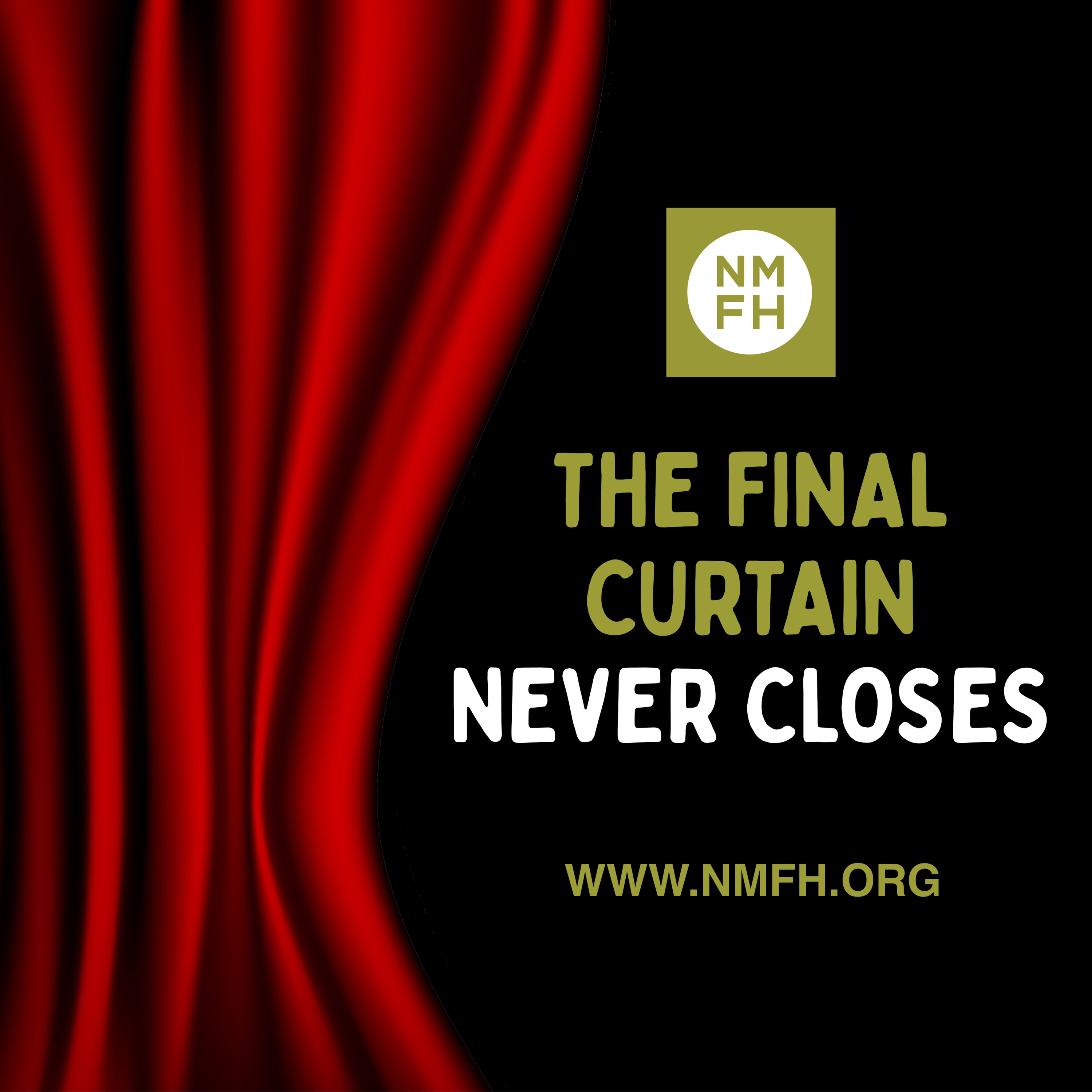
The Final Curtain Never Closes
- Format:
- Podcast
- New episodes:
- Every two weeks
- Typical length:
- about 40 minutes
- Latest episode:
About this show
The National Museum of Funeral History presents The Final Curtain Never Closes, a podcast that tells the stories about the people behind our final rite of passage.
This series is part of the museum's larger mission to build and maintain a love of history and enriched understanding of our industry.
Virtual tours are available 24/7, but we'd love to see you in person. Plan your visit at www.nmfh.org.
And remember, any day above ground is a good one!
Covers: funeral history, funeral service, end-of-life planning, grief and bereavement, cremation, death customs, museum exhibits, bereavement support, mourning traditions, American history
Show details and episodes come from the publisher's public feed at omnycontent.com. Last updated . Names, artwork and text belong to their publishers.
Recently on this show
Summary of recent episodes, drawn from the publisher's feed.
This podcast from the National Museum of Funeral History explores the people who work in funeral service and shape end-of-life planning. Recent episodes cover green burial, estate planning conversations, funeral industry advocacy, and the history of British mourning customs.
Cosmos
Similar by topic and creator
- bsnsHistory
Shares the topics Business, Education and History. - Bold By Choice Podcast
Shares the topics Business, Education and History. - Tasting Tequila with Brad
Shares the topics Business, Education and History.
Similar shows




Explore more
Episodes
Transforming Cremation Containers with Eco-Friendly Designs
· 40 min
What ignites the creation of a memorial service product that embodies personal stories and environmental consciousness? LifeArt's innovative cremation containers, introduced by Nikki Nordine and Brent Thorson of TerryBear, bring a new dimension to honoring loved ones with personalized, eco-friendly designs. Inspired by global trends and consumer demands for sustainability and personalization, these containers offer families a dignified send-off that transcends the conventional cardboard box. This unique product allows for an aesthetic that beautifully encapsulates a life well-lived. Key Takeaways 1. The company TerryBear was founded by a man named Terry, who initially started by selling plush teddy bears. Over time, the business pivoted to importing brass ware, which led to the development of pet urns after discovering a specific use case by a client. TerryBear is now a major urn and memorial item distributor. 2. The industry has evolved from offering limited options like bronze and hardwood urns to a broad range of materials, including brass and eco-friendly options. This evolution reflects a shift towards meeting consumer demand for personalization and eco-conscious products. 3. LifeArt is a cremation container product that combines eco-friendliness with personalization, using designs that reflect individuals' lives. LifeArt aims to offer a more celebratory and fitting send-off than traditional cardboard cremation boxes. 4. Consumer preferences and internet searches have greatly influenced the trends in the funeral industry, with increasing demand for personalized and environmentally friendly options. Companies like TerryBear are responding by developing products that meet these contemporary needs. 5. The future of the funeral industry is leaning towards complete personalization, allowing families to create cremation containers that fully capture the life story of their loved ones. This concept emphasizes the importance of choice and individual expression within funeral practices. Timestamped Overview 00:00 TerryBear's Brass Trade Ventures 06:04 Unexpected Career in Cremation Industry 07:27 Eco-Friendly Funeral Trends Rising 09:52 Internet Transforms Funeral Planning 15:10 Cremation Choices: Ash Variance Explained 18:39 Personalizing Funeral Options 22:28 Ensuring Informed Family Choices 25:16 Regret and Passion for Knowledge 26:36 Thumbprint Jewelry in Funerals 30:46 "Personalized Cremation Containers" 33:16 Digital Memorial Customization 38:42 "Understanding Cemetery Rules for Life Art" Subscribe to The Final Curtain Never Closes on Apple (https://podcasts.apple.com/us/podcast/the-final-curtain-never-closes/id1664936967), Spotify (https://open.spotify.com/show/4x8VZuVdq5UQtnrY2b1IJS), or wherever you get your podcasts (https://omny.fm/shows/thefinalcurtainnevercloses). Plan your visit (https://nmfh.org/the-museum/) to the museum today! See omnystudio.com/listener (https://omnystudio.com/listener) for privacy information.
Not rated yetThe Most Famous Burial of All-Time
· 58 min
Barrie Schwortz and Rudy Dichtl have spent the greater part of the past few decades researching and authenticating the Shroud of Turin. They join museum CEO and curator Genevieve Keeney-Vazquez to discuss the many things involved with studying the shroud which has captivated millions of people from all over the world. During this episode, you'll hear how Rudy and Barrie ended up on this project, where it led them, and the challenges they've faced along the way. Learn more about the Shroud of Turin on Barrie's website, Shroud.com (https://www.shroud.com/78exam.htm). Subscribe to The Final Curtain Never Closes on Apple (https://podcasts.apple.com/us/podcast/the-final-curtain-never-closes/id1664936967), Spotify (https://open.spotify.com/show/4x8VZuVdq5UQtnrY2b1IJS), or wherever you get your podcasts (https://omny.fm/shows/thefinalcurtainnevercloses). Plan your visit (https://nmfh.org/the-museum/) to the museum today! See omnystudio.com/listener (https://omnystudio.com/listener) for privacy information.
Not rated yetModern Technology Meets Ancient Artifact: The Shroud of Turin
· 53 min
Why does the Shroud of Turin continue to captivate both scientific interest and spiritual devotion? Nora Creech's lifetime passion culminated in her collaboration with Genevieve Keeney Vasquez to curate an exhibit at the National Museum of Funeral History. With her rich background in Shroud Studies, Creech seeks to elucidate its mysteries and inspire deeper faith exploration. The exhibit showcases a certified copy of the Shroud, inviting visitors to engage with its profound history. Key Takeaways 1. Nora Creech has a profound educational journey and lifelong interest in the Shroud of Turin, which began as a teenager. She obtained a Post Baccalaureate certificate in Shroud Studies from the Regina Apostolorum in Rome, indicating a strong academic foundation in this subject. 2. The Shroud of Turin is significant because it's a burial cloth with a mysterious image of a man believed by many to be Jesus Christ. Its uniqueness and the scientific questions it poses invite ongoing research and exploration, with recent studies utilizing advanced technologies like AI. 3. The history of the Shroud is marked by miracles and survival through events like fires. It has traveled across regions and is now housed in Turin. Historical and modern technologies continue to contribute to understanding its preservation and historical authenticity. 4. Othonia plays a crucial role in educating people about the Shroud through exhibits and research conferences. This organization was foundational in bringing the Shroud exhibit to the National Museum of Funeral History, indicating its influence in disseminating knowledge about the Shroud globally. 5. There is renewed interest in the Shroud due to recent research, including peer-reviewed articles and exhibits. The collaboration between the museum and scholars has resulted in a well-curated exhibit, reflecting a blend of historical reverence and cutting-edge research. Timestamped Overview 00:00 Shroud of Turin Educational Project 06:31 "Discovery of Burial Cloths" 07:12 Mystery of the Linen Image 12:19 "Sudarium in Jesus' Burial" 15:00 Possible Burial Linens and Their Uses 17:46 "Shroud Exhibit Reveals Hidden Image" 22:31 AI Recreates Shroud of Turin 27:30 Shroud's Legacy: Savoy Ownership 30:49 1988 Shroud Radiocarbon Dating Controversy 34:56 Linen Fragility and Shroud Repairs 37:52 Leadership Transition at Athonia Association 40:43 Custom Exhibit Design Choice 43:26 Turin Shroud Replicas Distribution Process 48:23 Reviving the Shroud: Modern Research 52:01 Mission: Sharing Jesus Through Shroud Subscribe to The Final Curtain Never Closes on Apple (https://podcasts.apple.com/us/podcast/the-final-curtain-never-closes/id1664936967), Spotify (https://open.spotify.com/show/4x8VZuVdq5UQtnrY2b1IJS), or wherever you get your podcasts (https://omny.fm/shows/thefinalcurtainnevercloses). Plan your visit (https://nmfh.org/the-museum/) to the museum today! See omnystudio.com/listener (https://omnystudio.com/listener) for privacy information.
Not rated yetEducating the Next Generation of Funeral Directors
· 48 min
What does it take to become a dedicated funeral director? Cody Lopasky, president of Commonwealth Institute of Funeral Services, delves into the education, hands-on labs, and apprenticeship that shape a skilled death care professional. With changing industry needs, students now require both academic rigor and a compassionate calling. Despite challenges, this profession is deeply rewarding. Key Takeaways 1. The profession of funeral directing is versatile. Individuals can choose to become funeral directors, embalmers, or educators within the field. This highlights a career path that caters to different skill sets and interests, beyond just working in a funeral home. 2. The curriculum at Commonwealth Institute has evolved to include more hands-on labs like funeral directing, embalming, and restorative arts, reflecting changes in accreditation requirements. These changes provide students with practical experiences that mirror real-world scenarios. 3. There are multiple types of funeral and memorial services, such as liturgical, non-liturgical, and military. Additionally, disposition methods have diversified beyond traditional burial and cremation to include newer techniques like alkaline hydrolysis, subject to state approval. 4. Becoming a funeral director is often viewed as a calling, with individuals drawn from diverse backgrounds and motivations. Commonwealth Institute offers both on-campus and online courses, providing flexible educational pathways for those interested in entering the field. 5. The profession involves emotional and technical challenges, such as working with deceased bodies and supporting grieving families. The rigor of mortuary science education prepares professionals to handle these complexities, emphasizing the importance of their role in aiding families during difficult times. Timestamped Overview 00:00 Exploring Careers in Funeral Services 05:50 Funeral Home Training Program 09:22 Texas Disposition Options Explained 13:30 Evolving Hands-On Learning in Education 14:22 Innovative Funeral Industry Training 19:58 Calling to Care for the Dead 23:44 Exploring Careers in Funeral Services 27:08 Funeral Director Licensure Requirements 28:27 Reluctance in Funeral Home Careers 33:13 "Paid Licensing Path for Funeral Work" 37:40 Preset Curriculum at Commonwealth 39:28 On-Site Certification for Off-Site Students 43:53 Embalming: One Chance, Lasting Impact Plan your visit to the museum today at nmfh.org (https://nmfh.org) and take a journey through over 30,000 square feet of fascinating history. Subscribe to The Final Curtain Never Closes on Apple Podcasts (https://podcasts.apple.com/us/podcast/the-final-curtain-never-closes/id1664936967), Spotify (https://open.spotify.com/show/4x8VZuVdq5UQtnrY2b1IJS?si=b1c6ae4a9c744e0a), or wherever you get your podcasts (https://www.nmfh.org/haunting-stories-of-the-museums-hometown/). See omnystudio.com/listener (https://omnystudio.com/listener) for privacy information.
Not rated yetThe Evolution of Funeral Services: From Cemeteries to Comprehensive Care
· 39 min
How does the ICCFA adapt to ever-evolving consumer needs in the funeral profession? Nadira Baddeliyanage, executive director of ICCFA, discusses the association's commitment to adaptive change and support for industry members. Founded in 1887, ICCFA has expanded from cemeteries to include funeral homes and cremation to remain relevant. By networking, legislative advocacy, and educational events like Dead Talks, ICCFA ensures the profession serves families and communities effectively. Key Takeaways 1. Nadira explains the history and evolution of the ICCFA, emphasizing its role as an umbrella organization that serves cemeteries, funeral homes, and other related professions. The key takeaway is its ongoing relevance and adaptability to industry changes and consumer needs. 2. The importance of associations like ICCFA for networking and learning is highlighted, particularly for professionals new to the industry. Associations provide opportunities to share best practices, build relationships, and prevent professional burnout. 3. The pandemic posed significant challenges for funeral directors, and ICCFA played a crucial role in navigating those challenges. The association helped facilitate essential resources and support for last responders during a critical time. 4. ICCFA’s involvement in legislative matters is crucial for the funeral industry. The association works to address federal and state regulations, ensuring they are applicable and beneficial to industry needs. This advocacy helps maintain professional standards and protect both providers and consumers. Timestamped Overview 00:00 Exploring ICCFA's Industry Role 05:07 Historic Cemeterians' Society Origins 09:27 Adapting in Death Care Industry 13:23 Passion Meets Understanding 16:41 Funeral Directors: Community Servants 24/7 20:22 Overwhelmed Food Supply Task Force 22:09 Vaccination Support and International Challenges 24:30 "Understanding Last Responders' Role" 29:54 "Tackling Hidden Fees in Regulations" 31:54 Cremation Hidden Fees Uncovered 36:15 ICCFA Convention Reimagined 39:51 ICCFA: Embracing New Opportunities 41:22 Gratitude for Mentors and Team Learn more about ICCFA HERE (https://iccfa.com/blog/fresh-energy-and-big-changes-an-inside-look-at-the-2025-iccfa-experience/). Plan your visit to the museum today at nmfh.org (https://nmfh.org) and take a journey through over 30,000 square feet of fascinating history. Subscribe to The Final Curtain Never Closes on Apple Podcasts (https://podcasts.apple.com/us/podcast/the-final-curtain-never-closes/id1664936967), Spotify (https://open.spotify.com/show/4x8VZuVdq5UQtnrY2b1IJS?si=b1c6ae4a9c744e0a), or wherever you get your podcasts (https://www.nmfh.org/haunting-stories-of-the-museums-hometown/). See omnystudio.com/listener (https://omnystudio.com/listener) for privacy information.
Not rated yetA History of Funeral Traditions for U.S. Presidents
· 36 min
In this conversation, Genevieve Keeney-Vazquez interviews Bob Boetticher Sr., a funeral director with 59 years of experience, about his career and the creation of the Presidential Exhibit at the National Museum of Funeral History. They discuss the significance of presidential memorabilia and artifacts, the role of the Military District of Washington in state funerals, and the planning and execution of state funerals. They also explore the traditions and rituals involved in state funerals, including lying in state, the caisson, and the riderless horse. Key Takeaways 1.) Bob Boetticher Sr. has had a long and distinguished career as a funeral director, including serving as the funeral director for some of the nation's presidents. 2.)The National Museum of Funeral History has a Presidential Exhibit that showcases the rituals and traditions involved in burying a U.S. president. 3.) State funerals involve various components, including lying in state, the caisson, the riderless horse, and military honors such as the 21-gun cannon salute and the missing man formation. 4.) Presidential libraries often serve as the final resting place for former presidents, providing an educational opportunity for visitors. Timestamped Overview 00:00 Introduction 00:45 Bob Bederker Sr.'s Career as a Funeral Director 03:09 Creation of the Presidential Exhibit 04:56 Presidential Memorabilia and Artifacts 08:00 Significant Artifacts in the Presidential Exhibit 09:27 Military District of Washington's Role in State Funerals 10:22 Planning and Execution of State Funerals 13:12 State Funerals and Presidential Libraries 14:14 Lying in State and Lying in Repose 17:07 Caisson and Riderless Horse in State Funerals 18:37 Presidential Funeral Trains 21:31 Lying in State in the US Capitol 22:55 21 Gun Cannon Salute and Missing Man Formation 25:17 Taps and Its Significance 26:41 Family's Role in Planning a State Funeral 27:37 Favorite Exhibit in the Presidential Section 28:06 History of Presidential Funeral Trains 30:31 George Bush's Funeral Train 31:47 Significance of 41-41 and the Engineer June Noble 35:04 Invitation to Visit the National Museum of Funeral History 36:18 Conclusion Plan your visit to the museum today at nmfh.org (https://nmfh.org) and take a journey through over 30,000 square feet of fascinating history. Subscribe to The Final Curtain Never Closes on Apple Podcasts (https://podcasts.apple.com/us/podcast/the-final-curtain-never-closes/id1664936967), Spotify (https://open.spotify.com/show/4x8VZuVdq5UQtnrY2b1IJS?si=b1c6ae4a9c744e0a), or wherever you get your podcasts (https://www.nmfh.org/haunting-stories-of-the-museums-hometown/). See omnystudio.com/listener (https://omnystudio.com/listener) for privacy information.
Not rated yetThe Role of Crematoriums in Metal Recycling and Conservation
· 42 min
What makes recycling metals from cremations crucial for both the environment and society? Mike McKenna, director of Recycling and Development with Core Scientific, discusses the importance of a circular economy for repurposing metals from cremations. This process not only conserves precious resources but also supports charities with the recycled materials' value. Through such innovative practices, funeral professionals are now contributing significantly to sustainability and environmental conservation. Key Takeaways - Circular Economy and Recycling: - Takeaway: Recycling plays a crucial role in conserving resources by keeping materials in a circular economy. This means metals from implants and other sources are reused, reducing the need for new raw material extraction. This process conserves air, land, and water resources (Mike McKenna [00:01:34], [00:19:40]). - Cremation and Metal Implants: - Takeaway: The process of cremation includes the retrieval and recycling of metal implants such as hips, knees, and dental implants. These metals are then repurposed into various everyday products, emphasizing the importance of recycling even in death (Genevieve [00:05:57], Mike McKenna [00:17:43]). - Professionalizing Recycling in Funeral Industry: - Takeaway: Core Scientific works with crematoriums to implement structured recycling programs, training operators, and handling logistics to ensure metals are collected and reused responsibly. This professionalization signals a shift towards more ethical practices in the funeral industry (Mike McKenna [00:04:55]). - Historical Context of Medical Implants: - Takeaway: Medical implants have a rich history dating back thousands of years, evolving from materials like wood, ivory, and seashells to modern-day titanium and cobalt. This evolution highlights humanity’s long-standing efforts to improve the quality of life through medical advancements (Mike McKenna [00:20:32], [00:22:26]). - Environmental and Ethical Implications: - Takeaway: Recycling metals from cremation not only conserves natural resources but also aligns with ethical responsibilities. The value from recycled metals is often donated to charities, further extending the positive impact on society and perpetuating a cycle of giving (Mike McKenna [00:34:59], Genevieve [00:36:19]). Timestamped Overview 00:00 Core Scientific's Origins and Development 05:57 Cremation: Separating Implant Metals 09:54 Crematorium Metal Removal Processors 12:20 Cremation Remains: Protocol and Personal Requests 16:26 Implant Recycling & Circular Economy 20:34 Exploring Funeral History & Prosthetics 22:53 Early History of Surgical Implants 24:59 Cremation Rise and Implant Growth 28:06 Localized Adoption in Select States 32:12 Cremation's Metal Dilemma 37:09 Ethical Funeral Metals Recycling 40:04 Crematorium Operators' Dedication Highlighted Plan your visit to the museum today at nmfh.org (https://nmfh.org) and take a journey through over 30,000 square feet of fascinating history. Subscribe to The Final Curtain Never Closes on Apple Podcasts (https://podcasts.apple.com/us/podcast/the-final-curtain-never-closes/id1664936967), Spotify (https://open.spotify.com/show/4x8VZuVdq5UQtnrY2b1IJS?si=b1c6ae4a9c744e0a), or wherever you get your podcasts (https://www.nmfh.org/haunting-stories-of-the-museums-hometown/). See omnystudio.com/listener (https://omnystudio.com/listener) for privacy information.
Not rated yetThe Art of Caring for the Departed: Insights from Hayley Campbell
· 48 min
Hayley Campbell writes for WIRED, Buzzfeed, The Guardian, and VICE, among many others. She’s written a book about Neil Gaiman and her most recent book All the Living and the Dead tackles something many of us in the West struggle with: death. During this conversation, museum president and CEO Genevieve Keeney-Vazquez and Hayley discuss the many facets of caring for the dead. And helping the living accept mortality Learn more about Hayley's work and buy All the Living and the Dead at hayleycampbell.com (https://www.hayleycampbell.com). Plan your visit to the museum today at nmfh.org (https://nmfh.org) and take a journey through over 30,000 square feet of fascinating history. Subscribe to The Final Curtain Never Closes on Apple Podcasts (https://podcasts.apple.com/us/podcast/the-final-curtain-never-closes/id1664936967), Spotify (https://open.spotify.com/show/4x8VZuVdq5UQtnrY2b1IJS?si=b1c6ae4a9c744e0a), or wherever you get your podcasts (https://www.nmfh.org/haunting-stories-of-the-museums-hometown/). See omnystudio.com/listener (https://omnystudio.com/listener) for privacy information.
Not rated yetBreaking the Silence: A Conversation on Death and Crime
· 37 min
Rania Mankarious, the CEO of Crime Stoppers in Houston, joins the podcast to discuss crime prevention and the significance of preparedness in crisis situations. Mankarious explains that even in the midst of panic, remaining calm and having a plan can save lives. She shares a personal experience of navigating a mall evacuation with her children, emphasizing the importance of pre-established exit knowledge. Genevieve stresses awareness training's value, drawing parallels to organized safety briefings on airplanes. The conversation highlights how Crime Stoppers educates on digital safety, especially for children, and offers resources at crime-stoppers.org. Mankarious also touches on the need for open discussions about death and safety. Additionally, the talk delves into the extensive work Crime Stoppers does beyond anonymous tips, including legislative advocacy and long-term support for crime victims. Key Takeaways 1. The importance of deterrents in crime prevention cannot be overstated. Utilizing programs like Crime Stoppers that actively engage in awareness and educational outreach plays a crucial role in reducing crime rates. 2. Being prepared and maintaining calm in emergencies is essential. Both cognitive and practical training, such as knowing exit routes and safety protocols, can significantly reduce chaos and ensure safety in crisis situations. 3. Providing comprehensive support to victims of crime, from immediate post-incident intervention to long-term emotional and legislative advocacy, is crucial in helping them recover and rebuild their lives. 4. Addressing broader societal issues such as food deserts and lack of after-school care is imperative for a holistic approach to crime prevention, as these factors contribute to the environment that fosters criminal behavior. 5. Open discussions about death and personal safety, though often uncomfortable, are necessary for preparedness. Knowing a loved one's wishes can provide emotional relief and clarity, ensuring that their desires are respected and reducing the potential for missteps in emergencies. Timestamped Overview 00:00 Guest from Crime Stoppers featured in podcast. 03:52 School tragedies irrevocably alter culture and lives. 09:07 Families need support, legal changes for recovery. 10:06 Family faces life sentence without their daughter. 13:49 Appreciation for Crime Stoppers' behind-the-scenes work. 16:41 Crime prevention through education and proactive work. 22:16 Finding functionality and positivity in new normal. 24:22 Airplane crash instructions differ from real reactions. 27:46 Training to enhance situational awareness for safety. 31:34 Funerals serve the living, not the deceased. 33:19 Address systemic failures; promote holistic societal solutions. Learn more about Crime Stoppers of Houston HERE (https://crime-stoppers.org). Plan your visit to the museum today at nmfh.org (https://nmfh.org) and take a journey through over 30,000 square feet of fascinating history. Subscribe to The Final Curtain Never Closes on Apple Podcasts (https://podcasts.apple.com/us/podcast/the-final-curtain-never-closes/id1664936967), Spotify (https://open.spotify.com/show/4x8VZuVdq5UQtnrY2b1IJS?si=b1c6ae4a9c744e0a), or wherever you get your podcasts (https://www.nmfh.org/haunting-stories-of-the-museums-hometown/). See omnystudio.com/listener (https://omnystudio.com/listener) for privacy information.
Not rated yetHonoring Our Fallen Veterans This Holiday Season
· 17 min
In this episode Genevieve Keeney-Vazquez hosts Karen Worcester, Executive Director of Wreaths Across America (WAA). They delve into honoring fallen veterans, exploring WAA's inception, and its diverse initiatives, including educational programs. The conversation emphasizes the significance of commemorating our heroes and the profound impact of WAA's efforts. For more on this cause, visit Wreaths Across America's website (http://wreathsacrossamerica.org/), engaging in honoring and learning about our nation's heroes. Subscribe to The Final Curtain Never Closes on Apple (https://podcasts.apple.com/us/podcast/the-final-curtain-never-closes/id1664936967), Spotify (https://open.spotify.com/show/4x8VZuVdq5UQtnrY2b1IJS), or wherever you get your podcasts (https://omny.fm/shows/thefinalcurtainnevercloses). Plan your visit (https://nmfh.org/the-museum/) to the museum today! See omnystudio.com/listener (https://omnystudio.com/listener) for privacy information.
Not rated yet