

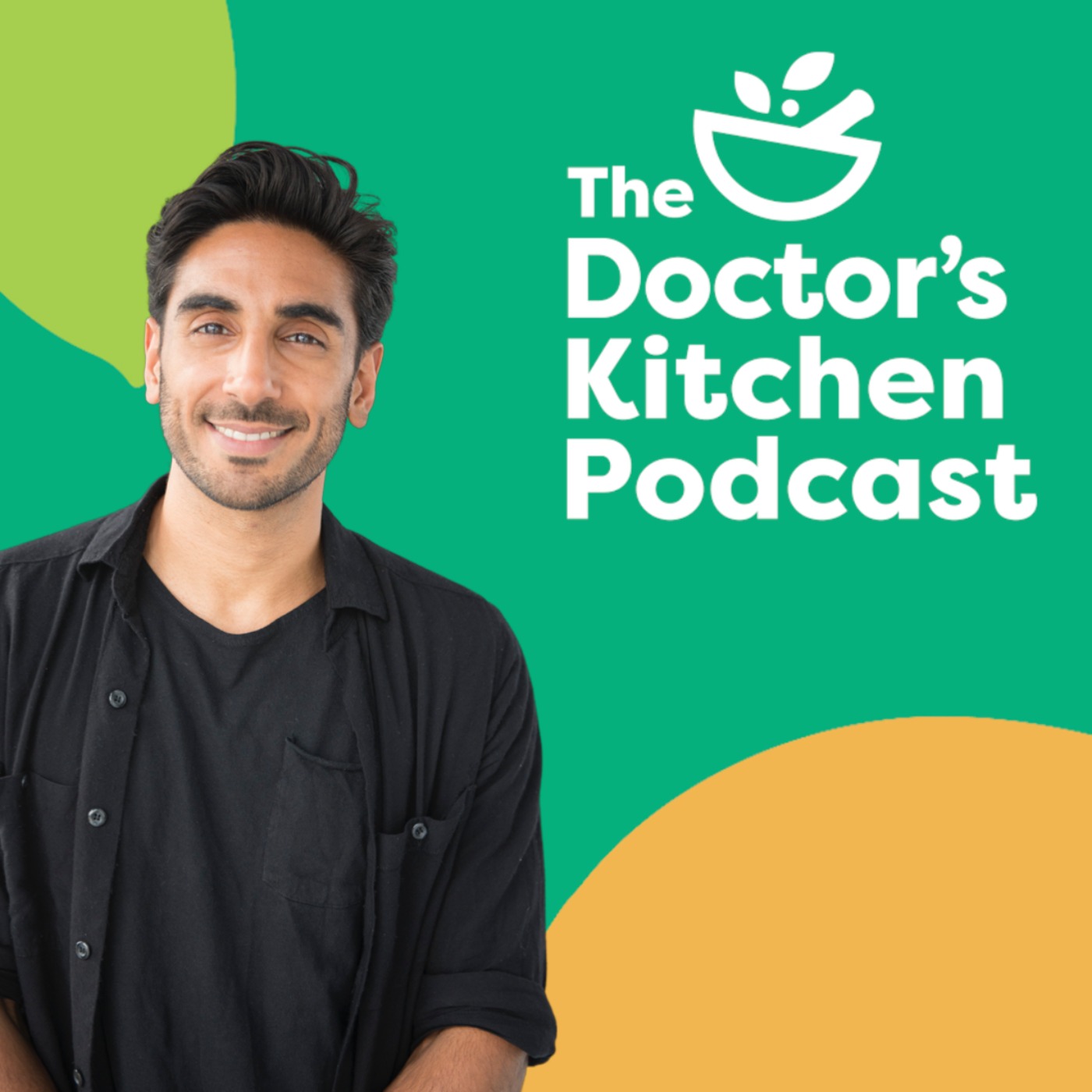
The Doctor's Kitchen Podcast
Dr Rupy AujlaAudio
- Format:
- Podcast
- New episodes:
- Every two weeks
- Typical length:
- about 1 hour 20 minutes
- Latest episode:
About this show
The Doctor's Kitchen is the show about food, medicine, lifestyle and how to improve your health today.
Join Dr Rupy and his expert guests as they explore the multiple ways in which diet and lifestyle can help you achieve your healthiest and most fulfilling life.
Covering a broad range of subjects such as Nutritional medicine, Mental wellbeing and Mindset, you are sure to learn actionable tips and principles to lead your best life.
Join the online community at www.thedoctorskitchen.com (http://www.thedoctorskitchen.com/) to learn more
Your Feedback Matters - we’d love to hear from you! Take our quick survey (http://bit.ly/thedoctorskitchenpodcast-survey) to share your thoughts about our show - and help shape future episodes!
Hosted on Acast. See acast.com/privacy (https://acast.com/privacy) for more information.
Covers: nutritional medicine, healthy eating, personal health, gut health, diet and inflammation, healthy ageing, mental wellbeing, weight management
Show details and episodes come from the publisher's public feed at feeds.acast.com. Last updated . Names, artwork and text belong to their publishers.
Recently on this show
Summary of recent episodes, drawn from the publisher's feed.
The Doctor's Kitchen is a podcast where Dr Rupy Aujla and guest experts discuss how food, lifestyle and medicine can support better health. Recent episodes cover healthy eating for energy and mood, lowering inflammation, calorie myths and the link between happiness and everyday habits.
Cosmos
Similar in subject
- Nutrition Diva
Both cover: weight management, healthy eating, gut health - Sound Bites A Nutrition Podcast
Both cover: weight management, gut health - Real WW Talk
Both cover: mental wellbeing, healthy eating
Similar shows





Explore more
Episodes
5 healthy eating reflexes I wish everyone had for better energy, mood and gut health | Dr Rupy Aujla
· 42 min
🚀 Put food-as-medicine into practice. Get 50% off: https://tdk.link/bf26-podcast My mission with this podcast and everything we create at The Doctor’s Kitchen is to help you feel more in control of your health through food. After 15 years as a doctor and hundreds of conversations with experts, I’ve developed 5 healthy eating reflexes that I use almost every day and share with friends and family. They help me make healthier choices wherever I am. And over time, they can make a real difference to your energy, mood, gut health and long-term health. That’s exactly why I created The Doctor’s Kitchen app: to put all of this in one place, in recipes you’ll actually want to cook. We sweat the details, from protein and fibre to the variety of plants in every recipe, so you can focus on making delicious food and enjoying it. In this episode: - How to read food labels and see past the health claims - Easy ways to get more protein into your breakfast - How I get more greens into my meals, even when eating out - The plant foods I try to eat every day for gut health - How to get more polyphenols from everyday foods and drinks You don’t need to change everything at once. Pick one and start there! More from us 🎬 Watch the podcast on YouTube here (https://tdk.link/pod_sn_yt) 📱 Download The Doctor’s Kitchen app (https://tdk.link/pod_sn_app) 🌐 View full show notes, including guest details, on our website (https://tdk.link/pod_sn_web) ☕️ Try Exhale Coffee here (https://exhalecoffee.com/pages/rupy) 🥗 Join the newsletter and receive a 7 day meal plan (https://tdk.link/pod_sn_mplan) 📷 Follow on Instagram (https://tdk.link/pod_sn_ig) Hosted on Acast. See acast.com/privacy (https://acast.com/privacy) for more information.
Not rated yetHow to improve your mood, energy and brain health from breakfast to dinner | Professor Tim Spector
· 1 hr 18 min
Every time you cook a meal, you could be shaping your mood, energy and how clearly you think, as well as supporting your long-term brain health. In this episode, we explore the links between diet, gut microbes, inflammation and brain health with Professor Tim Spector. And we get really foodie, talking through a day of eating, from his go-to breakfast to easy midweek dinners. Professor Spector is Professor of Genetic Epidemiology at King’s College London, a pioneering gut microbiome researcher, scientific co-founder of ZOE and bestselling author. His new cookbook, Good Mood Food, explores how what we eat shapes how we feel, think and age. We cover: - How inflammation and the gut–brain connection may influence your mood - Blood sugar, brain fog and the debate around glucose spikes - Tim’s yoghurt and kefir breakfast bowl, with berries, nuts and seeds - What to look for when buying kefir - Easy lunches - Oily fish, omega-3s and ways to use sardines, anchovies and mackerel - Adding more plants and fermented foods to your everyday dinners - A two-week breakfast challenge and how to track how you feel 📌 Turn these ideas into delicious meals with The Doctor’s Kitchen app (https://tdk.link/pod_sn_app). More from us 🎬 Watch the podcast on YouTube here (https://tdk.link/pod_sn_yt) 📱 Download The Doctor’s Kitchen app (https://tdk.link/pod_sn_app) 🌐 View full show notes, including guest details, on our website (https://tdk.link/pod_sn_web) ☕️ Try Exhale Coffee here (https://exhalecoffee.com/pages/rupy) 🥗 Join the newsletter and receive a 7 day meal plan (https://tdk.link/pod_sn_mplan) 📷 Follow on Instagram (https://tdk.link/pod_sn_ig) Hosted on Acast. See acast.com/privacy (https://acast.com/privacy) for more information.
Not rated yet4 food groups to lower inflammation, support your immune system and help you age well | Dr Jeffrey Bland
· 1 hr 24 min
Every time you sit down to eat, you’re giving your body information. Compounds in your food act as signals that influence your gut microbes, immune response and even the expression of your genes. That’s the idea we explore today with biochemist Dr Jeffrey Bland, widely known as the father of functional medicine. He co-founded the Institute for Functional Medicine and wrote The Disease Delusion, one of my all-time favourite books! We bring the research back to your kitchen with four food priorities for gut health, immune resilience and healthy ageing: polyphenols, fibre, healthy fats and fermented foods. Plus, why we all need to eat more bitter foods! In this episode: - How food can influence gene expression - The link between immune health, metabolism and ageing - Polyphenol-rich foods and why variety matters - Fibre and fermented foods for gut health - Omega-3s, olive oil and inflammation - Fish versus fish oil supplements - Bitter foods and how they may help regulate appetite If you want to put food as medicine on your plate, try The Doctor’s Kitchen app for free (https://tdk.link/pod_sn_app). Every recipe has these principles baked in. Dr Jeffrey Bland’s new book ’The Nourished Gene’ releases on April 27, 2027 and is available for preorder now at https://jeffreybland.com/ More to watch, cook and try 👇 🎬 Watch the podcast on YouTube here (https://tdk.link/pod_sn_yt) 📱 Download The Doctor’s Kitchen app (https://tdk.link/pod_sn_app) 🌐 View full show notes, including guest details, on our website (https://tdk.link/pod_sn_web) ☕️ Try Exhale Coffee here (https://exhalecoffee.com/pages/rupy) 🥗 Join the newsletter and receive a 7 day meal plan (https://tdk.link/pod_sn_mplan) 📷 Follow on Instagram (https://tdk.link/pod_sn_ig) Hosted on Acast. See acast.com/privacy (https://acast.com/privacy) for more information.
Not rated yetHow to lower inflammation from morning to evening | Dr Jenna Macciochi
· 1 hr 15 min
👉 If you’d like help eating a more anti-inflammatory diet, try The Doctor’s Kitchen app free for 7 days (https://tdk.link/pod_sn_app). Inflammation has become a huge wellness buzzword, but it isn’t always bad. It’s an essential part of how your immune system protects and repairs your body. The problem is long-term, unwanted inflammation. It’s linked to heart disease, type 2 diabetes and other chronic health problems. And it may also play a role in how we feel day to day, including our energy, gut health, skin and more. The good news is that simple changes to what you eat and how you live can help keep inflammation well regulated. Today, I’m joined by Dr Jenna Macciochi, an immunologist, author and inflammation expert with over 20 years of experience. We walk through: - What inflammation actually is and why everyone is talking about it - The biggest everyday drivers of inflammation - What to eat to support a healthy inflammatory response - How light, movement, stress and sleep affect your immune system - Simple habits to build into your day, from morning to evening 🎬 Watch the podcast on YouTube here (https://tdk.link/pod_sn_yt) 📱 Download The Doctor’s Kitchen app (https://tdk.link/pod_sn_app) 🌐 View full show notes, including guest details, on our website (https://tdk.link/pod_sn_web) ☕️ Try Exhale Coffee here (https://exhalecoffee.com/pages/rupy) 🥗 Join the newsletter and receive a 7 day meal plan (https://tdk.link/pod_sn_mplan) 📷 Follow on Instagram (https://tdk.link/pod_sn_ig) Hosted on Acast. See acast.com/privacy (https://acast.com/privacy) for more information.
Not rated yetProfessor shares 8 foods to lower inflammation and help you age slower | Professor Robert Thomas
· 1 hr 8 min
If you want to stay healthier for longer, one of the best things you can do is lower chronic inflammation. The great thing is, food is one of the most powerful tools we have. So I sat down with Professor Rob Thomas, consultant oncologist at Addenbrooke's and UCLH, Professor of Sports and Nutritional Science, and one of the UK's leading experts in healthy ageing, to talk about what makes the biggest difference. We cover: - The best foods to lower chronic inflammation - The link between inflammation and ageing - How to reduce your biological age - Why grip strength predicts how well you'll age There are so many practical takeaways in this one. I hope it inspires you to add a few more anti-inflammatory foods to your plate this week! – One of the most important ways we can impact our health, feel stronger and more energetic everyday and even slow ageing is by lowering inflammation. And the good news is, that what you choose to put on your plate is a powerful lever to reduce it, alongside improving sleep, moving more and stressing less. So today I'm joined by Professor Robert Thomas, NHS Consultant Oncologist at Addenbrooke's and Bedford (https://www.bedfordshirehospitals.nhs.uk/clinical-staff/professor-robert-thomas/) Hospitals, and Head of Integrative Oncology at The Royal London Hospital for Integrative Medicine (https://www.uclh.nhs.uk/our-services/our-hospitals/royal-london-hospital-integrated-medicine), where he advises lifestyle, complementary and nutritional strategies to improve patient outcomes. We’re going to discuss the 8 key foods he believes we should be eating everyday to optimise inflammation to help us live longer, healthier lives and protect us from diseases of ageing including cancer and heart disease. Professor shares 8 longevity foods to eat daily to protect against ageing OR Eat these 8 foods daily to reduce inflammation and age slower SEE SUGGESTED DISCUSSION POINTS FROM ROB BELOW. 🎬 Watch the podcast on YouTube here (https://tdk.link/pod_sn_yt) 📱 Download The Doctor’s Kitchen app (https://tdk.link/pod_sn_app) 🌐 View full show notes, including guest details, on our website (https://tdk.link/pod_sn_web) ☕️ Try Exhale Coffee here (https://exhalecoffee.com/pages/rupy) 🥗 Join the newsletter and receive a 7 day meal plan (https://tdk.link/pod_sn_mplan) 📷 Follow on Instagram (https://tdk.link/pod_sn_ig) Hosted on Acast. See acast.com/privacy (https://acast.com/privacy) for more information.
Not rated yetObesity professor explains 5 reasons why calories don't count and what to focus on instead | Professor Giles Yeo
· 1 hr 20 min
Next time you look at the calories on the back of a packet or the nutritional breakdown of a recipe, remember that number doesn't tell you the whole story. It says nothing about the nutrients, the quality of the food, how satisfying it'll be, or even how many calories your body will actually absorb. To unpack it all, I'm joined by Professor Giles Yeo, Professor of Molecular Neuroendocrinology at the University of Cambridge, MBE, and author of the brilliant book Why Calories Don't Count. We cover: - 5 reasons calorie counting matters less than we think - Why "low-cal" doesn't always mean healthy - Why we don't absorb every calorie we eat - Why the calories in nuts, avocados and seeds aren't the same as the calories in a ultra-processed foods, even when the numbers match - Is fruit juice really healthy? - 3 strategies to maintain a healthy weight I hope this changes the way you think about calories and gives you a few practical ideas you can start using straight away. If you know someone who's always checking the calorie label before anything else, send this episode their way. As always, thanks for listening! Dr Rupy x More from Professor Giles Yeo https://www.wolfson.cam.ac.uk/people/giles-yeo https://x.com/GilesYeo https://www.instagram.com/gilesyeo/?hl=en More from us 🎬 Watch the podcast on YouTube here (https://tdk.link/pod_sn_yt) 📱 Download The Doctor’s Kitchen app (https://tdk.link/pod_sn_app) 🌐 View full show notes, including guest details, on our website (https://tdk.link/pod_sn_web) ☕️ Try Exhale Coffee here (https://exhalecoffee.com/pages/rupy) 🥗 Join the newsletter and receive a 7 day meal plan (https://tdk.link/pod_sn_mplan) 📷 Follow on Instagram (https://tdk.link/pod_sn_ig) Hosted on Acast. See acast.com/privacy (https://acast.com/privacy) for more information.
Not rated yetThe 3 macronutrients of happiness and how to build them into your life | Professor Arthur Brooks
· 1 hr 0 min
How do you become happier? Professor Arthur Brooks describes 3 “macronutrients” for a happier life: enjoyment, satisfaction and meaning. Rather than chasing positive feelings, the idea is to build more of each into our everyday lives. We get into some really practical ways to do this, including: • Why being bored is good for your brain • The three times to put your phone away each day • How to make your downtime more meaningful • How to find more meaning through love, awe and spirituality 👤 About today’s guest: Arthur Brooks is a professor at Vanderbilt University, a senior fellow at Harvard Business School, a New York Times bestselling author and a leading researcher on happiness and meaning. His latest book, The Meaning of Your Life (https://d2hjkw04.na1.hs-sales-engage.com/Ctc/W4+23284/d2HjKw04/Jl22-6qcW7lCdLW6lZ3lVW5RClD51xpqvxVGsPxy2d76PvW58yl-h1-kwLxVQrGkS3K_TzSW5PS0sD5kzCVcW7PJy5f6wyWxnW7kTPK78MmNXcW128kJb3Fqw7RM_Kf2162SFbW2QrqzB67ff0HW6cstn87vMSNxVwXVn-7dHB3KW17CCry2LmtrvW4FVWMH4kMxt4W43pxk43bKxsKW4Ljmdr2CfG89VHwBqz31r2KRVSD00-1YxdpHW4yK9yg2Q9yP1W3zQllH6LBW90W6kq8Ss7cq4YgN6mtM3cp4pG0W10ldJv4WxPY_V-rcXx8XKV3mf8jr5wY04), is out now. From the #1 New York Times bestselling author of From Strength to Strength, it's an account of how the modern world sets us up to fail at finding meaning, and a plan for finding what you seek. More from us 🎬 Watch the podcast on YouTube here (https://tdk.link/pod_sn_yt) 📱 Download The Doctor’s Kitchen app (https://tdk.link/pod_sn_app) 🌐 View full show notes, including guest details, on our website (https://tdk.link/pod_sn_web) ☕️ Try Exhale Coffee here (https://exhalecoffee.com/pages/rupy) 🥗 Join the newsletter and receive a 7 day meal plan (https://tdk.link/pod_sn_mplan) 📷 Follow on Instagram (https://tdk.link/pod_sn_ig) Hosted on Acast. See acast.com/privacy (https://acast.com/privacy) for more information.
Not rated yetA nutritionist’s guide to 30g of protein and over 10g of fibre in every meal | Dominique Ludwig
· 1 hr 4 min
I’ve been talking a lot about eating healthy high protein. And sometimes it feels like you have to choose a side. High protein or plant-focused. But both play really important roles for energy, appetite, muscle health, gut health and healthy ageing. My guest today actually describes them as a dynamic duo 🤝 They work best together. You want both on your plate, not one crowding out the other. Dominique Ludwig is an accredited nutritionist and registered Nutritional Therapy Practitioner with more than 30 years of clinical experience helping people improve their health, energy and relationship with food. She’s also the author of the brilliant new book ‘No-Nonsense Nutrition (https://dominiqueludwig.com/product/book/)’, which is filled with practical, realistic advice and beautiful recipes that make healthy eating feel really achievable. We cover: - Protein recommendations for every meal - Why protein becomes more important after 30 - The benefits of prioritising protein during menopause - Top protein foods and easy 10g protein top-ups - How to upgrade breakfasts, salads and pasta - Whole carbs vs refined carbs - How to lose weight without counting calories - Building balanced plates that keep you full 🎬 Watch the podcast on YouTube here (https://tdk.link/pod_sn_yt) 📱 Download The Doctor’s Kitchen app (https://tdk.link/pod_sn_app) 🌐 View full show notes, including guest details, on our website (https://tdk.link/pod_sn_web) ☕️ Try Exhale Coffee here (https://exhalecoffee.com/pages/rupy) 🥗 Join the newsletter and receive a 7 day meal plan (https://tdk.link/pod_sn_mplan) 📷 Follow on Instagram (https://tdk.link/pod_sn_ig) Hosted on Acast. See acast.com/privacy (https://acast.com/privacy) for more information.
Not rated yet4 ways your thoughts affect your metabolism, gut and longevity | Sarah Ann Macklin
· 1 hr 5 min
What if I told you that two people could eat the exact same meal, with the exact same calories, and have completely different hormonal responses because of what they believed about what they were eating? These aren't fringe findings. A growing body of evidence suggests that the way we think about our health can meaningfully impact our biology. In this episode, I'm joined by nutritionist and Sunday Times bestselling author Sarah Ann Macklin to unpack four ways our thoughts can either help or hinder our health. We explore: • How your beliefs about food can influence hormones, appetite and metabolism • Why the way you think about exercise may affect the health benefits you experience • Whether your genes are really your destiny • Why self-compassion could be one of the most powerful tools for lasting health This is a fascinating conversation about the hidden connection between mind and body, and how changing the way we think could help shape our health for the better. Hope you enjoy this one and find something practical you can apply to your own life. Dr Rupy Learn more about Sarah's work Sarah's latest book 'Healthy Shouldn't Be This Hard' (https://linktr.ee/HealthySBTH) is out now Instagram: @sarahannmacklin (https://www.instagram.com/sarahannmacklin/?hl=en) YouTube: https://www.youtube.com/@livewellbewellsarah Substack:https://sarahmacklin.substack.com/ Website: www.sarahannmacklin.com (http://www.sarahannmacklin.com) Join the Doctor’s Kitchen 🎬 Watch the podcast on YouTube here (https://tdk.link/pod_sn_yt) 📱 Download The Doctor’s Kitchen app (https://tdk.link/pod_sn_app) 🌐 View full show notes, including guest details, on our website (https://tdk.link/pod_sn_web) ☕️ Try Exhale Coffee here (https://exhalecoffee.com/pages/rupy) 🥗 Join the newsletter and receive a 7 day meal plan (https://tdk.link/pod_sn_mplan) 📷 Follow on Instagram (https://tdk.link/pod_sn_ig) Hosted on Acast. See acast.com/privacy (https://acast.com/privacy) for more information.
Not rated yet5 signs of low fibre and how to eat 30g a day without getting bloated | Dr Emily Leeming
· 1 hr 22 min
I’ve been talking a lot about healthy protein and sometimes it can feel like you have to pick a side. Protein or fibre. But for long-term health, you want both on your plate. The problem is, 96% of people still don’t hit the recommended daily fibre target. Even if you eat vegetables at every meal. A salad is brilliant for micronutrients and polyphenols, but alone it’s usually not enough to reach the 30g of fibre a day linked to better gut health, satiety, cholesterol and a lower risk of disease. But for a lot of people, trying to eat more fibre comes with one big problem… bloating. So today I’m joined by Dr Emily Leeming, former chef, registered dietitian, scientist at King’s College London and author of the new book ‘Fibre Power’ (https://www.penguin.co.uk/books/476519/fibre-power-by-leeming-dr-emily/9780241804520), to break down how to increase fibre in a way that works for your gut. She brings a rare combination of ongoing research, clinical practice and love for food. We cover: - Key signs you may not be eating enough fibre - How to eat 30g of fibre a day without bloating - High-fibre foods people often overlook - The difference between high and low FODMAP foods - Whether fibre supplements are worth it - One fibre habit to start today It’s a really practical episode and I hope it leaves you inspired to make a few tweaks to gently increase your fibre intake. Hosted on Acast. See acast.com/privacy (https://acast.com/privacy) for more information.
Not rated yet5 foods to lose fat, regulate your appetite and improve your metabolism without counting calories | Dr Federica Amati
· 1 hr 27 min
What’s the healthiest way to lose weight and keep it off without counting calories? On paper, it sounds simple. But in a modern world of ultra-processed foods, clever marketing and disrupted hunger signals, it’s rarely that straightforward. And that’s why I think this is a conversation for everyone. Because learning to regulate your appetite is a health skill for all of us. It shapes your energy, your metabolic health, your gut and how you feel from one day to the next. 👉 I’m joined by Dr Federica Amati, PhD, a Medical Scientist and Registered Public Health Nutritionist with over 15 years of experience in research and clinical practice. We take a food-first approach to fat loss by focusing on key foods that improve satiety. And we get into a really important and often overlooked topic. What you need to know before, during and after taking GLP-1 weight loss medications. We talk about… - Why ultra-processed foods drive overeating - The benefits of quality fibre, protein and healthy fats - Whether skipping breakfast is helpful and how small changes in meal timing can improve your metabolic health - How to make weight loss sustainable - How to approach GLP-1 medications safely and effectively The Appetite Reset: (https://shor.by/fP5H) How to Eat, Drink and Thrive Before, During and After GLP-1s by Dr Federica Amati. Release 25/06/26. (Penguin Michael Joseph, £25) And if you’re listening and wondering how to actually put this into practice day to day, that’s really the intention behind The Doctor’s Kitchen app (https://tdk.link/pod_sn_app). Every recipe is developed and tested in your London kitchen, with the pink fridge, to be high fibre, quality protein… and delicious! More from us 🎬 Watch the podcast on YouTube here (https://tdk.link/pod_sn_yt) 📱 Download The Doctor’s Kitchen app (https://tdk.link/pod_sn_app) 🌐 View full show notes, including guest details, on our website (https://tdk.link/pod_sn_web) ☕️ Try Exhale Coffee here (https://exhalecoffee.com/pages/rupy) 🥗 Join the newsletter and receive a 7 day meal plan (https://tdk.link/pod_sn_mplan) 📷 Follow on Instagram (https://tdk.link/pod_sn_ig) Hosted on Acast. See acast.com/privacy (https://acast.com/privacy) for more information.
Not rated yet4 ways to ease bloating, constipation and improve your gut health beyond diet | Dr Rabia Topan
· 1 hr 21 min
SHOW NOTES This episode is for anyone dealing with constipation, bloating, reflux, abdominal pain or IBS. And really, anyone who wants to protect their gut, reduce stress and feel better overall. When we think about gut health, we usually start with food… what to eat, what to cut out, which diet or supplement to try next. And while nutrition is foundational, there’s another side we don’t talk about enough: the constant conversation between your brain and your gut 🧠💬 My guest today is Dr Rabia Topan, an NHS consultant gastroenterologist and PhD researcher specialising in disorders of gut–brain interaction like IBS. She works at The Functional Gut Clinic with people who’ve often had “normal” tests for years, but very real symptoms. She’s also trained in cognitive behavioural hypnotherapy and yoga, bringing a practical, mind–body approach to gut health. We cover 👇 • Breathwork techniques and why slowing your breath to around 6 breaths per minute can shift you into “rest and digest” • What the gut–brain axis actually is • Simple daily movements and pelvic floor exercises to support gut function • Practical toilet training tips for children • How cognitive reframing and gut-directed hypnotherapy can ease bloating, constipation and IBS • One habit you can start today to calm your nervous system and support your gut every morning 🔗 Key links • Dr Rabia’s website with resources, yoga videos and more (https://doctor-rabia.com/) • Gut–brain hypnotherapy audio you can try at home (https://doctor-rabia.com/#listen-for-calm) Important disclaimer: The patient mentioned in this episode gave full consent for their story to be shared. Hope you enjoy! Dr Rupy x Hosted on Acast. See acast.com/privacy (https://acast.com/privacy) for more information.
Not rated yetThink clearer and feel calmer with these 7 food strategies from neuroscientist Dr Miguel Toribio-Mateas
· 1 hr 22 min
What we eat, and how we eat, can have a profound effect on our brain health, even influencing depression, anxiety and ADHD. Today, we’re unpacking simple food strategies that can support your nervous system, with a big focus on the gut-brain connection. And I have the pleasure of chatting with Dr Miguel Toribio-Mateas to explore this topic. He’s a clinical neuroscientist, nutrition researcher and author of the brilliant new book ‘ADHD Body and Mind (https://drmiguelmateas.com/adhd-body-and-mind): A Compassionate Guide to Rewilding Your Nervous System’. He also has a fantastic way of bringing together brain health and delicious, practical food. We cover 👇 • Why combining foods can unlock more benefits than eating them on their own • The shift from “more fibre” to “more variety of fibre” • Everyday foods your gut microbes thrive on that most of us under-eat • Why how you eat matters just as much as what’s on your plate • The surprising impact even mild dehydration can have on focus and mood • Easy ways to upgrade meals you’re already eating, even on low-energy days This conversation will leave you inspired to cook your way to a healthier brain. And stick around for Miguel’s slightly unusual approach to using a slow cooker to maximise the nutritional value of his food. Dr Miguel’s socials https://drmiguelmateas.com/ https://thecreativescientist.substack.com/ http://instagram.com/drmiguelmateas Hope you enjoy! Dr Rupy x 🎬 Watch the podcast on YouTube here (https://tdk.link/pod_sn_yt) 📱 Download The Doctor’s Kitchen app (https://tdk.link/pod_sn_app) 🌐 View full show notes, including guest details, on our website (https://tdk.link/pod_sn_web) ☕️ Try Exhale Coffee here (https://exhalecoffee.com/pages/rupy) 🥗 Join the newsletter and receive a 7 day meal plan (https://tdk.link/pod_sn_mplan) 📷 Follow on Instagram (https://tdk.link/pod_sn_ig) Hosted on Acast. See acast.com/privacy (https://acast.com/privacy) for more information.
Not rated yet7 Health benefits of fibremaxxing and how to build a high fibre diet | Dr Karan Rajan
· 1 hr 5 min
I’m seeing fibre maxxing everywhere right now. And I think it might be one of the few trends actually worth paying attention to. But as always, it’s not that simple. This episode is a deep dive into fibre with Dr Karan Rajan, medical doctor and one of the most recognisable health voices online. He’s built an audience of over 10 million people across social media, breaking down complex health topics with a mix of evidence, clarity and generous servings of humour. We cover: - The benefits of increasing fibre for your skin, brain, inflammation, hormones and more - Is 30g a day enough? - Different types of fibres and why diversity is so important - How much fibre is too much? - How to increase fibre without bloating - Best high-fibre foods - His journey creating a fibre supplement and the controversy around it Quick disclaimer: I ask Dr Karan about his journey creating his own fibre supplement towards the end of the podcast, which is a really interesting process. I’m not affiliated in any way and, as you’ll hear, I’m still very much food first, with good quality, third party tested supplements as a top up when needed. More from us 🎬 Watch the podcast on YouTube here (https://tdk.link/pod_sn_yt) 📱 Download The Doctor’s Kitchen app (https://tdk.link/pod_sn_app) 🌐 View full show notes, including guest details, on our website (https://tdk.link/pod_sn_web) ☕️ Try Exhale Coffee here (https://exhalecoffee.com/pages/rupy) 🥗 Join the newsletter and receive a 7 day meal plan (https://tdk.link/pod_sn_mplan) 📷 Follow on Instagram (https://tdk.link/pod_sn_ig) Hosted on Acast. See acast.com/privacy (https://acast.com/privacy) for more information.
Not rated yetWhat to do when you feel overwhelmed and can't switch off | Dr Julie Smith
· 1 hr 18 min
In this episode, we're building an emotional toolkit for something a lot of us are dealing with: overwhelm. That feeling of too much coming at you at once. The pressure to get everything right with your health, your work, your relationships and still feel like you're just about keeping your head above water. If you've ever struggled to switch off at night, felt constantly on edge or caught yourself spiralling in your own thoughts, this is for you. Today's guest: Dr Julie Smith 🧠 Dr Julie (@drjulie on Instagram) is a clinical psychologist and one of the most trusted voices in mental health online. Her latest book “Open When” (https://www.drjulie.uk/books) is one of the best tools I've come across for navigating the harder moments in life. It went straight to number one and is a New York Times Bestseller. We cover: - What overwhelm feels like - Early warning signs you’re at full capacity - Social media, comparison and people pleasing - The inner critic and how to change that voice - Simple tools to regulate emotions in real time - How to create space for your brain in a noisy world You'll come away with a few simple tools you can use straight away. I hope you enjoy this one as much as I did. If you're more of a visual person, the analogy Dr Julie shows us on YouTube is one I won't forget 👇 🎬 Watch the podcast on YouTube here (https://tdk.link/pod_sn_yt) 📱 Download The Doctor’s Kitchen app (https://tdk.link/pod_sn_app) 🌐 View full show notes, including guest details, on our website (https://tdk.link/pod_sn_web) ☕️ Try Exhale Coffee here (https://exhalecoffee.com/pages/rupy) 🥗 Join the newsletter and receive a 7 day meal plan (https://tdk.link/pod_sn_mplan) 📷 Follow on Instagram (https://tdk.link/pod_sn_ig) Hosted on Acast. See acast.com/privacy (https://acast.com/privacy) for more information.
Not rated yet5 gut health habits to improve acne, eczema and skin health | Farzanah Nasser
· 1 hr 16 min
If there are five people in a room with eczema, they’re probably all dealing with it for completely different reasons. And that’s something we don’t talk about enough. Eczema, acne, psoriasis… these are rarely just skin issues. They’re often a reflection of what’s happening inside the body, particularly in the gut. So instead of just asking what to put on your skin, this episode is about asking a better question. What’s actually driving this underneath? My guest today is Farzanah Nasser, a registered nutritionist and certified functional medicine practitioner specialising in gut health, immune health and chronic skin conditions. She works with people every day, dealing with long-standing skin issues using a practical, gut-first approach. She’s also the author of “The Everyday High-Fibre Plan” (https://amzn.to/4uip3Re), full of simple, gut-friendly recipes… including those cookies on the table if you’re watching on YouTube 👀 We cover 👇🏽 - How gut health impacts skin conditions like eczema, acne and psoriasis - A functional medicine approach to eczema - How to build your meals for better skin health - Foods that support liver function - Whether food sensitivity tests are worth it - Farzanah’s personal journey with psoriasis - Tips to reduce bloating when increasing fibre 🎬 Watch the podcast on YouTube here (https://tdk.link/pod_sn_yt) 📱 Download The Doctor’s Kitchen app (https://tdk.link/pod_sn_app) 🌐 View full show notes, including guest details, on our website (https://tdk.link/pod_sn_web) ☕️ Try Exhale Coffee here (https://exhalecoffee.com/pages/rupy) 🥗 Join the newsletter and receive a 7 day meal plan (https://tdk.link/pod_sn_mplan) 📷 Follow on Instagram (https://tdk.link/pod_sn_ig) Hosted on Acast. See acast.com/privacy (https://acast.com/privacy) for more information.
Not rated yetCan ayurveda improve your health with food, herbs and daily routines? | Dr Vijay Murthy
· 2 hr 11 min
There’s a fascinating ancient system of medicine called Ayurveda, originating in India over 3,000 years ago, that has helped millions of people tune into their bodies through simple food, daily rhythms and plants. I grew up thinking it was just a set of beliefs and traditions, but my guest today really challenged that. What I came to understand is that Ayurveda is actually a codified system of observations and experiments, documented, debated and written in Sanskrit texts. My guest is Dr Vijay Murthy, an internationally acclaimed integrative physician who blends Ayurveda with modern, evidence-based medicine. He has over 30 years of clinical experience and regularly publishes in peer-reviewed journals. What’s remarkable is that many of the practices we unpack today closely mirror what modern research now tells us about gut health, lifestyle medicine and nutrition. This conversation genuinely made me reflect on my own daily routines in a different way. And there are a couple of simple practices in here that you might want to try for yourself. We cover: - What Ayurveda actually is - Daily routines and living in sync with natural cycles - How to identify your dominant dosha and what it means - How Ayurveda can support gut health and digestion - How to eat according to Ayurvedic food principles - What an Ayurvedic breakfast looks like - Key herbs used in Ayurveda for digestion, blood sugar, thyroid health, skin and hair - How to choose high-quality herbs and avoid contaminants 🎬 Watch the podcast on YouTube here (https://tdk.link/pod_sn_yt) 📱 Download The Doctor’s Kitchen app (https://tdk.link/pod_sn_app) 🌐 View full show notes, including guest details, on our website (https://tdk.link/pod_sn_web) ☕️ Try Exhale Coffee here (https://exhalecoffee.com/pages/rupy) 🥗 Join the newsletter and receive a 7 day meal plan (https://tdk.link/pod_sn_mplan) 📷 Follow on Instagram (https://tdk.link/pod_sn_ig) Hosted on Acast. See acast.com/privacy (https://acast.com/privacy) for more information.
Not rated yet7 Habits a neuroscientist swears by to keep your mind sharp at any age | Dr Tommy Wood
· 1 hr 58 min
One of the biggest myths about brain health is that decline is inevitable as we get older. That at some point our memory fades, our thinking slows down, and there’s not much we can do about it. My guest today argues the opposite. Dr Tommy Wood is a neuroscientist, Professor at the University of Washington, and performance consultant to world-class athletes. He’s published more than 100 scientific papers and has lectured all over the world on brain health, metabolism, physical activity and human performance. He’s also the author of the brilliant new book The Stimulated Mind: Future-Proof Your Brain from Dementia and Stay Sharp at Any Age (https://www.penguinrandomhouse.com/books/751292/the-stimulated-mind-by-dr-tommy-wood/) (Harmony, March 2026). It’s a really practical conversation about small, everyday habits that can keep your mind 🧠 sharper for longer, without needing extreme diets or stacks of nootropics. He walks us through 3 powerful levers to sharpen your mind: - How to stimulate it with specific exercises and mental challenges - How to supply it with key nutrients - And how to support it by changing your perspective on stress and sleep I’ve already changed a few simple things in my daily routine, and I’ve been sharing it with friends and family because this is something that really matters to most of us: keeping our minds sharp through life. I hope you find this conversation as useful and motivating as I did. If you want specific recipes and meal ideas, we have a whole brain‑healthy collection on the Doctor’s Kitchen app and website to help you put these principles into practice straight away. 🎬 Watch the podcast on YouTube here (https://tdk.link/pod_sn_yt) 📱 Download The Doctor’s Kitchen app (https://tdk.link/pod_sn_app) 🌐 View full show notes, including guest details, on our website (https://tdk.link/pod_sn_web) ☕️ Try Exhale Coffee here (https://exhalecoffee.com/pages/rupy) 🥗 Join the newsletter and receive a 7 day meal plan (https://tdk.link/pod_sn_mplan) 📷 Follow on Instagram (https://tdk.link/pod_sn_ig) Hosted on Acast. See acast.com/privacy (https://acast.com/privacy) for more information.
Not rated yetHow to use your breath to sleep better, stress less and live longer | James Nestor
· 1 hr 25 min
We breathe over 20,000 times a day. Those breaths do far more than just keep us alive. They shape your sleep, your focus, your energy, even your blood pressure and long-term risk of disease. That’s over 20,000 opportunities to support your health, every single day. The challenge is that modern life makes it harder to breathe well. We sit hunched over laptops, we’re constantly switched on, we chew softer foods, and many of us mouth-breathe, especially at night. My guest today is on a mission to improve our health through our breath. James Nestor is an award-winning science journalist and author of the bestseller “Breath” (https://www.mrjamesnestor.com/breath-book). He’s travelled the world to understand how our breathing has changed, and most importantly, what simple, practical steps we can take to improve it. This episode genuinely shifted things for my team and me. I hope it inspires you to make a few small changes too. And if you know a committed mouth breather, send it their way. We cover: - The risks of mouth breathing and James’ 10-day experiment - Why nasal breathing makes such a difference - Tips for a blocked nose or deviated septum - How to train your diaphragm for easier breathing - Why softer modern diets can affect your airways - Whether “mewing” is worth trying - Easy breathing habits you can start today 🎬 Watch the podcast on YouTube here (https://tdk.link/pod_sn_yt) 📱 Download The Doctor’s Kitchen app (https://tdk.link/pod_sn_app) 🌐 View full show notes, including guest details, on our website (https://tdk.link/pod_sn_web) ☕️ Try Exhale Coffee here (https://exhalecoffee.com/pages/rupy) 🥗 Join the newsletter and receive a 7 day meal plan (https://tdk.link/pod_sn_mplan) 📷 Follow on Instagram (https://tdk.link/pod_sn_ig) Hosted on Acast. See acast.com/privacy (https://acast.com/privacy) for more information.
Not rated yet#337 Why Mould Harms Your Health and How to Protect Yourself | Dr Peter Cook PhD
· 51 min
I talk a lot about what we eat for our health. But what about the air we breathe at home? If you or your kids have asthma, constant sniffles, a lingering cough, sinus issues, or you’ve noticed damp patches and that musty smell, this episode could change how you think about your home. As a new dad, I'm personally really interested in how our home environment shapes early immune development. This conversation made me think differently about ventilation, condensation and what really matters. My guest is Dr Peter Cook, a Wellcome Trust Sir Henry Dale Fellow at the MRC Centre for Medical Mycology at the University of Exeter. His research looks at how airborne fungal spores interact with the immune system and drive allergic and asthmatic disease, an area that has been surprisingly neglected. In this episode, we go into: - What mould actually is and when it becomes a problem - What is a safe level of mould? - How mould exposure can trigger asthma and allergic disease - Who’s most at risk - Whether mould testing kits are worth your money - If dehumidifiers and air purifiers actually work - Practical steps you can take this week to reduce your exposure and protect your health 🎬 Watch the podcast on YouTube here (https://tdk.link/pod_sn_yt) 📱 Download The Doctor’s Kitchen app (https://tdk.link/pod_sn_app) 🌐 View full show notes, including guest details, on our website (https://tdk.link/pod_sn_web) ☕️ Try Exhale Coffee here (https://exhalecoffee.com/pages/rupy) 🥗 Join the newsletter and receive a 7 day meal plan (https://tdk.link/pod_sn_mplan) 📷 Follow on Instagram (https://tdk.link/pod_sn_ig) Hosted on Acast. See acast.com/privacy (https://acast.com/privacy) for more information.
Not rated yet