


The Complete History of Science
Gethin RichardsAudio
- Format:
- Podcast
- New episodes:
- Irregular
- Typical length:
- about 25 minutes
- Latest episode:
About this show
A podcast exploring the history of science from the beginning. We will cover all of the most important scientific discoveries from Archimedes to Newton to Einstein. The aim is to give a complete overview of how science evolved and how it shaped the modern world.
Support the show and keep it going:
https://www.patreon.com/TheCompleteHistoryofScience
Website:
https://www.thecompletehistoryofscience.com/
Follow me on BlueSky for updates:
https://www.bsky.app/profile/gethinrichards.bsky.social
YouTube:
https://www.youtube.com/@thecompletehistoryofscience
Music credit:Folk Round Kevin MacLeod (incompetech.com) Licensed under Creative Commons: By Attribution 3.0 http://www.creativecommons.org/licenses/by/3.0/
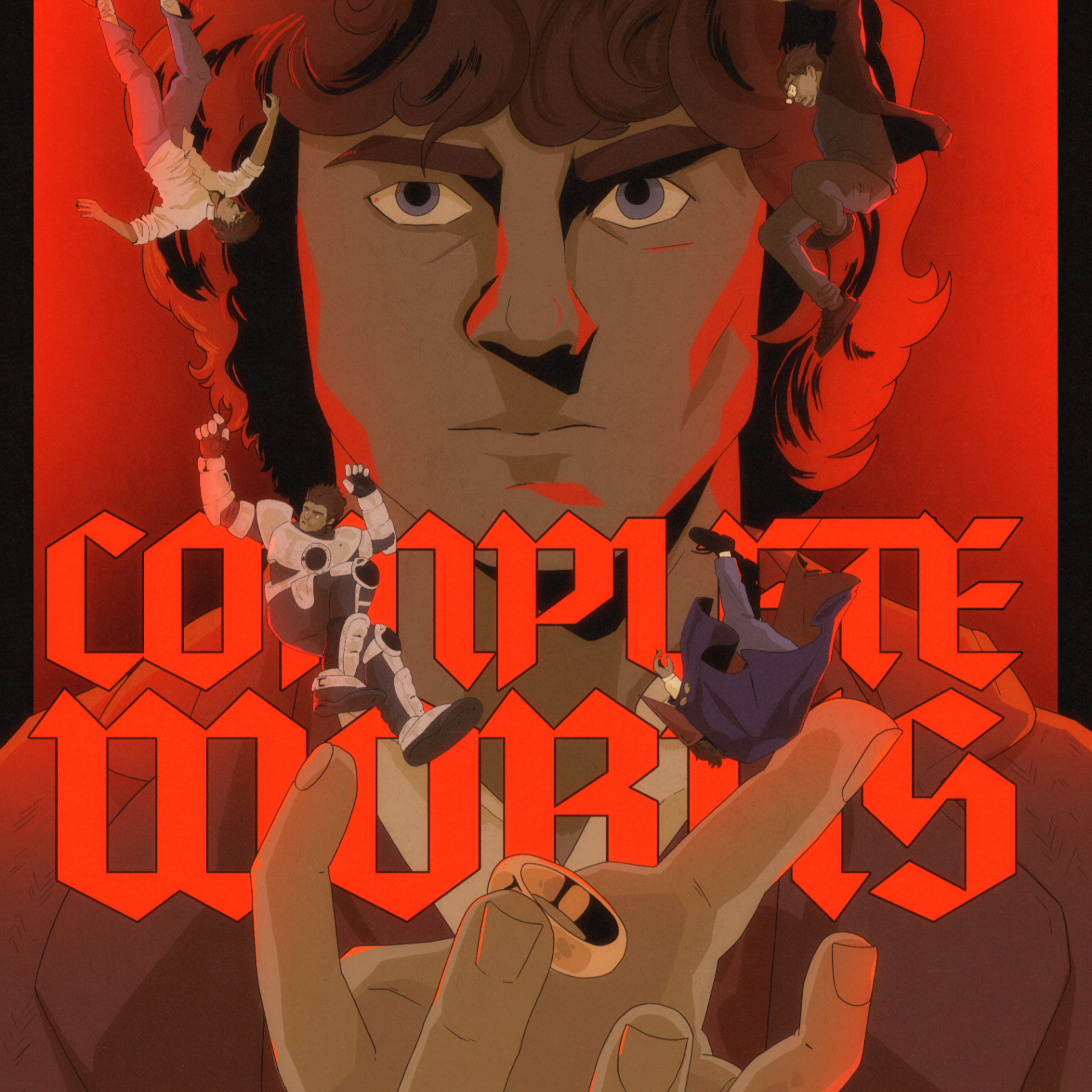
Photo credit: "L0015096EB" by Wellcome Library, London is licensed under CC BY 4.0. Image has been cropped.
Covers: history of science, astronomy, scientific revolution, galileo galilei, johannes kepler, tycho brahe, reproductive science, renaissance science
Show details and episodes come from the publisher's public feed at rss.buzzsprout.com. Last updated . Names, artwork and text belong to their publishers.
Recently on this show
Summary of recent episodes, drawn from the publisher's feed.
This podcast traces the history of science from ancient times to the modern era, covering figures from Archimedes to Einstein. Recent episodes follow Galileo's career in Pisa and Padua, Johannes Kepler's work on planetary motion, and a special on the history of reproductive science.
Cosmos
Similar by topic and creator
- Academy of Ideas
Shares the topics History and Science. - Chronicles of Newgate Vol 1
Shares the topics History and Science. - My Life and Work
Shares the topics History and Science.
Similar shows





Explore more
Episodes
Starry Messenger [Galileo - Part 4]
· 27 min
By the time Galileo was in his forties, he was respected in Padua, but little known elsewhere. His friend and rival Cesare Cremonini, the university’s leading philosopher, had everything Galileo lacked: a large salary, a large following and the prestige of being a member of the philosophy department. In this episode we follow how Galileo closed that gap. It began in 1604, when a new star appeared in heavens that were never supposed to change, and Galileo was drawn into a war of pamphlets with the Aristotelians. Then, in 1609, news reached Venice of the Dutch telescope. Galileo built his own, improved it and turned it on the sky. What he saw there, from mountains on the Moon to new worlds circling Jupiter, made him famous across Europe almost overnight. Not everyone was convinced, but fame brought him something he had long wanted: an invitation home to Florence. Support the show (https://www.patreon.com/TheCompleteHistoryofScience) Support the show and get episodes early: https://www.patreon.com/TheCompleteHistoryofScience Website: https://thecompletehistoryofscience.com/ Contact: thecompletehistoryofscience@gmail.com BlueSky: https://bsky.app/profile/gethinrichards.bsky.social Music Credit: Folk Round Kevin MacLeod (incompetech.com) Licensed under Creative Commons: By Attribution 3.0 License
Not rated yetA New Science [Galileo - Part 3]
· 25 min
In 1592, Galileo moved to the University of Padua for a much better salary. Protected by the power of Venice, Padua welcomed new ideas, and he soon found friends who shared his doubts about Aristotle. In this episode we follow his years there as he worked to fix his theory of motion and found a whole new science. Support the show (https://www.patreon.com/TheCompleteHistoryofScience) Support the show and get episodes early: https://www.patreon.com/TheCompleteHistoryofScience Website: https://thecompletehistoryofscience.com/ Contact: thecompletehistoryofscience@gmail.com BlueSky: https://bsky.app/profile/gethinrichards.bsky.social Music Credit: Folk Round Kevin MacLeod (incompetech.com) Licensed under Creative Commons: By Attribution 3.0 License
Not rated yetDe Motu [Galileo - Part 2]
· 19 min
At twenty-five, Galileo was back in Pisa, this time as its Professor of Mathematics. The salary was roughly that of a good stonemason, and the university was firmly in the hands of the Aristotelians, some of whom had once been his teachers. In this episode we look at Aristotle’s ideas on motion, and why even his most devoted followers couldn’t agree on what they meant. Galileo had little patience for any of it. Instead he turned to Archimedes and to a new generation of Italian mathematicians who were asking the same questions. Encouraged by his friends, he made his first real attempt at a theory of his own. Not very originally, he called it De Motu. Whether it actually worked was another matter. Support the show (https://www.patreon.com/TheCompleteHistoryofScience) Support the show and get episodes early: https://www.patreon.com/TheCompleteHistoryofScience Website: https://thecompletehistoryofscience.com/ Contact: thecompletehistoryofscience@gmail.com BlueSky: https://bsky.app/profile/gethinrichards.bsky.social Music Credit: Folk Round Kevin MacLeod (incompetech.com) Licensed under Creative Commons: By Attribution 3.0 License
Not rated yetI Follow Archimedes [Galileo - Part 1]
· 21 min
In 1583, Galileo Galilei was eighteen years old and enrolled as a medical student at the University of Pisa. On the surface, life was good. There was, however, one problem: he couldn't stand medicine. We begin with his early years, from his musician father and difficult mother to the monks who very nearly kept him for good. Nicknamed The Wrangler for arguing with his professors, Galileo slipped uninvited into a lecture on geometry and was captivated. Mathematics was poorly paid and held in low regard, but in Archimedes he had found his master. Abandoning a safe career was a gamble, and the road to a university post was not a smooth one. Support the show (https://www.patreon.com/TheCompleteHistoryofScience) Support the show and get episodes early: https://www.patreon.com/TheCompleteHistoryofScience Website: https://thecompletehistoryofscience.com/ Contact: thecompletehistoryofscience@gmail.com BlueSky: https://bsky.app/profile/gethinrichards.bsky.social Music Credit: Folk Round Kevin MacLeod (incompetech.com) Licensed under Creative Commons: By Attribution 3.0 License
Not rated yetSpecial: The History of Reproductive Science with Prof. Michael Carroll
· 1 hr 12 min
Michael, an Associate Professor in Reproductive Science, joins us for a wide-ranging dive into the history of reproductive science. From ancient Galenic theories and Leonardo da Vinci's anatomical drawings, through the gradual unravelling of how sperm and eggs work, to the breakthroughs that ultimately made IVF possible. We trace the key milestones: sperm capacitation, early animal studies, and the pioneering work of Edwards, Steptoe, and Purdy that led to the birth of Louise Brown in 1978, and the 12 million IVF babies who have followed since. Support the show (https://www.patreon.com/TheCompleteHistoryofScience) Support the show and get episodes early: https://www.patreon.com/TheCompleteHistoryofScience Website: https://thecompletehistoryofscience.com/ Contact: thecompletehistoryofscience@gmail.com BlueSky: https://bsky.app/profile/gethinrichards.bsky.social Music Credit: Folk Round Kevin MacLeod (incompetech.com) Licensed under Creative Commons: By Attribution 3.0 License
Not rated yetThe Harmony of Johannes Kepler [Kepler - Part 4]
· 43 min
In 1610 reports reached Prague that Galileo had discovered new planets, and Kepler felt compelled to find out for himself what had actually been seen. Reading Starry Messenger and later observing through a borrowed telescope, he became one of Galileo’s earliest and most important defenders. Kepler not only confirmed the existence of Jupiter’s moons but also argued publicly for the reliability of telescopic observations, and went further by explaining, for the first time, how the telescope worked in theory through his optical treatise Dioptrice. Alongside this defence of new instruments, the episode follows Kepler’s search for harmony in the structure of the cosmos, culminating in the discovery of his third law of planetary motion. It then traces his long and difficult effort to complete the Rudolphine Tables, based on Tycho Brahe’s observations. Published in 1627, the tables proved vastly more accurate than anything before them and made possible the successful prediction of planetary transits. Though Kepler did not live to see their full impact, the tables ensured that his astronomy could no longer be ignored. Support the show (https://www.patreon.com/TheCompleteHistoryofScience) Support the show and get episodes early: https://www.patreon.com/TheCompleteHistoryofScience Website: https://thecompletehistoryofscience.com/ Contact: thecompletehistoryofscience@gmail.com BlueSky: https://bsky.app/profile/gethinrichards.bsky.social Music Credit: Folk Round Kevin MacLeod (incompetech.com) Licensed under Creative Commons: By Attribution 3.0 License
Not rated yetChristmas Special 2025 - Q and A
· 28 min
Merry Christmas! Answering listener questions as well as some long standing FAQs. Enjoy! Support the show (https://www.patreon.com/TheCompleteHistoryofScience) Support the show and get episodes early: https://www.patreon.com/TheCompleteHistoryofScience Website: https://thecompletehistoryofscience.com/ Contact: thecompletehistoryofscience@gmail.com BlueSky: https://bsky.app/profile/gethinrichards.bsky.social Music Credit: Folk Round Kevin MacLeod (incompetech.com) Licensed under Creative Commons: By Attribution 3.0 License
Not rated yetThe New Astronomy [Kepler - Part 3]
· 39 min
After years of struggle, Johannes Kepler finally had the tools and data to wage what he called his “War with Mars.” Rejecting ancient assumptions he used Tycho Brahe’s observations to discover his first two laws of planetary motion. His New Astronomy not only redefined celestial mechanics but transformed astronomy from a geometric art into a true physical science. Support the show (https://www.patreon.com/TheCompleteHistoryofScience) Support the show and get episodes early: https://www.patreon.com/TheCompleteHistoryofScience Website: https://thecompletehistoryofscience.com/ Contact: thecompletehistoryofscience@gmail.com BlueSky: https://bsky.app/profile/gethinrichards.bsky.social Music Credit: Folk Round Kevin MacLeod (incompetech.com) Licensed under Creative Commons: By Attribution 3.0 License
Not rated yetLet Me Not Seem to Have Lived in Vain [Kepler - Part 2]
· 34 min
In 1600, Johannes Kepler arrived at Tycho Brahe’s castle hoping to escape religious persecution and gain access to the most precise astronomical data in Europe. Their relationship was strained by clashing temperaments — Tycho’s secrecy and pride meeting Kepler’s impatience and ambition — yet their collaboration began to bear fruit as Kepler tackled problems of planetary motion and optical theory. Despite constant uncertainty, Kepler’s time at Benátky marked the beginning of a partnership that would reshape astronomy and set him on the path toward his greatest discoveries. Support the show (https://www.patreon.com/TheCompleteHistoryofScience) Support the show and get episodes early: https://www.patreon.com/TheCompleteHistoryofScience Website: https://thecompletehistoryofscience.com/ Contact: thecompletehistoryofscience@gmail.com BlueSky: https://bsky.app/profile/gethinrichards.bsky.social Music Credit: Folk Round Kevin MacLeod (incompetech.com) Licensed under Creative Commons: By Attribution 3.0 License
Not rated yetSecrets of the Universe [Kepler - Part 1]
· 42 min
Johannes Kepler rose from a difficult childhood to become a brilliant but unconventional student, deeply influenced by his Lutheran faith, Copernican astronomy, and a belief in divine harmony within the cosmos. In Graz he developed his bold first theory, published in Mysterium Cosmographicum, which linked the orbits of the planets to the five Platonic solids and made him one of the earliest open defenders of heliocentrism. Facing religious persecution and desperate for accurate data, Kepler set out to join Tycho Brahe in Prague, convinced that Tycho’s observations were the key to uncovering the universe’s hidden order. Support the show (https://www.patreon.com/TheCompleteHistoryofScience) Support the show and get episodes early: https://www.patreon.com/TheCompleteHistoryofScience Website: https://thecompletehistoryofscience.com/ Contact: thecompletehistoryofscience@gmail.com BlueSky: https://bsky.app/profile/gethinrichards.bsky.social Music Credit: Folk Round Kevin MacLeod (incompetech.com) Licensed under Creative Commons: By Attribution 3.0 License
Not rated yetTycho's World System [Tycho Brahe - Part 3]
· 28 min
Tycho Brahe’s observations of the Great Comet of 1577 and his discovery of atmospheric refraction led him to reject solid celestial spheres and reassess the structure of the cosmos. Seeking an alternative to both the Ptolemaic and Copernican systems, he developed a geo-heliocentric model in which the Sun orbited the Earth while the planets orbited the Sun, a theory he supported with years of precise measurements, including a (mistaken) parallax for Mars. Though he failed to find definitive proof, Tycho’s tireless pursuit of accuracy and his revolutionary instruments laid the groundwork for the astronomical breakthroughs that would follow. Support the show (https://www.patreon.com/TheCompleteHistoryofScience) Support the show and get episodes early: https://www.patreon.com/TheCompleteHistoryofScience Website: https://thecompletehistoryofscience.com/ Contact: thecompletehistoryofscience@gmail.com BlueSky: https://bsky.app/profile/gethinrichards.bsky.social Music Credit: Folk Round Kevin MacLeod (incompetech.com) Licensed under Creative Commons: By Attribution 3.0 License
Not rated yetHven is a Place on Earth [Tycho Brahe - Part 2]
· 21 min
In 1576, Tycho Brahe was offered something no astronomer had ever received before: an island of his own. On the remote Baltic isle of Hven, Tycho set out to build the most advanced observatory in Europe. But just as construction began, a brilliant comet appeared in the night sky. For Tycho, it was more than a celestial spectacle: it was a chance to test Aristotle, challenge old ideas, and prove that careful observation could overturn centuries of dogma. This episode traces Tycho’s transformation from wandering scholar to scientific institution, as he turns a lonely island into the centre of the astronomical world. Support the show (https://www.patreon.com/TheCompleteHistoryofScience) Support the show and get episodes early: https://www.patreon.com/TheCompleteHistoryofScience Website: https://thecompletehistoryofscience.com/ Contact: thecompletehistoryofscience@gmail.com BlueSky: https://bsky.app/profile/gethinrichards.bsky.social Music Credit: Folk Round Kevin MacLeod (incompetech.com) Licensed under Creative Commons: By Attribution 3.0 License
Not rated yetA New Star [Tycho Brahe - Part 1]
· 35 min
n 1572, a mysterious new star appeared in the sky, defying the ancient belief that the heavens never changed. Tycho Brahe, a Danish nobleman with a passion for astronomy, set out to uncover the truth. His meticulous observations challenged established ideas and sparked debates among scholars. But Tycho’s journey wasn’t just about science, it was a struggle against family expectations, social norms, and the limits of the tools at his disposal. This episode is the first of three parts exploring how one man’s curiosity reshaped our understanding of the universe and set the stage for a new era of discovery. Support the show (https://www.patreon.com/TheCompleteHistoryofScience) Support the show and get episodes early: https://www.patreon.com/TheCompleteHistoryofScience Website: https://thecompletehistoryofscience.com/ Contact: thecompletehistoryofscience@gmail.com BlueSky: https://bsky.app/profile/gethinrichards.bsky.social Music Credit: Folk Round Kevin MacLeod (incompetech.com) Licensed under Creative Commons: By Attribution 3.0 License
Not rated yetThe Lodestone, the Compass and the Magnetic Earth
· 31 min
In this episode we trace the early development of magnetism and the compass—from ancient Chinese navigation to the groundbreaking insights of medieval and Renaissance Europe. The episode highlights the work of Peter Peregrinus, a 13th-century scholar whose detailed experiments with magnets laid the foundation for future magnetic science, and Robert Norman, who devised a method to reveal the mysterious “dip” of the magnetic needle. It also explores early efforts to understand magnetic declination, map its behavior, and investigate the nature of Earth’s magnetic forces. From the legends surrounding the compass’s invention to the precision of William Gilbert’s De Magnete, this episode examines how magnetism evolved from a mystical force into a measurable, mappable phenomenon—marking a crucial step on the path to modern science. Support the show (https://www.patreon.com/TheCompleteHistoryofScience) Support the show and get episodes early: https://www.patreon.com/TheCompleteHistoryofScience Website: https://thecompletehistoryofscience.com/ Contact: thecompletehistoryofscience@gmail.com BlueSky: https://bsky.app/profile/gethinrichards.bsky.social Music Credit: Folk Round Kevin MacLeod (incompetech.com) Licensed under Creative Commons: By Attribution 3.0 License
Not rated yetCirculation! [William Harvey Part 3]
· 23 min
At the start of the 17th century Harvey finally put all of the pieces in place. He had discovered that blood circulates through the body with the heart acting as a pump. Realising that he was undermining a millenia of Galenism, he set out carefully, working to convince his peers of his discovery. He made many public demonstrations to support his findings, meeting both support and controversy. Support the show (https://www.patreon.com/TheCompleteHistoryofScience) Support the show and get episodes early: https://www.patreon.com/TheCompleteHistoryofScience Website: https://thecompletehistoryofscience.com/ Contact: thecompletehistoryofscience@gmail.com BlueSky: https://bsky.app/profile/gethinrichards.bsky.social Music Credit: Folk Round Kevin MacLeod (incompetech.com) Licensed under Creative Commons: By Attribution 3.0 License
Not rated yetBe Still My Beating Heart [William Harvey Part 2]
· 20 min
In 1602, William Harvey joined the College of Physicians to secure his medical career, but behind the scenes, he was conducting bold anatomical research. Through dissections, vivisections, and innovative experiments on blood flow and the heart, Harvey began challenging Galen’s teachings. His relentless curiosity would soon lead to the groundbreaking discovery of blood circulation. Support the show (https://www.patreon.com/TheCompleteHistoryofScience) Support the show and get episodes early: https://www.patreon.com/TheCompleteHistoryofScience Website: https://thecompletehistoryofscience.com/ Contact: thecompletehistoryofscience@gmail.com BlueSky: https://bsky.app/profile/gethinrichards.bsky.social Music Credit: Folk Round Kevin MacLeod (incompetech.com) Licensed under Creative Commons: By Attribution 3.0 License
Not rated yetAristotle My General, Fabricius My Guide [William Harvey Part 1]
· 18 min
In late 1599, William Harvey, having completed his B.A. at Cambridge, sought further education abroad. His father, a successful businessman, funded his journey to Padua, a renowned center of medical learning. At Padua, Harvey encountered the teachings of Aristotle, particularly the idea of understanding the "final cause" of things, which influenced his approach to medicine. He also studied under Hieronymous Fabricius, who combined Aristotelian philosophy with detailed dissections, shaping Harvey’s future medical practices. Support the show (https://www.patreon.com/TheCompleteHistoryofScience) Support the show and get episodes early: https://www.patreon.com/TheCompleteHistoryofScience Website: https://thecompletehistoryofscience.com/ Contact: thecompletehistoryofscience@gmail.com BlueSky: https://bsky.app/profile/gethinrichards.bsky.social Music Credit: Folk Round Kevin MacLeod (incompetech.com) Licensed under Creative Commons: By Attribution 3.0 License
Not rated yetFallopio and Fabricius
· 22 min
Support the show (https://www.patreon.com/TheCompleteHistoryofScience) Support the show and get episodes early: https://www.patreon.com/TheCompleteHistoryofScience Website: https://thecompletehistoryofscience.com/ Contact: thecompletehistoryofscience@gmail.com BlueSky: https://bsky.app/profile/gethinrichards.bsky.social Music Credit: Folk Round Kevin MacLeod (incompetech.com) Licensed under Creative Commons: By Attribution 3.0 License
Not rated yetRealdo Colombo and the Pulmonary Transit of the Blood
· 19 min
Realdo Colombo, a former student and colleague of Vesalius, challenged aspects of Galenic anatomy and made significant strides in understanding blood circulation. Through vivisection, Colombo discovered that blood circulates through the lungs, a finding that corrected earlier theories and contributed to a major shift in Renaissance anatomical and physiological studies. His work, though not initially credited, played a crucial role in advancing medical knowledge and laid the groundwork for future discoveries in human physiology. Support the show (https://www.patreon.com/TheCompleteHistoryofScience) Support the show and get episodes early: https://www.patreon.com/TheCompleteHistoryofScience Website: https://thecompletehistoryofscience.com/ Contact: thecompletehistoryofscience@gmail.com BlueSky: https://bsky.app/profile/gethinrichards.bsky.social Music Credit: Folk Round Kevin MacLeod (incompetech.com) Licensed under Creative Commons: By Attribution 3.0 License
Not rated yetThe Book of the Body [Vesalius Part 2]
· 24 min
Support the show (https://www.patreon.com/TheCompleteHistoryofScience) Support the show and get episodes early: https://www.patreon.com/TheCompleteHistoryofScience Website: https://thecompletehistoryofscience.com/ Contact: thecompletehistoryofscience@gmail.com BlueSky: https://bsky.app/profile/gethinrichards.bsky.social Music Credit: Folk Round Kevin MacLeod (incompetech.com) Licensed under Creative Commons: By Attribution 3.0 License
Not rated yet