

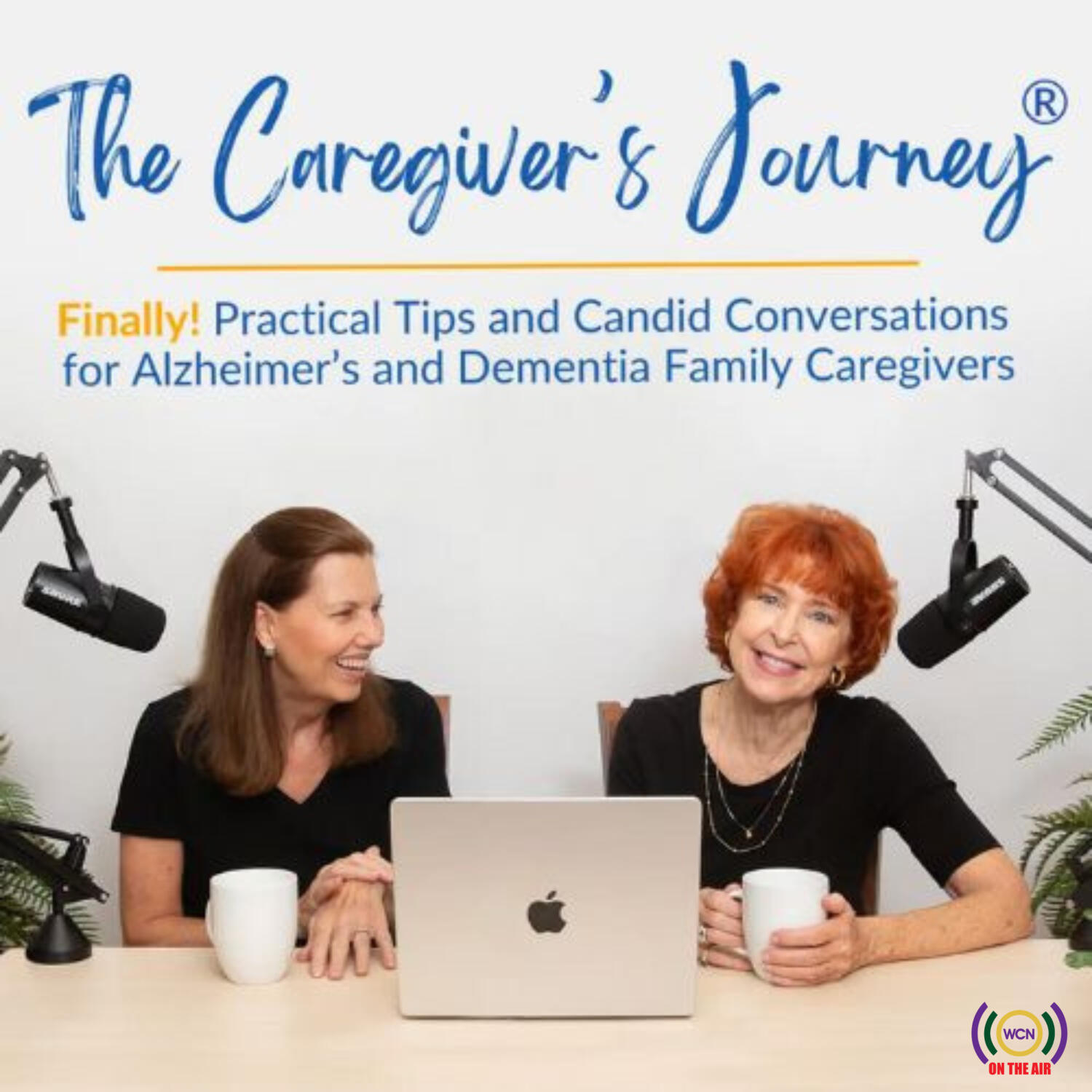
The Caregiver's Journey
Sue Ryan and Nancy TreasterAudio
- Format:
- Podcast
- New episodes:
- Every two weeks
- Typical length:
- about 25 minutes
- Latest episode:
About this show
The Caregiver’s Journey podcast is an innovative and refreshing way to learn how to tackle day-to-day Alzheimer's and dementia family caregiving challenges with strength, patience, and peace of mind. Using practical tips and candid conversations, Sue Ryan and Nancy Treaster help you navigate caregiving’s ups and downs, so you move from feeling frustrated, overwhelmed, and sometimes frightened - to confident, balanced, and supported.
Covers: caregiving, dementia, alzheimer's disease, memory care, family health, elder care resources, doctor visits, caregiver wellbeing
Show details and episodes come from the publisher's public feed at feed.pod.co. Last updated . Names, artwork and text belong to their publishers.
Recently on this show
Summary of recent episodes, drawn from the publisher's feed.
The Caregiver's Journey is a podcast for family members caring for someone with Alzheimer's or another dementia, offering practical advice on day-to-day challenges. Recent episodes cover Area Agencies on Aging, steps in a dementia caregiving roadmap, getting more from doctor's visits, and choosing a memory care community.
Cosmos
Rated alike
- Batteries Included
Often rated the same way. - Jessica Kobeissi
Often rated the same way. - Matt's Off Road Recovery
Often rated the same way.
Similar in subject
- The Empowering Neurologist Podcast
Both cover: alzheimer's disease, dementia - Dementia Careblazers
Both cover: dementia, caregiving - This Week in Neuroscience
Both cover: alzheimer's disease, dementia
Similar shows





Explore more
Episodes
Build a Partnership With Your Care Community: Six Essential Tips / Alzheimer’s and Other Dementias
· 29 min
Is your loved one in a memory care community, or are you considering moving them into one? Understanding how to build a collaborative relationship with the care team is crucial for ensuring the best outcomes for your loved one. We are Sue Ryan and Nancy Treaster. As caregivers for our loved ones with Alzheimer's and other types of dementia, we've learned that creating a true partnership with care community staff can dramatically improve quality of care and reduce stress for everyone involved. We recently spoke with James Lee, CEO and co-founder of Bella Groves, an award-winning memory care community. With over 17 years of experience in senior living and memory care, James has developed valuable insights on how to transform what is often an adversarial relationship between family caregivers and professional caregivers into a collaborative partnership. Full Show Notes https://thecaregiversjourney.org/35-build-a-partnership-with-your-care-community-six-essential-tips-alzheimers-and-other-dementias/ Additional Resources Mentioned - Support the nonprofit The Caregiver's Journey:https://give.cornerstone.cc/thecaregiversjourney Takeaways Tip 1: Assess the Overall Fit When looking for a memory care community, many families focus on practical aspects like location, price, and amenities. While these factors are important, James suggests that philosophical alignment and rapport with the management team are even more crucial for long-term success. When evaluating potential communities, James recommends shifting your mindset from "us versus them" to "us collectively versus dementia." This perspective can transform the relationship from the beginning. Tip 2: Embrace the Community Aspect Moving your loved one from home to a community setting represents a fundamental shift in their care environment—from one-on-one care to being part of a group. Tip 3: Acknowledge Your Role Has Changed When your loved one moves into a care community, your role shifts from being the primary caregiver to being a care partner working alongside professional caregivers. Tip 4: Recognize That the Diagnosis Will Progress A critical aspect of the care partnership is understanding that your loved one's condition will continue to change over time. In fact, by the time someone moves into a memory care community, they're often in the steeper part of their dementia journey where changes happen more rapidly. Tip 5: Acknowledge Your Grief The dementia journey involves ongoing loss, a phenomenon Sue calls "drip grief." As your loved one's condition progresses, you experience new losses almost daily—abilities that disappear, memories that fade, personality changes that emerge. Tip 6: Engage with the Community Caregiving Team The families whose loved ones have the best quality of life tend to be those who actively engage with the care team. This engagement goes beyond basic communication to building genuine relationships with the people caring for your loved one. Building a True Partnership Creating a collaborative relationship with your loved one's care community team isn't just about being nice—it's about achieving the best possible outcomes for your loved one with dementia. By reframing the relationship from "us versus them" to "us collectively versus dementia," you can transform what is often an adversarial dynamic into a true partnership. As James explains, "You are your loved one's expert, we are dementia experts. And the two together give us the best chance to get this right." Read More in This Blog here (https://medium.com/@sueryansolutions/35-building-a-partnership-with-your-care-community-team-6-essential-tips-65a15aaf69ae)
Not rated yetIntroduce and Integrate a Caregiver: Six Essential Tips / Alzheimer’s and Other Dementias
· 25 min
Adding a new caregiver to your support team can be a challenging transition, whether they're coming into your home, assisting your loved one who lives alone, or joining the care team in a memory care community. This transition can be particularly difficult for those caring for loved ones with Alzheimer's or dementia, as changes in routine can cause confusion and resistance. If your loved one doesn't think they need help (and let's be honest, many don't), don't give up too quickly. Be patient and allow the process time to unfold. As one experienced caregiver shared, "He told the new caregiver for at least the first couple of weeks, every time she came, 'You need to go home.' She would just smile at him and say, 'Well, I'm not going home just yet.'"
Not rated yetHow To Create a Care Plan: Five Essential Tips / Alzheimer’s and Other Dementias
· 26 min
Are you prepared for others to take care of your loved one? Do you have a care plan in place? Having a comprehensive care plan is one of the most important tools a caregiver can create — not just for emergencies, but for everyday peace of mind. We are Sue Ryan and Nancy Treaster. As caregivers for our loved ones with Alzheimer’s and other types of dementia, we’ve learned the importance of creating a care plan for our loved one. We spoke with Amanda Lukoff (https://www.linkedin.com/in/amanda-lukof-niederauer-75b16991/), co-founder and CEO of Eleplan (https://www.eleplan.com/), about what a care plan is and how to create one that works for your unique situation. Amanda's journey to creating Eleplan was deeply personal. Her brother Liam, who has autism, is her "North Star" and the inspiration behind her career path, including going to law school for special education law. Through observing her parents' caregiving journey with Liam, Amanda recognized the need to capture all the knowledge that lived in her parents' heads so that others could provide care that truly honored who Liam is as a person. Connect with us and share your tips: - Website: https://www.thecaregiversjourney.com (http://www.thecaregiversjourney.com) - Donate: https://give.cornerstone.cc/thecaregiversjourney - Instagram: https://www.instagram.com/thecaregiversjourney/ - Facebook: https://www.facebook.com/TheCaregiversJourneys/ - Linkedin: https://www.linkedin.com/in/suearmstrongryan/, https://www.linkedin.com/in/nancytreaster/ - Email: sue@thecaregiversjourney.com, nancy@thecaregiversjourney.com Additional Resources Mentioned - Episode 32: Navigating The Caregiver Hiring Process https://thecaregiversjourney.com/32-navigating-the-caregiver-hiring-process-five-essential-tips-alzheimers-and-other-dementias/ - Eleplan Website: https://www.eleplan.com/ - Support the nonprofit The Caregiver's Journey:https://give.cornerstone.cc/thecaregiversjourney Full Show Notes https://thecaregiversjourney.com/33-how-to-create-a-care-plan-five-essential-tips-alzheimers-and-other-dementias (https://thecaregiversjourney.com/33-how-to-create-a-care-plan-five-essential-tips-alzheimers-and-other-dementias//) Takeaways Tip 1: Start with the Basics The first step in creating a care plan is to document the essential information that would allow someone to provide short-term care (even for just 30 minutes) while you step out. This includes: - Emergency contacts - Medications and dosages - High-level meal preferences - Allergies - Relevant medical conditions Tip 2: Outline Preferences and Daily Routines Beyond the basics, a good care plan should capture what makes your loved one unique—their preferences, personality traits, and daily routines. Your care plan should include: - Likes and dislikes - Daily schedule and routines - Bedtime and morning rituals - Behavioral patterns - Emotional triggers (both positive and negative) Tip 3: Document What to Do in an Emergency Crisis situations demand clear instructions. Your care plan should outline: - What constitutes an emergency for your loved one - When to call 911 vs. other resources - Who to contact and in what order - Special instructions for EMTs or ER staff - Location of important medical documents Tip 4: Collect Key Contacts and Documents Gathering important documents in one accessible location is critical for seamless care. This includes: - Insurance cards - Healthcare directives - Power of Attorney documents - Guardianship forms - Medical history and medication lists Tip 5: Keep Everything Accessible and Current A care plan is only effective if it's up-to-date and easily accessible. Amanda frames this with an important question: "Do I have a system that is as dynamic as the needs of my loved one and the ever-changing piles of documents and information?" Whether you're using a physical binder, shared digital documents, or a specialized platform like Eleplan, the key is having a system that…
Not rated yetNavigating the Caregiver Hiring Process: Five Essential Tips / Alzheimer’s and Other Dementias
· 28 min
When the time comes to bring professional caregiving support into your loved one’s life, the process can feel overwhelming. Whether you’re hiring a caregiver for home care or to complement care in a community setting, understanding how to find, evaluate, and select the right person is crucial for both your peace of mind and your loved one’s well being. We are Nancy Treaster and Sue Ryan, we’ve developed five essential tips for hiring a paid caregiver, based on real experiences and practical advice from caregiving experts. These insights will help you navigate this important transition with confidence and clarity. Connect with us and share your tips: - Website: https://www.thecaregiversjourney.com (http://www.thecaregiversjourney.com) - Donate: https://give.cornerstone.cc/thecaregiversjourney - Instagram: https://www.instagram.com/thecaregiversjourney/ - Facebook: https://www.facebook.com/TheCaregiversJourneys/ - Linkedin: https://www.linkedin.com/in/suearmstrongryan/, https://www.linkedin.com/in/nancytreaster/ - Email: sue@thecaregiversjourney.com, nancy@thecaregiversjourney.com Full Show Notes https://thecaregiversjourney.com/32-navigating-the-caregiver-hiring-process-five-essential-tips-alzheimers-and-other-dementias/ Additional Resources Mentioned - Episode 5: Home Alone https://thecaregiversjourney.com/leaving-your-care-receiver-alone-six-essential-tips-alzheimers-and-other-dementias/ - Episode 28: Home and Community Living Options https://thecaregiversjourney.com/time-for-a-change-home-and-community-living-options-five-essential-tips-alzheimers-and-other-dementias/ - Episode 30: Elder Law Attorneys https://thecaregiversjourney.com/they-know-what-we-dont-elder-law-attorneys-four-essential-tips-alzheimers-and-other-dementias/ - Episode 33. How To Create a Care Plan: Five Essential Tips / Alzheimer’s and Other Dementias https://thecaregiversjourney.com/33-how-to-create-a-care-plan-five-essential-tips-alzheimers-and-other-dementias (https://thecaregiversjourney.com/33-how-to-create-a-care-plan-five-essential-tips-alzheimers-and-other-dementias//) - Support the nonprofit The Caregiver's Journey:https://give.cornerstone.cc/thecaregiversjourney Takeaways Tip 1: Assess Your Loved One’s Needs Before you begin searching for a caregiver, it’s important to thoroughly understand what kind of support your loved one requires. This assessment will guide all your subsequent decisions about the type of caregiver, frequency of care, and specific qualifications needed. Consider these key areas when assessing needs: - Activities of Daily Living (ADLs) - Medical Needs - Household Management Tasks - Safety Concerns - Transportation and Mobility - Companionship Needs Tip 2: Determine the Type of Caregiver and Frequency Needed There are three main categories of paid caregivers, each with different training levels and capabilities: - Companion Care - Certified Nursing Assistant (CNA) - Skilled Nursing Tip 3: Understand Your Financial Resources Review Your Financial Resources - Savings and investment accounts - Long-term care insurance policies - Regular income sources - Family financial contributions. Explore Available Benefits - Medicare - Medicaid - Veterans Benefits Consider Family Contributions Tip 4: Decide Between Agency or Private Hire When you work with a caregiving agency: - They Handle Administrative Tasks - They Provide Backup Coverage - They Offer Training and Supervision - They Assume Liability Private Hire Benefits - It’s Usually Less Expensive - You Have Complete Control - There’s Often More Flexibility - You May Find Through Word-of-Mouth Private Hire Challenges - You’re the Employer - No Backup Coverage - Limited Screening Resources Tip 5: Evaluate potential caregivers thoroughly Key Questions for Interviews - Scheduling and Availability - Qualifications and Experience - Approach to Care - Communication Style Background Checks and References Set Clear Expectations…
Not rated yetThey Know What We Don’t, Elder Law Attorneys: Four Essential Tips / Alzheimer’s and Other Dementias
· 33 min
We don't know what we don't know. But elder law attorneys do, and their expertise can be transformational for families facing aging-related challenges. Whether you're dealing with a recent diagnosis, planning for potential long-term care needs, or simply trying to prepare for the future, understanding how and when to work with an elder law attorney can make all the difference in your journey. In this episode, we'll explore four essential tips for working with elder law attorneys, based on insights from Beth Prather, a board-certified elder law attorney with 32 years of experience, and Courtney Lovejoy, an elder law attorney with a Master of Laws in elder law. Their expertise in Medicaid planning, VA benefits, estate planning, probate, trust administration, and guardianship offers valuable perspective for anyone navigating the complex legal landscape of aging and caregiving. Connect with us and share your tips: - Website: https://www.thecaregiversjourney.com (http://www.thecaregiversjourney.com) - Donate: https://give.cornerstone.cc/thecaregiversjourney - Instagram: https://www.instagram.com/thecaregiversjourney/ - Facebook: https://www.facebook.com/TheCaregiversJourneys/ - Linkedin: https://www.linkedin.com/in/suearmstrongryan/, https://www.linkedin.com/in/nancytreaster/ - Email: sue@thecaregiversjourney.com, nancy@thecaregiversjourney.com Full Show Notes https://thecaregiversjourney.com/they-know-what-we-dont-elder-law-attorneys-four-essential-tips-alzheimers-and-other-dementias/ Additional Resources Mentioned - www.NAELA.org (http://www.naela.org) The National Academy of Elder Law Attorneys website has a searchable directory. "They have a really good search function where you can type in your zip code and find elder law attorneys within a certain radius," Courtney notes. - State-specific organizations: For example, Florida has the Academy of Florida Elder Law Attorneys (www.AFELA.org (http://www.afela.org)). - Beth Prather: https://www.gskattorneys.com/attorneys/beth-a-prather/ - Courtney Lovejoy: https://www.gskattorneys.com/attorneys/courtney-van-emmerik-lovejoy/ - Support the nonprofit The Caregiver's Journey:https://give.cornerstone.cc/thecaregiversjourney Takeaways Tip 1: How to Find an Attorney Who Specializes in Elder Law Finding the right elder law attorney requires more than just a quick Google search. Here's how to identify professionals with genuine expertise in this specialized field: Look for Specialized Credentials Professional credentials can be helpful indicators of specialized knowledge in elder law: - Board Certification: I - Master of Laws (LLM) in Elder Law: Ask the Right Questions - How many Medicaid applications did they file last year? - What percentage of their practice focuses on elder law? - Do they handle guardianships, Medicaid planning, or VA benefits cases regularly? Use Reliable Resources to Find Specialists - NAELA.org: - State-specific organizations: For example, Florida has the Academy of Florida Elder Law Attorneys (AFELA.org). - Personal referrals: Tip 2: Prioritize These Legal Documents and Planning Tools Once you've found an elder law attorney, certain planning tools should take priority: - Comprehensive Durable Power of Attorney - Consider Long-Term Care Insurance - Limit or Avoid Gifting - Avoid DIY Planning Common DIY mistakes include: - Adding children to bank accounts or property titles - Giving away assets based on outdated or incorrect advice - Trying to "hide" assets from Medicaid Tip 3: Understand Medicaid and VA Benefits Options A significant part of elder law involves helping clients navigate government benefits for long-term care: Tip 4: Use This Time to Address Other Important Legal Matters - Review Beneficiary Designations - Create an Asset Inventory - Consider Account Consolidation - Address Healthcare Decision Documents - Be Cautious About Adding Others to Accounts or Deeds - Discuss End-of-Life Preferences
Not rated yetFinding Peace in Preparation: End of Life Service Preplanning: Eight Essential Tips / Alzheimer’s and Other Dementias
· 27 min
When you’re grieving, the last thing you need to be doing is planning a service. Pre-planning allows you to make only two decisions when death occurs: what day and what time the service will be held. Everything else can be arranged in advance, giving you the space to honor your loved one while processing your grief. We are Sue Ryan and Nancy Treaster, and we recently spoke with Greg Cannon (https://www.gregcannon.net/), who has more than 45 years of experience in the funeral profession (https://www.agassociates.org/), including as a funeral director. Greg shared his expertise on planning ahead for a loved one’s service, offering eight essential tips that can make all the difference during a difficult time. Rate, Subscribe, Share the Podcast and Share Your Tips on Social Media! Please click here (http://ratethispodcast.com/thecaregiversjourney) to review, follow, subscribe to and share our podcast. Connect with us and share your tips: - Website: https://www.thecaregiversjourney.com (http://www.thecaregiversjourney.com) - Instagram: https://www.instagram.com/thecaregiversjourney/ - Facebook: https://www.facebook.com/TheCaregiversJourneys/ - Linkedin: https://www.linkedin.com/in/suearmstrongryan/, https://www.linkedin.com/in/nancytreaster/ - Email: sue@thecaregiversjourney.com, nancy@thecaregiversjourney.com Full Show Notes https://thecaregiversjourney.com/finding-peace-in-preparation-end-of-life-service-preplanning-eight-essential-tips-alzheimers-and-other-dementias/ Additional Resources Mentioned End of Life Service Worksheet here (https://docs.google.com/document/d/1W4C-PXklZM_bG_bXevyk1Z-z5qmgbGIv/edit?usp=sharing&ouid=103774157808316719320&rtpof=true&sd=true) Takeaways Tip 1: Choose a Funeral Home Select a funeral home that will meet your needs. This choice may be based on location, previous experience with them, or their reputation. Tip 2: Decide on Burial or Cremation This fundamental decision shapes many subsequent choices. If choosing burial, consider: - Cemetery location - If the person is married, reserving an adjoining space for the spouse - Whether traditional burial or green burial options are preferred. For cremation, consider: - Whether the cremation will happen before or after the service. - What will be done with the cremated remains afterward. In both cases, you’ll need to decide what clothing the person will wear. Greg advises bringing a complete set of clothing, including undergarments and outerwear. Shoes are optional and often difficult to put on, but can be included if they’re meaningful. Tip 3: Decide on the Type of Service Funeral services have evolved beyond the traditional. Traditional Service (for either burial or cremation) Memorial Service Green Burial Direct Cremation or Direct Burial Tip 4: Choose a Location The location for the service could be: - A funeral home - A place of worship - A location meaningful to the deceased Tip 5: Prepare the Obituary Rather than writing the complete obituary under time pressure, prepare by: - Compiling all necessary information ahead of time - Creating a comprehensive list of family members to include - Selecting a photo or photos to accompany the obituary. Tip 6: Create a Notification Tree Decide ahead of time: - Who needs to be notified of the death - Who will notify whom - Create a “notification tree” so you’re not responsible for contacting everyone. Tip 7: Plan the Service Consider these elements and include your care receiver as much as possible: - Officiant: Choose the clergy or person who will lead the service - Eulogies: Decide who will deliver them and provide guidance - Music: Select meaningful songs or hymns - Readings: Choose scripture, poetry, or other readings - Personal touches: Include memorabilia, photos, or items that represent the person’s life. Consider alternatives to traditional floral arrangements: - Family quilts - Meaningful objects (like golf clubs for an avid golfer) - Photos.…
Not rated yetWhen To Call In Hospice: Four Essential Tips / Alzheimer’s and Other Dementias
· 27 min
As caregivers for our loved ones with Alzheimer's and other types of dementia, we've learned that there are many misconceptions about hospice care. Today, we're joined by hospice nurses Nancy Heyerman and Brenda Kizzire to help clarify what hospice really is and when to consider it. Through their extensive experience, they've developed four essential tips to help you navigate this important transition in your caregiving journey. Connect with us and share your tips: - Website: https://www.thecaregiversjourney.com (http://www.thecaregiversjourney.com) - Instagram: https://www.instagram.com/thecaregiversjourney/ - Facebook: https://www.facebook.com/TheCaregiversJourneys/ - Linkedin: https://www.linkedin.com/in/suearmstrongryan/, https://www.linkedin.com/in/nancytreaster/ - Email: sue@thecaregiversjourney.com, nancy@thecaregiversjourney.com Full Show Notes https://thecaregiversjourney.com/when-to-call-in-hospice-four-essential-tips-alzheimers-and-other-dementias/ Additional Resources Mentioned The Hospice Care Plan website here (https://www.thehospicecareplan.com/) Frailty scale here (https://drive.google.com/file/d/1154XBX15bcQSByLnPSThmT0YVkdX0CnH/view?usp=sharing) The Hospice Care Plan booklet here (https://www.thehospicecareplan.com/marketing) The Hospice Care Plan YouTube channel here (https://www.youtube.com/@TheHospiceCarePlan) YouTube video - End of life for a person with dementia here (https://www.youtube.com/watch?v=UBpRDNC358Q) Takeaways 1. Access Your Care Receiver Using the Frailty Scale One of the most important tools in determining when hospice might be appropriate is the frailty scale. This helps track changes that might indicate a need for hospice care. What to Monitor: - Weight loss patterns - Ability to feed themselves - Changes in mobility (e.g., walking distance decreasing) - Transition from walking to wheelchair - Changes in activities of daily living - Increased anxiety or behavioral changes - Decreased verbal communication - Mental status changes 2. Start Documenting This tip might seem obvious, but proper documentation can make a significant difference in getting hospice care approved. How to Document: - Keep a calendar with regular weight measurements - Note changes in mobility and daily activities - Use your phone to track behavioral changes - Record any falls or incidents - Track medication changes and effectiveness - Document observations from other family members and caregivers Important Note: Many primary care providers may not be familiar with the latest hospice criteria. Your documentation helps build a case for hospice evaluation and provides concrete evidence of decline. 3. Research Hospice Organizations Don't wait until you're in crisis to start researching hospice organizations. Start your research early and be prepared. What to Research: - Available hospice organizations in your area - Their team structure and approach to care - Response time for evaluations and care - Experiences of other families - Specific services offered - Their experience with dementia patients Additional Tips: - Ask for recommendations from other caregivers - Read reviews and testimonials - Consider visiting their facilities if applicable - Ask about their approach to dementia care - Understand their after-hours support system 4. Request a Hospice Evaluation Don't be afraid to ask for a hospice evaluation, even if you're not sure your loved one qualifies. Steps to Get an Evaluation: 1. Ask your primary care provider for a hospice evaluation 2. If met with resistance, emphasize your goals of care 3. Frame it as establishing a baseline if needed 4. Remember that two physicians must agree - your primary provider and the hospice doctor 5. Be prepared to be a "squeaky wheel" if necessary The Hospice Care Plan: A Valuable Resource Nancy and Brenda have created "The Hospice Care Plan: A Path to Comfort," a comprehensive guide that helps families navigate hospice…
Not rated yetTime for a Change? Tips When Considering Home and Community Living Options: Five Essential Tips / Alzheimer's and Other Dementias
· 34 min
As caregivers for our loved ones with Alzheimer's and other types of dementia, we often face the challenging question: "Is it time to change my care receiver's living situation?" We are Nancy Treaster and Sue Ryan, and through our experiences, we've developed five essential tips to help you navigate this complex decision-making process. Connect with us and share your tips: - Website: https://www.thecaregiversjourney.com (http://www.thecaregiversjourney.com) - Instagram: https://www.instagram.com/thecaregiversjourney/ - Facebook: https://www.facebook.com/TheCaregiversJourneys/ - Linkedin: https://www.linkedin.com/in/suearmstrongryan/, https://www.linkedin.com/in/nancytreaster/ - Email: sue@thecaregiversjourney.com, nancy@thecaregiversjourney.com Full Show Notes https://thecaregiversjourney.com/time-for-a-change-home-and-community-living-options-five-essential-tips-alzheimers-and-other-dementias/ Takeaways 1. Understand Your Financial Resources This foundational step requires a thorough assessment of both current and future financial resources. Professional Resources to Consult: - Financial advisors (especially those specializing in senior care) - Elder care attorneys - Government program specialists Income Sources to Consider: - Care receiver's savings - Pensions - Long-term care insurance - Public health insurance (Medicaid in the US) - Social Security disability benefits - Family contributions Expenses to Evaluate: - Home modifications - Safety adjustments - In-home caregiving costs - Day program fees - Potential lost income if reducing work hours - Care community costs 2. Research Care Options There are three main categories of care options to evaluate: Non-Residential Options: - Respite programs - Memory cafes - Day programs In-Home Options: - Professional caregiving services - Government programs (VA benefits, Medicare services) - Family caregiver arrangements Care Communities: - Memory care specific facilities - Communities with memory care units - Different care models and staffing levels - Waiting list considerations 3. Assess Home Safety This evaluation should include multiple perspectives: Medical Assessment: - Get an updated medical evaluation - Discuss current and future safety risks - Request occupational therapy assessment Key Safety Considerations: - Wandering risk - Cabinet and door safety - Mobility challenges - Fall prevention - Depth perception issues - Stairs and accessibility - Emergency services access 4. Evaluate Medical Needs Current and Future Medical Considerations: - Impact of multiple diagnoses - Care complexity - Required medical procedures - Medication management - Physical care requirements 5. Prioritize Wellbeing for Both Care Receiver and Caregiver This final tip focuses on quality of life considerations for everyone involved. Socialization Needs: - Care receiver's social preferences - Community engagement opportunities - Caregiver isolation prevention - Balance of stimulation and comfort Safety and Emotional Considerations: - Physical safety for both parties - Emotional wellbeing - Caregiver burnout prevention - Managing aggressive behaviors - Personal boundaries Making the Final Decision: - Consider all evaluation points - Involve family members - Maintain awareness of available options - Stay connected with potential care communities - Be prepared to act when needed
Not rated yetThe Realities of Caregiver Self-Care: Four Essential Tips / Alzheimer’s and Other Dementias
· 24 min
When you’re caring for a family member with Alzheimer’s or other type of dementia, you’ve probably heard countless times: “Don’t forget to take care of yourself.” While well-intentioned, this advice can feel overwhelming when you’re already juggling multiple responsibilities! Through our conversation with Elizabeth Miller, we’ve learned that effective self-care is about more than just general advice — it’s about finding practical, sustainable ways to maintain your own wellbeing while caring for others. Connect with us and share your tips: - Website: https://www.thecaregiversjourney.com (http://www.thecaregiversjourney.com) - Instagram: https://www.instagram.com/thecaregiversjourney/ - Facebook: https://www.facebook.com/TheCaregiversJourneys/ - Linkedin: https://www.linkedin.com/in/suearmstrongryan/, https://www.linkedin.com/in/nancytreaster/ - Email: sue@thecaregiversjourney.com, nancy@thecaregiversjourney.com Full Show Notes https://thecaregiversjourney.com/the-realities-of-caregiver-self-care-four-essential-tips-alzheimers-and-other-dementias/ Additional Resources Mentioned Happy Healthy Caregiver website here (https://happyhealthycaregiver.com/) 20 for 2025 Funsheet here (https://happyhealthycaregiver.com/20-for-2025-list/) Self-Care at Sea cruise here (https://www.funseas.com/self-care) Happy Healthy Caregiver podcast here (https://happyhealthycaregiver.com/podcast/) Just for You daily journal here (https://happyhealthycaregiver.com/product/journal/) Takeaways Tip 1: Give Yourself Permission One of the biggest barriers to self-care is the guilt that comes with taking time for yourself. Many caregivers feel it's selfish to focus on their own needs when their care recipient is struggling. Tip 2: Think Broadly About Self-Care Self-care encompasses much more than just physical health. Elizabeth identifies eight key categories: - Practical self-care (like organizing your desk) - Emotional self-care (therapy, journaling) - Social self-care (connecting with others) - Spiritual self-care (following your spiritual path) - Intellectual self-care (learning new things) - Financial self-care (budgeting, planning) - Professional self-care (career development) - Physical self-care (exercise, nutrition) Tip 3: Prioritize and Schedule Self-Care The best self-care strategy is simply putting it on your calendar. Elizabeth recommends creating a "20 for 25" list—twenty things you want to do this year that bring you joy, energy, or peace of mind. These can range from small activities like learning a new game to bigger plans like taking a vacation. Tip 4: Give Yourself Credit Instead of focusing solely on to-do lists, create a "ta-da" list celebrating what you're already doing right. Remember that self-care includes basic activities you're already doing: - Getting sleep - Preparing meals - Basic hygiene - Managing finances - Taking breaks Read More in This Blog here (https://sueryansolutions.medium.com/the-reality-of-caregiver-self-care-moving-beyond-good-advice-0c5be16e1132)
Not rated yetAre You Ready for an Emergency? Get a Plan!: Four Essential Tips / Alzheimer’s and Other Dementias
· 27 min
When you’re caring for a family member with Alzheimer’s or another type of dementia, worries can keep you up at night — but they don’t help you. Through our conversation with Denise Brown, we’ve learned having a solid emergency plan helps calm your worries, reduce your fears, and provide you with peace of mind. Full Show Notes https://thecaregiversjourney.com/are-you-ready-for-an-emergency-get-a-plan-four-essential-tips-alzheimers-other-dementias/ Additional Resources Mentioned Slides used in episode here (https://drive.google.com/file/d/1w9K1IzEshS35y6ANuATeiFwGlHaaOWKk/view?usp=sharing) Caring Our Way community here (https://join.caringourway.com/) Family Emergency Plan space on Caring Our Way here (https://join.caringourway.com/spaces/17369032/feed) Schedule of free planning sessions with consultant here (https://join.caringourway.com/spaces/17369032/events) Takeaways Tip 1: Name Your Worry The first step in creating an emergency plan is identifying specific concerns that keep you up at night. Denise's Family Emergency Plan includes eight categories of common caregiver worries: - Delays - Health emergencies - Hospitalizations - Behavioral challenges - Transportation issues - Medication management - Care coordination - Communication needs Tip 2: Develop Your Plan Once you've identified your concerns, it's time to create actionable plans. Remember that plans can take many forms: - Written instructions - Maps or diagrams - Medication lists - Contact information - Behavior management strategies - Transportation arrangements Tip 3: Communicate Your Plan Effective communication ensures everyone involved understands their role. Consider multiple methods of sharing information: - Written letters or emails - Shared online documents - In-person meetings - Physical copies in accessible locations - Regular updates and reminders Tip 4: Update Your Plan Regularly Emergency plans should evolve as circumstances change. Watch for these common triggers that signal the need for updates: - Changes in your care recipient's condition - New diagnoses or medications - Shifts in your own availability - Family member changes - Service provider updates - Transitions to palliative or hospice care About Our Guest Expert Denise Brown founded the Caring Our Way community to support family caregivers. The community offers free resources, including: - Monthly planning sessions - Family Care Manager course - Downloadable planning templates - Online support spaces - Access to certified caregiving consultants You can find these resources at caringourway.com. Read More in This Blog here (https://sueryansolutions.medium.com/calming-caregiver-worries-creating-your-effective-family-emergency-plan-20a9167b614a)
Not rated yet