

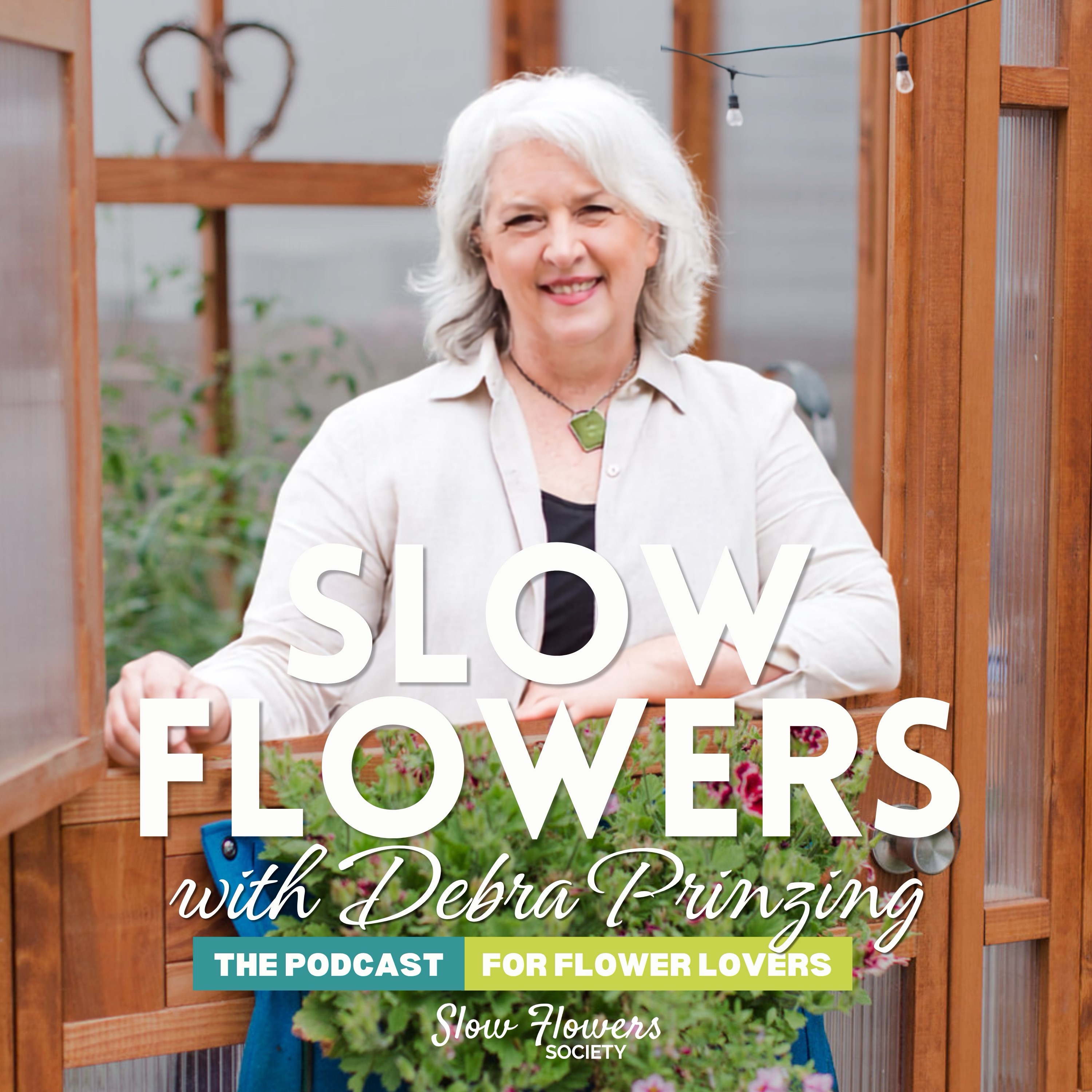
Slow Flowers Podcast
Debra PrinzingAudio
- Format:
- Podcast
- New episodes:
- Weekly
- Typical length:
- about 55 minutes
- Latest episode:
About this show
The Slow Flowers Podcast is the award-winning, long-running show known as the “Voice of the Slow Flowers Movement.” Airing weekly for more than 9 years, we focus on the business of flower farming and floral design through the Slow Flowers sustainability ethos. Listen to a new episode each Wednesday, available for free download here at slowflowerspodcast.com or on iTunes, Spotify, and other podcast platforms.
Covers: flower farming, floral design, sustainable agriculture, slow flowers movement, garden design, floral business, local flowers, horticulture
Show details and episodes come from the publisher's public feed at slowflowerspodcast.com. Last updated . Names, artwork and text belong to their publishers.
Recently on this show
Summary of recent episodes, drawn from the publisher's feed.
This podcast examines how flower farms and floral designers run their operations, guided by sustainability principles. Recent episodes explore scaling year-round floriculture at Floraponics, a sister business to a Maryland farm, Felicia Reid's move from law into garden design, and foraging blooms from a backyard.
Cosmos
Similar in subject
- Field and Garden with Lisa Mason Ziegler
Both cover: floral design, flower farming, sustainable agriculture - Morning in the Garden
Both cover: floral design, horticulture - The Plantastic Podcast
Both cover: garden design, horticulture
Similar shows



Episodes
Episode 775: The Earth Dress with Alanna Messner-Scholl of Waverly Flower Co., the American Flowers Week Botanical Couture Series, Part Three
· 45 min
https://youtu.be/IgB9f_-9SVc?si=Nd0prSpTRs6Sb7hc Designed by Alanna Messner-Scholl of Waverly Flower Co., the “Earth Dress” is a slender, floor-length gown that appears to grow from a demure pair of seed-embellished ballet flats. It seems fitting that a sustainable farmer-florist who once attended the Fashion Institute of Technology would conjure up this organic-looking garment using compost, soil, moss, roots, seeds, and vines. “I wanted it to be a concept piece with an organic, natural feeling,” Alanna said. Having designed botanical couture fashions for Slow Flowers Society’s past two American Flowers Week collections--both of which featured blooms, petals, and foliage straight from her cutting garden--Alanna wanted to highlight other aspects of flower-growing, so she turned to her potting shed. For 2026, she explores the lifecycle of a flower through botanical fashion. Her creativity helps us better understand what it means to grow and design. I know you’ll love our conversation as you learn about Alanna’s ideas and design process! Alanna Messner-Scholl of Waverly Flower Co. Slow Flowers Society created American Flowers Week in 2015 as a community-focused floral holiday that allows and encourages participation from everyone in the floral industry — from flower seed and bulb producers to growers; from designers to retailers; from cutting garden enthusiasts to artists. Now in its 12th year, the campaign continues to engage flower farmers, floral designers, farmer-florists, wholesalers, retailers, grocery stores, and flower lovers! DESIGN + CONCEPT: Alanna Messner-Scholl, Waverly Flower Co. waverlyflowerco.com, @waverlyflowercoPHOTOGRAPHY: Victoria Lin Photographyvictorialinphotography.com, @victorialin.photographyMODEL, HAIR + MAKEUP: Amie Bantz, @amiebantzSTUDIO AND DESIGN ASSISTANCE: Morgan Feher, @morganbfeherFOLIAGE AND SEEDLING SOURCE: Waverly Flower Co.SOIL AND COMPOST SOURCE: Barnside Mulch and CompostSEED SOURCE: Johnny’s Seeds, @johnnys_seedsVENUE: Waverly Flower Co. Studio Our first botanical couture look began with Susan McLeary’s iconic red-white-and-blue floral Afro, an impeccable floral headpiece became the branding for American Flowers Week in 2016 and inspired a decade of botanical couture looks that followed: Garments, ensembles, and accessories created by Slow Flowers members and farmer-florist teams across the U.S. Since 2016, we have celebrated an impressive lineup of more than 50 American Flowers Week botanical couture looks, designed by our members and featuring domestic flowers and foliage as the inspiration. These floral fashions hail from across the continent -- Alaska and Hawaii; Maine and Florida; Missouri and South Dakota and beyond. Alanna's original inspiration board for the Earth Dress So today, we travel to Pennsylvania, to meet Alanna Messner-Scholl of Waverly Flower Co., and learn about her third botanical couture look for American Flowers Week. It’s great conversation and I’m happy to share it with you! Download free social media badges, including those featuring The Earth DressDownload flower-farming artwork by Amy Rice, whose work we licensed for this year’s campaign. Hot off the Press: Slow Flowers Journal - Summer 2026 https://issuu.com/bloomimprint.com/docs/slow_flowers_journal_summer_2026_--_american_flow And please enjoy our Summer 2026 issue of Slow Flowers Journal – out this week. You can read extended stories about our featured artists and botanical couture designers, as well as some fun features about what our members are doing around the world. The stories are mostly based in the U.S., but we have a very special article commissioned by Slow Flowers Society -- a report by Dee Hall Goodwin of Mermaid City Flowers who traveled to London this past May to cover the first flower farm installed at the RHS Chelsea Flower Show. You’ll find all this inspiration in our 42-page digital magazine – Click on the flipbook above to read and enjoy! Thank you to our Sponsors This…
Not rated yetEpisode 774: Lily Fashions with floral artist Françoise Weeks, the American Flowers Week Botanical Couture Series, Part Two
· 59 min
https://youtu.be/2GBCwmvQz9g?si=acEjUfFB92SDBSJI Our 12th annual American Flowers Week is coming right up – June 28th through July 4th. To showcase this year’s Botanical Couture collection, I’m welcoming return guest Françoise Weeks to the Slow Flowers Podcast. A longtime Slow Flowers Member, her name is synonymous with botanical couture. As an educator, she has taught thousands of students around the globe, as well as from her Portland, Oregon-based studio, and online. Slow Flowers asked Françoise to create a lily-inspired floral fashion for this year’s American Flowers Week collection, an idea originally proposed by Flowerbulb.eu, a Slow Flowers sponsor that that promotes lilies grown from European bulbs for U.S. gardeners, flower farmers, and florists. Françoise designed and created two alluring styles to highlight lily petals and blooms. In addition to discussing this project, Françoise shares some of the techniques and mechanics she has developed for botanical couture – and you might want to add them to your floral tool kit! Françoise Weeks American Flowers Week represents a unique intersection of passions – flower farmers and floral designers coming together to promote local, seasonal, and sustainable flowers. This truth is at the core of what distinguishes the Slow Flowers Movement from any other floral industry organization of initiative.It underscores the shared values and celebrates the important, tandem paths of both professions, as well as the ones who call themselves farmer-florists. Brim detail of Françoise Weeks' lily Top Hat (c) Theresa Bear This year, we are delighted to welcome Françoise Weeks, who has created two of American Flowers Week’sfour distinct looks, a collaboration with Sandra Laubenthal and Norman Peterkort, growers of superior Asiatic, oriental, and double lilies, and owners of Peterkort Roses. Lily production at Peterkort Roses (c) Theresa Bear Peterkort Roses supplied Françoise with hundreds of lily stems and accent flowers from their greenhouses outside Portland, Oregon. We’re calling the collection “Lily Luxe,” and when you see the way Françoise has reimagined lilies into wearable fashions – you’ll be as enchanted as I am. Lily stole by Françoise Weeks (c) Theresa Bear "Flower Power" by Amy Rice Françoise Weeks LILY social media badge Visit Americanflowersweek.com to download our free social media badges:The Françoise Weeks-Peterkort looks Flower-farm social media campaign by Amy Rice And head’s up, today’s episode is the second of our three-part series, so join us on July 1st to meet Alanna Messner-Scholl of Waverly Flower Co., as we introduce her third consecutive botanical fashion created for American Flowers Week. Thanks for joining in and sharing the news about this special campaign! Thank you to our Sponsors This show is brought to you by slowflowers.com, the free, online directory to florists, shops, and studios who design with local, seasonal and sustainable flowers and to the farms that grow those blooms. It’s the conscious choice for buying and sending flowers. Thank you to our lead sponsor, Flowerbulb.eu and their U.S. lily bulb vendors. One of the most recognizable flowers in the world, the lily is a top-selling cut flower, offering long-lasting blooms, year-round availability, and a dazzling petal palette. Flowerbulb.eu has partnered with Slow Flowers to provide beautiful lily inspiration and farming resources to help growers and florists connect their customers with more lilies. Learn more at Flowerbulb.eu. Thank you to Rooted Farmers. Rooted Farmers works exclusively with local growers to put the highest-quality specialty cut flowers in floral customers' hands. When you partner with Rooted Farmers, you are investing in your community, and you can expect a commitment to excellence in return. Learn more at RootedFarmers.com. Thank you to Johnny's Selected Seeds, an employee-owned company that provides our industry the best flower, herb and vegetable seeds --…
Not rated yetEpisode 773: The Marigold Gardens with Caitlin Mathes, the American Flowers Week Botanical Couture Series, Part One
· 1 hr 2 min
https://youtu.be/qLDRA7aDbe0?si=ErpsCddUPW3DRei2 In the runup to our American Flowers Week’s annual Botanical Couture collection, I’m welcoming Caitlin Mathes to the Slow Flowers Podcast. A longtime Slow Flowers Member based in New York’s Finger Lakes Region, Caitlin has been cultivating the Tagetes species, also known as the marigold, since 2019. Her passion led to establishing The Marigold Gardens as a singular flower farm, specializing in more than 40 marigold varieties. When planning this year’s American Flowers Week floral fashions, we asked Caitlin if she would like to create a marigold garment – and she joined in the fun, growing, designing, fabricating, and modeling her playful look. Join me as we learn more about Caitlin’s floral enterprise, her love affair with marigolds, and her charming, Medieval-inspired garment fashioned with a multitude of colorful and uniquely-formed varieties. You, too, will fall in love with marigolds because Caitlin’s passion is contagious! Some of Caitlin Mathes' beautiful marigold varieties (left) and the flower farmer, portrayed wearing a marigold crown (right) American Flowers Week was founded by Slow Flowers in 2015 as the original domestic flower promotion campaign. Each year, from June 28-through July 4, Slow Flowers members and flower lovers everywhere are invited to showcase their flowers. Some folks post their blooms across social media as red-white-and-blue creations; others use the American Flowers Week bouquet labels to adorn market wraps or to decorate take-home arrangements from events and workshops. But since 2016, the centerpiece of American Flowers Week has been the botanical couture runway, floral fashions grown, designed, and produced by flower farmers, farmer-florists, and floral designers, as well as creative fashionistas who just love the idea of dressing a model in blooms. American Flowers Week promotional graphic featuring Caitlin Mathes and her marigold fashion This year, we have four distinct looks to share in our celebration, and today, we kick things off with a magical marigold design from Caitlin Mathes, owner of The Marigold Gardens. American Flowers Week: The Marigold Look The Marigold Gardens is an emerging flower farm with only one crop . . . MARIGOLDS! As Caitlin puts it: “The marigold has given me so much joy and inspiration that I felt the need to become a grower, steward, advocate, and cheerleader for this wonderful flower. It is high time marigolds had their praises sung and I look forward to growing The Marigold Gardens into a beautiful destination for all things marigold.”She calls herself a marigold monger, which is just one role this maker, performer, librarian, and agrarian represents. It was so much fun speaking with Caitlin about her marigold passion, one that inspires her to create and share in all types of ways. Let’s welcome Caitlin to the Slow Flowers Podcast and get ready for a deep dive into the world of marigolds. Garlands of Marigolds Marigold Inspiration Download free social media badgesFlower-farming prints by Amy RiceCaitlin Mathes’ Marigold Look American Flowers Week 2026, by Amy Rice And head’s up, today’s episode is the first a three-part series, so join us on June 24th to learn from botanical artist and educator Françoise Weeks; followed by a conversation on July 1st with Alanna Messner-Scholl of Waverly Flower Co., as both will discuss their American Flowers week floral fashions. I can’t wait to share those wonderful conversations – and you’ll be inspired! Thank you to our Sponsors This show is brought to you by slowflowers.com, the free, online directory to florists, shops, and studios who design with local, seasonal and sustainable flowers and to the farms that grow those blooms. It’s the conscious choice for buying and sending flowers. Thank you to our lead sponsor, Flowerbulb.eu and their U.S. lily bulb vendors. One of the most recognizable flowers in the world, the lily is a top-selling cut flower, offering…
Not rated yetEpisode 772: Diversification Through On-Farm Workshops with Niki Irving of Flourish Flower Farm
· 57 min
https://youtu.be/yJlU-Ca9W3M?si=5Q5zGfnc51bXKSDS Niki and William Irving are proud stewards of Flourish Flower Farm, a 9-acre farm in Asheville, North Carolina. Nestled in the heart of old tobacco country, they love nurturing their beautiful slice of paradise in the Blue Ridge Mountains -- a dream come true after many years of farming on leased land. They achieve their priority of growing specialty varieties of flowers and producing high quality, organic, fragrant blooms by focusing on intensive planting, soil fertility, plant health and succession planting. As Niki likes to say, ‘Flourish’ as a verb means: “to grow or develop in a healthy or vigorous way, especially as the result of a particularly favorable environment.” Wanting a simple and meaningful business name that fit their values and lives, and thanks to a suggestion from Niki’s mom, they started the farm-based venture during a time of transition and deep personal longing for something more in our lives. “We wanted to be flourishing as people and to be doing something heartfelt and important,” Niki explains. Their goal is not only to provide a favorable environment for plants to flourish, but also for employees, customers, workshop guests, wedding clients and everyone who is a part of Flourish Flower Farm to flourish. Niki Irving in the ranunculus patch at Flourish Flower Farm Flourish Flower Farm was established in 2016 is owned and loved by Niki Irving. Niki turned her dream of becoming a farmer-florist into reality and she is the creative force behind Flourish’s designs. As farm manager, she loves growing, nurturing and creating beauty through flowers; her love of plants runs deep, beginning with her family’s landscaping and tree farming businesses. Though he has a full-time job off the farm and is also a small business owner, her husband William enjoys balancing his office job with farm life. Niki and William share a love of nature, hard work, creating beauty and spreading joy at the farm. They believe that flowers make the world a more beautiful, enjoyable place and are inspired by the way a fresh bouquet of flowers lights up someone's entire face. Wedding party bouquets, grown and designed by Flourish Flower Farm Countless varieties of flowers and foliage are grown at Flourish Flower Farm using sustainable, natural practices. Niki and the Flourish team create lush, seasonally-inspired arrangements for weddings and special events, host classes and workshops on the farm and offer seasonal bouquets at the Farmstand. Flowers by Flourish Flower Farm -- in Niki's favorite palette of "pink and peach" Niki is the author of Growing Flowers: Everything You Need to Know About Planting, Tending, Harvesting and Arranging Beautiful Blooms, published in Spring 2021, for which I was honored to write the foreword. We’re delighted that Niki is a longtime Slow Flowers member. She serves as the Association of Specialty Cut Flower Growers’ Southeastern Regional Director and Flourish is a Certified Local business through the Appalachian Sustainable Agriculture Project. Boutonniere by Flourish Flower Farm When I ran into Niki this past January at the ASCFG winter conference, I asked if she would return to the Slow Flowers Podcast to share an update. Much of our conversation that you’ll hear today focuses on the full curriculum of flower farming and floral design workshops held on the big, wraparound, covered porch at Flourish Flower Farm – options from just a few hours to two full days of immersion. Niki’s insights about juggling education with flower farming and wedding design are worth your attention – I am so impressed with her approach to this sustainable operation. Let’s jump right in and welcome Niki Irving back to the Slow Flowers Podcast. Horses and Flowers with Niki Irving of Flourish Flower Farm More Resources:Follow Flourish Flower Farm on Instagram and FacebookOrder a signed copy of Growing FlowersOn-Farm Workshop Offerings + Schedule for 2026 Slow Flowers…
Not rated yetEpisode 771: Eileen Tongson of Orlando’s FarmGal Flowers on building a cutting garden-based business as a pioneer of the Slow Flowers Movement
· 42 min
https://youtu.be/6Fw4Yodu3Ww?si=9dEb1tKVamN6haAQ I recorded today’s conversation on the final day of our recent flower and garden-inspired river cruise in Holland and Belgium. It was a spontaneous decision to sit down with Eileen Tongson, a longtime Slow Flowers member, owner of FarmGal Flowers, and one of 29 North American growers featured in the pages of The Flower Farmers book, who had joined the tour along with her cousin, Sarah Ponce. Based in Winter Park, Florida, a suburb of Orlando, Eileen’s success at growing flowers nearly year-round was once a curiosity; now it’s part of her reputation. Her students want to learn how to grow a flower garden like she has; they take Eileen’s workshops at a local botanical garden or at East End Market, an artisanal food and restaurant hub; and in small-group events at the FarmGal Flowers' cottage garden where Eileen lives with her family. I’m so thankful that Eileen agreed to record this conversation with me as she shared her story with fellow tour-goers and with our viewers and listeners. It also gave me a chance to tell the story of the origins of the Slow Flowers Movement with our fellow travelers. FarmGal Flowers opening pages of chapter The Flower Farmers In the pages of The Flower Farmers book, the opening lines of our chapter about FarmGal Flowers begins: “The botanical lifestyle that Eileen Tongson leads today began with a simple packet of zinnia seeds from her mother. “In retrospect, I was very fortunate, because I didn’t think much about it when I threw those seeds into some of my vegetable beds,” she says. “But they grew like crazy!” Eileen Tongson, FarmGal Flowers And as is the case with so many of us, those seeds planted a passion for flowers, an overflowing cutting garden, and a new career for the former nursing educator. Twelve years ago, FarmGal Flowers was born, and through her micro urban flower farm Eileen has made a great impression on her community and beyond. Inside pages from The Flower Farmers book chapter featuring FarmGal Flowers I’m so happy that she agreed to be part of The Flower Farmers book. Her story illustrates how to shape a flower-filled life and how to share it with others. And in our conversation, Eileen joined me in telling the Slow Flowers story, as well. Debra Prinzing and Eileen Tongson in Holland April 2026 We recorded in the lounge of AmaWaterways’ Certo vessel, the home of our seven-day river and canal cruise in April. About 20 of our fellow tourgoers joined us to learn more about Slow Flowers and FarmGal Flowers, and it was a lively and lovely experience – and I'm so happy we can share it with you today. Find and follow FarmGal Flowers on Instagram and FacebookSign up for FarmGal Flowers' newsletter here Thank you to our Sponsors This show is brought to you by slowflowers.com, the free, online directory to florists, shops, and studios who design with local, seasonal and sustainable flowers and to the farms that grow those blooms. It’s the conscious choice for buying and sending flowers. Thank you to our lead sponsor, Flowerbulb.eu and their U.S. lily bulb vendors. One of the most recognizable flowers in the world, the lily is a top-selling cut flower, offering long-lasting blooms, year-round availability, and a dazzling petal palette. Flowerbulb.eu has partnered with Slow Flowers to provide beautiful lily inspiration and farming resources to help growers and florists connect their customers with more lilies. Learn more at Flowerbulb.eu. Thank you to Rooted Farmers. Rooted Farmers works exclusively with local growers to put the highest-quality specialty cut flowers in floral customers' hands. When you partner with Rooted Farmers, you are investing in your community, and you can expect a commitment to excellence in return. Learn more at RootedFarmers.com. And thank you to Johnny's Selected Seeds, an employee-owned company that provides our industry the best flower, herb and vegetable seeds -- supplied to farms large and small…
Not rated yetEpisode 770: Hudson Valley farmer-florist Rebekah Mindel of Meadow Wilds, on growing and designing weddings with a sense of season and place
· 50 min
https://youtu.be/5fCEbvjLDBc?si=L614SYdRlT9RgmFI The cover story of Slow Flowers Journal’s spring issue – published in early May -- features an editorial-style photoshoot of a wedding at the top of Catamount Mountain in New York’s Berkshires. The florals for this beautiful production were designed by Rebekah Mindel of Meadow Wilds, today’s guest – and if you haven’t seen or read my story yet, I’d love to share it with you to it today – and introduce the creative farmer-florist who brought a botanical sensibility to her collaboration with planner Lisa Jaroscak Chin of Elegante Weddings and Events. I introduced the story as follows: As a wedding designer who grows many of her own botanicals and also sources from local farms, Rebekah Mindel’s floral vision reflects the couple’s aesthetic, while capturing the character of the ceremony’s place, venue, and natural setting. Her manifesto appears on Meadow Wilds’ website and includes this statement: “The Meadow Wilds process is collaborative and visionary. We design with an artist’s eye, pulling inspiration from the natural world, sensory experiences, all of earth’s fine details, and of course, love.” Join me in a conversation with Rebekah to learn about how the connection between place and design informs her studio. Rebekah Mindel (c) Teresa Horgan Photography The Catamount wedding venue featuring lavish seasonal florals by Meadow Wilds (c) Molly McCauley Designing the florals for an editorial-styled photoshoot that portrays a spring wedding presented Rebekah Mindel of Meadow Wilds a chance to work creatively in a unique place, full of elemental power. As she told me: “The ceremony’s stunning location was literally on top of a mountain. Windblown textures and the expansive feeling of grand vistas became central aspects of the floral design.” The collaboration with planner Lisa Jaroscak Chin, Columbia Tent Rentals and photographer Molly McCauley was a rare opportunity for Rebekah to realize her vision with rare creative freedom. Catamount Editorial featuring lovely tables and florals from Meadow Wilds (c) Molly McCauley Vendor Credits: Planning: @_eleganteweddingsandevents Venue: @catamountevents @catamountmtnresort Photography: @mollymccauley_photo Videography: @magicflutephotovideo Rentals: @columbiatentrentals Florals: @meadowwilds Stationery: @hudsonvalleyletterpress Dress Boutique: @mira_couture Dresses: @marchesabridal Tuxedo: @galxndrstyle Hair and Make Up: @bridalbyalexandria Stylist: @francesca_stylist.to.the.bride Cake: @cakesbyashleeo Shoes: @jimmychoo Talent: @olviyaaaaa @_thomasmichael Detail of a large-scale urn arrangement by Meadow Wilds (c) Molly McCauley For the floral aesthetic, Rebekah drew from ornamental shrubs on her farm to create structure, volume, and texture in several stately urns and ground arrangements. Flowering bulbs and perennials from her fields, and from fellow Hudson Valley growers added to the floral recipe. A wide variety of branches, including ninebark and viburnum, created the necessary scale, while an ephemeral, earthy spectrum of apricot, mauve, plum, and chartreuse greens added detail and interest. Allium, foxglove, lupine, tulips, peonies, columbine, and other local blooms play against baptisia foliage, while cultivated and wild-foraged ingredients reflect the beauty of place and time. Seasonal botanical beauty by Rebekah Mindel of Meadow Wilds (c) Molly McCauley “I think the fact that I’m a grower allows me to bring more of an organic quality to this project,” Rebekah explains. I wanted to share it with our listeners and readers – and I especially wanted to introduce Rebekah’s floral aesthetic and her collaboration with other creatives to produce a wedding photo shoot that benefitted each. Click below for the Spring 2026 issue of Slow Flowers Journal and read the story about Rebekah’s project, along with an inspiring collection of real weddings that celebrate local flowers from our Slow Flowers members. Click to…
Not rated yetEpisode 769: A Conversation about Local Flower Hubs with Jodi Logue of West Sound Floral Exchange
· 1 hr 9 min
https://youtu.be/UNpJQvGNuPc?si=BsOX2cXLaMTtF44S Jodi Logue is a Pacific Northwest flower farmer based in Olalla, Washington. As owner of Moss and Madder Farm, Jodi believes in the power of community-building. She is known for bringing flower farmers together from across the Kitsap Peninsula, from Bremerton to Tacoma and points between. Listeners met Jodi on the Slow Flowers Podcast in October 2023, an episode recorded at one of her “Pie and Coffee” gatherings for flower farmers. That’s when I first heard Jodi voice her interest in starting a flower hub to collectively market local flowers to florists. This former health care manager knows how to make things happen. In the spring of 2024, West Sound Flower Exchanged launched as a mobile floral wholesaler serving parts of three counties – all located on the opposite side of Puget Sound from my home. West Sound Flower Exchange is not a collective or a cooperative, but it is an important hub that connects flower farmers with florists and their customers. Jodi is a solopreneur and I wanted to learn more about this unique model, because it has been cropping up more frequently, including in recent episodes of the Slow Flowers Podcast. Our interview includes a video tour of Jodi’s farm, including a new barn, two high tunnels, and the adorable vehicle called The Flower Bus – a small school bus converted to botanical delivery van. Jodi Logue, Moss and Madder Farm The mission of West Sound Floral Exchange is to make it convenient to shop locally grown flowers first! It’s a simply stated brand message that communicates who they are and what they believe. Essentially, West Sound Floral Exchange wants to connect local flower farmers to designers so that all can share locally grown flowers with their communities. Points on the map for West Sound Floral Exchange The service eliminates the pain point of traveling across the region – usually by costly and time-consuming ferry boats or via a toll bridge -- to go to Seattle for “local” flowers, or to trek to a wholesale warehouse that imports over 90% of their product from other continents. As founder Jodi Logue writes on West Sound Floral Exchange’s website: “We started this collective because want to enable our local flower farmers to keep farming by creating a wholesale marketplace that serves local professionals. We hope the rising tide of local flowers will lift all our boats as we grow.” In addition to Jodi, who also owns Moss and Madder Farm, I’m thrilled to note that several Slow Flowers members are part of West Sound Floral Exchange, including: Kristen Rubin of Sweetwater Stem Co. and Amy Linhart of Humming Harvest – both based in Gig Harbor; and Rebecca Slattery of Persephone Farm in Indianola – all three are past guests of the Slow Flowers Podcast. And there’s also Erin Ardoin of Ginger’s Florals in Port Orchard. I’m pretty excited to see that they are each part of this endeavor. In all, there are more than 20 flower farmers who sell their fresh, seasonal blooms through West Sound Flower Exchange. The Flower Bus from West Sound Floral Exchange Whether you listen or watch today’s episode, you may find it impressive that I visited Jodi on the Tuesday before Mother’s Day. For someone embarking on what is arguably the busiest floral week of the year, Jodi was calm, cool, and collected. . . a true professional! Find and follow West Sound Floral Exchange on Instagram Thank you to our Sponsors This show is brought to you by slowflowers.com, the free, online directory to florists, shops, and studios who design with local, seasonal and sustainable flowers and to the farms that grow those blooms. It’s the conscious choice for buying and sending flowers. Thank you to our lead sponsor, Flowerbulb.eu and their U.S. lily bulb vendors. One of the most recognizable flowers in the world, the lily is a top-selling cut flower, offering long-lasting blooms, year-round availability, and a dazzling petal palette. Flowerbulb.eu has partnered…
Not rated yetEpisode 768: Organic flower farming in the Netherlands, with Julian Langelaan of Op Beemster Klei
· 56 min
https://youtu.be/a14eAaKuufw?si=l-DMCSjyfhpK1DBK Julian Langelaan is a pioneer in the emerging organic farming movement in the Netherlands. As the founder of Op Beemster Klei, which translated means, “a farm with clay soil, in the Beemster region,” Julian began growing cut flowers 10 years ago. The healthy, high quality, annuals, perennials, and ornamental woody shrubs from Op Beemster Klei demonstrate the success of having an organic approach, rare in a nation filled with greenhouse cut flower operations and a mega flower auction that serves the globe. As part of our recent Slow Flowers tour to Holland and Belgium, we visited Op Beemster Klei for a personal tour with Julian. Prior to traveling to Holland in April, I also pre-recorded an interview with him. Together, the interview and the tour of Op Beemster Klei will introduce you to what promises to be the future of flower farming in Holland. Julian Langelaan of Op Beemster Klei Op Beemster Klei was founded in 2016 by Julian Langelaan. He grows a wide array of organic summer flowers, supplied to the floral marketplace from mid-May through the end of October. Principle crops include peonies, sunflowers and dahlias, supplemented with a selection of other species such as alchemilla, saponaria, flowering dill, and nearly 30 other crops -- a beautiful mix of perennials and annuals, making it possible to compile a complete organic bouquet. Op Beemster Klei supplies to (international) wholesalers and to local stores and florists, which are supplied via the FloraHolland locations, as well as directly from our nursery. Julian, leading a guided tour of Op Beemster Klei for our Slow Flowers group on an April 2026 visit to Holland Julian assumed management of the flower farming operations from Jan Knook, who grew organic flowers in the same fields for nearly 15 years. Jan’s organic arable farm is still located at the same address as Op Beemster Klei, while today he focuses on crops like potatoes and onions. One of the high tunnels at Op Beemster Klei The objective of Op Beemster Klei is to increase the organic cut flower sector and make the floriculture sector greener. Other floriculture growers also want to commit to this, together with them, Op Beemster Klei co-founded the association Pure Organic in 2017. Pure Organic aims to raise awareness of the organic floriculture sector among buyers and end users. The flowers of Op Beemster Klei are certified by SKAL Biocontrole, an independent organization that supervises the organic chain in the Netherlands. Skal certifies companies with organic activities. An independent administrative body, SKAL ensures that the organic production, processing, and trading of products comply with EU organic regulations, the Dutch Agricultural Quality Act, and the regulations and principles of Skal Biocontrole. The promise of a beautiful flower season across the fields at Op Beemster Klei Op Beemster Klei is located in The Beemster Polder, an important UNESCO World Heritage site, reclaimed from a lake via the water extracted by windmills between 1609 and 1612. The region’s original historic landscape of fields, roads, canals, and dykes has been preserved intact. It is a stunning landscape and we LOVED visiting Julian’s farm. The Slow Flowers Tulip Tour to Holland and Belgium 2026 Today’s episode is in two parts – first, I filmed an in-person tour led by Julian when our small tour group visited Op Beemster Klei on April 29th. That is followed by a virtual interview I conducted with Julian in early April, prior to my visit. I can’t wait to share this impressive flower farmer and his operation with you. Thanks to Lois Moss of Tour 2 Explore More, our fantastic tour producer, who arranged for our visit to Op Beemster Klei and introduced us to Julian Langelaan. Hot Off the Press! Slow Flowers Journal Spring 2026 "The Slow Weddings Issue" In News of the Week, we have just published the Spring 2026 edition of Slow Flowers Journal – our third annual…
Not rated yetEpisode 767: Floral tourism at FAM Flower Farm in Lisse, Holland
· 46 min
https://youtu.be/NkUs5zQIaCQ?si=r8yE4x6setQ4Zpud In anticipation of my visit to FAM Flower Farm during last month’s Slow Flowers Tulip Tour in Holland and Belgium, I invited floral entrepreneurs Linda van der Slot and Marlies Weijers to join me on the Podcast. Friends since age 12, who married into Dutch tulip bulb and dahlia tuber-producing families, respectively, Linda and Marlies left careers of their own to form FAM Flower Farm nearly a decade ago. Their goal was to bring a feminine touch to a global floral industry – producing and selling bulbs, not for brokers and distributors or via the famous Dutch flower auctions, but for home gardeners, flower enthusiasts and tulip and dahlia lovers across Europe. By sharing their floral lifestyles and encouraging people to “Grow Your Own Happiness,” the partners quickly became Instagram darlings, with nearly 200k followers. Our tour group, which I co-led with Lorene Edwards Forkner, was fortunate to schedule a private tour of FAM Flower Farm, located in Holland’s flower bulb region, next to Keukenhof Gardens. Join our visit, followed by my pre-recorded conversation with Linda and Marlies – and catch a glimpse into their beautiful, bloom-filled lives, that they share with the world. Marlies Weijers and Linda van der Slot of FAM Flower Farm For years, Marlies Weijers and Linda van der Slot watched their husbands grow bulbs and tubers, which were then shipped in bulk to wholesalers and exporters all over the world. But they had no idea who would actually end up enjoying those flowers in their garden. That felt like a missed opportunity. So, the women decided to team up and start FAM Flower Farm. They chose “FAM” because it stands for both family and feminine -- with the goal of bringing a fresh, female perspective and connecting directly with fellow flower lovers. Endless rows of tulips at FAM Flower Farm With a mutual love for flowers, shared on Instagram, through FAM Flower Farm’s inspiration-packed website and an online shop for tubers, bulbs, and seeds, the small enterprise has exploded. Their goal was to showcase the stunning variety of the flowers they grow, the vibrant colors, the blooming fields, and the heart of family businesses. All with our own feminine touch, in the photography, the stories, and the packaging. And guess what? It took off! Thousands of flower lovers found their way to us. Our colorful updates were welcomed with open arms, and people began ordering bulbs and tubers to bring that same joy to their own gardens. They visited our fields, shared their photos, and helped spread the word. Suddenly, we were connecting with flower fans all over the world. People we had never met became real faces and voices to us. We could ask them questions, learn what they love, and share tips and ideas. That direct contact with our customers is what we love most. Many are amazed by how easy it is to plant bulbs and tubers—and how long the flowers bring joy, both in the garden and in the home. The Slow Flowers Tulip Tour gathers at FAM Flower Farm on April 22, 2026 Today’s episode is in two parts – first, I filmed an in-person tour and Linda’s presentation when I visited FAM Flower Farm on 22nd, with 37 others as part of our Slow Flowers Tulip Tour to Holland and Belgium. That is followed by a virtual interview I conducted with Marlies and Linda in early April, prior to my visit. Thanks so much for joining me today. You’ll want to watch the replay video of Episode 767 at slowflowerspodcast.com or on our YouTube channel. Thanks to Lois Moss of Tour 2 Explore More, our fantastic tour producer, who initially discovered FAM Flower Farm and arranged for our visit to spend a beautiful afternoon with Linda and Marlies. If you’re planning to visit the region, be sure to check out FAM Flower Farm’s tour calendar – tickets go quickly for April’s tulip tour and September’s dahlia tour! Thank you to our Sponsors This show is brought to you by slowflowers.com, the free, online…
Not rated yetEpisode 766: Adding a flower farm and floral shop to a retail nursery center with Delisa Hiel of Gardenwerks in Helena, Montana
· 45 min
https://youtu.be/ng5wllVlQyU Back in 2018, we included Retail Garden Centers Adding Floral Design Services as one of our trends to watch in the annual Slow Flowers Floral Insights and Industry Forecast. I noted the early wave of retail nurseries and garden centers opening or reviving in-house floral shops with a distinctly local emphasis.As it turns out, that’s the year that Delisa Hiel joined Gardenwerks, an established retail nursery and landscape design business in Helena, Montana, founded by her father-in-law Michael Hiel. Gardenwerks is truly a family affair, with Delisa’s husband Peter Hiel serving as designer and foreman on the landscape side of the business. Delisa dreamed up, installed and now manages Gardenwerks flower farm, essentially creating a sister business that extends the nursery brand and provides a new suite of plants and design services to the community. I recently connected with Delisa to discuss her approach to flower farming and floral design, as she shares a fantastic model that brings together horticulture and floriculture with intentionality. Scenes from gardenwerks flower farm with Delisa Hiel (c) Kelly Van Dye Photography The flower farm at Gardenwerks grows more than 100 fresh cut flower varieties one important facet of the long-established full-service nursery, landscape design-build business. From the months of March through September, under the management of head flower farmer Delisa Hiel, Gardenwerks offers unique, seasonal fresh flowers and produces artisanal, natural designs for weddings and special events in Helena and the surrounding area. In the off season, customers can find beautiful dried flowers and increasingly, season-extention offerings like winter-forced tulips. The dahlia field at sunriset at Helena, Montana-based gardenwerks I recently spoke with Delisa about her family’s nursery business, as we touch on the “symbiosis” that brings together flowers and plants in harmony. The economics of growing cut flower crops and raising cutting garden plants under the same roof as a landscape nursery seems obvious to me, but I always question why more garden centers are missing out on the market potential of flowers. I think it boils down to personnel. You can’t just throw a talented landscaper onto the flower farm setting and expect them to magically grow and design blooms that resonate with the floral marketplace. Luckily for Gardenwerks, which has served Helena for decades, Delisa Hiel joined the family and brought her horticulture, design, and floriculture expertise to the company. I’m excited to share her story with you today. More dahlias! For floral designs and market bouquets (c) Kelly Van Dye Photography It’s so inspiring to see how a nursery and garden center like Gardenwerks has included flower farming and floral design services in the mix – I wish more independent garden centers would recognize the potential of this model. Thanks to Delisa for sharing her story and perhaps stimulating more conversation around flower-growing as a revenue center in the green industry. Find and follow Gardenwerks Nursery and Gardenwerks Flower Farm on Instagram and Gardenwerks on Facebook. Thank you to our Sponsors This show is brought to you by slowflowers.com, the free, online directory to more than 700 florists, shops, and studios who design with local, seasonal and sustainable flowers and to the farms that grow those blooms. It’s the conscious choice for buying and sending flowers. Thank you to our lead sponsor, Flowerbulb.eu and their U.S. lily bulb vendors. One of the most recognizable flowers in the world, the lily is a top-selling cut flower, offering long-lasting blooms, year-round availability, and a dazzling petal palette. Flowerbulb.eu has partnered with Slow Flowers to provide beautiful lily inspiration and farming resources to help growers and florists connect their customers with more lilies. Learn more at Flowerbulb.eu. Thank you to Charles Little & Company for supplying…
Not rated yetEpisode 765: Beyond the Bouquet: Expanding Your Flower Business Through Education and Experience with Xenia D’Ambrosi of Sweet Earth Co.
· 53 min
https://youtu.be/PDyvSAAA7FI We’ve recently highlighted Slow Flowers members who serve not only the professional floral market, but the home gardener in search of cut flowers, flower seedlings, education, and inspiration. Capturing the attention of this often-overlooked population is not hard these days. Home gardeners and flower lovers are avid followers of social media’s influential growers and designers.They are the principal buyers of books about cut flower gardening and about growing specific types of flowers, as well as the shoppers who eagerly line up to buy cutting garden plants not always seen at garden centers. After hosting several recent episodes on this theme, I continue the conversation in today’s episode with Xenia D'Ambrosi of Sweet Earth Co. Xenia shares how she developed an online course, The Eco-Friendly Cutting Garden, to teach students how to plant a backyard flower garden that benefits the environment. The course evolved from a series of in-person, on-farm workshops, adapted for an online format to serve a wider population of cutting garden students. Xenia discusses how she developed the course, the demographic of her students, and the ways this course reinforces her brand as a sustainable cut flower grower and designer. Xenia D'Ambrosi of Sweet Earth Co. Sweet Earth Co. in the pages of The Flower Farmers book Here’s an excerpt from The Flower Farmers, the 2025 book I co-authored with Robin Avni. One of the 29 flower farmers featured in its pages is today’s guest, Xenia D’Ambrosi of Sweet Earth Co. Xenia D'Ambrosi of Sweet Earth Co. We wrote:. . . in 2010, a cancer diagnosis altered everything for Xenia D’Ambrosi. “It was a life-changing event,” recalls the woman who at the time worked on Wall Street in finance. While going through her cancer treatments, Xenia began her own version of horticultural therapy. “I started to reconsider what I wanted to do and how I wanted to take care of myself and my family.” She embraced eating locally and gardening. “I volunteered at some local farms and I truly believe that having my hands in the soil healed me.” She also studied at New York Botanical Garden for a certificate in gardening with a focus on sustainable design and began to create edible landscapes for others in her community. She grew vegetables and herbs for both her family and for private chefs and formed Sweet Earth Co. in 2012. A few years later, she added cutting garden design and transformed the kids’ playfield into a “farmstead,” a thriving teaching farm filled with an acre of cut flowers, which grown for commercial use. The Eco-Friendly Cutting Garden course package Xenia D’Ambosi used the farm as a backdrop for the mini-sessions she films and posts to Sweet Earth Co.’s YouTube channel. These have led to her signature online course, The Eco-Friendly Cutting Garden, created for avid gardeners and beginning flower growers. The six-module course connects Xenia with people all around the country, as she teaches how to plan, plant, harvest, and maintain a productive cutting garden that supplies a steady supply of bouquets. The Eco-Friendly Cutting Garden Students at an in-person cutting garden workshop at Sweet Earth Co. Xenia recently appeared as our April Slow Flowers Member Meet-Up expert as she shared with others in the Slow Flowers community the background behind creating her online course. With an MBA and a background in business and marketing, it’s fascinating to learn how she evaluated Sweet Earth Co.’s assets and created a digital product to help scale her expertise. I’m sure you’ll find yourself asking, “what expertise do I have that could be packaged into an educational product or experience?” There are so many fantastic takeaways from Xenia’s session, so be sure to take notes! Find and follow Sweet Earth Co. on Instagram and FacebookRegister for The Eco-Friendly Cutting Garden, Xenia's online course. $100-off course discount: SLOWFLOWERS Thank you to our Sponsors This show is…
Not rated yetEpisode 764: A visit House Flowers, Megan Homewood’s 100-square-foot flower shop in Shelton, Washington
· 1 hr 8 min
https://youtu.be/3dhAhas1Awg?si=LJUYkQflSCv8xZDu Megan Homewood is the owner, lead designer, and grower at House Flowers. She combines a diverse design experience and a passion for sustainable floristry to inform her seasonal, romantic design style. Inspired by the transient beauty of seasonal flowers and the dynamic landscape of the Pacific Northwest, she loves growing and designing with unique elements to create events that embody a particular place and time. Prior to settling in Shelton, a town at the gateway to Washington’s Olympic National Forest and known for its famous oysters and logging industries, Megan worked as the lead florist at a show garden in Alaska and managed floral installation projects for large events at some of Chicago’s most iconic venues. Her background as a studio manager and lead designer have given her the experience needed to produce stunning events in any environment. I recently made the lovely spring drive to visit Shelton and spent time interviewing and filming Megan in her jewel box-sized flower shop at 211 West Cota Street. Megan Homewood, owner of House Flowers in Shelton, Washington As I described at the top of this show, I recently took a drive about 65 miles to the south of me, towards Washington’s Highway 101 to the town of Shelton. It was such a delight to step inside House Flowers, a tiny little flower shop owned by Megan Homewood, a Slow Flowers member, farmer-florist, and small business entrepreneur. Vignettes inside the petite flower shop, House Flowers Megan and I met in person last fall during an event for The Flower Farmers and there she introduced me to her friend Isa Radojcic, owner of Marmo Cafe, a neighboring Shelton business described as an alternative arts organization with a caffè and shop. Marmo was one of Megan’s CSA floral pickup locations, and it was Isa who urged Megan to “open a flower shop” in the tiny storefront just two doors down from Marmo. I love the passion that these two bring to their little street. They’re the impetus for helping attract other businesses, including a few nearby eateries. They collaborate with others to produce an annual summer Arts Walk and are working to establish Shelton as a Certified Creative District, a program that helps Washington state communities into arts and culture destinations. A glimpse into the cutting garden at Megan's mini-farm This is the life of solo creatives, and I thoroughly enjoyed visiting both House Flowers and stopping by Marmo before I left for my drive home. I will be back to spend more time – and If you come to the Seattle-Tacoma area, remember to plan a trip. As Megan points out, Shelton is filled with tourists in the summer months, when people from around the globe to the famed Olympic National Forest pass through the town. Shelton Resources:The beautiful mural with an elegant, oversized fritillaria that you see behind Megan in the video interview was painted by her friend Molly Wheat Baker, a PNW illustrator and painter. You can follow her at @mollywheatbaker. When in Shelton, please visit Caffè Marmo, the cafe, gallery, and shop on Cota Street - owned by Megan's friend Isa. Follow Marmo here. Find and follow House Flowers on Instagram and Facebook. Thank you to our Sponsors This show is brought to you by slowflowers.com, the free, online directory to more than 700 florists, shops, and studios who design with local, seasonal and sustainable flowers and to the farms that grow those blooms. It’s the conscious choice for buying and sending flowers. Thank you to our lead sponsor, Flowerbulb.eu and their U.S. lily bulb vendors. One of the most recognizable flowers in the world, the lily is a top-selling cut flower, offering long-lasting blooms, year-round availability, and a dazzling petal palette. Flowerbulb.eu has partnered with Slow Flowers to provide beautiful lily inspiration and farming resources to help growers and florists connect their customers with more lilies. Learn more at Flowerbulb.eu.…
Not rated yetEpisode 763: Colleen McCoole Payne on collective flower selling through Kansas City Flower Farmers Wholesale Market
· 58 min
https://youtu.be/cGL1isNsbbE?si=h00tMUumLpTPXCH3 Collective flower selling is on the rise and we continue to see numerous models across the continent and even abroad. The origin comes from traditional farmers’ markets and has since diversified to include cooperatives, co-marketing ventures and solo-run farmer-to-florist hubs. The structures reflect the desires and business objectives of their founders, and today you’ll hear from Colleen McCoole Payne, co-founder and chief administrator of the Kansas City Flower Farmers Wholesale Market. The KC Flower Farmers Wholesale Market is a mouthful, but was intentionally named to distinguish this venture in the local market. Colleen owns FarmStrong Flowers, a regenerative specialty cut flower farm in Bucyrus, Kansas. I recently spoke with her about the market model she and 21 fellow growers have developed, which she describes to florists as similar to shopping a farmers market and paying for the product from each farm that they buy from. The Market has a new lease and a new location, and as Colleen says, “it’s still a work in progress and we are evolving to make it work better!” Dahlias from FarmStrong Flowers More than 20 flower farmers in Kansas City, Missouri, and in Kansas City, Kansas, and beyond are part of the KC Flower Farmers Wholesale Market, now in its fourth year as a wholesale collective serving approximately 200 floral customers from operations on both side of the Missouri-Kansas state line. The woman behind this endeavor, Colleen McCoole Payne, a Kansas grower and owner of FarmStrong Flowers, joined me recently to record today’s interview. The group has signed a lease to move into a permanent location, a cause for celebration after numerous temporary and pop-up sites in past seasons. Colleen and I dive right into discussing the unique model developed for this specific flower hub. And you’ll have thoughts, I’m sure – especially if you’re part of a collective or cooperative yourself. Here’s a bit of the narrative, as was posted on the market’s Instagram account: “Every year we searched high and low for that perfect landing spot. So much gratitude goes out to the locations we placed our buckets in prior to finding our dream space. We truly were bootstrapping it those first three years.We could not have come this far selling our locally-grown flowers wholesale without our fabulous buyers. So many of you have embraced our products and encouraged us to keep growing. We hope to become your one-stop shop for quality, locally-grown flowers. In other news, the market has open hours two days per week -- Tuesdays and Thursdays from 9 AM to 1 PM. Also added: what they believe is the first-ever VIP buyer option for 24-hour self-serve access to “Shopping the Cooler” for local flowers and foliage. The new venue also accommodates floral design work space and cooler space for rent. Participating Flower Growers: Bee & Co. C-Us-Bloom Castle Hill Farm FarmStrong Flowers Fern's Farmette Julie Pal Peonies Laura’s Flower Farm Long Acre Farm Mainstream Meadows Morningstar Flower Farm Nurturing with Nature Oskaloosa Flower Farm Patina Meadows Red Barn Blossoms Ruthie Mae Blooms Shelti Farms Soul of Soil Farm St. Clair Stems Triple S Homestead Whistle Stop Peonies Wild Thistle-Flowers Wyld Heart Flower Farm Find and follow Kansas City Flower Farmers Wholesale Market on Instagram and FacebookFind and follow FarmStrong Flowers on Instagram (as @laylasmarket) and Facebook You're Invited to Join Us: April 10th Member Meet-Up Farmer-florist and educator Xenia D'Ambrosi of Sweet Earth Co. And head’s up, our April Slow Flowers Member Meet-Up is right around the corner on Friday, April 10th at 9 am Pacific/Noon Eastern. You’ll meet farmer-florist Xenia D'Ambrosi of Sweet Earth Co. Xenia will share how she developed an online course, The Eco-Friendly Cutting Garden, to teach students how to plant a backyard flower garden that benefits the environment. The course evolved…
Not rated yetEpisode 762: Sarah Nayani of Grow Girl Seattle on teaching gardeners how to plan and plant their backyard cutting gardens
· 42 min
https://youtu.be/tRuXU20m9Dc?si=eR5fwa5ZiZKdsiTf After several years of farming in an urban space – including on the paved driveway, sidewalk strip, and backyard at her Seattle home – Sarah Nayani has carved out a niche teaching gardeners how to grow a bounty of cut flowers, herbs, and foliages in residential environments. The founder of Grow Girl Seattle, Sarah encourages workshop students to create a thriving home cutting garden by focusing on sustainable techniques and small space growing. She shares the rewards of connecting with the seasons’ rhythms and how flower-growing helps people appreciate the role of pollinators up close. My conversation with Sarah includes the numerous ways her business has transitioned to fit her lifestyle, how she focuses on the parts of farming and floristry that give her the most joy, and income-generating tips for the farmer-florist side hustle. Sarah Nayani of Grow Girl Seattle We have been focused on an inspiring theme here at the Slow Flowers Podcast! For the early weeks of 2026 we’ve been highlighting members who serve not only the professional floral market, but the home gardener in search of cut flowers, flower seedlings, education, and inspiration. Capturing the attention of this often-overlooked population is not hard these days. Home gardeners and flower lovers are avid followers of social media’s influential growers and designers. They are the principal buyers of books about cut flower gardening and about growing specific types of flowers, as well as the shoppers who eagerly line up to buy cutting garden plants at retail prices not always seen at garden centers. Garden bouquet by Sarah Nayani Since the first of the year, we’ve highlighted the voices and stories of a number of people tapping into this major consumer shift. In March alone, we featured Growing Flower Seedlings for Profit, with Kate Skelton of Gratitude Flowers, Carol Wetzel of The Little Farm on Olga Road, and Fawn Rueckert of Sego Lily Flower Farm and Snuck Flowers; and The Beginner’s Cut Flower Garden,” with author Elizabeth Brown of Foxglove Farmhouse. Our upcoming April 10th member meetup will feature Xenia D’Ambrosi of Sweet Earth Co., on how she has developed a course called “The Eco-Friendly Cutting Garden,” and you’ve all heard me promote the upcoming May 3rd Ultimate Cutting Garden Plant Sale, scheduled to take place in partnership with the Seattle Growers Market. Scenes from a petite "driveway" cutting garden with volumes of blooms Today’s guest is situated at the convergence of all these topics, as well. I was delighted to recently sit down with Sarah Nayani of Grow Girl Seattle. She is an urban farmer-florist who teaches home gardeners, including members of local garden clubs and horticulture societies, all about starting flowers from seeds and planning their cutting gardens. Sarah enhances the workshop experience by offering her seedlings of hard-to-find, hard-to-grow, and uncommon cool and warm-season annuals. These revenue streams help fund her garden expenses and these events keep Sarah connected with her community. Raised beds on the sidewalk strip at Grow Girl Seattle's residential property I joined the audience at Sarah’s fantastic recent workshop sponsored by the Northwest Horticultural Society and held at Seattle’s Dunn Gardens, an exquisite garden whose origins date to 1915 as one of the unique Olmsted-designed landscapes in the Pacific Northwest. Thank you to both organizations for permitting me to attend and use the Dunn Gardens classroom for our recording. An urban field of flowers Thanks so much for joining me today. You’ll want to watch the replay video of this session under Episode 762 at slowflowerspodcast.com or on our YouTube channel. If you're interested in learning more, register for future email notices about events and classes, including how to register for Sarah’s May 30th workshop at the University of Washington’s Center for Urban Horticulture called “Grow a Cut Flower…
Not rated yetEpisode 761: Growing Flower Seedlings for Profit, with Kate Skelton of Gratitude Flowers, Carol Wetzel of The Little Farm on Olga Road, and Fawn Rueckert of Sego Lily Flower Farm and Snuck Flowers
· 1 hr 0 min
https://youtu.be/xnlzif1Nue0?si=60_eh0nNVHX1Gg42 The theme of today’s episode is straight from our Slow Flowers Floral Insights and Industry Forecast – an insight that identifies cutting garden plants as an important business channel. Flower farmers are translating their expertise into new revenue streams by growing and selling cut flower seedlings and starts to flower lovers and fellow growers. Last fall, we produced a report for Johnny’s Seeds’ newsletter on this trend and today, three of the growers featured in that story share more about their cutting garden plant collections. As the idea of “gardening like a flower farmer” has taken off, and as home gardeners and floral enthusiasts ask for the unique cultivars that the pros grow, we’re thrilled that more gardeners want to jump-start their cutting gardens with flowers sown by someone else. For the consumer, this means having a cut flower garden without the grit and grind of farming. For flower farmers and farmer-florists it means trading your time and knowledge for a rewarding new revenue stream. Kate Skelton, Fawn Rueckert (pictured in overalls), and Carol Wetzel It's the season for plant sales and for encouraging customers to grow cutting gardens! Today, you’ll learn from three Slow Flowers members as they discuss the market potential of growing and selling cut flower seedlings! Cut flower seedlings for profit Flower Farmers: Learn how you can translate your expertise into a revenue stream when you grow and sell cutting garden plants to flower lovers and fellow growers. Florists: Get in on the act and offer locally-grown cut flowers as an add-on for workshops and special events! As special thank-you to our expert panelists, Kate Skelton of Edgewood, Washington-based Gratitude Flowers; Carol Wetzel of The Little Farm on Olga Road in Eastsound-Washington on Orcas Island; and Fawn Rueckert of Sego Lily Flower Farm in Jordan, Utah, who is also the resident flower farmer and educator at Snuck Farm. This session was recorded as part of the March Slow Flowers Member Meet-Up and we wanted to share it today for our viewers and listeners. It's a follow-up to our November 2025 feature article in Johnny's Seeds' JSS Advantage Newsletter. Let’s dive into cutting garden plants and learn new ways you can profit from your farming expertise! LEARN MORE: Enjoy our past Slow Flowers Podcast episodes with these expertsEpisode 489 (January 20, 2021): Fawn Rueckert of Sego Lily Flower Farm, an urban micro farm in UtahEpisode 652 (March 6, 2024): Building a niche supplying flower seedlings for farmers and gardeners with Kate Skelton of Gratitude FlowersEpisode 734 (September 17, 2025): A visit to The Little Farm on Olga Road, with Carol Wetzel and Allan Tone, where customers are welcomed to harvest the beauty of flowers, herbs, and vegetables FIND/FOLLOW:Sego Lily Flower Farm on Instagram and FacebookSnuck Flowers on InstagramGratitude Flowers on Instagram and FacebookThe Little Farm on Olga Road on Instagram and Facebook Join us at the ULTIMATE CUTTING GARDEN PLANT SALE 2026 Ultimate Cutting Garden Plant Sale And head’s up if you’re in the Seattle area on May 3rd, please attend the Ultimate Cutting Garden Plant Sale, produced in partnership with the Seattle Growers Market. As you heard, Kate Skelton of Gratitude Flowers will be back with her soil-block cutting garden collections, as well as annuals, perennials, tubers and seeds – and possibly a few ornamental woody plant surprises – from dozens of the Market’s member growers and more Slow Flowers members. This is a free event – just bring your wagon and boxes to transport your purchases. You can find more details and the signup/RSVP link in today’s show notes! I hope to see you there! RSVP to Shop or Vend Thank you to our Sponsors! This show is brought to you by slowflowers.com, the free, online directory to more than 700 florists, shops, and studios who design with local, seasonal and sustainable flowers and to the farms…
Not rated yetEpisode 760: “The Beginner’s Cut Flower Garden,” with author Elizabeth Brown of Foxglove Farmhouse
· 44 min
https://youtu.be/eZ8rhWdiXGI?si=dpx4iDhOEBb3420T Foxglove Farmhouse is a small, regenerative flower garden in coastal Maine. If you follow the tidal York River from the sea, up along the winding salt marshes to the west side of town, there you will find owner Elizabeth Brown and her flowers. Her purpose is a simple one -- to grow sustainable local flowers, and to encourage others to do the same. Elizabeth believes flowers have the power to heal, connect, and bring joy, especially when we need it most. Through her community-based Foxglove Garden Club for home gardeners, and through her role as Resident Gardener at Cliff House Maine, Elizabeth shares her belief that the best flowers are those grown with your own two hands. Join me today as Elizabeth and I discuss her story and her new book, “The Beginner’s Cut Flower Garden.” Elizabeth Brown (c) Lindsay Fairchild Today’s interview is the final in our series of four conversations filmed in February at the Northwest Flower & Garden Festival in Seattle, where Slow Flowers has long been involved producing floral education and programming. In her gorgeous new book, The Beginner's Cut Flower Garden, certified therapeutic horticulturist and cut-flower expert Elizabeth Brown, reveals how growing your own show-stopping bouquet does not require abundant yard space, gardening expertise, or an overwhelming time commitment, just an eagerness to start. Introducing gardeners of all skill level to the vibrant world of floral gardening, The Beginner's Cut Flower Garden offers step-by-step seasonal advice, easy-to-grow bloom profiles, flower arranging tips, floral crafting activities, and more. Flizabeth at her Foxglove Farmhouse garden (c) Lindsay Fairchild Beyond just teaching how to nurture florals, Brown reminds why we should, inviting all to enjoy the healing, connection, and delight derived from a hand-grown bouquet. We featured Elizabeth, a longtime Slow Flowers member and owner of Foxglove Farmhouse, in the fall 2023 issue of Slow Flowers Journal, in a beautiful story about her role growing cut flowers and providing floral experiences at Cliff House, a coastal Maine resort. You can read that story here (see pages 25-29). It was no surprise to me that a book project soon followed after we featured Elizabeth. She had already been working with photographer Lindsay Fairchild and they shared some lovely images to illustrate that story, too. Floral experiences at Cliff House Maine with Elizabeth Brown of Foxglove Farmhouse (c) Lindsay Fairchild Here’s a bit more about Elizabeth: She is a certified therapeutic horticulturist and Maine Master Gardener Volunteer. After growing and gifting hundreds of blooms to essential workers in her community during the pandemic, Elizabeth created Foxglove Farmhouse, a quarter-acre cut flower garden in her backyard. This garden’s mix of annual and perennial blooms are cultivated without chemicals and pesticides, providing sustainable local flowers to florists and markets. Elizabeth regularly gives workshops on cut flower garden design, floral arrangements, and seed sowing and created the Foxglove Garden Club, a year-long virtual subscription-based garden education program for beginner gardeners. Brown also works as the Resident Gardener of Cliff House Maine. In 2023, she released a curated 100% organic cut flower seed line, highlighted in the Boston Globe and Down East Magazine’s seasonal gift coverage. Table of Contents by Season Flowers for Cutting Favorite Harvest Tools I’m delighted that we were able to sit down and record an episode for our special event, Slow Flowers Podcast LIVE. Thanks to everyone who attended – it was our best-attended session and we loved the interaction with friends and peers in the audience. Find and follow Foxglove Farmhouse on Instagram Thank you to our Sponsors This show is brought to you by slowflowers.com, the free, online directory to more than 700 florists, shops, and studios who design with local, seasonal…
Not rated yetEpisode 759: “Beautiful Roses,” with author Janice Cox of Natural Beauty at Home
· 46 min
https://youtu.be/aZi_o0UniTU?si=qXVttU3ViO_6wIwD Everyone loves roses, and Janice Cox proves why in her new book, "Beautiful Roses: A Guide and Workbook for Growing, Using, and Enjoying America’s Favorite Flower." The book covers rose growing but also the endless ways you can integrate roses into cooking, crafting, and wellness. A nationally recognized expert in natural beauty, DIY skincare, and gardening for health and wellness, Janice is author of five books, and she has created a series of hands-on workbooks focused on growing, using, and enjoying herbs and flowers. A longtime Slow Flowers member, she shares her newest book with us today – combining the beauty, fragrance and creativity that roses, rose gardening, and cultivation can bring to your life and your floral enterprise. Janice Cox, author of Beautiful Roses Today’s interview is the third in our series of four conversations filmed in February at the Northwest Flower & Garden Festival in Seattle, where Slow Flowers has long been involved producing floral education and programming. Cooking with Roses I’m so happy that we can learn from Janice Cox, Oregon-based author and expert on the natural use of so many beloved plants. She calls herself “the original DIY-er,” meaning that long before DIY was even a term, Janice turned to plants, nature, and the garden to make what other people purchase in plastic bottles or jars, as well as to cook with and make functional, everyday items. Natural Beauty with Roses I love how she has created a meaningful, plant-filled and flower-filled life and career. In our conversation, you’ll learn not only volumes about America’s favorite flower, the rose, but also (surprisingly) about Luffas. The common thread is that both the rose and the luffa plant can be grown and harvested for many uses. And sprinkled throughout this episode are delightful plant facts – stories of history, symbolism, and tradition – along with practical tips for preserving their blooms, petals, stems, and fruit. Crafting with Roses Find and follow Janice Cox at these social places:Instagram and FacebookOrder "Roses" and Janice's other books here Join us at the Slow Flowers Member Meet-Up In news of the week, there’s still time to sign up and attend our March Slow Flowers Member Meet-Up – coming up this Friday, March 13th at 9 am Pacific/Noon Eastern. The topic is one that’s particularly appealing to both growers and farmer-florists, but also to home gardeners. We’ve invited three of our members to share their experience, advice, and tips in a session called Growing Flower Seedlings for Profit. You’ll learn from Kate Skelton, Fawn Reuckert, and Carol Wetzel as they discuss how you can translate your expertise into a revenue stream when you grow and sell cutting garden plants to flower lovers and fellow growers. And florists will be encouraged to get in on the act and offer locally-grown cut flowers as an add-on for workshops and special events! Pre-registration is required for this Zoom meeting. Click the signup link below, or find a link in our Instagram linktree bio for Slowflowerssociety. Hope to see you there! Pre-Register for the March 13th Slow Flowers Member (Virtual) Meet-Up Thank you to our Sponsors This show is brought to you by slowflowers.com, the free, online directory to more than 700 florists, shops, and studios who design with local, seasonal and sustainable flowers and to the farms that grow those blooms. It’s the conscious choice for buying and sending flowers. Thank you to our lead sponsor, Flowerbulb.eu and their U.S. lily bulb vendors. One of the most recognizable flowers in the world, the lily is a top-selling cut flower, offering long-lasting blooms, year-round availability, and a dazzling petal palette. Flowerbulb.eu has partnered with Slow Flowers to provide beautiful lily inspiration and farming resources to help growers and florists connect their customers with more lilies. Learn more at Flowerbulb.eu. Thank you to Charles…
Not rated yetEpisode 758: “Modern Floriography: Flowers, Gardens, and Gifts Inspired by the Language of Flowers,” with author Teresa Sabankaya
· 55 min
https://youtu.be/nEmy-vXnxos?si=3u8-foe5nFkee7KM Teresa Sabankaya believes that today’s technology gives us endless ways to communicate, yet we are often left searching for words when faced with a declaration of love, the loss of someone dear, or the marking of a pivotal moment. For centuries, people have turned to the language of flowers to express their most heartfelt emotions. In Teresa’s new book, “Modern Floriography,” she honors this enduring tradition while inviting readers to discover fresh, creative forms of expression. Teresa recently joined our Slow Flowers Podcast LIVE series, held at the Northwest Flower & Garden Festival in Seattle where she spoke, taught, signed books, and met hundreds of fans. A longtime Slow Flowers member and pioneer of the slow flowers movement, Teresa shared generously with our live audience and with all of you today. Today’s interview is the second in our series of four conversations filmed in February at the Northwest Flower & Garden Festival in Seattle, where Slow Flowers has long been involved producing floral education and programming. I’m thrilled that Teresa Sabankaya brought her message of the language of flowers to this year’s festival, including at the Blooms & Bubbles workshop. Before we dive into the interview, here’s a bit more about Teresa: Teresa’s floral career began in 1999 when she became a farmer-florist who designed flowers that she herself grew – a practice not widely known among consumers. She added retail floristry with Bonny Doon Garden Co. in Santa Cruz, California, in 2003. Modern Floriography by Teresa Sabankaya One of the most innovative floral designers in the SF and Monterey Bay areas, Teresa has exhibited her floral art at museums and flower show, including Bouquets to Art at the De Young Museum in Golden Gate Park, the Monterey Museum of Art, and at Filoli Mansion and Gardens, where she teaches floral design regularly. She was a speaker at our first Slow Flowers Summit in 2017 and is a past guest of the Slow Flowers Podcast. Her first book, The Posy Book, was published in 2019. She was featured in Michael Pollen’s PBS documentary, The Botany of Desire and Amy Stewart profiled Teresa in her 2007 book, Flower Confidential. And so much more. I know you’ll enjoy today’s wide-ranging conversation that begins with designing posy gardens and illustrating those gardens for her new book, and ends with my asking Teresa to reflect on the arc of her incredible career and journey through flowers. Also, we have a giveaway copy of Modern Floriography, so if you’d like to add your name to the drawing, please comment here and share the meaning of your favorite flower. Or, comment on our IG account about this episode, @slowflowerssociety. We will draw the name of one lucky winner on Monday, March 9th at midnight Pacific Time. Thank you to our Sponsors This show is brought to you by slowflowers.com, the free, online directory to more than 700 florists, shops, and studios who design with local, seasonal and sustainable flowers and to the farms that grow those blooms. It’s the conscious choice for buying and sending flowers. Thank you to our lead sponsor, Flowerbulb.eu and their U.S. lily bulb vendors. One of the most recognizable flowers in the world, the lily is a top-selling cut flower, offering long-lasting blooms, year-round availability, and a dazzling petal palette. Flowerbulb.eu has partnered with Slow Flowers to provide beautiful lily inspiration and farming resources to help growers and florists connect their customers with more lilies. Learn more at Flowerbulb.eu. Thank you to Rooted Farmers. Rooted Farmers works exclusively with local growers to put the highest-quality specialty cut flowers in floral customers' hands. When you partner with Rooted Farmers, you are investing in your community, and you can expect a commitment to excellence in return. Learn more at RootedFarmers.com. Thank you to Johnny's Selected Seeds, an employee-owned company that…
Not rated yetEpisode 757: Briana Selstad Bosch of Blossom and Branch Farm on her new book, “The Regenerative Gardener’s Handbook.”
· 54 min
https://youtu.be/yjfsxcPy1H8?si=Y9WfgwZj_AX3Hbxm In her new book, “The Regenerative Gardener’s Handbook: Essential Techniques for Growing a Garden that Leaves the Land Healthier Than You Found It,” farmer-florist, YouTube influencer, and educator Briana Selstad Bosch translates her practices at Blossom and Branch Farm into backyard and residential gardening ideas for readers who want to change their relationship with the soil and with nature. In addition to sharing ways that she has eliminated chemicals and plastic from her farming practices, Briana inspires readers to prioritize the health of their own ecosystems, no matter the size. She advocates for planting more native varieties and establishing a closed-loop garden that’s self-sustaining. This is a book for gardeners, for sure, but it will also give flower farmers and farmer-florists new ideas for having a regenerative mindset of their own. Aerial view of Blossom and Branch Farm Today’s interview is the first in a series of four conversations filmed in February at the Northwest Flower & Garden Festival in Seattle, where Slow Flowers has long been involved producing floral education and programming. When Jeff Swenson, the flower festival’s general manager and seminar and judging manager LaManda Joy, offered me my own room for Slow Flowers gatherings during the five-day event, I realized it would be perfect for podcast recordings. But with so many people coming to the flower festival, why not invite them to join in? We created Slow Flowers Podcast LIVE, a four-day series featuring a daily interview with a Slow Flowers member and author who was at the festival to launch a new gardening or floral book. The addition of an audience was so positive and we invited people to ask questions of our guests after my interview. Today’s guest is Briana Selstad Bosch, the founder of Blossom and Branch and a longtime Slow Flowers member. She is a past guest of this podcast – we recorded an interview in 2022 (Episode 570). Briana also participated as a presenter of last year’s Slow Flowers WORLDWIDE Summit, speaking on “Building a Sustainable Brand,” and she’s featured in our 2025 book, “The Flower Farmers.” Blossom and Branch is a two-acre microfarm in Colorado that uses organic and regenerative processes to grow flowers, vegetables, and native plants that provide habitat for wildlife and pollinators. Briana teaches regenerative gardening workshops online and in person. A peek inside The Regenerative Gardener's Handbook Plant for Biodiversity, from "The Regenerative Gardener's Handbook" In eight chapters of "The Regenerative Gardener’s Handbook," Briana outlines the key principles of having a regenerative gardening mindset, through which readers – gardeners and flower farmers alike – can reframe their perspective on how to garden alongside nature. Order "The Regenerative Gardener's Handbook"Follow Blossom and Branch (and Briana Selstad Bosch) on YouTube and Instagram In 2025, Briana offered two garden retreats to France and her retreats and workshops continue for 2026. These special, small-group garden retreats are designed for those who love gardens, travel, beauty, and meaningful connection. The Paris Garden Tour is already sold out, but here are two others to check out: First, an on-farm retreat at Blossom and Branch Farm, April 15-18, 2026, which includes a 4-night, 3-day immersive stay at the farm, hands on learning, gardening, growing, and eating farm to table with fellow garden lovers! Learn more about the on-farm retreat here! And that’s followed by A Garden in France is a 5-day retreat (September 5-10, 2026), which combines gardening and great local food. The retreat is hosted by Chateau de Freyssinet - a castle nestled in the quiet green hills of the Limousin - an undiscovered part of France. You can find links to both events in today’s show notes. Thank you to our Sponsors This show is brought to you by slowflowers.com, the free, online directory to more than…
Not rated yetEpisode 756: Sarah Coldwell of Honeybee Grove Flower Farm – on building a destination floral enterprise on U-Pick, farmers’ and makers’ markets, and seasonal flower festivals
· 1 hr 3 min
https://www.youtube.com/watch?v=6XWxUGAMELY Nestled in the heart of Somers, New York, about one hour north of Manhattan, Honeybee Grove is a cozy little flower farm offering cut-your-own flowers, small events, workshops, retail pop-ups, and more. As owner Sarah Coldwell enters her fifth season, she joined me to share her story and discuss the benefits of planning a full year of events while managing the flow of production, sales, and customers. In addition to flowering her community with local blooms, Sarah incubates other small, local creative businesses through her weekly summer farmers’ markets and seasonal holiday markets that bring out the public. The season kicks off soon – on April 26th for Daffodil Day, a celebration that puts thousands of spring-flowering bulbs in the hands of her customers. And you’ll learn a thing or two about how to choose the best flowers for U-Pick programs and how to make your premium flowers more exclusive through a subscription program. She’s smitten with flowers so let’s join in and learn more. Daffodil Day at Honeybee Grove Flower Farm For Sarah Coldwell, Honeybee Grove Flower Farm began as an inkling of an idea and rapidly grew into a frenzied obsession: “I must bring a cut-your-own flower farm to our small town!” She could not get the dream out of my head after coming across a little roadside cutting spot in New York’s Finger Lakes area while vacationing with her family. With a background in marketing, branding and graphic design, and as a lifelong gardener, Sarah wanted to share the joy that she feels when harvesting blooms that have been carefully nurtured from seeds or bulbs. Honeybee Grove Flower Farm occupies rented land that was once part of a larger working vegetable farm in Sarah’s village. When she felt the itch for a new adventure, while simultaneously obsessing over the idea of a cut-your-own flower farm, Honeybee Grove Flower Farm was born in 2021. To Sarah, Honeybee Grove Flower Farm is about offering others an experience that they may not be able to create on their own – giving them the magical feeling of stepping into a field brimming with color and fragrance, that is buzzing with bees and butterflies. To slowly walk through rows of flowers to carefully select your own recipe for a bouquet. It is an experience that forces one to slow down, savor the natural beauty and harvest flowers with intention. We initially planned on talking about the upcoming season launch – Daffodil Day – but Sarah and I went further down the garden path to discuss farm dinners and popup sales events, retail versus wholesale, and the allure of U-Pick. I learned so much and I can’t wait for you to hear today’s episode, so let’s jump right in and get started. Some parting thoughts from Sarah – that answer her “why” question: She writes: “I believe in bringing people together within a community. Our two larger artisan markets at the beginning and end of our season extend an opportunity to local artisans, artists and makers to sell their wares to the surrounding community. With the success of our larger markets reaching a wider audience, I was eager to bring the town its own centrally-located Farmer’s Market. It gives our surrounding farms and food-product makers a weekly space to sell their crops and goods. It gives our community a chance to buy locally-raised meats, locally-grown produce and support small businesses from their own community.” What a beautiful mission! Find and follow Honeybee Grove Flower Farm on Instagram and Facebook Thank you to our Sponsors This show is brought to you by slowflowers.com, the free, online directory to more than 700 florists, shops, and studios who design with local, seasonal and sustainable flowers and to the farms that grow those blooms. It’s the conscious choice for buying and sending flowers. Thank you to our lead sponsor, Flowerbulb.eu and their U.S. lily bulb vendors. One of the most recognizable flowers in the world, the lily is a top-selling cut…
Not rated yet