

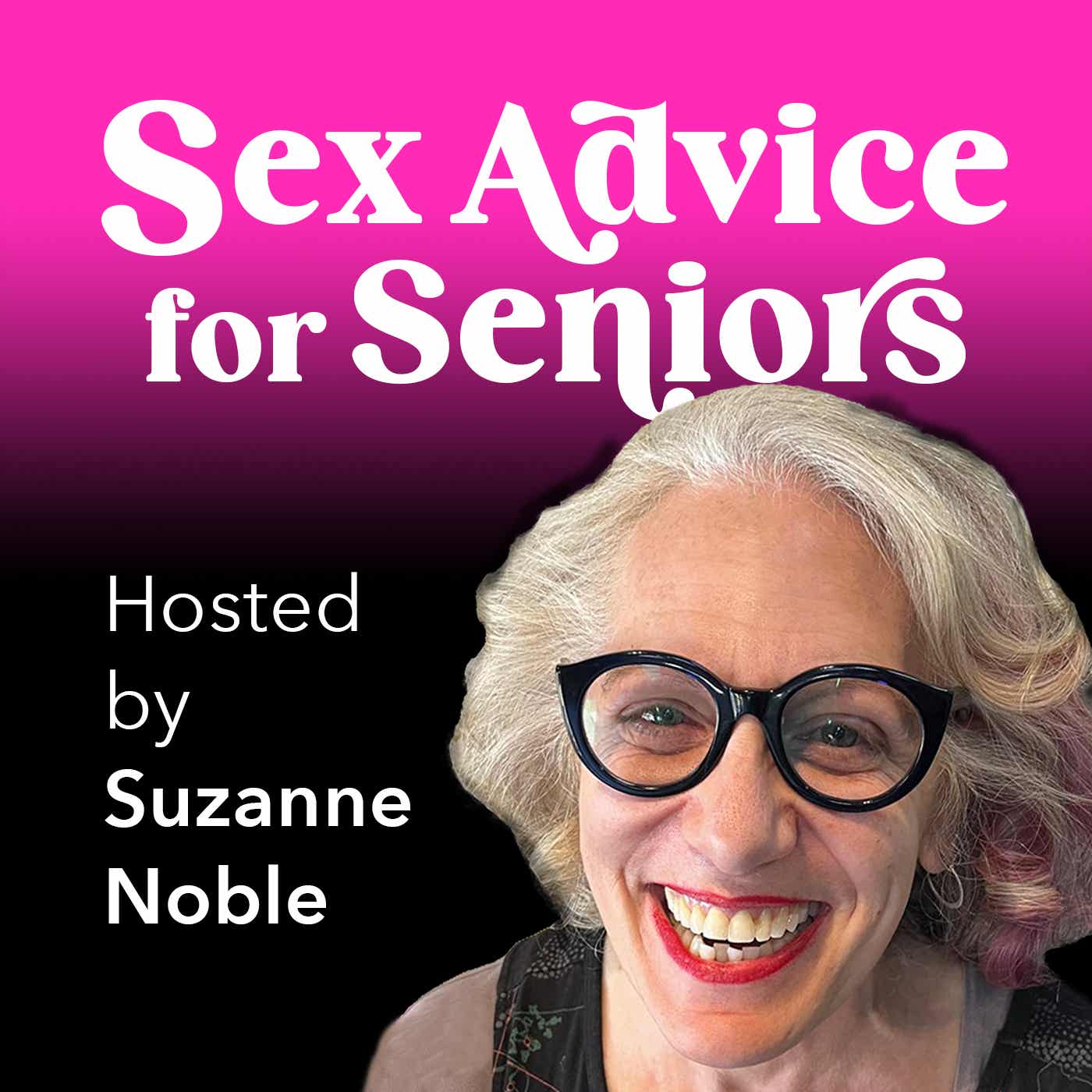
Sex Advice for Seniors Podcast
Suzanne NobleAudio
- Format:
- Podcast
- New episodes:
- Weekly
- Typical length:
- about 30 minutes
- Latest episode:
About this show
Everything you need to know to have a thriving, nourishing sex life as you age—whatever that means for you. Suzanne Noble is over sixty, sexually experienced and honest. She discusses her own experience and—as a woman in her sixties—brings years of sex and intimacy to reflect on in a witty, open and enthusiastic way. The series is dedicated to helping older people find their way to a healthy and enjoyable sex life. Whether you are just starting out with a new partner or continuing with an old one, there's sure to be something new here for you.
www.sexadviceforseniors.com (https://www.sexadviceforseniors.com?utm_medium=podcast)
Covers: sexual health, sex and aging, intimacy, relationships, menopause, erectile dysfunction, dating after 50, sex toys, pelvic floor health, midlife sex
Show details and episodes come from the publisher's public feed at api.substack.com. Last updated . Names, artwork and text belong to their publishers.
Recently on this show
Summary of recent episodes, drawn from the publisher's feed.
This podcast offers frank, open discussion about sex, intimacy and desire for older adults, hosted by Suzanne Noble. Recent episodes cover menopause and reduced desire, erectile dysfunction, keeping intimacy alive in long-term relationships, and dating again in later life.
Cosmos
Similar in subject
- Shameless Sex
Both cover: sex toys, intimacy, sexual health - Rena Malik, MD Podcast
Both cover: erectile dysfunction, sexual health, relationships - Pillow Talks
Both cover: intimacy, sexual health, relationships
Similar shows





Explore more
Episodes
The Surprising 69% of Women Unhappy in Sex... and How to Fix It
· 29 min
What I Discussed With Malia Lazu… - Why so many women spend years putting everyone else's needs before their own—including in the bedroom. - What the "pleasure gap" reveals about women's sexual satisfaction and why the issue goes far beyond orgasm. - How shame, social conditioning and unrealistic expectations stop women from asking for what they truly want. - Why learning what gives you pleasure is the first step towards better intimacy with a partner. - How creating emotionally safe spaces allows women to explore sexuality without judgement. - Why being single, child-free or choosing unconventional relationships can be deeply fulfilling later in life. - How letting go of outdated ideas about ageing can open the door to greater confidence, curiosity and sexual freedom. - Why stopping the habit of "faking it" could transform not only your sex life, but your relationship with yourself. And much more... Episode Chapters 00:00 Introduction 01:10 Why Malia Created Sunflower Spa 04:30 The Pleasure Gap and Why Women Fake Orgasms 08:00 Shame, Safety and Talking Honestly About Sex 12:30 Why Women Need Spaces to Learn from Each Other 15:30 Challenging Myths About Sexuality After 50 18:00 Being Child-Free, Single and Sexually Confident 22:00 Decentring Men and Redefining Relationships 27:00 Why Self-Pleasure Builds Better Relationships 32:00 Final Reflections: Grace, Purpose, Power and Pleasure Show Notes Who told us that getting older meant becoming quieter, less visible or less interested in pleasure? For many women, the second half of life brings an unexpected opportunity—not simply to rethink relationships, but to rethink the stories we've been telling ourselves for decades. Stories about worthiness, desire, ageing and what we're supposedly allowed to want. In this episode, I'm joined by entrepreneur and community organiser Malia Lazu, founder of Sunflower Spa, a women-centred space dedicated to healing sensuality, confidence and belonging. Rather than seeing pleasure as something frivolous or self-indulgent, Malia argues that it's deeply connected to how we value ourselves and the choices we make throughout our lives. Together we explore why so many women continue to fake satisfaction, remain silent about their needs or feel guilty for putting themselves first. We also discuss what happens when women begin to challenge those assumptions—whether that means exploring self-pleasure, embracing life without children, questioning traditional relationship expectations or simply becoming more honest about what feels good. What stayed with me most is the reminder that pleasure isn't really the destination. It's often the by-product of feeling safe, respected and fully present in your own body. And perhaps that's something we become better at as we age—not despite getting older, but because of it. Because the greatest freedom may not be finding someone else to choose us. It may be finally choosing ourselves. Listen, learn and enjoy. Key Takeaways - Pleasure begins with self-awareness, not with a partner. - Many women fake satisfaction because they struggle to communicate their needs. - Emotional safety is essential for fulfilling intimacy. - Social conditioning continues to shape women's sexuality throughout life. - Self-pleasure helps people understand what they genuinely enjoy. - Relationships shouldn't leave you emotionally exhausted. - Growing older creates opportunities to redefine intimacy and partnership. - Being single or child-free can be deeply fulfilling. - Honest communication benefits both partners. - Self-worth and sexual confidence are closely connected. About the Guest Malia Lazu is an entrepreneur, community organiser and the founder of Sunflower Spa, a women-centred community focused on healing, sensuality and belonging. After years leading businesses and working with major organisations, Malia shifted her focus towards creating spaces where women can explore pleasure, identity and…
Not rated yetThe Dating Mistakes That Keep You Single After 40 | ft. Sandy Weiner
· 31 min
I keep hearing the same story from people who are looking for love later in life: they want a relationship that feels good, but they’re not always sure how to tell the difference between real compatibility and a temporary rush of attraction. In this episode of Sex Advice for Seniors (https://podcasts.apple.com/us/podcast/sex-advice-for-seniors-podcast/id1633226903), I speak with dating and relationship coach Sandy Weiner (https://lastfirstdate.com/), chief love officer at (https://www.youtube.com/user/LastFirstDate)Last First Date (https://www.youtube.com/user/LastFirstDate), TEDx speaker, author of Choice Points in Dating, and host of the (https://podcasts.apple.com/us/podcast/last-first-date-radio/id586220219)Last First Date (https://podcasts.apple.com/us/podcast/last-first-date-radio/id586220219)podcast (https://podcasts.apple.com/us/podcast/last-first-date-radio/id586220219). We talk honestly about why so many people second-guess themselves in dating, why the spark can be misleading, and how to build a relationship that actually lasts.podcastmarketingmagic. What Sandy shares is practical, refreshing, and deeply useful for anyone navigating dating after 40, 50, or 60. We get into attachment styles, self-trust, boundaries, and the difference between chemistry that fizzles and connection that grows over time. Getting started with sex toys? GITM PLAYBOOK (https://gitmplaybook.com/) has a fabulous range of toys, plus a handy guide to help you pick the ones that suit you best. Use my code: SUZANNE20 for 20% off. ABOUT SUZANNE: Suzanne Noble is a sex and relationship expert, author, and host of the Sex Advice for Seniors podcast, one of the top-rated shows empowering people 50+ to embrace confident, joyful intimacy. Known for her candid, warm, and often humorous approach, Suzanne challenges age-related taboos, misinformation, and awkward conversations about sex after 50. She helps millions around the world navigate their sexual lives with pleasure, connection, and self-assurance. Because life is too short for bad sex... or silence about it. CONNECT WITH SUZANNE: Instagram: https://www.instagram.com/sexadviceforseniors Facebook:https://www.facebook.com/sexadviceforseniors TikTok: https://www.tiktok.com/@sexadviceforseniors Substack: https://www.sexadviceforseniors.com WANT MORE? Visit the Website: https://sexadviceforseniors.com — includes FREE guides and resources for better sex at any age. Free Downloadable Guide: 10 Most Overlooked Secrets to Better Sex PDF: https://subscribepage.io/suzannenoblefreebie Sign Up for My FREE Newsletter: https://sexadviceforseniors.com Overcome Erectile Dysfunction & Stay Firm: https://www.stayfirmprogram.com Check Out My Storefront for Better Sex: https://zaap.bio/stayfirm Interested in 1:1 Coaching or Custom Sex Advice for Seniors Sessions? https://tidycal.com/suzannenoble/30-minute-mentoring Follow Sandy Here: Website https://lastfirstdate.com/ Facebook https://www.facebook.com/lastfirstdate Instagram https://www.instagram.com/lastfirstdate1 YouTube https://www.youtube.com/@Lastfirstdate Chapters: 0:00 Chemistry vs compatibility in dating after 50 1:16 Meet Sandy Weiner, dating coach and founder of Last First Date 2:37 How dating motivation changes for women vs men after 40 3:09 Why women over 50 second-guess themselves in dating 7:38 How long does it take to really know someone you're dating? 8:04 What it means to be a woman of value in later life dating 9:35 How to identify your non-negotiables and real deal breakers 10:08 Sandy's three pillars for confident dating 10:41 Why your values get flexible when you like someone (and what to do about it) 12:46 Dating in your 50s vs your 20s and 30s: what actually changes 13:20 How to state your standards early without being difficult 14:10 Why chemistry is harder after 50 and how to recalibrate attraction 16:50 Dating after 50: body image, confidence, and doing the inner work 18:26 Does therapy make someone a…
Not rated yetWhy Women Really Hire Male Escorts | ft. George Goulburn
· 31 min
What if intimacy in later life isn’t really about sex at all? In this episode of Sex Advice for Seniors, I speak with George Goulburn (https://www.georgegoulburn.com/), a straight male escort in his 50s, who works with women in their 50s, 60s, 70s, and even 80s. What he shares challenges almost every assumption about escorting, desire, and connection in later life. Far from quick, transactional encounters, George’s clients are seeking something deeper: emotional connection, safety, touch, and the chance to feel seen and desired again, often after years or even decades without intimacy. We explore what women really want as they age, how confidence and sexual identity evolve, and why honest conversations about desire are still so rare. This episode is honest, surprising, and deeply human, and it might just change how you think about intimacy in later life. Getting started with sex toys? GITM PLAYBOOK (http://gitmplaybook.com/SUZANNE20) has a fabulous range of toys, plus a handy guide to help you pick the ones that suit you best. Use my code: SUZANNE20 for 20% off. ABOUT SUZANNE: Suzanne Noble is a sex and relationship expert, author, and host of the Sex Advice for Seniors podcast—one of the top-rated shows empowering people 50+ to embrace confident, joyful intimacy. Known for her candid, warm, and often humorous approach, Suzanne challenges age-related taboos, misinformation, and awkward conversations about sex after 50. She helps millions around the world navigate their sexual lives with pleasure, connection, and self-assurance. Because life is too short for bad sex... or silence about it. CONNECT WITH SUZANNE: Instagram: https://www.instagram.com/sexadviceforseniors Facebook:https://www.facebook.com/sexadviceforseniors TikTok: https://www.tiktok.com/@sexadviceforseniors Substack: https://www.sexadviceforseniors.com WANT MORE? Visit the Website: https://sexadviceforseniors.com — includes FREE guides and resources for better sex at any age. Free Downloadable Guide: 10 Most Overlooked Secrets to Better Sex PDF: https://subscribepage.io/suzannenoblefreebie Sign Up for My FREE Newsletter: https://sexadviceforseniors.com Overcome Erectile Dysfunction & Stay Firm: https://www.stayfirmprogram.com Check Out My Storefront for Better Sex: https://zaap.bio/stayfirm Interested in 1:1 Coaching or Custom Sex Advice for Seniors Sessions? https://tidycal.com/suzannenoble/30-minute-mentoring CONNECT WITH GEORGE: Website https://www.georgegoulburn.com/ Instagram https://www.instagram.com/georgegoulburnofficial YouTube https://www.youtube.com/@George_Goulburn Facebook. https://www.facebook.com/george.goulburn.2023 Chapters: 00:00 Introduction: Why this conversation matters 00:25 Meet George: A male escort for women over 50 03:20 Why intimacy takes time, not just sex 08:30 Who hires male escorts and why 11:20 What women really want 16:00 Do clients fall in love? 18:40 Ethical non-monogamy and dating life 21:40 Creating safety, trust, and consent 27:40 Myths about male escorts 29:00 Why older women don’t want “perfect” bodies 31:20 Why we struggle to talk about sex 34:20 Sex with older virgins: a hidden reality 35:50 The real outcome: confidence and self-worth This is a public episode. If you'd like to discuss this with other subscribers or get access to bonus episodes, visit www.sexadviceforseniors.com/subscribe (https://www.sexadviceforseniors.com/subscribe?utm_medium=podcast&utm_campaign=CTA_2)
Not rated yetWhy Long-Term Couples Drift Apart—and the Simple Habit That Brings Them Back
· 29 min
Most couples say their relationship is their top priority—but their time, energy, and attention often tell a different story. In this episode of Sex Advice for Seniors, I’m joined by relationship coach and Relational Life Therapy practitioner Monica Tanner to explore what really keeps long-term couples connected, emotionally and sexually, well into their 60s, 70s, and beyond. We dive into Monica’s surprisingly simple “3% rule” - a powerful framework for maintaining intimacy, connection, and communication without needing to overhaul your entire life. We also unpack why resentment builds in long-term relationships, how health challenges affect sexual intimacy in older adults, and whether it’s truly possible to change relationship patterns after decades together. If you’re navigating love, sex, and connection in later life, this episode offers practical, realistic tools you can start using today. What You’ll Learn: · The “3% rule” for relationship success and why small time investments create big intimacy gains · How to maintain emotional and sexual connection in your 50s, 60s, and 70s · Why resentment in long-term relationships is often unspoken desire · The daily habit that keeps couples from drifting apart over time · How illness, aging, and health issues impact intimacy... and how to adapt · Why couples delay important conversations about sex, needs, and expectations · Whether it’s possible to change deeply ingrained relationship patterns later in life Key Topics & Keywords: Sex advice for seniors, intimacy after 60, relationships in later life, sexual health for older adults, maintaining intimacy in long-term relationships, marriage advice for older couples, communication in relationships, emotional connection in aging, sex and aging, overcoming resentment in relationships, relationship coaching, Relational Life Therapy, intimacy after illness, rekindling connection in later life About Monica Tanner: Monica Tanner is a relationship coach, Relational Life Therapy practitioner, and host of the Secrets of Happily Ever After podcast. She helps couples create deeper connection, better communication, and lasting intimacy - no matter how long they’ve been together. Connect with Monica: · Website: https://www.monicatanner.com/ · Podcast: https://podcasts.apple.com/us/podcast/marriage-and-intimacy-tips · Instagram: https://www.instagram.com/monitalksmarriage · Facebook: https://www.facebook.com/monica.tanner2 · YouTube: https://www.youtube.com/@secretsofhappilyeverafter Listen & Follow Sex Advice for Seniors: If you enjoyed this episode, follow Sex Advice for Seniors for honest conversations about sex, intimacy, and relationships in later life. Share with a friend who might need this reminder: your relationship deserves to be a priority... at any age. This is a public episode. If you'd like to discuss this with other subscribers or get access to bonus episodes, visit www.sexadviceforseniors.com/subscribe (https://www.sexadviceforseniors.com/subscribe?utm_medium=podcast&utm_campaign=CTA_2)
Not rated yetThe Hidden Habits Destroying Men's Erections | ft. Tom Jenkins
· 28 min
Erectile dysfunction is often treated as a physical issue, but this conversation explores the emotional, psychological, and lifestyle factors that can sit underneath it. Suzanne Noble opens with a personal reflection on how ED can be an early warning sign of more serious health problems, before introducing guest Tom Jenkins, author of The Drunk Gambler with Erectile Dysfunction. Tom speaks candidly about his early sexual experiences, the role alcohol and gambling played in masking insecurity, and how poor confidence shaped his relationship with sex. He explains how honest communication with a partner, lifestyle changes, meditation, exercise, improved diet, and a major change of environment all contributed to his recovery. He also discusses why he eventually moved away from relying only on medication and toward addressing the root causes of his struggles. The conversation also covers the link between erectile dysfunction and drinking, the pressure men can feel around performance, and why shame often prevents men from seeking help. Tom shares how an ayahuasca retreat became a turning point, helping him confront deeper issues and rebuild his life with more self-awareness and stability. The episode closes with a reminder that every person’s healing path is different, and that responsible, supported approaches matter when exploring alternative therapies. Why listen This episode is for anyone interested in sexual health, men’s wellness, emotional resilience, recovery from unhealthy habits, and the connection between intimacy and confidence. It offers a grounded, honest conversation about ED that goes beyond quick fixes and into real-life change. Key topics Erectile dysfunction and what it can signal. Alcohol, gambling, and sexual confidence. Shame, performance pressure, and communication in relationships. Lifestyle changes, meditation, exercise, and diet. Medication versus root-cause healing. Psychedelics and responsible use in personal healing. SEO keywords erectile dysfunction, men’s sexual health, senior sex advice, confidence and intimacy, alcohol and erectile dysfunction, gambling addiction recovery, sexual wellness, relationship communication, natural ED solutions, lifestyle change, men over 50, emotional healing, sexual performance anxiety, healthy intimacy, podcast about sex FAQ What causes erectile dysfunction besides age? Erectile dysfunction can be connected to stress, alcohol use, low confidence, relationship issues, and broader health problems, not just age. Can lifestyle changes improve erectile dysfunction? This episode highlights how better diet, exercise, reduced drinking, meditation, and emotional honesty can support improvement. Is erectile dysfunction always physical? No. In this conversation, ED is presented as a mix of physical, emotional, and psychological factors. Does medication solve erectile dysfunction permanently? Medication can help symptoms, but Tom and Suzanne discuss the importance of addressing root causes too This is a public episode. If you'd like to discuss this with other subscribers or get access to bonus episodes, visit www.sexadviceforseniors.com/subscribe (https://www.sexadviceforseniors.com/subscribe?utm_medium=podcast&utm_campaign=CTA_2)
Not rated yetLive with Suzanne Noble and Ken Schafer - Uncovering the Root Cause of Erectile Dysfunction
· 45 min
This is a public episode. If you'd like to discuss this with other subscribers or get access to bonus episodes, visit www.sexadviceforseniors.com/subscribe (https://www.sexadviceforseniors.com/subscribe?utm_medium=podcast&utm_campaign=CTA_2)
Not rated yetThe Truth About Modern Love Nobody Talks About | ft. Scot McKay
· 33 min
What I Discussed with Scot McKay… - Why many people over 50 are abandoning dating apps and what they are doing instead to find meaningful relationships. - How online dating evolved from a genuine way to meet people into a swipe-based system that often prioritises engagement over connection. - Why dating after 60 may actually be easier than dating in your 30s and 40s for people seeking authentic relationships. - The surprising reasons more women over 50 are choosing younger partners and what this reveals about health, lifestyle and modern expectations. - Scot McKay's "Big Four" framework for attraction: confidence, masculinity or femininity, appreciation for the opposite sex, and character. - Why many long-term relationships fail after the children leave home and how couples can avoid drifting apart. - The concept of "Deserve What You Want" and why becoming the partner you want to attract may be more important than finding the perfect match. - Why optimism, generosity and strong character remain some of the most attractive qualities regardless of age, technology or dating trends. And much more... Episode Chapters 00:00 Introduction 02:15 How Modern Dating Has Changed Over the Last 20 Years 07:40 Why Dating Apps Are Failing So Many People 14:30 Is Online Dating Dead? 20:10 Finding Love and Connection After 60 25:45 Meeting People in Real Life Instead of Online 31:20 Why More Older Women Are Dating Younger Men 38:10 Health, Attraction and Ageing Well 45:00 Scot McKay's Big Four Principles of Attraction 52:30 Dating After Divorce and Rebuilding Confidence 58:40 Why Some Long-Term Relationships Fall Apart 01:04:15 The Philosophy of "Deserve What You Want" 01:10:30 What Creates Lasting Love Later in Life? 01:14:00 Final Thoughts Show Notes Have dating apps ruined modern relationships? Or have they simply exposed problems that were already there? When I first started dating online in the early 2000s, it felt exciting. You could meet interesting people, have fascinating conversations and genuinely believe you might stumble across someone special. Fast-forward to today, and many of us seem trapped in an endless cycle of swiping, ghosting and disappointment. In this episode, I speak with dating and relationship coach Scot McKay, who believes we've reached a tipping point. After spending more than two decades helping people navigate dating and relationships, Scot argues that modern dating has become increasingly transactional, with many people focusing more on what they can get from a relationship than what they can contribute to one. Together, we explore why dating apps no longer seem to deliver the results they once did, why some women over 50 are choosing younger partners, and whether finding love later in life might actually be easier than many people think. We also discuss the qualities that create lasting attraction, the mistakes many couples make after raising children together, and why character may be far more important than chemistry when it comes to building a successful relationship. Scot also shares his philosophy of "Deserve What You Want"—the idea that finding a great partner starts with becoming the kind of person a great partner would want to be with. Whether you're actively dating, happily partnered, divorced, widowed or simply curious about how relationships are changing, this conversation offers plenty of food for thought. Listen, learn and enjoy. Key Takeaways - Dating has changed dramatically since the rise of smartphones and social media. - Many people now approach relationships from a transactional mindset. - Authenticity remains one of the most attractive qualities in dating. - Older adults can still find success through online dating when expectations are realistic. - Meeting people in real life is becoming increasingly important. - Health and lifestyle compatibility matter more as we age. - Confidence and character are more attractive than superficial traits. -…
Not rated yetWhy Gay Men Struggle to Find True Love (And Nobody Talks About Why)
· 32 min
What I Discussed With Anthony Canapi… - Why many gay men over 50 are turning away from dating apps and looking for more personal ways to find meaningful relationships. - The unique dating challenges faced by older gay men, including grief, ageism, relationship loss and the legacy of the HIV/AIDS crisis. - Why some older gay men are drawn to younger partners and what may be driving that attraction. - How decades of discrimination and social stigma continue to influence dating and relationships later in life. - Why finding love after losing a long-term partner is often about restoring hope as much as finding companionship. - What professional matchmaking actually involves and why it goes far beyond simply introducing people. - The importance of shared values, lifestyle goals and plans when dating in your 50s, 60s and beyond. - Why authenticity, emotional readiness and flexibility are often more important than having a perfect list of requirements. And much more... Episode Chapters 00:00 Introduction 01:00 How Anthony Became a Matchmaker 03:00 Why Many Gay Men Are Leaving Dating Apps 06:30 Finding Love Again After Loss and Bereavement 10:00 The Unique Dating Challenges Facing Older Gay Men 14:30 The Lasting Impact of the HIV/AIDS Crisis 18:00 Why Some Older Gay Men Seek Younger Partners 22:00 What Professional Matchmaking Really Involves 27:00 Emotional Readiness and Relationship Success 31:00 Shared Values, Lifestyle and Future Goals 35:00 Why It's Never Too Late to Find Love 39:00 The Future of Dating and Matchmaking 42:00 Final Thoughts Episode Description Is it ever too late to find love? For many older adults, dating can feel overwhelming. Add in the unique experiences that many gay men have lived through—including discrimination, loss, grief and decades of social change—and finding a meaningful relationship can feel even more complicated. In this episode, I speak with Anthony Canapi, founder of Best Man Matchmaking, psychotherapist, dating coach and one of the few professional matchmakers dedicated exclusively to helping gay men find long-term relationships. Together, we discuss why dating apps are leaving so many people frustrated, what older gay men are really looking for in a partner, and why matchmaking is becoming an increasingly attractive alternative to endless swiping and ghosting. Anthony also shares some of the deeper psychological factors that can influence dating later in life, including the impact of missed experiences, relationship trauma and the desire for connection after years of independence. We explore how attitudes towards ageing, partnership and intimacy are changing, and why finding someone who shares your vision for the future may matter more than ever. Whether you're dating after divorce, grieving the loss of a partner, or simply wondering if meaningful love is still possible later in life, this conversation offers hope, insight and practical wisdom. Listen, learn and enjoy. Key Takeaways - It is never too late to find love or begin a new relationship. - Many older adults are becoming increasingly frustrated with dating apps. - Older gay men often face unique dating challenges shaped by history and lived experience. - Grief, loss and trauma can influence relationship expectations later in life. - Matchmaking provides a personalised alternative to online dating. - Emotional readiness is often more important than simply finding the right person. - Shared values and future goals become increasingly important with age. - Flexibility can be more valuable than rigid dating preferences. - Meaningful relationships are built on compatibility, communication and connection. - Hope remains an important part of finding love later in life. About the Guest Anthony Canapi is the founder and CEO of Best Man Matchmaking, a specialist matchmaking service dedicated exclusively to helping gay men find meaningful, long-term relationships. With a background in psychotherapy,…
Not rated yetWhy Women Feel Completely Different After Menopause | Tanya Leake
· 31 min
What I Discussed with Tanya Leake… - What clitoral atrophy is and why many women have never heard of it. - How menopause can affect sensation, arousal and orgasm. - The connection between clitoral health, blood flow and hormonal changes. - What clitoral adhesions are and how they can develop over time. - Whether regular sexual activity can help maintain sexual function during menopause. - The role of vaginal oestrogen, testosterone and other treatment options. - Non-hormonal approaches that may support vaginal and sexual health. - Why many women struggle to get accurate information about menopause-related sexual changes. And much more... Episode Chapters 00:00 Introduction 02:40 What Is Clitoral Atrophy? 05:00 How Menopause Affects Sexual Function 07:40 Blood Flow, Sensation and Pleasure 09:30 Does Sexual Activity Help? 13:20 Treatment Options and Hormonal Support 18:30 Why Women's Sexual Health Is Often Overlooked 22:00 Menopause Care and Healthcare Gaps 26:00 Breast Cancer, Menopause and Sexual Function 28:30 Non-Hormonal Treatments and Emerging Research 32:00 Advocating for Your Sexual Health Episode Description Why does nobody talk about clitoral atrophy? Most women have heard about hot flushes, brain fog and vaginal dryness during menopause. Far fewer know that menopause can also affect the clitoris, potentially impacting sensation, arousal and sexual pleasure. In this episode, I speak with Tanya Leake, menopause mindset and lifestyle coach, about a topic that remains surprisingly absent from many conversations about women's health. Together, we explore what clitoral atrophy is, why it happens, and how hormonal changes can affect sexual function during and after menopause. We discuss the role of blood flow, tissue health and nerve sensitivity, as well as practical ways women can support their sexual wellbeing as they age. Tanya also explains the differences between vaginal oestrogen, testosterone therapy and non-hormonal approaches, while highlighting why so many women struggle to get the information and support they need from healthcare providers. Whether you're currently navigating menopause, supporting a partner, or simply want to understand more about female sexual health, this conversation offers valuable insights into a subject that deserves far more attention. Listen, learn and enjoy. Key Takeaways - Clitoral atrophy is a real but often overlooked aspect of menopause. - Hormonal changes can affect sensation, arousal and orgasm. - Blood flow plays an important role in maintaining sexual function. - Clitoral adhesions can develop when tissue changes occur over time. - Regular stimulation may help support tissue health and sexual wellbeing. - Vaginal oestrogen can be an effective treatment option for many women. - Non-hormonal alternatives may be available for those who cannot use hormones. - Breast cancer survivors often face additional sexual health challenges. - Women should feel empowered to discuss sexual health concerns with healthcare providers. - Education and self-advocacy are important parts of menopause care. Understanding Clitoral Atrophy What Is Clitoral Atrophy? Clitoral atrophy refers to changes in the clitoris that may occur when declining hormone levels reduce blood flow and tissue health. These changes can affect sensation, arousal and sexual pleasure. Why Does It Happen? During menopause, lower levels of oestrogen and other hormones can impact blood circulation, tissue elasticity and nerve sensitivity within the genital area. What Are the Signs? - Women may notice: - Reduced sensitivity - Difficulty reaching orgasm - Changes in arousal - Discomfort during stimulation - Changes in genital tissue What Can Women Do About It? - Treatment options may include: - Vaginal oestrogen - Testosterone therapy (where appropriate) - Regular sexual stimulation - Pelvic floor exercises - Non-hormonal moisturisers and treatments - Specialist menopause…
Not rated yetThe Truth about Sex we were Rarely Taught
· 26 min
What I Discussed With Joe Bains… - How growing up in a traditional Indian family with an arranged marriage shaped Joe’s views on relationships, sex and personal freedom. - Why Joe deliberately pushed himself from being an extreme introvert into a highly social and adventurous life. - What biohacking actually means and how optimising your health can improve vitality, energy and sexual wellbeing as you age. - Why Joe believes good health is one of the most powerful aphrodisiacs available. - How loneliness and social isolation can affect wellbeing later in life, and why community matters more than many people realise. - Joe’s journey into tantra and how it changed his understanding of intimacy, pleasure and connection. - Why mindset, self-examination and personal growth play a significant role in sexual fulfilment. - What it means to continually reinvent yourself rather than allowing age or circumstance to define your future. And much more… Episode Chapters 00:00 Introduction 01:30 From Extreme Introvert to “Extrovert Nerd” 03:00 What Is Biohacking? 06:00 Why Health Is the Greatest Aphrodisiac 07:30 The Importance of Social Connection as We Age 09:15 Growing Up in a Traditional Indian Family 12:00 Discovering Tantra and Conscious Sexuality 13:15 Pickup Culture, Dating and Personal Transformation 15:30 Escaping Cultural Expectations and an Arranged Marriage 21:00 Mindset, Philosophy and Personal Growth 25:00 Measuring Sexual Vitality and Success 26:30 Understanding Tantra and Multiple Orgasms 28:15 Why Tantra Is About More Than Sex 31:00 Life After Tantra: Entrepreneurship, AI and New Challenges 33:00 Final Thoughts Episode Description What happens when you reject the life that was planned for you and decide to create your own? When I first read Joe Bains’ biography, I wasn’t entirely sure how to describe what he does. Biohacker. Tantra practitioner. Entrepreneur. Philosopher. Self-described “extrovert nerd”. Naturally, I had to invite him onto the podcast. In this episode, Joe shares his remarkable journey from growing up in a traditional Indian family, where an arranged marriage and a very different future were expected of him, to spending decades exploring personal development, health optimisation, tantra and conscious living. Together, we discuss what biohacking really means, whyhealth and longevity are closely connected to sexual wellbeing, and how social connection can dramatically influence how we age. Joe also explains how tantra transformed his understanding of intimacy and why he believes many people focus too much on performance and not enough on connection. Along the way, we explore mindset, philosophy, ageing, relationships and the importance of continually challenging yourself to grow. Whether you’re curious about tantra, interested in healthy ageing, or simply fascinated by people who take unconventional paths through life, this conversation offers plenty of food for thought. Listen, learn and enjoy. Key Takeaways - Good health plays a significant role in maintaining sexual vitality as we age. - Biohacking is about optimising health, energy and longevity. - Social connection may be just as important as diet and exercise for healthy ageing. - Personal growth often begins outside our comfort zones. - Cultural expectations can shape our attitudes towards sex and relationships. - Tantra focuses on awareness, connection and intentional intimacy. - Mindset has a profound impact on wellbeing and quality of life. - Reinvention is possible at any stage of life. - Lifelong learning can help keep us engaged, curious and resilient. - Age does not have to limit personal development or exploration. About the Guest Joe Bains is a London-based biohacker, tantra practitioner, entrepreneur and lifelong student of personal development. His work explores the intersection of health optimisation, sexuality, mindset, nervous system regulation and human potential. Drawing on decades of…
Not rated yetHow to Turn around your Sex Life in 6 Weeks
· 23 min
What I Discussed With Amy Color… - Why many couples mistakenly believe that better sex starts with talking more rather than connecting differently. - What Amy learned from her own sexless marriage and why traditional therapy didn't provide the answers she was looking for. - Why erectile dysfunction often creates shame, pressure and disconnection for both partners. - How couples can build intimacy without focusing solely on penetration or performance. - Why many men struggle with the language of therapy and how a different approach can help them engage. - The surprising reason "date nights" often fail to solve deeper intimacy problems. - How pleasure, play and exploration can reignite emotional and physical connection. - Why intimacy and sex are not the same thing—and why understanding the difference matters. And much more... Episode Chapters 00:00 Introduction 01:35 Amy's Journey From a Sexless Marriage to Intimacy Coaching 04:00 Why Traditional Therapy Didn't Work 06:00 Helping Couples Rebuild Connection Through Pleasure 09:00 Why Men Often Disengage From Therapy 11:00 Coaching vs Therapy: What's the Difference? 14:00 Dating, Desire and Sexual Connection 16:30 Why Penetration Isn't the Whole Story 17:30 What Intimacy Really Means 21:00 Erectile Dysfunction, Shame and Relationship Stress 25:00 Practical Skills for Better Sexual Connection 29:00 Final Thoughts Show Notes Can a relationship survive when sex disappears? And if it can, what does it actually take to rebuild intimacy? In this episode, I speak with intimacy and relationship coach Amy Color, whose own experience of navigating a sexless marriage led her to completely rethink how couples approach connection, desire and intimacy. Like many couples facing challenges in the bedroom, Amy and her husband sought help from therapists, sex therapists and medical professionals. But what she discovered was that much of the advice focused on analysing problems rather than teaching couples practical ways to reconnect. That experience led Amy on a mission to understand what actually helps couples rebuild emotional and physical intimacy. Today, she works with couples around the world, helping them move beyond performance pressure, shame and frustration towards a more playful, connected and pleasurable relationship. Together, we discuss erectile dysfunction, mismatched desire, why traditional therapy doesn't always work for everyone, and the difference between sex, love and intimacy. Amy also shares her unique coaching approach, which uses practical exercises, sports metaphors and real-world skills to help couples reconnect. Whether you're in a long-term relationship, struggling with intimacy, or simply curious about what keeps connection alive over time, this conversation offers a refreshing perspective on modern relationships. Listen, learn and enjoy. Key Takeaways - Many couples need practical intimacy skills, not just more conversations. - Erectile dysfunction affects both partners and often creates shame and pressure. - Emotional and physical connection are closely linked. - Traditional therapy doesn't work for every couple. - Intimacy is different from both love and sex. - Pleasure and exploration can help couples reconnect. - Performance pressure often makes sexual difficulties worse. - Men and women may communicate about intimacy in very different ways. - Building connection requires intention, practice and consistency. - Healthy relationships thrive when both partners feel seen, valued and understood. About the Guest Amy Color is an intimacy and relationship coach with more than 20 years of experience helping couples rebuild emotional and physical connection. Inspired by her own experience navigating a sexless marriage, she developed a practical, skills-based approach that combines relationship coaching, intimacy education and therapeutic techniques. Amy is also a TEDx speaker and creator of a range of programmes designed to help…
Not rated yetThe Side Effect of Prostate Surgery Nobody Prepares Men For
· 31 min
What I Discussed With Jon Plate… - Why erectile dysfunction is one of the most common but least discussed side effects of prostate cancer surgery. - The shocking number of men who experience erectile dysfunction after a radical prostatectomy—and why many aren't warned beforehand. - Why surviving cancer and maintaining quality of life should be part of the same conversation. - How shame, stigma and poor communication can prevent men from seeking help for erectile dysfunction. - What stem cell therapy is and how it may help repair the underlying damage that causes erectile dysfunction. - Why treatments like Viagra, injections and pumps may address symptoms but not necessarily the root cause. - How men can become better advocates for their sexual health before and after medical treatment. - What the latest clinical research reveals about stem cell treatment for erectile dysfunction. And much more... Episode Chapters 00:00 Introduction 01:50 Why Suzanne Cares So Deeply About Erectile Dysfunction 04:00 The Hidden Impact of Prostate Cancer Surgery 07:00 Why Sexual Side Effects Are Often Overlooked 10:00 Advocating for Your Sexual Health 11:30 Introducing Stem Cell Therapy for Erectile Dysfunction 15:00 Why Costa Rica Became a Stem Cell Treatment Hub 16:30 What the Treatment Process Involves 19:00 Recovery, Results and Success Rates 21:45 Who Is the Best Candidate for Treatment? 23:45 Erectile Dysfunction Treatments: Symptoms vs Root Causes 30:00 The Future of Stem Cell Therapy 33:00 Why Sexual Health Matters at Every Age 35:00 Final Thoughts Episode Description What if erectile dysfunction wasn't simply something men had to accept after prostate cancer treatment? One of the things I've become increasingly passionate about through this podcast is helping people understand that sexual health is health. Yet far too often, conversations about erectile dysfunction are avoided, dismissed or treated as an inevitable part of ageing. In this episode, I speak with Jon Plate, COO, CEO and co-founder of Nordic Stem Cells, a company pioneering an innovative approach to treating erectile dysfunction using a patient's own stem cells. Together, we explore one of the most common but least discussed consequences of prostate cancer surgery: the loss of erectile function. Jon explains why so many men are shocked by the impact of radical prostatectomy, how current treatments often focus on managing symptoms, and why stem cell therapy may offer a very different approach. We also discuss the emotional toll erectile dysfunction can have on relationships, the importance of patient advocacy, and why sexual function deserves to be part of every conversation about recovery and quality of life. Jon shares the results of early clinical research, explains what the treatment process involves, and discusses who may benefit most from this emerging therapy. Whether you're dealing with erectile dysfunction yourself, supporting a partner, or simply interested in the future of sexual medicine, this conversation offers a fascinating look at one of the most promising developments in men's sexual health. Listen, learn and enjoy. Key Takeaways - Erectile dysfunction is a common side effect of radical prostatectomy. - Many men feel unprepared for the sexual consequences of prostate cancer treatment. - Sexual health remains an important part of quality of life at every age. - Shame often prevents men from discussing erectile dysfunction openly. - Current treatments frequently focus on symptom management rather than tissue repair. - Stem cell therapy aims to address the underlying biological damage. - Clinical research has shown promising results in selected patients. - Overall health plays a significant role in treatment outcomes. - Patients should ask detailed questions before undergoing major procedures. - Advocacy and education are essential parts of sexual healthcare. - Understanding Erectile Dysfunction After Prostate Cancer…
Not rated yetDesire Doesn't Retire: The Secret Sex Lives of People Over 60
· 31 min
What I Discussed With Kathy Kay… - Why many women discover greater sexual confidence and freedom later in life. - The surprising reason some people become more adventurous in their 50s, 60s and beyond. - How communication—not necessarily better sex—is often the key to happier long-term relationships. - Why fantasies, fetishes and kinks are far more common than most people realise. - What Kathy has learned after interviewing more than a thousand people anonymously about their sex lives. - Why swinging, ethical non-monogamy and alternative relationships aren't always what people assume. - How shame prevents many people from exploring their sexuality—and why that often changes with age. - Why older adults shouldn't feel embarrassed about pursuing pleasure, curiosity and sexual fulfilment. And much more... Episode Chapters 00:00 Introduction 01:30 Kathy Kay's Journey into Anonymous Sex Storytelling 04:30 Why Many Women Become More Sexually Confident After 50 08:00 Older Adults, Swinging and Sexual Reinvention 11:30 How Craigslist Changed Kathy's Podcast 15:00 Fetishes, Fantasies and Why You're Not Alone 19:00 Exploring Kink Later in Life 22:00 Ethical Non-Monogamy and Swinging Relationships 25:30 Why Communication Is the Secret to Better Relationships 30:00 Why Older Adults Should Stop Feeling Ashamed About Sex 33:00 Final Thoughts Episode Description Does age make us more sexually adventurous? For many people, the answer might be yes. In this episode, I speak with Kathy Kay, host of the long-running podcast Strictly Anonymous Confessions and author of Secretly Anonymous Confessions: Secret Sex Lives of Total Strangers. Over the past decade, Kathy has interviewed more than a thousand people who have shared their most intimate experiences completely anonymously, giving her a unique perspective on what really happens behind closed doors. Together, we explore why so many people experience a sexual awakening later in life, how confidence often replaces shame as we age, and why older adults are far more adventurous than society gives them credit for. We also discuss fantasies, fetishes, swinging, ethical non-monogamy, online communities and the importance of honest communication in long-term relationships. Kathy shares some of the most surprising stories she's collected over the years and explains why many couples rediscover intimacy simply by talking openly about what they want. Above all, this conversation is a reminder that sexuality doesn't have an expiry date. Whether you're curious about exploring new experiences, wondering if your fantasies are "normal", or simply looking for reassurance that desire doesn't disappear with age, this episode offers humour, honesty and plenty of encouragement. Listen, learn and enjoy. Key Takeaways - Sexual confidence often grows with age. - Many people become more adventurous after 50. - Honest communication strengthens intimate relationships. - Fantasies and fetishes are more common than most people think. - Shame often prevents people from exploring their sexuality. - Ethical non-monogamy can work when built on trust and communication. - Older adults continue to seek novelty, intimacy and pleasure. - Online communities have helped reduce stigma around sexual interests. - There is no "right" way to experience sexuality between consenting adults. - Desire doesn't retire simply because we get older. About the Guest Kathy Kay is the creator and host of Strictly Anonymous Confessions, one of the longest-running podcasts exploring anonymous real-life stories about sex, relationships and intimacy. For more than a decade, she has interviewed over a thousand guests about everything from swinging and ethical non-monogamy to fetishes, fantasies and relationship dynamics. Kathy is also the author of Secretly Anonymous Confessions: Secret Sex Lives of Total Strangers, a collection of some of the most fascinating stories shared on her podcast. About Suzanne Suzanne…
Not rated yetHe Does Five Girth Fills a Day. Here's What Older Men Actually Want.
· 25 min
What I Discussed With Chris Bustamante… - Why more men over 50 are seeking treatments to improve erectile function, confidence and sexual wellbeing. - The difference between improving penile function and enhancing penile appearance—and why many men choose both. - What the P-Shot (PRP therapy) is and how it may help improve blood flow, sensation and erection quality. - How shockwave therapy works alongside medications like Viagra and Cialis to support erectile health. - Why penile Botox ("ShowTox") is becoming an increasingly popular treatment for erectile dysfunction. - What men should know about penile fillers, scrotal fillers and the latest aesthetic procedures. - How testosterone replacement therapy can affect the testicles and the options available to address those changes. - Why confidence, body image and sexual wellbeing remain important at every stage of life. And much more... Episode Chapters 00:00 Introduction 01:35 Why Men Seek Sexual Health and Penis Enhancement Treatments 04:00 What Is the P-Shot (PRP Therapy)? 07:30 How Shockwave Therapy Improves Erectile Function 10:15 Penile Botox ("ShowTox") Explained 13:00 Penile Fillers and Girth Enhancement 16:00 Testosterone Therapy and Testicular Atrophy 19:30 Scrotal Fillers: Restoring Confidence 21:30 Costs, Safety and Recovery 24:00 How Chris Specialised in Men's Sexual Health 27:00 Final Thoughts Show Notes How much does confidence influence a man's sex life? While erectile dysfunction is often discussed, many men are also concerned about changes in appearance, sensation and confidence as they get older. Yet these conversations are still surprisingly rare. In this episode, I speak with Chris Bustamante, better known as Injector Chris, a board-certified nurse practitioner specialising in men's sexual health and aesthetic medicine. Chris explains the latest non-surgical treatments designed to improve erectile function, restore confidence and address some of the physical changes that naturally occur with age. We discuss the science behind the P-Shot (platelet-rich plasma therapy), shockwave therapy and penile Botox, and how these treatments work alongside conventional medications such as Viagra and Cialis rather than replacing them. We also explore penile fillers, scrotal fillers and why more men are choosing aesthetic procedures as part of their overall wellbeing. Chris discusses testosterone replacement therapy, why it can cause testicular shrinkage, and the treatment options now available for men who want to restore their confidence. Whether you're curious about the latest developments in men's sexual health or simply want to better understand the options available, this episode offers an honest, informative and judgement-free conversation about a topic that many men think about but few openly discuss. Listen, learn and enjoy. Key Takeaways - Erectile dysfunction often has multiple physical causes that can be addressed together. - Shockwave therapy and PRP aim to improve tissue health rather than simply treating symptoms. - Penile Botox may help improve erection quality by increasing blood flow. - Penile fillers focus on cosmetic enhancement rather than erectile function. - Testosterone replacement therapy can cause testicular shrinkage over time. - Scrotal fillers offer a cosmetic option for men concerned about changes in appearance. - Many treatments work best alongside prescribed medications rather than replacing them. - Men's confidence and body image continue to matter throughout later life. - Choosing an experienced practitioner is essential for safety and good outcomes. - Open conversations about men's sexual health help reduce stigma and encourage informed decision-making. Understanding Non-Surgical Penis Enhancement What Is It? Non-surgical penis enhancement includes a range of medical and aesthetic procedures designed to improve erectile function, sensation, appearance or confidence without surgery. Treatments may…
Not rated yetGetting Naked Is the Fastest Way to Stop Hating Your Body
· 31 min
What I Discussed With Junie Moon… - Why so many women struggle with body confidence long after menopause—and how healing is possible. - What inspired Junie Moon to strip naked for her documentary Shed the Shame and what she learned from the experience. - Why nudity isn't necessarily about sex—and how it can become a powerful act of self-acceptance. - How negative body image affects intimacy, dating and relationships later in life. - Why confidence, not perfection, is often the most attractive quality we can bring into a relationship. - How movement, fitness and feeling healthy can naturally improve desire and sexual confidence. - Why both men and women carry insecurities about ageing bodies—and how compassion can change the conversation. - How learning to love your body can transform both your relationships and your sex life. And much more... Episode Chapters 00:00 Introduction 01:00 Why Junie Chose to Be Painted Naked 03:30 Nude Beaches, Body Image and Self-Acceptance 06:00 Menopause, Ageing and Learning to Love Your Body 09:00 Dating, Confidence and Feeling Attractive Again 12:00 Why Lingerie, Confidence and Attitude Matter More Than Perfection 15:00 Are Men Really More Visual Than Women? 18:30 Ageing Bodies, Health and Self-Compassion 24:00 Fitness, Movement and Feeling Sexy After 50 28:00 Why Feeling Alive Fuels Sexual Desire 30:30 Final Thoughts Episode Description How comfortable are you in your own skin? For many of us, the relationship we have with our bodies changes dramatically as we get older. Menopause, weight gain, wrinkles and the natural ageing process can all chip away at confidence—especially when we've spent decades believing we're supposed to look a certain way. In this episode, I speak with love coach and relationship expert Junie Moon, whose powerful documentary Shed the Shame follows her decision to be painted completely naked as an act of self-acceptance and healing. Our conversation quickly becomes much bigger than body painting. We explore how body image affects dating, intimacy and sexuality after 50, why confidence is often far more attractive than physical perfection, and how both men and women carry insecurities about ageing. We also share our experiences of naturist beaches, discuss why movement and physical wellbeing play such an important role in feeling sexual, and reflect on how learning to appreciate our bodies can transform the way we approach relationships. If you've ever looked in the mirror and wished your body looked different—or worried that age has made you less desirable—this episode is a gentle reminder that confidence, connection and self-compassion are far more powerful than perfection. Listen, learn and enjoy. Key Takeaways - Body confidence is something that can be developed at any age. - Confidence is often more attractive than physical perfection. - Negative body image can affect intimacy and dating. - Both men and women experience insecurities about ageing. - Self-compassion is an essential part of healthy relationships. - Movement and exercise support both physical and sexual wellbeing. - Naturist environments can help people develop healthier body image. - Feeling healthy often increases confidence and desire. - Loving yourself makes it easier to receive love from others. - Ageing doesn't mean becoming less attractive or less sexual. About the Guest Junie Moon is a certified love coach, relationship expert, speaker and host of the Midlife Love Out Loud podcast. She specialises in helping women over 50 overcome limiting beliefs, build self-confidence and create healthy, fulfilling relationships. Through coaching, workshops and her documentary Shed the Shame, Junie encourages people to embrace self-acceptance, heal old emotional wounds and rediscover love, intimacy and joy later in life. About Suzanne Suzanne Noble is a sex and relationship expert, author, and host of the Sex Advice for Seniors podcast—one of the top-rated shows…
Not rated yetThe Uncomfortable Truth About Senior Dating Nobody in the Industry Will Say Out Loud
· 38 min
Walk into an AARP event expecting walkers and wheelchairs. Leave rethinking everything you thought you knew about senior dating. That was Dr. Gilda Carle’s experience, and she has never looked at this age group the same way since. Gilda spent eight years as a columnist and spokesperson for Match.com, writing the widely read Ask Dr. Gilda column. When the company sent her to a Washington DC event for AARP members, she assumed she’d be done in five minutes. “I thought these people were going to be so over the hill,” she told me. “I’m going to make my presentation and five minutes later I’ll be out of the door.” Standing room only. A packed auditorium. Questions coming faster than she could answer them. These were not people with one foot in the grave. The women’s burning question? How do I find a man who drives at night? Gilda responded by asking every man in the room to raise his hand. What followed, she says, was a mob scene. The men had a different concern. They didn’t want their age displayed on the platform. One man made the argument with complete confidence. Short, bald, slightly bent. Ninety-two years old. He told Gilda he liked to date women in their sixties, and that he had what it takes. She believed him. She went back to Match and lobbied on his behalf. They declined. From there, our conversation covers a lot of ground. Gilda talks about why she walked out mid-sentence on a date who had shown up twenty years older than his profile claimed. (She had given a fake name online for safety: Sparkle. He chased her out of the restaurant calling after her. Loudly.) We discuss a Bumble study showing women are now dating ten years younger on average, and why their younger partners are enthusiastic about it. And Gilda shares the story of a PhD psychologist who found love by reading the obituaries, tracking down recently widowed men in her neighbourhood, and arriving with casseroles. One of them married her. We also get into something I hear about constantly from women my age. Men who retire without hobbies, without purpose, without much to offer in a conversation. Gilda shares a statistic that stuck with me: people who retire with nothing to replace the work tend to live only seven more years afterward. The grind ends and there is no plan for what comes next. That’s not just a health problem. It’s visible when you meet someone. It’s not attractive. Gilda’s position is simple: get vital before you try to get seen. Work out. Present well. Have a life. Know who you are. Because older women, as she points out, already do. We have done the difficult relationships, made the mistakes, and come out the other side with something younger women often cannot offer: directness, self-knowledge, and zero interest in playing games. Jane Seymour said she has had the best sex of her life at 74. Four husbands, one brilliant partner, no judgment, no interference. That is the standard Gilda is holding out for. Honestly, so am I. What Matters * Ageist algorithms are real. Lying about your age online is a rational response to being made invisible, not a character flaw. * Women’s top priority in senior dating is vitality, not youth, not money. Vitality. Men who let themselves go are not losing out to the competition. They are losing out to indifference. * Men who retire without purpose often become dependent on a partner for entertainment. It shows in every interaction, and it is not appealing. * Older women are increasingly dating younger, and the men are into it. Bumble data confirms it. Transparency and confidence are the draw. * One woman read the obituaries to find love. She brought casseroles. It worked. Do not dismiss unconventional approaches. * Essence matters more than age. The goal is to find someone who wants your presence, not your practicality. Unlock even more pleasure, clarity, and confidence in your intimate life by becoming a paid subscriber. You’ll gain full access to every weekly blog, the complete archive of 150+…
Not rated yetStop Blaming. Start Feeling. Why One Small Language Shift Changes Everything.
· 33 min
Most couples have their story memorised. When they met, what went wrong, why things aren’t what they used to be. They’ve told it so many times it feels like a fact. And that’s the problem. Dr. Dan Sneider is a couples therapist and the founder of IntimacyShift.com (https://intimacyshift.com). He works with two distinct groups of older people: couples who’ve been together for decades, and people starting over in their 50s and 60s but carrying years of history with them. Both tend to arrive stuck in the same way, often telling a story about their relationship that stopped being accurate a long time ago. One of Dan’s favourite tools comes from researchers John and Julie Gottman. He calls it the Story of Us. He asks couples to tell the story of their relationship and he says, that most have it memorised. That, he says, is where the work begins because if part of that story is “the passion faded,” that belief is now embedded, and better communication alone won’t shift it. We also talked about something I personally found frightening in my marriage : disclosing my desires. Not the everyday stuff but the wants you’ve kept quiet about for years, maybe decades. The ones that feel genuinely risky to say out loud. Dan’s approach isn’t to say everything at once. He talks about volume knobs. Turning down the fear a little, not eliminating it and scheduling regular time to talk about intimacy the same way you’d schedule the gym. Building safety in small stages rather than waiting for a perfect moment that never comes. We got into conflict too. Specifically, why couples who live for big dramatic ups and downs are actually hardwiring themselves for pain. You know, the stuff of which movie romances are made. The repair is harder and the dopamine hit of drama becomes part of what they expect from love. Dan’s antidote sounds deceptively simple: I-language. “I feel unseen” instead of “you never.” It changes everything about how the repair goes. Dan uses emotionally focused therapy, a model developed by Dr. Sue Johnson. He recommended her book Hold Me Tight to anyone who wants to understand it. The model runs 12 to 20 sessions, and Dan is refreshingly transparent about this: if you’re not seeing progress within that window, more sessions won’t fix it. He also runs a 12-week online programme through IntimacyShift.com for couples who can’t access therapy locally or want to do the work on their own schedule. Yes, it’s expensive and that’s the point. Couples who invest are the ones who show up and do the work. There’s a free tool on his website as well: a six-step framework for unlocking intimate conversations. A good place to start if everything else feels like too much right now. What Matters * The story you tell about your relationship shapes how you feel about it. It can be rewritten. * Disclosing desires doesn’t require going all in at once. Build safety in stages. * Schedule intimacy conversations like any other practice that matters to you. * Fight with I-language, not you-language. The repair is easier, and so is the making up. * Rebuilding after infidelity or betrayal is possible. Dan has seen it happen. * Emotionally focused therapy runs 12 to 20 sessions. That’s the research-backed window for lasting change. Unlock even more pleasure, clarity, and confidence in your intimate life by becoming a paid subscriber. You’ll gain full access to every weekly blog, the complete archive of 150+ expert-led podcasts, the private chat room for candid Q&A, and my 32‑page guide Sex Toys and Supplements for Thriving in Later Life. If you’re ready to deepen your knowledge, explore new possibilities, and feel fully supported on your journey, upgrade today only £6.99/month or £49.99/year. More than ever, I rely on your financial support to help produce each weekly episode of the podcast and blog post. Do consider becoming a paid subscriber if you are able at https://sexadviceforseniors.com This is a public episode. If you'd like to…
Not rated yetThe Hormone Your Body Has But Can't Use (And What Changes When You Fix That)
· 29 min
There’s a version of male ageing that’s become so familiar we’ve stopped questioning it. Energy drops. Interest fades. The man who used to be the life of the party just… stops showing up. His partner wonders where he went. He probably wonders too. Dan Leach hears this story constantly. Dan runs Valens Health, a UK-based hormone optimisation clinic focused on men’s health, though as our conversation made clear, hormones are very much a shared concern. His path into this work started personally, noticing his own vitality shifting in his 40s and finding that mainstream medicine didn’t have much to offer beyond a shrug. So he built something that did. The core problem, he explained, is that conventional medicine is set up to treat disease. Hormonal decline in men involves gradual drops in testosterone, DHEA, and thyroid from age 40 onward. It often doesn’t register as pathology. The numbers land inside the “normal range.” The patient gets sent home. Nothing changes. But the normal range is enormous. And there’s a significant difference between landing somewhere in that range and being where you were in your prime. That distinction is what Valens Health is built around. Dan calls it hormone optimisation rather than replacement: finding where each person actually functions best, not just keeping them out of the red zone. The testosterone conversation tends to carry a lot of baggage. People hear the word and think aggression, shortcuts, something vaguely illicit. Dan’s reframe is simple: testosterone doesn’t make you someone else. It makes you more of who you already are. If your energy has dropped off, your libido has gone quiet, you’ve lost motivation and muscle mass: it amplifies what’s been suppressed. The lights come back on. I’ve been taking prescription testosterone myself for a few months now, and the difference has been real. Better focus. More physical stamina. More interest in things generally, including sex. I wouldn’t have discovered it through a doctor. I found out through a friend. That’s a story I hear far too often. One thing I hadn’t known about before talking to Dan: DHEA. It’s not a hormone most people have heard of, but it plays a critical role in whether your body can actually use the testosterone it has. Some men have reasonable testosterone levels and still feel terrible, because the activation pathway isn’t working. DHEA is essentially the key that turns the lock. Adding it, Dan said, tends to produce a fast, noticeable effect. Thyroid rounds out the picture. It sets the pace for your entire metabolism. When it drops, even to a level that still reads as “normal” on a standard test, everything slows: mood, energy, concentration, libido. Optimising all three together is where people start describing themselves as feeling 30 again at 57. There’s also a serious health reason not to ignore this. Dan was clear that unreliable erections aren’t just a sex problem. They’re a cardiovascular signal. Around 80% of men who start experiencing them regularly will go on to have a significant cardiac event within five years. It’s worth paying attention to. Valens Health works remotely, which Dan says most patients actually prefer. It starts with a free consultation and comprehensive bloodwork. The premium package, a dedicated doctor and ongoing optimization for a full year, runs £1,800, payable in instalments. Dan put it simply toward the end of our conversation: isn’t life about feeling as good as we can? Most men have been told the answer is no, that decline is just the deal. It doesn’t have to be. Key Takeaways * Testosterone, DHEA, and thyroid all decline from age 40 onward. “Within normal range” doesn’t mean optimal. * DHEA helps the body activate testosterone. Some men have adequate levels but can’t use them properly. * Unreliable erections are a cardiovascular signal, not just a sex problem. Around 80% of men who experience them regularly go on to have a significant cardiac event within five years. *…
Not rated yetPermission at 70: Sex, Silence, and Starting Again
· 32 min
You’re not past it. You may even be approaching your peak. A psychiatrist just told me that women tend to reach their highest sexual satisfaction at 64. I’m 64. And I cannot tell you how many times I’ve heard the opposite message, that desire fades, that this is the time to wind down, that the body just stops cooperating. Dr. Shila Patel has been listening to patients talk about sex, relationships, and desire for 25 years. She grew up in Kenya, went to medical school in England, and spent the bulk of her career practicing psychiatry in the American South before retiring at 51. When the pandemic hit and the Me Too movement was at its peak, she started writing. Two books later, she’s on a mission to reach people that one-on-one clinical work never could. She’s also nearly 70, still sexually active, and completely unapologetic about both. What struck me most in our conversation wasn’t just the 64 statistic - which I found astounding (I hadn’t ever heard before!), it was the context. Because while women are approaching their sexual peak, men are often stepping back. Erectile dysfunction, reduced interest, withdrawal. Dr. Patel saw this pattern constantly in clinical practice, and she sees it in her own life and I’ve certainly seen it in my own. Women in her condominium complex, all roughly her age, laugh and joke about it. It’s a real thing. And most women, she says, just go quiet and accept it. That acceptance is partly cultural. Dr. Patel grew up in Indian culture, where sex was not discussed. Full stop. Not by parents, not between siblings, not even now. At 70, she and her sister have never once discussed whether either has had an orgasm. She described watching a preview of a Bollywood film where a group of women, talking about an upcoming wedding, couldn’t form the word for orgasm. They landed on “intense pleasure.” She said it with affection and exasperation in equal measure. But she’s quick to say this isn’t an Indian problem, or an Asian problem. It’s a human problem. Americans of her generation were raised the same way. Her 91-year-old mother still tenses slightly when hugged. The silence around sex, pleasure, and desire crosses every culture she encountered in 25 years of clinical work. What can be done about it? Quite a lot, actually. Dr. Patel was frank about her own experience with vaginal atrophy and vaginismus after a hysterectomy and the way the body can, as she put it, just close up. Her gynaecologist prescribed estradiol cream, and it changed everything. Lubrication, libido, comfort. It also dramatically reduces UTIs and vaginal infections, something most women are never told. I have my own version of this story: I found out about vaginal estrogen from a friend, not a single healthcare professional. When I complained about painful sex, she asked if I was on vaginal estrogen. I was angry that no doctor had mentioned it. If you’re avoiding sex because it hurts, or because desire has gone quiet, it’s worth asking about estradiol cream/pessaries or ring. It has certainly changed my life. Dr. Patel’s bigger message is about permission. Permission to still want sex at 70. Permission to tell your partner what you need — including that if they’ve stepped back, you might need to look elsewhere for that connection. Permission to adapt: different positions, more patience, a lot of laughter, and no more hanging off the chandeliers. She said it plainly: we only go through this life once. Are you going to make the most of what you enjoy? Unlock even more pleasure, clarity, and confidence in your intimate life by becoming a paid subscriber. You’ll gain full access to every weekly blog, the complete archive of 150+ expert-led podcasts, the private chat room for candid Q&A, and my 32‑page guide Sex Toys and Supplements for Thriving in Later Life. If you’re ready to deepen your knowledge, explore new possibilities, and feel fully supported on your journey, upgrade today only £6.99/month or £49.99/year. More than…
Not rated yet