

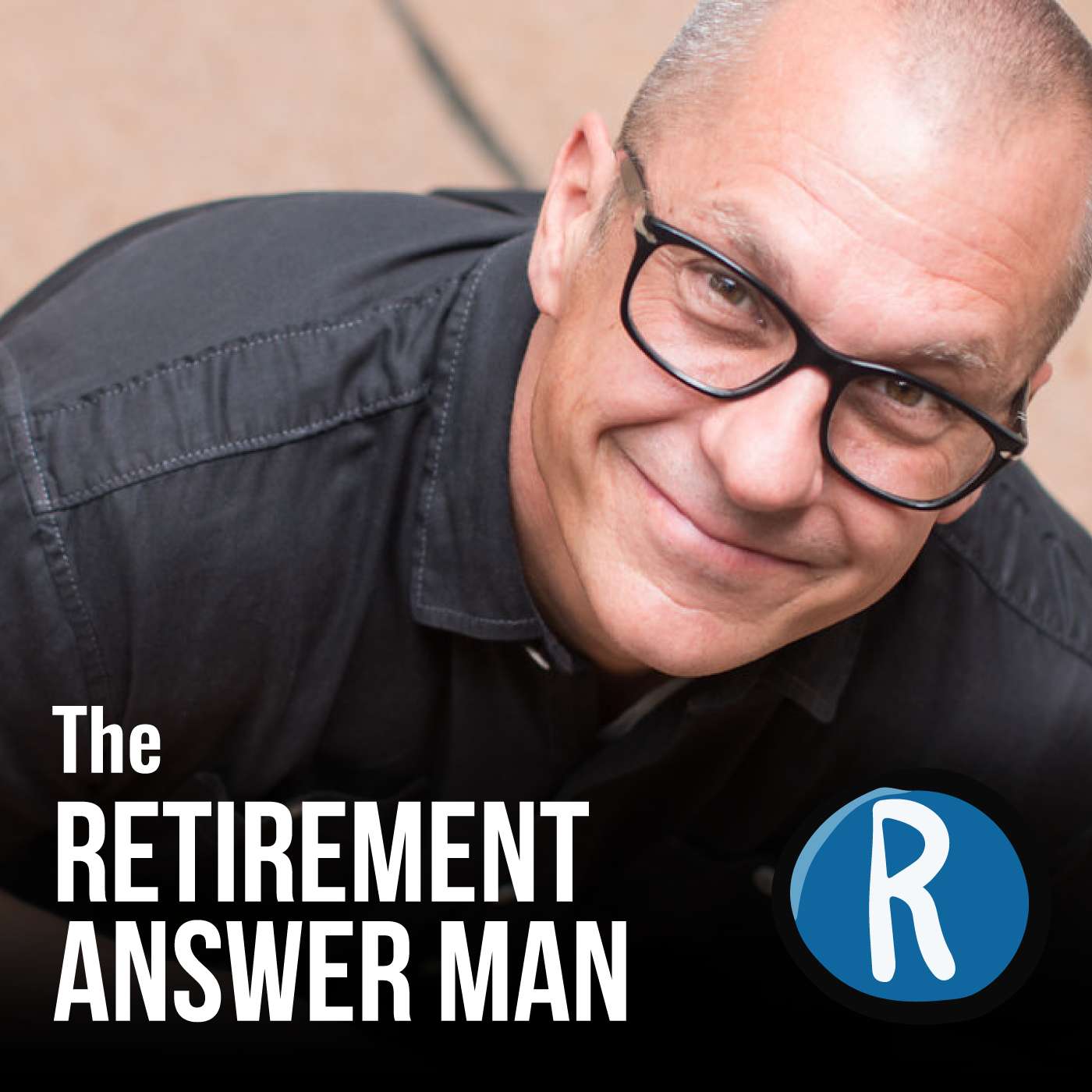
Retirement Answer Man
Roger Whitney, CFP®, CIMA®, RMA, CPWA®Audio
- Format:
- Podcast
- New episodes:
- Weekly
- Typical length:
- about 50 minutes
- Latest episode:
About this show
A top retirement podcast. Roger Whitney, CFP®, CIMA®, CPWA®, RMA, guides you on how to actually do retirement well financially and personally. This retirement podcast isn't afraid to talk about the softer side of retirement. It will teach you how to retire with confidence. Two-time PLUTUS winner for best retirement podcast / blog and the 2019 winner for best financial planner blog. This retirement podcast covers how to create a paycheck, medicare, healthcare, Social Security, tax management in retirement as well as retirement travel and other non-financial issues you'll need to address to rock retirement. Retirement isn’t an age OR a financial number. It’s finding that balance between living well today and feeling confident about your retirement. It’s about gaining more freedom to pursue the life you want. Join the rock retirement community at www.rogerwhitney.com
Show details and episodes come from the publisher's public feed at feeds.transistor.fm. Last updated . Names, artwork and text belong to their publishers.
Cosmos
Similar by topic and creator
- Harvard Business Review
Shares the topics Business and Education. - MIT OpenCourseWare: Free Courses from the institute
Shares the topics Business and Education. - Tony Robbins Podcast Daily
Shares the topics Business and Education.
Similar shows





Explore more
Episodes
Should I do a Roth Conversion This Year?
· 46 min
Year-end planning brings plenty of decisions to work through, and Roth conversions are one of them. Should you convert in 2026, or is it better to wait? This week, Roger walks through a practical framework for evaluating Roth conversions, including the factors to consider, potential tax implications, and how to make a decision that fits your retirement plan. He also answers listener questions about simplifying investment portfolios, IRMAA surcharges, Roth conversion strategies, and asset location for early retirees. OUTLINE OF THIS EPISODE OF THE RETIREMENT ANSWER MAN - (00:00) Introduction and why it's time to close the loop on Roth conversion decisions for 2026 PRACTICAL PLANNING SEGMENT - (01:05) Roger walks through a framework for deciding whether a Roth conversion makes sense in 2026. He covers the factors to weigh, including current and future tax brackets, required minimum distributions, tax implications, and potential impacts on healthcare costs. The goal is to evaluate your options, make an informed judgment call, and close the loop before year-end. LISTENER QUESTIONS - (25:55) How can you simplify an investment portfolio with multiple mutual funds while managing capital gains and tax consequences? - (35:39) What types of income are included when calculating IRMAA Medicare surcharges? - (37:06) Should you be more aggressive with Roth conversions when you have substantial retirement assets and future inheritance? - (39:56) Should early retirees prioritize keeping bonds in their brokerage bridge account rather than following traditional asset location strategies? SMART SPRINT - (43:52) If you're considering a Roth conversion for 2026, set aside time to review your retirement plan, complete a tax estimate, weigh the factors for and against converting, and make a decision. ROCKIN’ RETIREMENT IN THE WILD - (44:29) Christine discovers her passion for nature and wildlife photography after years of exploring different interests. Her story is a reminder that finding your lane in retirement can take time, experimentation, and a willingness to keep trying. REFERENCES - DinkyTown Financial Calculators (https://www.dinkytown.net/) - Retirement Answer Man FREE Resource Page (https://www.rogerwhitney.com/retirement-resources-free) - Roger Whitney on YouTube (https://www.youtube.com/@retirementanswerman) - Submit a Question for Roger (http://askroger.me/) - Rock Retirement Club (https://www.rockretirementclub.com/) - Sign up for the Noodle! (http://thenoodle.me/)
Not rated yetHow to Rebalance Before Retirement
· 32 min
In this episode, Roger explains how to rebalance your portfolio before retirement and why it's important to align your investments with the changing purpose of your money. He discusses how guaranteed income, your retirement plan's fundedness, and your comfort with market volatility influence your approach. Roger also shares a practical framework for organizing your assets into three layers to provide financial flexibility, fund your retirement paycheck, and support long-term growth. Plus, he answers listener questions about finding a retirement planner and preparing for the nonfinancial aspects of retirement. OUTLINE OF THIS EPISODE OF THE RETIREMENT ANSWER MAN - (00:00) Roger introduces the episode and discusses why rebalancing your portfolio before retirement is important, particularly as the purpose of your money changes. He previews the discussion on retirement portfolio allocation, listener questions, and a Rockin' Retirement in the Wild story. RETIREMENT TOOLKIT: HOW TO REBALANCE YOUR PORTFOLIO BEFORE RETIREMENT - (01:29) Roger explains why having enough liquidity is essential to enjoying retirement without allowing market downturns to force you to defer your life. He discusses three factors that influence how important rebalancing is: guaranteed income, how funded your retirement plan is, and your psychological comfort with volatility. - (08:55) Roger walks through his practical approach to rebalancing, starting with creating a retirement plan of record and defining your base great life and discretionary spending. He explains how to assign every dollar a job through three layers: a contingency fund for unexpected expenses, an income reserve to fund your retirement paycheck, and a long-term portfolio for future growth. He also discusses how to determine appropriate reserves and execute the rebalancing strategy. LISTENER QUESTIONS - (20:25) William asks how to find a retirement planner who can validate his DIY retirement plan, prepare tax returns, and serve as a trusted financial resource for his wife if he passes away. - (25:12) An anonymous listener asks whether conventional retirement planning focuses too much on accumulating wealth and not enough on preparing for the loss of purpose, mission, structure, and identity that can come with leaving work. ROCKIN' RETIREMENT IN THE WILD - (27:45) Rebecca shares how listening to the podcast helped her discover Social Security survivor benefits after her husband's passing and find her path to retirement. Now retired since 2024, she shares how she's living her best life. SMART SPRINT - (29:30) Evaluate whether your current asset allocation is doing the job it's supposed to do for the stage of life you're in or approaching. Consider whether strong market returns have made you hesitant to make adjustments that better serve your future needs. ON THE BOOKSHELF - (30:37) Kevin Lyle reviews Better with Age: The Psychology of Successful Aging by Alan Castel, exploring how attitude, adaptation, curiosity, and finding personal meaning can contribute to successful aging. REFERENCES - Retirement Answer Man FREE Resource Page (https://www.rogerwhitney.com/retirement-resources-free) - Roger Whitney on YouTube (https://www.youtube.com/@retirementanswerman) - Submit a Question for Roger (http://askroger.me/) - Rock Retirement Club (https://www.rockretirementclub.com/) - Sign up for the Noodle! (http://thenoodle.me/) - Better with Age: The Psychology of Successful Aging by Alan Castel (https://www.goodreads.com/book/show/38794731)
Not rated yetHow to Interview a Retirement Planner
· 55 min
In this episode, Roger shares how to find the right retirement planner, what to look for when interviewing advisors, and how to evaluate the value they bring. Tanya Nichols joins him to answer listener questions about financial advisors, retirement income, investment accounts, and Social Security. OUTLINE OF THIS EPISODE OF THE RETIREMENT ANSWER MAN - (00:00) Roger shares his concerns about heart health after several friends experience cardiac issues and explains how consulting a specialist helped him determine the appropriate next steps. He connects the experience to the importance of finding a retirement planner who specializes in your needs. RETIREMENT TOOLKIT: HOW TO CHOOSE A RETIREMENT PLANNER - (05:30) Roger explains why working with a retirement planning specialist matters and how to evaluate potential advisors based on connection, competence, consistency, qualifications, and the value they provide. - (14:41) Roger discusses what to look for when evaluating potential retirement planners, including their fee structure, planning process, and focus on clients’ life goals. - (18:40) Roger shares questions to ask when interviewing potential retirement planners to assess their approach, experience, and fit for your needs. LISTENER QUESTIONS - (26:24) Kurt asks how to begin developing a retirement strategy, including deciding whether and how to hire a financial advisor. - (32:44) Mike asks how to bridge the years between early retirement, Medicare, and Social Security while making tax-efficient financial decisions. - (38:24) A listener asks whether to continue working with an advisor who manages individual stocks, Roth conversions, cash reserves, and tax planning or switch to a flat-fee planner. - (43:12) Greg asks whether keeping retirement accounts at both Vanguard and Fidelity provides worthwhile protection or whether consolidating would simplify things. - (45:20) Todd asks how Social Security benefit estimates account for inflation and COLAs, and whether the estimates reflect today's dollars. - (49:40) Andrew asks about spousal Social Security benefits for a wife without her own earnings record and whether delaying his benefits until age 70 increases her benefit. SMART SPRINT - (52:18) Download the How to Choose a Retirement Planner worksheet and use it to evaluate your current advisor, review your own retirement plan, or interview potential planners. ON THE BOOKSHELF - (54:06) Kevin Lyles reviews Thinking, Fast and Slow by Daniel Kahneman and explores how recognizing biases can improve decision-making. REFERENCES - Retirement Answer Man FREE Resource Page (https://www.rogerwhitney.com/retirement-resources-free) - Roger Whitney on YouTube (https://www.youtube.com/) - Submit a Question for Roger (http://askroger.me/) - Rock Retirement Club (https://www.rockretirementclub.com/) - Sign up for the Noodle! (http://thenoodle.me/) - Thinking, Fast and Slow by Daniel Kahneman (https://www.goodreads.com/book/show/11468377)http://thenoodle.me/
Not rated yetMedicare Update with Danielle Roberts
· 47 min
Roger welcomes Danielle Roberts, co-founder of Boomer Benefits, to discuss Medicare in 2026, including rising Part D premiums, Medicare Advantage versus Medigap, and what to review during open enrollment. Then, Roger shares a Rock Retirement Club case study about building an income reserve before retirement and finding peace of mind by focusing on what matters most. OUTLINE OF THIS EPISODE OF THE RETIREMENT ANSWER MAN - 00:00 – Roger introduces the importance of time and attention and previews today's episode. MEDICARE UPDATE WITH DANIELLE ROBERTS - 01:25 – Navigating Medicare in 2026: Part D changes, Medicare Advantage, and Medigap. - 25:15 – What to review during Medicare open enrollment and when to make changes. RETIREMENT TOOLKIT- MINI CASE STUDY - 33:55 – A retirement case study on rebalancing investments, creating an income reserve, and reducing anxiety before retirement. SMART SPRINT - 44:56 – Identify one challenge you're facing and ask someone who can offer a fresh perspective to help you see it differently. CLOSING THOUGHTS - 45:35- Roger reflects on getting back into routines, making space for deeper thinking, and the relaunched Rock Retirement with Roger Whitney YouTube channel. RESOURCES - Medicare.gov (https://www.medicare.gov/) - Boomer Benefits (https://boomerbenefits.com/) - Rock Retirement with Roger Whitney on YouTube (https://www.youtube.com/results?search_query=Rock+Retirement+with+Roger+Whitney) - Submit a Question for Roger (http://askroger.me/) - Rock Retirement Club (https://www.rockretirementclub.com/) The opinions expressed in this podcast are for general informational purposes only and are not intended as specific advice or recommendations for any individual.
Not rated yetYear-End Planning Checklist for Retirees
· 43 min
Episode Overview Year-end planning doesn't have to become a giant project. Roger walks through the key items every retiree should put eyes on before December 31st -- not to do everything, but to avoid the unforced errors that sneak up on you. He also takes listener questions on coordinating Social Security survivor benefits, weighing a teacher pension lump sum against a higher annual payment, what happens to capital losses when there are no gains to offset, and how to build enough confidence to actually pull the trigger on retirement. Outline Of This Episode Of The Retirement Answer Man - (00:00) Year-end planning is about avoiding unforced errors -- not turning the checklist into a project - (00:42) Rock Retirement Club open enrollment runs October 15-21 -- rockretirementclub.com - (01:40) October theme in the club: year-end planning PRACTICAL PLANNING SEGMENT - (03:35) Life check: pull up your 2027 plan of record and ask what's changed - (05:01) What spending ideas are floating around that aren't in the plan yet? - (06:00) Re-check your retirement paycheck: is your contingency fund and income reserve where it needs to be? - (08:24) Tax-related action items - (16:18) Deadline-driven items: required minimum distributions - (17:15) Annual gifting limits ($19,000 per person in 2026) - (17:45) Charitable giving strategies: cash, appreciated assets, and qualified charitable distributions for those 70.5+ - (18:42) ACA subsidies: if your income changed this year, now is the time to check -- not at tax time - (20:38) ACA and Medicare open enrollment LISTENER QUESTIONS - (22:49) Jim asks about coordinating spousal and survivor Social Security benefits - (25:09) Brian asks whether to take a teacher pension lump sum or a higher annual pension - (29:19) Rose asks what happens to capital losses when there are no gains to offset - (32:36) Bacher asks how to assess confidence in being financially ready to retire SMART SPRINT - (41:29) In the next seven days, run through a year-end checklist -- just to put eyes on things. You may not have to do anything, but you'll be glad you looked. ROCKIN' RETIREMENT IN THE WILD - (42:26) Roger just got back from his annual golf trip to Traverse City -- a good reminder of why investing in friendships is worth it REFERENCES - Rock Retirement with Roger Whitney — YouTube channel (https://www.youtube.com/@retirementanswerman) - Submit a Question for Roger (http://askroger.me/) - Rock Retirement Club (https://www.rockretirementclub.com/) - Dinkytown tax estimator (https://www.dinkytown.net/taxes.html) - Boomer Benefits Medicare guidance (https://boomerbenefits.com/ram/) - Healthcare.gov (http://healthcare.gov/) -- ACA open enrollment
Not rated yetThe Perfect Portfolio with Peter Lazaroff
· 1 hr 3 min
Peter Lazaroff, Chief Investment Officer of PlanCorp and author of The Perfect Portfolio, joins Roger to explore what makes a portfolio “perfect.” The answer isn’t a mathematically optimized portfolio—it’s one that serves your life. They discuss how to align investments with your goals and purpose, manage risk, evaluate stocks and bonds, and create a simple investment process you can actually stick with. OUTLINE OF THIS EPISODE OF THE RETIREMENT ANSWER MAN PODCAST - (00:00) Roger welcomes Peter Lazaroff to discuss The Perfect Portfolio, shares what’s happening inside the Rock Retirement Club, and explores why the right portfolio is the one that serves your life. INTERVIEW WITH PETER LAZAROFF - (2:58) Roger introduces Peter Lazaroff, author of The Perfect Portfolio, and they discuss what makes a portfolio “perfect,” why there is no one-size-fits-all approach, and how your goals, preferences, risk capacity, and purpose should shape your investment strategy. - (12:12) Peter explains why the purpose of your money should drive your investment strategy and how to think about risk capacity, time horizons, and different goals. - (20:00) Roger and Peter begin filling in the pieces of the asset allocation, discussing indexing, factor investing, and how to approach the different components of a portfolio. - (40:32) Peter shares practical steps for implementing an investment strategy, including creating an investment policy, automating decisions, and connecting each investment to a specific purpose. LISTENER QUESTIONS - (47:33) Dan: How can he find his complete Social Security earnings history? - (48:48) Maggie: Are future Social Security benefit estimates adjusted for inflation and cost-of-living adjustments? - (51:09) Jay: When should he file Form SSA-44 if he expects an IRMAA surcharge from a one-time income event? - (53:05) Renee: How should an ultra-short-term bond fund fit into a five-year retirement income floor? SMART SPRINT - (1:00:14) Look at your entire portfolio and connect each investment to the goal it is meant to serve. ON THE BOOKSHELF - (1:01:12) Nichole recommends The Gales of November: The Untold Story of the Edmund Fitzgerald by John U. Bacon, and Roger shares his thoughts on Animal Farm by George Orwell. REFERENCES - The Perfect Portfolio by Peter Lazaroff (https://www.peterlazaroff.com/the-perfect-portfolio) - Social Security Administration (https://www.ssa.gov/) - Rock Retirement with Roger Whitney — YouTube channel (https://www.youtube.com/@retirementanswerman) - Submit a Question for Roger (http://askroger.me/) - Rock Retirement Club (https://www.rockretirementclub.com/) - The Gales of November: The Untold Story of the Edmund Fitzgerald by John U. Bacon (https://www.goodreads.com/book/show/226573163) - Animal Farm by George Orwell (https://www.goodreads.com/book/show/170448)
Not rated yetYour Social Security Playbook: Building Your Strategy- Married Filers
· 52 min
Roger Whitney closes out his five-week Social Security series with a practical framework for married couples deciding when to claim. He explains how to coordinate benefits, avoid common mistakes, and make a decision that fits the household rather than relying on a single calculator or searching for a perfect answer. OUTLINE OF THIS EPISODE OF THE RETIREMENT ANSWER MAN PODCAST - (00:00) Roger Whitney closes out his five-week Social Security series with a guide to building a claiming strategy for married couples. He shares a practical framework for coordinating benefits, avoiding common mistakes, and making a decision that fits the household. PRACTICAL PLANNING - (06:54) Roger shares a framework for coordinating benefits, weighing household priorities, and testing claiming strategies against a retirement plan of record. LISTENER QUESTIONS - (36:55) Dominic: Do cost-of-living adjustments apply before claiming? - (39:17) Joe: Should he wait until age 70 to claim while his wife claims at 62? - (41:31) Jason: Should the opportunity cost of delaying be compared with the potential return of an aggressive investment portfolio? - (45:05) Ann: What if both spouses have similar, moderate-to-high benefits? - (46:20) Stacy: Is it reasonable for a lower-earning husband to claim at 62 while his higher-earning wife waits until 70? SMART SPRINT - (49:08) Put time for your Social Security decision on the calendar. ON THE BOOKSHELF - (50:38) Roger and Nichole share books they’re reading, and Roger previews next week’s conversation with Peter Lazaroff about The Perfect Portfolio. REFERENCES - Social Security Administration (https://www.ssa.gov/) - Live Year-End Planning Session (http://livewithroger.com/) - Sign up for the Noodle! (http://thenoodle.me/) - Rock Retirement with Roger Whitney — YouTube channel (https://www.youtube.com/@retirementanswerman) - Submit a Question for Roger (http://askroger.me/) ON THE BOOKSHELF - Remarkably Bright Creatures by Shelby Van Pelt (https://www.goodreads.com/book/show/58733693) - In a Sunburned Country by Bill Bryson (https://www.goodreads.com/book/show/24)
Not rated yetYour Social Security Playbook: Building Your Strategy- Single Filers
· 50 min
Roger Whitney explains how solo filers can make a confident Social Security claiming decision without getting overwhelmed by complexity. He covers the biggest mistakes to avoid, introduces a practical decision-making framework, answers listener questions about survivor benefits, and closes with a simple action step for deciding when to revisit the issue. OUTLINE OF THIS EPISODE OF THE RETIREMENT ANSWER MAN PODCAST - (00:00) Intro: Why Social Security decisions get complicated PRACTICAL PLANNING SEGMENT - (02:55) Social Security claiming framework for solo filers: avoiding common mistakes, knowing when to begin, using the OODA framework, evaluating your plan and personal circumstances, checking survivor or divorced-spouse benefits, identifying your priorities, and testing your options against your retirement plan. LISTENER QUESTIONS - (36:24) Karen asks how to switch from her own Social Security benefit to survivor benefits later. - (39:06) Julie asks whether she should claim survivor benefits first while letting her own benefit grow. - (40:54) Drew asks how retiring at 60 and claiming at 64 would affect his Social Security benefits. SMART SPRINT - (46:50) If Social Security is still a green banana, use your full retirement age in your plan and set a date to revisit it; if it’s ripe, follow the protocol and make your claiming decision. ON THE BOOKSHELF - (47:30) Roger recommends The Violin Maker, while Natalia gives Wild Dark Shore five out of five for its emotional depth and thrilling twists. REFERENCES - Social Security Administration (https://www.ssa.gov/) - Live Year-End Planning Session (http://livewithroger.com) - Sign up for the Noodle! (http://thenoodle.me) - The Violin Maker: Finding a Centuries-Old Tradition in a Brooklyn Workshop by John Marchese (https://www.goodreads.com/book/show/673390) - Wild Dark Shore by Charlotte McConaghy (https://www.goodreads.com/book/show/231127223) - Rock Retirement with Roger Whitney — YouTube channel (https://www.youtube.com/@retirementanswerman) - Submit a Question for Roger (http://askroger.me/) - YouTube video: When Should a Single Person Claim Social Security? (https://youtu.be/tBi_rEb60AA)http://askroger.me/
Not rated yetYour Social Security Playbook: The Levers You Control
· 52 min
Roger Whitney explains six levers that can influence Social Security benefits: reviewing your earnings record, choosing when to claim, managing retirement income, reconsidering an early claim, considering where you live, and coordinating spousal or survivor benefits. The episode emphasizes that the best claiming strategy depends on each person’s priorities, resources, and desired outcome. OUTLINE OF THIS EPISODE OF THE RETIREMENT ANSWER MAN PODCAST - (00:00) Roger introduces the Social Security series and explains that this episode focuses on the factors individuals can control. PRACTICAL PLANNING SEGMENT - (02:52) Roger walks through the six Social Security levers, including earnings history, claiming age, retirement income, application withdrawal, state taxation, and spousal coordination. LISTENER QUESTIONS - (31:08) Planning for Social Security uncertainty: Roger responds to Turner, who asks how to model future benefits given uncertainty about possible changes to Social Security. - (36:25) Coordinating benefits for spouses with different earnings: Roger examines whether a higher earner should delay benefits while the lower earner claims earlier. - (45:27) Claiming benefits when retirement assets are growing: Roger discusses a listener’s decision to claim Social Security before age 70 because withdrawals from pre-tax accounts would otherwise be needed and how a spouse’s early claiming decision could affect future spousal and survivor benefits. SMART SPRINT - (49:14) Review your retirement plan, identify the Social Security levers you control, and compare alternative claiming strategies with a “what-if” scenario. CLOSING THOUGHTS - (50:15) Roger shares a personal story about his daughter and a listener’s positive experience with her work. REFERENCES - Social Security Administration — Social Security Statement and earnings record (https://www.ssa.gov/myaccount/?utm_medium=cpc&utm_source=bing&utm_content=sss-ad3&utm_campaign=account-services&msclkid=e5b73ea1cbe9117c41b75409d21dcd27) - Social Security Administration — Social Security Benefits Calculators (https://www.ssa.gov/benefits/calculators/) - Dinkytown —Social Security Benefits Taxation Calculator (https://www.dinkytown.net/java/social-security-taxable-benefits.html) - AARP — State Taxation Of Social Security Benefits (https://www.aarp.org/money/taxes/state-tax-guide/?msockid=260fabfcfdd16b6a0f2ebd9cfc116a6b) - Rock Retirement with Roger Whitney — YouTube channel (https://www.youtube.com/@retirementanswerman) - Submit a Question for Roger (http://askroger.me/) - Sign up for The Noodle (http://thenoodle.me/)
Not rated yetYour Social Security Playbook: How Your Benefit is Calculated
· 37 min
How is your Social Security benefit actually calculated? In this episode, Roger explains how you qualify for retirement benefits, how your earnings history determines your benefit, and why the age you claim matters. Understanding these basics will help you recognize the areas where you have agency as you build your Social Security claiming strategy. Roger also answers listener questions about survivor benefits, estimating taxes in retirement, and coordinating spousal benefits. OUTLINE OF THIS EPISODE OF THE RETIREMENT ANSWER MAN - [00:00] Understanding the context behind your Social Security benefit PRACTICAL PLANNING: SOCIAL SECURITY PLAYBOOK - [01:33] How you qualify for Social Security and how benefits are calculated - [11:08] Reviewing your Social Security statement and understanding cost-of-living adjustments - [15:30] Understanding your Social Security claiming age options LISTENER QUESTIONS - [22:11] What Social Security resources are available for widows and widowers? - [24:18] How to categorize income and expenses for tax planning - [30:43] Can my husband switch from his own benefit to a spousal benefit? SMART SPRINT - [33:39] Review your Social Security statement CLOSING THOUGHTS - [34:40] Reconsidering the words “should,” “must,” and “need to” REFERENCES - Social Security Administration (https://www.ssa.gov/) - Open Social Security (https://opensocialsecurity.com/) - Maximize My Social Security (https://maximizemysocialsecurity.com/) - Dinkytown 1040 Tax Calculator (https://www.dinkytown.net/java/1040-tax-calculator.html) - Submit a Question for Roger (http://askroger.me/) - Sign up for The Noodle (http://thenoodle.me/) - Rock Retirement with Roger Whitney on YouTube: How to Read Your Social Security Statement (https://youtu.be/e4CFquMFUKM)
Not rated yetYour Social Security Playbook: How the System Works
· 54 min
Social Security is one of the most important pieces of a retirement plan, but how does the system work, and will it remain financially viable for future retirees? Roger begins a five-week series on building your Social Security playbook by exploring the program’s history, funding structure, and current financial outlook. He also discusses potential paths to solvency, how he accounts for Social Security in retirement planning, and why building a resilient plan remains essential. OUTLINE OF THIS EPISODE OF THE RETIREMENT ANSWER MAN - [00:00] Roger introduces a new five-week series designed to help you build your Social Security playbook. - [01:37] The Retirement Answer Man YouTube channel is relaunching with weekly videos that complement the podcast. PRACTICAL PLANNING SEGMENT - [02:35] Roger outlines the five-week Social Security series and explains what you need to understand to build your own playbook. - [05:02] A brief history of Social Security provides context for how the program and its purpose have evolved. - [08:18] Roger explains how today’s workers fund benefits for today’s retirees through payroll taxes. - [11:58] Demographic changes and longer lifespans have caused benefit payments to exceed incoming payroll-tax revenue. - [15:45] The 2026 Trustees Report projects what could happen in 2032 if Congress does not address Social Security’s funding shortfall. - [21:50] Roger explores possible paths to solvency and explains how he accounts for Social Security when building a resilient retirement plan. LISTENER QUESTIONS - [37:40] Will claiming a reduced benefit at age 62 also reduce a spouse’s future survivor benefit? - [39:08] Should the decision to claim Social Security early account for the assets that can remain invested? - [43:17] Is OpenSocialSecurity.com a useful tool for choosing a claiming strategy, and how can you respond to someone who wants to claim early because they fear Social Security will run out of money? SMART SPRINT - [46:42] Claim your personal Social Security account at SSA.gov and consider contacting your federal representatives about addressing the program’s solvency. CLOSING THOUGHTS - [48:28] A listener demonstrates how small, consistent efforts can compound into meaningful progress over time. - [52:50] Allison reviews The Calamity Club by Kathryn Stockett, and Roger shares his current book recommendation. REFERENCES - Social Security Administration (https://www.ssa.gov/) - Open Social Security (https://opensocialsecurity.com/) - Submit a Question for Roger (http://askroger.me/) - Sign up for The Noodle (http://thenoodle.me/) - Retirement Answer Man on YouTube (https://www.youtube.com/@retirementanswerman) - The Calamity Club by Kathryn Stockett (https://www.goodreads.com/book/show/228820257) - The Way of Excellence by Brad Stulberg (https://www.goodreads.com/book/show/232345521)
Not rated yetSummer Reruns: Learn What to Ignore with Dr. Daniel Crosby
· 32 min
In this summer replay, Roger talks with Dr. Daniel Crosby about learning what to ignore in an age of information overload. They explore how to filter financial advice, align decisions with your values, and focus your attention on what truly matters to your finances and your life. OUTLINE OF THIS EPISODE OF THE RETIREMENT ANSWER MAN - [00:00] Roger introduces this summer replay with Dr. Daniel Crosby and talks about his upcoming Social Security series. SUMMER REPLAY WITH DR DANIEL CROSBY - [02:21] Roger revisits his conversation with Dr. Daniel Crosby about filtering out the noise competing for our attention. - [09:18] Daniel explains how our spending can reveal whether our choices truly align with our stated values. - [14:03] Roger and Daniel share four questions that can help determine whether information deserves our attention. CLOSING THOUGHTS - [31:46] Roger looks ahead to the upcoming five-week Social Security series. REFERENCES - The Soul of Wealth by Dr. Daniel Crosby (https://www.goodreads.com/book/show/203579235) - Deep Work by Cal Newport (https://www.goodreads.com/book/show/25744928) - The Rational Optimist by Matt Ridley (https://www.goodreads.com/book/show/7776209) - Submit a Question for Roger (http://askroger.me/) - Sign up for The Noodle (http://thenoodle.me/)
Not rated yetSummer Reruns: Gabbing with Gretchen Rubin- Your Personality and How it Plays into Your Retirement Planning
· 21 min
This Summer Replay revisits Roger’s 2018 conversation with Gretchen Rubin about the Four Tendencies and how understanding your personality can help you create a retirement plan and daily life that truly fit who you are. OUTLINE OF THIS EPISODE OF THE RETIREMENT ANSWER MAN - (00:00) Roger introduces this Summer Replay conversation with Gretchen Rubin about creating a retirement plan that fits your personality. SUMMER REPLAY: CONVERSATION WITH GRETCHEN RUBIN - (01:32) Gretchen explains the Four Tendencies and how each responds to expectations. - (08:25) Learn how working with your natural tendency can help you achieve your goals. - (09:39) Discover how the Four Tendencies can shape your transition into retirement. - (16:53) Understanding the tendencies of your spouse, family members, and coworkers can improve communication and reduce conflict. CLOSING THOUGHTS - (19:40) Roger shares his thoughts on relaunching YouTube in a way that fits him and the show. REFERENCES - Take Gretchen Rubin’s Four Tendencies Quiz (https://gretchenrubin.com/quiz/the-four-tendencies-quiz/?utm_source=chatgpt.com) - The Four Tendencies by Gretchen Rubin (https://gretchenrubin.com/books/the-four-tendencies/?utm_source=chatgpt.com) - Submit a Question for Roger (http://askroger.me/) - Sign up for The Noodle (http://thenoodle.me/)
Not rated yetSummer Reruns: Keep Investments Simple with Peter Lazaroff
· 41 min
As part of Roger’s summer replay series, he revisits a conversation with Peter Lazaroff about the value of elegant simplicity in retirement investing. They discuss why more sophisticated strategies are not necessarily better, how added complexity can create unexpected risks, and why the money supporting your retirement should remain separate from any “play money” used to explore alternative investments. OUTLINE OF THIS EPISODE OF THE RETIREMENT ANSWER MAN - (00:01) Roger introduces the benefits of simplifying your investments rather than continually adding new strategies. RERUN: KEEPING INVESTMENTS SIMPLE WITH PETER LAZAROFF - (01:56) Roger and Peter discuss elegant simplicity, private investments, and why adding complexity to your portfolio may create more risk and work without meaningfully improving your retirement. - (20:18) As private investments become more widely available, Peter shares a framework for deciding whether an investment truly belongs in your portfolio. - (32:02) Roger and Peter discuss when added complexity may serve a purpose and why private investments should not be a core part of the strategy securing your retirement. CLOSING THOUGHTS - (40:05) Roger connects elegant simplicity with the 80/20 rule and the theme of the upcoming Rock Retirement Club Roundup. REFERENCES - Learn more about Peter Lazaroff (https://peterlazaroff.com/) - Pre-Order Peter’s New Book: The Perfect Portfolio (https://www.panmacmillan.com/authors/peter-lazaroff/the-perfect-portfolio/9781804093672) - Submit a Question for Roger (http://askroger.me/) - Sign up for The Noodle (http://thenoodle.me/) Note: The opinions expressed are for informational purposes only and should not replace personalized advice from licensed professionals.
Not rated yetSummer Reruns: Retiring Single with Tanya Nichols
· 24 min
August is encore month on the Retirement Answer Man podcast, giving Roger an opportunity to step back, reflect, and revisit some of the show's most impactful conversations. This week, he replays his discussion with Tanya Nichols on retiring single—a topic that remains just as relevant today. Together, they explore the unique planning considerations for single retirees, including building a trusted support network, preparing for future care, creating a personal board of directors, balancing flexibility with financial security, and thinking intentionally about legacy. Roger closes the episode by sharing why he's spending August slowing down, revisiting favorite books, and using writing to gain greater clarity and conviction. OUTLINE OF THIS EPISODE OF THE RETIREMENT ANSWER MAN - (00:00) Roger explains why August will feature encore episodes, shares his desire to slow down and reflect, and introduces this week's replay with Tanya Nichols on retiring single. RETIREMENT TOOLKIT FEATURING TANYA NICHOLS - (02:18) Roger and Tanya discuss the unique planning considerations for single retirees, including future care planning, building a trusted support network, creating a personal board of directors, managing a household alone, balancing flexibility with financial security, and rethinking legacy. CLOSING THOUGHTs - (22:47) Roger reflects on why he's spending August revisiting favorite books and encourages listeners to embrace writing and reflection as tools for reconnecting with their own convictions. REFERENCES - Retire Agile (https://www.retireagile.com/) - The Gospel of Wealth by Andrew Carnegie (https://www.goodreads.com/book/show/10806532-the-gospel-of-wealth) - Mark Troutman's Money Mind Podcast (https://marksmoneymind.com/) - Submit a Question for Roger (http://askroger.me/) - Sign up for The Noodle (http://thenoodle.me/) Note: The opinions expressed are for informational purposes only and should not replace personalized advice from licensed professionals.
Not rated yetRetirement Toolkit: Never Worry About Money Again with Jesse Mecham
· 1 hr 5 min
What if budgeting wasn't about restriction, but about giving every dollar a purpose? This week, Roger sits down with Jesse Mecham, founder of YNAB (You Need A Budget), to discuss the power of intentionality with money. Together, they explore how asking one simple question, "What is this money for?" can reduce financial stress, improve decision-making, and help align your spending with the life you want to create. Roger also answers listener questions on rebalancing retirement portfolios, qualified dividends, supporting adult children, calculating net worth, and whether financial planners have financial planners of their own. OUTLINE OF THIS EPISODE OF THE RETIREMENT ANSWER MAN - (00:00) Roger introduces this week's conversation on intentionality with money, previews his interview with Jesse Mecham, and shares updates on the August replay schedule and upcoming Social Security series. RETIREMENT TOOLKIT FEATURING JESSE MECHAM - (03:06) Roger sits down with Jesse Mecham, founder of YNAB, to discuss how approaching money with intention instead of restriction can reduce financial worry and help you align your spending with what matters most. LISTENER QUESTIONS - (38:47) Christine asks about rebalancing her retirement portfolio. - (43:00) Peter asks about qualified and ordinary dividends. - (47:28) Paul asks about supporting adult children financially. - (56:05) Ron asks whether future taxes should be considered when calculating net worth - (58:38) Lisa wonders whether financial planners have financial planners of their own. SMART SPRINT - (01:01:55) Reflect on how intentional you are with your money and consider reading Jesse Mecham's book, Never Worry About Money Again, to help align your spending with the life you want to create. CLOSING THOUGHT - (01:03:23) Roger reflects on the summer goals he set earlier in the year and encourages you to revisit your own intentions before the season ends. REFERENCES - Never Worry About Money Again by Jesse Mecham (https://www.goodreads.com/book/show/252449904) - YNAB (You Need A Budget) (https://www.ynab.com/) - Submit a Question for Roger (http://askroger.me/) - Sign up for The Noodle (http://thenoodle.me/) Note: The opinions expressed are for informational purposes only and should not replace personalized advice from licensed professionals.
Not rated yetRetirement Toolkit: How do you Balance Optimization with Simplification
· 53 min
How do you know when it's worth optimizing your retirement plan and when it's better to keep things simple? This week, Roger answers a listener question by exploring Aristotle's concept of the "golden mean," arguing that the best retirement decisions are rarely found at either extreme. He explains why financial optimization should be measured by the life it enables rather than the dollars it saves and introduces the OODA Loop (Observe, Orient, Decide, Act) as a practical framework for evaluating trade-offs. Roger also answers listener questions about stepped-up cost basis after the death of a spouse, whether dividends can be used to fund an income floor, and when bonds versus CDs make sense in today's interest rate environment. OUTLINE OF THIS EPISODE OF THE RETIREMENT ANSWER MAN - (00:00) Roger introduces today's discussion on balancing financial optimization with simplicity, previews upcoming episodes, and shares updates on the August replay schedule and September Social Security series. RETIREMENT TOOLKIT - (02:31) Finding your "golden mean" between optimizing your retirement plan and keeping it simple- Why retirement planning often overemphasizes financial optimization - The difference between optimizing for money and optimizing for life - How Aristotle's concept of the golden mean applies to retirement decisions - Using the OODA Loop (Observe, Orient, Decide, Act) to make better decisions - Recognizing personal biases before making financial decisions - Evaluating trade-offs and second-order consequences before pursuing tax strategies, Roth conversions, and other optimization opportunities LISTENER QUESTIONS - (36:35) Roger answers a listener's question about home cost basis. - (41:02) Can dividend income be used to fill the gap in my retirement income floor? - (44:55) Are bonds still a good conservative investment, or should I use CDs instead? SMART SPRINT - (49:55) Practice using the OODA framework on a small, everyday decision this week to determine whether optimizing is truly worth the extra time and effort. CLOSING THOUGHTS - (51:24) Roger reflects on how building a resilient retirement plan isn't just about protecting against uncertainty—it also gives you the confidence to lean into life and enjoy retirement more fully REFERENCES - Submit a Question for Roger (http://askroger.me/) - Sign up for The Noodle (http://thenoodle.me/) Note: The opinions expressed are for informational purposes only and should not replace personalized advice from licensed professionals.
Not rated yetRetirement Toolkit: How to Rebalance a Retirement Portfolio
· 55 min
This week Roger explains why rebalancing is one of the most important disciplines in retirement planning. In the Retirement Toolkit, he explores the difference between a traditional investment allocation and a retirement allocation, explaining how to organize your assets to support both your current lifestyle and your future needs. Along the way, he answers listener questions about speculative investments, the retirement red zone, the Rule of 55, and managing retirement cash reserves. OUTLINE OF THIS EPISODE OF THE RETIREMENT ANSWER MAN - (00:00) Roger explains why portfolios naturally drift over time and why rebalancing helps keep your retirement plan aligned with your long-term goals. RETIREMENT TOOLKIT - (02:45) Roger explains how to rebalance a retirement portfolio, introduces his retirement allocation strategy, and shares practical tips for keeping your investments aligned with the life you want to live. LISTENER QUESTIONS - (34:50) BB asks whether a high-risk AI cryptocurrency investment belongs in a retirement portfolio. Roger discusses separating speculative investments from retirement assets and investing with intention. - (39:30) Jim asks how the retirement red zone changes for people who retire early. Roger explains sequence of returns risk and why its impact depends on factors like retirement age and overall funding. - (44:16) Jamie asks how the Rule of 55 applies to her 401(k). Roger explains why eligibility depends on the employer's retirement plan and recommends checking with the plan administrator. - (46:53) Pat asks how to replenish a retirement money market account each year. Roger discusses coordinating withdrawals with tax planning and maintaining flexibility in retirement income. SMART SPRINT - (50:10) Roger encourages listeners to identify their target retirement allocation by defining how much they want in their contingency fund, income reserve, and long-term growth portfolio. ON THE BOOKSHELF - (51:28) Nicole recommends Undistracted by Bob Goff, and Mark recommends Living Life in Crescendo by Stephen R. Covey and Cynthia Covey Haller. Roger shares his thoughts on lifelong growth and purpose in retirement. REFERENCES - Submit a Question for Roger (http://askroger.me/) - Sign up for The Noodle (http://thenoodle.me/) - Undistracted: Capture Your Purpose. Rediscover Your Joy. by Bob Goff (https://www.goodreads.com/book/show/58429319) - Living Life In Crescendo by Stephen R. Covey (https://www.goodreads.com/book/show/84212305) Note: The opinions expressed are for informational purposes only and should not replace personalized advice from licensed professionals.
Not rated yetRetirement Toolkit: How Does Step Up in Cost Basis Work
· 49 min
This week Roger talks about one of the biggest challenges retirees face today: information overload. He explains why more information doesn't always lead to better decisions and why building a great retirement starts with focusing on what matters most to you. In the Retirement Toolkit, Roger unpacks stepped-up cost basis, covering how it works, when it matters, and how it can become a valuable estate planning tool. Along the way, he answers listener questions on retirement income strategies, cash reserves, government retirement accounts, and how to create a retirement plan that's both practical and personal. OUTLINE OF THIS EPISODE OF THE RETIREMENT ANSWER MAN - (00:00) Roger discusses how information overload can make retirement planning feel overwhelming and explains why simplifying your focus leads to better decisions. RETIREMENT TOOLKIT - (08:20) Roger breaks down stepped-up cost basis, explaining how inherited assets receive a new tax basis at death, which assets qualify, how the rules differ for spouses, and how this strategy fits into estate and retirement planning. LISTENER QUESTIONS - (21:20) Mike asks whether adding a whole life insurance policy is an effective retirement income strategy. Roger explains why it's important to build a retirement plan first before evaluating insurance products and discusses situations where whole life may or may not make sense. - (32:00) Allison asks about the federal TSP's pro-rata withdrawal rules and whether rolling funds to an IRA would make a bucket strategy easier to implement. - (34:13) Steven asks how much cash to have available before retirement. Roger shares his approach for building a five-year spending reserve while balancing flexibility and sequence-of-returns risk. - (39:56) Tom asks whether to model retirement spending using flat nominal dollars or adjust for inflation and the retirement spending smile. Roger explains why retirement plans should reflect personal spending goals rather than population averages. SMART SPRINT - (47:00) Roger encourages listeners to filter information through their own priorities, remembering that general advice is only valuable if it applies to their unique situation. REFERENCES - Submit a Question for Roger (http://askroger.me/) - Sign up for The Noodle (http://thenoodle.me/) Note: The opinions expressed are for informational purposes only and should not replace personalized advice from licensed professionals.
Not rated yetRetirement Toolkit: How Required Minimum Distributions (RMDs) Work
· 45 min
This week Roger explores the idea of "digging where your feet are" and how focusing on what you can do today can reduce anxiety about the future and regret about the past. In the Retirement Toolkit, he explains the basics of Required Minimum Distributions (RMDs), including when they begin, which accounts they affect, how they're calculated, and strategies for managing them through retirement. Listener questions cover Roth conversions, 401(k) rollovers, donor-advised funds versus direct charitable giving, and healthcare costs before Medicare. Roger closes the episode with a Fourth of July story about unexpected kindness from strangers in rural Texas. OUTLINE OF THIS EPISODE OF THE RETIREMENT ANSWER MAN - (00:00) Roger introduces the idea of "dig where your feet are" and explains why focusing on today's actions leads to better retirement planning than living in the future or the past. RETIREMENT TOOLKIT - (04:06) Roger breaks down Required Minimum Distributions (RMDs), explaining what they are, when they begin, which retirement accounts are affected, how they're calculated, and strategies for minimizing their long-term tax impact. LISTENER QUESTIONS - (17:10) Michael asks whether Roth conversions are worthwhile with only a short window between retirement and the start of Required Minimum Distributions. - (23:10) Lynn asks how to minimize market risk when rolling a 401(k) into an IRA and worries about being out of the market during the transfer. - (28:19) Sandy shares concerns about donor-advised funds and encourages earlier conversations around charitable giving. Roger discusses both the advantages and criticisms of donor-advised funds. - (32:52) John shares concerns about healthcare costs before Medicare. Roger discusses replacing vague fears with concrete planning and evaluating the trade-offs of retiring early. SMART SPRINT - (38:01) Roger's challenge this week: estimate your future Required Minimum Distribution using an online calculator to better understand how RMDs may affect your retirement income and taxes. CLOSING THOUGHTS - (38:54) Roger shares a Fourth of July story about his daughter receiving help from several strangers after experiencing car trouble in rural West Texas, reflecting on kindness, generosity, and the spirit of America. REFERENCES - Submit a Question for Roger (http://askroger.me/) - Sign up for The Noodle (http://thenoodle.me/) - Charles Schwab Required Minimum Distribution Calculator (https://www.schwab.com/ira/ira-calculators/rmd?msockid=260fabfcfdd16b6a0f2ebd9cfc116a6b) Note: The opinions expressed are for informational purposes only and should not replace personalized advice from licensed professionals.
Not rated yet