


Rational Thinker
Rational ThinkerAudio
- Format:
- Podcast
- New episodes:
- Irregular
- Typical length:
- about 20 minutes
- Latest episode:
About this show
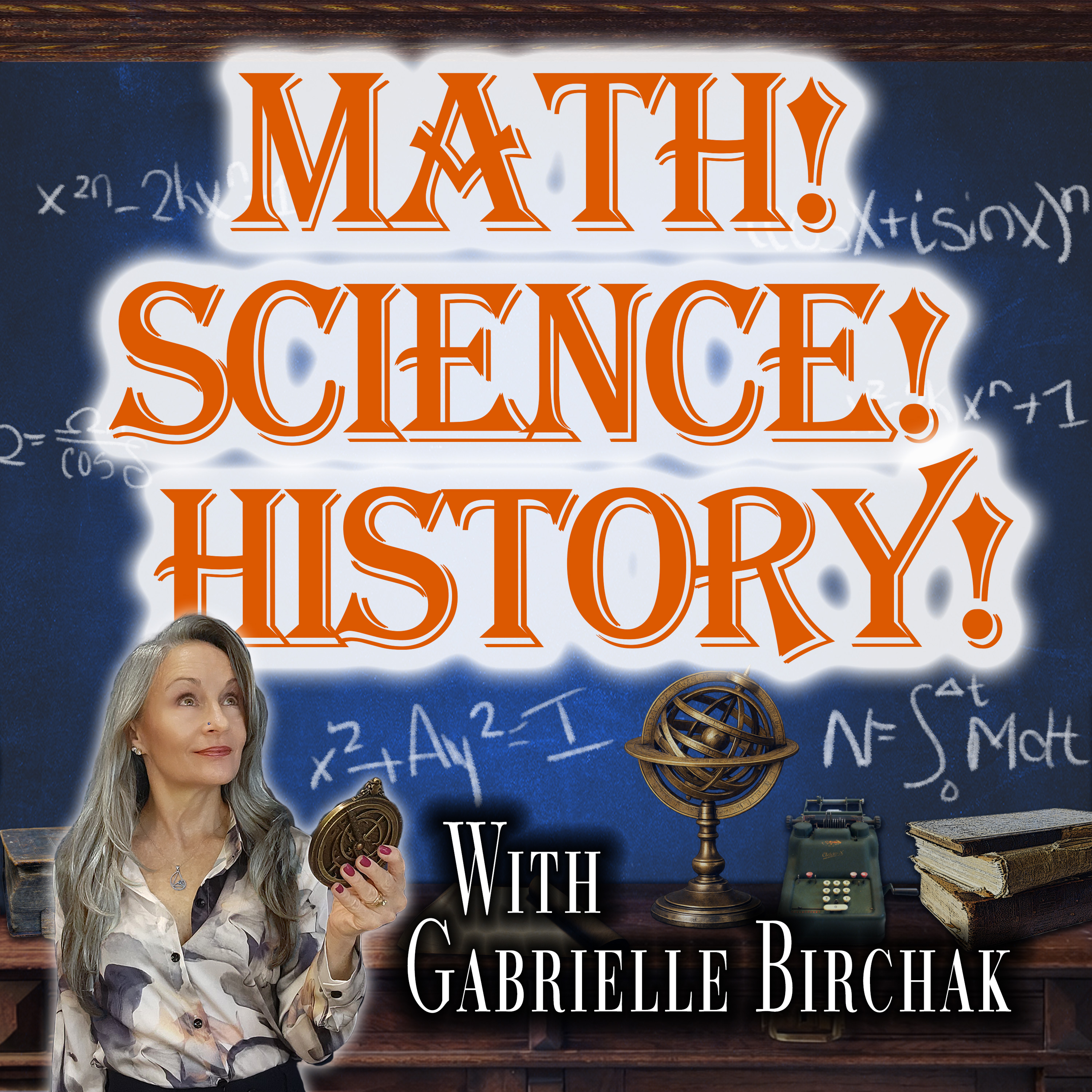
Rational Thinker is a podcast dedicated to exploring the rich and often surprising history of science — the discoveries, the debates, and the remarkable individuals whose curiosity and perseverance transformed our understanding of the world. From the revolutionary insights of the Scientific Revolution to the groundbreaking breakthroughs of the modern era, each episode examines the human stories behind the ideas that shaped civilization. I invite my listeners to look beyond the textbook and engage with science not merely as a collection of facts, but as an evolving, deeply human pursuit of truth. Whether you are a lifelong student of history, a science enthusiast, or simply someone who wonders how we came to know what we know, this podcast offers thoughtful, well-researched narratives that illuminate the minds and moments that moved science forward.
Covers: history of science, physics, chemistry, scientific discovery, quantum physics, relativity, astronomy, biology
Show details and episodes come from the publisher's public feed at anchor.fm. Last updated . Names, artwork and text belong to their publishers.
Recently on this show
Summary of recent episodes, drawn from the publisher's feed.
Rational Thinker explores the history of science, looking at the discoveries, debates and people behind major ideas about the world. Recent episodes cover Niels Bohr's atomic energy levels, the early measurement of electric force, the discovery of quarks, and how the double helix was found.
Cosmos
Similar in subject
- Curious Cases
Both cover: biology, chemistry, physics - Veritasium
Both cover: biology, chemistry, physics - SciShow
Both cover: biology, chemistry, physics
Similar shows







Explore more
Episodes
How the First Artificial Element Was Created
· 18 min
Technetium is quite an interesting element and has just as interesting of a history. Many had tried to discover it and failed, and this is because of how unstable all of its isotopes are. The only way to discover the element was to make it ourselves, and that was finally done in 1937.
Not rated yetThe Quantum Debate That Changed Physics Forever
· 19 min
The 1920s were an era of intense discovery and progress in the world of physics. Concepts such as matrix mechanics, the Schrödinger model of the atom, the Heisenberg uncertainty principle, and more dominated this era of progress. All of these concepts had a particular trait in common with one another: they showed that probability was the driving force behind reality. Many physicists, most notably among them, Albert Einstein, were not so willing to accept this idea to its fullest. Einstein brought his concerns with him, along with his challenging thought experiments, to the 5th Solvay Conference in 1927, where he and his colleague, Niels Bohr, would start a decades long debate over probability and the true nature of reality.
Not rated yetHow The Atomic Number Was Discovered
· 8 min
Henry Moseley was a British physicist known for his discovery of Moseley's Law, which relates the atomic number to the "characteristic X-ray" of each element. Before Moseley's discovery, the atomic number was merely an arbitrary number given to elements, and was not the way elements were sorted on the periodic table.
Not rated yetHow Radio Waves Were Discovered
· 18 min
In the 1780s, an Italian physicist named Luigi Galvani made a shocking discovering when experimenting with the remains of frogs. He found that when he touched a the nerves of a frog with a lancet, and at the same time, discharged electricity from an electrostatic machine nearby, the frog legs would kick. This would spark a century-long slew of discoveries and theory that would eventually lead to the discover of the invisible radiation known today as radio waves.
Not rated yet