

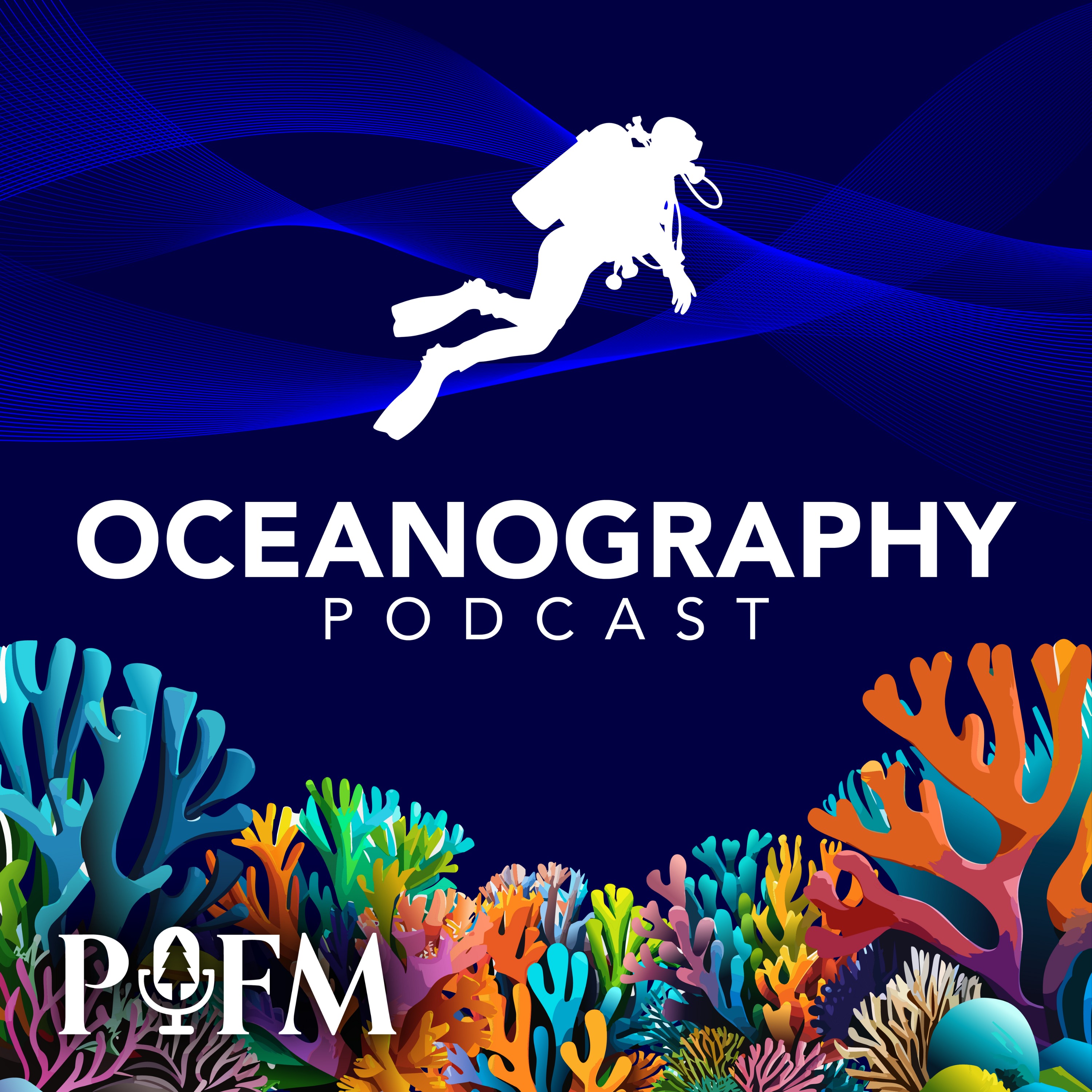
Oceanography | Marine Science and Ocean Stories
Pine Forest Media | Environmental Science PodcastsAudio
- Format:
- Podcast
- New episodes:
- Weekly
- Typical length:
- about 45 minutes
- Latest episode:
About this show
The ocean is never separate from human life. Oceanography is a marine science podcast about what we know, how we know it, and what we choose to do with that knowledge.
Hosted by science communicator Clark Marchese, the show brings researchers, conservationists, policymakers, Indigenous knowledge holders, advocates, and storytellers into conversations that move from discovery to decision-making. We follow whale calls into the deep sea, trace pollution from land to water, visit research vessels and international summits, and ask how ocean science can inform policy that genuinely serves people and the planet.
Each episode makes complex research accessible without flattening it, connecting marine biology and ocean discovery with conservation, technology, justice, power, and global policy. Expect deep-dive interviews, narrative explainers, and field reporting grounded in curiosity, rigor, and the belief that understanding the ocean should help us care for it.
Oceanography is an endorsed activity of the United Nations Decade of Ocean Science for Sustainable Development and is produced by Pine Forest Media (https://www.pineforestpods.com/)
Hosted on Acast. See acast.com/privacy (https://acast.com/privacy) for more information.
Covers: marine science, ocean science, climate change, ocean conservation, marine biology, ocean plastic pollution, fisheries management, deep sea, ocean technology, science communication
Show details and episodes come from the publisher's public feed at feeds.acast.com. Last updated . Names, artwork and text belong to their publishers.
Recently on this show
Summary of recent episodes, drawn from the publisher's feed.
Oceanography is a marine science podcast exploring how we learn about the sea and how that knowledge might guide what we do about it. Recent episodes cover solutions to plastic pollution, the plankton that shaped life on Earth, ocean measurement technology, and rebuilding sustainable fisheries.
Cosmos
Similar in subject
- The Deep-Sea Podcast
Both cover: deep sea, marine science, marine biology - World of Sharks
Both cover: fisheries management, ocean conservation, marine biology - National Geographic
Both cover: deep sea, ocean science
Similar shows





Explore more
Episodes
Our Green Sea: Plankton, CO2, and NASA EXPORTS
· 41 min
Plankton help move carbon into the deep ocean. PhD candidate Erin Jones explains how microzooplankton shape the biological carbon pump, a system that transfers carbon through marine food webs and into deeper waters. Learn why plankton diversity matters, what scientists still do not understand about carbon export, and how NASA EXPORTS connects field measurements with satellite observations to study this climate-regulating process at ocean scale. Support our science communication by joining us on Patreon (https://patreon.com/PineForestMedia?utm_medium=unknown&utm_source=join_link&utm_campaign=creatorshare_creator&utm_content=copyLink) or sending us a gift on PayPal (https://www.paypal.biz/pineforestmedia) Episode Guest: Erin Jones Connect with Erin on LinkedIn (https://www.linkedin.com/in/erin-jones-a81946101?miniProfileUrn=urn%3Ali%3Afs_miniProfile%3AACoAABnyLoEBiJ1ONc-r0KCLZ7n5ixTzhKRj7fM&lipi=urn%3Ali%3Apage%3Ad_flagship3_search_srp_all%3B0DGsSKUSQLKD9x%2FSxUd%2Frg%3D%3D) Learn more about the NASA EXPORTS Program (https://oceanexports.org/) Episode Transcript and more information on the Pine Forest Media (http://pineforestpods.com)website Follow Pine Forest Media on Instagram @pineforestmedia (https://www.instagram.com/pineforestmedia/) Hosted, produced, and edited by Clark Marchese Cover art byJomiro Eming (https://jomiro.webflow.io/about) Theme music by Nela Ruiz (http://nelaruizcomposer.com) Listen to Plastic Podcast on Spotify (https://open.spotify.com/show/4Iv20PynWeNKEZtq5O5UOj?si=MW-ZYI8zS0mUroec9T_lfA) or Apple Podcasts (https://podcasts.apple.com/us/podcast/plastic-podcast/id1737963995) Listen to South Pole on Spotify (https://open.spotify.com/show/292f9HcD3eCI2V6hLQG2Hi?si=j0TSZkmgQNWy4WCPfNHMXQ) or Apple Podcasts (https://podcasts.apple.com/us/podcast/south-pole/id1748730442) Listen to Something in the Water on Spotify (https://open.spotify.com/show/5HGQytPxV6FfcX03OUBXYf?si=YszhS8C4ToafplCEsEErAQ) or Apple Podcasts (https://podcasts.apple.com/us/podcast/something-in-the-water/id1740586381) Hosted on Acast. See acast.com/privacy (https://acast.com/privacy) for more information.
Not rated yetGlow in the Dark: the Magic of Ocean Bioluminescence
· 38 min
Ocean bioluminescence is more than a blue glow. Marine ecophysiologist Dr. Laurent Duchatelet explains how living light works and why sharks, fish, and plankton use it for hunting, camouflage, defense, and communication. The episode explores luciferin and luciferase chemistry, rare red light in the deep sea, bioluminescent sharks, and how studying marine light can support new biomedical research. Support our science communication by joining us on Patreon (https://patreon.com/PineForestMedia?utm_medium=unknown&utm_source=join_link&utm_campaign=creatorshare_creator&utm_content=copyLink) or sending us a gift on PayPal (https://www.paypal.biz/pineforestmedia) Episode Guest: Dr. Laurent DuChatelet Learn more about Dr. Laurent DuChatelet at UCLouvain (https://uclouvain.be/en/research-institutes/eli/eliv/duchatelet-laurent-ph-d-student.html) Read Dr. DuChatelet’s article on Marine Bioluminescence. (https://link.springer.com/article/10.1007/s42995-024-00250-0) Find more of Dr. DuChatelet’s publications on Research Gate. (https://www.researchgate.net/profile/Laurent-Duchatelet) Blue Glowing Beaches (https://www.oyster.com/articles/7-bioluminescent-beaches-and-bays-that-glow-at-night/) Around the World Episode Transcript and more information on the Pine Forest Media (http://pineforestpods.com)website Follow Pine Forest Media on Instagram @pineforestmedia (https://www.instagram.com/pineforestmedia/) Hosted, produced, and edited by Clark Marchese Cover art byJomiro Eming (https://jomiro.webflow.io/about) Theme music by Nela Ruiz (http://nelaruizcomposer.com) Listen to Plastic Podcast on Spotify (https://open.spotify.com/show/4Iv20PynWeNKEZtq5O5UOj?si=MW-ZYI8zS0mUroec9T_lfA) or Apple Podcasts (https://podcasts.apple.com/us/podcast/plastic-podcast/id1737963995) Listen to South Pole on Spotify (https://open.spotify.com/show/292f9HcD3eCI2V6hLQG2Hi?si=j0TSZkmgQNWy4WCPfNHMXQ) or Apple Podcasts (https://podcasts.apple.com/us/podcast/south-pole/id1748730442) Listen to Something in the Water on Spotify (https://open.spotify.com/show/5HGQytPxV6FfcX03OUBXYf?si=YszhS8C4ToafplCEsEErAQ) or Apple Podcasts (https://podcasts.apple.com/us/podcast/something-in-the-water/id1740586381) Hosted on Acast. See acast.com/privacy (https://acast.com/privacy) for more information.
Not rated yetHow to Set an Ocean Agenda: The UN Ocean Decade Explained
· 43 min
The UN Ocean Decade gives ocean science a roadmap. Alison Clausen, Deputy Global Coordinator of the UN Ocean Decade, explains how the 2021 to 2030 initiative connects ocean research with sustainable development, policy, and public participation. The conversation covers the science-policy-society interface, the role of Indigenous and local knowledge, how projects are endorsed, and what meaningful progress should look like by 2030. Episode Guest: Alison Clausen Ocean Decade Website Here (https://oceandecade.org/) 10 Ocean Decade Challenges (https://oceandecade.org/challenges/) Ocean Decade Actions (https://oceandecade.org/decade-actions/) GenOcean (https://oceandecade.org/genocean/) to get involved in the Ocean Decade Nice Ocean ConferenceOutcome Document here (https://docs.un.org/A/CONF.230/2025/L.1) Follow the UN Ocean Decade on Instagram @unoceandecade and LinkedIn here (https://www.linkedin.com/company/un-ocean-decade/) Listen to Plastic Podcast on Spotify (https://open.spotify.com/show/4Iv20PynWeNKEZtq5O5UOj?si=MW-ZYI8zS0mUroec9T_lfA) or Apple Podcasts (https://podcasts.apple.com/us/podcast/plastic-podcast/id1737963995) Episode Transcript and more information on the Pine Forest Media (http://pineforestpods.com)website Follow Pine Forest Media on Instagram @pineforestmedia (https://www.instagram.com/pineforestmedia/) Hosted, produced, and edited by Clark Marchese Cover art byJomiro Eming (https://jomiro.webflow.io/about) Theme music by Nela Ruiz (http://nelaruizcomposer.com) Listen to South Pole on Spotify (https://open.spotify.com/show/292f9HcD3eCI2V6hLQG2Hi?si=j0TSZkmgQNWy4WCPfNHMXQ) or Apple Podcasts (https://podcasts.apple.com/us/podcast/south-pole/id1748730442) Listen to Something in the Water on Spotify (https://open.spotify.com/show/5HGQytPxV6FfcX03OUBXYf?si=YszhS8C4ToafplCEsEErAQ) or Apple Podcasts (https://podcasts.apple.com/us/podcast/something-in-the-water/id1740586381) Hosted on Acast. See acast.com/privacy (https://acast.com/privacy) for more information.
Not rated yetSea Turtles and Plastic Straws: Ten Years Later
· 36 min
One sea turtle video changed the plastics debate. A decade after the viral footage of a plastic straw being removed from a turtle's nose, marine biologist Dr. Christine Figgener reflects on what that moment changed and what it could not. This Plastic Podcast crossover connects sea turtle research, migration, feeding biology, plastic pollution, science communication, and the complicated path from public attention to lasting marine conservation. Support our science communication by joining us on Patreon (https://patreon.com/PineForestMedia?utm_medium=unknown&utm_source=join_link&utm_campaign=creatorshare_creator&utm_content=copyLink) or sending us a gift on PayPal (https://www.paypal.biz/pineforestmedia) Episode Guest: Dr. Christine Figgener Learn more about Dr. Christine Figgener on her website (https://www.seaturtlebiologist.com/) Follow Dr. Christine Figgener on Instagram @seaturtlebiologist (https://www.instagram.com/seaturtlebiologist/) Order Dr. Christine Figgener’s book My Life with Sea Turtles (https://www.seaturtlebiologist.com/work/book) Watch Dr. Christine Figgener’s video on YouTube (https://www.youtube.com/watch?v=4wH878t78bw) Find more of Dr. Christine Figgener’s work on Google Scholar (https://scholar.google.com/citations?user=jqljN5YAAAAJ&hl=en) Learn more about sea turtle conservation at SEE Turtles (https://www.seeturtles.org/) Listen to Plastic Podcast on Spotify (https://open.spotify.com/show/4Iv20PynWeNKEZtq5O5UOj?si=MW-ZYI8zS0mUroec9T_lfA) or Apple Podcasts (https://podcasts.apple.com/us/podcast/plastic-podcast/id1737963995) Episode Transcript and more information on the Pine Forest Media (http://pineforestpods.com)website Follow Pine Forest Media on Instagram @pineforestmedia (https://www.instagram.com/pineforestmedia/) Hosted, produced, and edited by Clark Marchese Cover art byJomiro Eming (https://jomiro.webflow.io/about) Theme music by Nela Ruiz (http://nelaruizcomposer.com) Listen to South Pole on Spotify (https://open.spotify.com/show/292f9HcD3eCI2V6hLQG2Hi?si=j0TSZkmgQNWy4WCPfNHMXQ) or Apple Podcasts (https://podcasts.apple.com/us/podcast/south-pole/id1748730442) Listen to Something in the Water on Spotify (https://open.spotify.com/show/5HGQytPxV6FfcX03OUBXYf?si=YszhS8C4ToafplCEsEErAQ) or Apple Podcasts (https://podcasts.apple.com/us/podcast/something-in-the-water/id1740586381) Hosted on Acast. See acast.com/privacy (https://acast.com/privacy) for more information.
Not rated yetThe Secret Life of Deep Sea Symbiosis
· 42 min
Deep-sea animals survive through microbial partnerships. Dr. Shana Goffredi explores microbial symbiosis at methane seeps and hydrothermal systems, where chemosynthetic bacteria turn chemical energy into food. Meet worms, clams, snails, and other animals whose bacterial partners help them thrive in darkness, sometimes without a mouth or conventional digestive system. It is a fresh look at deep sea ecosystems, marine microbes, and cooperation as a survival strategy. Support our science communication by joining us on Patreon (https://patreon.com/PineForestMedia?utm_medium=unknown&utm_source=join_link&utm_campaign=creatorshare_creator&utm_content=copyLink) or sending us a gift on PayPal (https://www.paypal.biz/pineforestmedia) Episode Guest: Dr. Shana Goffredi Learn more about Dr. Goffredi at Occidental College (https://www.oxy.edu/academics/faculty/shana-goffredi) Visit the Symbioxys Lab’s website (https://sites.oxy.edu/sgoffredi/Symbiosis_Lab/Home.html) Follow the lab on Instagram (https://www.instagram.com/symbioxys/?hl=en) Find more of Dr. Goffredi’s work on Google Scholar (https://scholar.google.com/citations?user=yqvixxEAAAAJ&hl=en) Read the discussed article onFeather Dusters (https://www.science.org/doi/10.1126/sciadv.aay8562) Read the discussed article on Deep Sea Anenome (https://bmcbiol.biomedcentral.com/articles/10.1186/s12915-020-00921-1) Here’s a third on ‘Marine Vampires (https://scholar.google.com/citations?view_op=view_citation&hl=en&user=yqvixxEAAAAJ&sortby=pubdate&citation_for_view=yqvixxEAAAAJ:D_sINldO8mEC) Find more of Dr. Goffredi’s science outreach on Science Friday (https://www.sciencefriday.com/person/shana-goffredi/) Episode Transcript and more information on the Pine Forest Media (http://pineforestpods.com)website Follow Pine Forest Media on Instagram @pineforestmedia (https://www.instagram.com/pineforestmedia/) Hosted, produced, and edited by Clark Marchese Cover art byJomiro Eming (https://jomiro.webflow.io/about) Theme music by Nela Ruiz (http://nelaruizcomposer.com) Listen to South Pole on Spotify (https://open.spotify.com/show/292f9HcD3eCI2V6hLQG2Hi?si=j0TSZkmgQNWy4WCPfNHMXQ) or Apple Podcasts (https://podcasts.apple.com/us/podcast/south-pole/id1748730442) | Something in the Water on Spotify (https://open.spotify.com/show/5HGQytPxV6FfcX03OUBXYf?si=YszhS8C4ToafplCEsEErAQ) or Apple Podcasts (https://podcasts.apple.com/us/podcast/something-in-the-water/id1740586381) Hosted on Acast. See acast.com/privacy (https://acast.com/privacy) for more information.
Not rated yetContaminated Coasts: Submarine Groundwater Discharge
· 30 min
Pollution can reach the sea from underground. Marine geochemist Dr. Tristan McKenzie explains how submarine groundwater discharge carries nutrients, heavy metals, and pharmaceuticals into coastal waters. Drawing on research in Hawaii and Sweden, the episode explores geochemical tracers, groundwater pollution, and the hidden pathways connecting activity on land with ocean contamination and coastal ecosystem health. Support our science communication by joining us on Patreon (https://patreon.com/PineForestMedia?utm_medium=unknown&utm_source=join_link&utm_campaign=creatorshare_creator&utm_content=copyLink) or sending us a gift on PayPal (https://www.paypal.biz/pineforestmedia) Episode Guest: Dr. Tristan McKenzie Learn more about Dr. Tristan McKenzie on his website here (https://drtristanmckenzie.com/) and the University of Gothenberg (https://www.gu.se/en/about/find-staff/tristanmckenzie) Follow Dr. Tristan McKenzie on Blue Sky (https://bsky.app/profile/h2osci.bsky.social) Find more of Dr. Tristan McKenzie’s work on Google Scholar (https://scholar.google.com/citations?user=7Q5oGukAAAAJ&hl=en) How Gutting the EPA's Research Team Could Impact Clean Air and Water Rules by the (https://www.scientificamerican.com/article/trumps-epa-plans-to-gut-research-what-that-means-for-clean-air-and-water/) Scientific American EPA likely to move to further limit federal protections for wetlands (https://apnews.com/article/epa-trump-clean-water-act-wetlands-protection-021ff0aacd77b91c4b0e70bc5caedd06) by AP News Fish off the coast of Florida test positive for pharmaceutical drugs, says study (https://edition.cnn.com/2022/05/29/us/florida-fish-pharmaceutical-drugs-scn-trnd) by CNN Episode Transcript and more information on the Pine Forest Media (http://pineforestpods.com)website Follow Pine Forest Media on Instagram @pineforestmedia (https://www.instagram.com/pineforestmedia/) Hosted, produced, and edited by Clark Marchese Cover art byJomiro Eming (https://jomiro.webflow.io/about) Theme music by Nela Ruiz (http://nelaruizcomposer.com) Listen to South Pole on Spotify (https://open.spotify.com/show/292f9HcD3eCI2V6hLQG2Hi?si=j0TSZkmgQNWy4WCPfNHMXQ) or Apple Podcasts (https://podcasts.apple.com/us/podcast/south-pole/id1748730442) Listen to Plastic Podcast on Spotify (https://open.spotify.com/show/4Iv20PynWeNKEZtq5O5UOj?si=MW-ZYI8zS0mUroec9T_lfA) or Apple Podcasts (https://podcasts.apple.com/us/podcast/plastic-podcast/id1737963995) Hosted on Acast. See acast.com/privacy (https://acast.com/privacy) for more information.
Not rated yetWhat does the ocean sound like? Marine Bioacoustics Explained
· 42 min
The ocean is loud, and every sound carries clues. Marine biologist Dr. Jesús Alcázar-Treviño explains how toothed whales use echolocation to hunt and coordinate in darkness, how eruptions in the Canary Islands reshape ocean soundscapes, and how human noise pollution disrupts marine communication. An accessible introduction to marine bioacoustics and the many biological, geological, and human sounds moving through the sea. Support our science communication by joining us on Patreon (https://patreon.com/PineForestMedia?utm_medium=unknown&utm_source=join_link&utm_campaign=creatorshare_creator&utm_content=copyLink) or send us a gift on PayPal (https://www.paypal.biz/pineforestmedia) Episode Guest: Dr. Jesús Alcázar Treviño (https://scholar.google.com/citations?user=v7ZpfO8AAAAJ) Learn more about Dr. Jesús Alcázar Treviño (https://scholar.google.com/citations?user=v7ZpfO8AAAAJ) here (https://portalciencia.ull.es/investigadores/81689/detalle) Follow Dr. Jesús Alcázar Treviño (https://scholar.google.com/citations?user=v7ZpfO8AAAAJ) on Blue Sky (https://bsky.app/profile/jesussounds.bsky.social/post/3lbri3w3ebc2i) Find more of Dr. Jesús Alcázar Treviño (https://scholar.google.com/citations?user=v7ZpfO8AAAAJ)’s work on Research Gate (https://www.researchgate.net/profile/Jesus-Alcazar-Trevino-2) Explore more from the Spanish Institute of Oceanography (https://eurogoos.eu/member/ieospanish-oceanographic-institute-ieo/) Episode Transcript and more information on the Pine Forest Media (http://pineforestpods.com)website Follow Pine Forest Media on Instagram @pineforestmedia (https://www.instagram.com/pineforestmedia/) Hosted, produced, and edited by Clark Marchese Cover art byJomiro Eming (https://jomiro.webflow.io/about) Theme music by Nela Ruiz (http://nelaruizcomposer.com) Listen to South Pole on Spotify (https://open.spotify.com/show/292f9HcD3eCI2V6hLQG2Hi?si=j0TSZkmgQNWy4WCPfNHMXQ) or Apple Podcasts (https://podcasts.apple.com/us/podcast/south-pole/id1748730442) Listen to Plastic Podcast on Spotify (https://open.spotify.com/show/4Iv20PynWeNKEZtq5O5UOj?si=MW-ZYI8zS0mUroec9T_lfA) or Apple Podcasts (https://podcasts.apple.com/us/podcast/plastic-podcast/id1737963995) Listen to Something in the Water on Spotify (https://open.spotify.com/show/5HGQytPxV6FfcX03OUBXYf?si=YszhS8C4ToafplCEsEErAQ) or Apple Podcasts (https://podcasts.apple.com/us/podcast/something-in-the-water/id1740586381) Hosted on Acast. See acast.com/privacy (https://acast.com/privacy) for more information.
Not rated yetHow to save the whales (like, actually)
· 27 min
Can fishing gear protect whales and livelihoods? NOAA fisheries biologist Megan Amico explains how on-demand, or ropeless, lobster gear can reduce the vertical lines that entangle endangered North Atlantic right whales. The conversation follows gear testing with fishermen, seasonal closures, coastal economies, and the difficult work of designing marine conservation policy that protects both whales and fishing communities. Episode Guest: Megan Amico Learn more about Megan Amico here (https://www.fisheries.noaa.gov/contact/megan-amico) NOAA Protected Species Gear Research: Visit Here (https://www.fisheries.noaa.gov/new-england-mid-atlantic/science-data/protected-species-gear-research) NOAA’s Endangered Species List and Action Plans: Browse List (https://www.fisheries.noaa.gov/species-directory/threatened-endangered) Support the science communication and Pine Forest Media on Patreon (https://patreon.com/PineForestMedia?utm_medium=unknown&utm_source=join_link&utm_campaign=creatorshare_creator&utm_content=copyLink) Episode Transcript and more information on the Pine Forest Media (http://pineforestpods.com)website Follow Pine Forest Media on Instagram @pineforestmedia (https://www.instagram.com/pineforestmedia/) Hosted, produced, and edited by Clark Marchese Cover art byJomiro Eming (https://jomiro.webflow.io/about) Theme music by Nela Ruiz (http://nelaruizcomposer.com) Listen to South Pole on Spotify (https://open.spotify.com/show/292f9HcD3eCI2V6hLQG2Hi?si=j0TSZkmgQNWy4WCPfNHMXQ) or Apple Podcasts (https://podcasts.apple.com/us/podcast/south-pole/id1748730442) Listen to Plastic Podcast on Spotify (https://open.spotify.com/show/4Iv20PynWeNKEZtq5O5UOj?si=MW-ZYI8zS0mUroec9T_lfA) or Apple Podcasts (https://podcasts.apple.com/us/podcast/plastic-podcast/id1737963995) Listen to Something in the Water on Spotify (https://open.spotify.com/show/5HGQytPxV6FfcX03OUBXYf?si=YszhS8C4ToafplCEsEErAQ) or Apple Podcasts (https://podcasts.apple.com/us/podcast/something-in-the-water/id1740586381) Hosted on Acast. See acast.com/privacy (https://acast.com/privacy) for more information.
Not rated yetOceanography Trailer
· 1 min
Oceanography is a marine science podcast about the research happening beneath the surface—literally. It’s where your favorite science 101 class meets environmental journalism, with weekly conversations featuring marine biologists, oceanographers, and climate scientists from around the world. One week we might explore whale communication or how sound travels underwater; the next, we’re looking at fishing gear designed to protect endangered species. You'll also hear about ocean conservation, deep sea ecosystems, microplastic pollution, and the surprising ways marine life is connected to life on land. If you're curious about the ocean and want to hear from the people uncovering its secrets, you’re in the right place. Hosted on Acast. See acast.com/privacy (https://acast.com/privacy) for more information.
Not rated yet