
Jeremy Ethier
Jeremy EthierVideo
- Format:
- YouTube channel
- New videos:
- Every two weeks
- Typical length:
- about 20 minutes, not counting Shorts
- Latest video:
About this show
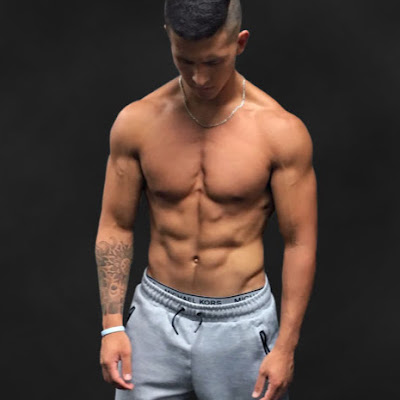
This channel is focused on providing science-backed training and nutrition videos in order to help you become the best version of yourself. I'm a fitness coach, Kinesiology graduate, and published researcher based in Vancouver, Canada. I focus on providing science-based information to help you optimize your training and nutrition.
Get your personalized training and nutrition plan here: https://builtwithscience.com/
Videos come from the channel's public YouTube feed. The artwork is the newest video thumbnail. Last updated . Names, artwork and text belong to their publishers.
Recently on this show
Summary of recent videos, drawn from the publisher's feed.
Jeremy Ethier's channel offers science-based training and nutrition videos from a fitness coach in Vancouver, Canada. Recent videos cover training a muscle every day, how many days a week to work out for muscle growth, testing 30 ab exercises, and why people store fat in certain areas.
Cosmos
Similar by topic and creator
- Bob & Brad
Shares the topic Health. - DocMikeEvans
Shares the topic Health. - Boston Children's Hospital
Shares the topic Health.
Videos
The Fastest Way to 12% Body Fat (From Any Start Point)
· 18 min
Try 2 weeks free of a personalized fitness program built for your body: https://bws.plus/_c If you’ve been stuck trying to figure out how to lose fat, this is the no-fluff guide to fat loss — and staying lean for good. In this video, learn how to cut body fat, preserve muscle, and reach a maintainable 12% body fat using smart training, strategic nutrition, and psychology. Whether you're looking to lose fat or finally learn how to lose body fat without rebounding, this is your blueprint. To get to 12% body fat from 15%, it took me just six weeks. But based on a DEXA scan analysis of 9,000+ American men, fewer than 1% ever reach 12% or below. That’s why understanding how to lose fat strategically, not just quickly, is critical — and why I worked with five top scientists and elite coaches to bring you this plan. Calorie calculator: https://builtwithscience.com/calorie-calculator 3-Day Workout Routine: https://www.youtube.com/watch?v=B12MXF0bSFo 4-Day/Week and 5-Day/Week Workout Routines: https://builtwithscience.com/workoutroutines 6-Day Workout Routine (old, but still good!): https://builtwithscience.com/pushpulllegsworkoutpdf/ First, how to lose body fat without losing muscle with Dr. Mike Israetel from RP Strength. If you lose weight without lifting, up to 50% of that can be muscle. That not only gives a “skinny” look instead of “lean,” it also cranks up hunger and cravings. Your biggest weapon when aiming to lose fat while preserving muscle? Weight training. One adjustment Dr. Mike recommends in a fat loss phase is using lighter weights with higher reps. Your strength may dip, but your endurance improves — and higher rep training still protects muscle just as well. When should you switch to this approach? Continue training normally until you feel real fatigue and strength begins to decline. How to cut body fat with the right workout split: Dr. Mike suggests that slightly more frequent training — hitting each muscle group 2–3x per week — is more effective during a fat loss phase. Massive workouts that train just one muscle become less effective when you’re depleted. Instead, go for: 3x/week: Full body 4x/week: Upper/lower 5x/week: U/L/P/P/L 6x/week: P/P/L/P/P/L A recent study showed even just 2 short full-body workouts a week (6 sets per muscle total) helped preserve 100% of muscle mass — even when combined with 5 hours of cardio. This shows that training smarter, not necessarily more, is key when figuring out how to lose fat without sacrificing muscle. "You can eat junk food and still lose fat and maintain lean mass.” – Dr. Layne Norton. Here’s how to lose body fat through your diet: start by determining your protein intake: 1.8 to 2.8g per kg of body weight. Then split the rest of your calories between carbs and fats based on what you’ll stick to long term. Whether you like savory or sweet, it’s adherence that matters most. For fat sources, think olive oil, peanut butter, and eggs. Carbs can be timed around workouts: oats before, potatoes after. And yes — even sugar isn’t the enemy. In a calorie deficit, sugar doesn’t prevent fat loss. What matters most is your total macros and calories. Now, how many calories do you need for fat loss? Multiply your weight in lbs by 10–13 to estimate your starting point. Adjust based on your activity level. But remember: these calculators can be off by 500+ calories. Instead, track your weight daily and aim for 1–2 lbs of fat loss per week. If things stall, adjust. My app did this for me — taking me from 2,300 to 2,000 calories after four weeks — which was essential for continuing to lose fat as my metabolism adapted. As Dr. Eric Trexler explains, your body adapts fast. For every 5% weight drop, you may burn 100–200 fewer calories daily. This slows progress dramatically. The fix? If your weight stalls for 2 weeks, lower calories by 100–150. But know your limit: don’t try to cut body fat by more than 10% in a single phase. Instead, pause, maintain, or lean bulk before going for…
Not rated yetDo THIS Before You Deadlift
· 35 sec
The deadlift can be a great exercise, if you do it correctly. Here's how to nail the setup.
Not rated yetWorkouts That WRECK Your Joints (I Wish I Knew This Sooner)
· 13 min
Click here to try 2 weeks free of a customized fitness plan personalized to you and your body: https://bws.plus/_b Most people make common gym mistakes that quietly wreck their joints — and often lead to joint pain, from shoulder pain to deadlift pain (especially in the lower back). But they’re easily avoidable. Instead of just copying the big guys in the gym or online, the real fix is actually understanding YOUR own anatomy. After years of researching movement science and working as a Kinesiologist, I found 5 simple tweaks that instantly fix those workout mistakes and ease joint pain — and more importantly, save you from bigger problems down the road. Click below to subscribe for more videos: https://www.youtube.com/jeremyethier/?sub_confirmation=1 Now, the first fix for your joint pain you need to make is to start using a form that matches your anatomy. It’s not talked about enough, but your individual bone length, joint mobility, and even the shape of your sockets change what “proper” form looks like for you. So experiment with simple adjustments. If you lean forward when you squat, try elevating your heels onto plates. Now this will hit more of the quads rather than the glutes, but you might also feel less low back strain, less joint pain, and just a smoother squat overall. But also play around with your squat stance. Then for deadlifts, let’s say you have trouble getting into position and struggle with deadlift pain, that’s where I’d try elevating the bottom position or using sumo instead. This applies to machines, too, where you’ll want to adjust the setup to better suit your anatomy. Everyone blames a weak rotator cuff when shoulder pain shows up. But you can’t ignore your bigger mid-back muscles like the traps and rhomboids. If they’re weak, your shoulder joint wobbles with every press or pull — and that instability is a fast track to joint pain. To make matters worse, most of us sit all day with our shoulders pitched forward, making it tough to activate these muscles. So how can you fix it? Two things: learn how to properly engage your back muscles. And sprinkle in some “prehab” exercises to further strengthen these areas, as well as the rotator cuff. After every upper‑body session, I finish with 3 sets of face pulls or prone arm circles. Then, every morning and anytime I step away from the desk, I’ll lean on the wall and bang out 10 wall slides to keep things strong. Now, while these changes will make a massive difference in your back strength and shoulder health, you don’t want to make the next mistake, which has to do with your grip. Most people don’t know this, but your arms have what’s called a natural “carrying angle.” Anytime you do an exercise where both of your hands are locked onto a bar, handle, or even a machine, you’re forcing both sides to follow the same fixed path. Plus, even though elbows angle in or out, your wrists can’t rotate to match. Tendons, ligaments, and muscles pull on each other, which means that strain in your wrists can eventually lead to strain in your elbows and even your shoulders. And when this goes on long enough, it can absolutely turn into joint pain. Now, the fix for one of the most unknown gym mistakes isn’t to eliminate these exercises altogether. Instead, it’s this: For each muscle group, work in at least one exercise that lets your hands and elbows rotate. E.g., Dumbbell presses for chest and shoulders. But now that you’ve fixed your workouts, it’s crucial you avoid the next mistake if you don't want joint pain — which has to do with how you’re progressing them over time. Fourth of our workout mistakes causing joint pain: not being smart with progression. Pushing too soon and making little compromises with your form just to lift that extra weight adds up, and can lead to an immediate injury, or a slow‑burn strain that shows up months later. And often, that strain is disguised as joint pain that never seems to go away. So if a PR isn’t there, don’t force it. If your…
Not rated yetEasiest Way to Lose Fat 2x Faster (Just Copy Me)
· 14 min
Click here to kickstart your fat loss journey with a customized fitness plan— try it free for 2 weeks: https://bws.plus/_a Tons of fitness videos promise the secret to fast fat loss... Then hit you with a “fat loss workout” that’d make a Navy SEAL throw up, a “fat loss diet” that repeatedly calls for boiled chicken for lunch… and lots of crying. If you’re not suffering, it’s not working. But what if I told you a simple walking method can help you lose fat faster than killing yourself with cardio? I know that sounds hard to believe, but it’s just one of four science-backed fat loss strategies I’ll show you to help you lose fat up to 2x faster—without losing muscle. And I’ve crunched the numbers to prove it. 0:00 - 0:30 : Why Most Fat Loss Plans Fail 0:30 - 4:04 : Adjusting Fat Intake 4:05 - 7:30 : The Walking Method 7:31 - 11:06 : The Accidental Deficit 11:07 - 13:37 : Unique Foods For Fat Loss 13:38 : What Results To Expect The first fat loss strategy is adjusting your fat intake. For health reasons you don’t want to go below around 35 to 50 grams of fat per day. Here's what I want you to do: Think about the fats you eat everyday. Cheese, butter, and even healthy fats like avocado. Starting tomorrow, cut however much you usually have of these in half. I want you to also check if you’re eating any high fat proteins. Try having just one of these daily, then for all your other meals, choose a more pure protein source from this list. And you can apply this same concept even when you’re eating out. If you just cut 1 fat source in half and make 1 protein swap, boom you’re saving up to 250 calories per day, which already speeds up your fat loss by half a pound per week. And you can lose even more by combining it with the next strategy, the walking method. What most people don’t know is that instead of relying on a specific “fat loss workout”, a highly active person can burn up to 2,000 more calories daily just from NEAT compared to someone who's sedentary. While cardio is great for your heart and health, it’s kind of just “meh” for fat loss. A much better approach I personally use myself and with our Built With Science clients is plain old walking. Now I’ve set a goal in my Built With Science app to hit 10,000 steps a day and it keeps track of it for me. But you can use the health app on your phone, and just aim for anywhere between 7,000 to 12,000 steps a day. But 30 minutes of walking is already 3,000 steps and for the average person can burn anywhere from 100 to 200 calories. Do that simple 30 minute walk every day and after a month you’ll lose an extra pound of fat, or an extra quarter pound of fat per week. And you can speed this up even faster with a dieting strategy I call the accidental deficit. During your busiest days, rely on quick grab-and-go protein sources and ready to eat fruits. Then when you finally get home, have a big dinner of lean protein and vegetables instead of ordering takeout. Then, just go to bed before you start snacking. If you do this right, you could end your day eating as little as 1,300 to 1,600 calories. For most people this is a huge deficit and is why I do NOT recommend doing this “fat loss diet” more than once or twice a week max - and preferably on your rest days. But even just doing this once a week can increase your average daily calorie deficit by about 100 calories, and help you get rid of an extra quarter pound per week. But this will work even better if you combine it with the last strategy for fast fat loss - eating foods that do the work for you. Most people don’t know this but your body burns a certain amount of calories just from digesting food. And protein is special because a solid 20 to 30% of its calories immediately get burned up for digestion, absorption, and metabolism - which is more than double any other food. As a result, studies have shown going from a low-protein to a high-protein diet can raise your daily calorie burn by 4–5%. For a 2000 calorie diet, that’s an extra…
Not rated yetThe ONLY 2 Exercises You Need For A Wide Back
· 10 min
Building a V-taper during your back workout is the best way to look jacked and create the illusion of a smaller waist, with and without a shirt. But the lats are one of the toughest muscles to target. For years, I did the usual back exercises during my lats workout: heavy rows and pulldowns. My strength went up, my upper back and arms got bigger, but my lats? Nonexistent. But everything changed when I started using the 2 best lat exercises I’m going to share. And the same transformation can happen for you if you do the 3 things I did as part of my “wide back workout” I’ll reveal here. Get 2 weeks of free workouts below: https://bws.plus/b_eis Click below to subscribe for more videos: https://www.youtube.com/jeremyethier/?sub_confirmation=1 For this wide back workout article, I couldn’t rely heavily on studies like I usually do because there are barely any reliable, conclusive studies on how to actually grow the lats. So, to get real answers, I teamed up with some experts. The first of whom is biomechanics expert Kassem Hanson. The first exercise he showed me was for the lower lats. Kassem explained that because the fibers in this area run downward, you’re going to want to do some kind of lat pulldown, but pulling narrow. The different grip options you have depending on what you have available are overhand narrow grip, underhand narrow grip, and neutral grip. You could also go with my current favourite, the single-arm pulldown. But regardless of what grip you use, here's the real game-changer for your lats workout. For the deepest lat stretch, lean your body back about 10-15 degrees. Then, as you pull, think about shoving your shoulder down rather than just moving your arms. But to make sure you’re not just using your biceps, don’t pull the grip towards your chest. Keep your elbow in front of you and pull your elbow down towards your hips. Now, unfortunately, without cables, there’s no good way to work the lower lats during your back workout with dumbbells. But you can still do this on a pull-up bar and see good results. All you do is, rather than using a wide overhand grip, either use a narrow overhand grip, an underhand grip, or the best option, a neutral grip. Lean back slightly, keeping your elbows in front, and pull them down towards your hips while pushing your shoulders down and away from your ears. If you want the kind of wide back that’ll make Greg Doucette want to run a “natty or not” video on you, then you’ll need the second of our best lat exercises to light up your mid and upper lats as well. To target them, you’ll still want an exercise where your elbows can pull narrow, close to your body. But unlike the lower lats, where the muscle fibers all run downward, the upper lats' fibers run more horizontally, with some fibers traveling just slightly downward. That means we need a rowing exercise where the arm can pull at a slight angle downwards. For the dumbbell version, use either an incline bench or elevate the back of a flat bench so that it angles downward. Then, set up just how you would with a single-arm dumbbell row, but the downward angle will now set your arm up so it’s pulling at a high-to-low angle. Then, simply pull your elbow down and back towards your hips, keeping it tight to your sides. Now if you don’t find that as comfortable, doing this on a flat bench can still work. A crucial mistake you need to avoid if you want a wide back: Keep your chest level with the ground, and then simply focus on pulling your elbow down and back towards your hips, keeping it tight against your sides. But for the best results for a wide back, I prefer using cables. instead of sitting fully upright, lean slightly forward while keeping your core and back stable. I made sure that my arm angle is now pulling from high to low, which mimics the same effect as if the cable were positioned higher up. Kassem also mentioned putting your feet a bit lower on the plates can make this more comfortable. When it comes to grip,…
Not rated yetThe Dark Science Behind America's Most Obese City
· 15 min
Today, I’m in the most obese city in America: McAllen, Texas. Almost half the population here is classified as obese, which has led to a crisis of health problems across the community. So, over the next 3 days, I’ve decided to get to know the people of McAllen — even if I have to knock on every door — to find out what’s really causing this obesity epidemic. I also want to see if I can find a science-backed fat loss solution that could make a real and lasting difference for the health problem the people face here. Click below to try my fitness app for free for 2 weeks, no strings attached: https://bws.plus/td8 HUGE shoutout to Fork to Fit for helping cater the event: https://www.instagram.com/forktofitkitchen After talking to the residents in the most obese city in America, one thing became clear: most people blamed the food. So I decided to check it out for myself. It didn’t take long to understand what they meant. Each meal looked like a generous helping of food, but I was surprised by how long I could keep eating. The reason? The food is highly processed and low in fiber, so I could eat a ton before feeling full. Worse still, these foods hijack your brain’s reward system, delivering a rush of pleasure that fades quickly — keeping you coming back for more. On top of that, the massive portions trick your brain into thinking you haven’t eaten that much. I brought in Kelly, our head dietitian at Built With Science, who’s helped thousands of clients make lasting dietary changes. We also partnered with a local business called Fork to Fit, which creates calorie-friendly meals to combat the overwhelming fast food culture and health problem in McAllen. Together, we planned to host a free community workshop, offering a healthy dinner, take-home meals, and a bag of BWS protein powder. But getting people to show up? That was harder than expected. Even Kelly had a tough time recruiting people at the mall. After half a day handing out flyers, we finally got over 20 people committed to attending. The longer I stayed in McAllen, the more I realized: the food is only part of the obesity problem. McAllen is a drive-only city, covered in 4-lane roads, with sidewalks that end abruptly and crosswalk buttons that often don’t work. Walking isn’t a realistic option, and public transport is nearly nonexistent — buses come only once an hour. This means most people are only getting a few thousand steps a day. Not only does this lead to fewer calories burned, but being sedentary can mess with your food choices. When you’re not moving, your brain starts seeing food as pleasure, not fuel — making overeating even more likely. Worst of all, this kind of inactivity is directly linked to higher risks of disease and death. While the community blames food, it became clear to me that the city itself is part of the problem. To dig deeper, I knocked on doors and offered to cook people a healthy dinner. Unfortunately, I got no bites — literally. Eventually, I met Santos and Samantha, who welcomed me in and opened up about their situation. They were never taught proper nutrition, their neighborhood has ~10 restaurants for every 1 gym, and local grocery stores don’t really sell fresh produce. The next day, Kelly and I went grocery shopping with a goal: create a healthy, affordable meal that supports fat loss. We settled on chicken fajitas. To stay within budget, we bought in bulk, looked for sales, and used canned/frozen veggies — which are not only cheaper, but often more nutritious than fresh ones. We got the cost down to $5 per person, and each fajita had just ~100 calories (compared to the 300-calorie versions from restaurants). They could eat three fajitas and still stay within a healthy calorie range. I even added a secret weapon: the seasoning from a delicious quesadilla I had on Day One. The owners were kind enough to share their spice blend to give our chicken some authentic Mexican flavor. To help Santos and Samantha continue this journey, we gave…
Not rated yet- Not rated yet
Ozempic: The END of Diet and Exercise?
· 14 min
The problem with Ozempic is that it works too well for obesity and weight loss. Imagine losing weight simply because you’re not hungry. Imagine suddenly disliking the taste of your favorite, high-calorie foods and preferring healthy, lower-calorie foods instead... because your brain itself has literally been rewired. That’s Ozempic… objectively, it’s… awesome. As a fitness coach, that may sound irresponsible of me. But if we're going to talk about it, we might as well do so honestly. In this video, I’ll cover everything to know about using Ozempic for weight loss, from how it works to Ozempic’s side effects. Click below to try the BWS+ app for free for 2 weeks, no strings attached: https://bws.plus/109 Credit to: Kurzgesagt and Jeff Nippard for the title/thumbnail inspiration Here’s how Ozempic works for weight loss, as explained by Dr. Eric Trexler. It works by mimicking a hormone called GLP-1, which, after we consume food, it tells us, ‘Hey, you're full, and it's time to stop eating.' But it also rewires what your brain actually wants to eat. When you're on ozempic, those same calorie dense, really delicious foods, they just aren't quite as satisfying. What you find is individuals who have less cravings for those high calorie foods and ultimately end up opting for lower calorie foods. Also, according to Dr. Spencer Nadolsky, America’s leading GLP-1 doctor and researcher, Ozempic might have benefits that extend far beyond just weight loss. Research found in those with a history of heart disease and obesity, it reduced more heart attacks than a placebo. People thought that it would be from the weight loss that you get from it, but they're actually these GLP-1 receptors all over the body and including the heart that it's thought that these drugs help reduce a lot of this risk of stuff through. But to be completely transparent with you, Dr. Spencer isn’t just familiar with the research on Ozempic, he prescribes it regularly. So if we’re going to be honest about its benefits, we should also be honest about Ozempic’s side effects. The first is “Ozempic face” and “Ozempic butt”. So when you lose a lot of weight, you’ll see that “sucked-in” look. These side effects are made even more visible when you combine muscle loss into the equation. On Ozempic, you still might struggle to eat anything at all. What do you think happens to your muscle? Your body quickly starts breaking it down. Then, stack that on top of the other big problem: low energy. Because overeating becomes more difficult, Ozempic can unintentionally put you in a severe calorie deficit. As a result, your workouts suffer. Another alarming, potential side effect is blindness. What happens to your body, and brain, when you stop taking Ozempic? Ozempic removes the part of “you” that makes you overweight. But when you go off it, your old self is back. That’s why on average, after hopping off drugs like Ozempic, most people regain 2/3rd’s of the weight they lost within the first year. And this is why most patients end up staying on the drug indefinitely. So many people, especially in the fitness industry, are against the idea of Ozempic. Ozempic gets you results without the suffering. It is kind of like... “cheating.” I without a doubt would have felt this way about Ozempic back when I was younger. But now, I understand something I didn’t back then. Many people who are obese or overweight WANT to change. Yes, obesity can be environmental, but obesity can also be, in many cases, genetic. So if you’re overweight and meet the criteria, Ozempic is a game changer. But what if… You’re healthy and just want to take ozempic to get leaner? The drug seems to be slowly making its way to the bodybuilding community. Is this bordering the line of abuse? Arguably, yes. But what we define as “abuse” of the drug I predict will very quickly change. It started as a treatment for diabetes. And now it's being used for weight loss. In the future, I believe Ozempic, and a handful of drugs…
Not rated yetThe Perfect Morning Routine to Build Muscle (Science-Based)
· 15 min
Looking for muscle building tips? What if a few simple tweaks to your morning routine could instantly boost your muscle growth? You'll hear about the Andrew Huberman morning routine and the Brian Johnson morning routine, but what actually works? Well after making six science-backed changes to my morning routine for muscle growth (including eating the best breakfast for muscle growth), my gains drastically improved—along with my energy and productivity. And the same can happen for you once you implement these morning muscle building habits. We'll talk about fasted workouts, cold showers, post-workout meals and more! Link to my recommended morning light lamp: https://amzn.to/3Xv7cb1 Click below to try my new fitness app for free for 2 weeks, no strings attached: https://bws.plus/eif Click below to subscribe for more videos: https://www.youtube.com/jeremyethier/?sub_confirmation=1 Timestamps: 0:00 - 0:25 : The 6 Parts Of The Morning Routine 0:26 - 3:30 : 1 - Wake Up Time 3:31 - 3:46 : Light Lamp Recommendation 3:46 - 5:13 : 2 - Proper Morning Weigh-In 5:14 - 6:59 : 3 - Morning Caffeine 7:00 - 8:07 : How to Tell If Your Sleep Is Good 8:08 - 10:06 : 4 - Morning Workout 10:07 - 13:26 : 5 - High Protein Breakfast 13:27 - 14:25 : 6 - Cold Showers? 14:26 : How to Implement The Morning Routine Without training harder or eating more protein, one of the best muscle building tips I can give is just improving your sleep. And the key to this is waking up at sunrise and getting morning sunlight to stimulate melatonin production. But if your sun doesn’t rise til later, you can still replicate this effect by investing in a light that provides at least 10,000 lux of brightness and filters out as much UV light as possible. Next, a daily weigh-in — right after waking up and after using the bathroom— during your morning routine is one of the best ways to track your muscle building progress. If you’re trying to build muscle, you should see your morning weight slowly creep up by about half a pound per week. Whereas if your goal is fat loss while building muscle, then your weight should stay relatively stable or drop slightly every week. Caffeine is one of the best morning muscle building habits you can use to boost focus, mood, and even your workouts. But timing is key. I prefer to have my caffeine as early as possible. For most people, caffeine has a half-life of about six hours. So for me, shortly after waking at 6 a.m. I’ll have an Earl Grey tea (about 50 milligrams of caffeine). By 9 am, I’ll have a scoop of our Built With Science pre-workout which contains 180mg of caffeine but also an added ingredient called L-Theanine which helps smooth out the energy boost and prevents the hard crash you usually get from taking that amount of caffeine on its own. After that, I avoid caffeine. Next, training during your morning routine for muscle growth leads to a circadian “phase advance”. If you’re used to training later in the day, you might notice that your lifts feel heavier and your performance takes a hit when you first switch to morning workouts. That’s completely normal. But the good news is, this is just temporary. Next, a high-protein breakfast is the best breakfast for muscle growth. But how much is actually necessary? My recommendation is to aim for at least 20-30 grams of high-quality protein in your morning meal, then spread the rest of your daily intake across a few meals throughout the day. Here’s what I personally do. If I’m training first thing in the morning, I’ll have a banana with 1 scoop of my Built With Science whey protein powder. After my workout is when I have my more satiating, slow digesting meal. This is usually either oatmeal topped with half a scoop of Built With Science protein powder and greek yogurt, or a sourdough bread sandwich with 4 whole eggs. Lastly, cold exposure. Whether it’s a cold shower or ice bath, is believed to be a game-changer for muscle recovery, metabolism, and looking really, really cool on…
Not rated yetThe ONLY 2 Exercises You Need For Massive Arms
· 11 min
With so many arm exercises out there, it's hard to know what arm workout to do. But you're probably doing too many bicep exercises and tricep exercises and focusing on the wrong areas. In fact, after cutting out all the fluff and focusing on just 2 science-backed arm exercises, I’ve gotten fuller and bigger arms. I also asked the top natural bodybuilders and muscle growth researchers (Alberto Nunez, Mike Israetel from RP Strength, Daniel Plotkin) the same question. "If you could only pick 2 exercises — 1 best exercise for bicep and 1 tricep exercise — to maximize growth, what would they be?” And they all pointed to the same 2 weird exercises. Today, I’ll show you what these 2 best arm exercises are and teach you how to do them properly in your arms workout at the gym so your arms grow faster than ever. Click below to try the BWS+ app for free for 2 weeks, no strings attached: https://builtwithscience.com/ Click below to subscribe for more videos: https://www.youtube.com/jeremyethier/?sub_confirmation=1 Timestamps: 0:00 - 0:30 : Why Less Is More 0:30 - 1:16 : Downsides of Regular Curls 1:16 - 2:59 : New Biceps Research 3:00 - 4:28 - Reverse Preacher Curls 4:29 - 5:21- Lying Dumbbell Curls 5:22 - 6:10 - Lying Dumbbell Curls (Supported) 6:11 - 6:39 - Behind Body Cable Curls 6:40 - 8:01 - Triceps Research 8:02 - 8:55 - Overhead Extensions 8:56 - 10:20 - Form Tips For Joint Health 10:30 - How to Implement The Exercises Out of the many bicep arm exercises, I started in the gym with standard bicep curls. But here’s the problem. They challenge your biceps mostly in the middle position when your arm is flexed. This is a similar challenge your biceps already get from your back exercises. Plus, because the biceps cross all the way over the shoulder, exercises like dumbbell curls don't stretch your biceps as much as they could by exercises where your arm stays behind you. Which, at least based on research on other muscle groups, seems to be a powerful way to stimulate more growth. To discover the best exercise for your biceps, scientists from a brand new 2025 study ran an exercise comparison. They split participants into 2 groups. One group did only incline curls for 8 weeks, whereas the other group did preacher curls. Incline curls led to more growth in the upper part of the arm, but preacher curls led to more growth in the lower part of the arm! Meaning? Theoretically, to maximize growth in all parts of your biceps, you’d want an exercise where the challenge is hardest at the bottom but without the arm held in front of the body, so the biceps are more stretched. Fitness experts share 3 options when it comes to the best exercise for biceps: reverse preacher curls, flat bench dumbbell curls, and behind-the-body cable bicep curls. But even with the best arm exercises for the bicep, your biceps only contribute about a third of your arm size. The other two-thirds? The triceps. Unfortunately, most people use arm exercises — like pushdowns, close-grip presses, or dips — that don’t allow this muscle to reach its full potential. Those arm exercises primarily work just 2 parts of the triceps: the lateral head and the medial head. Which are what beef up the triceps from the front and side.But the third head, the long head, is the biggest part of the triceps and beefs them up from the back and hangs down when you flex your arms. So, what’s the better option? To find out which tricep exercise would yield bigger arms, Scientists from a 2022 study had subjects perform overhead extensions with one arm and pushdowns with the other arm for 12 weeks. Now, because the long head crosses over the shoulder, whenever you do a triceps exercise with your arm overhead, this muscle gets stretched, which, as you know by now, seems to boost growth in certain muscles. But surprisingly, all 3 heads grew more with the overhead extensions, resulting in 1.4x more overall triceps growth than the pushdowns. Now, we don’t yet know why the other 2 heads grew more, and…
Not rated yet