

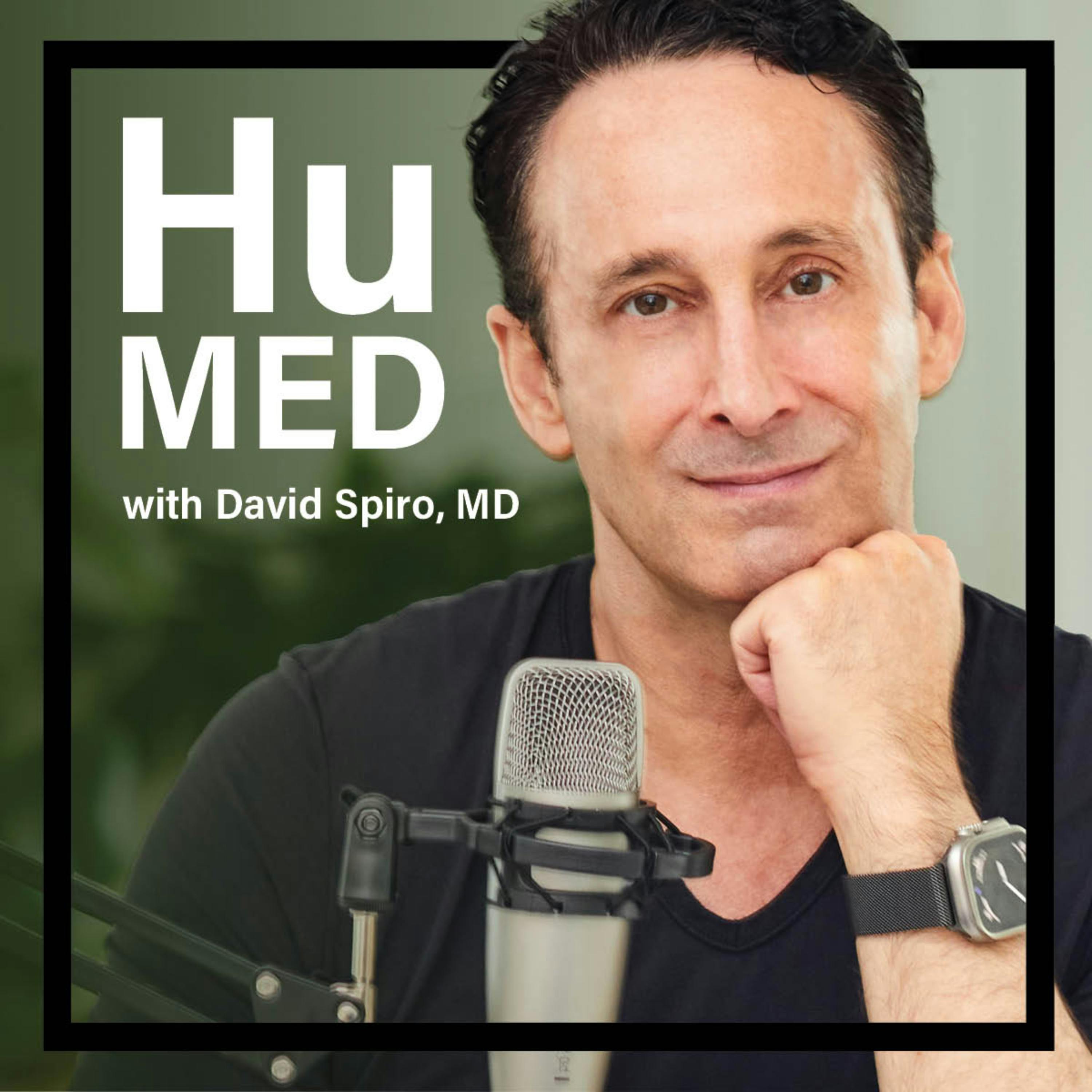
HuMed with David Spiro, MD
David Spiro, MD | Doctor Podcast NetworkAudio
- Format:
- Podcast
- New episodes:
- Several times a week
- Typical length:
- about 45 minutes
- Latest episode:
About this show
HuMed goes beyond diagnoses and procedures to explore the profound human experiences of medical professionals. Join Dr. Spiro as he engages in deep, candid conversations with fellow doctors, nurses, and other healthcare providers. They share the often-unseen realities of their work in the demanding hospital environment – the challenging cases, the emotional toll, and the ethical dilemmas they navigate daily.
Covers: medicine, physician wellbeing, medical ethics, clinical practice, patient care, emergency medicine, cardiovascular prevention, medical error
Show details and episodes come from the publisher's public feed at api.riverside.com. Last updated . Names, artwork and text belong to their publishers.
Recently on this show
Summary of recent episodes, drawn from the publisher's feed.
HuMed, hosted by Dr. David Spiro, is a podcast where healthcare professionals speak candidly about the human side of their work, including emotional strain, hard cases and ethical choices. Recent episodes cover leadership training for physicians, a family facing normal test results, and a nurse who caught a medication error as a patient.
Cosmos
Similar in subject
- A Tale of Two Hygienists Podcast
Both cover: patient care, clinical practice - The World’s Okayest Medic Podcast
Both cover: medical ethics, emergency medicine - High Yield Family Medicine
Both cover: medical ethics, medicine
Similar shows



Explore more
Episodes
Navy Anesthesiologist Dr. Zachary Meade: From Childhood Trauma to Becoming a Doctor
· 42 min
Dr. Zachary Meade watched his grandfather shoot his father to save his mother's life. He was a child. He thought it was normal. "Apparently it's not normal." Dr. Meade is a Navy anesthesiologist based in San Diego who took one of the least conventional roads into medicine you will ever hear. Before medical school he was an Army bomb squad technician, a firefighter, an EMT, and an electrical engineer, and he served in the Army, the Air Force, and the Navy. Before any of that he was a kid in Indiana and Florida moving between homes and foster care, failing freshman English, with nobody in his family who had ever done any of this. Today he reaches over 400,000 people online debunking medical misinformation. In this conversation with Dr. David Spiro, he talks about the grandparents who rebuilt his foundation, what the bomb squad taught him about attention to detail ("an 84 essentially meant you died"), the faith that gave him purpose, and the hardest question of the episode: has he forgiven his parents? He shares the phone call that ended contact with his father, the rule that helped his mother get sober, and the "cultural divide" that opens up when you become the first physician in your family. He closes with what he would say to 10-year-old Zach, and Dr. Spiro responds with a story from his own pediatric ER that he says will change how he practices. Chapters: (00:00) Cold Open: "My Dad Was a Very Violent Man" (00:16) Welcome & Meet Dr. Zachary Meade (01:20) "I Never Saw Me Being a Physician" (02:18) Indiana, Florida, and a Childhood That Wasn't Normal (04:55) Foster Care and a Greyhound Bus Through Fort Benning (06:13) Joining the Army at 17: Bomb Squad, Not Chaplain (07:11) The Grandparents Who Rebuilt His Foundation (08:53) Bill Henson: Forgiveness, Hard Work, and the Balance Between (10:05) What the Bomb Squad Taught Him: "An 84 Meant You Died" (11:50) Wounded Veterans and the Pivot to Engineering (12:26) Carle Illinois College of Medicine: Building Physician Innovators (13:18) Landmines in the Woods: The Stateside EOD Mission (15:08) Why He Chose the Navy (16:43) How Childhood Trauma Shaped Him as a Physician (17:44) A Steeper Hill Than His Peers (18:24) How Faith Shaped Him (19:39) What It Means to Serve (21:37) "Have You Forgiven Them?" (22:12) Married at 20 and Realizing What Normal Was (23:22) His Father's Relapse and the Phone Call From the NICU (24:18) "I Can Love Him. I Can Even Forgive Him." (25:39) The Rule That Helped His Mother Get Sober (26:59) The Cultural Divide: "I Concur, Doctor" (28:45) Reaching 400,000 People Online (29:59) Fighting Misinformation That Can Kill (33:12) Tommy Martin and Doing Good on Social Media (34:21) What Would You Tell 10-Year-Old Zach? (36:20) "This Is Just the Intro Scene to Your Life" (36:58) Dr. Spiro's Story: "I'm Here Because No One Loves Me" (39:44) Closing Thoughts and Zach's Question for David Follow HuMed so you never miss an episode.
Not rated yetInternist Dr. Robert Beck: "He Wasn't Worthy of the Care"
· 53 min
Two attending physicians declared medical futility on a man in his late 40s. He was awake. He was begging for the ICU. He was begging for his mother. And the only doctor at his bedside that night was an intern on his second call shift. Dr. Robert Beck has carried that night for nineteen years. In his second appearance on HuMed, Dr. Beck tells the story of a patient at New Orleans' Charity Hospital in July 2007 — and what it taught him about paternalism, about abandoning learners, and about the difference between a clinical judgment and a judgment about whose life is worth saving. David asks him directly whether race changed the outcome, and Dr. Beck's pause before answering is the turning point of the episode. The second half is a practical masterclass: how to deliver bad news, the four questions every patient is actually asking, and how end-of-life care and medical assistance in dying work in the Canadian system where Dr. Beck now practices. ABOUT THE GUEST Dr. Robert Beck is an internist. He completed medical school, internal medicine residency, and a chief residency at Tulane, spent ten years in private practice in Tennessee, and moved to the Pacific Northwest of Canada in 2020. He hosts The Interesting MD podcast. IN THIS EPISODE 00:00 "He wasn't worthy of the care" 00:24 Welcome back, Dr. Robert Beck 02:03 What counts as a difficult conversation? 02:46 July 2007: second call night at Charity Hospital 05:13 The patient nobody wanted to touch 06:08 Two attendings declare medical futility 07:40 "His die is cast" 10:02 Alone at the bedside until 4:30am 12:28 How it changed the way he supervises residents 13:11 "Do you think if he were white it would have been different?" 14:04 A pattern of practice 15:32 Paternalism vs. shared decision-making 19:03 Two white physicians talk about privilege 21:10 White flight on his childhood street 23:11 "Society was never going to allow him" 26:10 How to give bad news: the four questions 31:19 Sit down. Eye level. Every time. 33:03 Giving bad news in the pediatric ER 36:30 Teaching residents to deliver the worst news 39:09 When a patient chooses not to treat 40:09 Medical assistance in dying in Canada 43:14 The four pathways of end-of-life care 47:52 How the MAID assessment actually works 51:26 How a society treats its most vulnerable A note on content: this episode includes frank clinical description of sepsis, wound infection, and a patient's death. Dr. Beck's podcast, The Interesting MD HuMed is hosted by David Spiro, MD. New episodes weekly. If this one resonated, the most useful thing you can do is leave a rating on Apple Podcasts or Spotify — it's how other clinicians find us!
Not rated yetPediatric Oncologist Dr. Joana Mack: "I'm Not Bossy, I'm the Boss"
· 50 min
Dr. Joana Mack has been called "bossy" her whole career — in training, at work, even by her own mom. Now, she just says it back differently: "I'm not bossy, I'm the boss." Dr. Mack is a board-certified pediatric hematologist-oncologist, NIH-funded researcher, and mother of five daughters, practicing at Arkansas Children's Hospital and UAMS. In this conversation with Dr. David Spiro, she opens up about the everyday bias she still encounters as a woman in medicine, how artificial intelligence is reshaping (and sometimes eroding) communication between doctors, why she's stopped chasing "work-life balance" in favor of "work-life integration," and the rituals — prayer, permission to cry, a trampoline park at midnight — that get her through the hardest days of treating children with cancer. She also shares a story from Dr. Todd Maxson's Grand Rounds that changed how she trains the next generation of physicians, and reflects on how far childhood leukemia survival has come in her lifetime, from a near-certain death sentence to roughly 90% remission today. (00:00) Cold Open: "I Went to the Trampoline Park" (00:16) Welcome & Meet Dr. Joana Mack (01:51) Called "Bossy" Her Whole Life (02:44) "I'm Not Bossy, I'm the Boss" (03:59) Balancing 4 Jobs and 5 Daughters (07:06) Staying Present as a Working Mom (08:51) The Email That Calls Everyone "Doctor" Except Her (10:47) Naming Unconscious Bias at Work (13:26) Being a Role Model for the Next Generation (16:08) AI in Medicine: Efficiency vs. Connection (19:14) From "Google Parents" to AI-Informed Parents (20:28) Prioritizing Herself and Her Marriage (25:16) Phones, Sleep, and Circadian Disruption (29:19) Why She Pours Into Medical Students (30:42) Dr. Todd Maxson's Grand Rounds Story (36:22) From a Death Sentence to 90% Survival (38:49) How She Copes: Prayer, Tears, and the Trampoline Park (42:08) A Prayer Circle in the ER (47:00) The Village That Makes It Possible (49:54) Closing Thoughts This episode is also available on video on YouTube and Apple Podcasts. Follow HuMed so you never miss an episode.
Not rated yetPhysician-Scientist Dr. Mari Mitrani: "Retiring Shouldn't Be a Thing"
· 44 min
At 18, on her first night in a military hospital ER in Ecuador, Dr. Mari Mitrani held the hand of an injured American soldier and translated for a team that spoke no English. She didn't know much medicine yet, but she knew compassion, and that night decided her path. Dr. Mitrani is a physician-scientist and biotech entrepreneur who has spent 20 years in regenerative medicine. In this conversation with Dr. David Spiro, she explains how stem cells and exosomes work, where the science and regulation actually stand, and why she says stem cells are already the present of medicine rather than its future. They also cover the low-cost foundations of healthy aging (fiber-rich food, hydration, sleep, movement, strength training and community), whether humans could live to 125, why "retiring shouldn't be a thing," women's bone health, and the compassion behind her veganism and the Vegan Women Summit. (00:00) Meet Dr. Mari Mitrani (02:03) The Night That Inspired Her (07:21) Entering Biotechnology (11:11) How Stem Cells Work (18:25) Healthspan Versus Lifespan (20:38) Foundations of Healthy Aging (23:15) Community and Longevity (27:15) The Future of Stem Cells (30:00) Why Exosomes Matter (34:02) Could Humans Live to 125? (35:30) Strength, Bones and Women's Health (38:07) Veganism and Compassionate Innovation This conversation is for educational purposes only and does not constitute medical advice. This episode is also available on video on YouTube and Apple Podcasts. Follow HuMed so you never miss an episode.
Not rated yetOrthopedic Surgeon Dr. Adam Bitterman: "This Is My Second Chance"
· 39 min
Dr. Adam Bitterman spent his career on one side of the rail. Then he got short of breath walking up to his own surgery unit, and within weeks he was on the operating table himself. "This is my second chance," he says, and he means to use it. Dr. Bitterman is an orthopedic foot and ankle surgeon, chair of orthopedic surgery at Huntington Hospital, and an educator at the Zucker School of Medicine. In this conversation with Dr. David Spiro, recorded the night before his first day back at work, he talks about the denial that kept him from getting checked, the aortic aneurysm that led to a seven-hour open-heart operation, the atrial fibrillation that required a second procedure, and the fear of the unknown as a surgeon turned patient. He shares how the experience changed the way he answers frightened patients' after-hours calls, why he now takes a lunch break, what he changed in his diet and daily routine, and his advice for any physician handed a serious diagnosis: pause, triage your life, and lean on a support system. (00:00) Cold Open: "This Has Made Me Rethink Everything" (00:31) Welcome & Meet Dr. Adam Bitterman (02:50) On the Other Side of the Rail (03:46) Short of Breath, Then the Diagnosis (05:23) What an Aortic Aneurysm Is (07:21) Why Doctors Deny Their Own Symptoms (08:56) Fear Walking Into the OR (12:23) A-Fib and a Second Procedure (13:30) Returning to Patients With a New Perspective (15:38) Diet, Exercise and Being Present (20:02) Why Doctors Learn So Little About Nutrition (23:24) The Lunch Break and the Productivity Rat Race (27:31) The Night Before His First Day Back (29:42) Life Goes On Without You (32:16) Advice for Physicians Facing a Diagnosis (34:19) Hiding, Support and Getting Back to Normal (37:00) Closing Thoughts This episode is education and storytelling, not individual medical advice. This episode is also available on video on YouTube and Apple Podcasts. Follow HuMed so you never miss an episode.
Not rated yetGeneral Surgeon Dr. Talar Tejerian: "Hemorrhoids Are the Scapegoat"
· 54 min
A local news station recorded Dr. Talar Tejerian for a health story, then refused to air it because she kept saying the word "anus." So she started Booty MD. Her message to doctors: hemorrhoids are the scapegoat, so stop blaming every complaint on them. Dr. Tejerian is a board-certified general surgeon in Los Angeles who ran a large proctology practice for a decade and founded Booty MD, a nonprofit for clear, shame-free anal health education. In this conversation with Dr. David Spiro, a fellow UCSF graduate, she explains why patients so often arrive with the wrong diagnosis, the gaps in medical training and the exam that gets skipped, the difference between hemorrhoids and fissures, and why fistulas, inflammatory bowel disease and even anal cancer can be mistaken for hemorrhoids. She also covers the three-minute toilet rule, scrolling on the toilet, constipation and fiber, HPV vaccination, rectal foreign bodies in the ER, and teaching sensitive health topics on social media. (00:00) Cold Open: The Three-Minute Toilet Rule (00:29) Welcome & Meet Dr. Talar Tejerian (02:38) Why She Founded Booty MD (08:33) Breaking the Stigma Around Anal Health (12:10) Gaps in Medical Training and Examination (20:11) Anal Cancer, Colorectal Cancer and HPV (24:39) Diet, Constipation and Anal Health (25:06) Hemorrhoids Versus Anal Fissures (31:26) Is Scrolling on the Toilet Harmful? (33:45) Rectal Foreign Bodies and Emergency Care (42:24) The Future of Booty MD (45:39) Health Education Through Social Media (49:38) Authenticity and Trust in Medicine (53:50) Closing Thoughts This episode is education and storytelling, not individual medical advice. This episode is also available on video on YouTube and Apple Podcasts. Follow HuMed so you never miss an episode.
Not rated yetSurgeon Dr. David Shapiro: Stop the Bleed Skills That Could Save a Life
· 55 min
What would you do if someone were bleeding severely—and help was miles away? In this episode of HuMED, Dr. David Spiro welcomes back surgeon and critical care physician Dr. David Shapiro for a powerful conversation about the moment that changed how he understood emergency preparedness. Years ago, while mountain biking through remote terrain between Bryce Canyon and Zion National Park, Dr. Shapiro encountered an injured cyclist with a deep leg wound and significant bleeding. With no reliable phone service, limited first-aid supplies, and professional help far away, he had to improvise a pressure dressing and remain with the cyclist until assistance arrived. That experience left him with a lasting question: What if nobody had come along? Today, Dr. Shapiro serves as a leader in the American College of Surgeons’ Stop the Bleed program, a public-health initiative that teaches ordinary people how to recognize and respond to life-threatening bleeding before professional help arrives. The conversation explores: • How to recognize potentially life-threatening bleeding • Direct pressure, wound packing, and tourniquet use • What belongs in a practical bleeding-control kit • Why internal bleeding may be difficult to recognize • How trauma resuscitation has evolved • Good Samaritan protections for people who help during emergencies • Why bleeding-control kits should be available alongside AEDs • How Stop the Bleed applies to accidents, outdoor injuries, and violence • What communities learned from Sandy Hook and other mass-casualty events • The responsibilities and limits of bystander intervention • How to access free Stop the Bleed training Drs. Spiro and Shapiro also discuss firearm violence, mental health, social isolation, and the need to address both emergency preparedness and the underlying causes of violence. This episode is ultimately about empowerment. You may never need to use these skills—but learning them could give you the confidence to act during the minutes when action matters most. Free Stop the Bleed education and course information are available at StopTheBleed.org (http://StopTheBleed.org). Content note: This episode includes discussion of traumatic injury, severe bleeding, firearm violence, and mass-casualty events.
Not rated yetCritical Care Physician Dr. Khalil Diab: The Night Beirut Exploded
· 48 min
What happens when a physician suddenly finds himself responding to one of the largest non-nuclear explosions in modern history? In this episode of HuMED, Dr. David Spiro speaks with Dr. Khalil Diab, a pulmonologist, critical care physician, associate professor at the George Washington University School of Medicine, and host of the Lebanese Physicians Podcast. On August 4, 2020, Dr. Diab was having dinner with his family in Beirut when the ground began to shake. Moments later, a massive explosion tore through the city. After receiving an urgent call for all available medical professionals, he rushed to the hospital and entered a mass-casualty environment unlike anything he had experienced before. Patients arrived with devastating injuries caused by shattered glass, collapsing ceilings, and the force of the blast. Physicians from every specialty worked together as the hospital ran short of ventilators, patient identities remained unknown, and medical teams were forced to make rapid life-or-death decisions. Dr. Diab shares what he witnessed that night, what it took to care for so many critically injured patients, and how the experience affected him as a physician, husband, and father. The conversation also explores: • Moving his family from the United States back to Lebanon • Practicing medicine within the Lebanese healthcare system • How financial instability affects medical decisions and patient care • Raising children amid political and economic uncertainty • Why the Beirut explosion ultimately influenced his return to the United States • The medical conditions physicians encounter in Lebanon that are less common in the U.S. • How people adapt to instability, conflict, and crisis • Why he created the Lebanese Physicians Podcast • The power of storytelling to reveal the human side of medicine • How podcasting can amplify valuable voices—and spread misinformation • Why listening to people on the “other side” matters This is a deeply personal account of medicine under extraordinary circumstances—and a reflection on resilience, identity, family, conflict, and our shared humanity. ABOUT THE GUEST Dr. Khalil Diab is a pulmonologist and critical care physician and an associate professor at the George Washington University School of Medicine. After completing his medical training in the United States, he returned to Lebanon with his family and practiced there during a period marked by political upheaval, economic collapse, COVID-19, and the 2020 Beirut port explosion. He is also the host of the Lebanese Physicians Podcast, where he documents the experiences and stories of physicians connected to Lebanon. ABOUT HuMED Hosted by Dr. David Spiro, HuMED explores the people and experiences behind medicine. Through honest conversations with physicians, healthcare professionals, patients, and other compelling guests, the show reveals the human stories that rarely appear in medical charts or textbooks. #BeirutExplosion #Lebanon #CriticalCare #Medicine #PhysicianStories #MedicalPodcast #Healthcare #HuMED
Not rated yetER Physician Dr. Heather Hinshelwood: Muscle Is Medicine
· 41 min
What if one of the most important tools for healthy aging isn’t another pill—but preserving your strength? Dr. David Spiro welcomes back Dr. Heather Hinshelwood, an emergency medicine physician whose work has expanded from treating acute medical crises to helping patients improve their long-term health and independence. Dr. Hinshelwood explains why maintaining muscle becomes increasingly important as we age. Together, they discuss strength training, cardiovascular exercise, Pilates, metabolic health, bone density, type 2 diabetes, and the challenge of creating sustainable lifestyle change without shaming patients. They also explore: • Why muscle supports mobility and independence • The relationship between strength and metabolic health • How resistance training may support healthier aging • Why cardio and flexibility still matter • How older adults can begin exercising safely • The value of knowledgeable coaching • Why it is never too late to improve your health This conversation isn’t about becoming an elite athlete. It’s about preserving the ability to carry groceries, rise from the floor, pursue the activities you enjoy, and remain independent for as long as possible. What do you want to remain capable of doing at age 80? HuMed with David Spiro, MD explores the human side of medicine through candid conversations with physicians, patients, and healthcare leaders. This episode is intended for education only and does not replace individualized medical advice. The discussion includes the speakers’ perspectives on exercise, metabolic health, and medications. Consult a qualified healthcare professional before changing medications or beginning a new exercise program.
Not rated yetInternist Dr. Emma Cooke: "What Do You Want to Be When You Grow Up?"
· 41 min
Why do we ask physicians in their 30s, “What do you want to be when you grow up?” In this episode of HuMed, Dr. David Spiro sits down with Emma Cooke, MD, an internal medicine physician, Med-Peds graduate, and author of a thought-provoking JAMA essay exploring how a simple question reveals deeper issues within medical culture. Together they discuss: Why medical trainees are often defined by their future specialty rather than who they are today How unconscious bias shapes evaluations, mentorship, and career opportunities The challenges women continue to face in medical training Why physicians should connect with trainees as people—not stereotypes How empathy, curiosity, and human connection create better teachers and better doctors This conversation challenges long-held assumptions about medical education while offering practical ways to build a more compassionate culture for learners, physicians, and patients alike. Whether you’re a physician, trainee, healthcare professional, educator, or simply interested in the human side of medicine, this episode offers an honest look at identity, bias, and what it truly means to grow as a doctor. About HuMed HuMed with David Spiro, MD explores the human side of medicine through conversations with physicians, nurses, patients, and healthcare leaders who remind us that compassion is just as important as clinical expertise. Learn more about your ad choices. Visit megaphone.fm/adchoices
Not rated yetPediatric Hospitalist Dr. Tommy Martin: The Patient Who Restored His Passion
· 49 min
What makes medicine worth the sacrifice? Dr. Tommy Martin—a pediatric hospitalist at Boston Children’s Hospital, physician, endurance athlete, and one of medicine’s most influential voices on social media—shares the patient encounter that changed his life forever. After a long residency shift, Tommy was exhausted and simply wanted to get home to his wife and son. Instead, one final patient reminded him why he became a doctor. The next morning, he returned with one unforgettable meal. That single act of kindness reshaped how he practices medicine—and why he believes every patient deserves our full presence. In this deeply personal conversation, Dr. David Spiro and Dr. Tommy Martin discuss: • The patient who restored Tommy’s passion for medicine • Why medicine isn’t worth it without human connection • Caring for children with complex medical needs • Parenting a child with autism and a rare genetic condition • Finding balance between medicine and family • Authenticity, vulnerability, and physician burnout • Why love, presence, and compassion remain medicine’s greatest tools If you’re a physician, healthcare professional, student, patient, or simply someone who believes kindness still matters, this episode is for you. Subscribe for weekly conversations exploring the human side of medicine. Learn more about your ad choices. Visit megaphone.fm/adchoices
Not rated yetPediatric ER Physician Dr. Julia Bruckner: What Her Father Taught Her About Healing
· 1 hr 1 min
In this deeply moving episode of HuMed, Dr. David Spiro speaks with Dr. Julia Bruckner, a pediatric emergency physician, writer, and Director of Faculty Well-Being at the University of Colorado. Dr. Bruckner shares how her father — a minister, humanist, advocate, and witness to suffering — taught her lessons about healing that medicine alone often cannot teach. Together, they explore what it means to give devastating news, sit with suffering, care for families in crisis, support physicians after trauma, and bring humanity back into medicine. This conversation moves through grief, cancer, hospice, physician wellness, pediatric emergency medicine, and the quiet power of presence. At its heart is a simple message from Dr. Bruckner’s father: because the world will die without it, go with love. Topics include: humanizing medicine, physician wellness, giving bad news, hospice, grief, narrative medicine, pediatric emergency care, burnout, compassion, and love as a form of healing. Learn more about your ad choices. Visit megaphone.fm/adchoices
Not rated yetPediatric Orthopedic Surgeon Dr. Ron Turker: The Patient Who Became His Daughter
· 58 min
What happens when a patient changes your life forever? In this unforgettable episode of HuMed, pediatric orthopedic surgeon Dr. Ron Turker shares the remarkable story of a one-month-old infant who arrived in the emergency department with multiple fractures and severe injuries—and ultimately became his daughter. Dr. Turker reflects on child abuse, foster care, adoption, trauma, attachment, fatherhood, and the profound lessons he learned raising a child whose life began with extraordinary adversity. He also discusses physician empathy, judgment, chronic pain, healthcare reform, physician burnout, mental health, social media, community, and why human connection remains at the heart of healing. This is a conversation about medicine, family, resilience, second chances, and the patient who changed everything. Topics Discussed • Child abuse and child advocacy • Foster care and adoption • Parenting and attachment • Pediatric orthopedic surgery • Chronic pain in children • Physician burnout and moral injury • Mental health and social media • Healthcare reform • Human connection and healing • The human side of medicine Learn more about your ad choices. Visit megaphone.fm/adchoices
Not rated yetTransplant Surgeon Dr. Charles Strom: The 10-Year-Old Donor He Never Forgot
· 53 min
What happens after a family says “yes” to organ donation? In this powerful episode of HuMed, transplant surgeon Dr. Charles Strom shares the story of a young organ donor whose life—and legacy—left a lasting impact on him during his first week of transplant fellowship. Dr. Strom takes us inside a world most people never see: the moment of honor before organ recovery, the emotional family statements read in the operating room, the realities of brain death and cardiac death donation, and the profound responsibility of helping one donor save multiple lives. We discuss: The donor story Dr. Strom will never forget How one organ donor can save up to eight lives Common misconceptions about organ donation The ethics and realities of transplantation Why some healthcare professionals still misunderstand the donation process The emotional impact of caring for donor families Balancing medicine, family, and personal sacrifice New innovations that are dramatically increasing organ utilization One of the most moving moments comes when Dr. Strom realizes the donor being honored was the same age as his own son. This conversation is about grief, hope, generosity, and the extraordinary gift of life. Join The HuMed Weekly Newsletter:https://humed.kit.com/newsletter Subscribe for more conversations exploring the human side of medicine. #HuMed #OrganDonation #TransplantSurgery #Medicine #HealthcareStories Learn more about your ad choices. Visit megaphone.fm/adchoices
Not rated yetPediatric ER Physician Dr. Jay Pershad: The Overdose Case That Still Haunts Him
· 50 min
Dr. Jay Pershad — PEM physician, professor at George Washington, and faculty at Children's National — joins Dr. David Spiro for an unflinching conversation about the moments that define a career in pediatric emergency medicine. Jay shares a story that still haunts him: a teenage girl brought in after a suspected overdose, a resuscitation that ends in death, and a family that spoke only Spanish — connected to him through a video interpreter that kept disconnecting. What followed was one of the most human, painful moments in his 30+ year career. They also talk about: Teaching learners how to deliver bad news at the bedside Family presence during resuscitation — and why the data changed everything What keeps seasoned physicians showing up at 6am after three decades Aging in emergency medicine, night shifts, and knowing when to step back. Why "family first" isn't just a slogan — it's the thing that outlasts the career HUMED is the podcast where healthcare professionals share the stories they never forget — the emotional, moral, and human realities of medicine. Subscribe so you never miss an episode. Learn more about your ad choices. Visit megaphone.fm/adchoices
Not rated yetMaternal-Fetal Specialist Dr. Sarah Pachtman-Shetty: The Night She Almost Lost Her Son
· 43 min
What happens when a high-risk OB can't diagnose her own son? Dr. Sarah Pachtman-Shetty is a double board-certified maternal-fetal medicine specialist — a doctor trained to manage the most critical pregnancies imaginable. But when her two-year-old son Orion spiked a fever on a Caribbean vacation and his O2 sat dropped into the 70s, all that training couldn't stop her from feeling like a helpless mom. In this raw and unforgettable episode of HuMed, Sarah shares the terrifying night she called 911 on a St. Martin island, fought for a chest X-ray in a foreign ER at 2am, and watched a jack-of-all-trades surgeon prepare to place a chest tube in her toddler — with no pediatric ventilator in sight. This is the human side of medicine no one talks about. Dr. Sarah Pachtman-Shetty | Maternal-Fetal Medicine | @HealthyMamaDoc Virtual consultations: Uma Health In this episode: The vacation that became a medical nightmare Why even expert physicians miss signs in their own children Practicing medicine in maternity care deserts How a near-tragedy reordered her entire life Subscribe for more stories from the human side of medicine Listen on Spotify, Apple Podcasts #HuMed #MaternalFetalMedicine #HighRiskPregnancy #PhysicianLife #DoctorStories #MomLife #MedicalPodcast #WomensHealth Learn more about your ad choices. Visit megaphone.fm/adchoices
Not rated yetPsychiatrist Dr. Jenna Taglienti: Time Is Finite
· 45 min
In this episode of HuMed, Dr. David Spiro is joined by Dr. Jenna Taglienti, a psychiatrist, residency program director, and assistant professor at the Zucker School of Medicine. Dr. Taglienti's recent JAMA essay, Time Is Finite, sparked widespread reflection across the medical field. Dr. Taglienti shares her deeply personal story of receiving an unexpected lung cancer diagnosis as a lifelong nonsmoker, which forced her to take a medical leave and step back from her roles. The experience provided time to reflect on the immense mental load she was carrying, and the true cost of continually postponing life. She discusses the profound realization that "institutions are designed to endure beyond individuals. On the other hand, families are not". This is a crucial conversation for any physician wrestling with the balance between a demanding career and their irreplaceable role at home. We discuss: The "invisible load" of mental energy physicians spend trying to control things that are out of their hands.3 The high divorce rate among doctors and how constant accessibility to work can distract from relationships.3 How the priority of medicine is ingrained from the first day of medical school, and the struggle to shift that focus when relationships and children arrive.3 The importance of being "present" with family and recognizing that small moments with children add up.3 Modeling self-care and good boundaries for residents, demonstrating that it's okay to prioritize health and return stronger.3 The therapeutic value of vulnerable writing, such as essays submitted to JAMA's A Piece of My Mind. Subscribe to HuMed with David Spiro, MD for more conversations about the human side of medicine. #PhysicianBurnout #WorkLifeBalance #TimeIsFinite #PhysicianWellness #Psychiatry #ResidencyLife #JAMA #HuMed Learn more about your ad choices. Visit megaphone.fm/adchoices
Not rated yetFamily Physician Dr. Stephen Sanders: His Labs Were Normal, but He Was Crashing
· 1 hr 0 min
What happens when your labs are “normal” — but you know something is wrong? In this episode of HuMed, Dr. David Spiro sits down with Dr. Stephen Sanders, a board-certified family physician and men’s health expert, to talk about the moment his own health collapsed in his late 30s. On paper, everything looked good: career, family, success. But inside, he was struggling with brain fog, fatigue, low energy, weight gain, erectile dysfunction, poor sleep, and the frightening feeling that his best days might already be behind him. Dr. Sanders shares how one photo during a bike ride in Colorado became the turning point — and how he rebuilt his health through sleep, nutrition, training, hormone optimization, community, and a completely different approach to men’s health. We discuss: • Why “normal labs” don’t always mean optimal health• Testosterone, free testosterone, and hormone optimization• Sleep, wearables, HRV, and recovery• Intermittent fasting and whole-food nutrition• Ultra-processed foods and metabolic health• GLP-1 medications, muscle loss, and protein• Creatine, sauna, cold plunge, and longevity tools• Male loneliness, stress, vulnerability, and community• Why medicine treats disease well — but often fails at creating health This is a conversation about men’s health, longevity, burnout, behavior change, and what it takes to feel alive again. Subscribe to HuMed with David Spiro, MD for more conversations about the human side of medicine. #MensHealth #Testosterone #Longevity #HuMed #HealthOptimization Learn more about your ad choices. Visit megaphone.fm/adchoices
Not rated yetPhysician-Scientist Dr. Barry Davis: The Prevention Mindset That Could Save Millions
· 54 min
Dr. David Spiro speaks with physician-scientist and clinical trialist Dr. Barry Davis, author of The Preventioneers, about one of the most important questions in medicine and public health: Why do we so often know how to prevent harm—but fail to act until crisis arrives? Dr. Davis shares the powerful story of Ignaz Semmelweis, the physician who discovered that handwashing could dramatically reduce childbirth deaths long before germ theory was accepted. He also discusses the resistance faced by prevention pioneers across history—from fire prevention and auto safety to hypertension, smoking, ultra-processed foods, and climate change. This conversation explores the gap between knowledge and action, the resistance to changing systems, and why prevention requires more than individual willpower. It requires leadership, culture change, and a willingness to challenge the status quo. Topics include:Semmelweis and the history of handwashingWhy prevention is often resistedHypertension and cardiovascular preventionSeat belts, auto safety, and public healthUltra-processed foods and the modern prevention crisisWhy healthcare often treats disease instead of preventing itHow physicians can become change agents Please subscribe for more conversations about the emotional, moral, and human realities of medicine. #Prevention #PublicHealth #Medicine #CardiovascularHealth #HuMed Learn more about your ad choices. Visit megaphone.fm/adchoices
Not rated yetPediatric Cardiologist Dr. Josh Daily: When the Doctor Found His Own Brain Tumor
· 47 min
What happens when the doctor becomes the patient? In this powerful episode of HuMed, Dr. David Spiro sits down with pediatric cardiologist Dr. Josh Daily to talk about the moment his life changed: unexplained fatigue, low testosterone, headaches, and eventually the discovery of a brain tumor deep in the center of his brain. Dr. Daily shares the full story of being diagnosed, challenging the initial read, seeking second opinions, undergoing high-risk brain surgery, facing a devastating recurrence, and nearly losing his vision. He also opens up about what it felt like to navigate the healthcare system from the other side of the bedrail—even as a physician. This conversation goes far beyond medicine. It’s about fear, vulnerability, faith, grief, resilience, and what serious illness teaches us about being human. In this episode: What it feels like when a doctor becomes the patient How his brain tumor was initially misread Why his vision began rapidly deteriorating The targeted therapy that changed everything The emotional reality of serious illness How faith reshaped his experience as both patient and physician Why empathy and presence matter so much in medicine This is one of the most honest and moving conversations yet on HuMed. Subscribe for more conversations on the human side of medicine. #BrainTumor #DoctorBecomesPatient #HuMed #MedicineAndFaith #PatientStory #Neurosurgery #TargetedTherapy #PhysicianStory #MedicalPodcast #DavidSpiroMD Learn more about your ad choices. Visit megaphone.fm/adchoices
Not rated yet