

Gastronomica
- Format:
- Podcast
- New episodes:
- Irregular
- Typical length:
- about 40 minutes
- Latest episode:
About this show
The Gastronomica podcast is where the academic field of food studies meets a public appetite for gastronomy and the culinary arts. Tune in to hear interviews with authors whose articles or books have recently been featured in the journal (published by University of California Press since 2001), as we showcase diverse voices in the food world, tackle complex questions about cooking, cuisine, culinary traditions, food justice and equity. Each episode is hosted by a member of the journal’s Editorial Collective, representing food scholars, perspectives, and disciplines from around the world. Gastronomica's theme song is by Robert T. Valgenti and mixed by Samuel N. Ortiz.
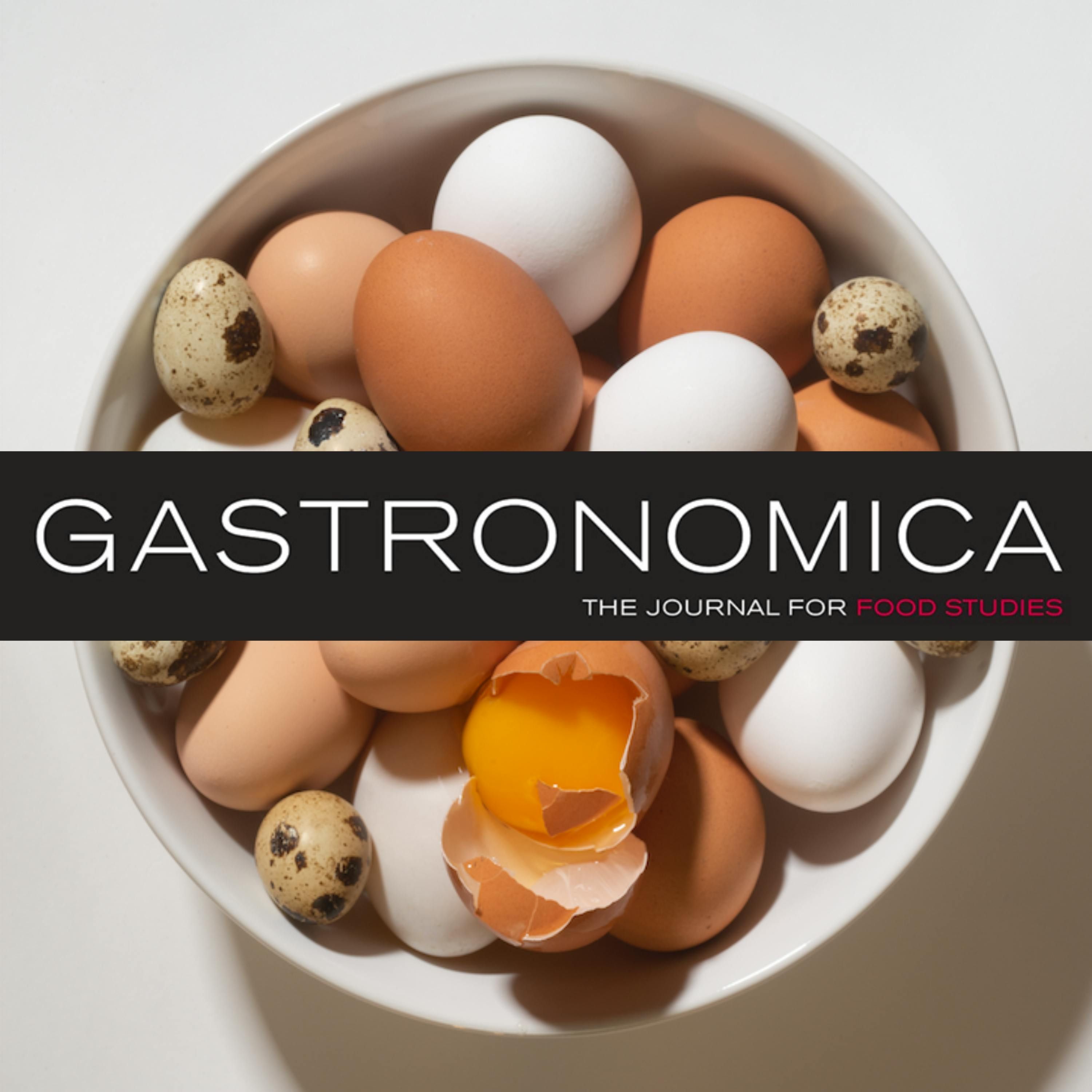
The photo, "A Wise Crack,” is by Carl Fleischhauer.
Gastronomica can be found at this link here.
Show details and episodes come from the publisher's public feed at feeds.simplecast.com. Last updated . Names, artwork and text belong to their publishers.
Cosmos
Similar by topic and creator
- The Speakeasy
Shares the topics Arts and Culture and Society and the creator Heritage Radio Network. - Cutting the Curd
Shares the topic Arts and Culture and the creator Heritage Radio Network. - Paranoid American
Shares the topics Arts and Culture, History and Society.
Similar shows





Explore more
Episodes
Sean Wyer on Rome’s Historic Jewish Quarter
· 38 min
In this episode, Gastronomica’s Krishnendu Ray talks with Sean Wyer about the 21st century transformation of Rome’s Jewish Quarter. Drawing on his latest research, recently published in Gastronomica (https://doi.org/10.1525/gfc.2023.23.3.29), Sean considers how a range of factors – from heritage tourism and cosmopolitan innovation to religious dietary laws and diasporic migration – helped shape Jewish-Roman cuisine and the evolving character of a historic neighborhood. Hosted by Simplecast, an AdsWizz company. See pcm.adswizz.com (https://pcm.adswizz.com) for information about our collection and use of personal data for advertising.
Not rated yetLauren Crossland-Marr on Emerging Food Technologies and Science Communication
· 34 min
In this episode, cultural anthropologist Lauren Crossland-Marr returns to the Gastronomica podcast to discuss her new project on gene-edited foods and science communication. In conversation with Dan Bender of Gastronomica’s editorial collective, Lauren shares her evolving research interests in food studies and how she transitioned from studying local “authentic” foods (https://heritageradionetwork.org/episode/lauren-crossland-marr-and-elizabeth-krause-fashioning-authenticity-culinary-craft-and) to researching the rollout of a new technology in global food and agricultural commodity systems with the GEAP3 network (https://www.geap3.com/). Lauren introduces her most recent work, a podcast series called A CRIPSR Bite (https://podcasts.apple.com/us/podcast/welcome-to-a-crispr-bite/id1706287071?i=1000628540718), that tells the story of a new gene editing technology through case studies of tomatoes, soy, cattle, and wine. Hosted by Simplecast, an AdsWizz company. See pcm.adswizz.com (https://pcm.adswizz.com) for information about our collection and use of personal data for advertising.
Not rated yetDan Bender on Making Wine Amidst Ruins
· 38 min
Gastronomica’s Dan Bender and Jaclyn Rohel explore wines from Italy’s Alto Piemonte region in this discussion on taste, livelihoods, and a changing environment. In his newly published creative nonfiction article (https://doi.org/10.1525/gfc.2023.23.3.7), Dan writes that “Wine is good for thinking ruins.” This episode connects abandoned factories, overgrown terraces, vineyards, cellars, and local memory of “The Great Hailstorm of 1905” to tell a larger story about how past, present, and future collide in the wineglass. Hosted by Simplecast, an AdsWizz company. See pcm.adswizz.com (https://pcm.adswizz.com) for information about our collection and use of personal data for advertising.
Not rated yetNancy Sommers on Family Keepsakes
· 45 min
In this episode, Nancy Sommers discusses her new creative nonfiction article, “Things Left Behind,” (https://doi.org/10.1525/gfc.2023.23.3.21) in conversation with Signe Rousseau, Co-Chair of Gastronomica’s Editorial Collective. Nancy shares the personal story of sorting through the family keepsakes that her mother had meticulously preserved over the span of many decades. Recipes, menus, seating plans, accounts of household meals, drawings and diagrams and other ephemera – all classified, archived, and saved – come to new light against the backdrop of dementia. Nancy highlights the complex layers of remembering and forgetting, the surprises, and the unexpected gifts. Hosted by Simplecast, an AdsWizz company. See pcm.adswizz.com (https://pcm.adswizz.com) for information about our collection and use of personal data for advertising.
Not rated yetJed Hilton on Professional Cooking and the Meanings of Sustainability
· 34 min
What does it mean to be a “sustainable” chef? In this episode, Gastronomica’s Jaclyn Rohel talks with anthropologist Jed Hilton about his latest research on culinary labor in the hospitality industry (https://doi.org/10.1525/gfc.2023.23.3.65). Drawing on his ethnography of British chefs, Jed shares some of the ways that chefs navigate notions of sustainability through the craft of cooking. Connecting expertise, ethics, and the market, the conversation highlights the tensions that surround the meaning of sustainability in fine dining restaurants. Hosted by Simplecast, an AdsWizz company. See pcm.adswizz.com (https://pcm.adswizz.com) for information about our collection and use of personal data for advertising.
Not rated yetChelsea Fisher and Clara Albacete on Superfoods and Green Capitalism
· 42 min
In this episode, Gastronomica’s Bob Valgenti talks with Chelsea Fisher and Clara Albacete about their new article on food justice and civilizations in the supermarket (https://doi.org/10.1525/gfc.2023.23.3.46). Drawing on superfoods such as quinoa and chia, they unpack the process of ancient greenwashing and the notion of long-term sustainability. Their conversation connects the contemporary moment to pre-colonial civilizations to reveal how social inequities in global food systems live on through storied food. Hosted by Simplecast, an AdsWizz company. See pcm.adswizz.com (https://pcm.adswizz.com) for information about our collection and use of personal data for advertising.
Not rated yetCamille Bégin on Memory, Travel, and a Family Archive
· 45 min
In this episode, Gastronomica’s Alyshia Gálvez hosts historian Camille Bégin in a discussion on a family food archive. Drawing on her recent piece, Bégin stitches together a collage of memories from the 1948-49 letters of her great-grandfather, who traveled through Algeria, Morocco and Tunisia as an inspector of the French lycées. Bégin explains how she came to spin a narrative of food, family, and the French colonial empire through her great-grandfather's ephemera and three subsequent generations of family cooks. Hosted by Simplecast, an AdsWizz company. See pcm.adswizz.com (https://pcm.adswizz.com) for information about our collection and use of personal data for advertising.
Not rated yetEllen Meiser on Taipei’s Daytime Street Markets
· 40 min
What is the social value of a daytime street market? In this episode, sociologist Ellen Meiser talks with Gastronomica’s Dan Bender about the meaning and value of Taiwan’s caishichang. Drawing on her early memories of these vegetable street markets and her participant observations of the same lively streets in the contemporary moment, Ellen explains the important roles that caishichang play in the local food system and in social, economic, and political life. Listeners can learn more about caishichang in Ellen’s photo essay, featured in Gastronomica’s newest issue (https://gastronomica.org/category/issues/) (23.2). Photo by Ellen Meiser Hosted by Simplecast, an AdsWizz company. See pcm.adswizz.com (https://pcm.adswizz.com) for information about our collection and use of personal data for advertising.
Not rated yetCristina Fernández Recasens on the Pebbles Omelet
· 35 min
In this episode, Irina Mihalache of Gastronomica’s Editorial Collective hosts Cristina Fernández Recasens in a conversation about women’s domestic labor in coastal Catalonia. Cristina shares some of the findings from their work on fish consumption and gendered work in the local fishing industry, highlighting how the research eventually led them to a recipe for pebbles omelet. Listeners can learn more about the pebbles omelet and find the recipe for this subversive dish in Cristina’s newest piece, featured in Gastronomica’s upcoming issue (Summer 2023) (https://online.ucpress.edu/gastronomica). Photo by Maria Fernández Recasens. Hosted by Simplecast, an AdsWizz company. See pcm.adswizz.com (https://pcm.adswizz.com) for information about our collection and use of personal data for advertising.
Not rated yetAnnie Koempel on the Ripple Effects of Disordered Eating
· 31 min
In this episode, anthropologist and registered dietician Annie Koempel discusses her research on the sociality of eating behaviors in conversation with Gastronomica’s Jaclyn Rohel. Drawing on her latest article, available in Gastronomica’s Summer 2023 issue (https://online.ucpress.edu/gastronomica), Annie explains the differences between disordered eating, eating disorders, and dieting. Situating surveys and stories of eating behaviors within the broader phenomenon of food sharing, Annie describes how disordered eating can move between bodies. Hosted by Simplecast, an AdsWizz company. See pcm.adswizz.com (https://pcm.adswizz.com) for information about our collection and use of personal data for advertising.
Not rated yetThiago Braga on Tea Art in Urban China
· 35 min
What is tea art, and when and how did it emerge as a social practice? In this episode, Daniel Bender of Gastronomica (https://online.ucpress.edu/gastronomica) hosts anthropologist Thiago Braga in a conversation about the aesthetics of tea in urban China. Drawing on his latest research, featured in Gastronomica’s newest issue (Summer 2023), Thiago explains how contemporary Chinese Tea Art is neither a timeless nor an invented tradition, but a complex social phenomenon. Hosted by Simplecast, an AdsWizz company. See pcm.adswizz.com (https://pcm.adswizz.com) for information about our collection and use of personal data for advertising.
Not rated yetStuart Freedman on London’s Eel, Pie, and Mash Shops
· 49 min
What do eel, pie, and mash shops reveal about London's past, and what role do they play in the current moment? In this episode, Stuart Freedman talks with Signe Rousseau about his research on forgotten foods and changing urban spaces, forthcoming in Gastronomica’s newest issue (Summer 2023) (https://online.ucpress.edu/gastronomica). Combining sensory ethnography with the concepts of nostalgia and resistance, Freedman explores working class identity through the social worlds of London's disappearing eel, pie, and mash shops. Hosted by Simplecast, an AdsWizz company. See pcm.adswizz.com (https://pcm.adswizz.com) for information about our collection and use of personal data for advertising.
Not rated yetPatrick Charbonneau, Jeffrey Pilcher, and Kelsey Kilgore on the Mexican Roots of an American Candy
· 41 min
This episode brings together physical chemistry, history, and food studies in search of the origins of a colonial Mexican fudge (https://doi.org/10.1525/gfc.2023.23.1.100). In conversation with Gastronomica’s Jaclyn Rohel, Patrick Charbonneau, Jeffrey Pilcher, and Kelsey Kilgore discuss their unique collaboration and share the story of how they re-created the dish (https://doi.org/10.1525/gfc.2023.23.1.112) in the teaching kitchen of the University of Toronto’s Culinaria Research Centre. Drawing on manuscripts and published cookbooks from the 18th to 20th centuries, in combination with hands-on culinary experimentation, they trace the recipe to Mexican vernacular traditions of candy making. Photo Courtesy of Kelsey Kilgore. Hosted by Simplecast, an AdsWizz company. See pcm.adswizz.com (https://pcm.adswizz.com) for information about our collection and use of personal data for advertising.
Not rated yetVictor Valle on Acquired Tastes: Memories and Metaphors of Chile-Eating
· 33 min
What roles do culture, ecology, and neuroscience play in making sense of lived experiences of eating? In this episode, Victor Valle speaks with Krishnendu Ray of Gastronomica’s Editorial Collective about his newly published personal essay, “Toward a Poetics of Chile.... in Another Mexico.” (https://doi.org/10.1525/gfc.2023.23.1.65) Reflecting on palatal taste, memory, family biography, and colonial history, Victor connects culinary aesthetics with neural networks as he delves into acquired tastes and parses the complex sensations of his chile-eating experiences over time. Hosted by Simplecast, an AdsWizz company. See pcm.adswizz.com (https://pcm.adswizz.com) for information about our collection and use of personal data for advertising.
Not rated yetLauren Crossland-Marr and Elizabeth Krause on Fashioning Authenticity: Culinary Craft and Creative Work in Italy
· 40 min
How is value created in heritage food systems, and what role does the figure of the artisanal producer play? In this episode, anthropologists Lauren Crossland-Marr and Elizabeth Krause introduce a special section on authenticity (https://doi.org/10.1525/gfc.2023.23.1.5), published in Gastronomica’s newest issue (Spring 2023). In conversation with Gastronomica’s Bob Valgenti, Lauren and Elizabeth share some of the most pressing questions around the notion of authenticity today. Drawing on culinary cases from Italy – including ethnographic research on slow figs and fast fashion (https://doi.org/10.1525/gfc.2023.23.1.13) - they discuss how storytelling and producers’ improvisations shape value in the face of social, environmental, and economic precarity. Photo Courtesy of Betsy Krause Hosted by Simplecast, an AdsWizz company. See pcm.adswizz.com (https://pcm.adswizz.com) for information about our collection and use of personal data for advertising.
Not rated yetJames Edward Malin on How Seltzer Became a Jewish Icon
· 42 min
In this episode, James Edward Malin (https://www.instagram.com/jmalin1026/) talks with Gastronomica’s Jessica Carbone about the history of seltzer in New York City. Drawing together histories of migration with histories of public health, engineering, and urban infrastructure, James sheds light on how soda water eventually came to be Jewish food icon. In discussing his new article in Issue 22.4 of Gastronomica (https://online.ucpress.edu/gastronomica/article-abstract/22/4/37/194510/Give-Us-Seltzer-That-We-May-DrinkHow-Soda-Water?redirectedFrom=fulltext), James takes listeners on a historical tour of some of New York’s most important water provisioning sites, from the Croton Aqueduct, to seltzer street carts, to the eventual implementation of rooftop water towers. Hosted by Simplecast, an AdsWizz company. See pcm.adswizz.com (https://pcm.adswizz.com) for information about our collection and use of personal data for advertising.
Not rated yetHolly Brause on Water Scarcity and the Terroir of New Mexico Chile
· 39 min
How does environmental change and water scarcity affect heritage crops? In this episode, Holly Brause discusses her newly published ethnographic research (https://doi.org/10.1525/gfc.2022.22.4.26) on the chile industry in southern New Mexico. In conversation with Paula Johnson of the Gastronomica Editorial Collective, Holly connects the local effects of climate change and drought to the economic and cultural value of a heritage crop. Drawing together taste, place, and practices of agricultural production, she explains how the strategies used to grow chiles under the conditions of water scarcity can have unintended consequences for the quantity and quality of chiles produced. Hosted by Simplecast, an AdsWizz company. See pcm.adswizz.com (https://pcm.adswizz.com) for information about our collection and use of personal data for advertising.
Not rated yetChanelle Dupuis on Waterways and Environmental Change: ‘Slow Smelling’ Along the Nanay River
· 39 min
In this episode, Chanelle Dupuis (https://humanities.brown.edu/people/chanelle-dupuis) talks with Dan Bender of the Gastronomica Editorial Collective (https://gastronomica.org/) about contaminated waterways and sensory perceptions of environmental change. Focusing on the changing smell of water and the role of the nose in sensing environmental degradation in the Peruvian Amazon, Chanelle sheds light on how bilious odors and processes of “slow smelling” affect riverine residents and Indigenous communities in and around the Nanay River. Drawing from her article in Gastronomica’s newest issue (22.4) (https://gastronomica.org/2023/01/17/winter-2022-volume-22-number-4/), Chanelle connects the odors of pollution to ways of living that have come under threat, elaborating on the implications for community identity, local livelihoods, health and the sourcing of local foods, and spiritual connections to the waterways. Hosted by Simplecast, an AdsWizz company. See pcm.adswizz.com (https://pcm.adswizz.com) for information about our collection and use of personal data for advertising.
Not rated yetThe Water Issue: A Gastronomica Roundtable
· 45 min
Join Gastronomica’s Editorial Collective as we discuss The Water Issue (22.4) (https://online.ucpress.edu/gastronomica/issue/22/4). Recorded live at the University of Toronto in November 2022, this episode offers a peek into a roundtable conversation on water across social and ecological registers, drawing connections between place, taste, and social justice. With contributions from Gastronomica editors including Paula Johnson (https://americanhistory.si.edu/profile/428), Irina Mihalache (https://ischool.utoronto.ca/profile/irina-mihalache/), Krishnendu Ray (https://steinhardt.nyu.edu/people/krishnendu-ray), Signe Rousseau (https://www.linkedin.com/in/signe-rousseau-947a5325/?originalSubdomain=za), Bob Valgenti (https://www.bbs.unibo.eu/faculty/valgenti-robert/), Jessica Carbone (http://www.jessfscarbone.com/), and moderated by Dan Bender (https://www.history.utoronto.ca/people/directories/all-faculty/daniel-e-bender), the roundtable explores water as a topic of food studies research where infrastructure, history, culture, and ethics meet. Photo courtesy of Paula Johnson. Hosted by Simplecast, an AdsWizz company. See pcm.adswizz.com (https://pcm.adswizz.com) for information about our collection and use of personal data for advertising.
Not rated yetA Dispatch on Wartime Provisioning: Food Supply Chains in Eastern Europe
· 43 min
How is the war in Ukraine impacting regional food supply chains? In this episode, Gastronomica’s (https://gastronomica.org/) Bob Valgenti (https://www.bbs.unibo.eu/faculty/valgenti-robert/) speaks with scholars Diana Mincyte (https://www.citytech.cuny.edu/faculty/DMincyte) and Fabio Parasecoli (https://steinhardt.nyu.edu/people/fabio-parasecoli) about the current state of food systems in countries that immediately border Ukraine. They shed light on crisis and resiliency in localized food networks -- from emergency aid and community food supports for refugees to smallholder farming -- and on what may lie ahead for food security in Eastern Europe more broadly. Listeners can learn more from their new article (https://doi.org/10.1525/gfc.2022.22.3.1) in the Fall 2022 issue of Gastronomica. Photos courtesy of Fabio Parasecoli and Diana Mincyte. Gastronomica is Powered by Simplecast (http://simplecast.com/). See Privacy Policy at https://art19.com/privacy and California Privacy Notice at https://art19.com/privacy#do-not-sell-my-info. Hosted by Simplecast, an AdsWizz company. See pcm.adswizz.com (https://pcm.adswizz.com) for information about our collection and use of personal data for advertising.
Not rated yet