

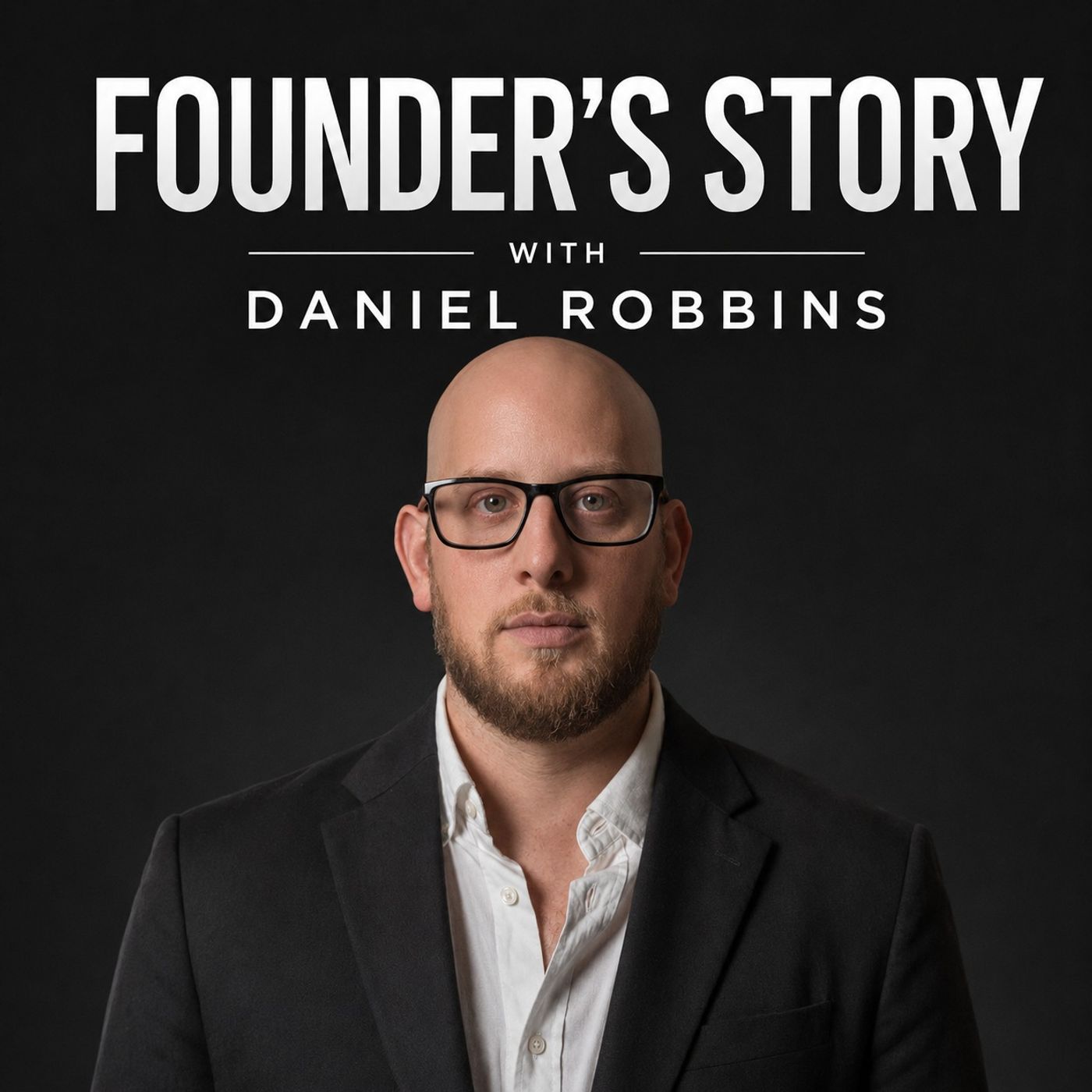
Founder's Story
IBH MediaAudio
- Format:
- Podcast
- New episodes:
- Several times a week
- Typical length:
- about 40 minutes
- Latest episode:
About this show
"Founder's Story" by IBH Media isn't a business show. It's the conversation founders don't get to have anywhere else.
Think 60 Minutes, but for entrepreneurs. We sit down with the most interesting people in business and go past the highlight reel, past the pitch, past the polished version they give every other podcast. We go into the mud with them. The 2 a.m. doubts. The bet that almost ended everything. The moment they wanted to quit and didn't.
You'll hear from household names like Gary V, Codie Sanchez, Rob Dyrdek, and Tom Bilyeu, and just as often from founders you've never heard of who are building something the world needs to know about. Either way, the goal is the same: a real conversation that makes you laugh, makes you think, and sometimes catches you off guard with how much it makes you feel.
This is where the story behind the success finally gets told. This is "Founder's Story."
Covers: entrepreneurship, business founders, personal finance, venture capital, franchising, music industry, stand-up comedy, automotive industry, startup fundraising, family business
Show details and episodes come from the publisher's public feed at feeds.simplecast.com. Last updated . Names, artwork and text belong to their publishers.
Recently on this show
Summary of recent episodes, drawn from the publisher's feed.
Founder's Story is a podcast where business leaders talk candidly about the doubts and setbacks behind their success. Recent episodes explore DJ Don Diablo's long path to fame, Quetico's growth to a $300 million company, and Rose Ni's move from venture capital to MossCode.
Cosmos
Similar in subject
- Y Combinator Startup Podcast
Both cover: startup fundraising, venture capital - The Money Mondays
Both cover: venture capital, music industry, entrepreneurship - GaryVee
Both cover: venture capital, entrepreneurship
Similar shows






Explore more
Episodes
Top 10 DJ Don Diablo: It Took Me 20 Years To Become An Overnight Success
· 1 hr 6 min
Daniel Robbins and Kate Hancock sit down with Don Diablo to explore how a teenager from the Netherlands became one of the world's most recognized DJs despite spending years feeling like an outsider. Don reflects on building his career without traditional industry support, pioneering new sounds, and creating Hexagon, a brand that eventually became a global fan-driven community. The conversation also reveals the personal challenges behind his success, including criticism, betrayal, self-doubt, and the pressure of fame. Don shares why he continuously reinvents himself, how he expanded into digital art and major creative collaborations, and why remaining curious and passionate matters more to him than financial success. Key Discussion Points - The 20-year journey from outsider to international DJ: Don shares how he released his first record at 13, learned music production through experimentation, and struggled for years before achieving widespread recognition around age 35. He explains why his career was built through persistence and developing original sounds rather than following popular music trends. - Building Hexagon into something bigger than music: Don reveals how the Hexagon symbol evolved into a record label, clothing line, creative platform, and international community. He explains why he never wanted everything to revolve around his personal identity and how fans organically developed the concept of Hexagonians and Planet Hexagonia. - The online hater who operated 21 different accounts: Don recounts discovering that what appeared to be widespread criticism across music blogs was connected to one individual using numerous accounts. He describes tracking the activity to a single IP address, confronting the person, and learning how online negativity can distort an artist's perception of their own success. - Why fame and success can come with a hidden emotional cost: Don discusses his experiences with difficult industry relationships, personal betrayals, isolation, and the pressure of maintaining success. He also reflects on the tragic story of Avicii and why a rapid rise to fame can create challenges that audiences never see. - From electronic music to seven-figure art and Hollywood collaborations: Don explains how his creative interests expanded into contemporary art, including work auctioned at Sotheby's, a Formula 1 trophy design, and collaborations involving Star Wars and Stranger Things. He also shares how connecting with Jaden Smith and Robbie Williams helped him overcome creative insecurity and become more comfortable collaborating with other artists. - Why AI, reinvention, and authenticity will shape the future of creativity: Don discusses how AI is changing music production and why creators can no longer rely on technical skills alone to distinguish themselves. He explains why he continually changes genres, embraces new technology, and believes that audiences will increasingly connect with the individuality and authenticity of the person behind the work. Takeaways Success can take decades, even when you're exceptionally talented. Don spent approximately 20 years building his career before achieving the global recognition people associate with him today. His experience challenges the illusion of overnight success and reinforces the importance of persistence. Build something people can belong to, not just something they can buy. Hexagon grew beyond a music label into a movement because fans connected with its identity and values. Don believes building a community around a shared vision can create a deeper relationship than simply promoting a personal brand. You cannot let criticism determine your creative direction. After discovering that one individual was responsible for numerous negative online comments, Don learned how easily criticism can become amplified. He believes creators must develop resilience and recognize that reinvention will naturally disappoint people who want them to remain the same.…
Not rated yetI Made $2 My First Day In America, Then I Built A $300M Company | Nick & Markar Agakanian
· 40 min
Daniel sits down with Nick and Markar Agakanian to explore how Quetico grew into a $300 million business while remaining committed to its people and long-term independence. Nick reflects on immigrating to America at 14, his father's lessons about hard work and integrity, and the decisions that helped the company survive more than three decades of industry disruption. The conversation also examines how Markar earned his leadership role, why the family rejected opportunities to sell, and how they plan to expand through vertical integration, strategic partnerships, and brand acquisitions while preserving the culture that helped build the business. Key Discussion Points - The immigrant journey from $2 to a $300 million business: Nick recalls arriving in America at 14 and watching his father borrow a screwdriver and wrenches to find work. After returning home with two dollars, his father declared that they could make money in America. Nick shares how that experience inspired him to pursue every opportunity, from pumping gas and managing a McDonald's at 18 to starting small businesses before building Quetico. - Why successful family businesses don't simply hand over leadership: Markar explains how he grew up inside Quetico, building a makeshift desk beside his father's before eventually working on the warehouse floor. He discusses the pressure of being the owner's son and why earning employees' respect required working harder, learning the business from the ground up, and proving he could contribute. - Surviving 30 years of recessions, disruption, and uncertainty: Nick reflects on navigating Y2K, the dot-com era, the 2008 financial crisis, COVID, tariffs, and supply chain challenges. He explains why he views problems as opportunities and believes excessive hesitation can cause companies to miss important moments. The family also discusses how an unexpected opportunity to establish foreign trade zone capabilities at its Arizona facility became strategically valuable. - The Costco relationship and the strategy of doing everything under one roof: Nick shares how Quetico developed relationships with major retailers, including helping Costco with apparel barcode tracking. He also challenges conventional advice to specialize, explaining why the company integrates warehousing, distribution, transportation, and brand operations to reduce costs and simplify the supply chain for customers. - Why Quetico reinvests profits instead of chasing an exit: Nick discusses the financing challenges involved in operating a large logistics company, particularly when interest rates rise. He explains why the owners prioritize keeping capital in the business rather than spending it on luxury purchases, and why he has resisted acquisition offers that could jeopardize employees and the company's culture. - The plan to grow from $300 million to $1 billion: Markar shares his ambition to expand Quetico through additional warehouse locations, deeper vertical integration, brand partnerships, acquisitions, and licensing opportunities. He explains how the next generation can preserve the company's relationships and values while pursuing significantly greater scale. Takeaways The smallest opportunities can become the foundation of extraordinary success. Nick's entrepreneurial journey began with a simple lesson from his father: work hard, take initiative, and recognize opportunity wherever it appears. That mindset eventually helped him build a company generating approximately $300 million in annual revenue. A family business survives when the next generation earns its position. Nick believes children should be introduced to the business early rather than suddenly given leadership roles. Markar's experience demonstrates how learning the operation from the bottom creates credibility, respect, and a stronger understanding of employees. Fear and overthinking can cause entrepreneurs to miss opportunities. Nick believes business owners must learn to make…
Not rated yetVivian Tu got 100K followers in one week, then turned it into a real business, here’s how
· 40 min
Daniel Robbins and Kate Hancock sit down with Vivian Tu to explore why earning more money doesn't always lead to financial freedom and how her upbringing shaped her journey to becoming a millionaire at 27. Vivian shares the childhood experience that changed her relationship with money, her transition from Wall Street to entrepreneurship, and why she believes ownership matters more than income alone. The conversation also explores the rise of Your Rich BFF, her seven-figure investment in Ask Dolly, the financial mistakes that keep people from building wealth, and how couples, entrepreneurs, and families can make smarter decisions about money. Key Discussion Points - The childhood moment that shaped her relationship with money: Vivian recalls growing up in a Chinese immigrant household where saving was essential. She shares the story of buying expensive ripped jeans as a teenager and hearing her mother explain why their family couldn't afford the same things as her friend's family, a moment that motivated Vivian to pursue financial independence. - Why the traditional American dream is becoming harder to achieve: Vivian challenges the belief that working hard, earning a salary, and staying loyal to an employer will automatically lead to financial success. She discusses rising living costs, housing affordability, and why building ownership in assets is increasingly important for long-term wealth. - From one viral video to a financial education empire: Vivian explains how her first financial education video, posted on January 1, 2021, helped her gain 100,000 followers in one week. She shares why timing mattered, how she maintained a daily posting schedule for more than five years, and how she expanded into books, podcasting, speaking, brand partnerships, and technology. - Betting seven figures on Ask Dolly without venture capital: Vivian reveals why she invested more than seven figures of her own money to bootstrap Ask Dolly rather than raise outside capital. She discusses building financial guidance tools, connecting users with Certified Financial Planners, and why she believes AI should complement, not replace, human expertise in sensitive financial decisions. - The money mistakes that keep people from getting wealthy: Vivian explains why lifestyle inflation, buying things to impress others, failing to invest, and relying entirely on earned income can prevent financial progress. She also shares how she would approach turning $10,000 into long-term wealth by first investing in skills and earning potential. - Relationships, financial independence, and generational wealth: Vivian discusses why couples shouldn't automatically split expenses 50/50, the importance of maintaining personal financial independence, and how parents can structure inheritances responsibly. She explains why wealth is ultimately about freedom rather than luxury possessions. Takeaways You cannot build lasting wealth through earning alone. Vivian believes one of the biggest misconceptions about money is that a higher salary automatically creates financial security. Her philosophy is that earning money is important, but owning investments and assets that can generate income is what helps build long-term wealth. Your childhood money experiences can shape your financial decisions for decades. Vivian's upbringing taught her to be careful with every dollar, but it also created a scarcity mindset that followed her into adulthood. Recognizing those patterns helped her develop a healthier relationship with spending, saving, and wealth. A creator becomes an entrepreneur by building beyond their audience. Vivian didn't stop after her first viral video. She expanded into podcasting, publishing, speaking, and technology, building diversified revenue streams that reduce dependence on brand sponsorships or any single platform. The cheapest option is not always the smartest financial decision. Vivian explains how repeatedly buying inexpensive, low-quality items…
Not rated yetEx Sequoia Investor: The Real Reason VCs Say No To Your Startup | Rose Ni
· 32 min
Daniel sits down with Rose Ni to explore why she left venture capital to build MossCode and what investors really look for in founders. Rose shares how her experience at Sequoia China shaped her approach to identifying meaningful problems, developing products, and building a company that can compete against established technology brands. The conversation also explores the challenges of hardware development, why consumers are overwhelmed by fitness devices, the importance of product-led marketing, and how conviction, team alignment, and endurance can help founders navigate the uncertainty of building a startup. Key Discussion Points - The real reason venture capitalists reject founders: Rose explains why many startups fail to identify problems that are real, solvable, and valuable enough to justify investment. She discusses how investors evaluate founder conviction and why being passionate about technology is not the same as building a product customers actually need. - Leaving Sequoia China to challenge the hardware giants: Rose shares why she believes hardware offers opportunities for innovation despite the dominance of established brands. She explains how larger companies can lose direct contact with users and why smaller startups can compete by iterating quickly and responding to unmet customer needs. - Why hardware takes longer but may create a competitive advantage: Rose breaks down the reality of building physical products, from spending three months refining an idea to creating molds, prototyping, testing, and preparing for mass production. She explains why complex hardware products can take more than 12 months to reach production and how that difficulty can make products harder to replicate. - The fitness device problem that inspired MossCode: Rose describes experiencing device fatigue as a cyclist, spending too much time charging, syncing, and preparing multiple wearables before exercising. She explains MossCode's modular approach, including hot-swappable GPS functionality, and why consumers should not need several overlapping devices for different activities. - Why explaining features can hurt your marketing: Rose reveals how MossCode initially struggled to communicate modularity through advertising. The company discovered that showing customers why they needed the product, rather than explaining its technical design, created stronger engagement. She also discusses why some people mistake MossCode's real product demonstrations for AI-generated content. - What investors really mean when they ask for more data: Rose shares insights from her investment career, explaining why requests for additional information can sometimes indicate a lack of conviction rather than a simple need for numbers. She also discusses bringing her founding team into early investor meetings, hiring people who believe in the mission, and pacing entrepreneurship like an endurance race. Takeaways Investors want meaningful problems, not just exciting technology. Rose believes one of the biggest mistakes founders make is creating a solution before identifying a real customer need. A compelling startup must address a problem that matters, can realistically be solved, and offers enough value to justify the resources required. A great product can be a stronger advantage than moving fast. Rose argues that software features are increasingly easy to copy, particularly with AI-assisted development. Hardware takes longer to build, but thoughtful design, engineering, and a superior user experience can create meaningful differentiation. The best opportunities often come from your own frustrations. MossCode grew from Rose's experience juggling multiple fitness devices. By recognizing how much time athletes spend managing technology instead of exercising, she identified a problem that established companies were not fully addressing. Show customers why they need your product before explaining how it works. Rose learned that audiences responded…
Not rated yetDane Cook: I Sold Out Madison Square Garden, Then My Own Brother Took Everything
· 37 min
Daniel sits down with Dane Cook to explore his journey from an anxious, insecure kid in Massachusetts to one of the biggest names in stand-up comedy. Dane reflects on his first time on stage, building a loyal following before social media became mainstream, selling out massive arenas, and the unforgettable moments that defined his career. The conversation takes a deeply personal turn as Dane opens up about discovering that his own brother had betrayed his trust while managing his business. He shares the financial and emotional consequences, the lessons he learned about protecting himself, and why he believes betrayal can become a defining moment rather than the end of your story. Key Discussion Points - Overcoming social anxiety to become a stand-up comedian: Dane shares how insecurity and fear nearly prevented him from performing. He recalls his first stand-up appearance in 1990 at Catch a Rising Star in Cambridge, Massachusetts, and why simply stepping on stage remains one of the proudest moments of his life. - The rise from selling CDs out of his trunk to sold-out arenas: Dane explains how he created the artwork and packaging for his first comedy album, Harmful If Swallowed, sold copies directly to fans, and eventually landed on the Billboard charts. He also reflects on selling out Madison Square Garden, performing for 20,000 people at Boston Garden, and receiving the call to host Saturday Night Live. - The family betrayal behind the fame: Dane discusses his relationship with his older brother, who worked alongside him during the peak of his career. He reveals how discovering financial wrongdoing destroyed his sense of security, forced him to reconsider their relationship, and left him trying to rebuild both his business and personal life. - The financial lessons that changed how he operates: Dane admits he once felt intimidated by financial statements, taxes, and the business details behind his career. He explains why entrepreneurs and artists must understand their own finances, ask questions, and recognize when someone they trust is deliberately keeping them uninformed. - How Dane Cook became an original social media influencer: Dane reflects on building a massive fan community through MySpace, where he says he had approximately seven million followers. He shares how he used the platform to connect directly with fans, reward their loyalty, and build a community long before today's influencer economy existed. - Turning betrayal and pain into purpose: Dane discusses his documentary Funny Money, why he wanted to tell his story through both humor and vulnerability, and how the experience helped him become more compassionate, confident, and intentional about the people he allows into his life. Takeaways The first breakthrough is often overcoming your own fear. Dane considers his first stand-up performance in 1990 one of the greatest achievements of his career. Before the arenas, television appearances, and Hollywood roles, the most important victory was finding the courage to step onto a stage. Building a direct relationship with your audience creates lasting value. Dane recognized the power of online communities before most entertainers. His use of MySpace, direct fan interactions, and grassroots album distribution helped him build an audience that supported his rise to major venues. Never give up complete visibility into your own finances. Dane's experience taught him that trusting someone does not mean surrendering responsibility. Founders, artists, and entrepreneurs need to understand their finances and surround themselves with people who welcome transparency. The people closest to you can sometimes create the greatest business risk. Dane explains how his brother's involvement in his career made the betrayal especially devastating. He believes trustworthy partners should help you understand your business rather than discourage you from asking questions. Pain does not automatically create great art, but…
Not rated yetRobert Herjavec: Why Most Founders End Up Broke (And Why I Walked Off Shark Tank)
· 32 min
Daniel sits down with Robert Herjavec to explore why successful entrepreneurs can still struggle with money, how obsession fuels business growth, and what it really takes to build a company from nothing. Robert reflects on getting fired, bootstrapping his businesses, selling companies, and the surprising challenges that came with having access to significant capital. The conversation also explores behind-the-scenes disagreements on Shark Tank, including his reaction to MrBeast's $50,000 giveaway, the sacrifices founders make for success, and why Robert believes ambition without purpose can lead to unhappiness. Key Discussion Points - Why successful founders still end up broke: Robert explains that entrepreneurship and wealth management require fundamentally different skills. Building a company demands risk-taking, speed, and conviction, while preserving wealth requires patience, diversification, and long-term thinking. - From getting fired to building a $200 million company: Robert recalls losing his job and starting a business because he needed to make his mortgage payment. He shares how he relied on credit cards and multiple mortgages, eventually building a company to $200 million before taking a bank loan. - The Shark Tank disagreement that made him walk off set: Robert reveals how he and Mark Cuban walked off the set after fellow Sharks agreed to invest in a founder without examining the business numbers. He also discusses why MrBeast's decision to give a contestant $50,000 for zero equity bothered him and how it challenged his understanding of what Shark Tank represents. - Why bootstrapping can eventually hold founders back: Robert explains how the financial discipline that helped him build successful companies became a disadvantage after selling to a major investment firm. He struggled to adjust from spending a few million dollars carefully to investing significantly more capital to accelerate product development and growth. - The hidden sacrifices behind entrepreneurial success: Robert reflects on the early years when the business consumed nearly every minute of his life, including vacations and family time. He explains why building something meaningful often requires more than passion and why obsession plays such a powerful role in entrepreneurship. - Money, happiness, and the immigrant mindset: Robert discusses growing up with very little, his early dream of owning and paying off a home, and how financial success changes the way people think about security. He also opens up about raising children who have everything he lacked growing up and why sharing life with loved ones matters more than material success. Takeaways Being a successful founder doesn't make you a good investor. Robert explains that the skills required to create wealth are often the opposite of those required to preserve it. Entrepreneurs must learn when to transition from taking concentrated risks to protecting what they've built. Obsession matters more than passion when building a business. Robert recalls Mark Cuban challenging a founder's passion by asking about their obsession. In Robert's experience, early-stage entrepreneurship requires a level of commitment that goes beyond simply loving an idea. The habits that build a company can eventually limit its growth. Robert's ability to stretch every dollar helped him bootstrap successful businesses. But when larger financial resources became available, his reluctance to spend aggressively sometimes slowed down opportunities. Financial security means something different to everyone. For Robert, his earliest goals were to own a home, earn a comfortable income, and afford a used Corvette. Achieving those milestones helped him overcome the fear of losing everything that had shaped his early entrepreneurial journey. Ambition without purpose can become destructive. Robert has met extraordinarily wealthy people who remain deeply unhappy because they continue chasing more without understanding…
Not rated yetAuto Industry Pioneer: The Next Car You Buy, You Won’t Set Foot In A Dealership | David Boice
· 39 min
Daniel sits down with David Boice to explore why buying a car remains so frustrating and how AI agents could transform the experience. David shares his journey from starting an automotive software company with his father at 22 to building Team Velocity and navigating decades of technological disruption. The conversation also explores surviving the automotive industry's financial collapse, the importance of preparation and cash reserves, managing family relationships in business, and why David had to change his leadership style as Team Velocity grew to approximately 700 employees. Key Discussion Points - How AI could completely change the car-buying experience: David explains his vision of consumers using AI agents to compare vehicles, negotiate deals across dealerships, handle financing details, and arrange delivery. He believes the technology could eliminate much of the frustration, confusion, and wasted time associated with buying a car. - Starting a company at 22 with his father: David reflects on entering the automotive industry with little experience and building AutoMark alongside his father, a senior military leader. He shares how being young, taking risks, and learning strategic thinking helped the company grow into a major industry acquisition. - The unexpected downside of selling a successful company: David describes the accomplishment of selling his first company, but also the emptiness that followed when the business that had consumed his life was suddenly gone. That experience eventually led him to reunite with former colleagues and build Team Velocity. - Surviving the 2008 automotive collapse: David explains how Team Velocity endured substantial financial losses without panicking or laying off employees. Because the company maintained financial reserves and continued investing, it was positioned to capitalize on the Cash for Clunkers recovery while competitors struggled to respond. - Building a family business and finding the right people: David discusses working alongside his father, mother, daughters, sister, and other family members. He explains how Team Velocity encourages employees to explore different roles and why allowing talented people to find the right position strengthens the company. - Scaling to 700 employees without becoming the bottleneck: David shares why growing companies eventually require founders to relinquish control. He explains how stepping away from operational decisions, HR, and marketing allowed stronger leaders to take ownership while he concentrated on product innovation, company vision, and major enterprise relationships. Takeaways AI could make buying a car dramatically easier. David believes the next generation of automotive AI agents will handle much of the research, negotiation, and administrative work that currently makes buying a vehicle frustrating and time-consuming. Being early doesn't always mean being right. David says companies shouldn't rush into major changes without preparation. His philosophy is that founders don't necessarily need to arrive first; they need to arrive with a better product and a clearer strategy. Cash reserves can turn a crisis into an opportunity. When the automotive industry collapsed, Team Velocity had enough financial stability to maintain its workforce and prepare for recovery. That preparation helped the company expand rapidly when demand returned. The best founders learn when to stop doing everything themselves. David acknowledges that his involvement sometimes slowed down marketing, operations, and HR. By trusting experienced leaders, he allowed those departments to perform better and gave himself more time to focus on the areas where he created the greatest value. Company culture starts with the CEO. David credits his father's military background with shaping Team Velocity's culture of strategic thinking, preparation, accountability, and adaptability. He believes leaders must demonstrate the standards they expect from everyone…
Not rated yetSkims Co-Founder: $1M On Day One Set Me Up To Fail | Emma Grede
· 46 min
In this episode, Emma Grede (co-founder of Good American, founding partner of SKIMS, and Shark Tank investor) opens up about the unfiltered realities of building billion-dollar brands. From Good American making $1M on its very first day and the intense behind-the-scenes pressure that followed, to dropping out of school at 16 to forge her own path in East London, Emma shares the gritty details of her journey. We dive into how to build a network from scratch, the biggest piece of conventional business advice she thinks is complete BS (and why building a "personal brand" early on is a trap), overcoming mom guilt, and the crucial negotiation advice she learned from Mellody Hobson. Follow Emma: IG: https://www.instagram.com/emmagrede/ https://www.youtube.com/@UCX502l7IeiHUUlcUHQLSCaA https://www.emmagrede.me/ Timestamps: [00:00] - Intro: The pressure of Good American making $1M on day one [03:07] - Keeping company culture together during impossible scaling [05:37] - Dropping out of school at 16 and finding her early hustle [07:33] - Sourcing motivation when you're starting from nothing [10:24] - Breaking into fashion sponsorship and learning the art of selling [11:53] - Are successful entrepreneurs born with it, or can grit be learned? [13:08] - Scribe Ad Break [14:18] - What powerful people understand about leverage that most don't [15:48] - How to build a powerful network when you don't have one [18:50] - How to use being underestimated in a room to your advantage [20:39] - Do women actually support other women in business? [26:01] - Why focusing on a "personal brand" is terrible advice for early founders [34:08] - Motherhood, sacrifice, and completely reframing mom guilt [40:12] - Life-changing negotiation advice from Mellody Hobson [42:38] - The #1 trait all truly exceptional founders share [44:24] - The one industry Emma would never start a business in [46:35] - Why you will never become successful until you stop lying to yourself Hosted by Simplecast, an AdsWizz company. See pcm.adswizz.com (https://pcm.adswizz.com) for information about our collection and use of personal data for advertising.
Not rated yetFranchise Insider: The Quiet Millionaires Nobody Talks About (And How They Did It) | Ep. 460 with Alex Smereczniak CEO of Franzy
· 32 min
Daniel sits down with Alex Smereczniak to explore why franchising may be a more practical path to entrepreneurship than starting a company from scratch. Alex shares how his college laundry business led him into franchising and how everyday business owners are quietly building substantial wealth through multiple locations, acquisitions, and proven operating systems. The conversation also explores which franchises offer attractive opportunities, how to finance acquisitions without putting all your savings at risk, why some franchisees fail, and how Franzy is making it easier for aspiring entrepreneurs to compare opportunities and understand the economics before investing. Key Discussion Points - Franchising versus starting from scratch: Alex explains why the right path depends on personality, risk tolerance, and financial goals. Franchising offers structure and an established playbook, while independent startups give founders greater freedom but require them to figure everything out themselves. - How ordinary people build $100 million franchise portfolios: Alex shares examples of multi-unit operators who have quietly built businesses generating over $100 million in annual revenue by buying additional locations, expanding into multiple brands, and using acquisitions to scale. - Buying franchises without paying everything upfront: Alex explains seller financing, SBA loans, outside investors, and franchise roll-ups. He shares the example of an operator who acquired approximately 30 additional Midas locations through seller financing without borrowing from a bank. - The best and worst franchises to consider: Alex highlights moving companies, garage renovation businesses, and other home services as attractive categories with relatively accessible startup costs. He also warns about expensive, unproven food concepts, questionable franchise operators, unfavorable royalties, and buyers who fail to investigate unit economics. - Why franchise ownership is not passive income: Alex explains the difference between actively operating a franchise, gradually training management, and eventually building a business that runs without daily owner involvement. He shares how his own PopUp Bagels expansion uses an operating partner and outside capital to support multi-unit growth. - Building Franzy and democratizing business ownership: Alex discusses the lack of transparency in traditional franchise brokerage, how Franzy helps buyers compare brands and evaluate opportunities, and his mission to help one million people become entrepreneurs. Takeaways You don't have to invent the next billion-dollar startup to become wealthy. Alex believes franchising offers a practical path to ownership for people who want to run a business but don't necessarily have a groundbreaking original idea. Proven systems can give entrepreneurs a starting point without requiring them to build everything from zero. The first location can unlock the next ten. Alex explains that once an entrepreneur learns how to operate one franchise successfully, adding locations or acquiring other franchisees becomes more manageable. Existing operating systems, management teams, and access to capital can accelerate that growth. Seller financing can make acquisitions more accessible. Rather than paying the entire purchase price upfront, buyers may negotiate with existing owners to pay over time using cash flow from the business. Alex describes how this approach helped one operator acquire dozens of additional automotive service locations. Boring businesses can produce extraordinary results. Moving companies, garage renovations, laundromats, and home services may lack the excitement of technology startups, but Alex points to their recurring customer needs, established demand, and potential for multi-location expansion. Franchising is not a shortcut to passive income. Alex warns that new franchisees often underestimate the work required during the first one or two years. Successful…
Not rated yetSerial Founder: I Failed For 3 Years, Sold A Company, Then Raised VC On A Napkin | Ep. 459 with Girish Redekar CEO and Co-founder of Sprinto
· 33 min
Daniel sits down with Girish Redekar to explore his journey from a quiet, accidental founder who taught himself programming to building and selling Recruiterbox before launching Sprinto. Girish reflects on three years of failed ideas, the importance of customer validation, and why solving painful problems matters more than building impressive technology. The conversation also explores why AI is making software easier to create but harder to sell, the realities of enterprise sales, bootstrapping versus venture capital, and Girish's vision for autonomous software that works independently while bringing humans in when needed. Key Discussion Points - From accidental founder to successful SaaS entrepreneur: Girish explains how he and his co-founder taught themselves programming in their late twenties because they couldn't afford developers. After spending three years experimenting with unsuccessful ideas, they built Recruiterbox around the unglamorous but important problem of managing hiring processes. - Why founders should stop falling in love with their ideas: Girish shares his biggest lesson from failure: become attached to the customer's problem, not your proposed solution. He explains how The Mom Test transformed his approach to validating ideas and why he interviewed roughly 30–50 founders before building Sprinto. - Why AI makes building a business harder: Girish argues that as software becomes cheaper and faster to create, identifying valuable problems and reaching customers become increasingly difficult. He explains why founders must find problems painful enough that customers are genuinely willing to pay to solve them. - The hidden difficulty of enterprise sales: Girish explains why large companies prioritize risk reduction over new features, how multiple decision-makers can derail a deal, and why a startup's product may need to be two or three times better than an established alternative to overcome concerns about adopting something new. - Bootstrapping versus venture capital: Girish compares building Recruiterbox from the ground up with raising capital for Sprinto. He explains how bootstrapping made him the bottleneck at every stage, why Sprinto adopted a more experienced leadership team, and how investors shift their expectations from founder potential to measurable financial performance. - The future of autonomous AI and software: Girish discusses Sprinto's vision for software that works while humans sleep, focusing on outcomes rather than individual tasks. He explains why accuracy, reliability, and bringing humans in when necessary are essential to building trustworthy autonomous systems. Takeaways Fall in love with the problem, not the solution. Girish spent years building products that nobody wanted. His biggest breakthrough came when he learned to focus on real customer pain instead of becoming attached to the excitement of creating something new. Validate before you build. Before writing code for Sprinto, Girish interviewed dozens of founders to understand their challenges with security, privacy, and enterprise trust. Those conversations helped refine the original idea and confirm there was a problem worth solving. AI is making creation abundant, but customer attention scarce. As anyone can build software faster and cheaper, competition increases. Girish believes the real advantage now comes from identifying valuable problems, understanding customers deeply, and finding effective ways to reach them. Enterprise customers buy confidence, not just features. A product that is slightly better than an established alternative may not be enough. Girish explains that enterprise buyers need security, reliability, trust, and compelling reasons to accept the risk of working with a newer company. Fundraising changes from promise to proof. Early investors often back founders based on their experience, capabilities, and potential. As companies mature, subsequent funding rounds increasingly depend on demonstrated…
Not rated yetEx Microsoft Exec: Gary Vee Told Me Analog Is The New Digital, Here’s Why He’s Right | Ep. 458 with Vince Menzione Founder/CEO of Ultimate Partner
· 32 min
Daniel sits down with Vince Menzione to explore why partnerships remain one of the most powerful and overlooked ways to grow a business. Vince shares how a single phone call unlocked a major government contract, eventually contributing to a company acquisition at 10 times its previous valuation. The conversation explores why most partnerships fail, what Vince learned from Microsoft's massive partner ecosystem, and why trust, accountability, and personal relationships matter more than ever in the age of AI. Vince also reflects on leaving corporate America, learning from his immigrant grandfather, surviving a serious bicycle accident, and building Ultimate Partner around one belief: being in the right room changes everything. Key Discussion Points - The phone call that changed everything: Vince recounts calling a General Dynamics executive at 7 a.m. to bypass the usual gatekeepers. That conversation helped establish a partnership, opened access to a major U.S. Army contract, and ultimately led to an acquisition at 10 times the company's earlier valuation. - Why most business partnerships fail: Vince explains that companies often announce exciting partnerships, prepare presentations, and celebrate agreements without creating the accountability needed to execute. Successful partnerships require measurable objectives, executive commitment, and alignment across sales, marketing, product, and delivery teams. - What Microsoft taught him about partnerships: Vince discusses helping Microsoft develop its co-selling strategy and attract software partners to Azure. He explains why growing an ecosystem requires more than great salespeople and why the best partnership leaders must influence the entire organization. - Why AI makes human relationships more valuable: Vince shares a conversation with Gary Vaynerchuk about why face-to-face interactions are becoming increasingly important as AI-generated content, automated messages, and digital interactions make authenticity harder to recognize. - The worst job that inspired his book: After leaving Microsoft, Vince joined a company that claimed to prioritize partnerships but repeatedly failed to support them. Discovering he was its seventh partnership leader in roughly eight years helped him identify the organizational failures that became the foundation of his seven principles. - The accident, the book, and the power of the right room: Vince reflects on being struck by a car while cycling, recovering from multiple fractures, and realizing he needed to document his experience. He also shares how Ultimate Partner's events create environments where meaningful connections turn into lasting business relationships. Takeaways One relationship can change the trajectory of a company. Vince's General Dynamics story demonstrates how understanding another organization's needs and creating mutual value can unlock opportunities far beyond a single sale. Partnerships are an organizational strategy, not a sales tactic. A successful partnership requires commitment across leadership, marketing, product, sales, and operations. Without internal alignment, even the most promising agreements can fail. Execution is what separates partnerships from announcements. Vince emphasizes that presentations, handshakes, and signed agreements mean little unless both organizations establish clear responsibilities and follow through. The best partnership leaders operate like entrepreneurs. Vince believes effective partnership leaders need an ownership mentality, the ability to influence multiple departments, and a willingness to create opportunities that benefit both organizations. Trust becomes more valuable as technology advances. While AI can improve efficiency, Vince argues that authentic relationships, personal conversations, and in-person experiences create the confidence that technology alone cannot provide. The right room is only the beginning. Vince explains that meaningful networking requires intentional…
Not rated yetLil Jon Reveals Why He Leaked Usher’s “Yeah!” | Ep. 457 with Lil Jon
· 48 min
Daniel sits down with Lil Jon to explore the untold stories behind his biggest hits, his rise from Atlanta DJ to global music icon, and the creative instincts that helped him build a lasting career. Lil Jon shares how one word transformed “Goodies,” how “Yeah!” nearly never became a single, and what it meant to perform at the Super Bowl. The conversation takes a personal turn as Lil Jon discusses turning 50, going through divorce, discovering meditation, and navigating the loss of his son. He opens up about spirituality, acceptance, gratitude, and why there is much more to him than the loud, energetic persona the world knows. Key Discussion Points - The rise of the King of Crunk: Lil Jon explains how growing up around music, learning drums, and discovering DJing helped him develop the ability to control a crowd's energy. He reflects on how crunk evolved from Atlanta club culture into a worldwide movement. - The untold stories behind his biggest hits: Lil Jon reveals how changing one word from “cookies” to “goodies” transformed Ciara's hit, why Usher's “Yeah!” had to be rebuilt after another artist released a song using the same beat, and how he leaked “Yeah!” to DJs to help turn it into a massive success. - His first million and the power of intuition: Lil Jon remembers receiving a million-dollar publishing advance and explains why producing hit records requires instinct, timing, perfectionism, and knowing when to stop forcing a creative idea. - From Dave Chappelle to the Super Bowl: Lil Jon recalls how an exaggerated impersonation on Chappelle's Show expanded his fame, how he eventually improvised a sketch with Dave Chappelle, and what it meant to serve as musical director and performer for Usher's Super Bowl halftime show. - The transformation from partying to meditation: Lil Jon explains how turning 50, experiencing personal struggles, and going through divorce motivated him to change his mindset. Meditation, affirmations, and spiritual reflection eventually became part of his daily life and creative work. - Grief, fatherhood, and finding peace: Lil Jon speaks about losing his son, the special bond they shared through music, and why he chose to discuss the loss in his book. He reflects on vulnerability, keeping loved ones' memories alive, and how acceptance and gratitude help him continue moving forward. Takeaways Sometimes one small change creates a massive breakthrough. Lil Jon recalls how replacing a single word in “Goodies” helped transform the song, illustrating why creative details can make an enormous difference. Trust your instincts, but understand timing. Lil Jon says he can sometimes recognize a hit immediately, yet even great music can underperform when released at the wrong moment. Persistence and timing both matter. Creative excellence requires knowing when to walk away. Lil Jon describes himself as a perfectionist, but explains that forcing creativity can make it worse. Taking a break and returning with a fresh perspective often produces better results. Success does not eliminate the need for personal growth. Despite worldwide fame and financial success, Lil Jon reached a point where he was unhappy with aspects of his life. He began changing his daily habits, mindset, and approach to emotional well-being. Acceptance can create peace. One of Lil Jon's most important lessons from the past four years is that acceptance helps him navigate outcomes he cannot control. His spiritual practice has taught him to approach uncertainty with greater trust and gratitude. Your public persona does not have to define your entire identity. Lil Jon believes many people see only the loud entertainer who shouts catchphrases. Through his book, meditation music, and personal conversations, he wants people to understand the thoughtful, creative, and vulnerable person behind the character. Closing Thoughts Lil Jon's Founder’s Story episode reveals a side of the legendary artist that audiences rarely get to see. Behind…
Not rated yetNobel Prize Economist: 3 Choices Every Country Has On Climate | Ep. 456 with Gary Yohe
· 45 min
Daniel sits down with Gary Yohe to explore what four decades of climate research reveal about the future of the planet. Gary explains why climate change is also an economic problem, whether it is too late to reverse course, and why misinformation and inaction concern him as much as rising temperatures. The conversation also explores Gary's Nobel Peace Prize experience, the threats climate scientists have faced, carbon markets, lessons from successful adaptation programs, and why hope matters even when optimism is difficult. Key Discussion Points - Are we past the point of no return? Gary says no, but warns that many climate impacts are already unavoidable and could persist for decades or centuries. He explains why reducing emissions today can still prevent worse outcomes. - Abate, adapt, or suffer: Gary introduces the three fundamental responses to climate change: reduce greenhouse gas emissions, adapt to unavoidable impacts, and build resilience against the damages that remain. - The hidden danger of climate misinformation: Gary argues that one of the greatest threats is the spread of misinformation and the resulting inability to coordinate meaningful responses. He also recounts the intimidation and threats faced by climate researchers. - The Nobel Peace Prize and 195 countries: Gary shares his experience contributing to the IPCC and helping write 30 words on climate risk management that were accepted by consensus by 195 countries, shaping how policymakers approach uncertainty and adaptation. - What actually works against climate change: The conversation examines carbon markets in Europe and elsewhere, along with an adaptation success story in South Asia where protecting livestock and addressing local evacuation barriers helped dramatically reduce flood deaths. - AI, climate risk, and the future of science: Gary compares the potential threats of artificial intelligence and climate change, explains why science must be accessible to ordinary people, and shares advice for young researchers facing an increasingly difficult environment. Takeaways Climate change is an economic problem as much as an environmental one. Economic activity produces emissions, climate impacts damage communities and infrastructure, and economists help assess the trade-offs involved in reducing those risks. We are not past the point of no return. Gary says there is still an opportunity to influence future temperatures and damages, but we must recognize that some consequences are already unavoidable. Climate policy must evolve as science improves. Gary emphasizes iterative risk management, where governments make decisions using the best available evidence and adjust their plans as new information emerges. Hope and optimism are not the same thing. Gary explains that optimism depends on expecting a positive outcome, while hope means believing your actions can make a meaningful difference even when success is uncertain. The best solutions are not always the most expensive. Gary's example of flood adaptation in South Asia shows how understanding local communities and addressing practical barriers can save lives without massive infrastructure investments. Scientists must learn to communicate beyond academia. Gary believes research has its greatest impact when scientists can answer two simple questions for the public: “So what?” and “Why?” Closing Thoughts Gary Yohe’s Founder’s Story episode is a conversation about science, resilience, courage, and the responsibility to act in the face of uncertainty. After more than four decades studying climate change, Gary has helped shape international policy, contributed to Nobel Peace Prize-winning research, and continued sharing evidence despite significant opposition. His message is not that the future is hopeless, but that meaningful progress requires honest science, smarter decisions, cooperation, and the willingness to adapt. For Gary, the goal is not simply to predict what happens next. It is to help…
Not rated yet8-Figure Entrepreneur: “I Embraced Synchronicity. Then My Business Started to Flourish”
· 37 min
Daniel sits down with Rod Yancy to explore how mortality, intuition, fear, and purpose shape the way we build businesses and live our lives. Rod shares how he moved from law and finance into entrepreneurship, why a trip to India changed his relationship with intuition, and how Oath became more than an estate planning company. The conversation also dives into social media, consciousness, poker, manifestation, inheritance, AI, the future of work, and why thinking about death may be one of the most powerful ways to live with more intention. Key Discussion Points - Rod explains the idea behind “resist what’s true and it only gets louder,” sharing how fear can push people into living someone else’s life instead of following what they know deep down. - He shares how synchronicities, including repeatedly seeing 11:11, eventually led him to India and opened him up to intuition as a serious force in life and business. - Rod discusses how poker helped train his decision-making, teaching him to combine math, pattern recognition, timing, and gut instinct when information is incomplete. - The conversation explores how Oath scaled beyond one market, and why Rod chose to stay focused on estate planning instead of expanding into unrelated legal practice areas. - Rod breaks down mortality awareness, explaining why contemplating death is not about dying, but about living with more clarity, urgency, love, and purpose. - Daniel and Rod discuss the future of work, inheritance, AI, human expression, and why people may need to reconnect with passion and purpose as traditional jobs change. Takeaways Intuition matters, but it often gets buried under fear. Rod says many people already have a deep knowing about what they are meant to do, but fear, expectations, and logic can cause them to resist it. Social media can take over your consciousness. Rod describes scrolling as giving your attention away to an algorithm, which can trigger jealousy, comparison, and reactive thinking instead of creative decision-making. Great decisions are not always purely logical. Rod’s poker experience taught him that when enough information is absorbed, the right move may appear as a gut feeling before the mind can fully explain it. Mortality awareness creates better priorities. Rod believes recognizing that life is short helps people make clearer decisions about who they love, what they create, how they spend time, and what they want to leave behind. Wealth without purpose can become empty. Rod explains that some people spend their lives accumulating money, then retire without hobbies, health, creative outlets, or a clear sense of who they are beyond work. Inheritance needs structure and meaning. Rod says people who inherit wealth often need a plan and purpose around how to live with it, or the money can create guilt, confusion, and emotional conflict. More from Rod: https://www.RodYancy.com Visit Oath: https://www.oath.law/ Closing Thoughts Rod Yancy’s Founder’s Story episode is a thoughtful conversation about building a business while staying connected to the deeper questions of life. Through Oath, Rod helps families prepare for death, but his message is really about living better before that day comes. His story connects entrepreneurship, intuition, estate planning, AI, inheritance, social media, fear, and purpose into one central idea: when you remember life is finite, you start making decisions differently. Rod’s challenge is simple but profound — trust yourself, confront fear, create from your true self, and build a life that feels meaningful before time runs out. Today's Sponsor: Turn live shopping into a real business with Whatnot, where sellers build relationships, move inventory in real time, and reach buyers across collectibles, electronics, luxury, beauty, and more. Search Whatnot in the App Store and start selling today. Stop losing deals in spreadsheets and switch to Pipedrive, the AI-powered sales CRM built by salespeople for…
Not rated yetSouthern Charm Star: I Built An 8-Figure Pillow Brand My Own Cast Rooted Against | Ep.454 With Craig Conover
· 45 min
Daniel and Kate sit down with Craig Conover for a candid conversation about childhood bullying, OCD, reality television, business, and personal growth. Craig reflects on how the pain and uniqueness he struggled with as a kid later became part of what made him relatable to millions of people. The episode also follows Craig’s journey from Southern Charm to building Sewing Down South, learning hard business lessons, choosing the right partners, managing fame, and using his platform to help people feel less alone. Key Discussion Points - Craig opens up about being bullied as a child, how he internalized it, and how OCD routines and anxiety became part of his early life. Pasted text - He explains why he wants kids to understand that bullying is usually the bully’s issue, not proof that something is wrong with the person being bullied. Pasted text - Craig shares how structure, stopping Adderall, and building healthier routines helped lower the intensity of his OCD and bring more peace into his life. Pasted text - The conversation explores what Southern Charm gets right and wrong about him, and how Craig learned to stop blaming the edit and take more accountability for how he shows up. Pasted text - Craig breaks down how Sewing Down South started, why the right partners changed everything, and how a pillow business grew from fan support, pop-ups, and personal connection. Pasted text - He talks about fame, relationships, haters, Reddit, and why turning television exposure into a real business is easier said than done. Pasted text Takeaways The things that make you different can become your advantage. Craig says the qualities kids are bullied for often become the exact things people later love about them. OCD requires patience from both sides. Craig explains that pressure from a partner can amplify the anxiety, while patience and understanding can help reduce it. Structure can create freedom. Although it goes against his natural adrenaline-driven personality, Craig says structure has given him peace and made him more productive. A platform only matters if you do something with it. Craig says television gives people enormous exposure, but many never turn that visibility into action, products, or a real business. Profitability matters more than revenue. Craig shares that Sewing Down South had exciting revenue growth, but the company had to mature into focusing on expenses, margins, and actual profit. Haters are often revealing themselves. Craig says people who are truly happy and fulfilled are not usually the ones tearing strangers down online. Closing Thoughts Craig Conover’s Founder’s Story episode is about turning pain, weirdness, public judgment, and self-doubt into connection, purpose, and business. His story moves from being bullied as a child to becoming a reality TV personality, founder, author, and advocate for kids who feel different. Craig’s journey shows that fame alone does not build a company, and success does not erase inner work. But with the right partners, real accountability, a loyal audience, and the willingness to keep growing, the things people once mocked can become the very foundation of your impact. Today's Sponsor: Turn live shopping into a real business with Whatnot, where sellers build relationships, move inventory in real time, and reach buyers across collectibles, electronics, luxury, beauty, and more. Search Whatnot in the App Store and start selling today. Stop losing deals in spreadsheets and switch to Pipedrive, the AI-powered sales CRM built by salespeople for salespeople. Get an exclusive 30 days free with no credit card at https://www.pipedrive.com/founders When you need a legal hand, visit LegalZoom. Go to https://www.LegalZoom.com…
Not rated yetLegendary Composer: AI Will Never Replace Human Creativity | Ep. 453 With Dmitry Sitkovetsky
· 32 min
Daniel sits down with Dmitry Sitkovetsky to explore a life shaped by music, discipline, freedom, and reinvention. Dmitry reflects on growing up in a legendary musical family, leaving the Soviet Union, rebuilding his life in New York, and creating a global career as a violinist, conductor, transcriber, and cultural leader. The conversation moves through the emotional power of music, the pressure of legacy, the importance of mentorship, and why Dmitry believes human creativity still carries an “inner fire” that AI cannot replace. Key Discussion Points - Dmitry shares how growing up with a legendary pianist mother and violinist father gave him both a genetic inheritance and a deep responsibility to live up to a family legacy. - He explains why music is different from words, describing it as a language capable of expressing emotional complexity that cannot be reduced to simple “good” or “bad.” - The conversation explores composers like Bach, Schubert, Shostakovich, and Prokofiev, and how Dmitry feels he travels with them as constant companions rather than historical figures. - Dmitry reflects on leaving the Soviet Union, the reality of artistic control under the system, and why he did not want to become a “glorified slave” even if that path came with fame and opportunity. - He discusses the importance of continuous reinvention, from violin soloist to conductor, transcriber, festival builder, and cultural connector. - Dmitry shares why he returned to Baku to build the Baku International Arts Festival, and why he believes the city now has the infrastructure, history, hospitality, and cultural potential to become a major artistic center. Takeaways Music is a time machine. Dmitry describes music as a way to enter another century, another culture, or another emotional world instantly. Genius can be misunderstood in its own lifetime. Dmitry points to Bach and Schubert as examples of artists whose greatness was not fully recognized in the moment. Legacy is both a gift and a burden. Coming from four generations of musicians gave Dmitry access to a world of music, but also created pressure to become more than “another violin soloist.” Reinvention is essential to a long creative life. Dmitry says child prodigies can peak too early, but the deeper path is continuous growth, curiosity, and openness to new experiences. Mentorship has invisible impact. Dmitry recalls meeting a young James Ehnes, who later became one of today’s leading violinists, and helping Fuad Ibrahimov study abroad before he became a major musical figure in Baku. AI can copy structure, but not inner fire. Dmitry says music and the arts are ultimately about emotion, and the divine spark inside human beings is what AI lacks. Closing Thoughts Dmitry Sitkovetsky’s Founder’s Story episode is a conversation about music, freedom, memory, and the responsibility of carrying culture forward. His life moves from a legendary Soviet musical family to New York, Juilliard, the world’s great concert halls, and now back to Baku, where he is building a festival rooted in history, hospitality, and artistic exchange. Dmitry’s story is not just about becoming a world-class violinist or conductor. It is about refusing to be owned by a system, reinventing yourself across decades, sharing what you have learned, and protecting the human “inner fire” that makes art more than technique. Today's Sponsor: Turn live shopping into a real business with Whatnot, where sellers build relationships, move inventory in real time, and reach buyers across collectibles, electronics, luxury, beauty, and more. Search Whatnot in the App Store and start selling today. When you need a legal hand, visit LegalZoom. Go to https://www.LegalZoom.com…
Not rated yetData Center Investor: "I Turned $40M Into $140M Before Anyone Noticed" | Ep. 452 with Anita Verma-Lallian
· 20 min
Daniel opens the episode by framing Anita’s work through one of the biggest investment themes of the moment: AI infrastructure. While many people focus on AI apps, models, and software companies, Anita is focused on the physical layer underneath all of it: land, power, and the shell required to support data centers. She explains that without land and power, the best AI models in the world cannot actually scale. Anita then breaks down how billion-dollar entrepreneurs think differently. She says they look for patterns and position themselves ahead of where everyone else is going. Instead of entering when the headlines are already crowded and margins are compressed, she prefers the uncomfortable third layer: the place where almost no one is looking yet, but where future growth is likely to come. The conversation also explores Anita’s move into film through Camelback Productions. Even though real estate and Hollywood appear completely different, Anita sees both as forms of creation: building something from nothing, assembling the right team, creating lasting value, and shaping how people experience the world. She shares what she has learned about film risk, distribution, scripts, directors, cast, production, post-production, and the future of short-form and social-first storytelling. Key Discussion Points - Anita explains why the best investors are often early to uncomfortable opportunities, entering before the headlines arrive and before margins become compressed. - She breaks down why land is a powerful asset, especially when it is purchased strategically in the path of growth or near infrastructure that future development will need. - The episode explores why AI infrastructure depends on land, power, and data center approvals, and why sites that can support data centers are becoming harder to find. - Anita shares the investment lesson from buying a property for $40 million, entitling it over roughly two and a half years, and selling it for about $140 million, while learning how to survive the emotional roller coaster of major deals. - She explains how due diligence and gut instinct helped her avoid a land deal with fissures and environmental issues that later made the property undevelopable. - Anita discusses her pivot into Hollywood and film production, including why people thought she was crazy, what she learned about film economics, and why she believes storytelling can shape culture. Takeaways The biggest opportunities are often found before the market agrees with you. Anita prefers investing where few people are looking yet, even though that layer is less proven and more uncomfortable. AI is not just a software story. Anita’s view is that AI depends on physical infrastructure: land, power, shells, data centers, approvals, and the ability to actually support future compute demand. Land is valuable when it is bought with foresight. Anita looks at where growth is moving, where infrastructure exists, where power is available, and where future demand may arrive before others see it. Big wins require emotional resilience. Anita’s first data center project involved major uncertainty, delays, and deals falling apart and coming back together, but it taught her how to stay persistent through volatility. Due diligence protects conviction. Anita explains that instinct matters, but it has to be paired with research, environmental review, and the discipline to walk away when the facts do not support the deal. Film and real estate both require building something from nothing. Anita sees both worlds as a process of finding the right opportunity, assembling the right team, managing risk, and creating something with lasting impact. Closing Thoughts Anita Verma’s Founder’s Story episode is about seeing the invisible layer beneath the obvious opportunity. While most people chase headlines around AI, Anita is looking at the land, power, approvals, and infrastructure that make AI possible in the first place. Her story shows…
Not rated yetAcquisition Playbook: Scaling From 12 Buses to 600 Employees | Ep. 451 with Rich Thomson Founder of Dreamliner Luxury Coaches
· 37 min
Daniel opens the episode by asking Rich what it feels like to go from helping his parents in a frozen yogurt shop to working with artists like Beyoncé, Bad Bunny, Billie Eilish, Drake, and IShowSpeed. Rich says it still feels surreal and explains that Dreamliner was never part of his original plan. He was building another company when he first learned about the touring transportation industry through an investment opportunity in 2019. The conversation then moves into the COVID-era decision that changed everything. While live entertainment was shut down, Rich had the opportunity to buy 12 entertainer coaches. Because he had already studied the industry, he understood the supply-demand dynamics and believed the world would start again. What looked like a risky bet during a dead market became the starting point for Dreamliner’s rapid growth. Rich also breaks down how Dreamliner scaled through acquisitions, including Diamond Coach, Hemphill, and trucking companies that expanded the business from moving artists to also transporting stages and production equipment. He shares why direct negotiation with founders matters, why he avoids auctions when possible, and why acquiring a business requires patience before making major changes. Key Discussion Points - Rich explains why buying 12 tour buses during COVID felt risky, but also like a rare opportunity because he believed live entertainment would eventually return. - He breaks down how Dreamliner grew from 12 coaches to more than 225 coaches and 70+ trucks through acquisitions, timing, relationships, and industry demand. - The episode explores why Rich prefers direct founder-to-founder acquisition conversations instead of competitive auctions run by bankers. - Rich shares why founders should avoid changing too much too fast after buying a company, because disrupting people, processes, and culture can destroy what they just paid for. - Daniel and Rich discuss the difference between analyzing companies from the finance side and actually sitting in the founder seat with employees, operations, systems, and daily decisions. - Rich explains why profitability, free cash flow, brand reputation, client service, and the right people matter more than simply chasing revenue or being the biggest. Takeaways The biggest opportunities often show up when everyone else is afraid. Rich bought into live entertainment transportation during COVID, when the industry was shut down and many people were afraid to take risk. Direct acquisition conversations can reveal what a founder really wants. Rich says working directly with founders gives him better insight into the company, its people, and what matters to the seller beyond just price. Do not destroy what you bought. Rich believes buyers should keep the business running as it was at first, then take time to understand the people and processes before making major changes. Being an investor is not the same as being an operator. Rich says sitting in the founder seat taught him lessons that spreadsheets, metrics, and underwriting never could. The right people matter more than the right resume. Rich looks for integrity, character, ownership mentality, and people who treat company money and client relationships like their own. Revenue is not the goal if it does not create profit. Rich emphasizes that bottom-line profit, free cash flow, margins, and disciplined financial decision-making are what make a business sustainable. Closing Thoughts Rich Thomson’s Founder’s Story episode is about risk, timing, service, and the realities of scaling through acquisition. His journey from finance to Dreamliner shows what happens when an investor becomes an operator and learns that the real work is not just buying assets, but building teams, protecting reputation, serving clients, and making disciplined decisions every day. Rich’s story is a reminder that the goal is not always to be the biggest. The real goal is to be the best, build a company people trust,…
Not rated yetMarriage Expert: "After 20,000 Hours Of Counseling, I Know What Kills A Marriage" | Ep. 450 with Tim Arrigo Co-Founder of Beyond Driven Enterprises
· 40 min
Daniel opens the episode by asking Tim one direct question: what really kills a marriage? Tim answers that selfishness and self-centeredness are often at the root, but those patterns usually come from deeper issues formed long before the marriage began. He explains that intimate relationships are shaped by early attachment, family systems, trauma, and the way people learned to love, protect themselves, communicate, and survive. Pasted text The conversation then moves into why so many people try to fix the marriage without fixing themselves. Tim says many men, especially business owners, wait until the house is burning down before they call for help. They look for communication hacks, date nights, vacations, or external fixes, but Tim argues that to change the marriage, a man has to change the man who shows up to the marriage. Pasted text Daniel and Tim also explore how business success can distort identity. Tim explains that entrepreneurs often become so enmeshed with their companies that delegating feels like handing off part of who they are. That same control, fear, and constant problem-solving can damage marriages, health, emotional regulation, and the ability to be present with family. Pasted text Key Discussion Points - Tim explains why selfishness, self-centeredness, resentment, contempt, unforgiveness, victimhood, and unresolved childhood patterns can slowly destroy a marriage. Pasted text - He breaks down the difference between feeling good and being happy, saying dopamine-driven pleasure is not the same as inner peace, healthy relationships, service, and shared life experience. Pasted text - Tim explains why men often come to counseling trying to fix the relationship externally, when the real breakthrough begins by changing the man who shows up to the marriage. Pasted text - The conversation explores how couples reinforce the exact patterns they complain about, often becoming so focused on what their spouse is doing wrong that they miss their own role in the cycle. Pasted text - Tim shares why aligned values, communicated needs, forgiveness, and emotional intelligence are foundational to healthier relationships and better dating choices. Pasted text - Daniel and Tim discuss how entrepreneurs can lose sleep, health, emotional stability, and marriage connection when business becomes fused with identity, control, and fear. Pasted text Takeaways Marriage is not about returning to who you used to be. Tim says a marriage is a living, breathing organism, which means both people are constantly changing and must learn how to keep choosing and loving each other in each new season. Pasted text Many people confuse dopamine with happiness. Feeling good can come from food, shopping, drinking, achievement, or distraction, but Tim defines happiness as inner peace, soundness of mind, connection, service, and shared meaning. Pasted text Your partner’s change will not automatically heal you. Tim explains that many people wait for their spouse to change, but the deeper work begins when someone looks at their own patterns, wounds, reactions, and contribution to the cycle. Pasted text For entrepreneurs, business can become identity. Tim says many founders started their company for freedom, but eventually become enslaved to it because they cannot separate their self-worth from business performance. Pasted text Emotional intelligence does not make men weaker. Tim argues that men with low emotional intelligence are often the most emotionally reactive, while emotionally intelligent men can name what they feel, regulate themselves, and respond with strength instead of reactivity. Pasted text If you cannot name it, you cannot tame it. Tim’s first step for increasing emotional intelligence is learning to identify what is actually happening internally, whether it is guilt, shame, overwhelm, anger, loneliness, fear, or feeling triggered. Pasted text Closing Thoughts Tim Arrigo’s Founder’s Story episode is a powerful conversation…
Not rated yetTony Hawk: "They Offered Me $500K For Everything, I Said No!" | Ep. 449 with Tony Hawk
· 41 min
Daniel opens the conversation inside Tony’s skateboarding room by asking which item he would keep if he could only hold on to one. Tony points to one of his first signature skateboards from 1982, a board he rode in competitions, gave away to an amateur skater, and eventually received back decades later. He also shares the story behind a prop skateboard from the movie Hook, used by Robin Williams’ character. Pasted text The episode then moves into Tony’s early years, when professional skateboarding existed but was not a reliable career. Tony explains that when he started skating seriously at 11 or 12, being a professional mostly meant having your name on a board and maybe winning $100 at a contest. For him, skating gave his hyperactive energy somewhere to go and quickly became the center of his life. Pasted text From there, Daniel and Tony explore the business side of his career: starting Birdhouse in 1992 when skateboarding was struggling, taking out a second mortgage, living lean, and learning how to protect his name after seeing low-quality products and even a toilet paper mockup with his branding. Those lessons shaped how Tony approached Activision, where he insisted on creative approval before attaching his name to what became a video game franchise with nearly $2 billion in sales. Pasted text Pasted text Pasted text Key Discussion Points - Tony shares the story of one of his first signature boards from 1982 and why that piece of history still matters to him decades later. Pasted text - He explains why skateboarding did not feel like a career choice at first, because in the early days, even professionals were barely making money from competitions. Pasted text - Tony breaks down the risk behind starting Birdhouse in 1992, including taking out a second mortgage, downsizing his life, and living on instant noodles, Taco Bell, and peanut butter and jelly while keeping the company alive. Pasted text - The conversation explores brand control, including how a bad licensing deal and low-quality products taught Tony not to sign away his name without creative approval. Pasted text - Tony explains why he said no to a $500,000 buyout from Activision, choosing instead to let the video game royalties ride because he no longer felt desperate for cash. Pasted text - He reflects on landing the 900 after more than 10 years of attempts, describing it not as emptiness, but as relief after years of injuries, falls, and relentless pursuit. Pasted text Takeaways Tony’s story shows that obsession can build greatness, but it can also cost relationships, time, and physical health. He says skating demanded complete focus, and that kind of hyperfocus can cause someone to lose sight of everything else. Pasted text Brand control matters. Tony learned that if someone else controls your name, likeness, or creative direction, they may not protect the values or quality that made the brand matter in the first place. Pasted text Pasted text The Activision deal worked because Tony protected the integrity of skateboarding. He wanted approval over anything carrying his name, and when the game resonated with both core skaters and mainstream audiences, that trust became leverage for future partnerships. Pasted text Entrepreneurship is exciting, but it does not always work. Tony talks about successful brands, failed bets, and learning the hard way that getting into a business you do not truly understand can create major risk. Pasted text The 900 was about perseverance, not just spectacle. Tony says the move took more than 10 years of attempts, injuries, and painful falls, and finally landing it represented what skateboarding is really about: trying something until you make it happen yourself. Pasted text A “steel mindset” means not giving up through pain and difficult attempts. For Tony, that mindset changed his life, but it also came with sacrifice, especially to his body. Pasted text Closing Thoughts Tony Hawk’s Founder’s Story episode is about…
Not rated yet