

APEX: the beginning of a new chapter
From European Southern Observatory (ESO) · · 1 min
The player loads from YouTube only when you click. It uses YouTube's privacy-enhanced mode.
If the video does not play, the owner may have turned off embedding. Watch it on YouTube instead.
Description
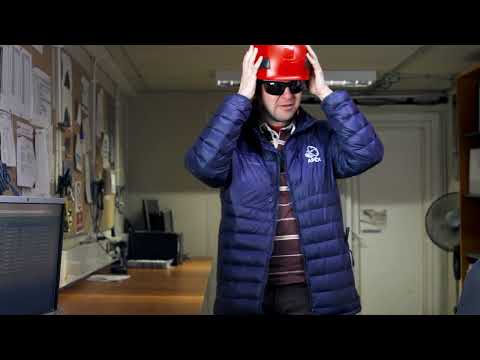
Today, instead of a picture, we feature a Video of the Week giving a glimpse into one of the highest altitude observatories on Earth: the Atacama Pathfinder Experiment (APEX).
APEX is a telescope designed to explore cold, dark regions of our Universe, such as dense clouds of gas and cosmic dust where new stars are born. While visible light is obscured by the dust, these regions glow bright at the (sub)millimetre wavelengths that APEX observes. APEX allows astronomers, among other things, to study the chemical conditions within these clouds, detecting a variety of molecules in these dark, distant regions of our Universe.
Water vapour in the atmosphere absorbs these wavelengths. That's the reason APEX is located on the Chajnantor plateau in Chile’s Atacama Desert at an altitude of 5100 m: one of the driest regions on Earth with few clouds.
Once a joint project of the Max-Planck Institute for Radio Astronomy (MPIfR), the Onsala Space Observatory (OSO) and ESO, APEX now enters a new chapter and becomes a project solely of the MPIfR. But the science continues!
This caption was written by Julian Seeholzer, one of the winners of the European Contest for Young Scientists in 2023.
Credit: ESO
Editing: A. Tsaousis Footage and photos: ESO, A. Tsaousis, B. Tafreshi, S. Molyneux, F. Mac Auliffe, ALMA/NAOJ/NRAO/General Dynamics C4 Systems.
More information and download options: https://www.eso.org/public/videos/potw2552a/
Back to European Southern Observatory (ESO) · Report a problem