

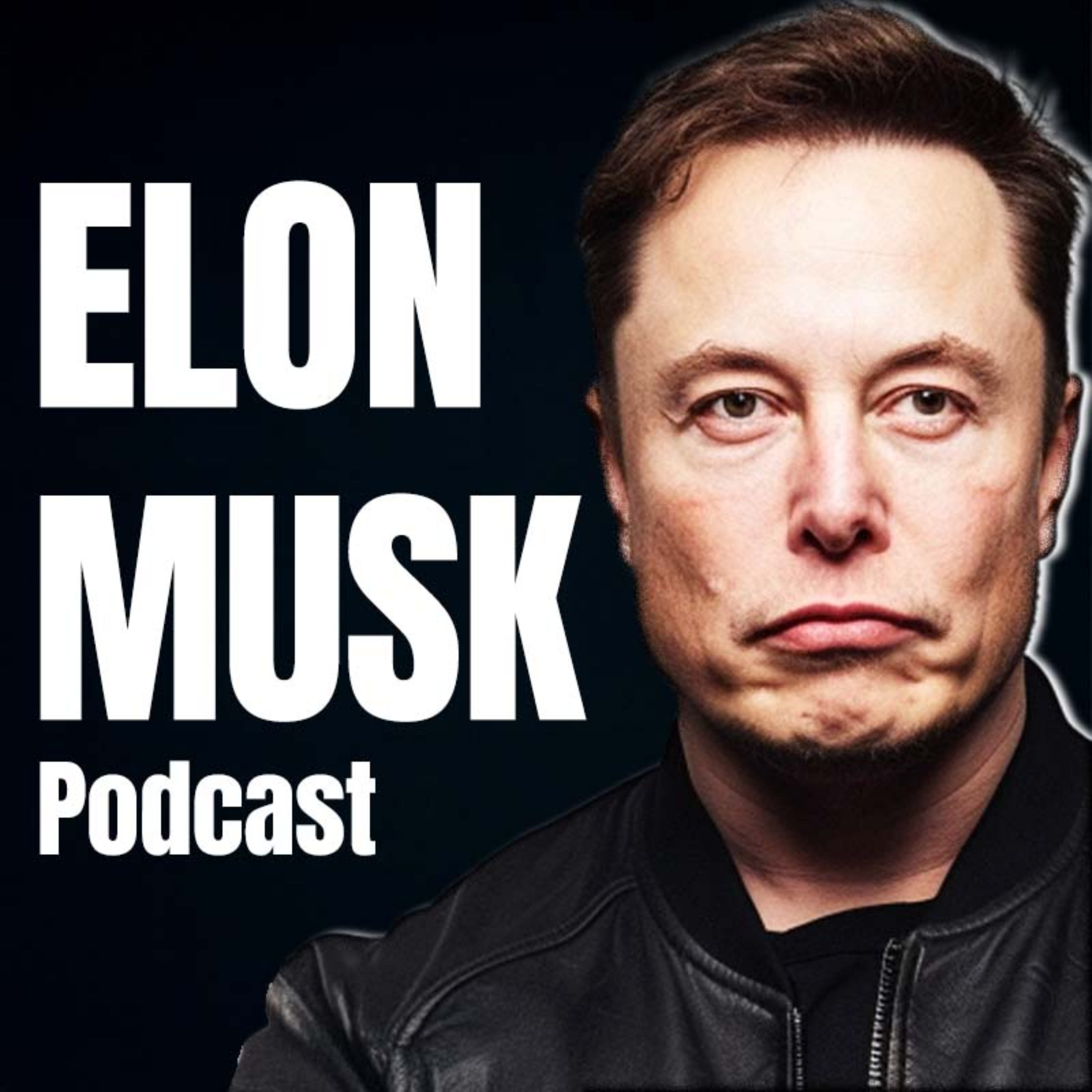
Elon Musk Podcast
Stage ZeroAudio
- Format:
- Podcast
- New episodes:
- Daily
- Typical length:
- about 20 minutes
- Latest episode:
About this show
The Elon Musk Podcast takes an in-depth look into the world of the visionary entrepreneur. From SpaceX's mission to colonize Mars, to the revolutionary underground transportation network of the Boring Company, to the cutting-edge technology of Neuralink, and the game-changing innovations of Tesla, we cover it all. Stay up to date with the latest news, events and highlights from the companies led by Elon Musk.
Covers: business news, technology industry, space exploration, artificial intelligence, electric vehicles, corporate governance, stock market, aviation safety
Show details and episodes come from the publisher's public feed at anchor.fm. Last updated . Names, artwork and text belong to their publishers.
Recently on this show
Summary of recent episodes, drawn from the publisher's feed.
This podcast covers Elon Musk's companies, including SpaceX, the Boring Company, Neuralink and Tesla, with news about the businesses he leads. Recent episodes cover SpaceX catching the Starship upper stage at Starbase, Texas, Nvidia's leadership change, and Anthropic's planned stock offering.
Cosmos
Similar in subject
- Squawk Pod
Both cover: aviation safety, business news, stock market - WSJ Minute Briefing
Both cover: technology industry, business news, stock market - The Best One Yet
Both cover: technology industry, business news, stock market
Similar shows






Explore more
Episodes
The AI Business Model Test: Alphabet, Anthropic, DoorDash, and Apple
· 56 min
Can the companies building the AI economy turn enormous investment into lasting profits? Frontier Labs connects four conversations about the business models behind the headlines: Alphabet’s infrastructure spending and search advertising challenges, Anthropic’s compute commitments and financing risks, DoorDash’s proposed $17 billion acquisition of Instacart, and Apple’s touchscreen MacBooks, local AI, and document automation.Support the channel for free with our Amazon affiliate link – https://link.amazon/B0gcdGTP4 Chapters:00:00 Alphabet: Paying for the AI buildout08:32 Anthropic: Growth, compute, and financing risk26:18 DoorDash and Instacart: The fight for the customer41:47 Apple: Touchscreens, local AI, and open workflows
Not rated yetThe Hidden Debt Behind Anthropic's Growth
· 30 min
Anthropic’s recent IPO prospectus reveals explosive revenue growth paired with massive financial obligations, sparking intense industry debate. The documents highlight hundreds of billions of dollars in future compute and infrastructure commitments owed to major technology providers who simultaneously act as investors and commercial partners. While optimists point to improving operational efficiency and surging gross margins, skeptics warn of severe liquidity risks driven by cancellable customer usage models and long-term capital expenditure pressures. Consequently, financial experts are questioning whether these soaring valuations reflect genuine economic demand or an unsustainable cycle of circular corporate financing within the artificial intelligence sector.
Not rated yetWhy DoorDash Spent 17 Billion On Instacart
· 24 min
DoorDash has officially agreed to acquire Instacart for approximately $17 billion in a cash and stock transaction scheduled to finalize between late 2027 and early 2028. This major corporate combination aims to unite DoorDash’s dominant restaurant delivery network with Instacart’s specialized grocery marketplace and established retailer relationships. Market analysts note that the merger offers DoorDash a strategic advantage to better rival retail giants like Walmart and Amazon in the rapid delivery space. Additionally, experts highlight that the deal addresses the pressing need to secure higher-value grocery baskets and capture greater customer order frequency amid rapid technological shifts. However, the proposed agreement faces potential scrutiny and regulatory hurdles regarding antitrust concerns that previously disrupted acquisition discussions between the two companies in 2021.
Not rated yetAlphabet turns cash negative on AI
· 21 min
Alphabet experienced a 10% stock drop in after-hours trading following a third-quarter earnings report that missed Wall Street expectations for both overall revenue and core advertising sales. Despite total revenue climbing 25% to $127.6 billion and Google Cloud revenue doubling to $30.7 billion due to massive artificial intelligence demand, investors grew increasingly anxious over mounting financial pressures. The company reported a negative free cash flow of $9.1 billion, driven by unprecedented infrastructure investments and a significant investment loss largely tied to SpaceX shares. While products like the Gemini app reached one billion users, executives acknowledged that newer AI features currently monetize at lower rates and consume heavy capital. Ultimately, financial analysts and market participants are questioning whether Alphabet's immense artificial intelligence spending will generate sufficient profitability to justify its surging capital expenditures and preserve its core profit margins.
Not rated yetTouchscreen MacBooks and 2nm M6 Chips
· 32 min
Ahead of its highly anticipated product showcase, Apple has rolled out several updated devices featuring powerful new processors capable of handling local artificial intelligence tasks. The recent hardware refreshes include an entry-level 14-inch MacBook Pro and a vibrant 24-inch iMac, both powered by advanced M6 chips. Additionally, the company introduced a water-resistant iPad mini equipped with an enlarged OLED screen and an A20 Pro processor. Software updates are also underway, bringing an open, JSON-based file format and Python integration to Keynote, alongside artificial intelligence assistants for core productivity apps like Pages and Numbers. Industry observers speculate that these early releases are merely a prelude to the main event, where Apple is widely expected to debut its very first touch-screen laptop.
Not rated yetLocal AI, Billion-Dollar Costs, and the Trust Problem
· 54 min
Local AI, Billion-Dollar Costs, and the Trust Problem
Not rated yetThe AI Neocloud Debt Crisis
· 23 min
Elon Musk recently warned that neoclouds, which are specialized companies that rent out artificial intelligence computing power, face severe financial distress and widespread industry consolidation. He noted that debt markets have largely stopped funding firms whose earnings rely solely on artificial intelligence infrastructure, leaving companies without independent revenue streams vulnerable to failure. While enterprises like his own SpaceX secure massive loans by leveraging diversified operations such as rocket launches and satellite services, smaller cloud providers struggle under heavy debt burdens. Furthermore, industry observers highlight that building physical data centers is plagued by lengthy delays and local opposition, creating a dangerous gap between rapid hardware purchases and operational infrastructure. Consequently, experts suggest that plummeting technology costs and towering capital expenditures could threaten traditional investment models, proving that artificial intelligence demand alone does not guarantee financial returns.
Not rated yetAI Spending Boom and Housing Freeze
· 24 min
Major financial discussions and market trends, primarily highlighting a intense debate over whether artificial intelligence is in a bubble. Industry leaders express sharp disagreements, with figures like Citadel CEO Ken Griffin warning of a speculative market while others, such as Blackstone President Jon Gray, point to surging, parabolic demand for compute infrastructure. Commentators also draw comparisons to historical market events like the dot-com era and Black Monday, analyzing how current valuations and productivity metrics differ from past crashes. Furthermore, the sources examine concurrent struggles in the U.S. housing market, where climbing mortgage rates have driven pending home sales and housing starts to historic lows. Ultimately, financial experts emphasize the importance of selectivity and careful evaluation as businesses navigate these transformative yet volatile economic conditions.
Not rated yetMeta AI Spending Terrifies Wall Street
· 21 min
The stock market experienced a sharp downturn, led by a significant tech rout that pushed the Nasdaq to its worst performance since June. Major technology companies like Meta and Tesla saw their share prices drop despite positive earnings reports, primarily driven by investor anxieties surrounding the massive financial costs and infrastructure spending required for artificial intelligence. This widespread selling in the tech sector triggered a notable sector rotation, with investors shifting capital toward defensive areas like consumer staples while semiconductor stocks suffered steep declines. In response to the growing economic uncertainty, the bond market rallied strongly as investors sought safety, pushing Treasury yields lower and restoring the traditional inverse relationship between bonds and stocks. Ultimately, market participants are reassessing the economic realities and long-term profitability of the ongoing AI investment cycle rather than doubting the technology itself.
Not rated yetSpaceX Targets 80,000 Cell Towers
· 20 min
SpaceX is actively negotiating to utilize over 80,000 cellular sites across the United States in its strategic push to become the nation's fourth major wireless carrier. This ambitious initiative combines its established Starlink satellite network and recent spectrum acquisitions with vital terrestrial infrastructure to expand mobile connectivity. While traditional telecom giants like AT&T, Verizon, and T-Mobile face potential stock pressure and pricing disruptions, infrastructure landlords such as Crown Castle and American Tower have seen their shares surge. Industry analysts debate whether this move signals a direct challenge to incumbent carriers or the emergence of a hybrid network model that seamlessly blends space-based and ground-based technologies. Ultimately, experts emphasize that while securing tower access marks a crucial milestone, significant operational hurdles regarding capital allocation, equipment, and network density still remain before the vision is fully realized.
Not rated yet