

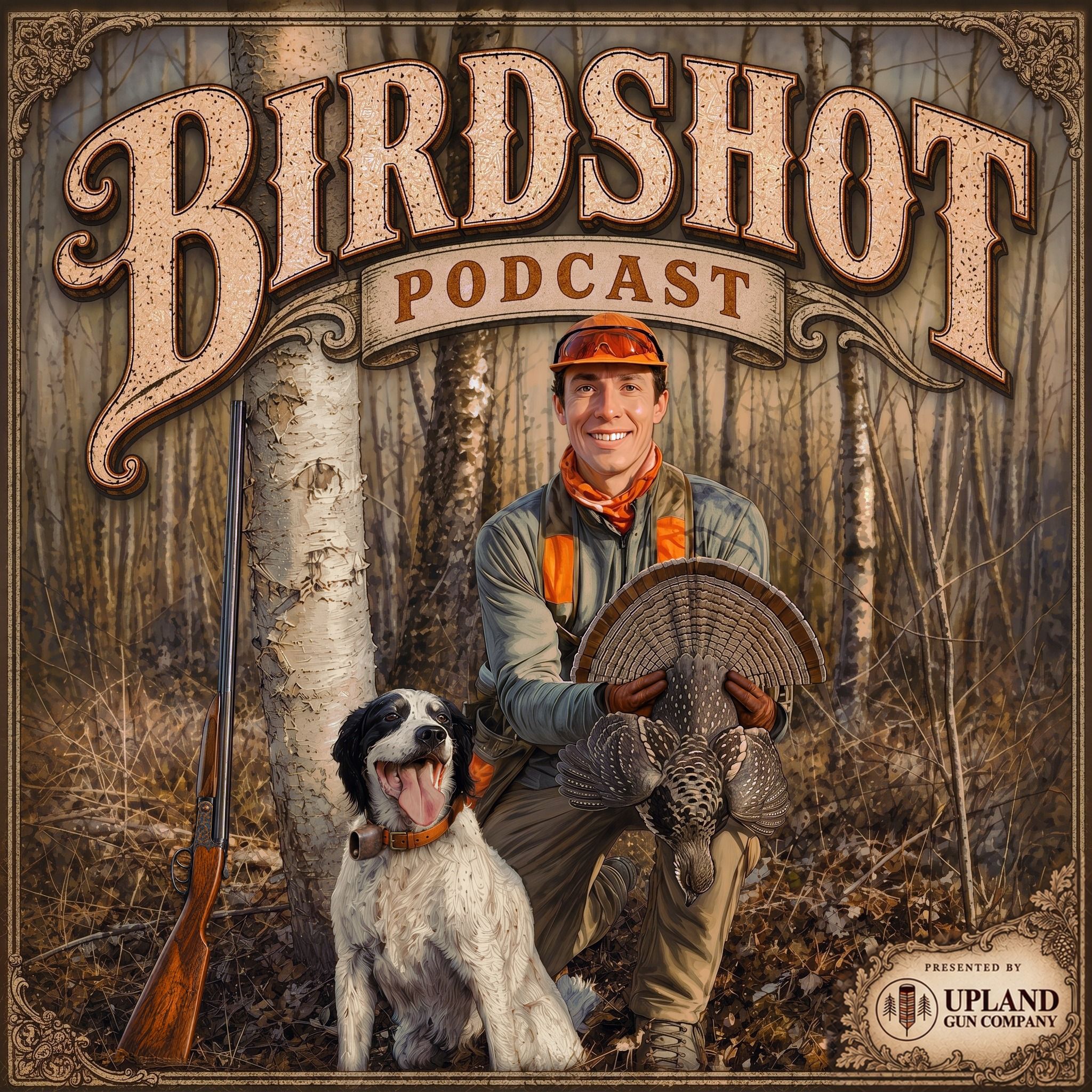
Birdshot Podcast
Nick LarsonAudio
- Format:
- Podcast
- New episodes:
- Every two weeks
- Typical length:
- about 1 hour 20 minutes
- Latest episode:
About this show
Birdshot Podcast, presented by Upland Gun Company and hosted by Nick Larson, is where upland hunters come together. Each week we share conversations that connect the people, stories, and traditions of wingshooting—from bird dogs and shotguns to the birds and landscapes that bring us back season after season.
Covers: upland hunting, bird dogs, wingshooting, grouse hunting, woodcock hunting, dog training, shotgun sports, quail habitat
Show details and episodes come from the publisher's public feed at feeds.simplecast.com. Last updated . Names, artwork and text belong to their publishers.
Recently on this show
Summary of recent episodes, drawn from the publisher's feed.
This podcast covers upland bird hunting, including bird dogs, shotguns, and the birds and landscapes of wingshooting. Recent episodes discuss grouse photography, young bird dog progress, reading grouse cover, and tick prevention for hunters and dogs.
Cosmos
Similar by topic and creator
- The Major Wrestling Figure Podcast
Shares the topics Games and Sports. - WHOOP Podcast
Shares the topics Science and Sports. - The Functional Breeding Podcast
Shares the topics Games and Science.
Similar shows







Explore more
Episodes
#363 | The Bird, the Dog and the Photograph With Chad Donahue
· 1 hr 26 min
Bird dogs and wild birds in the same photograph have kept Chad Donahue carrying a camera through the woods for 21 years. This fall, he finally got a photograph he had been chasing: a grouse on the ground with his setter Dax pointing behind it. He was shaking so much that some of the pictures came out blurry. Chad joins Nick for a conversation about the moments between a dog finding a bird and that bird taking flight. They talk about the pull of hunting season, taking kids along, and why photographs of old dogs grow more valuable with time. Chad also shares his approach to photographing woodcock, stories from spring banding, and the perspective he gained from photographer Tim Flanigan. The conversation closes with Chad's field-care suggestions for birds headed to a taxidermist and the hand-drawn upland designs behind Lazy 8 Outfitters. In this episode: - October hunts, young dogs and taking kids into the cover - The photograph that started Chad's camera habit in 2005 - Why a grouse and a pointing dog are so difficult to capture together - Getting low, working around cover and letting the bird settle - Woodcock band recoveries and the stories behind individual birds - Remembering old dogs through photographs - Freezing and handling birds for taxidermy Connect with Chad: https://lazy8outfitters.com/ Questions from the conversation Why is photographing a grouse with a pointing dog so difficult? Chad describes a narrow window in which the grouse, dog and camera all line up. Grouse rarely tolerate much movement, and even a small leaf or blade of grass can obscure the bird or the dog's face. Over 21 years, he says he has captured only four photographs with both a grouse on the ground and a dog in view. How does Chad approach woodcock photography? Chad starts with the photograph available from a distance, then gradually moves closer if the bird remains comfortable. He tries to keep his movements calm and often lies on the ground for a lower perspective. His goal is a clear view of the bird's eye, with the dog's eye and nose visible when both fit in the frame. What can a recovered woodcock band reveal? A band number can connect a harvested bird with the record made when it was banded. Chad keeps his own field notebook alongside the information submitted through the banding program. In this conversation, he describes sharing photographs with hunters who recovered birds he had banded, including one found roughly 100 yards from its spring location and another 134 miles away. How does Chad prepare birds for the taxidermist? Chad's approach is to protect the bird from unnecessary damage, double-bag it, squeeze the air out and freeze it promptly. He encourages getting the frozen bird to the taxidermist before it spends months being shifted around the freezer. He also explains that early-season pin feathers can make the work more difficult than a later-season bird with more developed plumage. Chapters 0:00 Birdshot Podcast Intro 0:58 October Hunts and Bird Reports 11:41 Meet Chad Donahue 19:25 The Pull of Hunting Season 23:43 When Photography Becomes Part of the Hunt 29:21 The Photograph That Started It 34:12 Grouse, Pointing Dogs and a 21-Year Pursuit 42:45 Approaching Birds With a Camera 46:35 Photography Lessons From Tim Flanigan 49:27 Stories Behind Chad's Photographs 55:23 Woodcock Banding and Recoveries 57:23 A Woodcock in a Tree 1:08:24 Looking Back at the First Photograph 1:16:29 A Banded Woodcock's Journey 1:20:19 Field Care for Taxidermy 1:23:27 Lazy 8 Outfitters and Hand-Drawn Designs 1:26:16 Birdshot Podcast Outro Support the show Support the show on Patreon: https://www.patreon.com/c/birdshot Sponsors This episode is brought to you by Upland Gun Company, Final Rise, and Irish Setter Boots. Upland Gun Company: https://uplandguncompany.com/ Final Rise Shirt of the Month: https://finalrise.com/pages/upland-shirt-subscription Irish Setter Pheasants Forever Edition:…
Not rated yet#362 | Young Bird Dogs: Learning to See Progress With Aaron Hepler
· 1 hr 20 min
Young bird dogs can make a handler question everything after one rough hunt. Then the next outing offers a very different picture. Aaron Hepler of InCamp Podcast joins Nick to talk about learning alongside his French Brittany, Rue, and finding a place for bird hunting in a life that already includes bowhunting, work and family. Rue's development leads into a conversation about running pheasants, bird contacts, changing conditions and what it means to look for a pattern instead of judging a dog by a single mistake. There is more to the story than training. Aaron remembers growing up outdoors in Pennsylvania, shares a few thoughts on taking kids hunting, and looks back on Emma, the Labrador who made bird hunting part of his life. Her loss, and the quiet she left in the house, help explain why getting another bird dog meant so much. Later, Nick and Aaron compare the expectations they put on themselves with their first pointing dogs. They talk about everyday whoa foundations, learning from older dogs, and the satisfaction of watching a young dog begin to understand the job. In this episode - Giving kids room to enjoy their own day in the woods - How Emma's pheasant hunts hooked Aaron on bird dogs - Moving from a flushing Labrador to a pointing French Brittany - Reading a young dog's progress across multiple bird contacts - Rue's very different outings in changing wind and moisture - Everyday foundations and hunting alongside experienced dogs Connect with Aaron InCamp Podcast: https://linktr.ee/incamppodcast Recorded October 13, 2026. Weather, season references and mentions of an episode releasing "today" refer to that recording date. Questions from the conversation Does bumping a bird mean a young pointing dog is falling behind? A bumped bird alone does not tell the whole story. Nick describes looking at the pattern across contacts: whether the dog is trying to point, what happens on the next bird, and how conditions affect the work. Aaron's experiences with Rue show why one frustrating day can look very different from the next outing. This is a discussion of their experiences, not a training prescription. How did Aaron's experience change when he moved from a Labrador to a French Brittany? Aaron found himself learning a different job alongside Rue after years of pheasant hunting with his Labrador, Emma. He describes encouraging a pointing dog's natural instincts and providing bird exposure rather than trying to manufacture a point. The conversation centers on his own dogs and his expectations as a handler. It does not establish a rule about every Labrador or Brittany. What helped Aaron see progress in Rue's pointing? Repeated bird contacts gave Aaron a better picture of what Rue understood. He describes solid woodcock points and a pheasant outing that followed a much harder day. Nick connects those stories to looking for a pattern over time. Aaron also reflects on wind, moisture and running birds, while the conversation leaves room for several factors influencing any individual hunt. What do Nick and Aaron mean by everyday whoa foundations? They describe brief, consistent moments in daily life where a dog stands and waits for a release, including around meals, doors and the kennel. Nick distinguishes that foundation from the more involved steadiness work a new handler might see demonstrated. Aaron discusses adjusting to the dog in front of him. Their point is the value of clear, repeated communication in their own routines. What can a young bird dog learn from hunting with an older dog? Aaron describes Rue backing an experienced Vizsla and paying attention to how that dog worked. Nick shares his early observations of running a puppy with an older setter, while also wanting the pup to develop an independent search. Both stories concern what they have seen with their own dogs. The balance between shared hunts and solo time remains part of that development. How do they approach taking kids hunting? Nick…
Not rated yet#361 | Bird Dog Puppy Progress: Grouse Woods and Prairie Sharptails
· 1 hr 0 min
Bird dog puppy progress can be easier to recognize looking back than it is in the moment. In this solo episode, Nick Larson catches up on the grouse season and recaps a South Dakota sharptail hunt with Hazel and Rose. Back in the woods, six-month-old Hazel gets her first woodcock and begins showing more caution around grouse. Nick talks through the cover he explored, the birds he found and the check-ins that are helping him build confidence in her. A final walk produces the kind of puppy work that makes a day, even without a shot. On the prairie, fog and heat shape the hunting, Rose brings the experience of a six-year-old dog, and Nick encounters his first rattlesnake. Hazel keeps following scent across much more ground than Nick expects. Twice, he stops believing her before the birds get up. The episode also introduces Across the Uplands, a film series following a Upland Gun Company 20-gauge Venus and a Final Rise vest as they travel from hunter to hunter. The South Dakota film launches Friday, October 16, alongside this podcast episode. In this episode - Hazel's first woodcock and more deliberate work around ruffed grouse - Aspen cover, understory and a patchy midseason bird report - Range, bells and learning to stay connected in the woods - Rose's experience on exposed prairie birds - A first rattlesnake encounter and the unfamiliarity of new country - Puppy bumps, long sharptail tracks and learning when to trust the dog - Across the Uplands films, partners and giveaways Across the Uplands campaign and updates: https://finalrise.com/pages/across-the-uplands Questions from the episode How is Hazel progressing as a young bird dog? Hazel is beginning to slow down, point and advance more cautiously around birds. Nick contrasts her recent grouse-woods work with the birds she bumped in South Dakota. Her first woodcock and several promising grouse contacts stand out, while range, consistency and staying connected remain part of her development. This is one puppy's progress report, rather than a fixed training schedule. Why does Nick use a bell with a GPS collar? Nick likes the bell because its cadence gives him a sense of how his dog is moving through cover. With Hazel, he can hear her coming back, pausing to locate him and moving again after he calls. He describes those small exchanges as useful while they learn to keep track of each other in the grouse woods. What did the South Dakota sharptail tracks teach Nick? The long tracks challenged Nick's confidence in Hazel. During one sequence, he followed her for about 400 yards before stopping, and she continued downhill before two sharptails flushed. The experience left him wondering why he had quit following. He also acknowledges uncertainty about exactly what scent she was working throughout these sequences. What is Across the Uplands? Across the Uplands is a film series following a Upland Gun Company 20-gauge Venus and a Final Rise vest as they travel between hunters. The recording describes current-season hunts filmed and released shortly afterward, including this South Dakota trip. Nick also mentions partner giveaways. Find campaign updates at https://finalrise.com/pages/across-the-uplands. This episode is brought to you by Upland Gun Company, Final Rise, and Irish Setter Boots. Upland Gun Company: https://uplandguncompany.com/ Final Rise Shirt of the Month: https://finalrise.com/pages/upland-shirt-subscription Irish Setter Pheasants Forever Edition: https://irishsetterboots.com/pheasantsforever Support the show on Patreon: https://www.patreon.com/c/birdshot Listen and follow Spotify: https://open.spotify.com/show/17EVUDJPwR2iJggzhLYil7 Apple Podcasts: https://podcasts.apple.com/us/podcast/birdshot-podcast/id1288308609 YouTube: https://www.youtube.com/@birdshot.podcast Instagram: https://www.instagram.com/birdshot.podcast/ Website: https://www.birdshotpodcast.com/ Hosted by Simplecast, an AdsWizz company. See pcm.adswizz.com…
Not rated yet#360 | Reading Grouse Cover and Handling Bird Dogs with Ann Jandernoa
· 1 hr 53 min
Ruffed grouse habitat can look good on a map and still leave plenty of questions once the boots hit the ground. Ann Jandernoa returns for her tenth appearance on the Birdshot Podcast to help Nick work through listener questions about reading cover and handling bird dogs. The conversation starts with early-season conditions and how dry weather changes the places Ann looks for birds. From there, they get into stem density, the forest floor, and the smaller features that make one pocket of a cut more useful than the surrounding cover. A clump of balsam, a shaded edge, or a connection between cover types can give a grouse another option. There are questions about hawthorn and wild apples, hunting habitat farther east, where grouse spend the night, and those unusual days when birds seem to keep flushing from the same stretch of cover. Nick and Ann also discuss helping a young dog work running grouse more calmly, choosing dogs to run together, and communicating a plan with hunting partners. In this episode - Dry conditions, moisture, and early-season brood observations - What stem density tells Ann about canopy and the forest floor - Finding productive pockets and connections within grouse cover - Hawthorn, wild apples, and habitat differences between New England and the Great Lakes - Grouse movement, nighttime cover, and large concentrations of birds - Relocating on running grouse and helping a young dog slow down - Running one dog or several, approaching points, and planning a hunt with partners Questions from the conversation What does stem density tell a grouse hunter? Ann looks beyond the number of stems to how the canopy comes together and what grows beneath it. She describes cover with an interlaced canopy and a floor that young grouse can move through. Nick and Ann discuss how the useful features change as a stand ages and birds move beyond their brood cover. How does dry weather change where Ann looks for grouse? Ann follows shade, moisture, and cover connections. She describes looking toward transitions near lowlands and conifers when surrounding cover dries out. Nick and Ann also discuss how sandy and heavier soils respond differently, and why the condition of the plants and forest floor can be more useful in the field than remembering a soil classification. What makes one pocket of grouse habitat better than another? Ann's answer changes with the season. Early on, she pays close attention to the floor and canopy. As leaves come down, shrub cover and connections between habitat types become more important. Nick describes scanning for a lone spruce, balsam clumps, deadfalls, and nearby edges, then giving his dog a chance to investigate those features. How does Ann approach a dog on point? Ann describes circling out and around rather than crowding the dog from behind or coming directly alongside a young dog. She also looks at likely escape cover and whether there is room to swing a shotgun among the trees. Nick shares his own tendency to circle wider, with communication and positioning becoming especially important when another hunter is present. Connect with Ann Scout and Hunt habitat maps: https://scoutandhunt.com/ Support the show This episode is brought to you by Upland Gun Company, Final Rise, and Irish Setter Boots. Upland Gun Company: https://uplandguncompany.com/ Final Rise Shirt of the Month: https://finalrise.com/pages/upland-shirt-subscription Irish Setter Pheasants Forever Edition: https://irishsetterboots.com/pheasantsforever Join the Birdshot Podcast community on Patreon: https://www.patreon.com/c/birdshot Questions for a future episode: nick@birdshotpodcast.com Listen and follow Spotify: https://open.spotify.com/show/17EVUDJPwR2iJggzhLYil7 Apple Podcasts: https://podcasts.apple.com/us/podcast/birdshot-podcast/id1288308609 YouTube: https://www.youtube.com/@birdshot.podcast Instagram: https://www.instagram.com/birdshot.podcast/ Website: https://www.birdshotpodcast.com/ Hosted…
Not rated yet#359 | Prairie Lessons and a Puppy's First Sharptail Hunts
· 1 hr 9 min
Sharptail hunting on the prairie gave Nick plenty to think about, especially with Hazel along for her first prairie trip. In this solo episode, he recaps the hunts and shares what changed when he started choosing cover with a young setter in mind. A cut hayfield that looked too short to hide a bird turned into one of the trip's most memorable walks. There was good work from an older dog, a puppy carrying a sharptail around a hay bale, and plenty of small moments that made the next hunt even more exciting. Nick also answers a listener's question about range and staying connected with a young dog, reflects on what the wind can hide, and remembers Hartley as another season gets underway. In this episode - Why the roadside view doesn't always tell the whole story about prairie cover - Grazing, patchy grass, and choosing places where Hazel could move and stay in sight - A cut hayfield, Pike's point, and Hazel's first sharptail experiences - Young-dog range, checking in, changing directions, and GPS collars - How wind and the path a dog takes can change a bird contact - Hazel's early pointing and backing, and memories of Hartley A few questions from the conversation Can sharptails hide in a cut hayfield? They did on this trip. Nick describes Pike pointing a sharptail in short alfalfa that looked too open to conceal a bird. Taking Hazel into that field gave her room to move and stay visible, and the hunt changed Nick's confidence in a cover type he hadn't spent much time hunting. What made patchy prairie cover useful for a puppy? Nick found that thinner areas let Hazel move more easily and maintain visual contact. Patches of snowberry, bowls, and other remaining cover also gave the hunt clearer places to investigate. He contrasts that with thick, tall grass that can make a young dog's first outings harder than they need to be. How does Nick stay connected with a young dog? Nick describes building that connection through repeated outings and opportunities for the pup to check back. When Hazel lost sight of him, he stopped and let her look for him. He also talks about reconnecting before a major change of direction and fitting her with a GPS collar before her first grouse hunts. Does a birdless walk mean sharptails weren't there? Nick's experiences have taught him to leave room for doubt. One bird flushed while the hunters stopped to water a dog and check the map. In another remembered hunt, Hartley passed close to birds on the wrong side of the wind, then found them when he looped around. Support the show This episode is brought to you by Upland Gun Company, Final Rise, and Irish Setter Boots. - Upland Gun Company (https://uplandguncompany.com/) - Final Rise Shirt of the Month (https://finalrise.com/pages/upland-shirt-subscription) - Irish Setter Pheasants Forever Edition (https://irishsetterboots.com/pheasantsforever) Join the Birdshot Podcast community on Patreon (https://www.patreon.com/c/birdshot). Have a question or something you'd like to hear more about in a future solo episode? Email nick@birdshotpodcast.com. Listen and follow - Spotify (https://open.spotify.com/show/17EVUDJPwR2iJggzhLYil7) - Apple Podcasts (https://podcasts.apple.com/us/podcast/birdshot-podcast/id1288308609) - YouTube (https://www.youtube.com/@birdshot.podcast) - Instagram (https://www.instagram.com/birdshot.podcast/) - Birdshot Podcast website (https://www.birdshotpodcast.com/) Hosted by Simplecast, an AdsWizz company. See pcm.adswizz.com (https://pcm.adswizz.com) for information about our collection and use of personal data for advertising.
Not rated yet#358 | Tick Prevention for Hunters and Bird Dogs with Travis Avery
· 51 min
Tick prevention for hunters and bird dogs starts before the first walk through cover. Travis Avery of Sawyer Products joins Nick to talk about permethrin, treated clothing, and what happens when a tick reaches that fabric. I've sprayed my hunting pants for years, but I hadn't spent much time thinking about what the treatment was doing two weeks later. No smell. Nothing I could see. Travis's explanation helped me connect that familiar routine to how the product works. We also discuss treating boots and socks, along with the dog beds and kennel pads I already spray. We talk about the difference between a fabric treatment and a topical repellent, why drying matters, and how Travis approaches prevention with his dog Murphy. The conversation also covers tick checks and the extra care involved when cats are around. We open with Sawyer's water filters and a few ways they can fit into a hunting vest, a truck, or a trip with the dogs. The idea is to spend more time in the woods with a routine that makes sense. Questions from the episode How is permethrin different from a topical insect repellent? Permethrin is the fabric treatment at the center of this conversation. Travis describes it as a contact insecticide, while DEET and picaridin serve as topical repellents. Nick asks how those approaches fit together when a hunter has treated clothing but still has exposed skin. The distinction helped him better understand the routine he already uses. Why can treated hunting clothes still work two weeks later? The treatment bonds with the fabric rather than depending on a smell that Nick can detect. Travis compares that bond to dye in a shirt. He describes sunlight and washing as factors that reduce its effectiveness over time. For Nick, that explains why an odorless pair of treated pants can still be part of his routine. How long does Sawyer's clothing treatment last? Sawyer describes its clothing treatment as lasting up to six weeks or six washings, whichever comes first. Travis discusses that window alongside sunlight, laundering, and time in the field. Nick connects it to the early grouse season, when he is regularly walking through tick cover. The current product label gives the application and retreatment directions. What changed in Nick's thinking about bird dogs and ticks? Nick already uses an oral preventive for his setters and treats their beds and kennel pads. Hearing how permethrin works on contact made him curious about treating the dogs themselves. Travis describes his routine with Murphy and points listeners to Sawyer's dog-specific instructions. That conversation is about an additional layer, with the product label and a veterinarian guiding any individual dog's use. Where does water filtration fit into a bird-hunting trip? Travis carries a filter when fly fishing and describes options for a hunting vest, truck, cabin, or group camp. Nick starts from a place where water is usually available, then thinks about western hunts and carrying enough for himself and the dogs. They also discuss the limits of standard filters, including viruses and chemical contamination. Connect with Sawyer Sawyer Products: https://www.sawyer.com/ Permethrin product details and dog application instructions: https://www.sawyer.com/products/permethrin-fabric-treatment Sawyer on Instagram: https://instagram.com/sawyerproducts Listen and follow Spotify: https://open.spotify.com/show/17EVUDJPwR2iJggzhLYil7 Apple Podcasts: https://podcasts.apple.com/us/podcast/birdshot-podcast/id1288308609 YouTube: https://www.youtube.com/@birdshot.podcast Instagram: https://www.instagram.com/birdshot.podcast/ Website: https://www.birdshotpodcast.com/ Sponsors This episode is brought to you by Upland Gun Company, Final Rise, and Irish Setter Boots. Upland Gun Company: https://uplandguncompany.com/ Final Rise Shirt of the Month: https://finalrise.com/pages/upland-shirt-subscription Irish Setter Pheasants Forever Edition:…
Not rated yet#357 | What Wild Birds Teach a Pointing Dog with Mark Payton
· 1 hr 35 min
Wild bird contacts can shape a pointing dog in ways a training setup cannot. Mark Payton joins Nick to talk about first seasons, launchers, steadiness, and letting birds teach. Mark is the author of Favorite Ways to Train Your Bird Dog and a longtime bird hunter who has worked dogs for the public for about 15 years. He returns to the podcast for a listener-question episode built around developing young dogs, carrying yard work into new places, and recognizing what a dog is saying before adding more pressure. I have a new setter pup at my feet this season, so this one landed at the right time. We talk about how little formal work a young pointing dog may need before its first fall, what early wild-bird opportunity can open up, and why a puppy's light-bulb moment tends to stick with the person holding the gun. Mark remembers Izzy pointing a quail single before she was six months old. With another dog, he went into the field with a puppy and came out with a bird dog. The conversation also gets practical. Mark explains his wooden backing silhouette, his use of remote launchers, the difference between steady to flush and steady through the fall, and why he treats a launcher as a stand-in for a wild bird rather than a machine for making a dog point. His recurring question is a useful one: what would a wild bird do? Later, we get into whoa posts, flank collars, relocation, gun introduction, e-collar timing, trash breaking, retrieving, and the limited role of a wing on a string. The larger idea stays simple. Build the dog's love for birds, give it meaningful opportunity, and pay attention to the small signals along the way. DOWNLOAD: Mark's Backing Dummy Silhouette (https://drive.google.com/file/d/1CxsNzolIdKvYj6FhKi9aiqPppt9KCfto/view) Chapters 00:00 Let the wild bird teach the dog 02:37 Short bird dog training sessions and consistency 04:58 Mark Payton's bird dog background 11:33 How much training does a young pointing dog need? 21:47 Letting the dog and bird work it out 22:14 A young bird dog's first hunting season 28:24 Building bird drive in a hesitant puppy 31:02 Developing range and independence 33:26 Teaching backing with a wooden silhouette 43:16 Helping dogs generalize training in new places 46:05 E-collar timing and command reinforcement 48:58 When a young dog catches a training bird 50:37 Using a launcher like a wild bird 54:35 Steady to flush, wing, shot, and fall 1:00:00 Whoa posts and flank collars 1:03:54 Letting a pointing dog relocate on moving birds 1:07:28 Reading small signals during gun introduction 1:10:28 Trash breaking and deer chasing 1:14:37 Retrieving and force fetch 1:19:15 The limited role of wing on a string 1:28:00 Birds, breaks, and taking away the chase 1:30:16 Why wild birds become the best teacher 1:33:47 Where to find Mark Payton Questions from the episode How much training does a young pointing dog need before its first season? Mark keeps the early program fairly light: recall, collar conditioning, bird introduction, gun introduction, and enough bird work for the dog to begin pointing. He prefers to build a love for birds and let the first hunting season provide experience. More formal polish can come later, often when the dog is roughly nine to 15 months old. Is it a good idea to hunt a puppy during its first season? Mark believes a first season can be valuable when the puppy is physically ready and has the basic preparation to be safe in the field. The goal is opportunity, not finished performance. His own young dogs pointed wild quail and woodcock before six months, while another dog needed more time before the light came on during a scattered covey. What does a young bird dog's light-bulb moment look like? It is the point when bird contacts begin to make sense to the dog. Nick remembers Rose moving from a very young puppy to reliably pointing grouse as the season progressed. Mark remembers one dog sticking quail singles so clearly that he felt he had walked…
Not rated yet#356 | What Grouse Hunting Is Really About with Andy Wayment
· 1 hr 7 min
Idaho Grouse Fever author Andy Wayment joins Nick to talk about bird dogs, grouse literature, favorite shotguns, and what keeps a life of grouse hunting meaningful. Andy returns to the podcast with two new projects: Idaho Grouse Fever: An Obsession for All Things Grouse and Breaking Cover, a monthly podcast focused on upland literature and tradition. He explains why his latest book reaches across all five of Idaho's grouse species and mixes hunting stories with classic writing, sporting art, shotguns, named coverts, and the friendships built around them. I was halfway through the book when we recorded, and what kept standing out was Andy's attention to everything surrounding the bird in hand. We talk about Rainy's growth into a seasoned grouse dog, what Aki learned by hunting alongside her, and what I hope Hazel might pick up from Rose this fall. Andy also takes us into the mystery behind Corey Ford's The Road to Tinkhamtown, including the clues that suggest its fictional covert was rooted in a real place. The conversation closes with broken and lost Ruger Red Labels, a first ruffed grouse double with a 16-gauge side-by-side, the beauty of Idaho's Franklin grouse, and Andy's belief that the highs and lows are what make progress in the grouse woods feel earned. Chapters 00:00 Keeping grouse hunting honest 01:44 Andy Wayment returns to the Birdshot Podcast 02:44 Breaking Cover and the books behind upland hunting 09:35 Counting down to Idaho's grouse opener 11:36 A new setter, an older dog, and another season 13:27 How Rainy became a seasoned grouse dog 20:21 Teaching a golden retriever to hunt grouse 24:27 What a young dog can learn from an older dog 29:09 Why Andy wrote Idaho Grouse Fever 31:39 Tinkhamtown, Sleepy Hollow, and grouse-country fiction 33:32 Ross Young and Jay Dowd bring the book to life 38:41 Searching for the real Tinkhamtown 45:08 What grouse hunting becomes over time 48:17 Lost guns, Ruger Red Labels, and shotgun fit 53:37 Andy's first ruffed grouse double 1:01:21 Why Franklin grouse stand out in Idaho 1:04:36 Named coverts and the places hunters remember 1:05:36 Where to find Idaho Grouse Fever Questions from the episode What is Idaho Grouse Fever about? Idaho Grouse Fever: An Obsession for All Things Grouse collects Andy Wayment's stories about hunting all five of Idaho's grouse species. The book also reaches into bird dogs, sporting literature, shotguns, art, named coverts, mistakes, and friendships. Andy describes it as a book for people who think about grouse hunting eight days a week. Why does grouse hunting become about more than finding birds? The hunt grows to include everything surrounding the bird: companionship with dogs, time with friends, the history of a place, and the search itself. Andy says the highs and lows make successful moments sweeter because growth comes through both. Nick adds that if grouse hunting were easy, much of the fun would disappear. Can a golden retriever that is not from hunting stock learn to hunt grouse? Andy's golden retriever Aki did. She first learned by hunting alongside Rainy, watching for the pointing dog's bell to go quiet, and racing in to find birds. Over time, Aki became more independent, worked mostly within about 30 yards, flushed birds in range, and developed into the retriever Andy trusts most with a bird. What is Tinkhamtown, and why does it matter to grouse hunters? The Road to Tinkhamtown is Corey Ford's classic fictional grouse story. Andy found clues in an unedited version of the story and in writing by Ford's hunting companions that suggest the covert drew from a real place. That turns the story into something close to a treasure hunt for the grouse hunter's ideal cover. Which shotguns does Andy Wayment hunt with? Andy rotates among a Ruger Red Label 12 gauge, a Ruger Red Label 28 gauge with a straight grip, and a 16-gauge TriStar Bristol side-by-side. Fit and confidence determine which gun he carries. The Bristol…
Not rated yet#355 | What 39 Years of Guiding Has Taught Jason Curtis About Bird Dogs
· 1 hr 11 min
New Brunswick guide Jason Curtis shares what 39 years around grouse, woodcock, and wild birds have taught him about developing young bird dogs. Nick welcomes Jason back to the podcast eight years after their first conversation. They start on the Miramichi River, where a fall trip can combine Atlantic salmon fishing with grouse and woodcock hunting, then move into the part of the conversation that hit closest to home: raising a puppy for her first season. Jason explains why he begins exposure work early, how he introduces a wing, birds, a bell, and gunfire without turning puppyhood into a formal training program, and why short sessions woven into everyday life can build the foundation for later work. He and Nick also talk about what younger dogs pick up from older dogs, why solo hunting time still matters, and how real contacts with wild birds can change a dog quickly. The conversation also covers New Brunswick's changing woodcock migration, the timing of a Miramichi cast-and-blast trip, and what visiting hunters need to know about guides, lodges, and the short October window. Chapters 00:00 How wild birds change a young dog 01:52 Jason Curtis returns to the Birdshot Podcast 06:05 Miramichi River salmon outlook 12:27 Planning a grouse, woodcock, and salmon trip 17:09 October cover and the changing woodcock migration 22:52 Jason's path into 39 years of guiding 30:58 Bringing home a new bird dog puppy 35:01 Early puppy exposure and the first bird-dog lessons 41:03 Building steadiness through everyday routines 46:42 Introducing birds and gunfire 51:03 Wild woodcock close to home 52:54 What puppies learn from older dogs 59:27 Planning a New Brunswick upland trip 1:06:13 Bringing young hunters into the uplands 1:07:31 What a strong grouse and woodcock day looks like 1:09:14 Connect with Jason Curtis Questions from the episode When does Jason Curtis begin working with a bird dog puppy? Jason starts as soon as the puppy comes home, but he keeps the work light and playful. He uses short sessions with a wing, a small check cord, and simple moments around food or doorways to introduce the idea of standing still and paying attention. At that age, the goal is exposure and foundation, not polished performance. How does Jason introduce a young dog to birds and gunfire? He begins with sound at a distance while the puppy is occupied and confident, then closes that distance gradually. Around 12 weeks, he may introduce planted birds at a preserve. By roughly 16 weeks, when the individual dog is handling each step well, he likes to begin finding wild birds in real cover. Why are wild birds valuable for a young bird dog? Wild birds teach lessons that planted birds cannot fully reproduce. Their scent, movement, escape behavior, and use of cover require the dog to adjust naturally. Jason has watched young dogs make visible progress after several consecutive days of good wild-bird contacts, especially in New Brunswick covers with strong grouse and woodcock numbers. Do young bird dogs learn from older dogs? They can learn a great deal about range, recall, routine, and backing by watching experienced dogs. Jason still believes the puppy needs solo time so it develops independence instead of simply following. The older dogs help establish the pattern, while individual contacts teach the puppy how to hunt for itself. When is the best time for a New Brunswick cast-and-blast trip? The overlap runs from the September 15 woodcock opener through the October 15 salmon close, but the full grouse, woodcock, and salmon window is October 1 through October 15. Hunters can float and combine both pursuits in one day, or hunt the cooler morning and fish the river later. Does a nonresident need a guide to hunt in New Brunswick? Yes. Jason explains that hunters coming from outside New Brunswick need a licensed guide. A lodge is the simplest all-inclusive route, while an Airbnb paired with the right independent guide can also work. Guide…
Not rated yet#354 | TFL Shotgun Fest 2026: Learn From Hall of Fame Pros
· 1 hr 0 min
TFL Shotgun Fest 2026 is coming to central Minnesota this July, and this year two shotgun Hall of Famers are teaching the clinics. Steve Gould joins Nick to walk through the whole weekend. On this episode, host Nick Larson brings back Steve Gould, creator of the Target Focused Life YouTube channel and part-owner of the Alexandria Shooting Park, to preview the second annual TFL Shotgun Fest. The event runs Friday, July 24 (development day plus VIP night) and Saturday, July 25 (the main shooting day) at the Alexandria Shooting Park in central Minnesota. The headline this year is the talent. Corey Cruz, a two-time national champion, world champion, and National Sporting Clays Hall of Fame inductee, is running sporting clays clinics. Richard Marshall Jr., a 35-time All-American and multiple Grand American winner on the trap side, is running trap clinics. Both are kept small on purpose: five shooters per session, half a day, real range time and real feedback. Del Whitman is on-site doing gun fittings. Beyond the clinics there are manufacturer demos where you can get hands-on and actually shoot a rack of different shotguns, an Upland Gun Company booth with a new RFM shotgun to see, and over $10,000 in prizes, including a custom 250th-anniversary shotgun for high overall. Then there's the unconventional stuff Steve's crew is known for: the Can Cannon Challenge, the Benelli AI Challenge, and the Wheel of Shotgun Fortune. The day closes with an Annie Oakley tournament and a social hangout. There's a thread running under all of it that matters more than the prize wall. Steve talks about how people are starved for in-person connection, and how an event like this is really about getting folks who love shotguns in the same place for a weekend. We also get into Steve's first trip to Italy and the Benelli and Perazzi factories, the Minnesota high school trap tournament that ran 7,700 kids through the range, a good stretch on barrel length and gun fit, and the ShotTracker training tool that might one day track a flushing grouse. Clinics, camping, and tickets are limited, so check the website for current availability. Chapters: 0:00 - Meet the Hall of Fame Clinic Pros 2:00 - Welcome Back: Steve Gould, Target Focused Life 2:35 - MN High School Trap and 7,700 Young Shooters 7:00 - A New Sporting Clays Course at Alexandria 8:15 - Inside Steve's Italy Trip: Benelli and Perazzi 17:15 - Shotgun Fest 2026: The Big Vision 18:30 - Clinics With Corey Cruz and Richard Marshall Jr. 19:15 - Del Whitman Gun Fittings and VIP Night 20:15 - Prizes, the 250th-Anniversary Gun, and Challenges 23:20 - Why People Are Craving In-Person Again 26:50 - How the Weekend Works: Friday and Saturday 27:50 - Manufacturer Demos: Get Hands-On With the Guns 30:20 - The RFM Venus 20ga Grouse Gun 31:30 - Barrel Length, Balance, and Gun Fit 37:00 - A New RFM Sporting Clays Shotgun (First Look) 40:40 - Year One to Year Two: What Changed 44:50 - Small-Group Clinics and How They Work 48:10 - Annie Oakley Tournament and Awards 50:10 - Camping and Lodging in Alexandria 52:20 - Shotgun Find 2.0 and the ShotTracker Tool Resources & Links: Target Focused Life on YouTube: https://www.youtube.com/@TargetFocusedLife TFL Shotgun Fest tickets & clinic registration: https://www.targetfocused.life/shotgunfest Alexandria Shooting Park (camping & booking): https://shootasp.com Shotgun Find (Steve's shotgun research tool): https://shotgunfind.com Support the show: The Birdshot Podcast is Presented By onX Hunt. Use code BSP20 to save 20% on your onX Hunt subscription. Support the show on Patreon: https://www.patreon.com/c/birdshot (from $5/month, and you get Birdshot can coolers and stickers as a thank-you). Follow the show: Instagram: @birdshot.podcast Website: https://BirdshotPodcast.com Listen: Spotify: https://open.spotify.com/show/17EVUDJPwR2iJggzhLYil7 Apple Podcasts: https://podcasts.apple.com/us/podcast/birdshot-podcast/id1288308609 YouTube:…
Not rated yet#353 | Why 95% of Quail Broods Need Disturbed Ground
· 1 hr 10 min
Quail habitat is the whole story. Kyle Hedges and Frank Loncarich spent five years following bobwhite quail across the Midwest, and the data pointed at one thing over and over: disturbed ground grows birds. On this episode, host Nick Larson brings back Kyle Hedges and Frank Loncarich, two biologists who helped run one of the largest quail habitat studies in the region. From 2014 to 2018 they monitored 500 nests, radio-collared chicks, and even collared raccoons to see how predators move through cover. What came out of it is a genuinely hopeful finding: you can grow quail if you're deliberate about it. The number that anchors the conversation: 95% of their brood locations were in habitat that had been burned, grazed, or otherwise disturbed within the previous 12 months. Grassland managed with fire and cattle beat the old broken-up dairy-farm model on nest success, on survival, and on eggs per nest. The thick, idle CRP field that looks so birdy in January? The chicks can't get through it. Before the quail talk, Nick and the guys swap turkey-season stories and take on the old myth that turkeys are eating quail and grouse into decline. The short version: the timing doesn't add up, and it never did. It's a habitat problem wearing a predator's costume. Chapters: 0:00 - 95% of Broods: The Stat That Reframes Everything 2:19 - Turkey Season Recap and a Mid-Morning Tom 15:14 - Are Turkeys to Blame for Quail and Grouse? 21:57 - Inside the 5-Year Quail Study 25:40 - Usable Space and the Numbers on Nest Success 28:23 - Why Broods Live in Recently Disturbed Cover 31:18 - Prescribed Fire and Grazing at Landscape Scale 34:37 - Why Change Is Hard on Working Farms 36:35 - The Idle CRP Problem 38:40 - How Often to Disturb: Every 1, 2, or 3 Years 41:17 - One Farm for Quail, Turkeys, and Deer 42:10 - Cost Share and the Real Price of a Burn 45:26 - Building a Fire Culture and Burn Associations 46:52 - Native Grass Restoration Goes Mainstream 48:11 - Pollinator Plantings as Quail Habitat 50:08 - What Good Quail Cover Actually Looks Like 53:02 - Shrubby Escape Cover and the 10-20% Rule 54:16 - Eastern Red Cedar and When Woody Cover Helps 59:36 - Predators, Raccoons, and Why Grasslands Win Resources & Links: Land and Legacy: https://landandlegacy.tv/ Kyle Hedges: https://landandlegacy.tv/about/ Frank Loncarich: https://landandlegacy.tv/about/ How to conduct a prescribed burn for upland bird habitat (Project Upland): https://projectupland.com/hunting-conservation/how-to-conduct-a-prescribed-burn-for-upland-bird-habitat/ Support the show: The Birdshot Podcast is Presented By onX Hunt. Use code BSP20 to save 20% on your onX Hunt subscription. Use code BSP10 to save 10% at Meadow Creek Mounts. Use code BS10 to save 10% at Trulock Chokes. Follow the show: Instagram: @birdshot.podcast Website: https://BirdshotPodcast.com Hosted by Simplecast, an AdsWizz company. See pcm.adswizz.com (https://pcm.adswizz.com) for information about our collection and use of personal data for advertising.
Not rated yet#352 | Raising the Next One: A Lifetime of Bird Dogs with Steve Snell of Gun Dog Supply
· 1 hr 23 min
Bird dogs come and go over a hunting life, and every new puppy is a chance to do it better than the last. Fresh off bringing home a new setter pup, Nick Larson sits down with Steve Snell of Gun Dog Supply to talk through what 50-plus dogs have taught Steve about raising the next one, from the first weeks at home to a lifetime in the field. It had been since 2018 — episode #12 — that Steve was last on the show, and a lot of ground gets covered here. The conversation opens on bird dog safety: heat and when to call a hunt, the real risk math on rattlesnakes versus ticks, and the hazard most owners underrate (porcupines, not snakes). From there it works its way through nearly every stage of a dog's life — breed selection, the first few weeks with a puppy, crate training, sound exposure, table work, and the gear that actually matters — before closing on Garmin's new TT25 beeper and why Steve runs mini flex bands on every dog he owns. A throughline keeps surfacing: the hunter's job is to make good decisions on the dog's behalf, because the dog won't make them for itself. Expect to Learn: - Why Steve sees protecting the dog as the hunter's responsibility — the dog won't protect itself. - How heat, sun, wind, and terrain change the call on whether to run a dog at all. - Why porcupines may be a bigger day-to-day problem than the rattlesnakes everyone fears. - How Steve thinks about matching a breed to where and how you actually hunt. - What Steve focuses on in a puppy's first few weeks, and why he keeps sessions to five or ten minutes. - Why he raises every dog inside the house, and how exposure to noise, crates, kids, and vehicles builds a bulletproof dog. - The only two pieces of gear Steve insists on for a new puppy — and why a drag line does so much work. - What's new with Garmin's TT25 beeper, and why Steve recommends a mini flex band for every bird dog. Frequently Asked: When should you stop hunting a bird dog in the heat? Steve uses roughly 65 degrees as his cutoff in Texas and says he'll never run a dog over 70 when it's sunny with no wind. The number isn't fixed — humidity, cloud cover, and wind all change it. His larger point: bird dogs won't quit on their own, so it's on the hunter to make the call, even when that means not hunting at all. What's the most underrated danger for a bird dog in the field? Porcupines, in Steve's experience. Snakes get treated as the boogeyman, but porcupine encounters are far more frequent, and they smell appealing to a pointing dog. The real trouble is the dog that doesn't learn its lesson — the one that goes back for revenge. He'd take a skunk encounter over a porcupine any day. How do you choose the right bird dog breed? Steve's rule is to match the breed to where and how you actually hunt the majority of the time — not to the breed you find most appealing. He also starts his search geographically, buying pointers out of lines hunted in tough country like Texas, Oklahoma, and the Southwest, because a dog bred where you hunt is built for it. What should you do with a bird dog puppy in the first few weeks? Steve keeps it simple and short. Sessions run five to ten minutes, broken up across the day, so the puppy never gets burned out or sour. He focuses on self-control and exposure over drills, and he always leaves them wanting more — and he prefers raising the dog inside the house from day one. Notable Quotes: "To me it's the hunter's responsibility to protect the dog 'cause the dog's not gonna protect himself." — Steve Snell "Developing a puppy — that's my favorite part of the game." — Steve Snell Resources Mentioned: - Steve Snell's "7 Puppy Tips" puppy-raising article (Gun Dog Supply): https://www.gundogsupply.com/2026-04-23-7-puppy-tips.html - Garmin TT25 Mini (the beeper/collar Steve discussed): https://www.gundogsupply.com/garmin-tt25-mini.html Follow Steve: Gun Dog Supply — https://www.gundogsupply.com Follow Nick: Instagram @birdshot.podcast —…
Not rated yet#351 | Keith Marcott on Woodcock Covers, Border Crossings, and a Lifetime of Bird Hunting
· 1 hr 39 min
In this episode of Birdshot Podcast, Nick sits down with Keith Marcott to talk about woodcock hunting, bird travel, and a lifetime spent chasing upland birds across North America and overseas. Keith shares stories from hunting woodcock in New Brunswick, Quebec, and Scotland, along with memories from Wyoming, the western bird country, and the years before GPS and OnX made it easier to find cover. Keith Marcott is a retired engineer and lifelong upland hunter now based in Wyoming. After growing up bird hunting in the Northeast, he eventually built a life around western birds — Huns, chukar, sharptails, prairie grouse, and mountain hunts with Llewellin setters. Some of his most meaningful bird hunting memories, though, came from repeated trips into New Brunswick and Quebec, and later to Scotland, where woodcock hunting shaped the way he thinks about dogs, habitat, and travel. In this conversation, Keith and Nick talk about: - Woodcock hunting in New Brunswick, Quebec, and Scotland - What separates woodcock hunting from grouse hunting - How hunters found productive cover before GPS and OnX - Bird hunting travel, border crossings, and old-school camp logistics - Western bird hunting, dogs, landscapes, and the pull of woodcock country Episode breakdown: - [00:05:02] Keith Marcott’s background and a lifetime of bird hunting - [00:07:01] Moving west: Wyoming, huns, chukar, and prairie birds - [00:09:42] Keith’s bird hunting road trip across multiple states - [00:11:07] Camping, snake country, and hunting dogs in the West - [00:13:00] Snake avoidance training and a rattlesnake encounter in the field - [00:19:20] Western hunters, ticks, and the difference between regions - [00:27:07] The first New Brunswick woodcock trip - [00:29:27] Hunting with guide Danny Bird and chasing woodcock full-time - [00:36:47] Repeated trips into Canada and DIY hunting in Quebec - [00:42:05] Alaska, British Columbia, and border-crossing logistics with dogs and guns - [00:48:01] Finding woodcock cover before modern mapping technology - [00:49:27] Why woodcock still matter to a western bird hunter Links: - Birdshot Podcast: https://birdshotpodcast.com (https://birdshotpodcast.com/) - Instagram: https://instagram.com/hwy22outdoors/ - Spotify: https://open.spotify.com/show/17EVUDJPwR2iJggzhLYil7 - Apple Podcasts: https://podcasts.apple.com/us/podcast/birdshot-podcast/id1288308609 - YouTube: https://www.youtube.com/@birdshot.podcast Support: - Use promo code BSP20 to save 20% on your onX Hunt subscription: https://onxmaps.com/hunt/app - Use promo code BSP10 to save 10% at Meadow Creek Mounts: https://meadowcreekmounts.com/ Birdshot is presented by onX Hunt. Hosted by Simplecast, an AdsWizz company. See pcm.adswizz.com (https://pcm.adswizz.com) for information about our collection and use of personal data for advertising.
Not rated yet#350 | From Rucking to Mobility: Practical Fitness for the Upland Hunter
· 1 hr 35 min
In this episode of The Birdshot Podcast, host Nick Larson sits down with Todd Bumgardner, founder of Pack Mule Training Co., for a deep dive into physical preparation for the uplands. They discuss the shift from extreme "murder yourself" workouts to a philosophy of long-term consistency, focusing on how small, frictionless habits can pay massive dividends come September. Todd brings nearly 20 years of experience training hunters and elite military units to help upland hunters move better, stay resilient, and extend their longevity in the field. I’ve been following these principles for three years now, and the biggest change for me wasn't some fancy new gear—it was realizing that consistency is the most important variable. I used to tolerate sore shoulders and heavy legs during those first few grouse hunts, but by keeping a simple routine and rucking year-round, those opening-day miles now feel like a breeze. Todd and I dig into the "why" behind Zone 2 cardio, the efficiency of the 20% body weight ruck, and how to outsmart your own willpower by making your training environment frictionless. Expect to Learn: - Why consistency over a long period is the ultimate driver for progress in the field. - The "environmental design" trick of putting your gear in your way to reduce startup friction. - How to use the 3-mile rucking assessment to establish your baseline aerobic fitness. - Why Zone 2 training acts as your "recovery system" for handling back-to-back hunting days. - The technical benefits of the Zercher squat for hunters looking to protect their spine while building strength. - A simple one-minute mobility routine you can do every morning while your coffee is brewing. Episode Breakdown with Timestamps: [00:02:06] – Nick’s Turkey Season Prep and Meadow Creek Mounts Update [00:05:06] – Meet Todd Bumgardner: Founder of Pack Mule Training Co. [00:08:37] – Why Consistency is the Most Important Variable in Your Training [00:13:02] – Reducing Friction: The "Floss One Tooth" Approach to Habits [00:35:13] – Step-by-Step: The 3-Mile Rucking Assessment [00:45:10] – The Science of Zone 2 Cardio and Aerobic Efficiency [01:03:00] – Incline Training: NordicTrack at 40% vs. Stair Climbers [01:08:43] – The One-Minute Coffee-Brew Mobility Routine [01:14:00] – Nick’s Minimalist Strength Routine: Pull-ups, Zerchers, and Incline Bench [01:31:26] – Todd’s Bird Dog Search Follow The Guest, Todd Bumgardner: - Website: humanpredatorpackmule.com (https://humanpredatorpackmule.com/) - Instagram: @packmuletrainingco (https://www.instagram.com/packmuletrainingco) Follow the Host, Nick: - Instagram: @birdshot.podcast (https://www.instagram.com/birdshot.podcast/) - Website: www.birdshotpodcast.com (http://www.birdshotpodcast.com/) Listening Links: - Spotify: Birdshot Podcast (https://open.spotify.com/show/17EVUDJPwR2iJggzhLYil7) - Apple Podcasts: Birdshot Podcast (https://podcasts.apple.com/us/podcast/birdshot-podcast/id1288308609) - YouTube: Birdshot Podcast (https://www.youtube.com/@birdshot.podcast) SUPPORT: - Use Promo Code | BSP20 to save 20% on your onX Hunt Subscription (https://www.onxmaps.com/hunt/app) - Use Promo Code | BSP10 to save 10% at Meadow Creek Mounts (https://meadowcreekmounts.com/) - Use Promo Code | BS10 to save 10% at Trulock Chokes (https://trulockchokes.com/) The Birdshot Podcast is Presented By: onX Hunt (https://www.onxmaps.com/hunt/app) Todd’s free PDF download: The Upland Hunter Off-Season Basic Training Program. (https://www.birdshotpodcast.com/offseason-training-guide) Hosted by Simplecast, an AdsWizz company. See pcm.adswizz.com (https://pcm.adswizz.com) for information about our collection and use of personal data for advertising.
Not rated yet#349 | Red Dot Sights for Turkey Guns with Greg Maher
· 1 hr 6 min
In this episode of The Birdshot Podcast, host Nick Larson sits down with Greg Maher of Meadow Creek Mounts for a conversation about the practical shift from traditional beads to optics in the turkey woods. They dig into the engineering behind rib-mounted sights, the "equalizer" effect of a red dot on gun fit, and why seeing more of the bird is a significant advantage when the shot counts. Greg Maher is an engineer and a lifer in the turkey woods with over 20 years of experience. After identifying a need for better optic placement on shotguns that weren't originally drilled and tapped, he launched Meadow Creek Mounts in 2020. Based in South Carolina, Greg is a dedicated public land hunter who has pursued turkeys in over 20 states, bringing a perspective focused on gear reliability and the "why" behind every piece of equipment in his vest. Expect to Learn: - Why a red dot acts as an "equalizer" for head position and consistency in the field. - The technical differences between open and enclosed reflex sights and how they handle the elements. - Why mounting an optic on the rib provides a superior field of view compared to receiver mounts. - A practical "one-shot" method for zeroing your optic to save on expensive TSS ammunition. - How to use a bore laser and a reference sheet to ensure your zero hasn't shifted during travel. Episode Breakdown with Timestamps: - [00:02:46] – Greg Maher and Meadow Creek Mounts in a Nutshell - [00:07:02] – From Beads to Red Dots: The "Aha" Moment in the Woods - [00:15:39] – The Engineering of Rib Mounts vs. Receiver Mounts - [00:21:47] – Understanding Reflex Sights, Astigmatism, and Reticle Options - [00:31:32] – Battery Life, "Shake Awake," and Avoiding "Amazon Specials" - [00:40:55] – Step-by-Step: Zeroing and Patterning for Precision - [00:50:07] – Greg’s Personal Setup: The Mossberg SA-20 and Hand-Loaded TSS - [00:56:41] – Red Dots for Wingshooting? - [01:00:27] – Perspective on "Slams" and Returning to the Spring Woods - [01:04:36] – Where to Find Greg and Closing Thoughts Follow The Guest, Greg Maher: - Website: https://meadowcreekmounts.com/ - Email: Greg@MeadowCreekMounts.com Follow the Host, Nick: - Instagram: @birdshot.podcast - Website: www.birdshotpodcast.com (http://www.birdshotpodcast.com/) Listening Links: - Spotify: https://open.spotify.com/show/17EVUDJPwR2iJggzhLYil7 - Apple Podcasts: https://podcasts.apple.com/us/podcast/birdshot-podcast/id1288308609 - YouTube: https://www.youtube.com/channel/UCkIF3w6P9rkuciwX-jEMG3g SUPPORT - Use Promo Code | BSP20 to save 20% on https://www.onxmaps.com/hunt/app - Use Promo Code | BSP10 to save 10% on https://meadowcreekmounts.com/ - Use Promo Code | BS10 to save 10% on https://trulockchokes.com/ The Birdshot Podcast is Presented By: https://www.onxmaps.com/ Hosted by Simplecast, an AdsWizz company. See pcm.adswizz.com (https://pcm.adswizz.com) for information about our collection and use of personal data for advertising.
Not rated yet#349 | Southern Bird Hunting: Woodcock, Rails, and the Traditions That Shape It with Patrick Hunter
· 1 hr 13 min
In this episode of The Birdshot Podcast, host Nick Larson sits down with Patrick Hunter for a laid-back and insightful conversation about upland bird hunting in the Southeast. They dig into everything from family hunting traditions and first shotguns to the pursuit of elusive woodcock and what makes southern hunting so different. Patrick Hunter is an avid upland hunter and outdoorsman based in coastal South Carolina. With a background rooted in family hunting traditions, Patrick pursues a wide range of game including woodcock, quail, ducks, and wild turkeys. By day, he works as an engineer, but he has developed a growing passion for outdoor writing, contributing to publications like the Ruffed Grouse Society and Project Upland while advocating for conservation and awareness of southern bird hunting opportunities. Expect to Learn: - What makes bird hunting in the Southeast uniquely challenging and rewarding - How woodcock hunting can transform both hunters and their dogs - The cultural traditions behind southern hunts like dove shoots and duck hunting - Insights into lesser-known species like rails (marsh hens) and their hunting styles - Why spring turkey hunting is one of the most addictive and meaningful pursuits Episode Breakdown with Timestamps: - [00:00:00] - Introduction and Early Hunting Background - [00:07:00] - First Shotguns, Bird Dogs, and Hunting Traditions - [00:13:15] - Raising Kids Around Hunting and the Outdoors - [00:19:26] - Duck Hunting in the Southeast and Unique Setups - [00:27:08] - Seaweed, Conservation, and Writing About Bird Hunting - [00:34:26] - Discovering Woodcock Hunting in the South - [00:39:34] - Dove Hunting Culture and Rail (Marsh Hen) Hunting Explained - [00:48:12] - Turkey Hunting Stories, Traditions, and Close Calls - [00:55:54] - Public Land Hunting, Mentorship, and Sharing the Outdoors - [01:11:38] - Where to Find Patrick and Closing Thoughts Follow The Guest, Patrick Hunter: - Patrick Hunter Instagram: https://www.instagram.com/jpatrickhunter/ - Website: https://www.highway22outdoors.com/ - Highway 22 Outdoor Shop: https://www.highway22outdoors.com/shop - Youtube (Company): https://www.youtube.com/channel/UCp64d9-168IfGomYk14T_GA - Instagram (Company): https://www.instagram.com/hwy22outdoors/ Follow the Host, Nick: - Instagram: @birdshot.podcast (https://www.instagram.com/birdshot.podcast/?hl=en) - Website:https://www.birdshotpodcast.comwww.birdshotpodcast.com (http://www.birdshotpodcast.com) Listening Links: - Spotify: https://open.spotify.com/show/17EVUDJPwR2iJggzhLYil7 - Apple Podcasts: https://podcasts.apple.com/us/podcast/birdshot-podcast/id1288308609 - YouTube: http://www.youtube.com/@birdshot.podcast (http://www.youtube.com/@birdshotpodcast8302) SUPPORT | http://www.patreon.com/birdshot Use Promo Code | BSP20 to save 20% on https://www.onxmaps.com/hunt/app Use Promo Code | BS10 to save 10% on https://trulockchokes.com/ The Birdshot Podcast is Presented By: https://www.onxmaps.com/ Hosted by Simplecast, an AdsWizz company. See pcm.adswizz.com (https://pcm.adswizz.com) for information about our collection and use of personal data for advertising.
Not rated yet#348 | The Gear That Made a Difference This Upland Season with Mike Neiduski
· 1 hr 44 min
In this episode of The Birdshot Podcast, host Nick Larson sits down with Mike Neiduski (https://www.linkedin.com/in/michael-neiduski-75635126/) of Ugly Dog Hunting Company for a wide-ranging and entertaining conversation covering hockey, Pheasant Fest highlights, dog gear innovations, and the tools that made a difference this season. The conversation wraps with an exciting announcement, Nick is adding a new puppy to the family. Mike Neiduski is the founder of Ugly Dog Hunting Company, a Minnesota-based retailer specializing in high-quality hunting dog gear and training equipment. A passionate upland hunter and dog owner, Mike is deeply involved in the bird hunting community and regularly shares insights through the Ugly Dog Podcast. Expect to Learn: - The real-world pros and cons of Garmin’s new TT25 beeper collar - Why upland hunters are embracing GPS watches - Smart gear upgrades that improved efficiency this season - How a simple walkie-talkie can enhance group hunts - Essential tools and mindset shifts for bringing home a new bird dog puppy Episode Breakdown with Timestamps: - [00:00:00] - Introduction and Hockey Banter - [00:07:06] - Analysis of Player Performances and Skills - [00:13:07] - Olympic Games and USA vs Canada Showdown - [00:19:46] - Player Dynamics and Team Strategies - [00:25:24] - The Impact of Officiating on Game Outcomes - [00:36:26] - Insights from Pheasant Fest and Gear Trends - [00:45:54] - Precision in Hunting with GPS Technology - [00:53:45] - Understanding GPS Data and Its Challenges - [01:00:17] - The Importance of Smartwatch Integration in Hunting - [01:09:00] - Finding the Right Gear for Cold Weather Hunting - [01:15:24] - Innovative Communication Tools for Hunting - [01:24:01] - Convenience in Hunting Gear - [01:39:05] - Preparing for a New Puppy Follow The Guest, Mike Neiduski: - LinkedIn: https://www.linkedin.com/in/michael-neiduski-75635126/ - Facebook (Company): https://www.facebook.com/uglydoghunting - Instagram (Company):https://www.instagram.com/doug_stewart_authorhttps://www.instagram.com/uglydoghuntingco/ - Tiktok (Company): https://www.tiktok.com/@uglydoghuntingco - Youtube (Company): https://www.youtube.com/channel/UC7G1T81K9zEBLmB0AoqOcgA - Website:https://uglydoghunting.com/ - Products mentioned on the show: Cold weather gloves - https://amzn.to/47hxsuf Portable tripod - https://amzn.to/4r0e1NyRockie Talkie - https://amzn.to/4kZsQysSika Alpha Fleece - https://amzn.to/4l0heeDCold weather FastFit gloves - https://amzn.to/3OCyfzD Follow the Host, Nick: - Instagram: @birdshot.podcast (https://www.instagram.com/birdshot.podcast/?hl=en) - Website:https://www.birdshotpodcast.comwww.birdshotpodcast.com (http://www.birdshotpodcast.com) Listening Links: - Spotify: https://open.spotify.com/show/17EVUDJPwR2iJggzhLYil7 - Apple Podcasts: https://podcasts.apple.com/us/podcast/birdshot-podcast/id1288308609 - YouTube: http://www.youtube.com/@birdshot.podcast (http://www.youtube.com/@birdshotpodcast8302) SUPPORT | http://www.patreon.com/birdshot Use Promo Code | BSP20 to save 20% on https://www.onxmaps.com/hunt/app Use Promo Code | BS10 to save 10% on https://trulockchokes.com/ The Birdshot Podcast is Presented By: https://www.onxmaps.com/ Hosted by Simplecast, an AdsWizz company. See pcm.adswizz.com (https://pcm.adswizz.com) for information about our collection and use of personal data for advertising.
Not rated yet#347 | Understanding Vintage Side-by-Sides: Fit, Function & Field Performance with Doug Stewart
· 1 hr 12 min
In this episode of The Birdshot Podcast, Nick Larson sits down with Doug Stewart, an avid upland bird hunter, author, and expert on traditional side-by-side shotguns. Doug shares his deep passion for bird hunting, the stories behind his favorite guns, and offers plenty of advice for anyone interested in the world of vintage shotguns. Whether you're a seasoned hunter or just starting to explore, Doug’s wealth of knowledge will leave you inspired and eager to get out in the field. Doug is the author of two books about traditional side-by-side shotguns: The Traditional Side-by-Side and its sequel. With decades of experience under his belt, he offers a unique perspective on the craftsmanship, history, and performance of these iconic firearms. Expect to Learn: - The stories behind Doug's hunting adventures and his approach to the sport. - Why side-by-sides are more than just guns – they’re part of a tradition. - How to choose the right side-by-side shotgun for your hunting style. - Doug’s personal tips on hunting gear and the joy of being out in the field. Episode Breakdown with Timestamps - [00:00:00] - Welcome & Introduction - [00:01:02] - Chasing Birds in Colorado, Nebraska & New Mexico - [00:05:57] - The Grouse Camp Tradition - [00:10:13] - How Doug’s Wife Became an Upland Hunter - [00:12:11] - Doug's TV Habits: True Crime and History - [00:13:07] - Hunting with Vintage Guns - [00:19:57] - Barrel Length and Gun Fit - [00:28:14] - The Importance of Gun Balance in the Field - [00:31:13] - Sporting Clays vs Upland Bird Guns - [00:40:21] - Vintage Shotguns: What to Look For - [00:51:15] - Starting Out with Side-by-Sides - [01:07:57] - Doug's Upcoming Book: What's Next? - [01:12:11] - The Joy of the Hunt Follow The Guest, Doug Stewart: - Facebook: https://www.facebook.com/dougstewartauthor - Instagram:https://www.instagram.com/doug_stewart_author - Website: https://www.dougstewartauthor.com/ - The Book: https://www.dougstewartauthor.com/the-book - The Book Part II: https://www.dougstewartauthor.com/the-book-part-ii Follow the Host Nick: - Instagram: @birdshot.podcast (https://www.instagram.com/birdshot.podcast/?hl=en) - Website:https://www.birdshotpodcast.comwww.birdshotpodcast.com (http://www.birdshotpodcast.com) Listening Links: - Spotify: https://open.spotify.com/show/17EVUDJPwR2iJggzhLYil7 - Apple Podcasts: https://podcasts.apple.com/us/podcast/birdshot-podcast/id1288308609 - YouTube: http://www.youtube.com/@birdshot.podcast (http://www.youtube.com/@birdshotpodcast8302) SUPPORT | http://www.patreon.com/birdshot Use Promo Code | BSP20 to save 20% on https://www.onxmaps.com/hunt/app Use Promo Code | BS10 to save 10% on https://trulockchokes.com/ The Birdshot Podcast is Presented By: https://www.onxmaps.com/ Hosted by Simplecast, an AdsWizz company. See pcm.adswizz.com (https://pcm.adswizz.com) for information about our collection and use of personal data for advertising.
Not rated yet#346 | Lessons from an 80-Year-Old Grouse Hunter with Tim Flanigan
· 1 hr 29 min
In this heartwarming episode of The Birdshot Podcast, Host Nick Larson welcomes back Tim Flanigan, a revered outdoorsman, author, photographer, and retired game warden. Now in his 80s, Tim reflects on a life immersed in upland bird hunting, wildlife photography, and conservation. He shares rich stories from his time in the field, thoughts on aging gracefully, and timeless lessons passed down through generations of hunters and mentors. Tim Flanigan is a celebrated upland bird hunter, retired game warden, and author of books such as Grouse & Woodcock: The Birds of My Life and the Night Killers series. Known for his evocative writing, wildlife photography, and depth of field knowledge, Tim has become a treasured voice in the hunting community. Expect to Learn: - Why life truly begins at 40, especially for outdoorsmen - The value of mentorship and passing on hunting traditions - Tales from the field: from poachers to unforgettable first grouse hunts - Insights into Tim’s books, including Grouse & Woodcock and Turkey Man - How aging changes a hunter’s priorities from the kill to the memories Episode Breakdown with Timestamps: - [00:00:00] - Welcome & Turning 80 with Tim Flanigan - [00:02:56] - Life Begins at 40 - [00:05:30] - What inspired you to write an article? - [00:14:43] - Chasing Grouse and Outlaws: A Game Warden’s Story - [00:19:43] - Grouse, Woodcock, and the Joy of Observation - [00:41:58] - What do you look at when you’re shooting? - [00:53:09] - The grouse's morning stretching routine - [01:12:39] - Photo Tim wants to capture - [01:28:17] - Book Recommendations and Final Thoughts Follow The Guest, Tim Flanigan - Facebook: https://www.facebook.com/TimFlanigan.NatureExposure/ - Instagram: https://www.instagram.com/timflanigan418/?hl=en - Book#1:https://www.wildriverpress.com/product/grouse-woodcock-timothy-c-flanigan-wild-river-press/ - Book#2:Poacher Pursuit: Game Warden vs Wildlife Killers (https://amzn.to/3YVwcbO) - Book #3:Night Killers: Blood Lusting Poachers (https://amzn.to/4bPZ9NP) Follow the Host Nick: - Instagram: @birdshot.podcast (https://www.instagram.com/birdshot.podcast/?hl=en) - Website:https://www.birdshotpodcast.comwww.birdshotpodcast.com (http://www.birdshotpodcast.com) Listening Links: - Spotify: https://open.spotify.com/show/17EVUDJPwR2iJggzhLYil7 - Apple Podcasts: https://podcasts.apple.com/us/podcast/birdshot-podcast/id1288308609 - YouTube: http://www.youtube.com/@birdshot.podcast (http://www.youtube.com/@birdshotpodcast8302) SUPPORT | http://www.patreon.com/birdshotUse Promo Code | BSP20 to save 20% on https://www.onxmaps.com/hunt/app Use Promo Code | BS10 to save 10% on https://trulockchokes.com/ The Birdshot Podcast is Presented By: https://www.onxmaps.com/ Hosted by Simplecast, an AdsWizz company. See pcm.adswizz.com (https://pcm.adswizz.com) for information about our collection and use of personal data for advertising.
Not rated yet#345 | Hearing the Flush Without Losing Your Hearing with Marc Musselman
· 1 hr 25 min
In this episode of the Birdshot Podcast, host Nick Larson is joined by Marc Musselman, CEO at Alclair Audio, to discuss the intersection of bird hunting and hearing protection. From nostalgic stories of Nebraska pheasant hunts to embracing Minnesota winters and late-season grouse excursions, the conversation evolves into a deep dive on the science and user experience behind custom digital hearing protection. Marc shares his journey through the hearing industry, the challenges of adoption among upland hunters, and why hearing protection should be as common as boots and a bird vest. Marc Musselman is a lifelong upland hunter and audio innovator based in Minnesota. Originally from Nebraska, his passion for bird hunting, especially grouse and woodcock, runs deep. Through Alclair, Marc has made it his mission to help hunters protect their hearing while staying tuned into the natural world, combining decades of engineering expertise with a hunter’s instinct. Expect to Learn: - How Marc’s childhood pheasant hunts shaped his upland hunting journey - What goes into making custom digital hearing protection for hunters - The difference between hearing enhancement and noise suppression in the field - How to properly acclimate to digital hearing protection for upland hunting - What’s next for hearing protection innovation and Alclair’s mission Episode Breakdown with Timestamps - [00:00:00] - Introduction and recent hunts in snowy Minnesota - [00:08:30] - The joys and trials of late-season grouse and woodcock hunting - [00:18:00] - Dog talk: Oscar’s progress and the next setter - [00:25:00] - From Nebraska to Minnesota: Marc’s hunting roots and evolution - [00:37:00] - Camper life and cross-country bird hunting dreams - [00:46:42] - How Alclair got started in music and moved into hearing protection - [00:50:52] - Understanding digital hearing protection: features and challenges - [01:08:00] - Tips for adjusting to and maximizing Alclair EXP Pro - [01:21:00] - Final Thoughts Follow the Guest, Marc Musselman - Marc Musselman: https://www.linkedin.com/in/marc-musselman-b733a68/ - Alclair LinkedIn: https://www.linkedin.com/company/alclair-audio/ - Aclair’s Website: https://alclair.com/ - Instagram: https://www.instagram.com/marcmusselman/?hl=en Follow the Host Nick: - Instagram: @birdshot.podcast (https://www.instagram.com/birdshot.podcast/?hl=en) - Website:https://www.birdshotpodcast.comwww.birdshotpodcast.com (http://www.birdshotpodcast.com) Listening Links: - Spotify: https://open.spotify.com/show/17EVUDJPwR2iJggzhLYil7 - Apple Podcasts: https://podcasts.apple.com/us/podcast/birdshot-podcast/id1288308609 - YouTube: http://www.youtube.com/@birdshot.podcast (http://www.youtube.com/@birdshotpodcast8302) SUPPORT | http://www.patreon.com/birdshot Use Promo Code | BSP20 to save 20% on https://www.onxmaps.com/hunt/app Use Promo Code | BS10 to save 10% on https://trulockchokes.com/ The Birdshot Podcast is Presented By: https://www.onxmaps.com/ Hosted by Simplecast, an AdsWizz company. See pcm.adswizz.com (https://pcm.adswizz.com) for information about our collection and use of personal data for advertising.
Not rated yet