

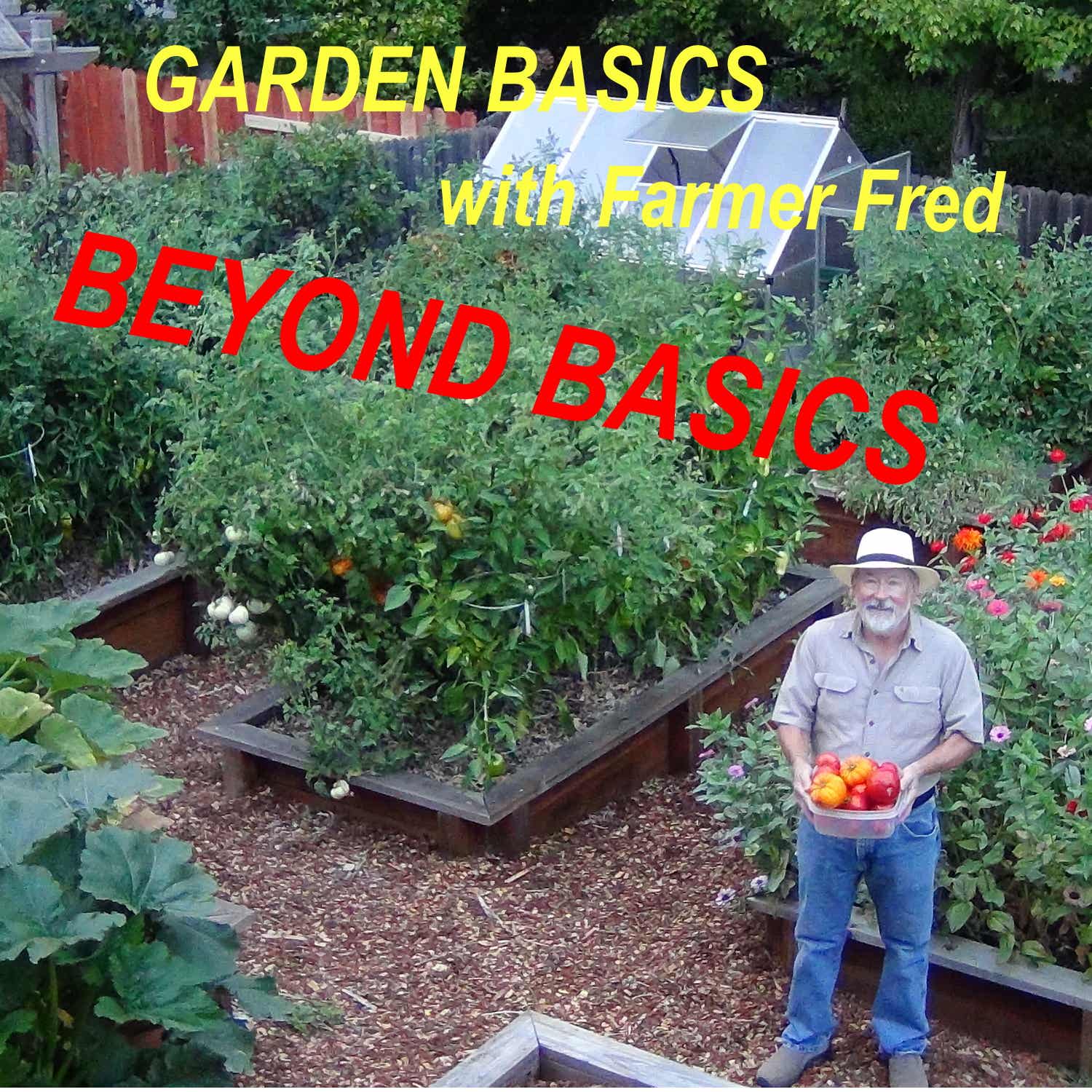
Beyond the Garden Basics
Farmer FredAudio
- Format:
- Podcast
- New episodes:
- Several times a week
- Typical length:
- about 20 minutes
- Latest episode:
About this show
Picking up where the Garden Basics podcast left off.
gardenbasics.substack.com (https://gardenbasics.substack.com?utm_medium=podcast)
Show details and episodes come from the publisher's public feed at api.substack.com. Last updated . Names, artwork and text belong to their publishers.
Recently on this show
Summary of recent episodes, drawn from the publisher's feed.
Beyond the Garden Basics is a gardening podcast from Farmer Fred that picks up where the earlier Garden Basics show left off. Recent episodes cover growing beets and carrots, potato planting problems, indoor citrus, tomato reviews, and mini-pumpkins.
Cosmos
Similar by topic and creator
- The Game with Alex Hormozi
Shares the topics Education and How-To and DIY. - The Caregiver's Journey
Shares the topics Education and How-To and DIY. - BirdNote Daily
Shares the topics Education and How-To and DIY.
Episodes
Growing Sweet Potatoes
· 16 min
Sweet potatoes are one of the most under-appreciated crops you can grow. But it will reward those gardeners who give sweet potatoes what they really need: heat. As you will hear in the podcast with Master Gardener and vegetable expert Gail Pothour, sweet potatoes have some very particular needs. A San Joaquin County (CA) listener wrote in asking how to alleviate the frustration of trying to sprout sweet potato slips from organic potatoes in a cold house in January. That’s the core problem right there — sweet potatoes are tropical plants, closer kin to morning glory than to the white potato, and they simply won’t cooperate without warmth. They’ll sit, sulk, and rot before they ever sprout. The good news is that our region of California is genuinely excellent sweet potato territory. Twenty percent of all commercially grown sweet potatoes in the U.S. come out of Merced County (https://ucanr.edu/sites/default/files/2026-04/anrcatalog%20Sweet%20Potato%20Production%20in%20California%207237.pdf) here in California, so conditions here are about as favorable as it gets. Timing is everything. Don’t rush them into the ground — mid-May is about right, once the soil has had a chance to warm up. Plant slips, not seeds — always buy certified disease-free slips from a reputable nursery or mail-order source. More about creating sweet potato slips, from the Santa Clara Master Gardeners (https://ucanr.edu/site/uc-master-gardeners-santa-clara-county/sweet-potatoes) * To grow your own slips: * Start in February or March. * Fill a shallow container that has drainage holes with moist potting soil. * Nestle in the sweet potato so it is half covered in the soil. Place in a waterproof tray. * Cover to retain humidity and keep it warm. * Remove covering when sprouts appear in 2–4 weeks. * When sprouts are 6 inches long, clip off 1 inch from potato (to prevent possible disease propagation from the mother potato) and plant directly in pots (or root in water then transplant into pots). The Santa Clara Master Gardeners have a video, as well, about creating your own sweet potato slips. Grow in raised beds or ridged rows, about 12 inches apart with three feet between rows. They need room to sprawl. Soil prep matters too. Work in some compost and a light dose of nitrogen before planting, and aim for something loose and sandy — sweet potatoes hate compacted ground. Water consistently for the first few weeks while the vines establish, then ease off. Once they’re growing vigorously, they don’t need much babying. For fertilizer, lean toward something a bit higher in phosphorus and potassium than nitrogen — a 3-4-4 or a 2-2-2 would be ideal. Harvest runs anywhere from 90 to 140 days after transplanting. Watch for the vines to start yellowing — that’s your signal. Don’t wait too long, though. Cold is the enemy at this stage too: roots can suffer damage if temperatures dip below 50 degrees, even briefly. If frost is coming, get them out of the ground and into boxes in a warm, slightly humid spot right away for curing. More about Sweet Potato Curing and Storage From “Growing Sweet Potatoes in the Sacramento Region”: Newly harvested sweet potatoes are not very sweet. They require 1 to 2 months of curing and/or storage before they will develop the sweet, moist taste we expect (part of the starch content turns to sugar). Freshly harvested sweet potatoes can, however, be candied or made into pies. This is a good use for roots that may have been damaged during harvest. Sweet potatoes need to be cured if they are to be stored for long periods. The curing process allows any bruises or blemishes on the thin skin to dry so that rotting in storage is reduced. If the sweet potatoes are not intended for long-term storage, curing is not essential; however, storing freshly-harvested sweet potatoes for several weeks will improve the flavor. After the roots are harvested and thoroughly dry, put them in a warm, humid place (80° to 90°F at 85% relative humidity, if…
Not rated yetMycorrhizal Activity and Your Plants' Health
· 1 hr 23 min
Soil mycorrhizae. What is it? If you’ve seen any of the “Avatar” movies, you would know that James Cameron probably has a good grasp of the subject…and you would have a basic understanding of what we are going to talk about today. Without mycorrhizal activity, there would be very little gardening. To return to the “Avatar” comparison, you know how in those movies, if anyone fell ill or was near death or they needed to call in the National Guard, they could stick a tree root in their ear and they’d get healthy or victorious, and then the movie could have a happy ending? To quote the “Avatar” Wiki: In Avatar, tree roots are critical, bioluminescent conduits for Eywa, Pandora's neural network, allowing Na'vi to connect to their deity and ancestors. Key structures include the Tree of Souls (https://james-camerons-avatar.fandom.com/wiki/Tree_of_Souls) and Tree of Voices (https://james-camerons-avatar.fandom.com/wiki/Tree_of_Voices), featuring complex, willow-like root systems that facilitate tsaheylu (the bond) for communication and data transfer. Can you see mycorrhizae activity? Yes! If you have a microscope: (p.s. “Arbuscular”: Arbuscular mycorrhizal fungi (AMF) are soil fungi (subphylum Glomeromycotina) that form symbiotic relationships with roughly 80% of terrestrial plant species. They colonize plant roots, forming tree-like structures called "arbuscules" inside root cells that act as exchange sites. AMF improve plant uptake of phosphorus, nitrogen, and water, in exchange for plant carbon, increasing plant biomass and stress tolerance.) Aren’t you glad you asked? What about if you turn over the mulch that’s beneath your persimmon tree. Is that white stuff on the bottom of the mulch that’s in contact with the soil…is that mycorrhizae? Short answer: No. Long answer: That white stuff on the bottom of mulch is a decomposing fungi, saprophytic fungi. Saprophytes act as decomposers breaking down dead organic matter, while mycorrhizal fungi form symbiotic partnerships with living plant roots. Falling asleep yet? Here’s Ben Faber, a soil, water, and subtropical crops advisor for the Ventura/Santa Barbara UC Cooperative Extension, with his more astute look at mycorrhizae. This is from his newsletter, “Topics in Subtropics (https://ucanr.edu/blog/topics-subtropics/article/mycorrhizae-underground-support-network-trees)”: Mycorrhizae means fungus (myco) root (rhizae). These root-associated fungi predate the evolution of terrestrial plants, and the partnership with mycorrhizal fungi facilitated the establishment of plants on earth. Mycorrhizae form symbiotic associations with more than 70% of land plants across a broad range of terrestrial ecosystems. Plants supplies mycorrhizae with photo-assimilated carbon in exchange for nutrients and water. This is the definition of a perfect relationship whereby the two sides support each other and have a personal interest at maintaining their counterpart well-being for survival. Once mycorrhizae colonize the host plant, its mycelium can grow over large distances to neighboring plants connecting them together by a common network. This extension of the root network allows plants to acquire water and nutrients (especially nitrogen and phosphorus) far beyond its root zone, rendering plants more resilient to drought and nutrient deficiency. The ability of mycorrhizae to form this underground web also enables the connected plant to communicate with each other through chemical signals and exchange water and nutrients. For example, in forest ecosystems, saplings rely on nutrients and carbon supply from older trees sent through the mycorrhizal network. This underground mycorrhizal web has also great physical properties because they improve the soil structure by forming stable soil aggregates thereby limiting erosion and leaching of nutrients. Today’s podcast features two interviews. The first is with Sacramento County Master Gardener Pat Rosales. We discuss the chances of you buying living…
Not rated yetHow Safe is Rain Barrel Water? When to Plant Warm Season Vegetables and Flowers.
· 15 min
We talk about water safety and rain barrels with Sacramento County Master Gardener and vegetable expert Gail Pothour who swears up and down on her stack of Ruth Stout gardening books that she would NEVER drink water from a rain barrel…nor would she water her edible plants with it. What’s a gardener to do? This is a public episode. If you'd like to discuss this with other subscribers or get access to bonus episodes, visit gardenbasics.substack.com/subscribe (https://gardenbasics.substack.com/subscribe?utm_medium=podcast&utm_campaign=CTA_2)
Not rated yetThe 2026 Tomato Preview Show!
· 59 min
If we sound excited, we are! It’s getting close to tomato planting time! In this week’s podcast and newsletter, Don Shor of Redwood Barn Nursery (https://redwoodbarn.com/) in Davis, CA and I discuss this year’s unusual weather, emphasizing the importance of proper soil temperature and patience when planting. Don shares insights on different tomato varieties, explaining determinate, indeterminate, and heirloom types, alongside effective watering and mulching techniques for possible drought conditions. We offer tips for new gardeners, encouraging variety and restraint in their tomato-growing journey. This is a public episode. If you'd like to discuss this with other subscribers or get access to bonus episodes, visit gardenbasics.substack.com/subscribe (https://gardenbasics.substack.com/subscribe?utm_medium=podcast&utm_campaign=CTA_2)
Not rated yetGrowing Citrus Trees in a Non-Citrus Environment
· 24 min
This is a free preview of a paid episode. To hear more, visit gardenbasics.substack.com (https://gardenbasics.substack.com?utm_medium=podcast&utm_campaign=CTA_7) Farmer Fred interviews horticulturist and commercial citrus grower Lance Walheim about the history and cultivation of citrus fruits, covering varieties, growing tips, pest challenges, and the joys of homegrown citrus.
Not rated yetThe Preserver's Garden
· 30 min
This is a free preview of a paid episode. To hear more, visit gardenbasics.substack.com (https://gardenbasics.substack.com?utm_medium=podcast&utm_campaign=CTA_7) In this podcast episode, I speak with Staci and Jeremy Hill, authors of "The Preserver's Garden," at their 11-acre farm Gooseberry Bridge in the Ozark Mountains. We explore their transition from urban life to sustainable farming, emphasizing self-sufficiency and healthy eating through preserving homegrown food.
Not rated yetWhat is Backyard Orchard Culture?
· 10 min
This is a free preview of a paid episode. To hear more, visit gardenbasics.substack.com (https://gardenbasics.substack.com?utm_medium=podcast&utm_campaign=CTA_7) What is Backyard Orchard Culture? According to Dave Wilson Nursery, (https://www.davewilson.com/home-garden/backyard-orchard-culture/) the goal of Backyard Orchard Culture is the prolonged harvest of tree-ripe fruit from a small space. This means planting close together several fruit varieties that ripen at different times and keeping the trees small by summer pruning. According to today’s podcast guest, Ed Laivo, the backyard garden is not a place for a commercial orchard, where all the fruit and nut trees are planted 20 feet apart and get 20-30 feet tall. For thirty years, Ed has championed the idea that the backyard gardener needs only to grow enough fruit to feed the family, as safely and economically as possible.
Not rated yetStock Tank Gardening
· 7 min
This is a free preview of a paid episode. To hear more, visit gardenbasics.substack.com (https://gardenbasics.substack.com?utm_medium=podcast&utm_campaign=CTA_7) Some passersby or visitors might think you have a yard full of shiny coffins in your front or backyard. OK, using large steel cattle watering troughs as gardening containers might not appeal to those who heed form and design before function. But that staple of rural areas for supplying water to horses, cattle, and sheep is also damn practical for the gardener looking to remain more upright while working with food and flower crops. Opting for watering troughs as large garden containers also helps avoid vexing in-ground soil issues such as perpetually soggy clay soil, rocks, thin soil, as well as soil that might be rife with pests (hello, gophers!) and soil-borne diseases such as verticillium wilt, nematodes, fusarium and more. Besides, you can mute the “coffin comments” by prettying them up…with the right paint. In today’s newsletter podcast, we talk with Sacramento County Master Gardener Gail Pothour about using steel watering troughs as large containers for food and flowers. Not only does she have them in her own yard, she and her fellow Master Gardeners at the vegetable section of the Fair Oaks Horticulture Center in Sacramento County, California are showing visitors their value for growing vegetables, annuals, and perennials. Beyond the paywall in both the podcast and newsletter today, we discuss the benefits and drawbacks of using regular steel and galvanized steel as containers for edible crops. One of the big drawbacks to galvanized steel: the chances of zinc leaching into the soil and into the roots of your plants…and then into you. We will look at the available scientific literature (and there’s not much, really) that discusses the dangers of using a container made from galvanized steel. Also, we will delve into the important topic of how to have easier drainage from containers to avoid standing water. And, from “The Road to Hell is Paved with Good Intentions” Department: what some gardeners do, thinking they are helping the water draining situation, when in reality, they may be creating more problems, causing water to collect in the containers, leading to possible root rot. And, of course, paid subscribers get a transcript of the podcast, corrected by an actual human! Paid subscribers are about to find out if their galvanized stock tanks serving as raised vegetable garden beds are slowly killing them. Don’t be left out!
Not rated yetAll About Grapes
· 10 min
This is a free preview of a paid episode. To hear more, visit gardenbasics.substack.com (https://gardenbasics.substack.com?utm_medium=podcast&utm_campaign=CTA_7) Today’s podcast here on Beyond the Garden Basics is all about grapes. We have two interviews with two Sacramento County UC Master Gardeners, who specialize in grape selection, planting, trellising, feeding, watering, protecting, and harvesting both wine grapes and table grapes. You’re going to discover the best disease and heat resistant varieties, the best tasting grape varieties, and detailed information about pruning both table grapes and wine grapes. And if ever there was a podcast that screamed for pictures, charts, graphics, and more. It’s this one. To the rescue is the original newsletter that contains this podcast, Beyond the Garden Basics, which you can find with an easy search or just to Substack dot com. In the newsletter, we’ll have more explanations about what we talk about in the podcast, including diagrams explaining the various pruning techniques for grapes, best performing grape varieties, and links to grape growing advice from universities throughout the country.
Not rated yetFirst Food Garden? New Garden? We Have Tips.
· 18 min
Please share this with any of your friends or family embarking into the exciting world of backyard gardening, especially starting a food garden! America’s Favorite Retired College Horticultural Professor, Debbie Flower, and I explored these “lessons learned the hard way” (aka “Garden Wisdom”) back in 2022. This is a public episode. If you'd like to discuss this with other subscribers or get access to bonus episodes, visit gardenbasics.substack.com/subscribe (https://gardenbasics.substack.com/subscribe?utm_medium=podcast&utm_campaign=CTA_2)
Not rated yet