
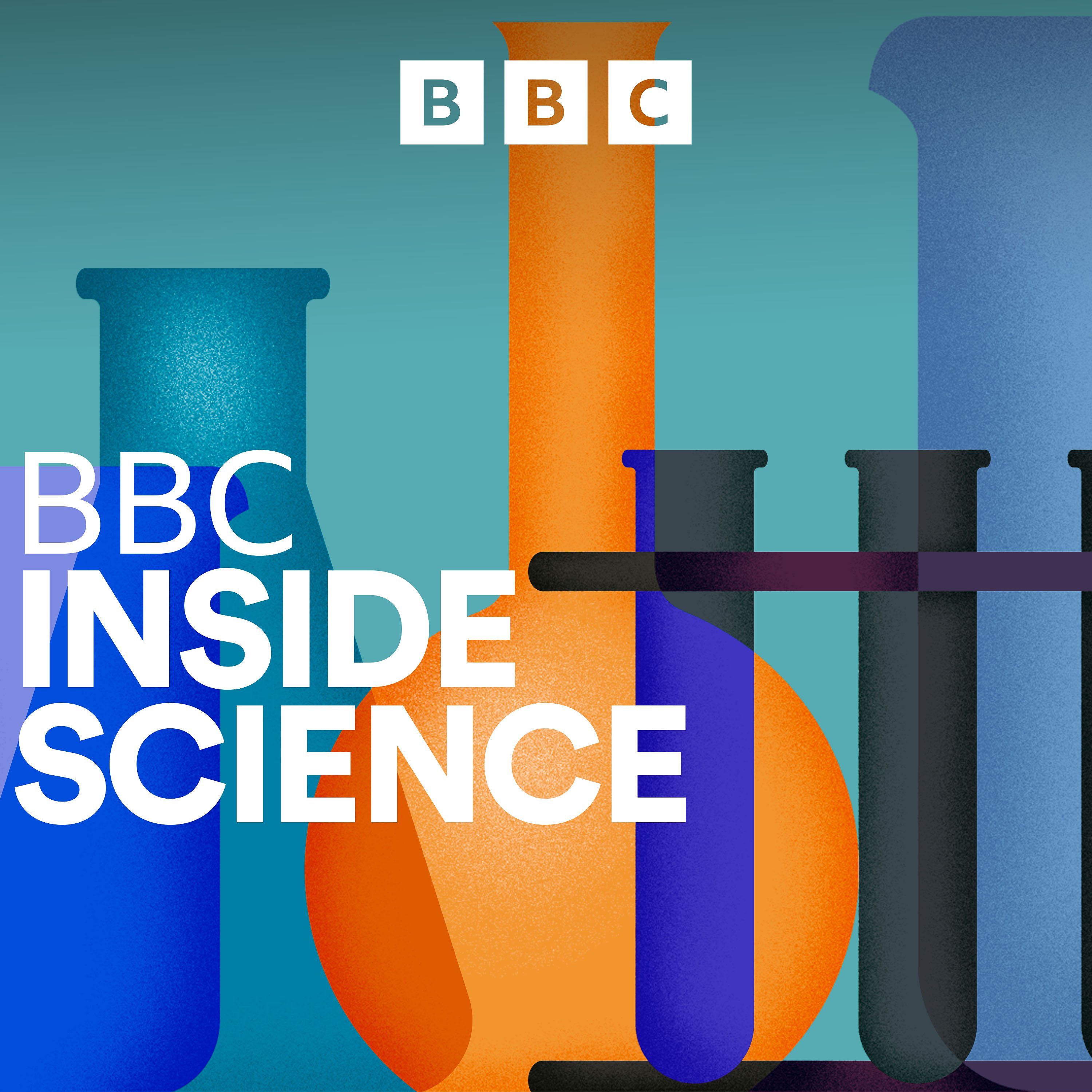
BBC Inside Science
BBC Radio 4Audio
- Format:
- Podcast
- New episodes:
- Weekly
- Typical length:
- about 25 minutes
- Latest episode:
About this show
A weekly programme that illuminates the mysteries and challenges the controversies behind the science that's changing our world.
Covers: science, climate change, physics, artificial intelligence, space exploration, energy policy, mathematics, biodiversity
Show details and episodes come from the publisher's public feed at podcasts.files.bbci.co.uk. Last updated . Names, artwork and text belong to their publishers.
Recently on this show
Summary of recent episodes, drawn from the publisher's feed.
BBC Inside Science, a BBC Radio 4 podcast, explores scientific mysteries and debates shaping the world today. Recent episodes cover China's climate emissions, the zeptoverse, whether AI can complete mathematics, and upgrades to CERN's Large Hadron Collider.
Cosmos
Similar in subject
- World Science Festival
Both cover: mathematics, physics, science - Shirtloads of Science
Both cover: physics, space exploration, science - The Quanta Podcast
Both cover: mathematics, physics, science
Similar shows
- Daniel and Kelly’s Extraordinary Universe
- The Joy of Why
- Quirks and Quarks
- Hoos in STEM
- Dr. Starkid
- New Scientist
- Sustainability, Climate Change, Renewable Energy, Politics, Activism, Biodiversity, Carbon Footprint, Wildlife, Regenerative Agriculture, Circular Economy, Extinction, Net-Zero · One Planet Podcast
- Sabine Hossenfelder




Explore more
Episodes
Where do forever chemicals come from?
· 26 min
This week the UK Government decided it was worried enough about so called ‘forever chemicals’ to bring in it’s first ever plan to tackle them. Environment Minister Emma Hardy called PFAS "one of the most pressing chemical challenges of our time". Stephanie Metzger, policy adviser at the Royal Society of Chemistry talks us through where all these chemicals have come from, and Lucy Hart, researcher at Lancaster university, brings us new science on their sources. Technology journalist Gareth Mitchell is in the studio with his take on this week’s brand new discoveries. And as future winter Olympians ready themselves atop Italy’s snow-covered peaks, Victoria Gill hears how the chemical make up of ski wax can make or break a gold medal winning run. She hears from Jostein Vinjerui, manager of the British cross-country team, and Pat Sharples, Head Coach for GB Snowsports. To discover more fascinating science content, head to bbc.co.uk, search for BBC Inside Science and follow the links to The Open University. Presenter: Victoria Gill Producer: Alex Mansfield, Katie Tomsett, Kate White and Clare Salisbury Editor: Martin Smith Production Co-ordinator: Jana Bennett-Holesworth
Not rated yetShould we rethink navigating by GPS?
· 26 min
This week 14 European countries warned that “maritime safety and security” was being put in jeopardy by Russian interference. The Royal Institute of Navigation says GPS is so vulnerable to so called ‘spoofing’ and ‘jamming’ that we need to rethink the navigation systems on which shipping relies. Tom Whipple speaks to Ramsey Faragher, CEO of the Institute. Something else with the potential to affect navigation systems are solar storms. Tom visits Professor Tim Horbury and Helen O’Brien at Imperial College London whose instrument strapped to the Solar Orbiter probe, and speeding through space, is giving us more warning about solar activity which could affect us here on earth. And science journalist Caroline Steel brings you the latest scientific research. To discover more fascinating science content, head to bbc.co.uk, search for BBC Inside Science and follow the links to The Open University.
Not rated yetHow is air travel returning to supersonic speeds?
· 26 min
It’s exactly half a century since two Concorde jets took off from Paris and London respectively. The supersonic jet would come to define top end luxury travel. But Concorde has also been retired for nearly half that time, famously making its final flight to Bristol, UK where it was built, in 2003. What is Concorde’s engineering legacy? And will supersonic speeds ever be a reality for air travellers again? Tom Whipple is at Aerospace Bristol, back on-board Concorde which these days is stowed safely in its hangar. He meets Concorde’s former Chief Engineer John Britton. He also hears what it will take to overcome the engineering challenges of supersonic flight from Dr Kshitij Sabnis, lecturer in Aerospace Engineering at Queen Mary University of London. And speaks to founder and CEO of US start up Boom Supersonic Blake Scholl who wants to make supersonic air travel accessible to all. To discover more fascinating science content, head to bbc.co.uk, search for BBC Inside Science and follow the links to The Open University. Presenter: Tom Whipple Producer: Tim Dodd, Kate White, Clare Salisbury Editor: Martin Smith Production Co-ordinator: Jana Bennett-Holesworth
Not rated yetWhy is Nasa sending people around the moon?
· 26 min
The space science world is buzzing. In the next few days, NASA is expected to begin the rollout of its Artemis II rocket to the launch pad with the launch itself expected as early as February. Science journalist Jonathan Amos explains why NASA is interested in travelling around the moon now? And what we will learn from sending humans further into space than ever before. Penny Sarchet, Managing Editor at New Scientist brings Tom Whipple her pick of the best new science this week. And why are scientists shipping ice cores from around the world to a frozen cave in Antarctica? Dr Liz Thomas, head of ice core research at the British Antarctic Survey explains the science behind the Ice Memory Sanctuary as it officially opens. To discover more fascinating science content, head to bbc.co.uk, search for BBC Inside Science and follow the links to The Open University. Presenter: Tom Whipple Producer: Kate White, Katie Tomsett, Tim Dodd and Clare Salisbury Editor: Martin Smith Production Co-ordinator: Jana Bennett-Holesworth
Not rated yetHow rare are Greenland’s rare earth elements?
· 26 min
President Trump has his sights set on Greenland. If he succeeds, what mineral wealth will he find there? Adrian Finch, Professor of Geology at St Andrews University has been visiting Greenland for more than 3 decades and explains what so called ‘rare earth elements’ are found in Greenland and why. Professor Danny Altmann talks to Tom Whipple about a new project to understand the genetic and metabolic similarities between two illnesses; Long Covid and ME. And Lizzie Gibney, senior physics reporter at Nature brings her pick of the best new science this week. To discover more fascinating science content, head to bbc.co.uk, search for BBC Inside Science and follow the links to The Open University. Presenter: Tom Whipple Producer: Clare Salisbury Editor: Martin Smith Production Co-ordinator: Jana Bennett-Holesworth
Not rated yetHow did President Trump transform science in 2025?
· 26 min
This week President Trump’s director of the Office of Management and Budget announced that a major climate research centre would be broken up. 2025 has brought a wave of reorganisations and funding cuts, reshaping the ways science is done in the USA. Veteran science journalist Roland Pease tells us whether we’re starting to see the impacts. Victoria Gill gets a subterranean tour of Finland’s new nuclear waste disposal facility. It’s the first country in the world to get one and the UK are interested in learning how they did it. Victoria is also joined by science journalist Caroline Steel to talk about this week in science research. And 40 years ago, Dian Fossey was murdered at her home in Rwanda where she had spent decades studying mountain gorillas. Gilly Forrester, Professor of Comparative Cognition at the University of Sussex talks about why the data collected from Dian’s ‘gorillas in the mist’ continues to shape science today. To discover more fascinating science content, head to bbc.co.uk search for BBC Inside Science and follow the links to The Open University. Presenter: Victoria Gill Producers: Clare Salisbury, Kate White and Tim Dodd Editor: Martin Smith Production Co-ordinator: Jana Bennett-Holesworth
Not rated yetWould our ancestors have benefited from early neanderthals making fire?
· 26 min
400 thousand years ago our early human cousins dropped a lighter in a field in the East of England; evidence that was uncovered this week and suggests that early neanderthals might have made fire 350 thousand years earlier than we previously thought. Dr Rebecca Wragg Sykes is honorary researcher at the universities of Cambridge and Liverpool and author of Kindred: Neanderthal Life, Love, Death and Art. She explains what this new discovery could mean for our own ancestors. Should we genetically modify our farmed salmon to prevent it breeding with their wild relatives? Dr William Perry from Cardiff University thinks this could help the endangered wild Atlantic salmon recover it’s numbers. And Lizzie Gibney, Senior Physics Reporter at Nature joins Tom Whipple to dig into the new science released this week. Think you know space? Head to bbc.co.uk, search for BBC Inside Science, and follow the links to the Open University to try The Open University Space Quiz.
Not rated yetA 'functional' cure for HIV?
· 26 min
Almost 40 years ago, the first treatment was approved for HIV, but it came with a warning: “This is not a cure.” On the week of World AIDS Day, Kate Bishop, principal group leader at the Francis Crick Institute, tells us how science may now have finally found a “functional” cure for the virus that causes AIDS. How are tree rings, volcanoes, trade routes and Europe’s deadly Black Death pandemic connected? Professor Ulf Büntgen from the University of Cambridge explains how matching tree ring data with historical records shows that Italian city-states importing grain accidentally introduced the Black Death to Europe. Plus science broadcaster Caroline Steel is in the studio to discuss her favourite new scientific discoveries. To discover more fascinating science content, head to bbc.co.uk search for BBC Inside Science and follow the links to The Open University. Presenter: Tom Whipple Producers: Jonathan Blackwell, Ella Hubber, Tim Dodd, Alex Mansfield, and Hannah Fisher Editor: Martin Smith Production Co-ordinator: Jana Bennett-Holesworth
Not rated yetWhy aren’t gene therapies more common?
· 26 min
This week, a world first gene therapy treats rare Hunter syndrome. Could these personalised medicines be used more widely? We speak to Claire Booth, professor in Gene Therapy at Great Ormond Street Hospital. And high in the Chilean desert, the last bit of 13 billion year old light has hit the mirror of the Atacama Cosmology Telescope for the last time. Dr Jenifer Millard, a science communicator and host of the Awesome Astronomy podcast, tells us what it’s been up to for the past 20 years. And Penny Sarchet, managing editor at New Scientist brings her pick of the latest new discoveries. Think you know space? Head to bbc.co.uk, search for BBC Inside Science, and follow the links to the Open University to try The Open University Space Quiz. Presenter: Tom Whipple Producers: Alex Mansfield, Ella Hubber, Jonathan Blackwell, Tim Dodd and Clare Salisbury Editor: Martin Smith Production Co-ordinator: Jana Bennett-Holesworth
Not rated yetWhat’s in the wording of the COP 30 negotiations?
· 26 min
COP 30 delegates from around the globe are about to depart the Amazon city of Belem in Brazil. But not before some very important documents are drawn up. Camilla Born, former advisor to Cop 26 president Alok Sharma speaks to Tom Whipple about the scientific significance of the language negotiators choose to use. And it’s the eve of The Ashes. As England Men’s Cricket Team line up against their Australian counterparts in Perth, cricket fans on both sides will be hoping for sporting records to fall. But is breaking those records getting increasingly less likely? And can some maths explain all? Tom asks Kit Yates, author and Professor of Mathematical Biology and Public Engagement at the University of Bath. Plus science broadcaster Caroline Steel is in the studio to discuss this week’s brand new scientific discoveries. If you want to test your climate change knowledge, head to bbc.co.uk search for BBC Inside Science and follow the links to The Open University to take the quiz. Presenter: Tom Whipple Producers: Jonathan Blackwell, Ella Hubber, Tim Dodd, Alex Mansfield and Clare Salisbury Editor: Martin Smith Production Co-ordinator: Jana Bennett-Holesworth
Not rated yet