

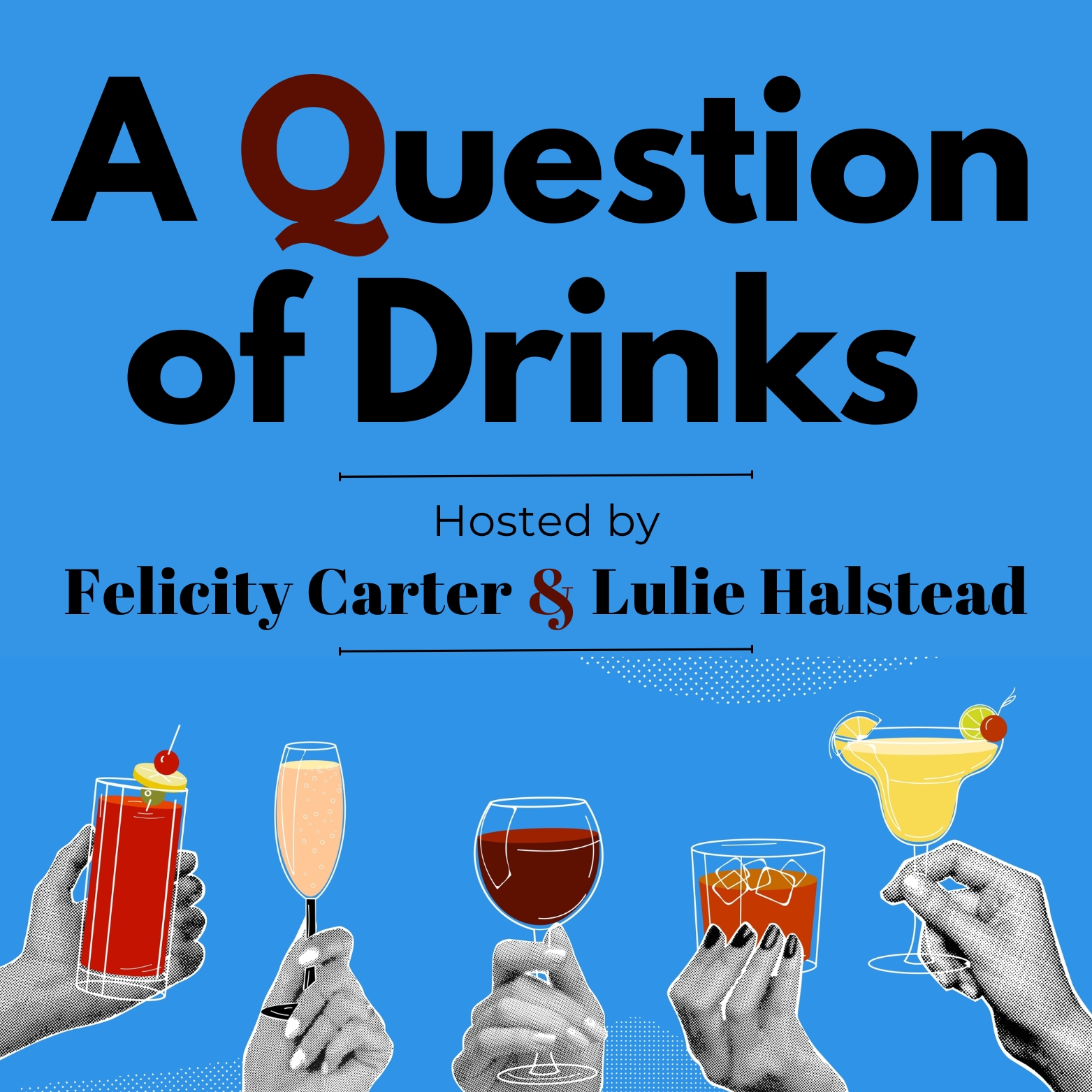
A Question of Drinks
Felicity Carter and Lulie HalsteadAudio
- Format:
- Podcast
- New episodes:
- Every two weeks
- Typical length:
- about 50 minutes
- Latest episode:
About this show
Why do we drink what we do? Is it just the taste — or are there other drivers behind what's on the shelf? Drinks data expert Lulie Halstead joins writer and editor Felicity Carter to explore the economic, technological and social turning points that determine what's in the glass.
Covers: alcohol industry, wine industry, drinks marketing, moderation trends, non-alcoholic drinks, consumer behaviour, brand strategy, drinks history
Show details and episodes come from the publisher's public feed at feeds.castos.com. Last updated . Names, artwork and text belong to their publishers.
Recently on this show
Summary of recent episodes, drawn from the publisher's feed.
A Question of Drinks is a podcast where drinks data expert Lulie Halstead and writer Felicity Carter examine why people drink what they do, looking at economic, technological and social forces. Recent episodes cover drinks for doomsday preparation, the spread of the Aperol spritz, and wine's declining consumption.
Cosmos
Similar in subject
- VinePair Podcast
Both cover: drinks marketing, alcohol industry - True Mocktails
Both cover: drinks history
Similar shows



Explore more
Episodes
Ep 19: The 5 Psychological Traps Dominating Your Liquor Cupboard
· 37 min
Lulie and Felicity put out a plea on social media — “Tell us what’s in your drinks cabinet” — and discovered a whole world of crimes against taste. Sweet, creamy liqueurs dominated the offerings (Baileys, Advocat, and even a banana liqueur with holiday PTSD), alongside objects of pride like single malt and bourbon that get opened but never finished. There was plenty of Sherry, Muscat and half-dead whites lurking in the name of “cooking” while the global curios proved that even the most discerning consumer can get suckered by duty free. Researcher Lulie revealed the five drivers of the drinks cabinets, from the endowment effect and sunk-cost fallacy to identity signalling, magical thinking about future selves and sacralisation. Along the way we got into the Baileys origin story, why Advocat is basically alcoholic custard with 140g sugar/litre, and a simple cocktail framework that rescues strays without requiring a degree in bartending. It’s confession, anthropology, and behavioural science in one tidy purge. You’ll never look at crème de menthe the same way again. Meet Your Hosts: Lulie Halstead founded and led international consumer research and strategy consultancy Wine Intelligence, and led it to a successful PE exit. Today she is a renowned global beverage alcohol and wine sector specialist, focused on consumer behaviour, strategy, retail and hospitality. An accomplished keynote speaker, she has spoken at more than 70 international events over the past 20 years. Felicity Carter is an award-winning wine and drinks journalist, editor and content strategist. She led Meininger’s Wine Business International to become the world’s most must-read wine trade magazine, and was founding Executive Editor of The Drop/Pix, which the Wall Street Journal named one of the most trusted sources of wine information. A regular keynote speaker, she was named a 2024 Industry Leader by WineBusiness Monthly.
Not rated yetEp 18: Why the Reign of Red Wine Is Ending
· 48 min
Why is it red wine that accrues all the prestige? Is this because red wine is better — or for a historic reason? Felicity and Lulie dig into this mystery and discover that red wine’s prestige didn’t come from taste alone, but from logistics, trade, and the infrastructure that developed around red wines — merchants, classifications, and long-distance shipping. Red’s ability to age made it tradable and collectible, creating a system of status and expertise that white wines couldn’t match. We trace this history through Bordeaux’s port advantage, Burgundy’s influence, and Italy’s late pivot from bulk production. Riesling’s boom-and-bust cycle shows how fragile reputations can be when they depend on markets and laws rather than inherent quality. We also look at the technologies that are reshaping the hierarchy. Cool fermentation, stainless steel, sulfur management, screw caps, and cold-chain logistics have given whites new aging potential, just as consumer tastes shift toward freshness and chillable styles. Bourdieu’s sociology explains how prestige is socially constructed and maintained, while colour psychology reveals how strongly hues influence perception — even leading to the oddity of blue wine. Finally, we explore China’s move from gifting reds, where colour symbolised luck, to a growing preference for whites, alongside rosé’s celebrity-driven rise. The conversation ends by asking whether prestige still lies in the glass or mostly in the stories we tell around it. Meet Your Hosts: Lulie Halstead founded and led international consumer research and strategy consultancy Wine Intelligence, and led it to a successful PE exit. Today she is a renowned global beverage alcohol and wine sector specialist, focused on consumer behaviour, strategy, retail and hospitality. An accomplished keynote speaker, she has spoken at more than 70 international events over the past 20 years. Felicity Carter is an award-winning wine and drinks journalist, editor and content strategist. She led Meininger’s Wine Business International to become the world’s most must-read wine trade magazine, and was founding Executive Editor of The Drop/Pix, which the Wall Street Journal named one of the most trusted sources of wine information. A regular keynote speaker, she was named a 2024 Industry Leader by WineBusiness Monthly.
Not rated yetEp 17: Why Does Natural Wine Make Some People So Angry?
· 47 min
Natural wine has attracted vitriol, mean-spirited editorials and plenty of controversy. One of our listeners wrote in to ask why all the angst, and the hosts use it as a springboard to map the movement’s rise, backlash, and commercial co-option. Felicity sketches the history from Beaujolais and the “Gang of Four,” through the Parker era reaction, NOMA’s catalytic influence, and the media flashpoints that framed natural wine as an oppositional identity. Lulie and Felicity also define what natural wine is, how it’s produced and the role of additives like sulphur dioxide. And they also discuss consumer perceptions and how consumer psychology can harden snap judgements into prejudice. They then stress-test today’s narratives, from the beginning of the movement to today. Verdict: the movement reshaped wine culture and writing, but its successes and excesses now coexist. Better farming and more experimental styles on one side, muddled claims and unpredictable quality on the other. Meet Your Hosts: Lulie Halstead founded and led international consumer research and strategy consultancy Wine Intelligence, and led it to a successful PE exit. Today she is a renowned global beverage alcohol and wine sector specialist, focused on consumer behaviour, strategy, retail and hospitality. An accomplished keynote speaker, she has spoken at more than 70 international events over the past 20 years. Felicity Carter is an award-winning wine and drinks journalist, editor and content strategist. She led Meininger’s Wine Business International to become the world’s most must-read wine trade magazine, and was founding Executive Editor of The Drop/Pix, which the Wall Street Journal named one of the most trusted sources of wine information. A regular keynote speaker, she was named a 2024 Industry Leader by WineBusiness Monthly.
Not rated yetSummer Repeat: Why Isn't There More Wine In Small Bottles? (Or Cans?)
· 55 min
While Lulie and Felicity are busy writing the scripts for the new episodes, here's a repeat of one of our most downloaded episodes to date, asking that all-important question of why you can only get wine in big formats. If everybody is moderating their wine intake, then how come there aren’t more small wine bottles on the shelf? And what would it take to put them there? In this episode of A Question of Drinks, join hosts Lulie Halstead and Felicity Carter as they explore why wine continues to be sold in those standard 750ml bottles. And who decided it should be 750 ml in the first place? Come on a journey into wine history, into a world of glass blowers, Biblical figures, show-offs and vending machines. Along the way the hosts explore bag-in-box, aluminium cans, and whether there’s really a bottle called the Goliath or whether it’s just an urban myth. Meet Your Hosts: Lulie Halstead founded and led international consumer research and strategy consultancy Wine Intelligence, and led it to a successful PE exit. Today she is a renowned global beverage alcohol and wine sector specialist, focused on consumer behaviour, strategy, retail and hospitality. An accomplished keynote speaker, she has spoken at more than 70 international events over the past 20 years. Felicity Carter is an award-winning wine and drinks journalist, editor and content strategist. She led Meininger’s Wine Business International to become the world’s most must-read wine trade magazine, and was founding Executive Editor of The Drop/Pix, which the Wall Street Journal named one of the most trusted sources of wine information. A regular keynote speaker, she was named a 2024 Industry Leader by WineBusiness Monthly.
Not rated yetSummer Repeat: The Unstoppable Rise and Rise of Rosé Wine
· 51 min
Lulie and Felicity are going on holiday! And so have re-uploaded one of our most commented-upon episodes, for new listeners. Pink wine is everywhere. On supermarket shelves, on Instagram, and clutched in the hands of celebrities. If there is a single defining wine of the 21st Century, it has to be rosé. How did this pink wine go from being considered an icon of 70s kitsch to a celebrity diva? In this episode of Drinks Insider, hosts Lulie Halstead and Felicity Carter delve into the fascinating world of rosé wine, looking at the economic, social, and technological forces that have made rosé wine such a hit. From novel cooling systems to Instagram, the story of rosé is one of quirky changes that have had major consequences. Tracing the story from Portugal to Provence to the world, this is a story about how and why rosé became an unstoppable trend. [00:05:28] Is the rosé wine boom here to stay — or just a fad? [00:13:00] The surprising truth about global rosé consumption [00:18:17] How changes in technology led to the unstoppable rise of rosé [00:27:12] The role of Provence [00:35:06] How Instagram fuelled a wine boom Got a question for us? Email us at aquestionofdrinks@gmail.com and it might just become our next episode. Meet Your Hosts: Lulie Halstead founded and led international consumer research and strategy consultancy Wine Intelligence, and led it to a successful PE exit. Today she is a renowned global beverage alcohol and wine sector specialist, focused on consumer behaviour, strategy, retail and hospitality. An accomplished keynote speaker, she has spoken at more than 70 international events over the past 20 years. Felicity Carter is an award-winning wine and drinks journalist, editor, speaker trainer and content strategist. She led Meininger’s Wine Business International to become the world’s most must-read wine trade magazine, and was founding Executive Editor of The Drop/Pix, which the Wall Street Journal named one of the most trusted sources of wine information. A regular keynote speaker, she was named a 2024 Industry Leader by WineBusiness Monthly.
Not rated yetEp 16: How Do Celebrities Influence What We Drink?
· 54 min
Celebrity drinks are nothing new — they’ve been around for the past couple of centuries. But today’s star-backed bottles are more strategic than ever, blending personal branding with product placement. In this episode we look at where the phenomenon started, the different ways celebrities attach themselves to drinks, and the very real influence they can have on whole categories — for better or worse. We pull apart the success stories of Casamigos, Aviation Gin, and Miraval, and contrast them with high-profile disasters like Trump Vodka and the Bud Light backlash. Along the way we unpick why some famous faces fit perfectly with their chosen tipple while others misfire badly, and how audience perception, authenticity, and timing determine whether a brand becomes a category leader or a cautionary tale. Expect historic gossip, marketing missteps, and the occasional marketing masterstroke as we ask the question: when you buy a celebrity drink, are you buying a great product or just the story on the label? 08:38 Roman vineyards and medieval popes as early examples of celebrity-linked wine. 10:43 The halo effect and why famous names can boost perceived quality. 12:49 Lily Langtry’s 19th-century California wine parties as a precursor to modern celebrity branding. 14:49 Defining celebrity in the modern age and how fame can be manufactured. 20:24 The three main types of celebrity drinks involvement — founder, co-creator, and endorser. 26:58 How Casamigos tequila and Aviation Gin boosted their categories before selling for huge sums. 28:28 Brad Pitt and Angelina Jolie’s Miraval and its role in premiumising rosé. 31:00 The Trump Vodka catastrophe. 34:37 The Bud Light disaster, a horror show in slow motion. Got a question for us? Email us at aquestionofdrinks@gmail.com and it might just become our next episode. Meet Your Hosts: Lulie Halstead founded and led international consumer research and strategy consultancy Wine Intelligence, and led it to a successful PE exit. Today she is a renowned global beverage alcohol and wine sector specialist, focused on consumer behaviour, strategy, retail and hospitality. An accomplished keynote speaker, she has spoken at more than 70 international events over the past 20 years. Felicity Carter is an award-winning wine and drinks journalist, editor, speaker trainer and content strategist. She led Meininger’s Wine Business International to become the world’s most must-read wine trade magazine, and was founding Executive Editor of The Drop/Pix, which the Wall Street Journal named one of the most trusted sources of wine information. A regular keynote speaker, she was named a 2024 Industry Leader by WineBusiness Monthly.
Not rated yetEp 15: Why Do Holidays Change the Flavour of Wine?
· 56 min
Why does the same wine taste magical on holiday but boring when you open it at home? Felicity and Lulie unpack the fascinating mix of physiology, psychology, and culture that shapes our experience of flavour. From the mechanics of taste buds and retronasal smell to the cultural lexicons we use to describe flavour, they reveal why context is as important as chemistry. Drawing on cutting‑edge research in sensory science, food psychology, and wine training, the hosts explore everything from genetic taste differences and airline wine selection to the role of branding, price, and expectation. If you’ve ever wondered why that charming wine you bought on holiday disappoints in your kitchen (or why wine critics sometimes seem to be speaking a different language), this episode explains why. - Taste is only about 20% tongue and 80% aroma, thanks to retronasal smell. - Our brains struggle to name aromas because smell evolved before language. - Genetic differences mean some people can’t detect key wine aromas, like violets. - Chinese wine drinkers describe flavours with culturally familiar terms, not Western fruits. - Super tasters experience bitterness more intensely but aren’t automatically better at wine tasting. - Training doesn’t give you more taste buds; it tunes your brain to notice relevant aromas. - Experiments show the same wine tastes “better” if presented as expensive. - Airline wine service adapts to taste dulling at altitude with bold, balanced styles. - Branding, labelling, and even background music measurably alter taste perception. - Wine quality is real, but our experience of it is filtered through mood, culture, and expectation. Developing a Chinese lexicon for wine: https://marketingscience.info/wine/trade-articles/developing-chinese-lexicon-wine/ Got a question for us? Email us at aquestionofdrinks@gmail.com and it might just become our next episode. Meet Your Hosts: Lulie Halstead founded and led international consumer research and strategy consultancy Wine Intelligence, and led it to a successful PE exit. Today she is a renowned global beverage alcohol and wine sector specialist, focused on consumer behaviour, strategy, retail and hospitality. An accomplished keynote speaker, she has spoken at more than 70 international events over the past 20 years. Felicity Carter is an award-winning wine and drinks journalist, editor, speaker trainer and content strategist. She led Meininger’s Wine Business International to become the world’s most must-read wine trade magazine, and was founding Executive Editor of The Drop/Pix, which the Wall Street Journal named one of the most trusted sources of wine information. A regular keynote speaker, she was named a 2024 Industry Leader by WineBusiness Monthly.
Not rated yetEp 14: Is Gen Z Giving Up On Alcohol? Part 2
· 48 min
In this episode of A Question of Drinks, Felicity and Lulie continue their deep dive into Gen Z drinking habits. Is this generation truly rejecting alcohol — or are they just broke? Leaving no stone unturned, they dissect commercial reports from Barclays, Rabobank, and IWSR, comparing them with public health research that claims Gen Z is fundamentally different from previous generations. Discover how social media, economic pressures, and delayed adulthood are shaping drinking patterns. From Tinto de Verano cocktails made with cheap Pinot Noir to boarding school rebellions and prawn cocktail crisps, this episode blends hard data with sharp conversation. The hosts discuss: - Whether social media is replacing alcohol’s social utility - Why underage drinking has plummeted - How economic models predict future alcohol growth - The difference between moderation trends in Gen Z vs boomers - Why brands must stop treating Gen Z as a monolith Join Felicity and Lulie as they ask: Is the drinks industry doomed or simply changing shape? In this episode: 04:43 Gen Z alcohol decline described as a long-term cultural shift 05:46 Alcohol losing its use as a tool of rebellion for Gen Z 12:50 Social media driving Gen Z to self-monitor and reduce drinking 15:10 Social media replacing alcohol’s role in making it easier to meet people 16:02 Asahi CEO links alcohol decline to rise of digital entertainment 21:04 Barclays predicts Gen Z alcohol spend will rise with disposable income 22:58 Rabobank says Gen Z drinks less not because they’re worried about health, but because they’re broke 31:00 IWSR data shows Gen Z alcohol consumption rebounding post-pandemic 34:44 Gen Z prefers temporary abstinence over long-term reduction 47:47 But it’s possible the cultural meaning of alcohol is changing despite sales data Got a question for us? Email us at aquestionofdrinks@gmail.com and it might just become our next episode. Meet Your Hosts: Lulie Halstead founded and led international consumer research and strategy consultancy Wine Intelligence, and led it to a successful PE exit. Today she is a renowned global beverage alcohol and wine sector specialist, focused on consumer behaviour, strategy, retail and hospitality. An accomplished keynote speaker, she has spoken at more than 70 international events over the past 20 years. Felicity Carter is an award-winning wine and drinks journalist, editor, speaker trainer and content strategist. She led Meininger’s Wine Business International to become the world’s most must-read wine trade magazine, and was founding Executive Editor of The Drop/Pix, which the Wall Street Journal named one of the most trusted sources of wine information. A regular keynote speaker, she was named a 2024 Industry Leader by WineBusiness Monthly.
Not rated yetEp 13: Is Gen Z Really So Different When It Comes to Alcohol? Part 1
· 48 min
It’s the question of the moment: why is Gen Z drinking less alcohol? Academics are wondering, banks are wondering, and the drinks trade doesn’t know what to think. In the first episode of a two-part deep dive, Felicity and Lulie tackle this hotly debated question head one. In Part One, they examine a major new academic study, Young People, Alcohol and Risk: A Culture of Caution, which argues that Gen Z's attitudes to alcohol mark a generational shift, not just a life stage delay. From risk-aversion to the rise of the Clean Girl Aesthetic, this episode explores what might be behind the dramatic fall in drinking across high-income countries — and whether it's really as new as people think. Along the way, expect Lidl wine tastings, boxing metaphors, rage-baiting influencers, and a brief moment of intergenerational defensiveness. This episode covers: - A major new academic study argues that Gen Z is fundamentally different from previous generations in how they perceive alcohol. - The clash between cohort theory (generational difference) and life stage theory (age-based behaviour). - Who is Gen Z? Two sub-groups are defined: those born 1995–2002 and those born 2002–2012, with markedly different digital and social upbringings. - An overview of the level of fall in high-income countries like Australia, Sweden, and the UK, with researchers linking this to cultural change. - The role of risk aversion as the defining trait of Gen Z. - The rise of the “clean girl” aesthetic and Trad Wife content points to a cultural pull toward order, discipline, and nostalgia. - Gen Z is also more emotionally distressed than earlier cohorts, with higher rates of anxiety and depression shaping lifestyle decisions. - The study finds that Gen Z often views intoxication as inauthentic, with alcohol seen as a way to mask the ‘real self.’ - While individual behaviour varies, the academic consensus is that this generation’s ambivalence toward alcohol reflects deeper structural shifts. - Lulie has questions about all of this. Big questions. Got a question for us? Email us at aquestionofdrinks@gmail.com and it might just become our next episode. Meet Your Hosts: Lulie Halstead founded and led international consumer research and strategy consultancy Wine Intelligence, and led it to a successful PE exit. Today she is a renowned global beverage alcohol and wine sector specialist, focused on consumer behaviour, strategy, retail and hospitality. An accomplished keynote speaker, she has spoken at more than 70 international events over the past 20 years. Felicity Carter is an award-winning wine and drinks journalist, editor, speaker trainer and content strategist. She led Meininger’s Wine Business International to become the world’s most must-read wine trade magazine, and was founding Executive Editor of The Drop/Pix, which the Wall Street Journal named one of the most trusted sources of wine information. A regular keynote speaker, she was named a 2024 Industry Leader by WineBusiness Monthly.
Not rated yetEp 12: Lies on the Label and Other Wine Crimes
· 1 hr 3 min
Felicity and Lulie investigate the murky world of wine and spirits fraud — from harmless fakes to lethal counterfeits. They start with historic wine scandals that rocked Austria and Italy in the 1980s, where illicit additives led to injury and even death. From there, they explore the modern world of counterfeiting: billionaires tricked by fake Romanée-Conti, questionable Thomas Jefferson bottles, and the infamous case of Rudy Kurniawan, whose kitchen doubled as a counterfeit factory. Lulie introduces her framework for understanding deception in drinks — “fake, fraud or faux” — and the duo discuss how fakes can turn up anywhere, as in the case of $10,000 fake whisky served in a luxury Swiss hotel. Also covered: - Counterfeit bulk wine sold as French - The Gallo Pinot Noir scandal - Methanol poisoning in Southeast Asia - Why counterfeit spirits can blind or kill - Efforts to authenticate bottles using technology and carbon dating - How fake wine might still be sitting in collections around the world Plus: undercover sommeliers, Elvis impersonators, and cheap wine confessions. Got a question for us? Email us at aquestionofdrinks@gmail.com and it might just become our next episode. Please note: the story of the Jefferson bottles and Hardy Rodenstock is covered in public record sources including The Billionaire’s Vinegar. No assertion is made about events not publicly documented. Meet Your Hosts: Lulie Halstead founded and led international consumer research and strategy consultancy Wine Intelligence, and led it to a successful PE exit. Today she is a renowned global beverage alcohol and wine sector specialist, focused on consumer behaviour, strategy, retail and hospitality. An accomplished keynote speaker, she has spoken at more than 70 international events over the past 20 years. Felicity Carter is an award-winning wine and drinks journalist, editor, speaker trainer and content strategist. She led Meininger’s Wine Business International to become the world’s most must-read wine trade magazine, and was founding Executive Editor of The Drop/Pix, which the Wall Street Journal named one of the most trusted sources of wine information. A regular keynote speaker, she was named a 2024 Industry Leader by WineBusiness Monthly.
Not rated yetEp 11: Who Really Invented Champagne?
· 1 hr 0 min
In this fizz-filled episode of A Question of Drinks, Felicity Carter and Lulie Halstead investigate one of the wine world’s most persistent myths: who really invented Champagne? Was it Dom Pérignon, as the marketing legends claim — or were British scientists and merchants bottling bubbly decades earlier? Expect exploding bottles, legal firestorms, Russian oligarchs, Stalinist innovation, and a blind tasting study that might permanently change how you see cheap sparkling wine. What we cover: - The overlooked role of English scientist Christopher Merret (1662) in documenting secondary fermentation. - Why British coal-fired glass furnaces mattered more than French monks. - How Champagne marketing reinvented history and created global brand dominance. - The 1911 Champagne riots and how they shaped today’s AOC protections. - Champagne Jane vs. the CIVC: When trade protection becomes personal. - Why Californian 'Champagne' still exists — and the legal loophole keeping it alive. - What really happened when Belgian customs seized Gallo André 'Champagne' on its way to Nigeria. - Stalin’s role in democratising sparkling wine. - Consumer preferences: Do drinkers actually like Champagne best? - Sugar, calories, and labelling. Plus: - Lulie tastes Chinese wine in Hong Kong. - Felicity finally tries Guinness (but did she like it?). - Australia goes soft, with Wagyu for dogs and "Paw-kies" on menus. To contact us: Got a burning drinks question? Or just want to tease Felicity about Guinness? Email us at: aquestionofdrinks@gmail.com Meet Your Hosts: Lulie Halstead founded and led international consumer research and strategy consultancy Wine Intelligence, and led it to a successful PE exit. Today she is a renowned global beverage alcohol and wine sector specialist, focused on consumer behaviour, strategy, retail and hospitality. An accomplished keynote speaker, she has spoken at more than 70 international events over the past 20 years. Felicity Carter is an award-winning wine and drinks journalist, editor, speaker trainer and content strategist. She led Meininger’s Wine Business International to become the world’s most must-read wine trade magazine, and was founding Executive Editor of The Drop/Pix, which the Wall Street Journal named one of the most trusted sources of wine information. A regular keynote speaker, she was named a 2024 Industry Leader by WineBusiness Monthly.
Not rated yetEp 10: Why Are So Many People Signing Up for Wine Education?
· 1 hr 7 min
Why are so many people suddenly fluent in tannins, terroir, and Tokaji? There is an explosion of interest in wine education — and not just in the wine trade. Thousands of enthusiasts are signing up for wine courses, regardless of difficulty or cost. What’s driving this new thirst for knowledge? Is it fun, status, or the chance to bond with others? s not just about work: many are taking courses for fun, for status, or to bond with others. The episode dissects the appeal of rigorous wine courses, from the WSET diploma to the notoriously difficult Master of Wine, and what motivates people to sign up even when pass rates are low and costs are high. This episode also touches on how education is becoming a new kind of cultural capital, replacing the arts as a marker of sophistication. It features features personal stories, educational psychology frameworks like the Human Givens model, and historical insights into how institutions like the WSET and the Court of Master Sommeliers evolved. Meet Your Hosts: Lulie Halstead founded and led international consumer research and strategy consultancy Wine Intelligence, and led it to a successful PE exit. Today she is a renowned global beverage alcohol and wine sector specialist, focused on consumer behaviour, strategy, retail and hospitality. An accomplished keynote speaker, she has spoken at more than 70 international events over the past 20 years. Felicity Carter is an award-winning wine and drinks journalist, editor, speaker trainer and content strategist. She led Meininger’s Wine Business International to become the world’s most must-read wine trade magazine, and was founding Executive Editor of The Drop/Pix, which the Wall Street Journal named one of the most trusted sources of wine information. A regular keynote speaker, she was named a 2024 Industry Leader by WineBusiness Monthly.
Not rated yetEp 9: Is The Wine Trade Out Of Touch? Understanding Why People Get Confused by Wine
· 52 min
Why do so many people find wine so confusing? Is it something about wine itself, or is it because of the misconceptions that the wine trade has about wine drinkers? Data maven Lulie Halstead and wine journalist Felicity Carter dive into the topic, looking at the consumer experience: - In supermarkets - When reading about wine on menus - In front of the wall of wine in retail - When talking to sommeliers and other wine professionals - With other people. Is the wine trade putting up barriers to entry — or is there something else going on? Felicity and Lulie look at research from China, at international consumer data, and the questions that consumers themselves have asked, to come up with some answers. If you’ve ever felt confused about wine, you’ll discover why. And if you’re a wine nerd, this episode might inspire you to approach customers differently. Meet Your Hosts: Lulie Halstead founded and led international consumer research and strategy consultancy Wine Intelligence, and led it to a successful PE exit. Today she is a renowned global beverage alcohol and wine sector specialist, focused on consumer behaviour, strategy, retail and hospitality. An accomplished keynote speaker, she has spoken at more than 70 international events over the past 20 years. Felicity Carter is an award-winning wine and drinks journalist, editor, speaker trainer and content strategist. She led Meininger’s Wine Business International to become the world’s most must-read wine trade magazine, and was founding Executive Editor of The Drop/Pix, which the Wall Street Journal named one of the most trusted sources of wine information. A regular keynote speaker, she was named a 2024 Industry Leader by WineBusiness Monthly.
Not rated yetEp 8: How The World Went Wild for Prosecco and Launched a Trade War
· 52 min
What happens when sparkling wine, global trade policy, and Paris Hilton collide? In this episode, Felicity Carter and Lulie Halstead take a deep dive into the unlikely but very real international trade war over Prosecco. What could be more civilised than a glass of refreshing Prosecco, or a colourful Aperol Spritz? And yet this aperitivo ritual, adopted around the world, led to one of the most bitter fights in wine. From vineyard slopes in northern Italy to Australia’s King Valley and the halls of the EU, this is a story of politics, marketing, and viticulture — and how one celebrity upended the serene world of wine. In this episode: - Prosecco, from humble beginnings to international juggernaut - The invention of the Aperol Spritz — and why everybody’s drinking it - How a flying visit by celebrity Paris Hilton caused a regional crisis - The wily politician who exploited a legal loophole - Why an international trade war ensued Meet Your Hosts: Lulie Halstead founded and led international consumer research and strategy consultancy Wine Intelligence, and led it to a successful PE exit. Today she is a renowned global beverage alcohol and wine sector specialist, focused on consumer behaviour, strategy, retail and hospitality. An accomplished keynote speaker, she has spoken at more than 70 international events over the past 20 years. Felicity Carter is an award-winning wine and drinks journalist, editor and content strategist. She led Meininger’s Wine Business International to become the world’s most must-read wine trade magazine, and was founding Executive Editor of The Drop/Pix, which the Wall Street Journal named one of the most trusted sources of wine information. A regular keynote speaker, she was named a 2024 Industry Leader by WineBusiness Monthly.
Not rated yetEp 7: Why Isn't There More Wine In Small Bottles? (Or Cans?)
· 54 min
If everybody is moderating their wine intake, then how come there aren’t more small wine bottles on the shelf? And what would it take to put them there? In this episode of A Question of Drinks, join hosts Lulie Halstead and Felicity Carter as they explore why wine continues to be sold in those standard 750ml bottles. And who decided it should be 750 ml in the first place? Come on a journey into wine history, into a world of glass blowers, Biblical figures, show-offs and vending machines. Along the way the hosts explore bag-in-box, aluminium cans, and whether there’s really a bottle called the Goliath or whether it’s just an urban myth. Meet Your Hosts: Lulie Halstead founded and led international consumer research and strategy consultancy Wine Intelligence, and led it to a successful PE exit. Today she is a renowned global beverage alcohol and wine sector specialist, focused on consumer behaviour, strategy, retail and hospitality. An accomplished keynote speaker, she has spoken at more than 70 international events over the past 20 years. Felicity Carter is an award-winning wine and drinks journalist, editor and content strategist. She led Meininger’s Wine Business International to become the world’s most must-read wine trade magazine, and was founding Executive Editor of The Drop/Pix, which the Wall Street Journal named one of the most trusted sources of wine information. A regular keynote speaker, she was named a 2024 Industry Leader by WineBusiness Monthly.
Not rated yetEp 6: Why Is Everybody Drinking Guinness All of a Sudden?
· 57 min
It may be more than 300 years old, but sales of Guinness are surging, as the Irish beer finds popularity with new groups of consumers of all ages. How has it managed to reinvent itself in a world of falling beer sales? Hosts Lulie Halstead and Felicity Carter do a deep dive into everything Guinness, from the beer’s history to its taste, to the ‘Splitting the G’ social media trend that’s taking TikTok by storm. They explore every question, from the effectiveness of the 51-page pouring manual, to the immersive beer tourism experience, to the value of legacy advertising campaigns. And they look at the phenomenal rise of Guinness 0.0 and ask what lessons can be learned by other drinks, both historic and modern. It’s an entertaining look at an Irish institution that’s gone global — and which shows no signs of slowing down. Meet Your Hosts: Lulie Halstead founded and led international consumer research and strategy consultancy Wine Intelligence, and led it to a successful PE exit. Today she is a renowned global beverage alcohol and wine sector specialist, focused on consumer behaviour, strategy, retail and hospitality. An accomplished keynote speaker, she has spoken at more than 70 international events over the past 20 years. Felicity Carter is an award-winning wine and drinks journalist, editor and content strategist. She led Meininger’s Wine Business International to become the world’s most must-read wine trade magazine, and was founding Executive Editor of The Drop/Pix, which the Wall Street Journal named one of the most trusted sources of wine information. A regular keynote speaker, she was named a 2024 Industry Leader by WineBusiness Monthly.
Not rated yetEp 5: The Unstoppable Rise and Rise of Rosé Wine
· 48 min
Pink wine is everywhere. On supermarket shelves, on Instagram, and clutched in the hands of celebrities. If there is a single defining wine of the 21st Century, it has to be rosé. How did this pink wine go from being considered an icon of 70s kitsch to a celebrity diva? In this episode of A Question of Drinks, hosts Lulie Halstead and Felicity Carter delve into the fascinating world of rosé wine, looking at the economic, social, and technological forces that have made rosé wine such a hit. From novel cooling systems to Instagram, the story of rosé is one of quirky changes that have had major consequences. Tracing the story from Portugal to Provence to the world, this is a story about how and why rosé became an unstoppable trend. [00:05:28] Is the rosé wine boom here to stay — or just a fad? [00:13:00] The surprising truth about global rosé consumption [00:18:17] How changes in technology led to new styles of wine [00:27:12] The role of Provence [00:35:06] How Instagram fuelled a wine boom
Not rated yetEp 4: What’s Driving Us All to Drink Less?
· 48 min
The days of the pre-lunch cocktail followed by the bottle of wine at lunch, followed by a chaser, are well and truly over. The peak of alcohol consumption came in 2012 and it’s fallen 25% since then. Not only are people drinking less alcohol than ever before, but many people now see any amount of alcohol as being bad for them. What happened? In this insightful episode, Lulie Halstead and Felicity Carter look at the impact of technology, the rise of health and wellness trends, and the emergence of the sober curious movement. They also discuss the rise of the No- and Low-Alcohol category and ask whether it has a future or is just a momentary trend. And they dive into controversial questions about just how bad (or not) alcohol really is, and look at the impact of health lobby messaging. You might want a drink in hand as you listen. [00:01:55] Global Alcohol Consumption Decline Since 2012, it’s all been downhill. [00:04:32] The Impact of Technology How a new gadget hit the market and had an unexpected impact on alcohol consumption. [00:05:50] The Rise of Zebra Striping The hosts explore how the sober curious movement and the new trend of zebra striping are changing drinking habits. [00:17:06] Conflicting Research on Safe Alcohol Levels The discussion highlights conflicting research and the controversy around the claim there is no safe level of alcohol. [00:27:40] The Future of the Drinks Market With so much changing so fast, where to from here? Meet Your Hosts: Lulie Halstead founded and led international consumer research and strategy consultancy Wine Intelligence, and led it to a successful PE exit. Today she is a renowned global beverage alcohol and wine sector specialist, focused on consumer behaviour, strategy, retail and hospitality. An accomplished keynote speaker, she has spoken at more than 70 international events over the past 20 years.Felicity Carter is an award-winning wine and drinks journalist, editor and content strategist. She led Meininger’s Wine Business International to become the world’s most must-read wine trade magazine, and was founding Executive Editor of The Drop/Pix, which the Wall Street Journal named one of the most trusted sources of wine information. A regular keynote speaker, she was named a 2024 Industry Leader by WineBusiness Monthly.
Not rated yetEp 3: Do Award-Winning Wines Taste Better?
· 58 min
Join Lulie Halstead and Felicity Carter as they unpack the complex world of wine scores, medals, and critics, asking where they come from and why the results can be so different between competitions and critics. Then they move into the history of wine criticism and the impact of figures like American wine critic Robert Parker, who changed the market. They also unpack the psychological and sociological factors that affect consumer perceptions of wine, to find out what consumers think about it all. And they discover a surprising truth about what drives people to choose one wine over another. And they answer the question — do those little gold dots on bottles of wine count for anything? In this episode: [00:05:19] How the emergence of Robert Parker and his 100-point scoring system significantly changed wine criticism. [00:10:22] An insider’s look at how wine competitions across the world use different judging systems and get very different results, from Australia to Europe. [00:24:27] How taste in wine is influenced by social class — and how awards and medals tap into “social capital”. [00:26:52] How awards and medals act as a heuristic, helping consumers make quicker decisions. [00:30:33] Where awards and medals sit in the hierarchy of choice. Meet Your Hosts: Lulie Halstead founded and led international consumer research and strategy consultancy Wine Intelligence, and led it to a successful PE exit. Today she is a renowned global beverage alcohol and wine sector specialist, focused on consumer behaviour, strategy, retail and hospitality. An accomplished keynote speaker, she has spoken at more than 70 international events over the past 20 years. Felicity Carter is an award-winning wine and drinks journalist, editor and content strategist. She led Meininger’s Wine Business International to become the world’s most must-read wine trade magazine, and was founding Executive Editor of The Drop/Pix, which the Wall Street Journal named one of the most trusted sources of wine information. A regular keynote speaker, she was named a 2024 Industry Leader by WineBusiness Monthly.
Not rated yetEp 2: The Surprising and Sometimes Violent History of the Gin and Tonic
· 38 min
Gin may have started life as a medicine for heartburn, but it became so popular, it turned into an instrument of mayhem and murder. Hosts Lulie Halstead and Felicity Carter delve into the fascinating world of gin to explore the question of how this one drink shaped history —and what has driven the contemporary gin craze. The discussion then explores the role of tonic water and its connection to the expansion of the British Empire. And then the question comes round to the current boom in non-alcoholic versions. Can they last? And why did gin never take off in the US market, despite its popularity elsewhere? Like no other, gin illustrates how history and culture shape our drinks choices. This episode includes: (00:08:28) The role of the botanicals and where they come from. (00:21:00) How the 18-th century gin craze led to murder and governmental crackdowns. (00:27:00) How two entrepreneurs changed the law and kickstarted the modern gin boom. (00:24:52) The role of tonic water in the colonial expansion of the British Empire. Meet Your Hosts: Lulie Halstead founded and led international consumer research and strategy consultancy Wine Intelligence, and led it to a successful PE exit. Today she is a renowned global beverage alcohol and wine sector specialist, focused on consumer behaviour, strategy, retail and hospitality. An accomplished keynote speaker, she has spoken at more than 70 international events over the past 20 years. Felicity Carter is an award-winning wine and drinks journalist, editor and content strategist. She led Meininger’s Wine Business International to become the world’s most must-read wine trade magazine, and was founding Executive Editor of The Drop/Pix, which the Wall Street Journal named one of the most trusted sources of wine information. A regular keynote speaker, she was named a 2024 Industry Leader by WineBusiness Monthly.
Not rated yet